
Human Computer Interaction Evaluation Techniques Evaluation Techniques Evaluation


- Slides: 30
Human Computer Interaction Evaluation Techniques
Evaluation Techniques � Evaluation � tests usability and functionality of system � occurs in laboratory, field and/or in collaboration with users � evaluates both design and implementation � should be considered at all stages in the design life cycle
Goals of Evaluation � assess extent of system functionality � assess effect of interface on user � identify specific problems
Evaluating Designs Cognitive Walkthrough, Heuristic Evaluation, Review-based evaluation
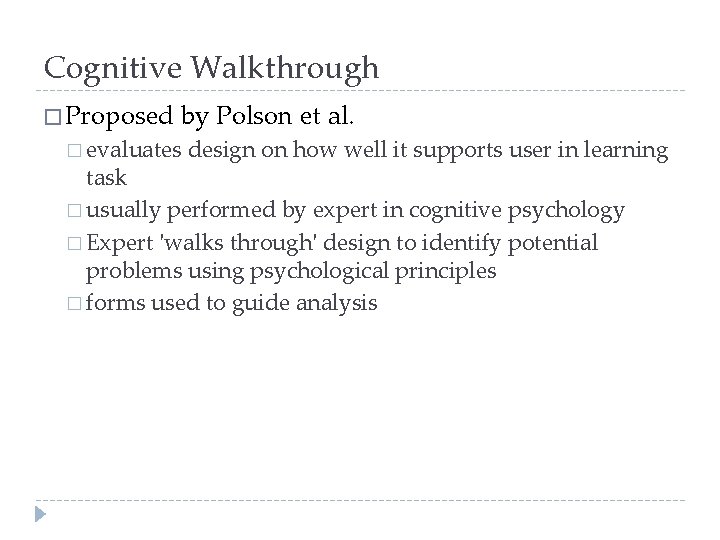
Cognitive Walkthrough � Proposed by Polson et al. � evaluates design on how well it supports user in learning task � usually performed by expert in cognitive psychology � Expert 'walks through' design to identify potential problems using psychological principles � forms used to guide analysis
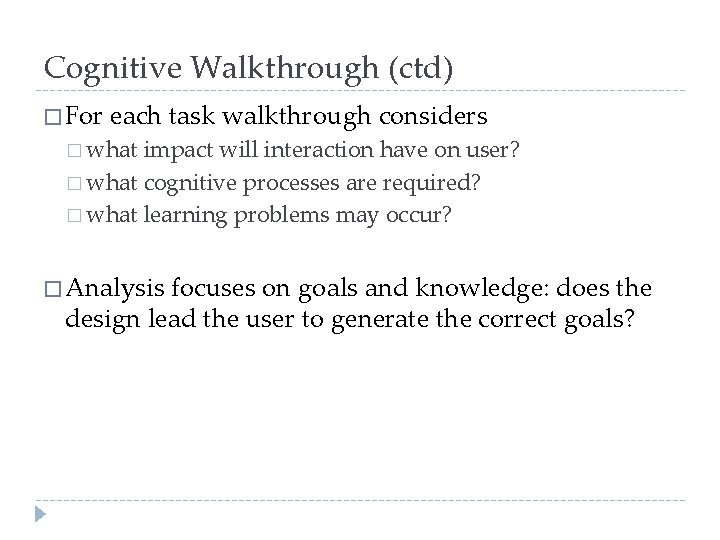
Cognitive Walkthrough (ctd) � For each task walkthrough considers � what impact will interaction have on user? � what cognitive processes are required? � what learning problems may occur? � Analysis focuses on goals and knowledge: does the design lead the user to generate the correct goals?
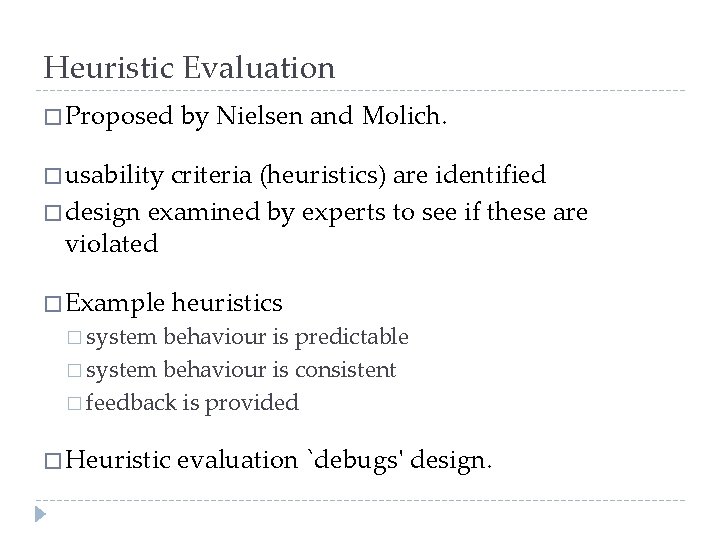
Heuristic Evaluation � Proposed by Nielsen and Molich. � usability criteria (heuristics) are identified � design examined by experts to see if these are violated � Example heuristics � system behaviour is predictable � system behaviour is consistent � feedback is provided � Heuristic evaluation `debugs' design.
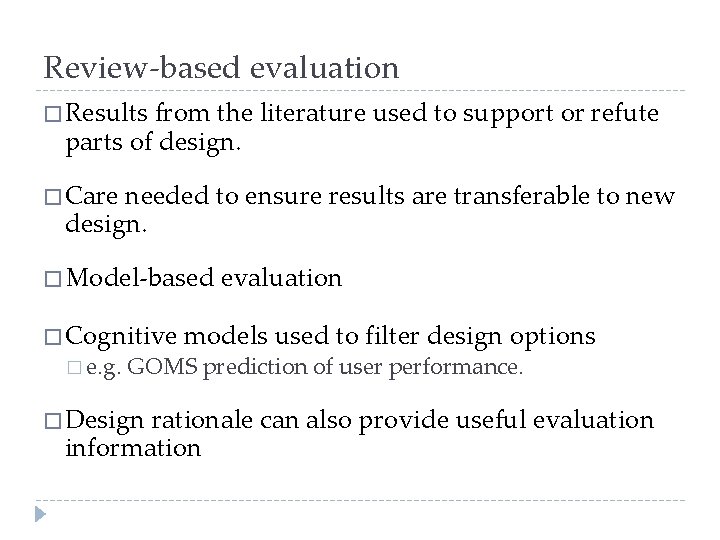
Review-based evaluation � Results from the literature used to support or refute parts of design. � Care needed to ensure results are transferable to new design. � Model-based � Cognitive � e. g. evaluation models used to filter design options GOMS prediction of user performance. � Design rationale can also provide useful evaluation information
Evaluating through user Participation
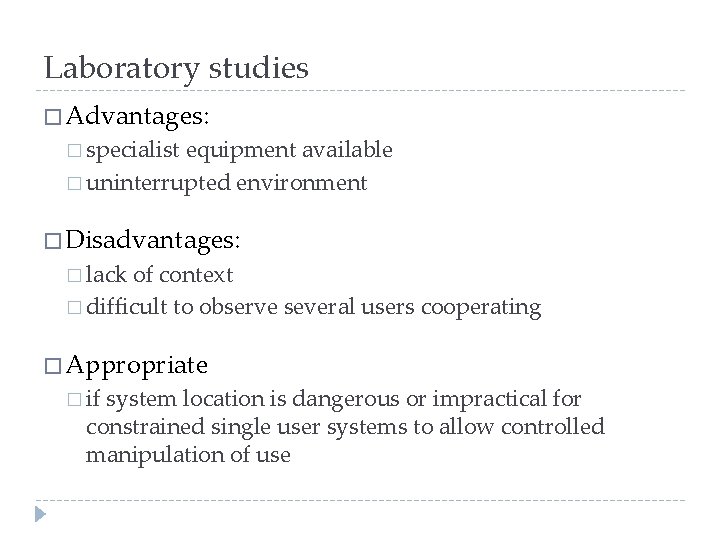
Laboratory studies � Advantages: � specialist equipment available � uninterrupted environment � Disadvantages: � lack of context � difficult to observe several users cooperating � Appropriate � if system location is dangerous or impractical for constrained single user systems to allow controlled manipulation of use
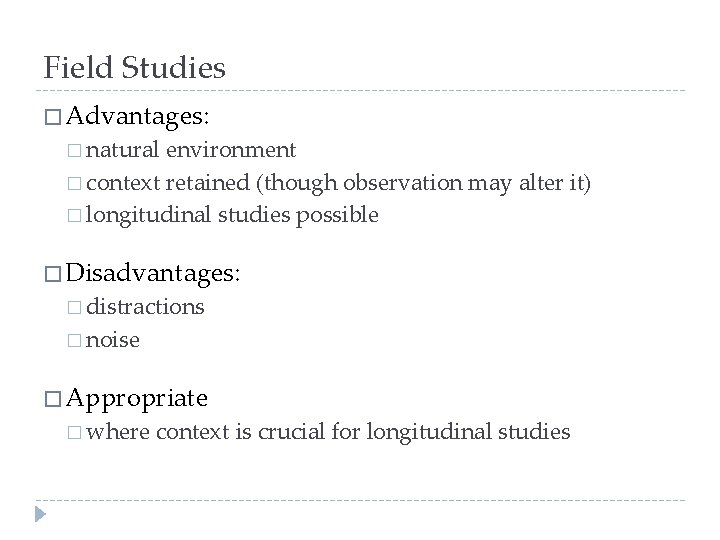
Field Studies � Advantages: � natural environment � context retained (though observation may alter it) � longitudinal studies possible � Disadvantages: � distractions � noise � Appropriate � where context is crucial for longitudinal studies
Evaluating Implementations Requires an artefact: simulation, prototype, full implementation
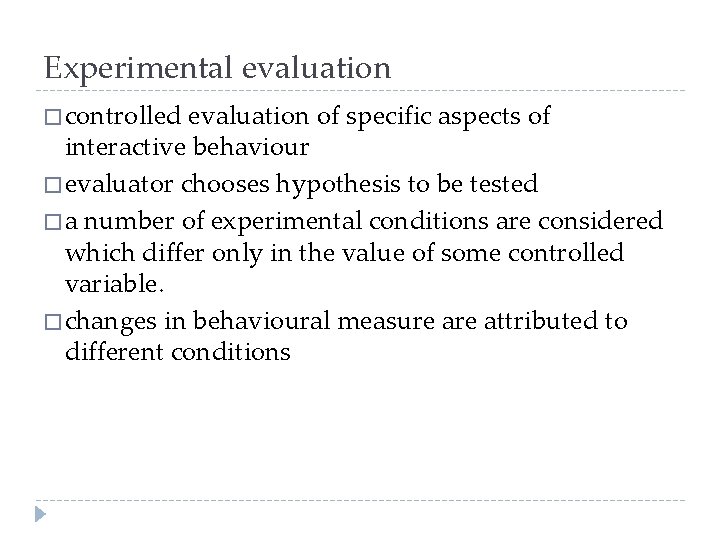
Experimental evaluation � controlled evaluation of specific aspects of interactive behaviour � evaluator chooses hypothesis to be tested � a number of experimental conditions are considered which differ only in the value of some controlled variable. � changes in behavioural measure attributed to different conditions
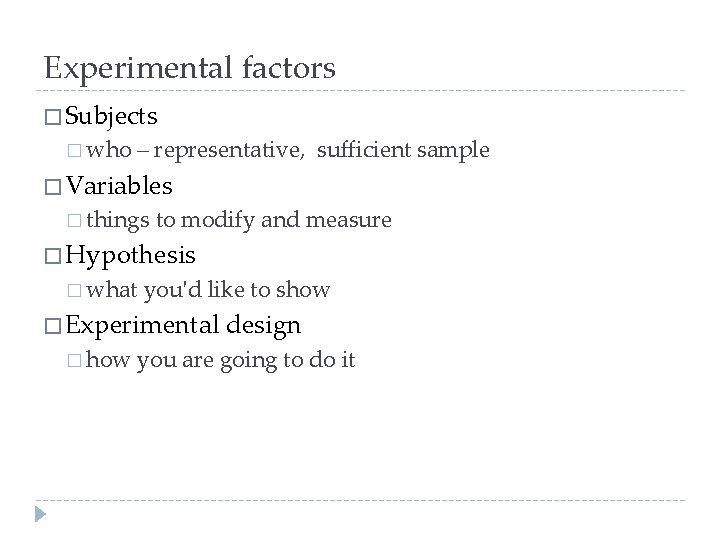
Experimental factors � Subjects � who – representative, sufficient sample � Variables � things to modify and measure � Hypothesis � what you'd like to show � Experimental � how design you are going to do it
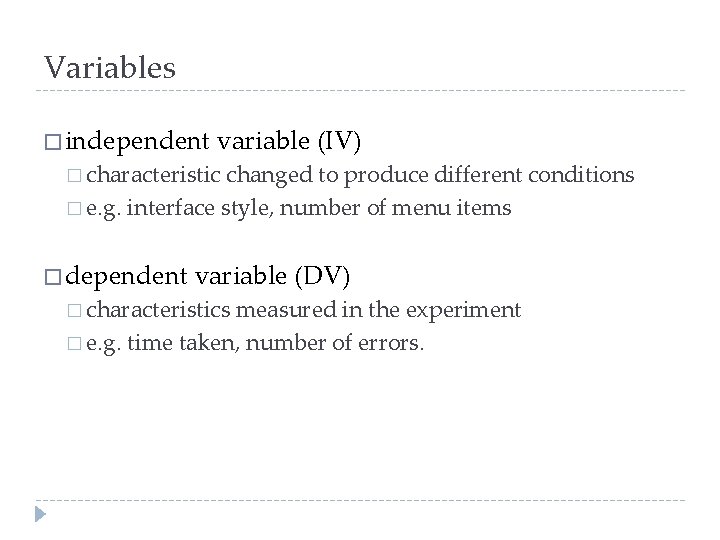
Variables � independent variable (IV) � characteristic changed to produce different conditions � e. g. interface style, number of menu items � dependent variable (DV) � characteristics measured in the experiment � e. g. time taken, number of errors.
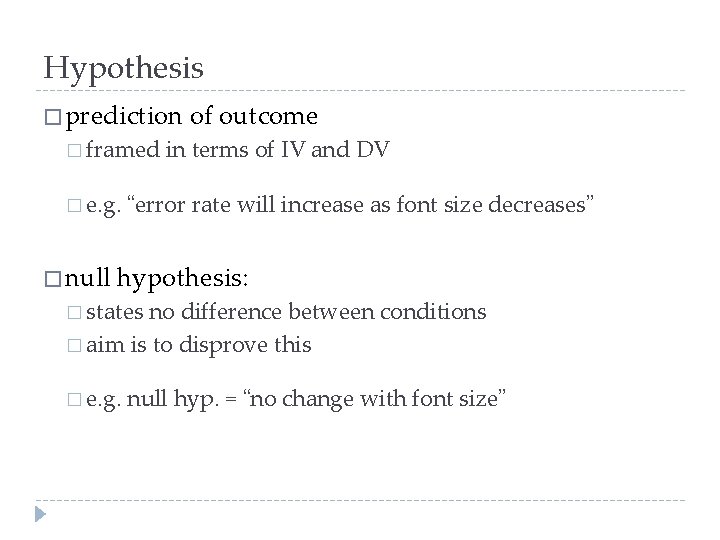
Hypothesis � prediction � framed � e. g. � null of outcome in terms of IV and DV “error rate will increase as font size decreases” hypothesis: � states no difference between conditions � aim is to disprove this � e. g. null hyp. = “no change with font size”
Observational Methods Think Aloud, Cooperative evaluation, Protocol analysis, Automated analysis, Post-task walkthroughs
Think Aloud � user observed performing task � user asked to describe what he is doing and why, what he thinks is happening etc. � Advantages � simplicity - requires little expertise � can provide useful insight � can show system is actually use � Disadvantages � subjective � selective � act of describing may alter task performance
Cooperative evaluation � variation on think aloud � user collaborates in evaluation � both user and evaluator can ask each other questions throughout � Additional � less advantages constrained and easier to use � user is encouraged to criticize system � clarification possible
Protocol analysis � paper and pencil – cheap, limited to writing speed � audio – good for think aloud, difficult to match with other protocols � video – accurate and realistic, needs special equipment, obtrusive � computer logging – automatic and unobtrusive, large amounts of data difficult to analyze � user notebooks – coarse and subjective, useful insights, good for longitudinal studies � Mixed use in practice. � audio/video transcription difficult and requires skill. � Some automatic support tools available
Automated analysis – EVA � Workplace project � Post task walkthrough user reacts on action after the event � used to fill in intention � � Advantages analyst has time to focus on relevant incidents � avoid excessive interruption of task � � Disadvantages lack of freshness � may be post-hoc interpretation of event. S � � Examples � Noldus Pocket Observer XT (http: //www. noldus. com)
Post-task Walkthroughs � Transcript played back to participant for comment � immediately fresh in mind � delayed evaluator has time to identify questions � useful to identify reasons for actions and alternatives considered � necessary in cases where think aloud is not possible
Query Techniques Interviews Questionnaires
Interviews � analyst questions user on one-to-one basis usually based on prepared questions � informal, subjective and relatively cheap � Advantages � can be varied to suit context � issues can be explored more fully � can elicit user views and identify unanticipated problems � Disadvantages � very subjective � time consuming
Questionnaires � Set of fixed questions given to users � Advantages � quick and reaches large user group � can be analyzed more rigorously � Disadvantages � less flexible � less probing
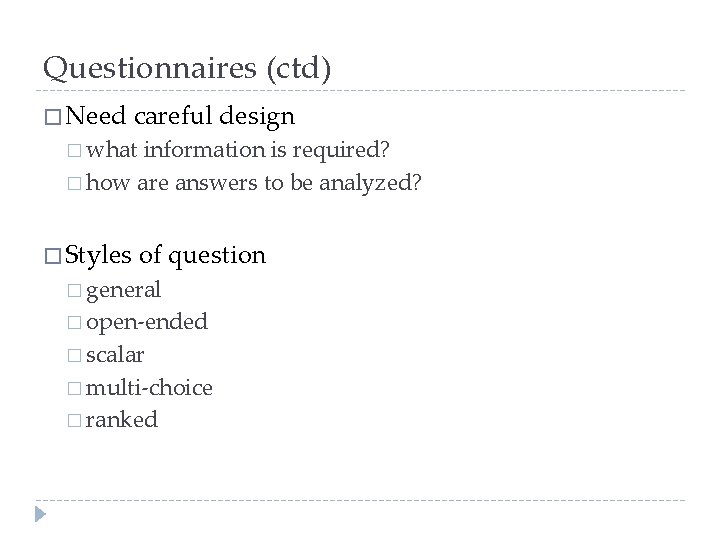
Questionnaires (ctd) � Need careful design � what information is required? � how are answers to be analyzed? � Styles of question � general � open-ended � scalar � multi-choice � ranked
Physiological methods Eye tracking Physiological measurement
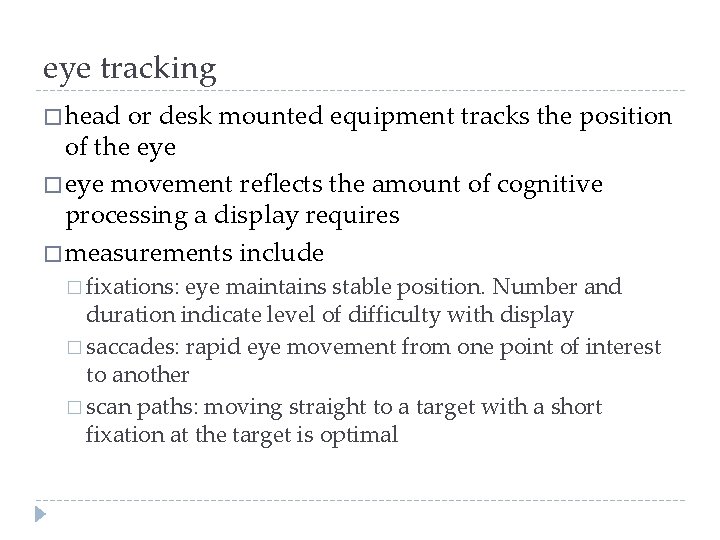
eye tracking � head or desk mounted equipment tracks the position of the eye � eye movement reflects the amount of cognitive processing a display requires � measurements include � fixations: eye maintains stable position. Number and duration indicate level of difficulty with display � saccades: rapid eye movement from one point of interest to another � scan paths: moving straight to a target with a short fixation at the target is optimal
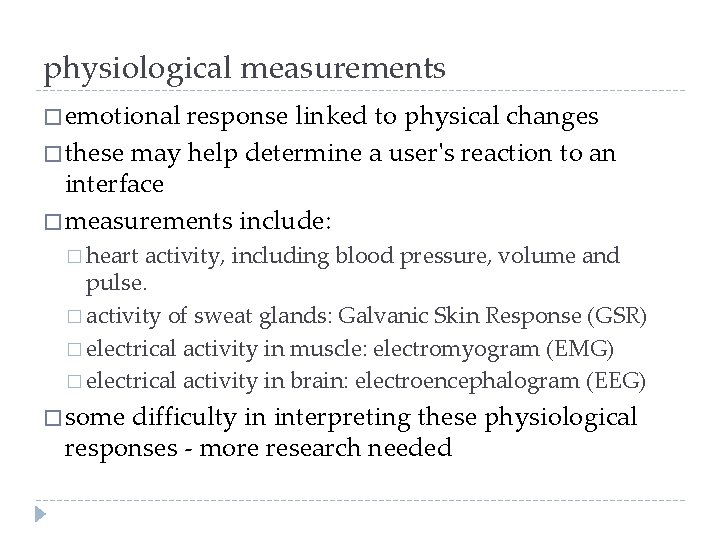
physiological measurements � emotional response linked to physical changes � these may help determine a user's reaction to an interface � measurements include: � heart activity, including blood pressure, volume and pulse. � activity of sweat glands: Galvanic Skin Response (GSR) � electrical activity in muscle: electromyogram (EMG) � electrical activity in brain: electroencephalogram (EEG) � some difficulty in interpreting these physiological responses - more research needed
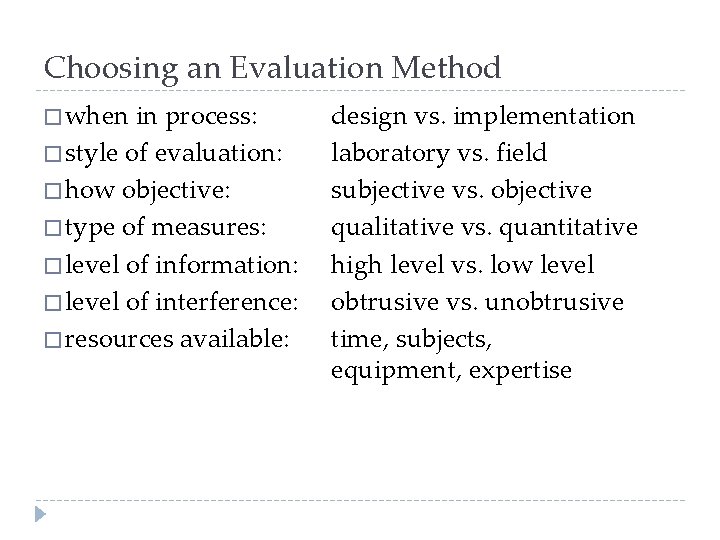
Choosing an Evaluation Method � when in process: � style of evaluation: � how objective: � type of measures: � level of information: � level of interference: � resources available: design vs. implementation laboratory vs. field subjective vs. objective qualitative vs. quantitative high level vs. low level obtrusive vs. unobtrusive time, subjects, equipment, expertise