
Human Circulation A closer look Contents Cardiac cycle

- Slides: 17
Human Circulation A closer look
Contents Cardiac cycle Maintenance of heartbeat Principles governing blood circulation Lymphatic system Blood composition and function Cardiovascular disease
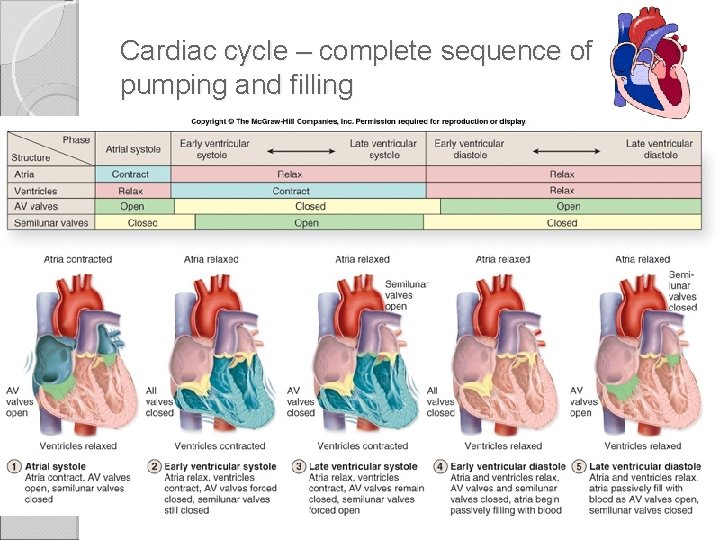
Cardiac cycle – complete sequence of pumping and filling
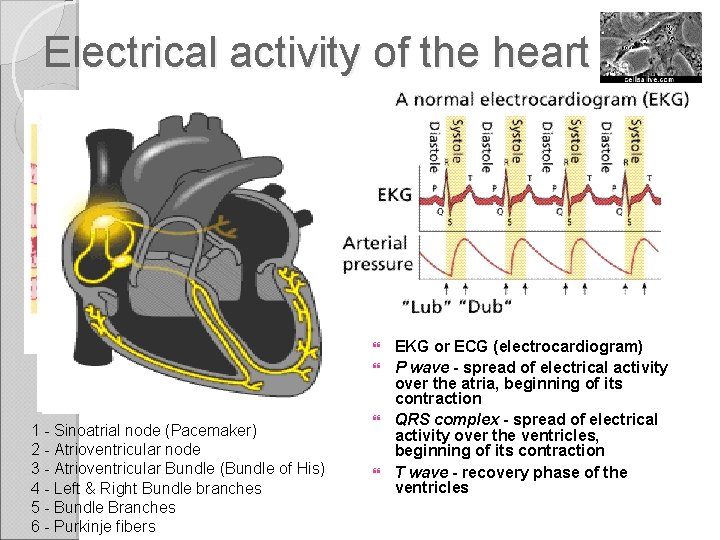
Electrical activity of the heart 1 - Sinoatrial node (Pacemaker) 2 - Atrioventricular node 3 - Atrioventricular Bundle (Bundle of His) 4 - Left & Right Bundle branches 5 - Bundle Branches 6 - Purkinje fibers EKG or ECG (electrocardiogram) P wave - spread of electrical activity over the atria, beginning of its contraction QRS complex - spread of electrical activity over the ventricles, beginning of its contraction T wave - recovery phase of the ventricles
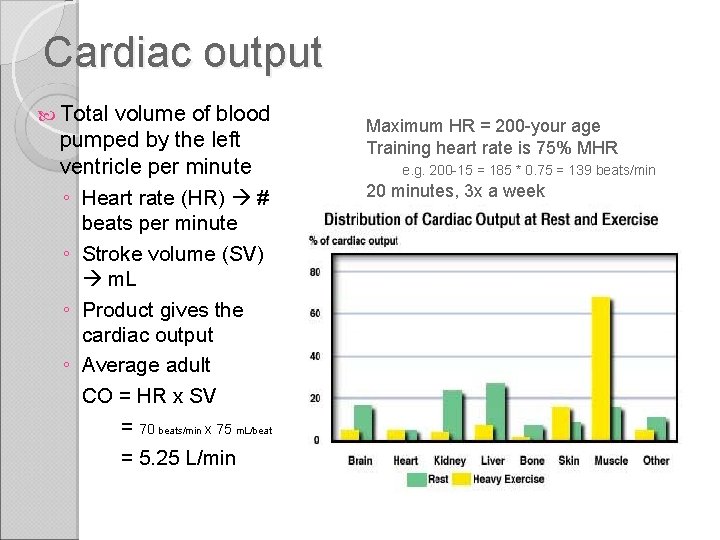
Cardiac output Total volume of blood pumped by the left ventricle per minute ◦ Heart rate (HR) # beats per minute ◦ Stroke volume (SV) m. L ◦ Product gives the cardiac output ◦ Average adult CO = HR x SV = 70 beats/min x 75 m. L/beat = 5. 25 L/min Maximum HR = 200 -your age Training heart rate is 75% MHR e. g. 200 -15 = 185 * 0. 75 = 139 beats/min 20 minutes, 3 x a week
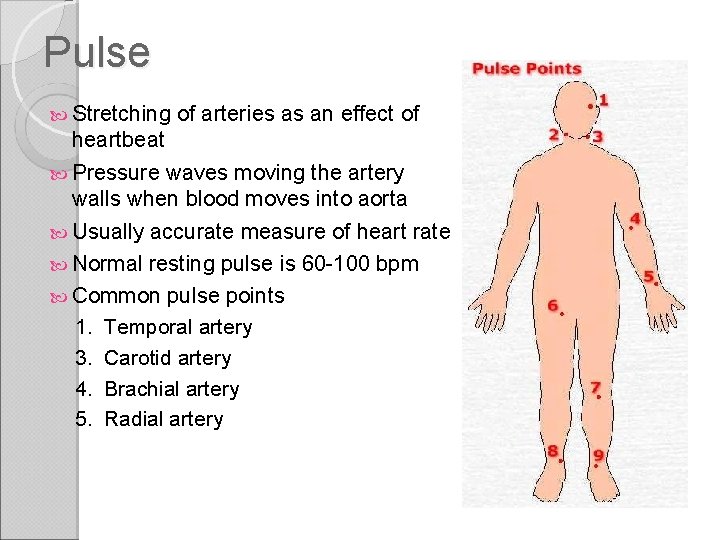
Pulse Stretching of arteries as an effect of heartbeat Pressure waves moving the artery walls when blood moves into aorta Usually accurate measure of heart rate Normal resting pulse is 60 -100 bpm Common pulse points 1. Temporal artery 3. Carotid artery 4. Brachial artery 5. Radial artery
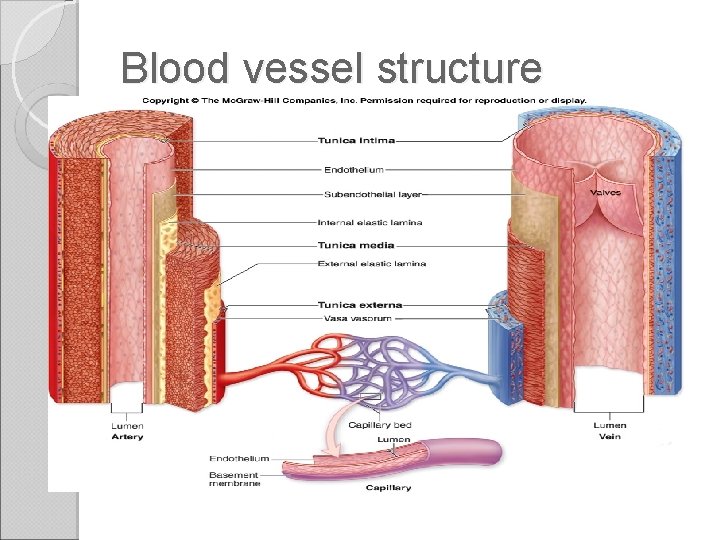
Blood vessel structure
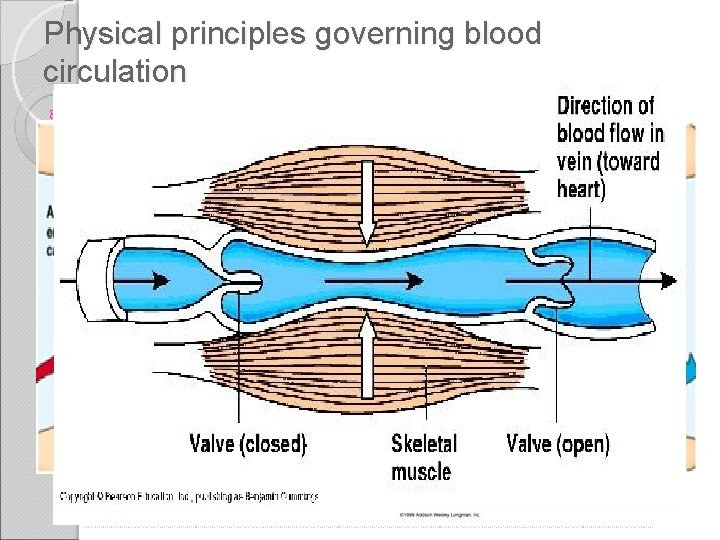
Physical principles governing blood circulation Blood flow velocity ◦ Aorta (30 cm/s) ◦ Capillaries (0. 026 cm/s) Law of continuity ◦ Volume of flow per second must be constant through the entire pipe ◦ Total cross-sectional area of the pipes delivering the fluid ◦ Slows down in capillary beds
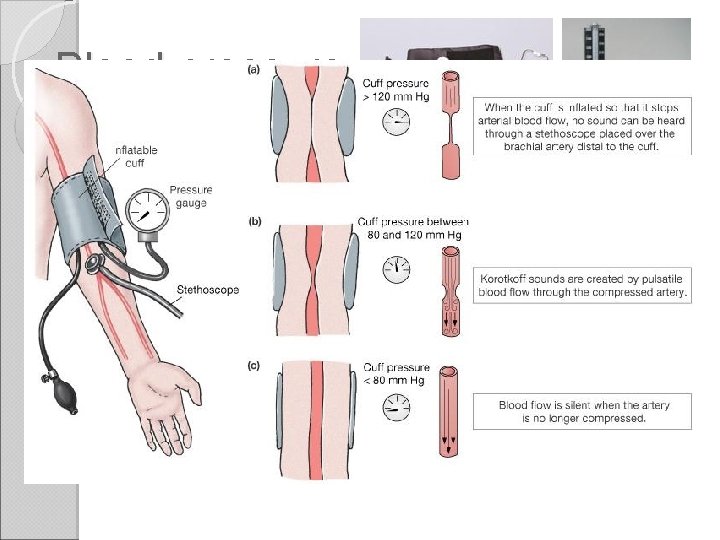
Blood pressure Force exerted by blood on walls of vessels Pressure decreases from arteries to veins Determined by cardiac output and peripheral resistance by arterioles Arterial pressure measured by a sphygmomanometer Systolic/Diastolic (mm. Hg) Factors ◦ ◦ Heart rate Blood volume Resistance of vessels Viscosity
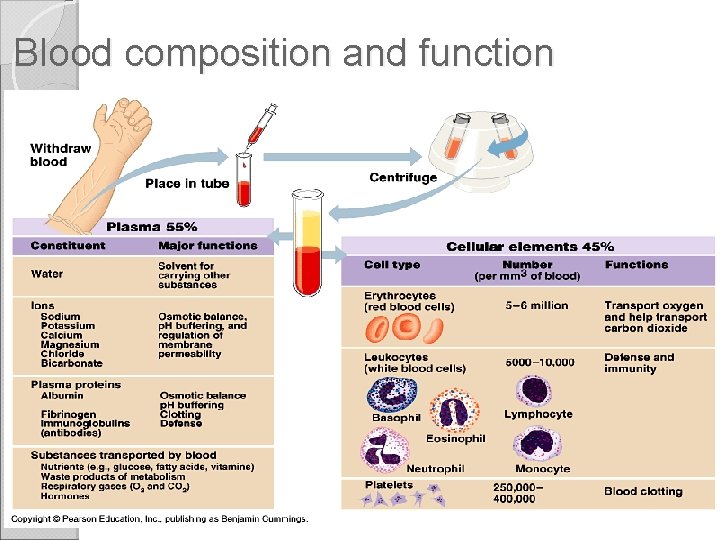
Blood composition and function
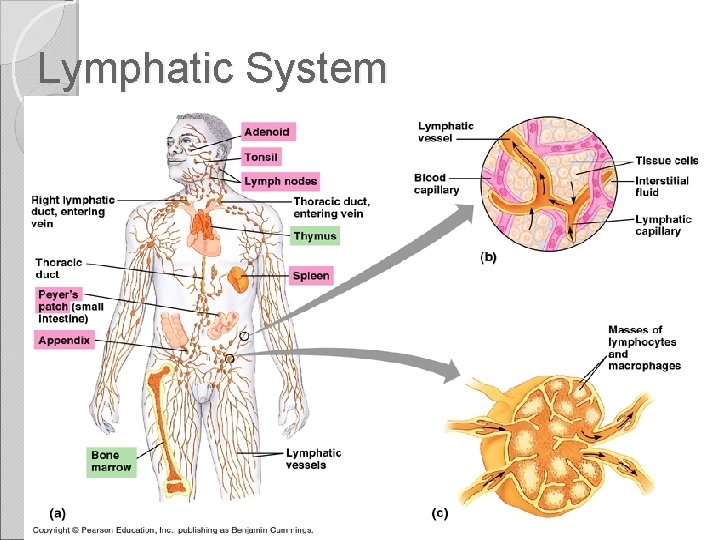
Lymphatic System Functions ◦ Returns excess body fluid to blood ◦ Transports fats from intestines to blood ◦ Defense Anatomy ◦ Lymph nodes scattered throughout body (thymus, spleen) ◦ Vessels
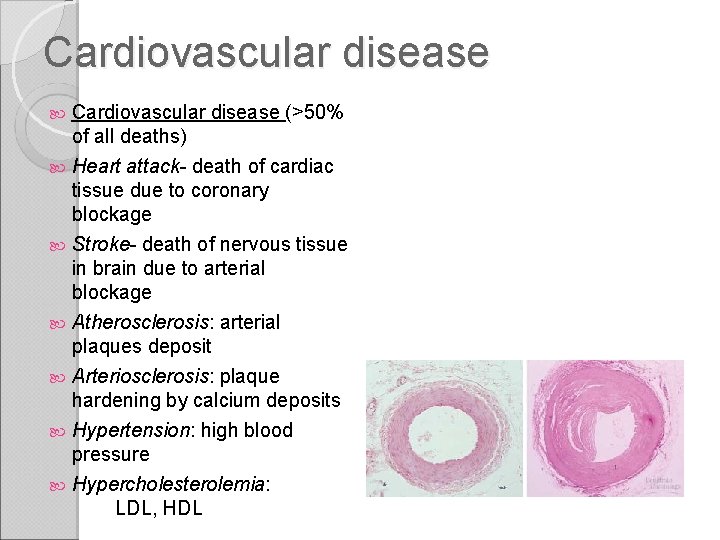
Cardiovascular disease (>50% of all deaths) Heart attack- death of cardiac tissue due to coronary blockage Stroke- death of nervous tissue in brain due to arterial blockage Atherosclerosis: arterial plaques deposit Arteriosclerosis: plaque hardening by calcium deposits Hypertension: high blood pressure Hypercholesterolemia: LDL, HDL
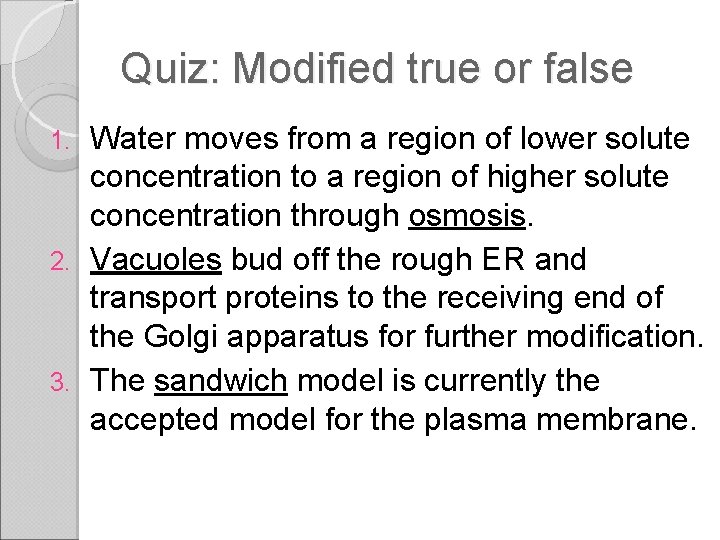
Quiz: Modified true or false Water moves from a region of lower solute concentration to a region of higher solute concentration through osmosis. 2. Vacuoles bud off the rough ER and transport proteins to the receiving end of the Golgi apparatus for further modification. 3. The sandwich model is currently the accepted model for the plasma membrane. 1.
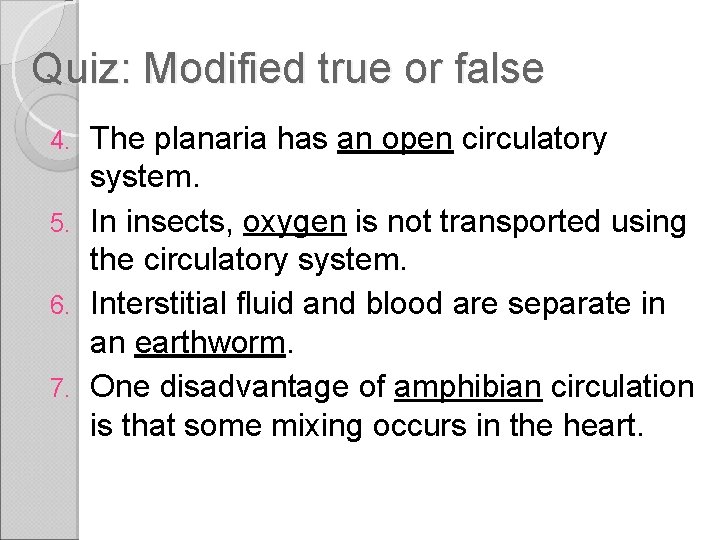
Quiz: Modified true or false The planaria has an open circulatory system. 5. In insects, oxygen is not transported using the circulatory system. 6. Interstitial fluid and blood are separate in an earthworm. 7. One disadvantage of amphibian circulation is that some mixing occurs in the heart. 4.
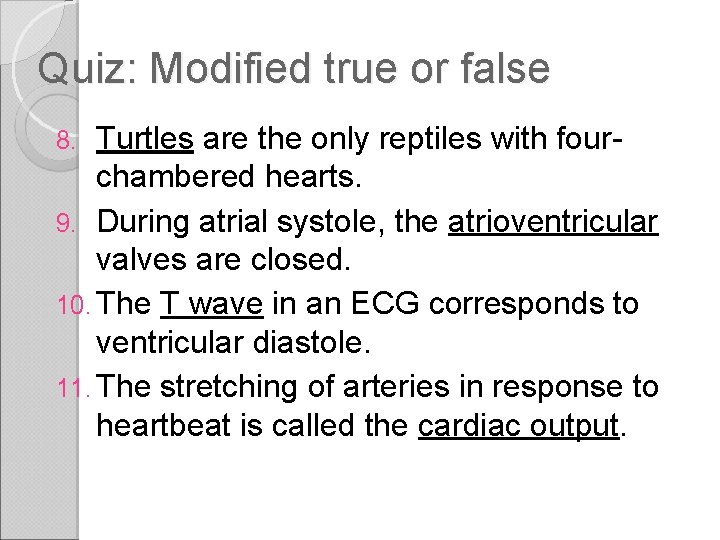
Quiz: Modified true or false Turtles are the only reptiles with fourchambered hearts. 9. During atrial systole, the atrioventricular valves are closed. 10. The T wave in an ECG corresponds to ventricular diastole. 11. The stretching of arteries in response to heartbeat is called the cardiac output. 8.
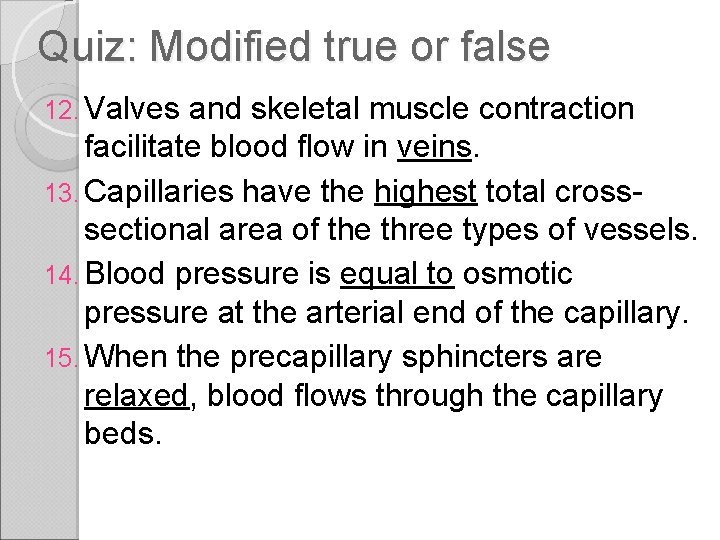
Quiz: Modified true or false 12. Valves and skeletal muscle contraction facilitate blood flow in veins. 13. Capillaries have the highest total crosssectional area of the three types of vessels. 14. Blood pressure is equal to osmotic pressure at the arterial end of the capillary. 15. When the precapillary sphincters are relaxed, blood flows through the capillary beds.