
Human Characteristics of Places WG1 2 Culture the
- Slides: 12
Human Characteristics of Places WG-1. 2
Culture- the way of life of a group of people who share similar ways of thinking, believing, and living, expressed in common elements or features. ● Language, religion, daily life, history, art, government, technology, government
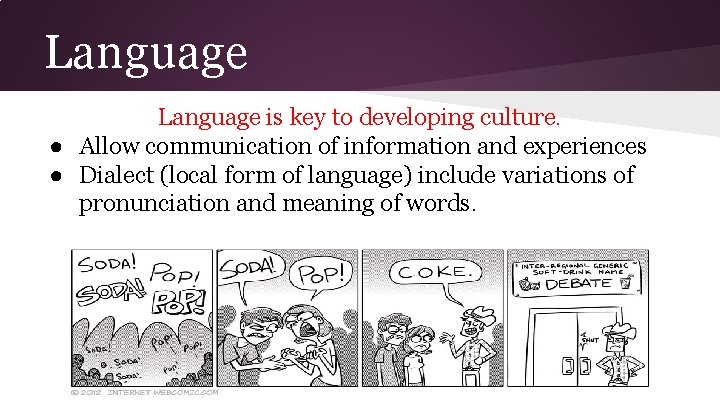
Language is key to developing culture. ● Allow communication of information and experiences ● Dialect (local form of language) include variations of pronunciation and meaning of words.
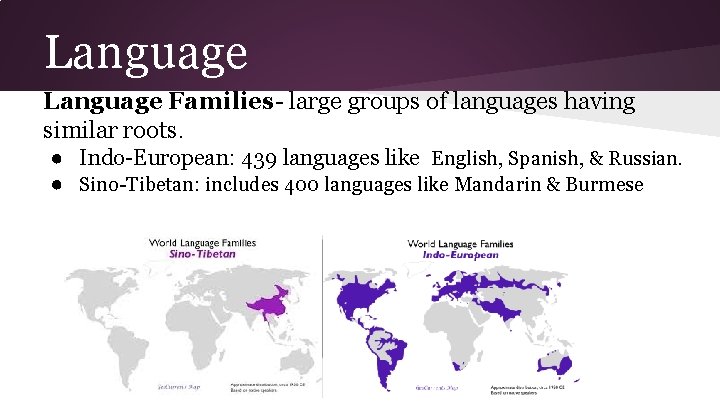
Language Families- large groups of languages having similar roots. ● Indo-European: 439 languages like English, Spanish, & Russian. ● Sino-Tibetan: includes 400 languages like Mandarin & Burmese
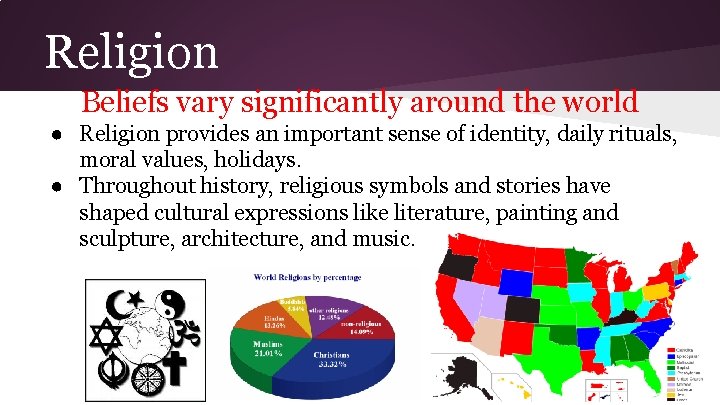
Religion Beliefs vary significantly around the world ● Religion provides an important sense of identity, daily rituals, moral values, holidays. ● Throughout history, religious symbols and stories have shaped cultural expressions like literature, painting and sculpture, architecture, and music.
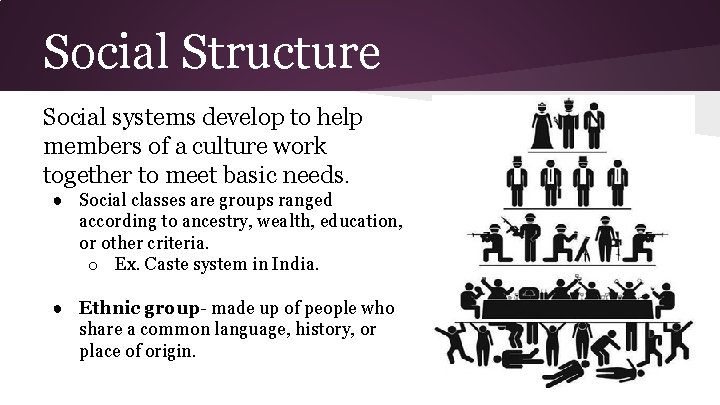
Social Structure Social systems develop to help members of a culture work together to meet basic needs. ● Social classes are groups ranged according to ancestry, wealth, education, or other criteria. o Ex. Caste system in India. ● Ethnic group- made up of people who share a common language, history, or place of origin.
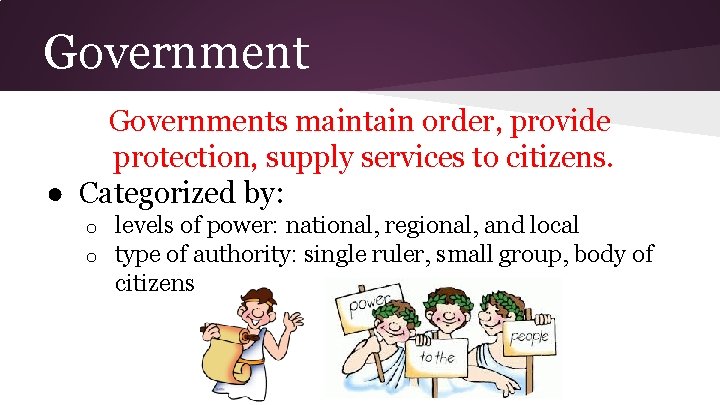
Governments maintain order, provide protection, supply services to citizens. ● Categorized by: o o levels of power: national, regional, and local type of authority: single ruler, small group, body of citizens
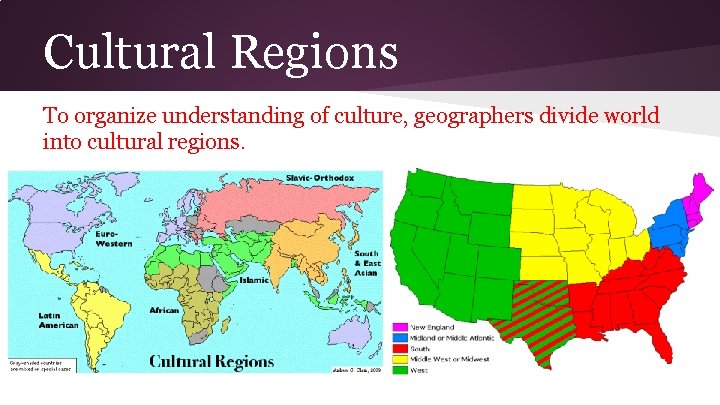
Cultural Regions To organize understanding of culture, geographers divide world into cultural regions.
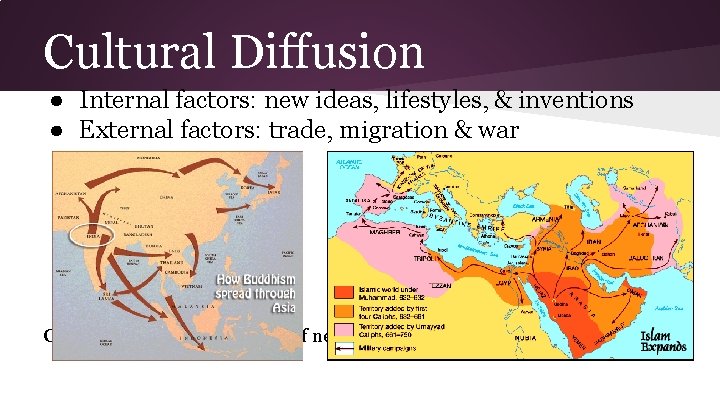
Cultural Diffusion ● Internal factors: new ideas, lifestyles, & inventions ● External factors: trade, migration & war Cultural diffusion- spread of new knowledge from one culture to another.
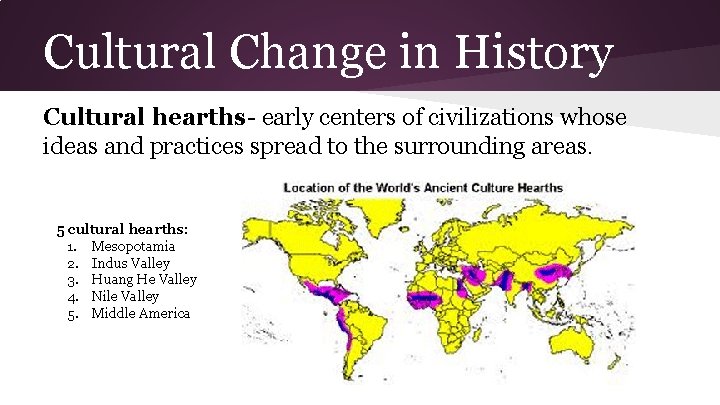
Cultural Change in History Cultural hearths- early centers of civilizations whose ideas and practices spread to the surrounding areas. 5 cultural hearths: 1. Mesopotamia 2. Indus Valley 3. Huang He Valley 4. Nile Valley 5. Middle America
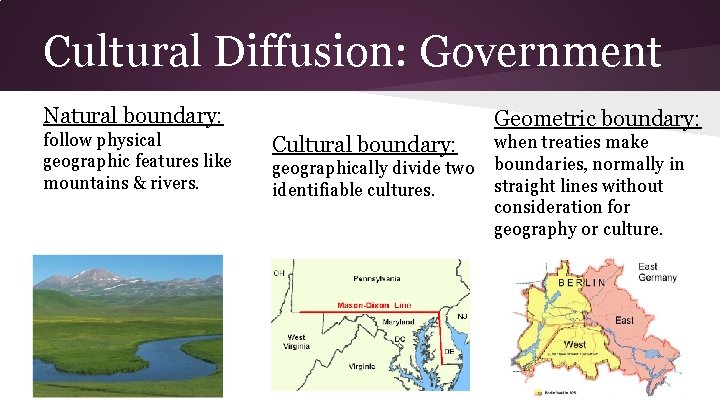
Cultural Diffusion: Government Natural boundary: follow physical geographic features like mountains & rivers. Geometric boundary: Cultural boundary: geographically divide two identifiable cultures. when treaties make boundaries, normally in straight lines without consideration for geography or culture.