
Human Cell Biology Understand the structure of eukaryotic
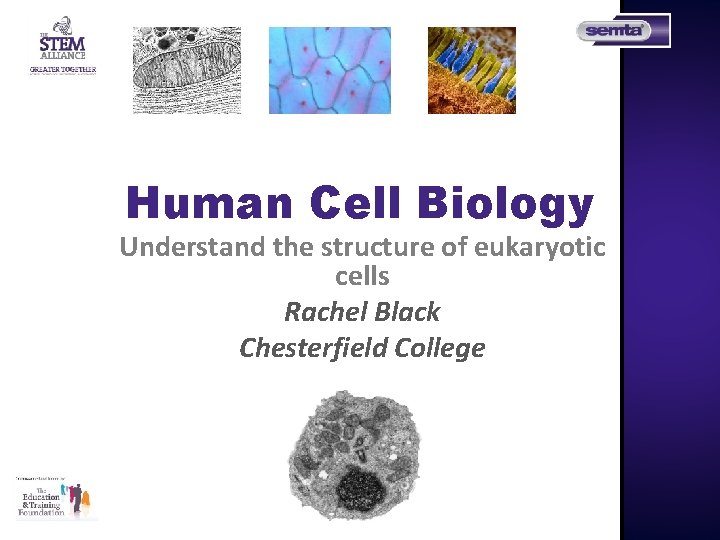
Human Cell Biology Understand the structure of eukaryotic cells Rachel Black Chesterfield College
Topic Cell Structure Aims Ø Detailed information into a structure and function of Organelles Level 3 Method All Power. Point slides, to be worked in small groups, group research tasks, investigations, creation of labelled diagrams. Equipment Ø Ø Laptop/Projector Pens/Pencils A 4 paper for students to make notes Hand-Outs Duration >30 Minutes
How you will learn…. . • Taught lessons aim to give you a foundation knowledge of the subject, to signpost you in the right direction. • Independent study is essential to gain merit & distinctions. • Class work will consist of: – Lectures – Group research tasks and presentations (this will help prepare you for assessed presentations and higher education) – BYOD if possible. – Practical investigations – Creation of labelled diagrams (helps organise ideas and consolidate learning) – A range of other learning methods
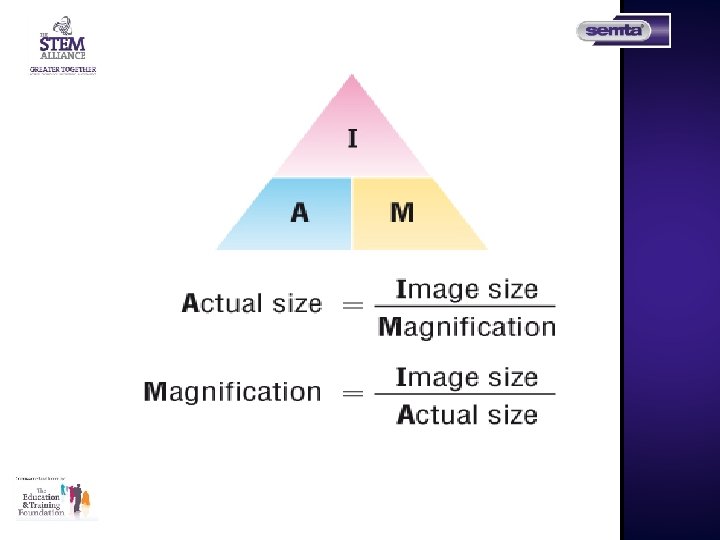
Human Cell Biology • Lesson Objectives: – Describe the structure of eukaryotic cells and identify the nucleus, cell membrane, endoplasmic reticulum, ribosomes, mitochondria, Golgi body and lysosomes from electron micrographs. • – Estimate the size of cells and organelles from microscope study or photographs. 16
Levels of Organisation Starting with the body, what comes next?
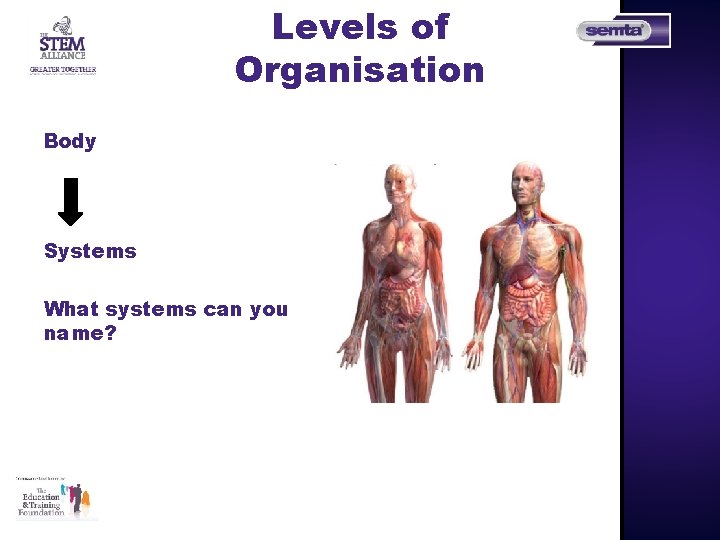
Levels of Organisation Body Systems What systems can you name?
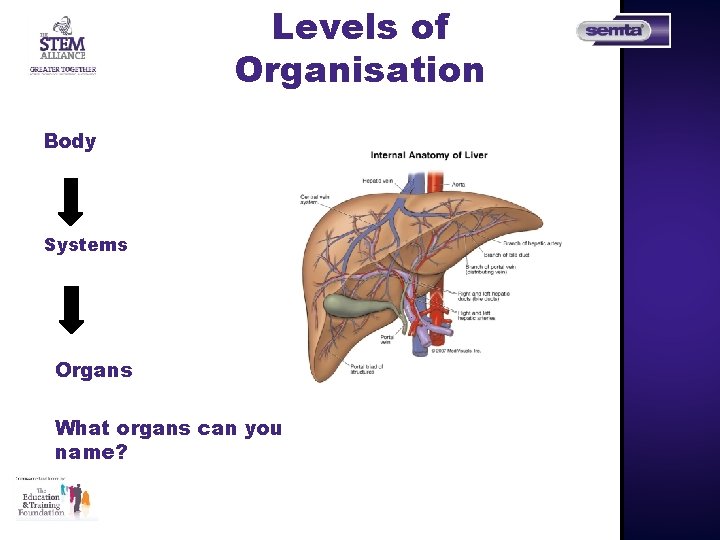
Levels of Organisation Body Systems Organs What organs can you name?
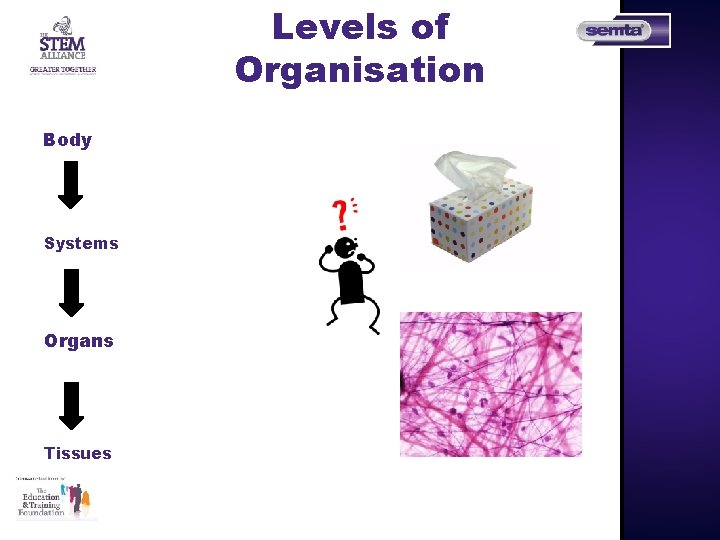
Levels of Organisation Body Systems Organs Tissues
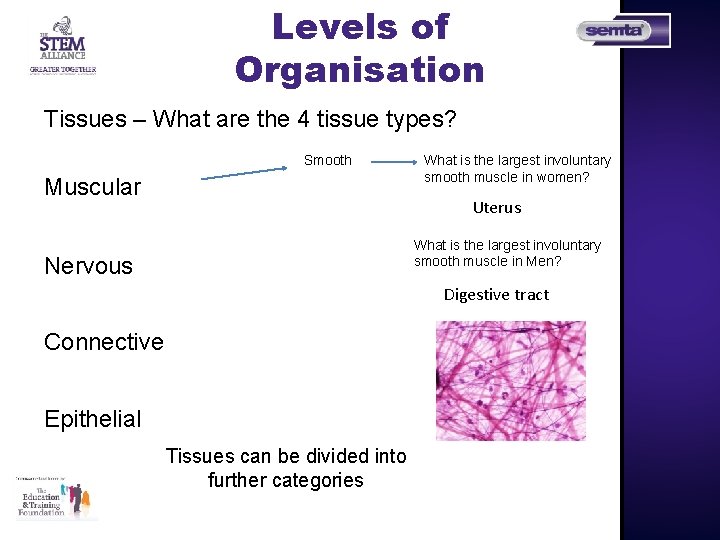
Levels of Organisation Tissues – What are the 4 tissue types? Smooth Muscular What is the largest involuntary smooth muscle in women? Uterus What is the largest involuntary smooth muscle in Men? Nervous Digestive tract Connective Epithelial Tissues can be divided into further categories
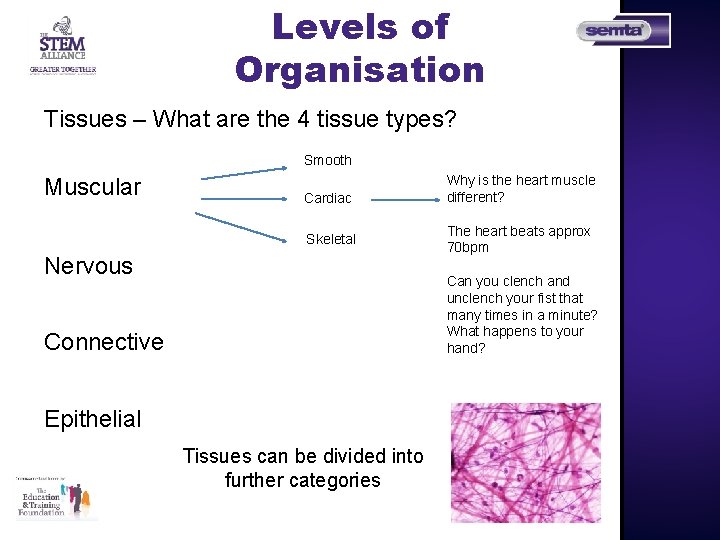
Levels of Organisation Tissues – What are the 4 tissue types? Smooth Muscular Cardiac Skeletal Nervous Why is the heart muscle different? The heart beats approx 70 bpm Can you clench and unclench your fist that many times in a minute? What happens to your hand? Connective Epithelial Tissues can be divided into further categories
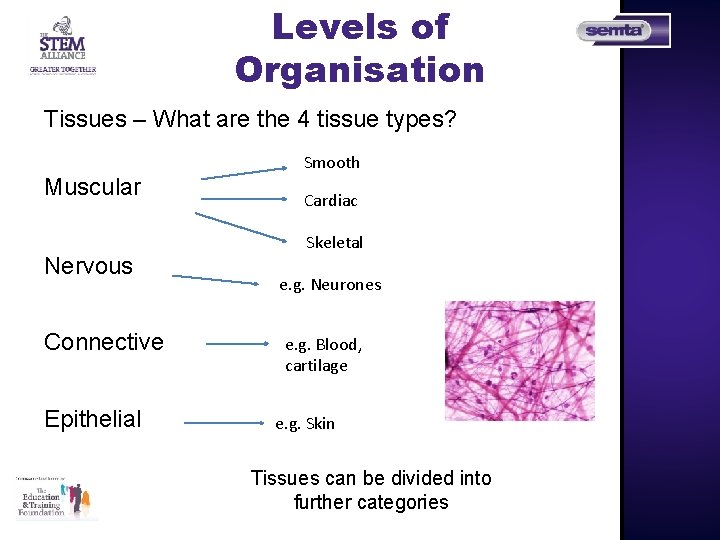
Levels of Organisation Tissues – What are the 4 tissue types? Smooth Muscular Cardiac Skeletal Nervous Connective Epithelial e. g. Neurones e. g. Blood, cartilage e. g. Skin Tissues can be divided into further categories
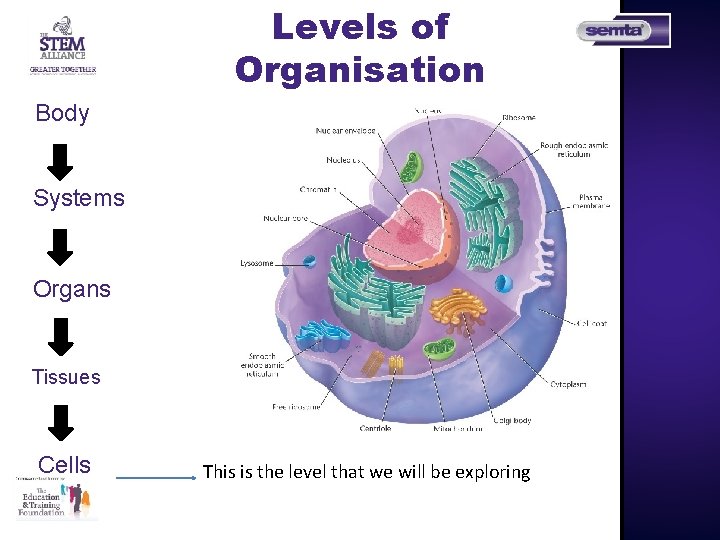
Levels of Organisation Body Systems Organs Tissues Cells This is the level that we will be exploring
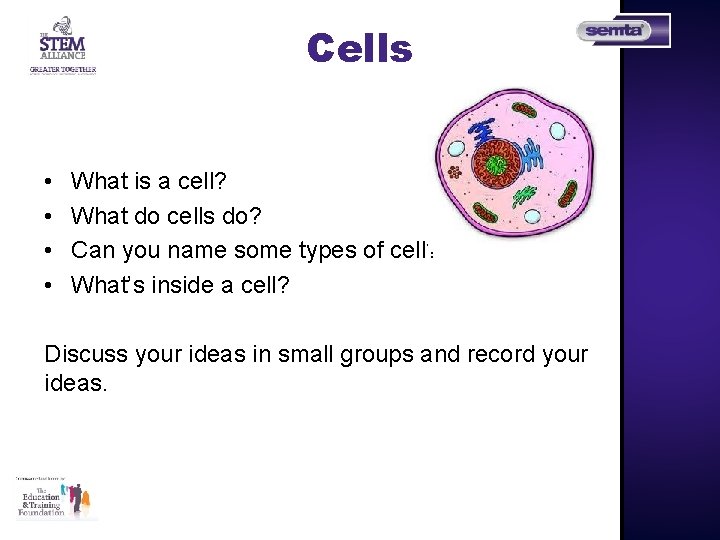
Cells • • What is a cell? What do cells do? Can you name some types of cell? What’s inside a cell? Discuss your ideas in small groups and record your ideas.
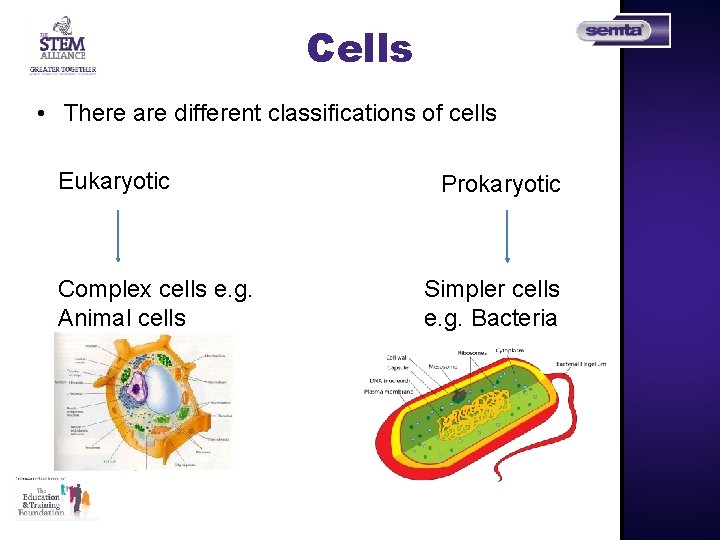
Cells • There are different classifications of cells Eukaryotic Complex cells e. g. Animal cells Prokaryotic Simpler cells e. g. Bacteria
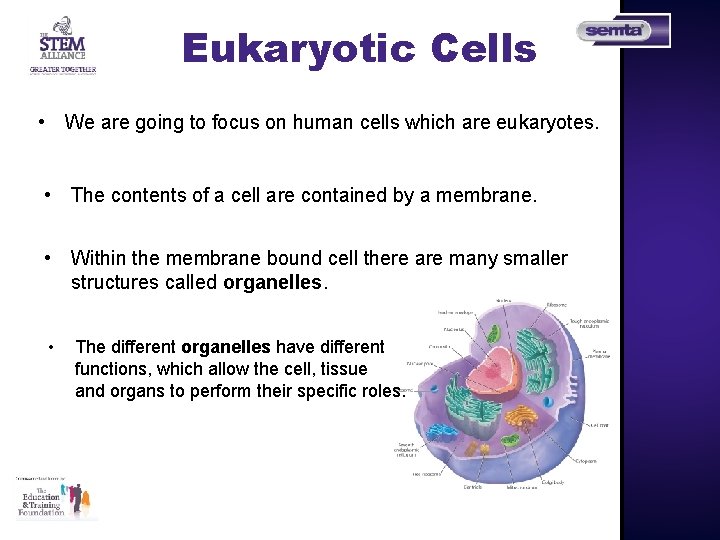
Eukaryotic Cells • We are going to focus on human cells which are eukaryotes. • The contents of a cell are contained by a membrane. • Within the membrane bound cell there are many smaller structures called organelles. • The different organelles have different functions, which allow the cell, tissue and organs to perform their specific roles.
Organelles Lets explore what the different organelles are, what they look like and what they do. There are many different types of organelle, the main ones we will focus on are: nucleus, cell membrane, endoplasmic reticulum, ribosomes, mitochondria, Golgi body lysosomes What do you already know about these organelles?
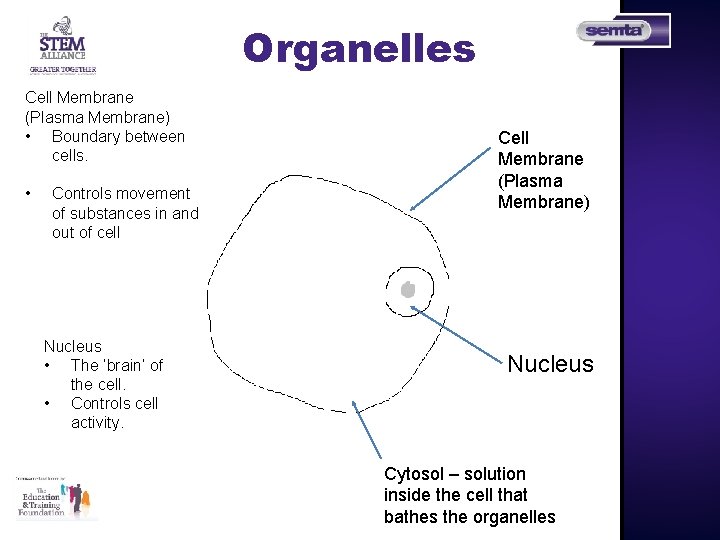
Organelles Cell Membrane (Plasma Membrane) • Boundary between cells. • Controls movement of substances in and out of cell Nucleus • The ‘brain’ of the cell. • Controls cell activity. Cell Membrane (Plasma Membrane) Nucleus Cytosol – solution inside the cell that bathes the organelles
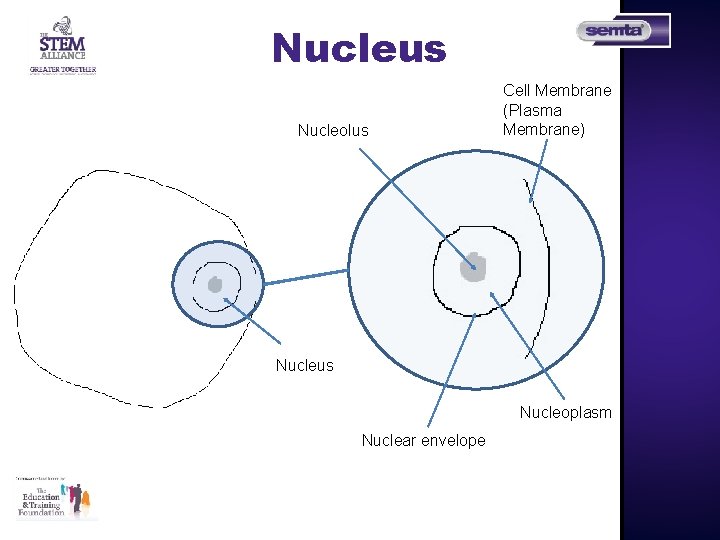
Nucleus Nucleolus Cell Membrane (Plasma Membrane) Nucleus Nucleoplasm Nuclear envelope
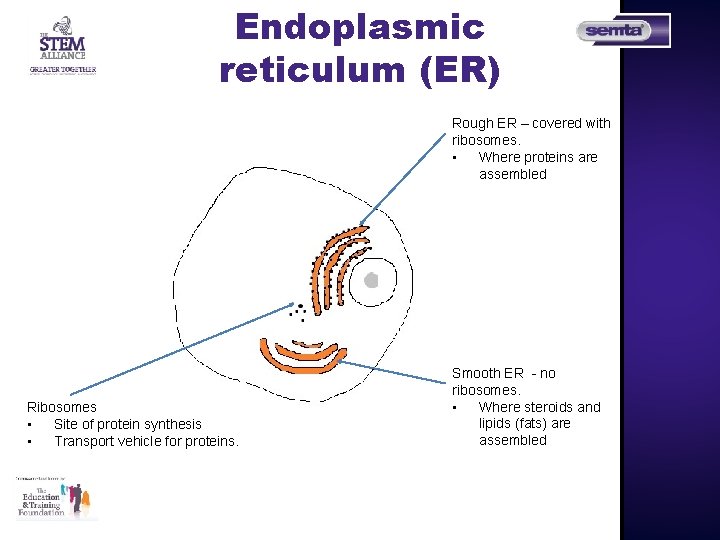
Endoplasmic reticulum (ER) Rough ER – covered with ribosomes. • Where proteins are assembled Ribosomes • Site of protein synthesis • Transport vehicle for proteins. Smooth ER - no ribosomes. • Where steroids and lipids (fats) are assembled
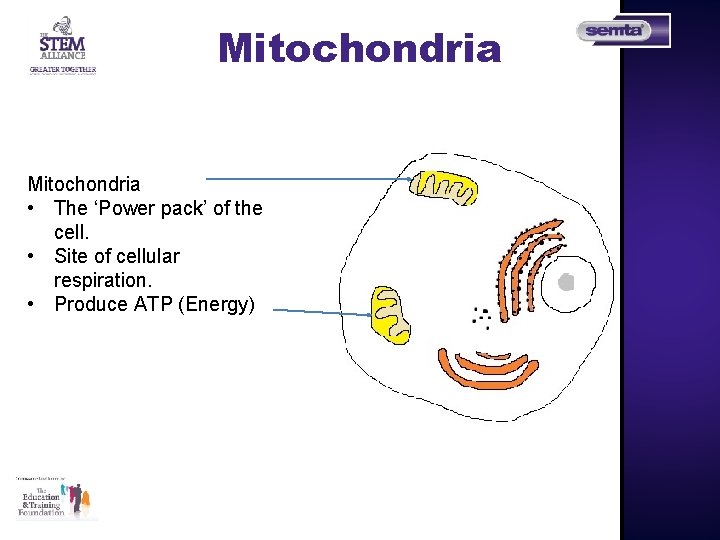
Mitochondria • The ‘Power pack’ of the cell. • Site of cellular respiration. • Produce ATP (Energy)
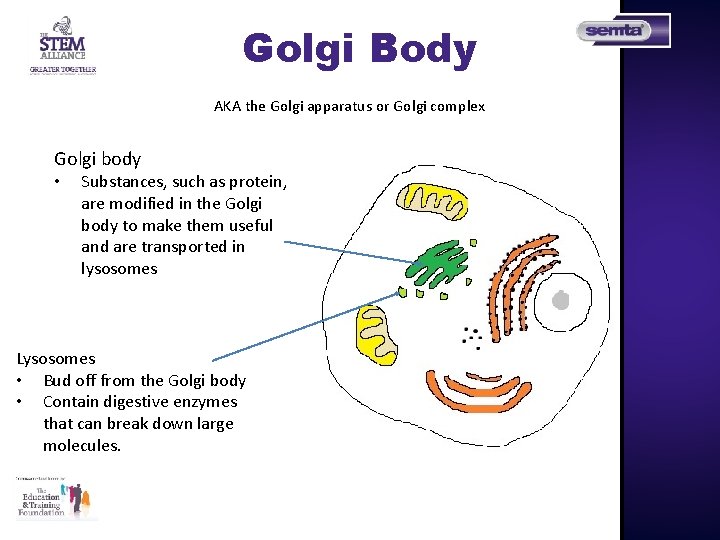
Golgi Body AKA the Golgi apparatus or Golgi complex Golgi body • Substances, such as protein, are modified in the Golgi body to make them useful and are transported in lysosomes Lysosomes • Bud off from the Golgi body • Contain digestive enzymes that can break down large molecules.
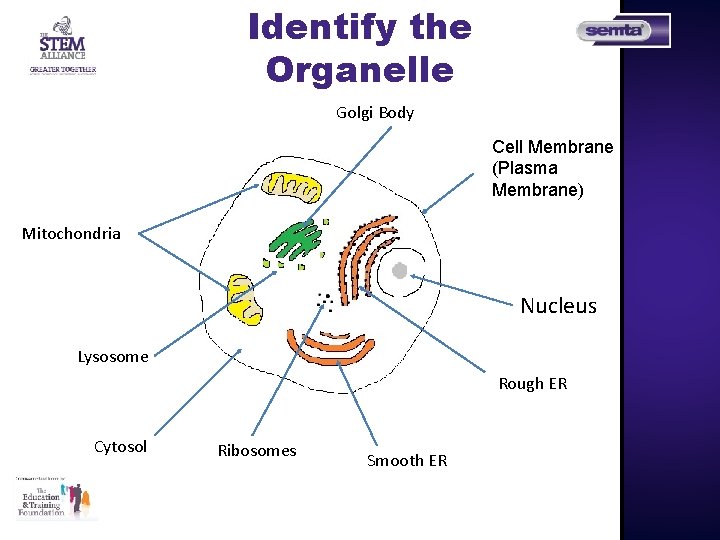
Identify the Organelle Golgi Body Cell Membrane (Plasma Membrane) Mitochondria Nucleus Lysosome Rough ER Cytosol Ribosomes Smooth ER
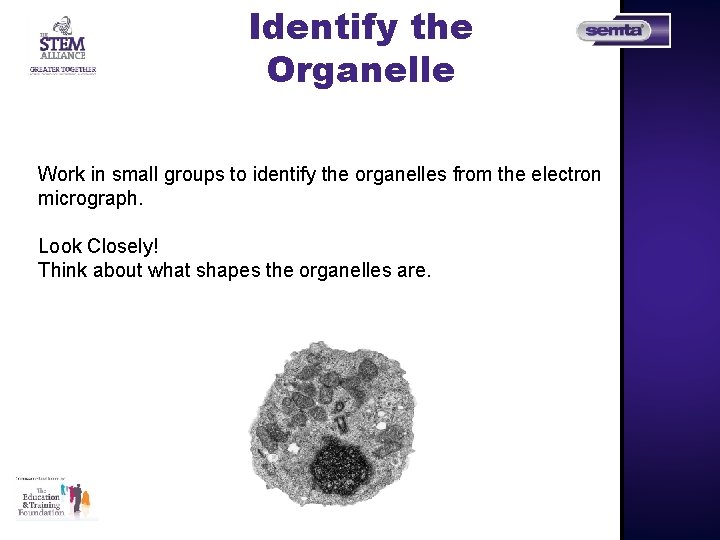
Identify the Organelle Work in small groups to identify the organelles from the electron micrograph. Look Closely! Think about what shapes the organelles are.

- Slides: 25