
Human Body Systems Part 1 The Respiratory System
Human Body Systems Part 1: The Respiratory System
Respiratory System • Air is made of many gasses and solid particles. • Your body only wants the oxygen. • Your respiratory system moves air in and out of your body. • The process of breathing is called respiration.

Oxygen • Oxygen is used to release the energy stored in food molecules, such as glucose. • Your cells always need chemical energy. • Oxygen is carried through your body by the blood.

Carbon Dioxide • CO 2 is carried by the blood to the lungs so it can be removed. • CO 2 is used by the body to control the breathing rate.
The Lungs and Chest Cavity • Your lungs are spongy organs that receive the air you inhale. • Lungs are made up of tiny, hollow sacs called alveoli. • Your lungs are located in the chest cavity, the large space in your upper body. • The walls of the chest cavity are made up of the ribs and muscle. • This wall is the rib cage.
• At the bottom of the rib cage is a large sheet of muscle. This dome-shaped muscle is the diaphragm.
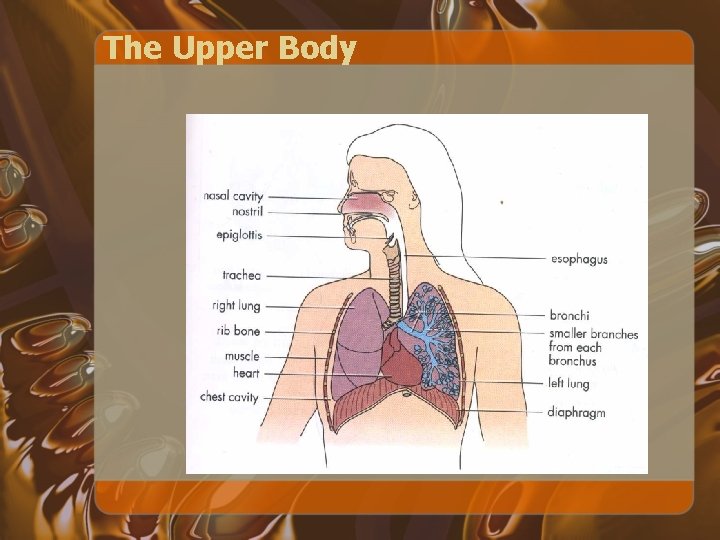
The Upper Body
How You Breathe • When the diaphragm contracts and lowers it pulls the ribs apart. This causes the air to enter the lungs. • When the diaphragm relaxes, the ribs collapse and push the air out.
Nose to Lungs • The hollow space behind your nostrils is your nasal cavity. • The hairs in your nose filter the air by removing large particles, like dust.
The Trachea • The trachea is the tube that carries air from the mouth to the lungs. • The air gets cleaned in the trachea by getting trapped in mucus. • The trachea is also lined with tiny hairs called cilia. The cilia move back and forth and push the mucus away from the lungs. • The trachea branches into two tubes called bronchi. The bronchi then split into smaller tubes until they reach the alveoli.
Gas Exchange in the Alveoli • The alveoli are surrounded by blood vessels. • The blood coming to the alveoli are low in oxygen and high in carbon dioxide while the blood leaving the alveoli are high in oxygen and low in carbon dioxide.
- Slides: 11