
Human Body Systems Nervous System Purpose The Nervous
Human Body Systems

Nervous System Purpose The Nervous System recognizes and coordinates the body's response to changes in its internal and external environments
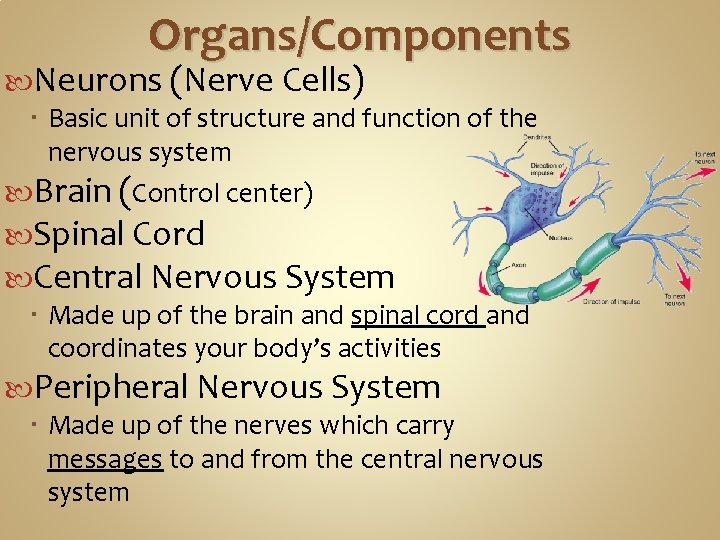
Organs/Components Neurons (Nerve Cells) Basic unit of structure and function of the nervous system Brain (Control center) Spinal Cord Central Nervous System Made up of the brain and spinal cord and coordinates your body’s activities Peripheral Nervous System Made up of the nerves which carry messages to and from the central nervous system
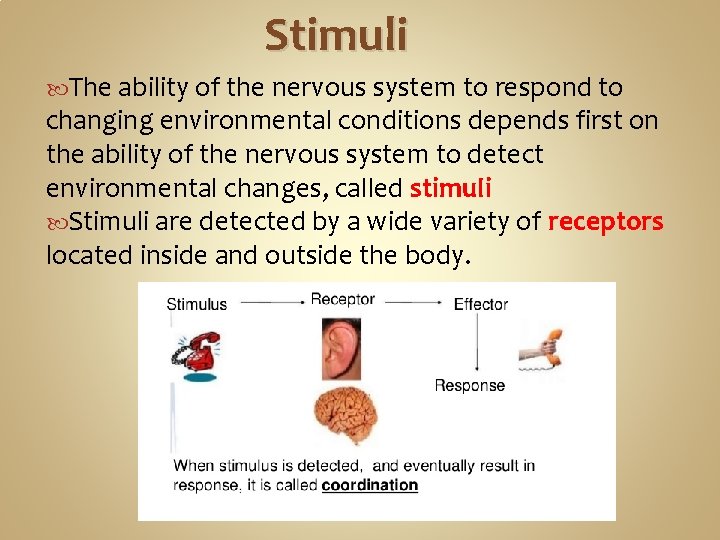
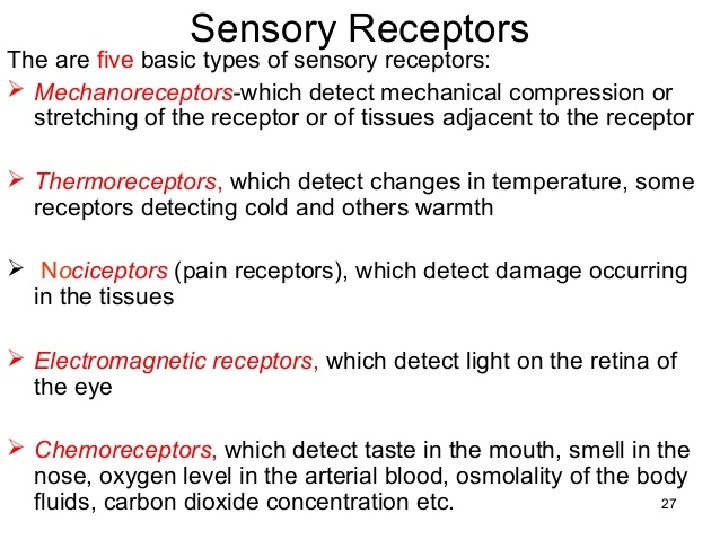
Stimuli The ability of the nervous system to respond to changing environmental conditions depends first on the ability of the nervous system to detect environmental changes, called stimuli Stimuli are detected by a wide variety of receptors located inside and outside the body.
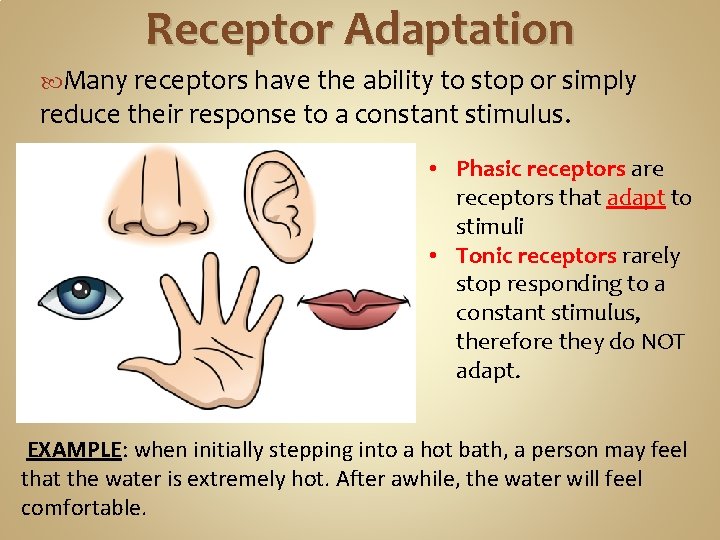
Receptor Adaptation Many receptors have the ability to stop or simply reduce their response to a constant stimulus. • Phasic receptors are receptors that adapt to stimuli • Tonic receptors rarely stop responding to a constant stimulus, therefore they do NOT adapt. EXAMPLE: when initially stepping into a hot bath, a person may feel that the water is extremely hot. After awhile, the water will feel comfortable.
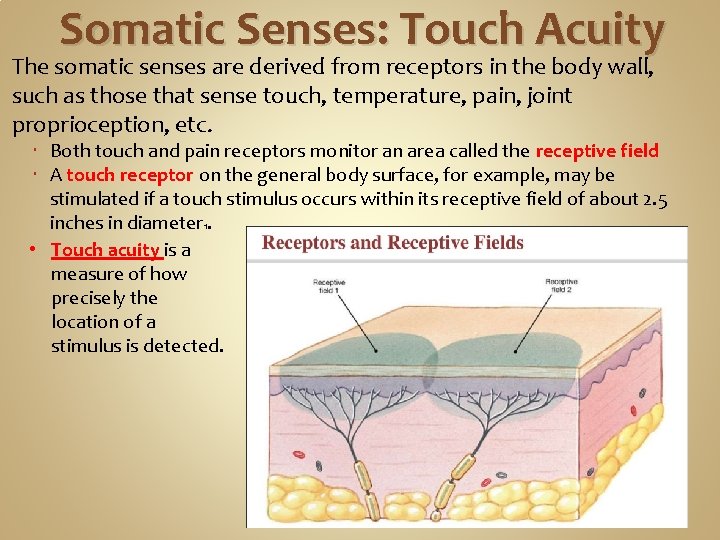
Somatic Senses: Touch Acuity The somatic senses are derived from receptors in the body wall, such as those that sense touch, temperature, pain, joint proprioception, etc. Both touch and pain receptors monitor an area called the receptive field A touch receptor on the general body surface, for example, may be stimulated if a touch stimulus occurs within its receptive field of about 2. 5 inches in diameter 1. • Touch acuity is a measure of how precisely the location of a stimulus is detected.
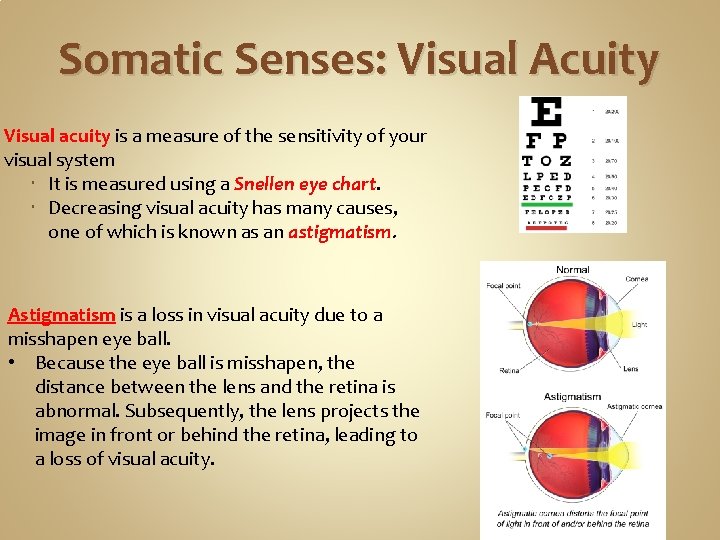
Somatic Senses: Visual Acuity Visual acuity is a measure of the sensitivity of your visual system It is measured using a Snellen eye chart. Decreasing visual acuity has many causes, one of which is known as an astigmatism. Astigmatism is a loss in visual acuity due to a misshapen eye ball. • Because the eye ball is misshapen, the distance between the lens and the retina is abnormal. Subsequently, the lens projects the image in front or behind the retina, leading to a loss of visual acuity.
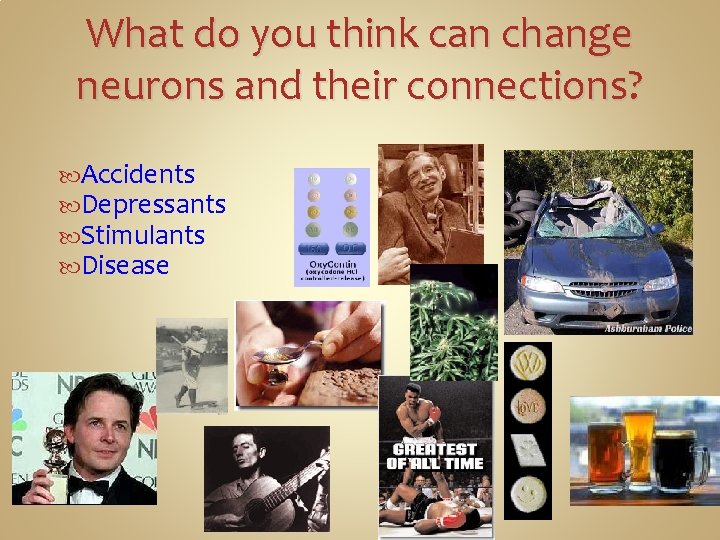
What do you think can change neurons and their connections? Accidents Depressants Stimulants Disease
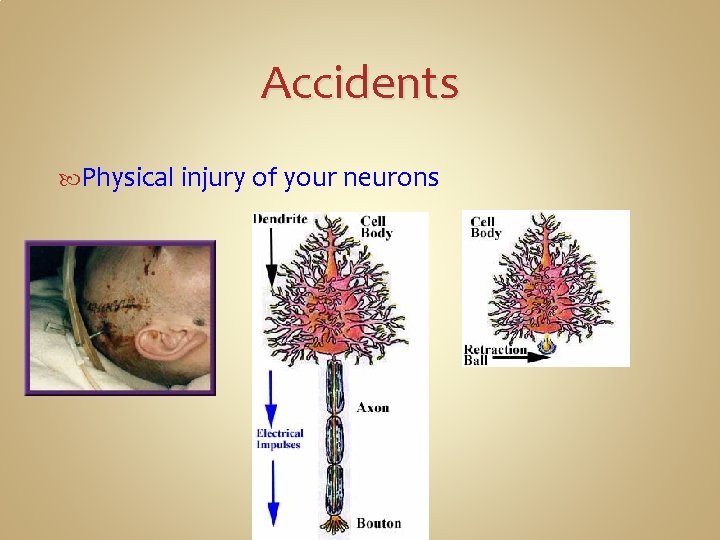
Accidents Physical injury of your neurons
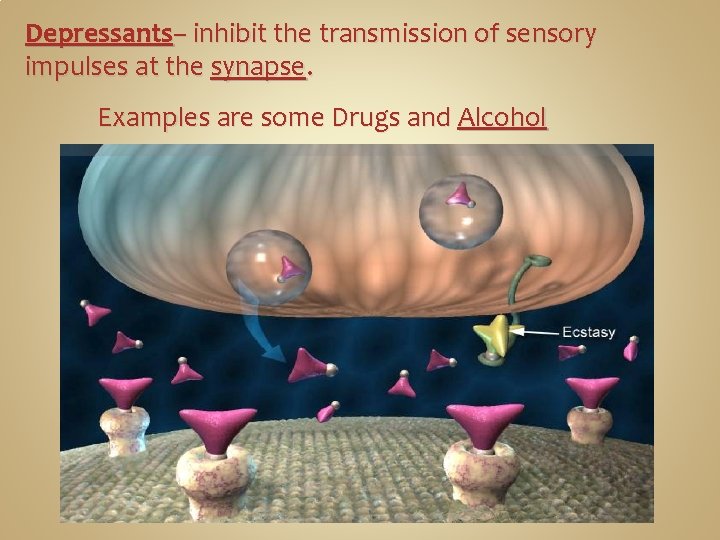
Depressants– inhibit the transmission of sensory impulses at the synapse. Examples are some Drugs and Alcohol
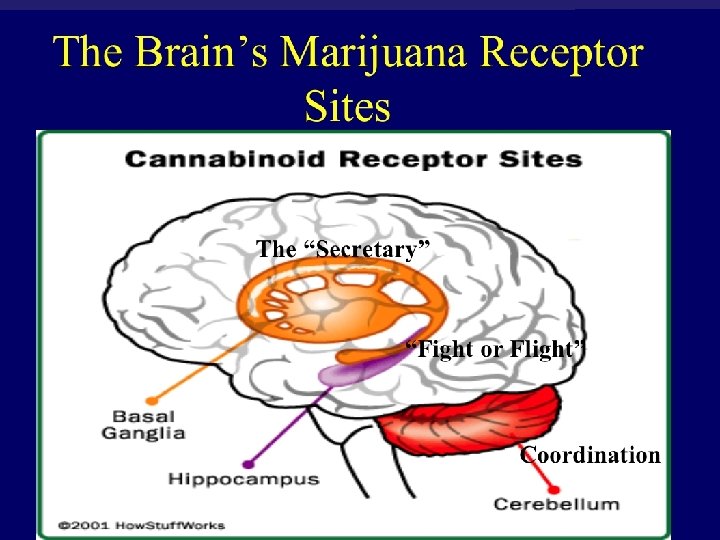
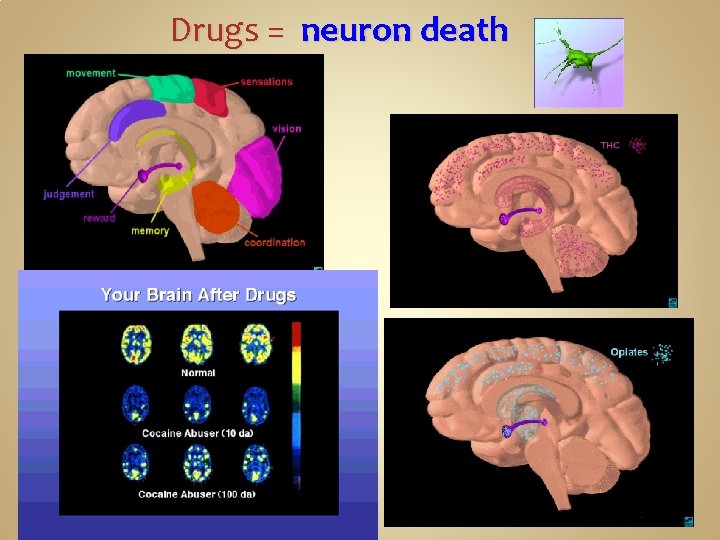
Drugs = neuron death
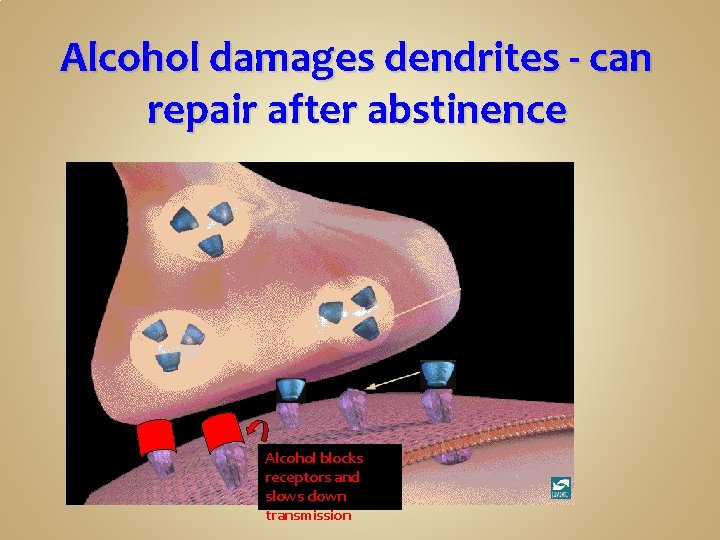
Alcohol damages dendrites - can repair after abstinence Alcohol blocks receptors and slows down transmission
Stimulants Speed up activities of the nervous system Examples: Caffeine Nicotine Cocaine Amphetamines Prescription drugs
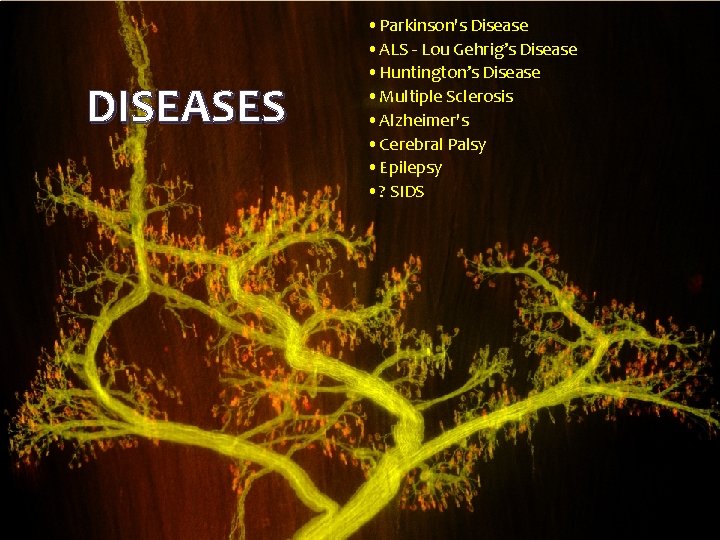
DISEASES • Parkinson's Disease • ALS - Lou Gehrig’s Disease • Huntington’s Disease • Multiple Sclerosis • Alzheimer's • Cerebral Palsy • Epilepsy • ? SIDS
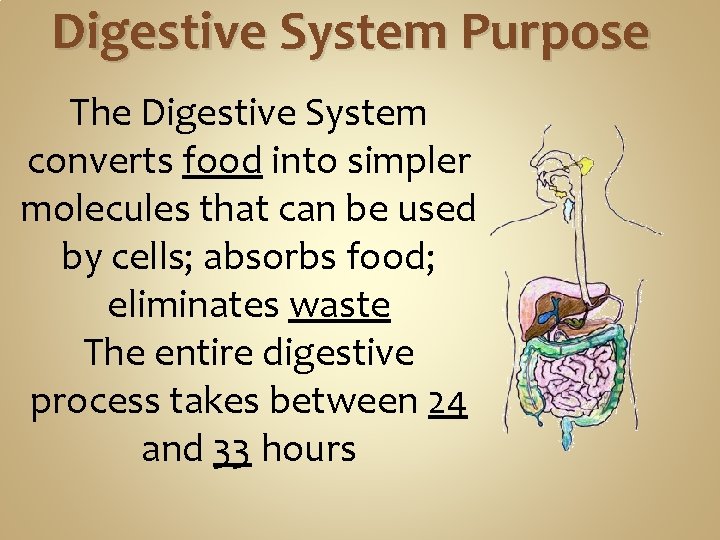
Digestive System Purpose The Digestive System converts food into simpler molecules that can be used by cells; absorbs food; eliminates waste The entire digestive process takes between 24 and 33 hours
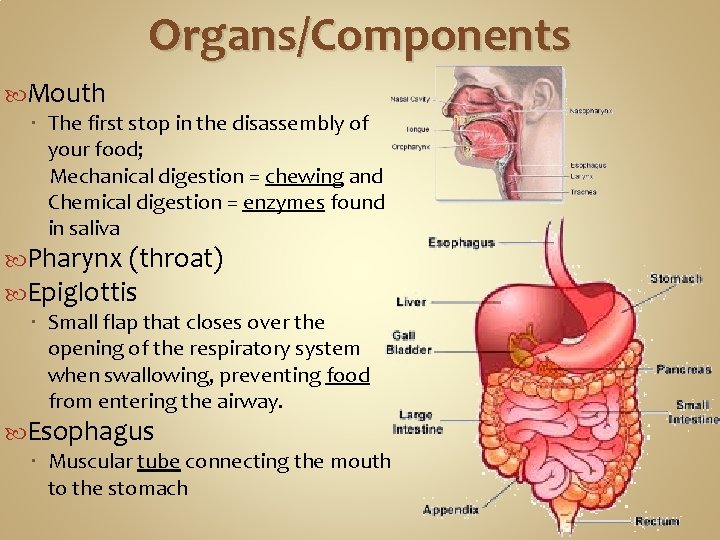
Organs/Components Mouth The first stop in the disassembly of your food; Mechanical digestion = chewing and Chemical digestion = enzymes found in saliva Pharynx (throat) Epiglottis Small flap that closes over the opening of the respiratory system when swallowing, preventing food from entering the airway. Esophagus Muscular tube connecting the mouth to the stomach
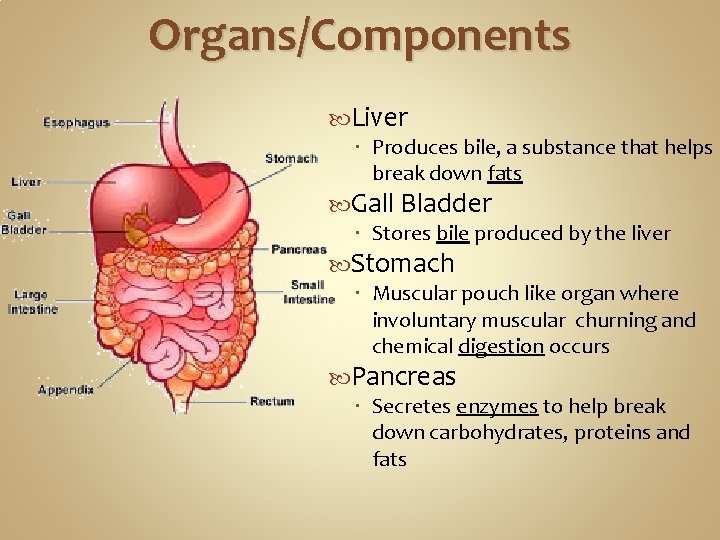
Organs/Components Liver Produces bile, a substance that helps break down fats Gall Bladder Stores bile produced by the liver Stomach Muscular pouch like organ where involuntary muscular churning and chemical digestion occurs Pancreas Secretes enzymes to help break down carbohydrates, proteins and fats
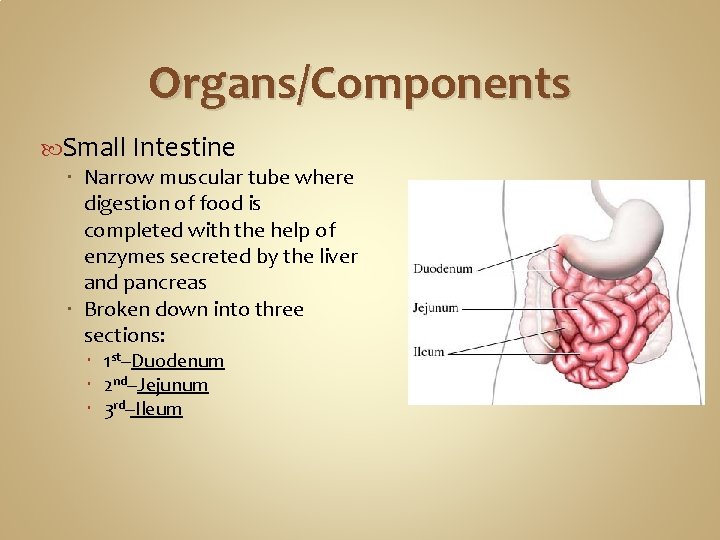
Organs/Components Small Intestine Narrow muscular tube where digestion of food is completed with the help of enzymes secreted by the liver and pancreas Broken down into three sections: 1 st--Duodenum 2 nd--Jejunum 3 rd--Ileum
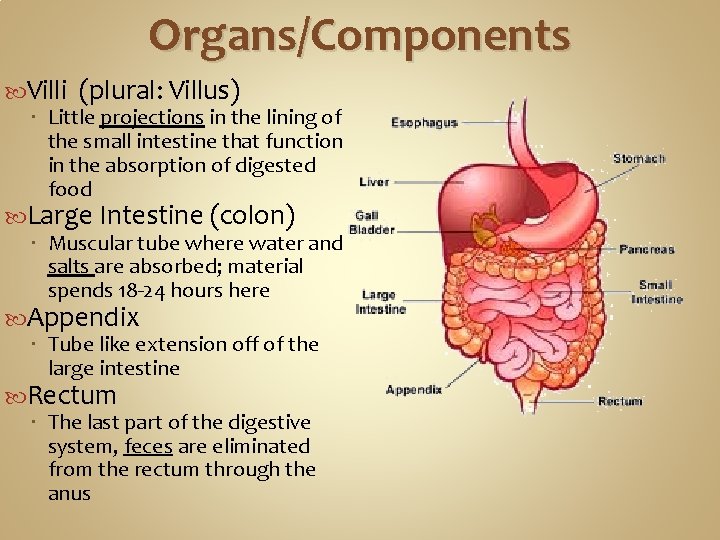
Organs/Components Villi (plural: Villus) Little projections in the lining of the small intestine that function in the absorption of digested food Large Intestine (colon) Muscular tube where water and salts are absorbed; material spends 18 -24 hours here Appendix Tube like extension off of the large intestine Rectum The last part of the digestive system, feces are eliminated from the rectum through the anus
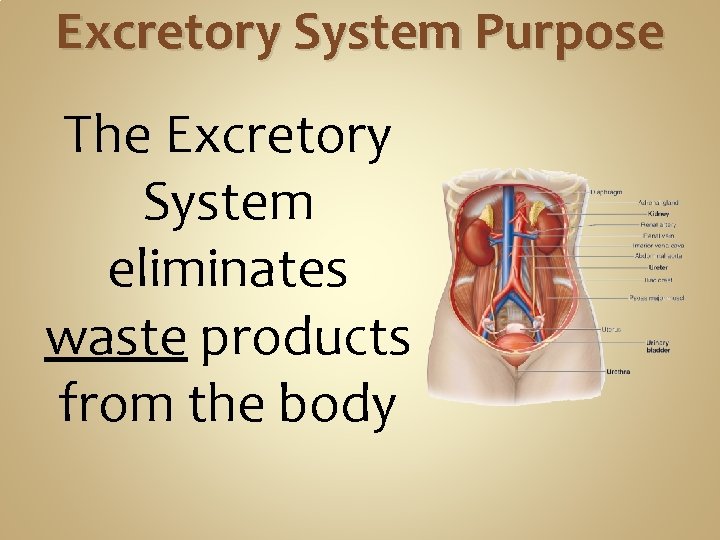
Excretory System Purpose The Excretory System eliminates waste products from the body
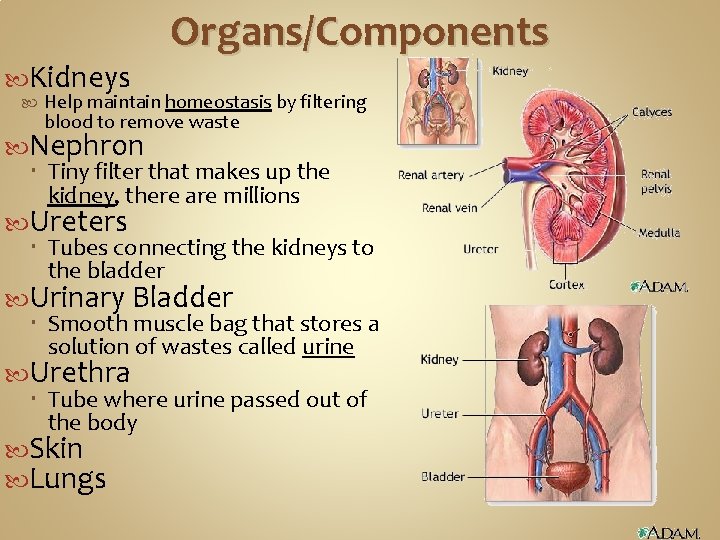
Kidneys Organs/Components Help maintain homeostasis by filtering blood to remove waste Nephron Tiny filter that makes up the kidney, there are millions Ureters Tubes connecting the kidneys to the bladder Urinary Bladder Smooth muscle bag that stores a solution of wastes called urine Urethra Tube where urine passed out of the body Skin Lungs
How Does this System Relate to others? Circulatory – waste products are carried from the cells to the kidney through blood vessels Endocrine – hormones are sent that control water levels and homeostasis Respiratory – expels toxic CO 2 out of body
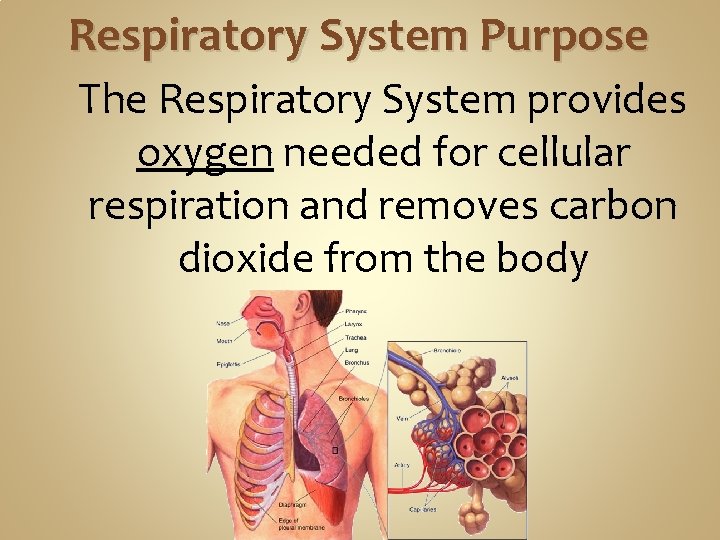
Respiratory System Purpose The Respiratory System provides oxygen needed for cellular respiration and removes carbon dioxide from the body
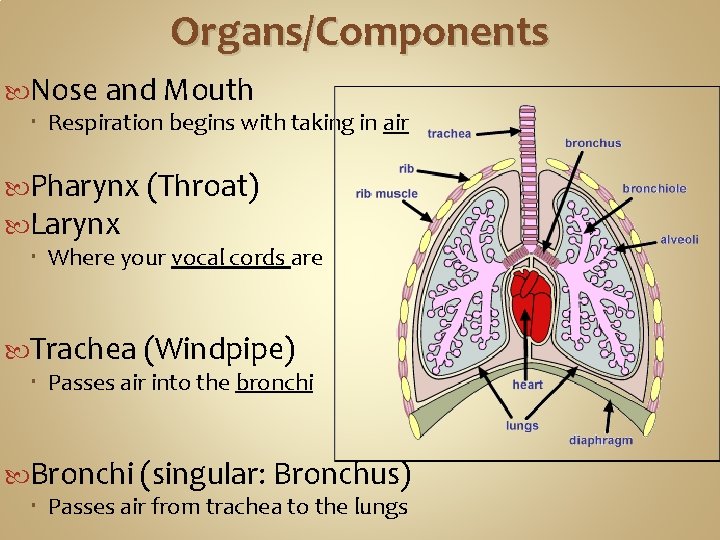
Organs/Components Nose and Mouth Respiration begins with taking in air Pharynx (Throat) Larynx Where your vocal cords are Trachea (Windpipe) Passes air into the bronchi Bronchi (singular: Bronchus) Passes air from trachea to the lungs
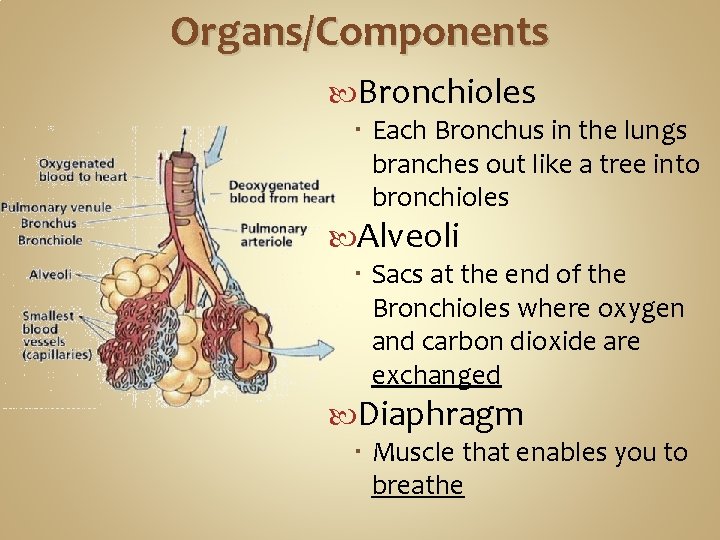
Organs/Components Bronchioles Each Bronchus in the lungs branches out like a tree into bronchioles Alveoli Sacs at the end of the Bronchioles where oxygen and carbon dioxide are exchanged Diaphragm Muscle that enables you to breathe
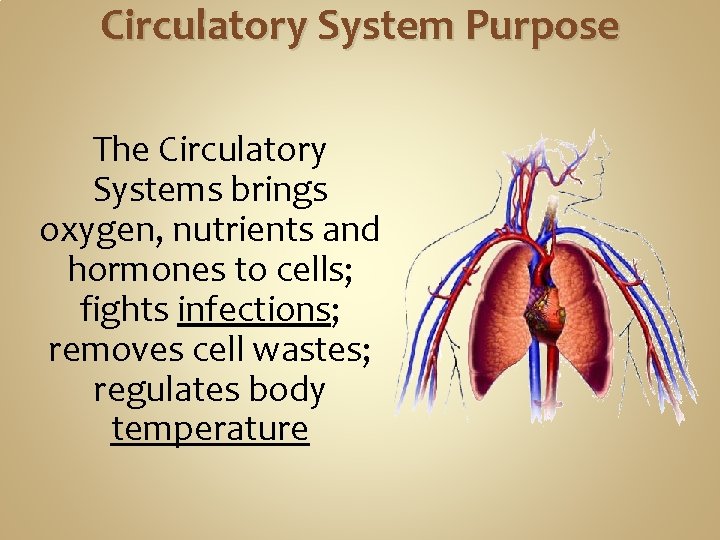
Circulatory System Purpose The Circulatory Systems brings oxygen, nutrients and hormones to cells; fights infections; removes cell wastes; regulates body temperature
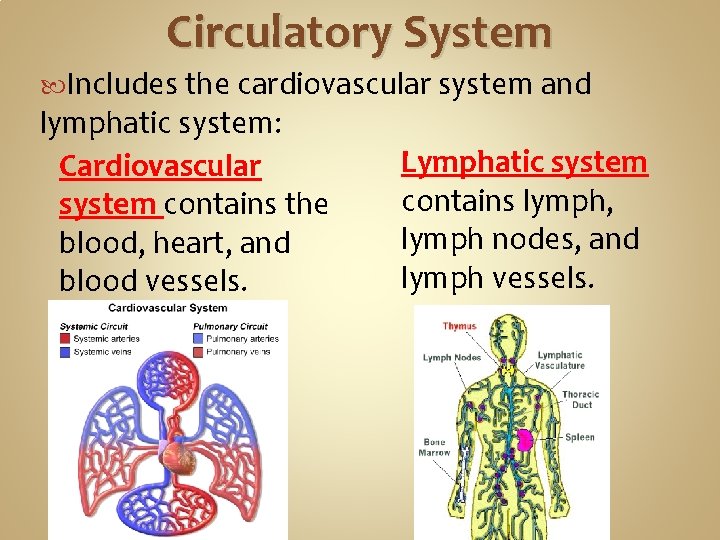
Circulatory System Includes the cardiovascular system and lymphatic system: Cardiovascular system contains the blood, heart, and blood vessels. Lymphatic system contains lymph, lymph nodes, and lymph vessels.
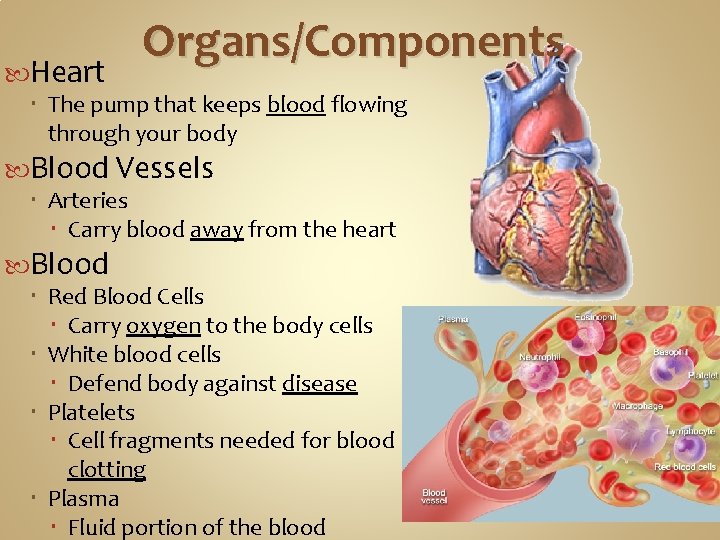
Heart Organs/Components The pump that keeps blood flowing through your body Blood Vessels Arteries Carry blood away from the heart Blood Red Blood Cells Carry oxygen to the body cells White blood cells Defend body against disease Platelets Cell fragments needed for blood clotting Plasma Fluid portion of the blood
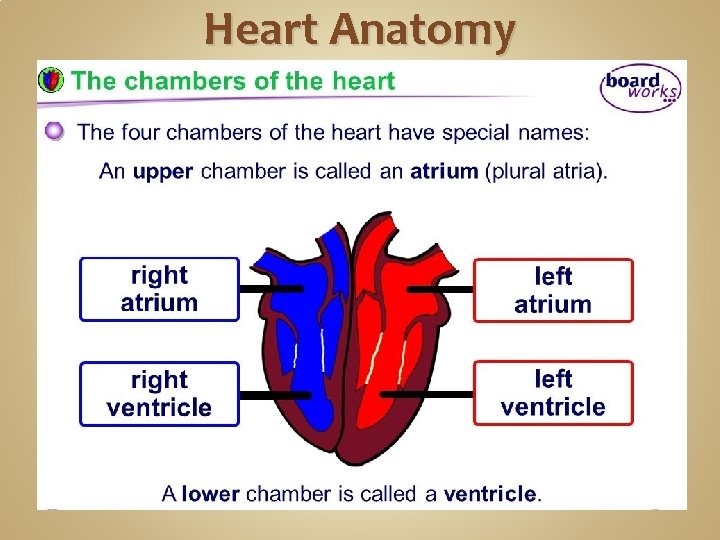
Heart Anatomy
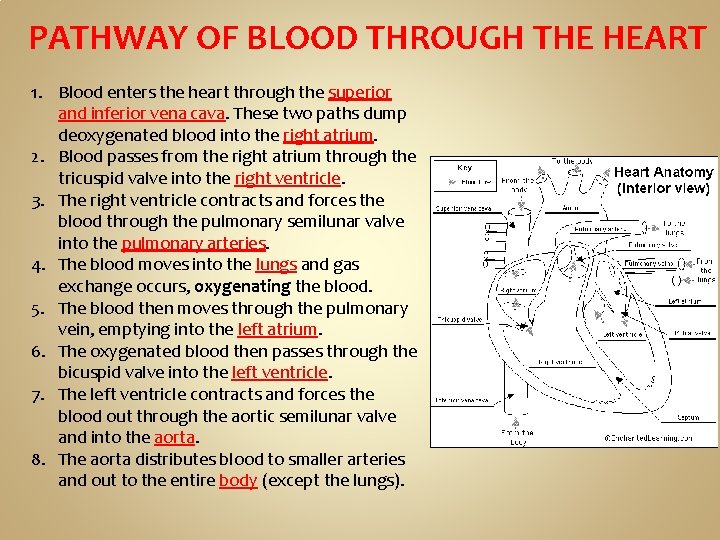
PATHWAY OF BLOOD THROUGH THE HEART 1. Blood enters the heart through the superior and inferior vena cava. These two paths dump deoxygenated blood into the right atrium. 2. Blood passes from the right atrium through the tricuspid valve into the right ventricle. 3. The right ventricle contracts and forces the blood through the pulmonary semilunar valve into the pulmonary arteries. 4. The blood moves into the lungs and gas exchange occurs, oxygenating the blood. 5. The blood then moves through the pulmonary vein, emptying into the left atrium. 6. The oxygenated blood then passes through the bicuspid valve into the left ventricle. 7. The left ventricle contracts and forces the blood out through the aortic semilunar valve and into the aorta. 8. The aorta distributes blood to smaller arteries and out to the entire body (except the lungs).
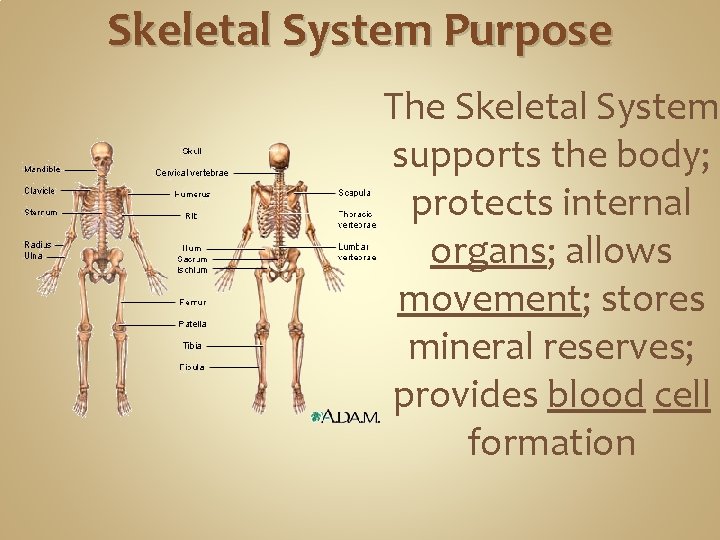
Skeletal System Purpose The Skeletal System supports the body; protects internal organs; allows movement; stores mineral reserves; provides blood cell formation
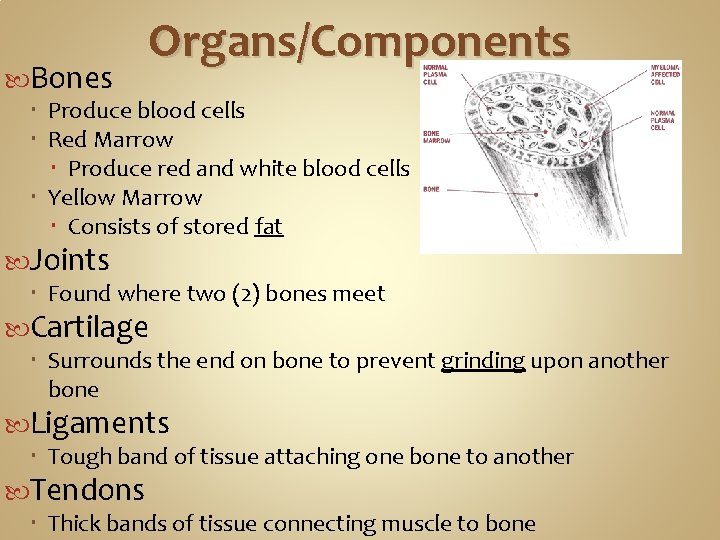
Bones Organs/Components Produce blood cells Red Marrow Produce red and white blood cells Yellow Marrow Consists of stored fat Joints Found where two (2) bones meet Cartilage Surrounds the end on bone to prevent grinding upon another bone Ligaments Tough band of tissue attaching one bone to another Tendons Thick bands of tissue connecting muscle to bone
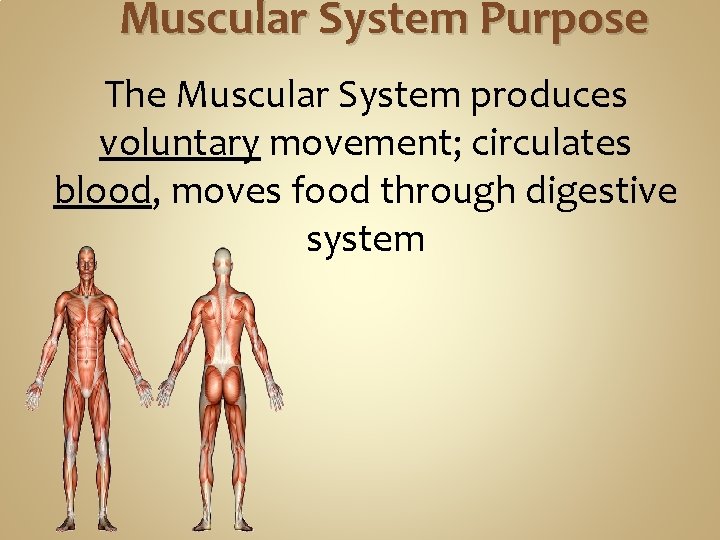
Muscular System Purpose The Muscular System produces voluntary movement; circulates blood, moves food through digestive system
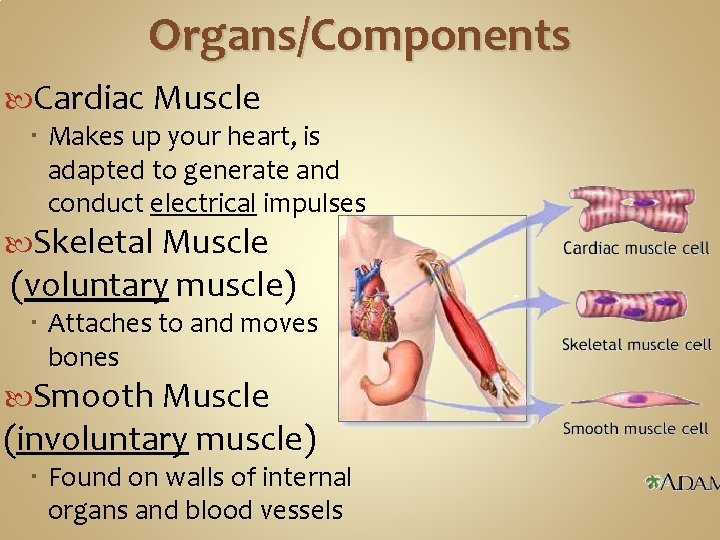
Organs/Components Cardiac Muscle Makes up your heart, is adapted to generate and conduct electrical impulses Skeletal Muscle (voluntary muscle) Attaches to and moves bones Smooth Muscle (involuntary muscle) Found on walls of internal organs and blood vessels
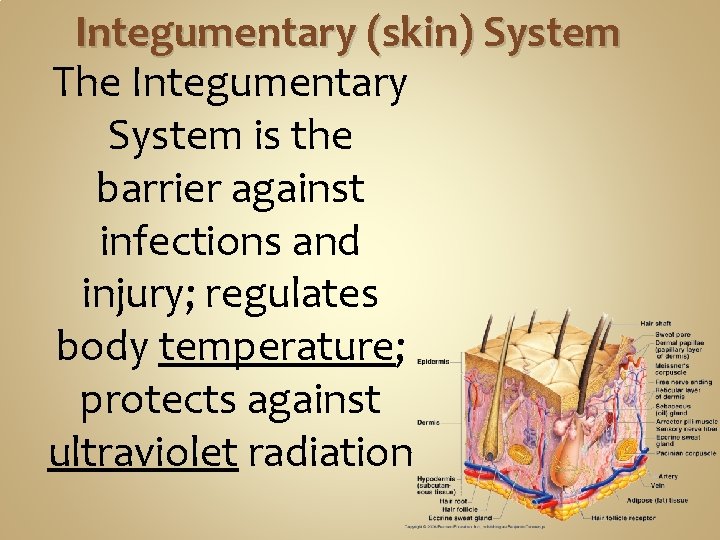
Integumentary (skin) System The Integumentary System is the barrier against infections and injury; regulates body temperature; protects against ultraviolet radiation
Organs/Components Skin Epidermis: outermost layer of skin covers the surfaces of the body Dermis: inner layer of skin Contains blood vessels, nerve cells, hair follicles, sweat and oil glands Hair, Skin and Nails Made up of Keratin Pigment of skin and hair Controlled by melanin Sweat Produced to help maintain homeostasis Oil Glands
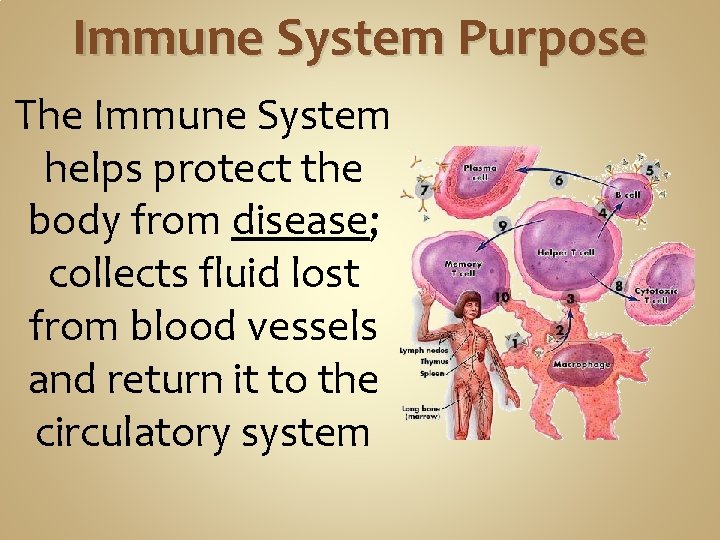
Immune System Purpose The Immune System helps protect the body from disease; collects fluid lost from blood vessels and return it to the circulatory system
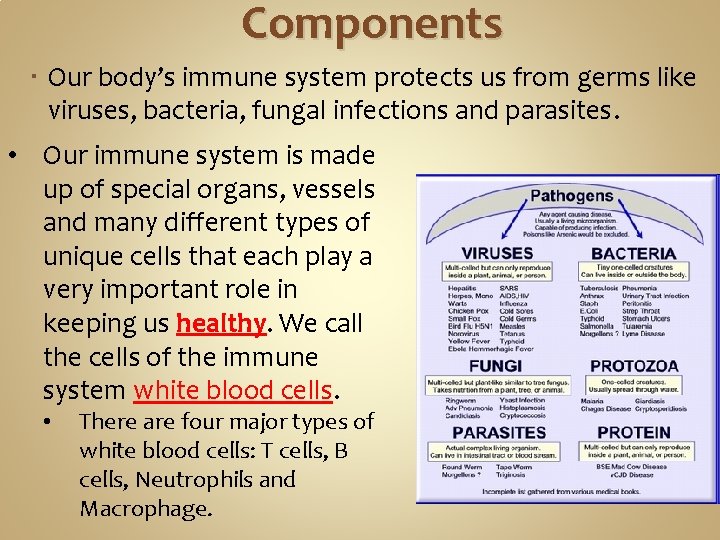
Components Our body’s immune system protects us from germs like viruses, bacteria, fungal infections and parasites. • Our immune system is made up of special organs, vessels and many different types of unique cells that each play a very important role in keeping us healthy. We call the cells of the immune system white blood cells. • There are four major types of white blood cells: T cells, B cells, Neutrophils and Macrophage.
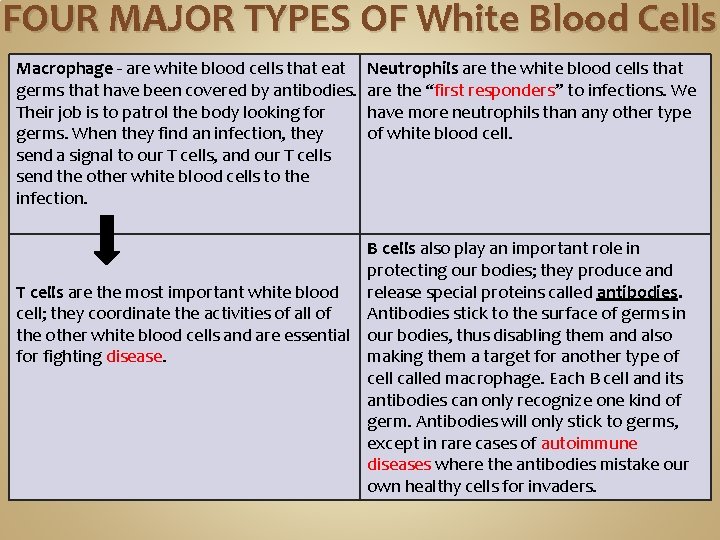
FOUR MAJOR TYPES OF White Blood Cells Macrophage - are white blood cells that eat germs that have been covered by antibodies. Their job is to patrol the body looking for germs. When they find an infection, they send a signal to our T cells, and our T cells send the other white blood cells to the infection. Neutrophils are the white blood cells that are the “first responders” to infections. We have more neutrophils than any other type of white blood cell. B cells also play an important role in protecting our bodies; they produce and T cells are the most important white blood release special proteins called antibodies. cell; they coordinate the activities of all of Antibodies stick to the surface of germs in the other white blood cells and are essential our bodies, thus disabling them and also for fighting disease. making them a target for another type of cell called macrophage. Each B cell and its antibodies can only recognize one kind of germ. Antibodies will only stick to germs, except in rare cases of autoimmune diseases where the antibodies mistake our own healthy cells for invaders.
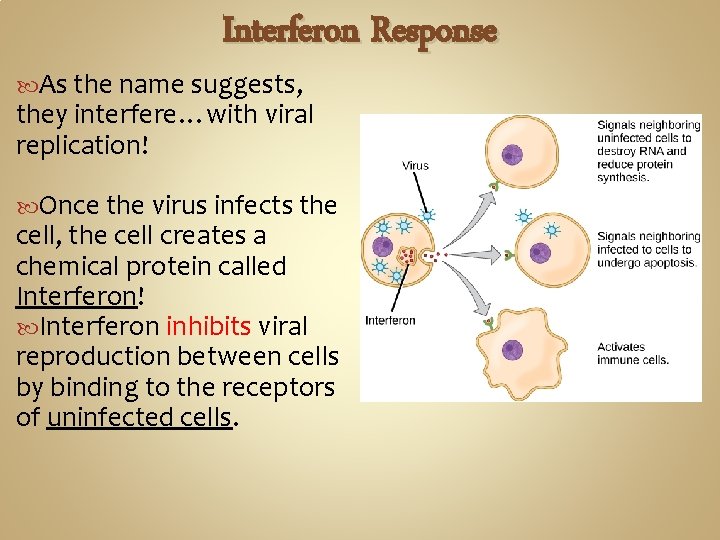
Interferon Response As the name suggests, they interfere…with viral replication! Once the virus infects the cell, the cell creates a chemical protein called Interferon! Interferon inhibits viral reproduction between cells by binding to the receptors of uninfected cells.
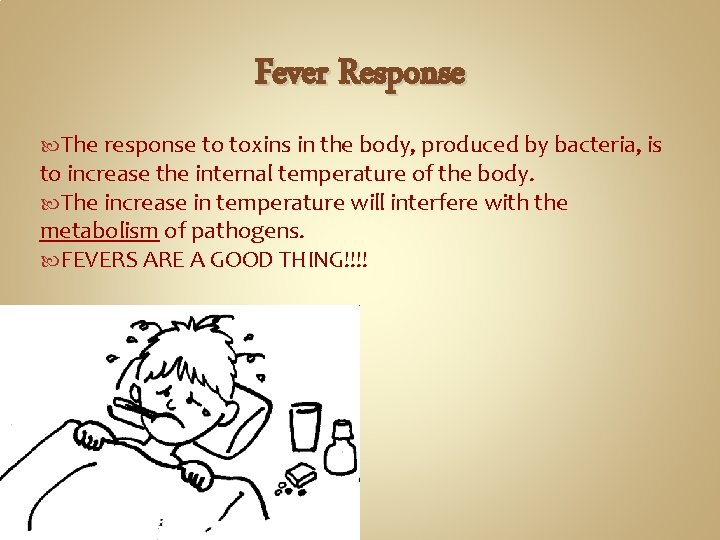
Fever Response The response to toxins in the body, produced by bacteria, is to increase the internal temperature of the body. The increase in temperature will interfere with the metabolism of pathogens. FEVERS ARE A GOOD THING!!!!
Infectious Disease & Immunity Infectious Disease: caused by pathogens Immunity: occurs when the body builds up a resistance to pathogens Vaccines: Weakened, dead, or parts of pathogens/antigens injected into the body to help build up immunity to a particular disease
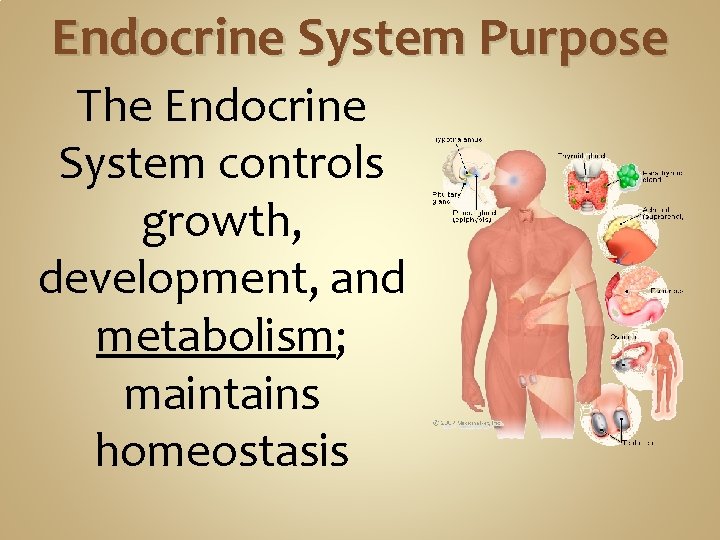
Endocrine System Purpose The Endocrine System controls growth, development, and metabolism; maintains homeostasis
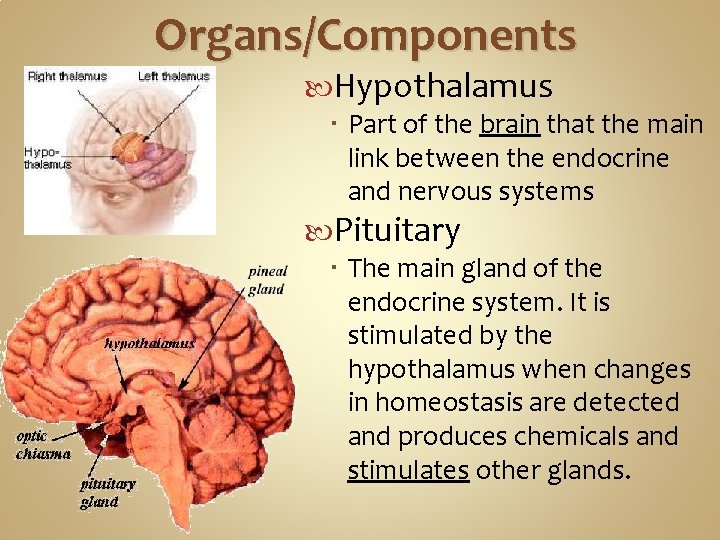
Organs/Components Hypothalamus Part of the brain that the main link between the endocrine and nervous systems Pituitary The main gland of the endocrine system. It is stimulated by the hypothalamus when changes in homeostasis are detected and produces chemicals and stimulates other glands.
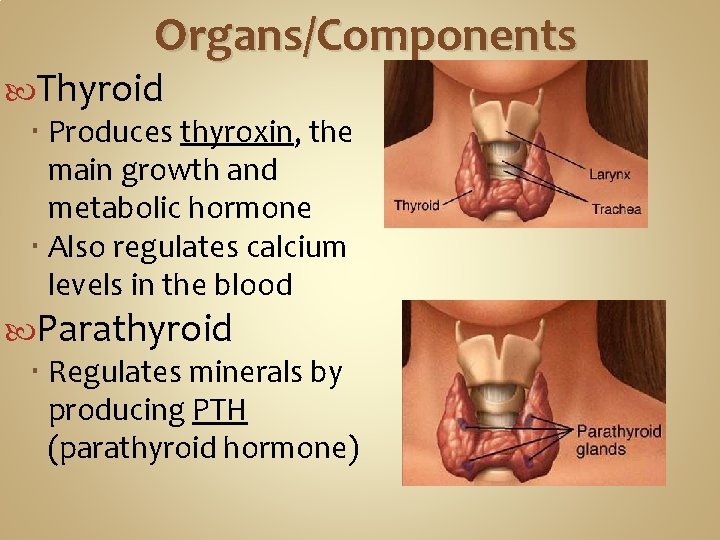
Organs/Components Thyroid Produces thyroxin, the main growth and metabolic hormone Also regulates calcium levels in the blood Parathyroid Regulates minerals by producing PTH (parathyroid hormone)
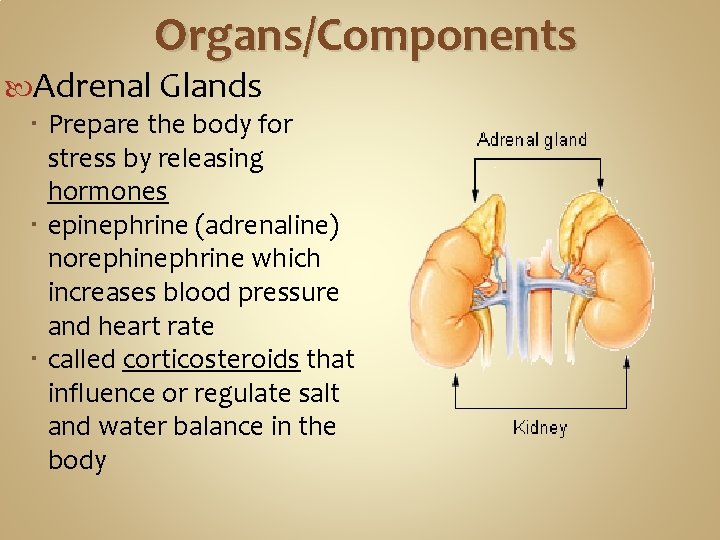
Organs/Components Adrenal Glands Prepare the body for stress by releasing hormones epinephrine (adrenaline) norephinephrine which increases blood pressure and heart rate called corticosteroids that influence or regulate salt and water balance in the body
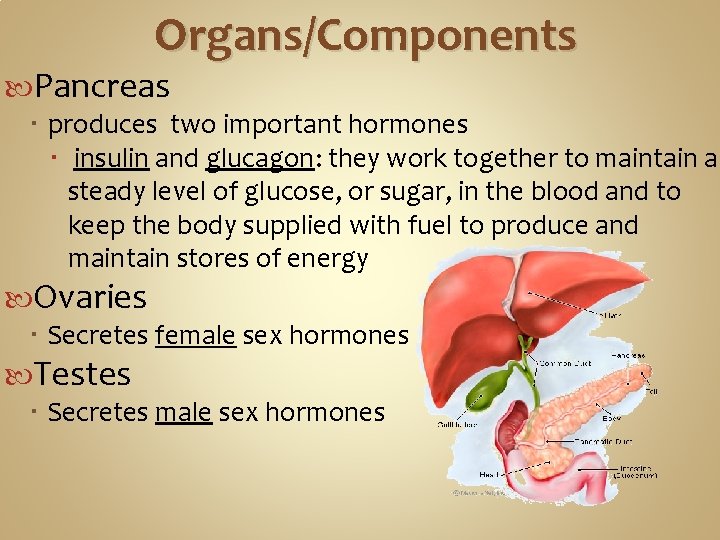
Organs/Components Pancreas produces two important hormones insulin and glucagon: they work together to maintain a steady level of glucose, or sugar, in the blood and to keep the body supplied with fuel to produce and maintain stores of energy Ovaries Secretes female sex hormones Testes Secretes male sex hormones
- Slides: 49