
Human Body Systems Levels of Organization Cells Tissues
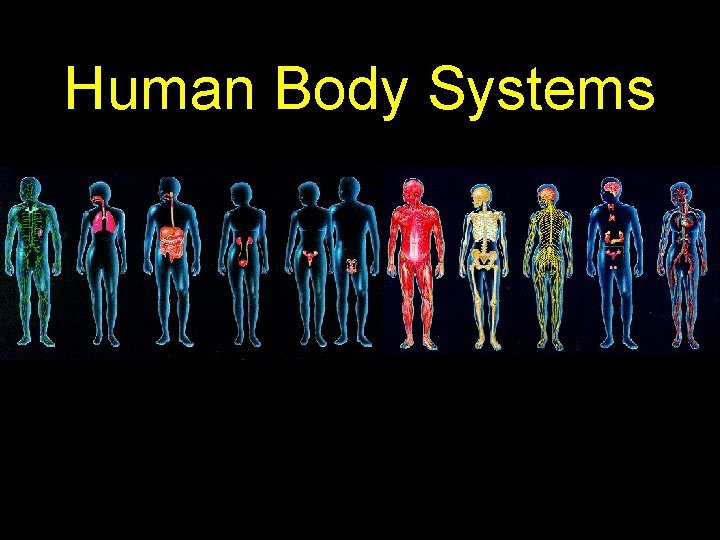
Human Body Systems
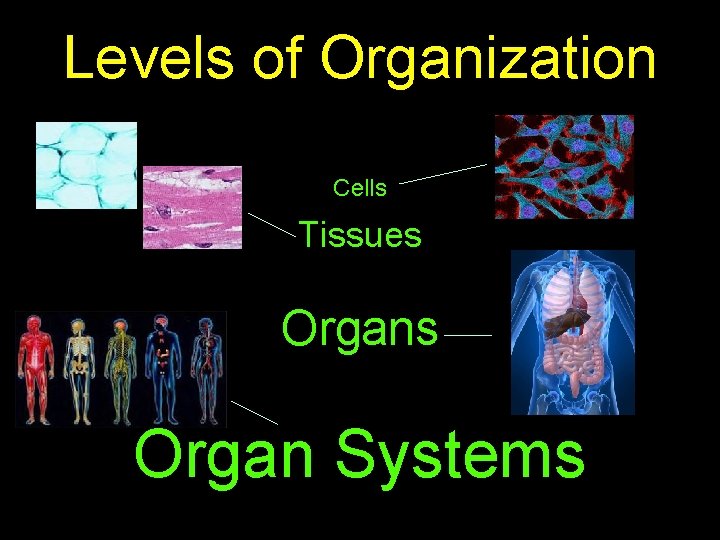
Levels of Organization Cells Tissues Organ Systems
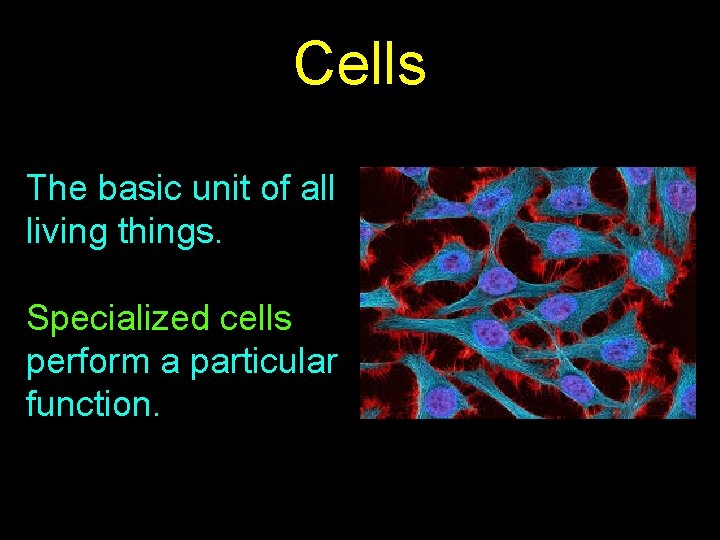
Cells The basic unit of all living things. Specialized cells perform a particular function.
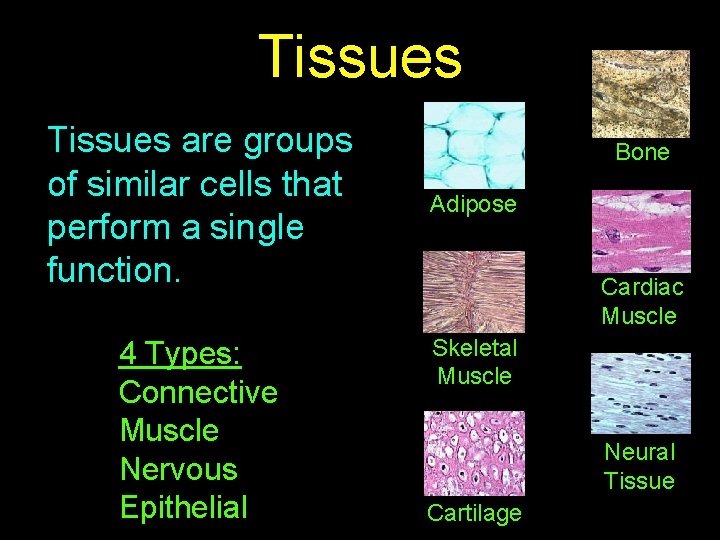
Tissues are groups of similar cells that perform a single function. 4 Types: Connective Muscle Nervous Epithelial Bone Adipose Cardiac Muscle Skeletal Muscle Neural Tissue Cartilage
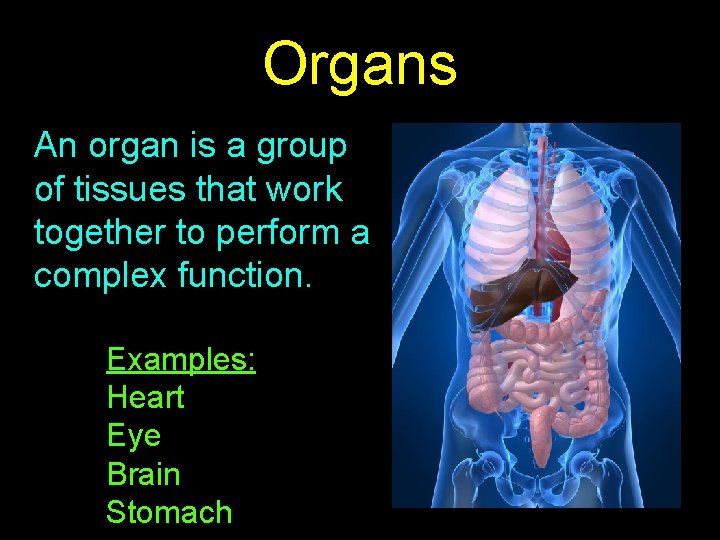
Organs An organ is a group of tissues that work together to perform a complex function. Examples: Heart Eye Brain Stomach
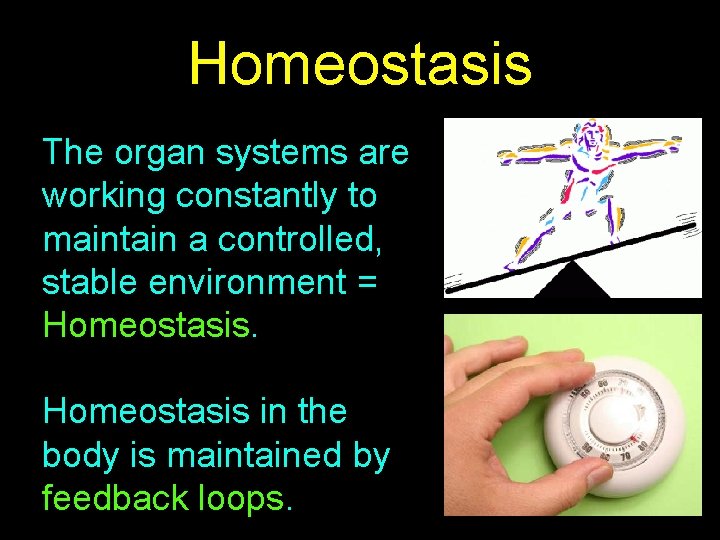
Homeostasis The organ systems are working constantly to maintain a controlled, stable environment = Homeostasis in the body is maintained by feedback loops.

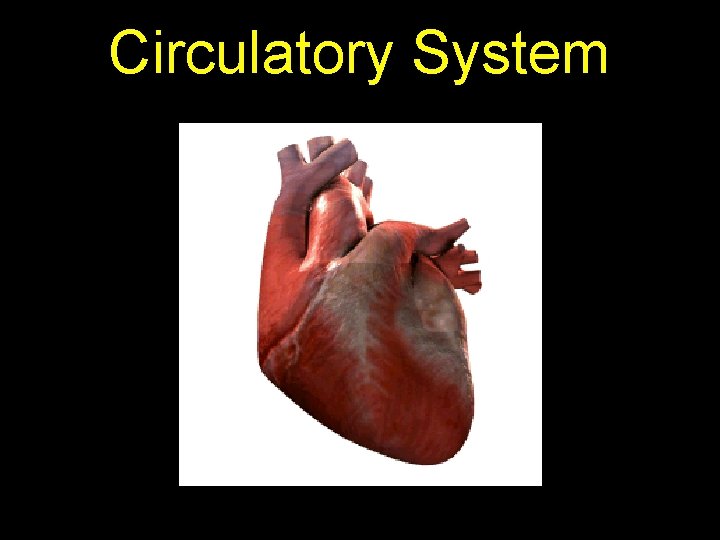
Circulatory System
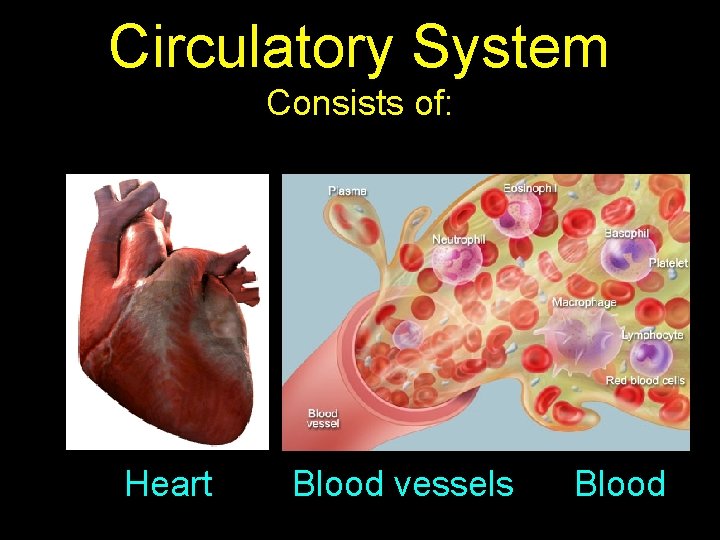
Circulatory System Consists of: Heart Blood vessels Blood
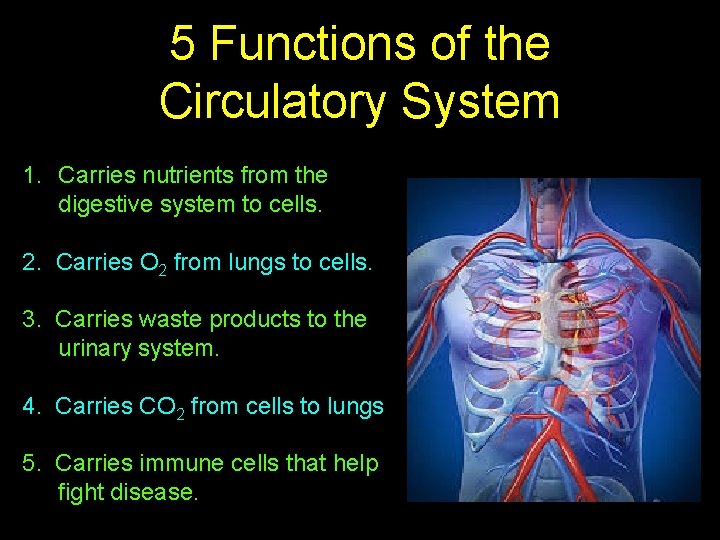
5 Functions of the Circulatory System 1. Carries nutrients from the digestive system to cells. 2. Carries O 2 from lungs to cells. 3. Carries waste products to the urinary system. 4. Carries CO 2 from cells to lungs 5. Carries immune cells that help fight disease.
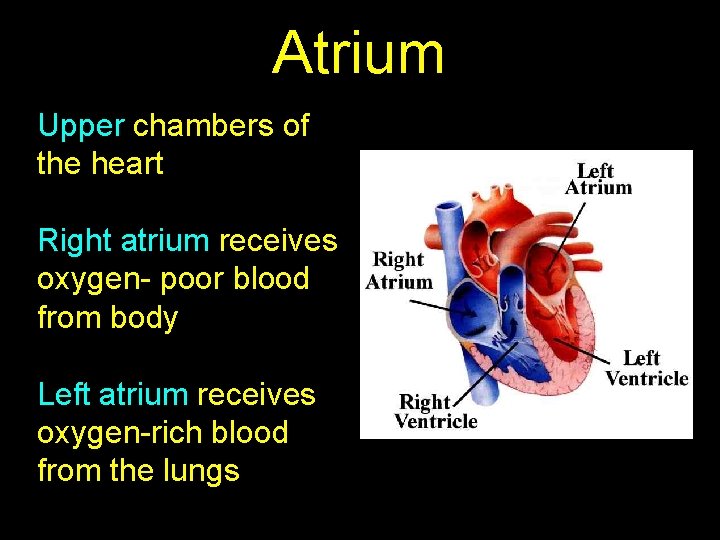
Atrium Upper chambers of the heart Right atrium receives oxygen- poor blood from body Left atrium receives oxygen-rich blood from the lungs
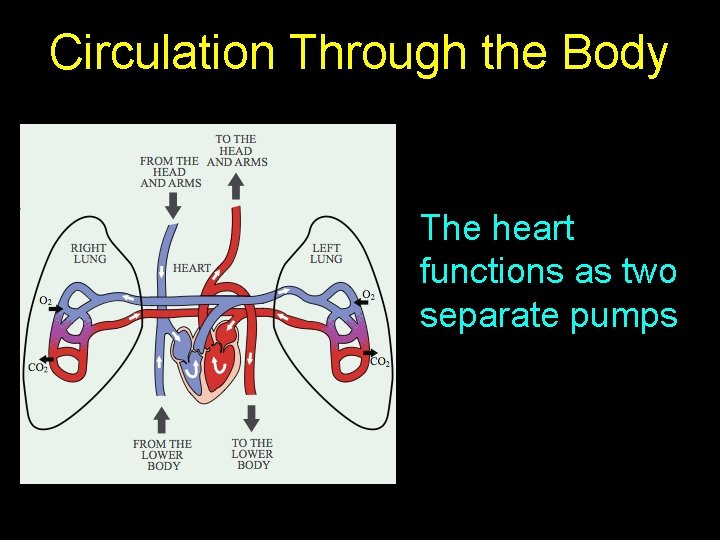
Circulation Through the Body The heart functions as two separate pumps
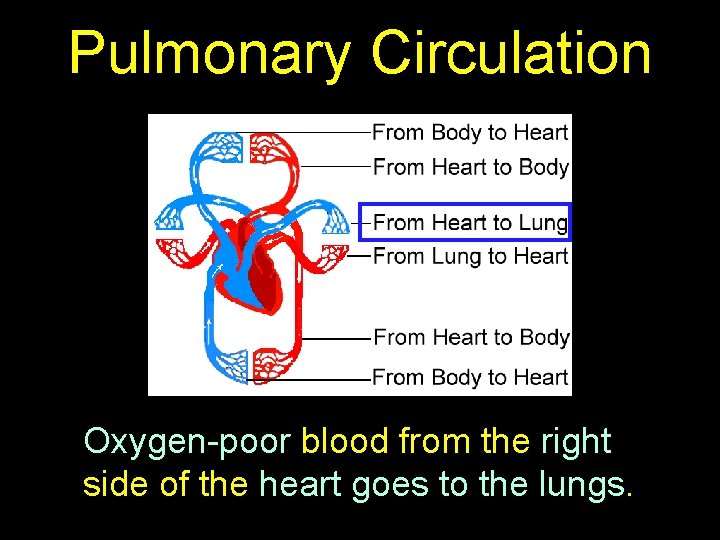
Pulmonary Circulation Oxygen-poor blood from the right side of the heart goes to the lungs.
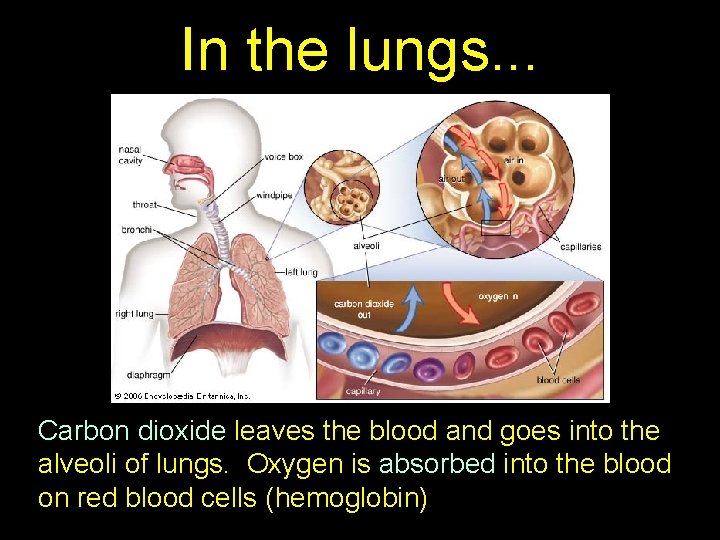
In the lungs. . . Carbon dioxide leaves the blood and goes into the alveoli of lungs. Oxygen is absorbed into the blood on red blood cells (hemoglobin)

Systemic Circulation Oxygen-rich blood from the left side of the heart goes to the rest of the body.
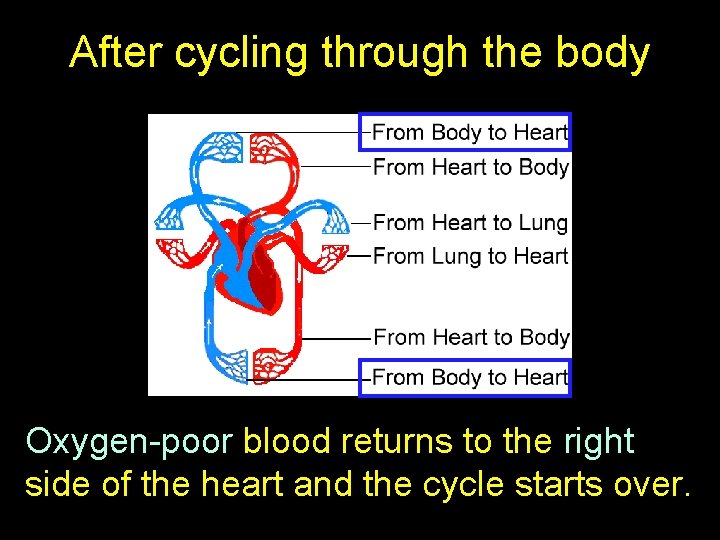
After cycling through the body Oxygen-poor blood returns to the right side of the heart and the cycle starts over.
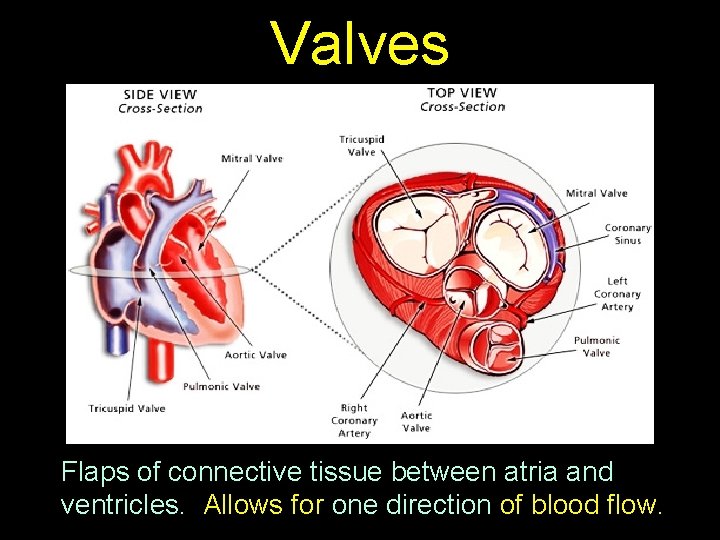
Valves Flaps of connective tissue between atria and ventricles. Allows for one direction of blood flow.
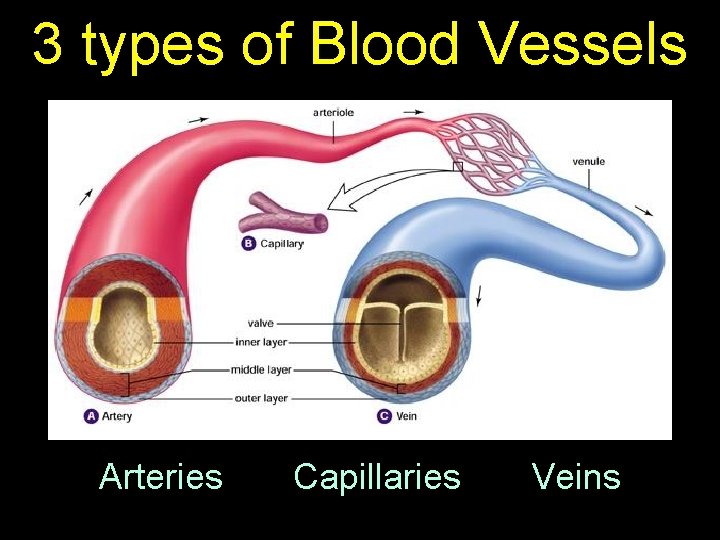
3 types of Blood Vessels Arteries Capillaries Veins
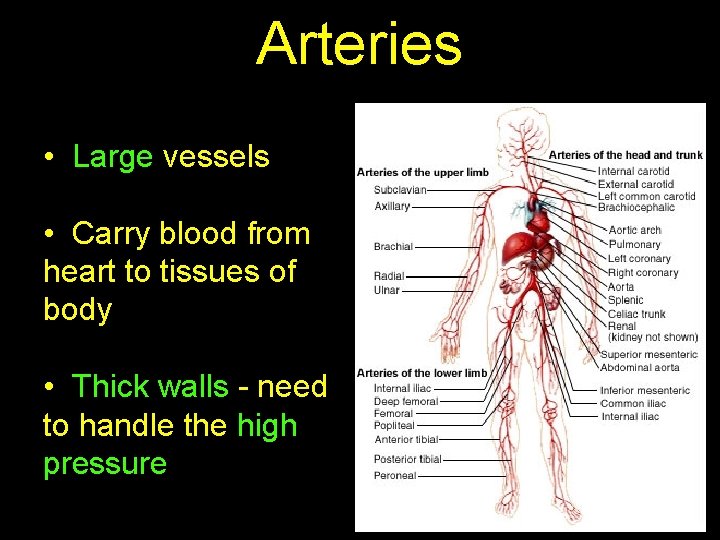
Arteries • Large vessels • Carry blood from heart to tissues of body • Thick walls - need to handle the high pressure

Capillaries • Smallest blood vessels • Walls only one cell thick (endothelium) • Bring nutrients and O 2 to tissues and absorbs CO 2 and waste from tissues
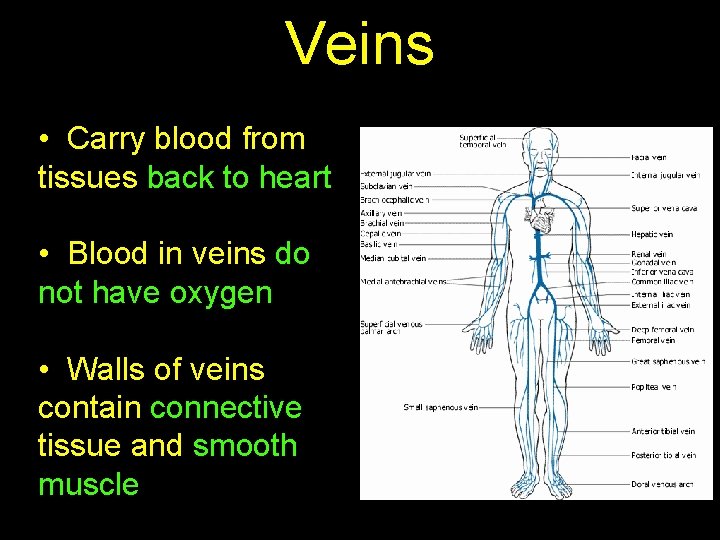
Veins • Carry blood from tissues back to heart • Blood in veins do not have oxygen • Walls of veins contain connective tissue and smooth muscle
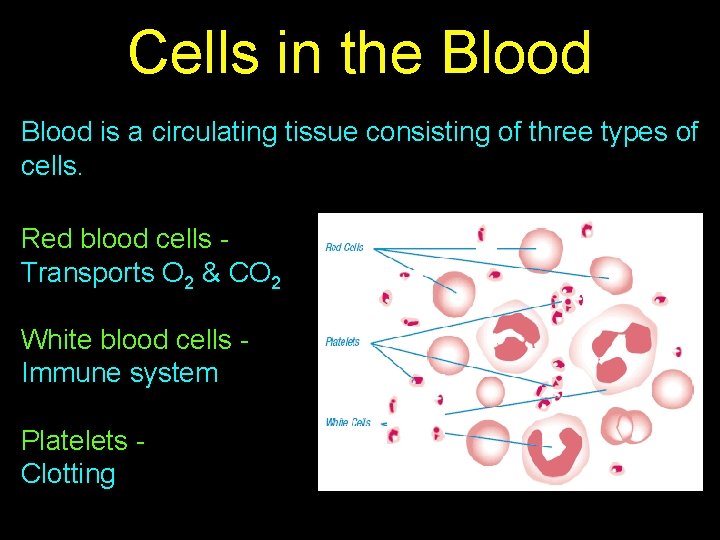
Cells in the Blood is a circulating tissue consisting of three types of cells. Red blood cells Transports O 2 & CO 2 White blood cells Immune system Platelets Clotting
Break Time!
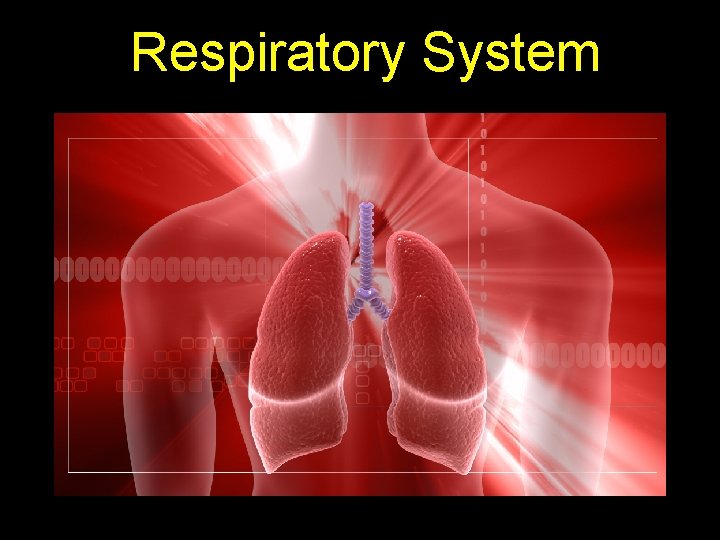
Respiratory System
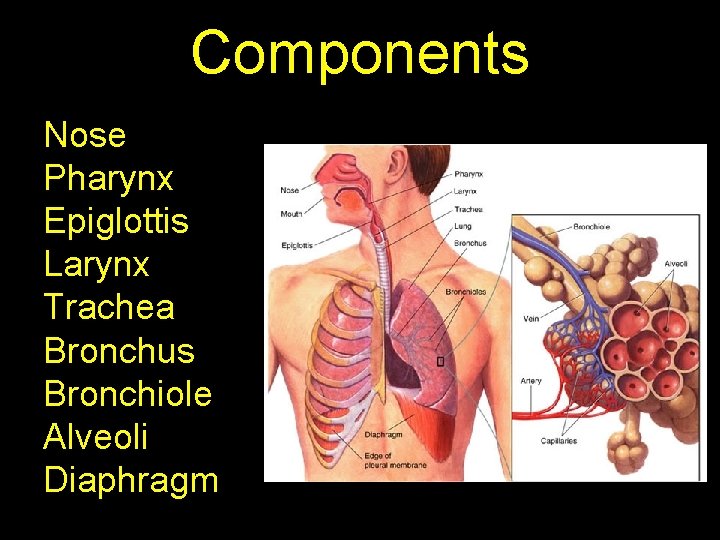
Components Nose Pharynx Epiglottis Larynx Trachea Bronchus Bronchiole Alveoli Diaphragm
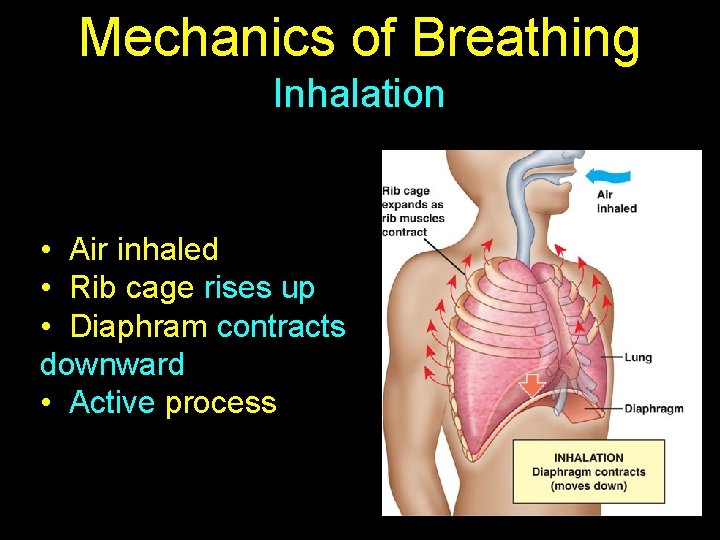
Mechanics of Breathing Inhalation • Air inhaled • Rib cage rises up • Diaphram contracts downward • Active process
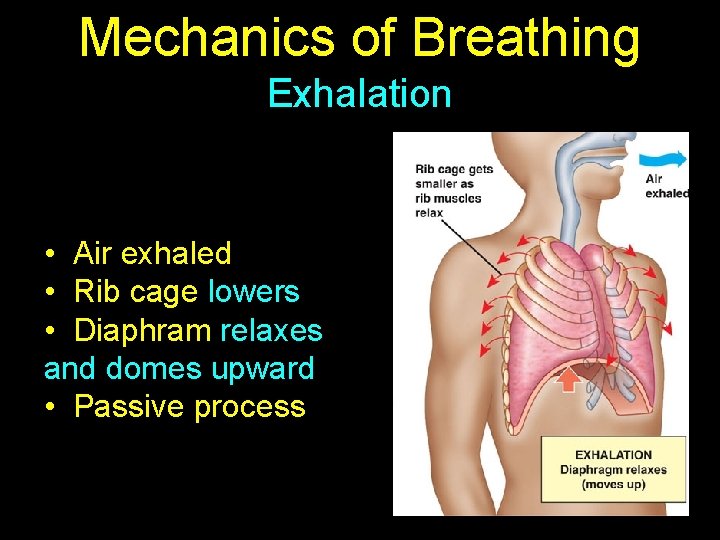
Mechanics of Breathing Exhalation • Air exhaled • Rib cage lowers • Diaphram relaxes and domes upward • Passive process
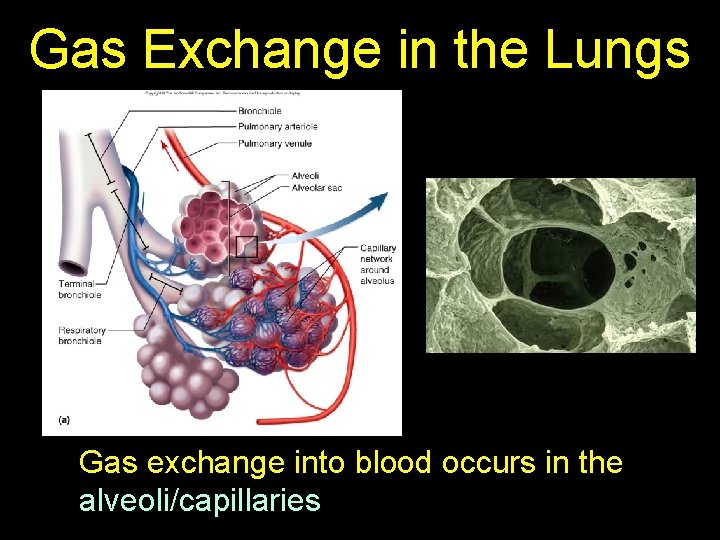
Gas Exchange in the Lungs Gas exchange into blood occurs in the alveoli/capillaries
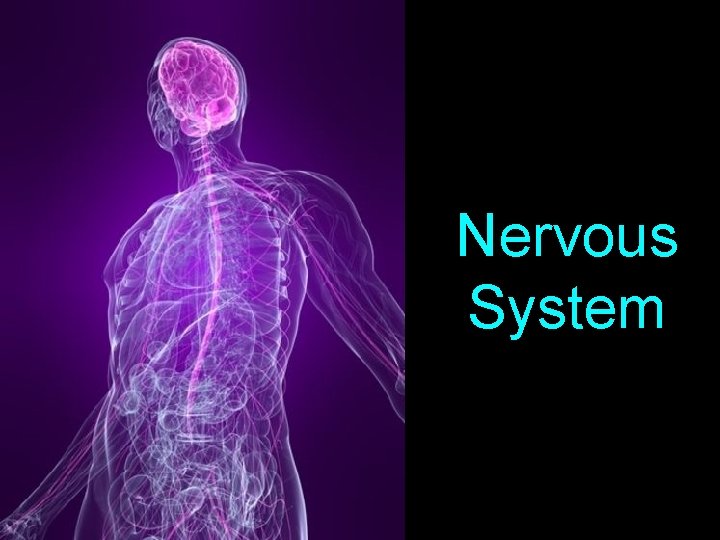
Nervous System
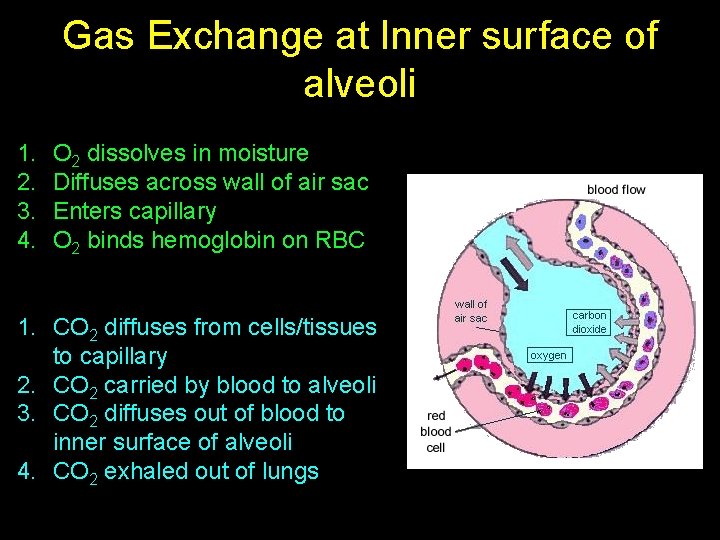
Gas Exchange at Inner surface of alveoli 1. 2. 3. 4. O 2 dissolves in moisture Diffuses across wall of air sac Enters capillary O 2 binds hemoglobin on RBC 1. CO 2 diffuses from cells/tissues to capillary 2. CO 2 carried by blood to alveoli 3. CO 2 diffuses out of blood to inner surface of alveoli 4. CO 2 exhaled out of lungs
Break Time!
Nervous System
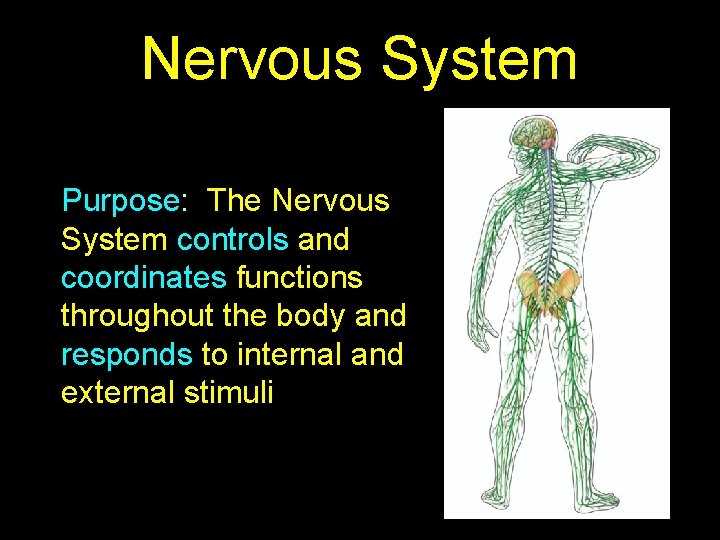
Nervous System Purpose: The Nervous System controls and coordinates functions throughout the body and responds to internal and external stimuli
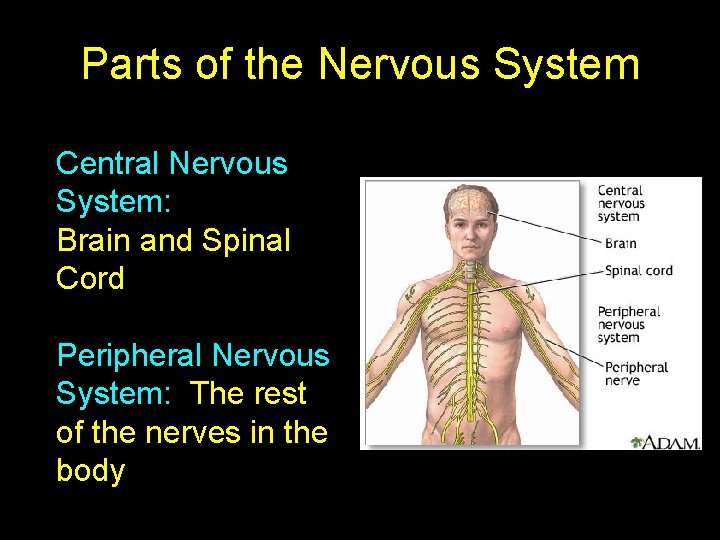
Parts of the Nervous System Central Nervous System: Brain and Spinal Cord Peripheral Nervous System: The rest of the nerves in the body

Parts of a Neuron
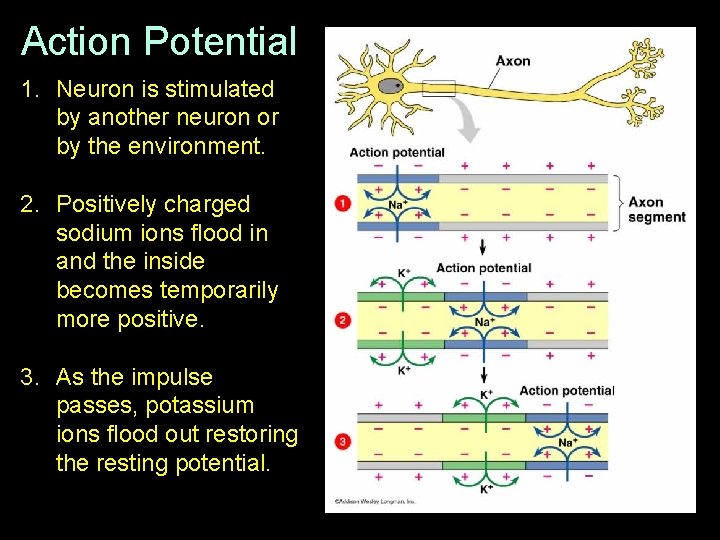
Action Potential 1. Neuron is stimulated by another neuron or by the environment. 2. Positively charged sodium ions flood in and the inside becomes temporarily more positive. 3. As the impulse passes, potassium ions flood out restoring the resting potential.
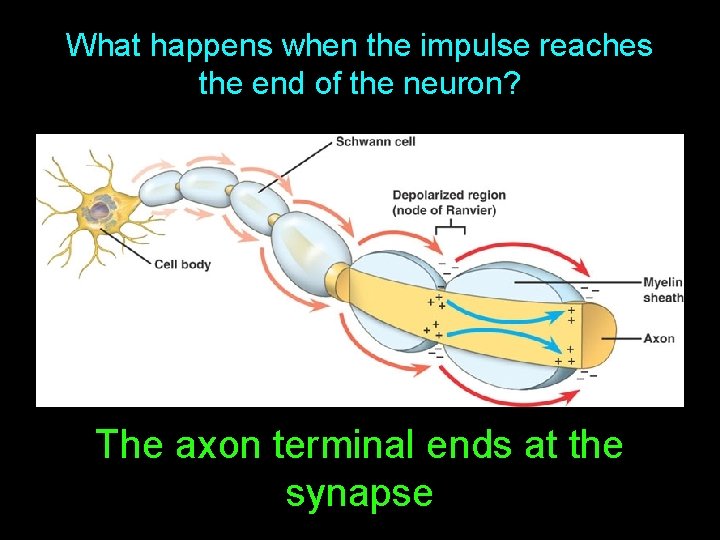
What happens when the impulse reaches the end of the neuron? The axon terminal ends at the synapse
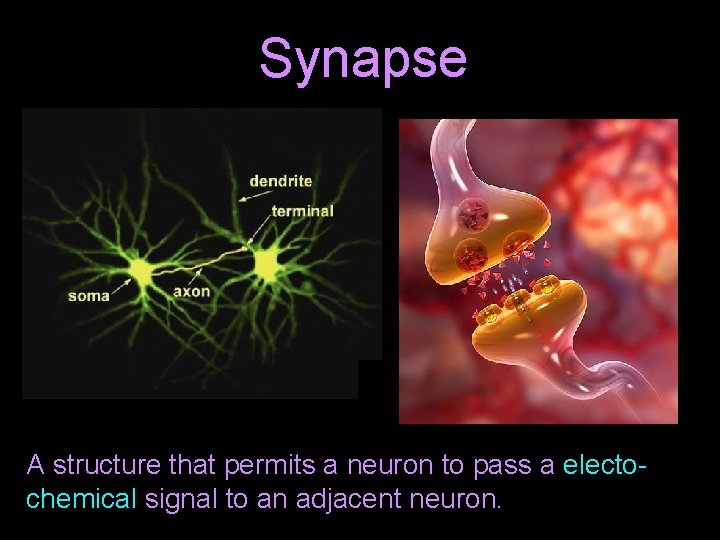
Synapse A structure that permits a neuron to pass a electochemical signal to an adjacent neuron.
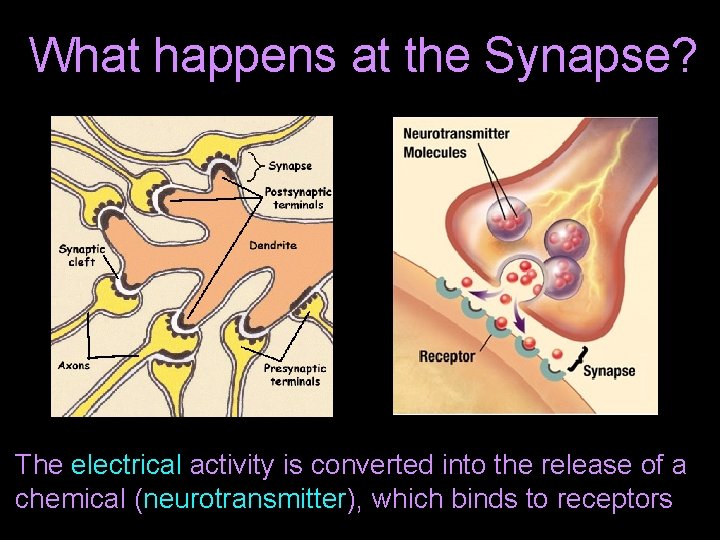
What happens at the Synapse? The electrical activity is converted into the release of a chemical (neurotransmitter), which binds to receptors
3 Types of Neurons • Sensory • Interneuron • Motor
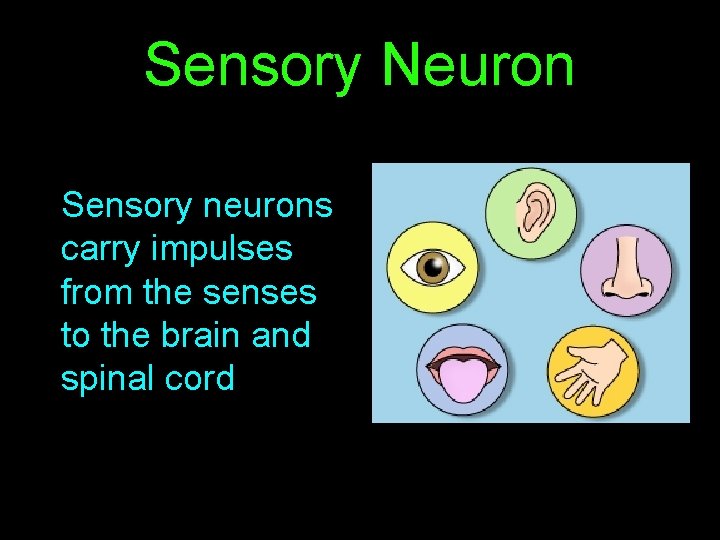
Sensory Neuron Sensory neurons carry impulses from the senses to the brain and spinal cord
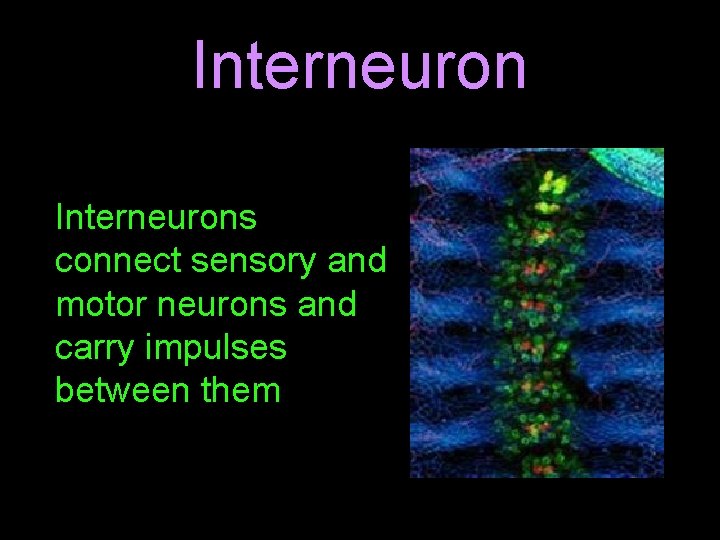
Interneurons connect sensory and motor neurons and carry impulses between them
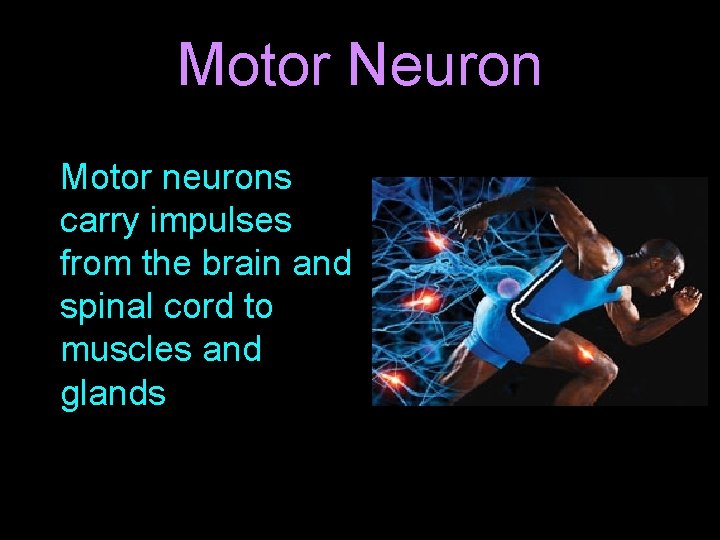
Motor Neuron Motor neurons carry impulses from the brain and spinal cord to muscles and glands
Break Time!
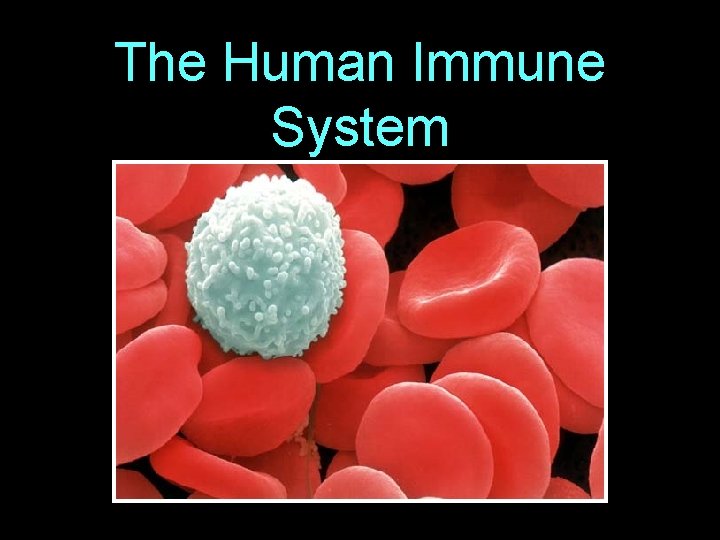
The Human Immune System
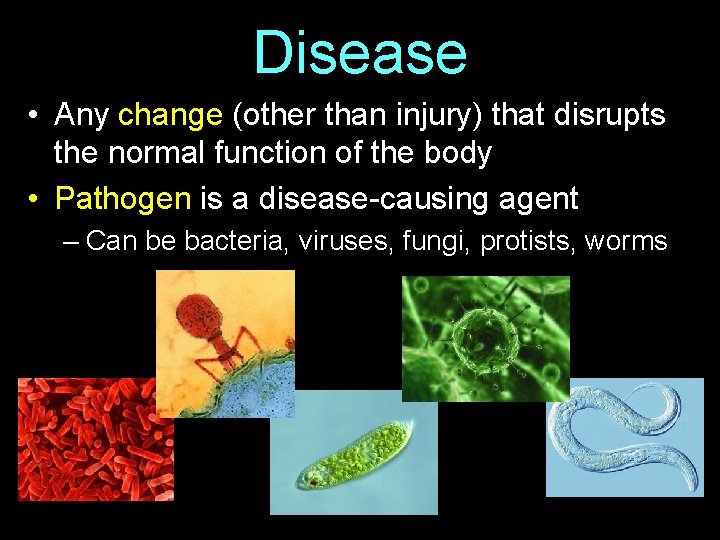
Disease • Any change (other than injury) that disrupts the normal function of the body • Pathogen is a disease-causing agent – Can be bacteria, viruses, fungi, protists, worms
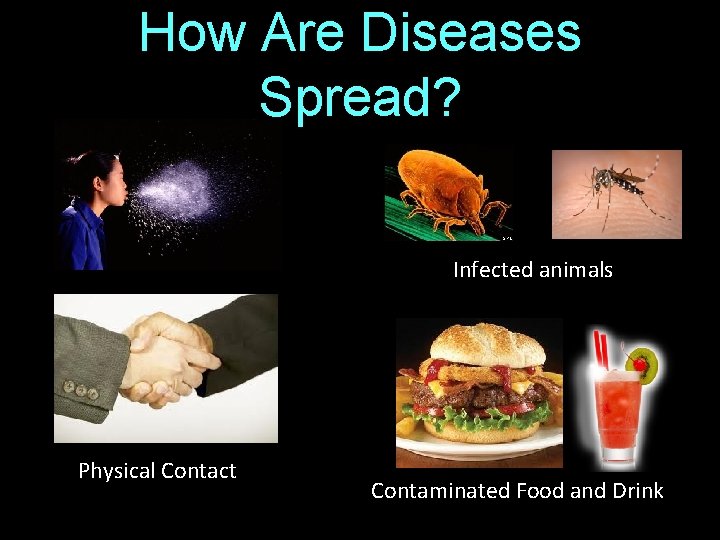
How Are Diseases Spread? Infected animals Physical Contact Contaminated Food and Drink
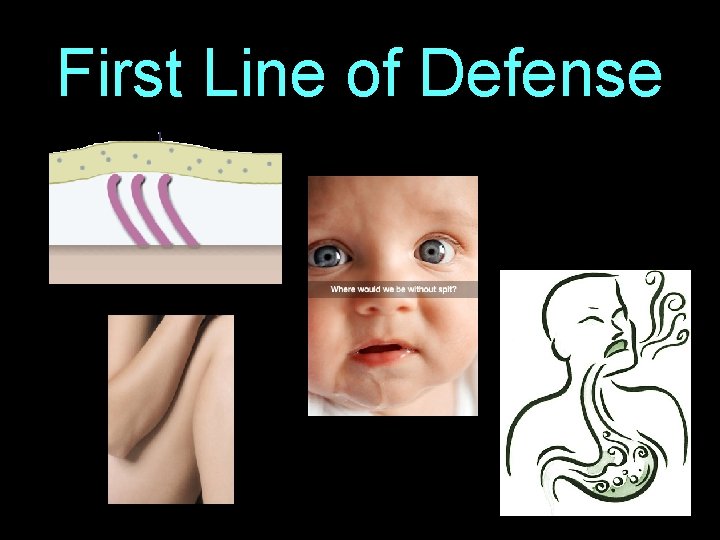
First Line of Defense

Second Line of Defense
Third Line of Defense Immune Response (Specific Defense)
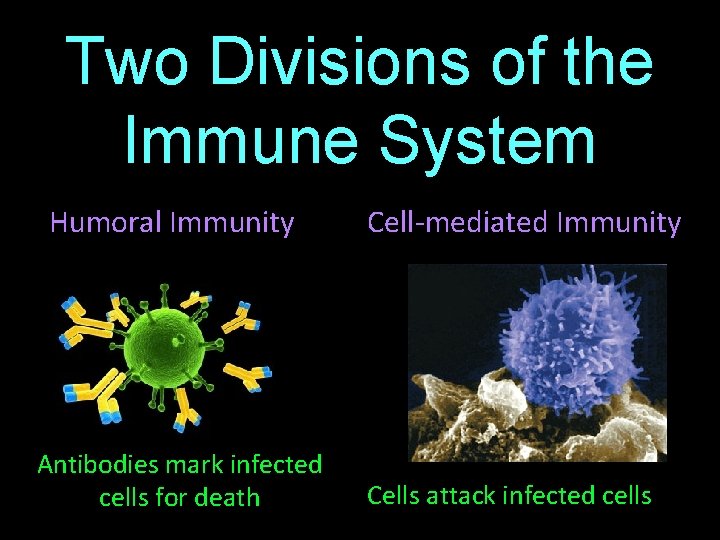
Two Divisions of the Immune System Humoral Immunity Antibodies mark infected cells for death Cell-mediated Immunity Cells attack infected cells

Humoral Immunity B-Cells - provides immunity against pathogens found in body fluids. Plasma cells make antibodies
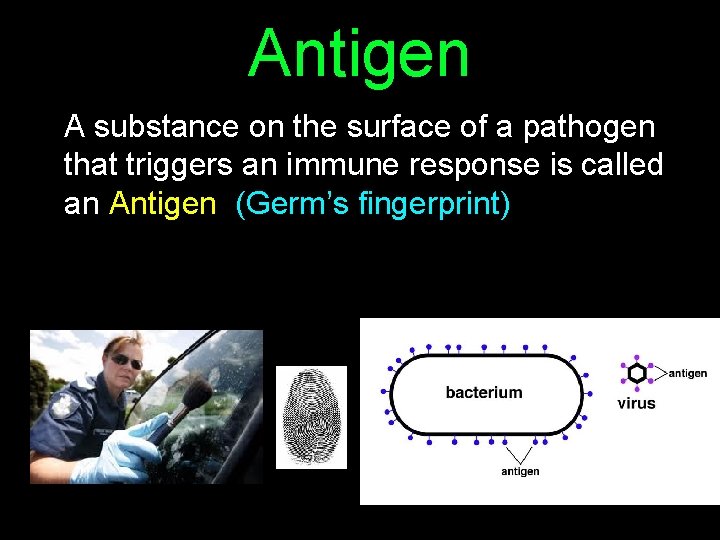
Antigen A substance on the surface of a pathogen that triggers an immune response is called an Antigen (Germ’s fingerprint)
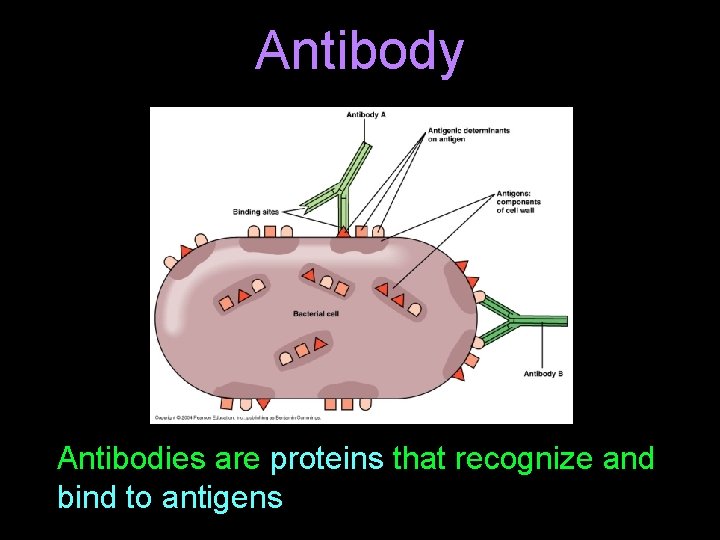
Antibody Antibodies are proteins that recognize and bind to antigens
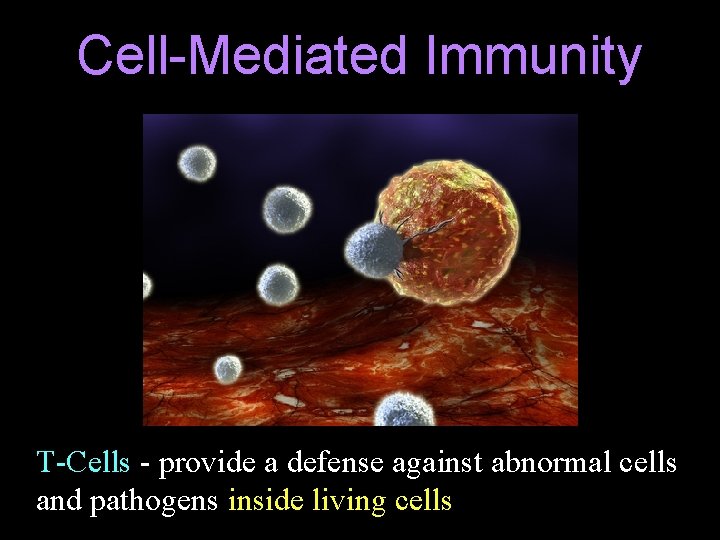
Cell-Mediated Immunity T-Cells - provide a defense against abnormal cells and pathogens inside living cells
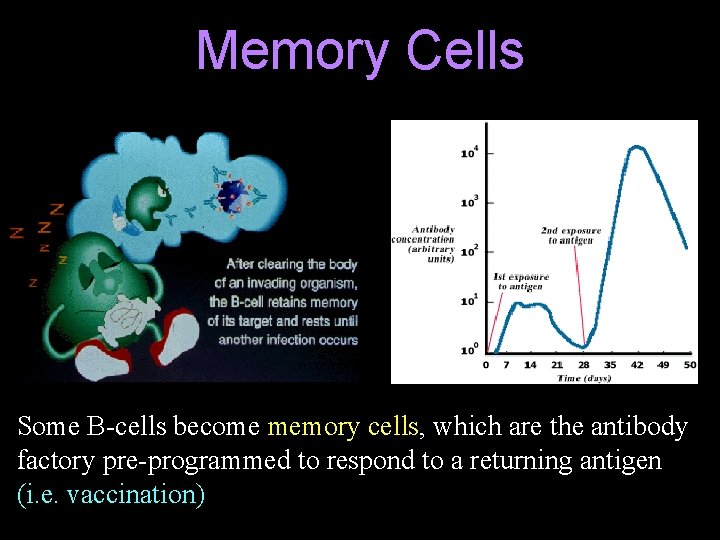
Memory Cells Some B-cells become memory cells, which are the antibody factory pre-programmed to respond to a returning antigen (i. e. vaccination)
Break Time!
- Slides: 57