
Human Body Systems and Disease 7 th Grade
Human Body Systems and Disease 7 th Grade Science Standard 7 -3
Organization of Living Things The human body is divided into specific levels of organization. These levels are what make the human body a complex organism. n The levels of organization, from the simplest structure to the most complex are: n n Cells, tissues, organ systems, organism
Organization of Living Things Cells make up tissues Tissues make up organs Organs make up organ systems Organ Systems make up Organisms Way To Remember = CTO 3 C = cells T = tissues O = organ systems O = organisms
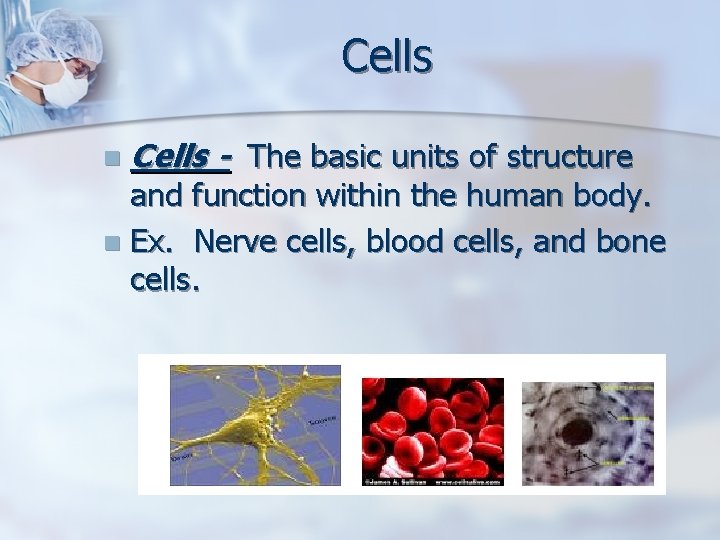
Cells n Cells - The basic units of structure and function within the human body. n Ex. Nerve cells, blood cells, and bone cells.
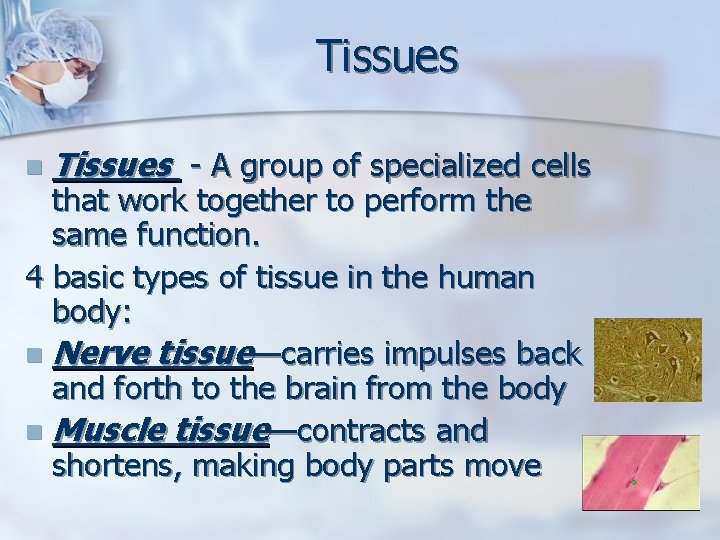
Tissues n Tissues - A group of specialized cells that work together to perform the same function. 4 basic types of tissue in the human body: n Nerve tissue—carries impulses back and forth to the brain from the body n Muscle tissue—contracts and shortens, making body parts move
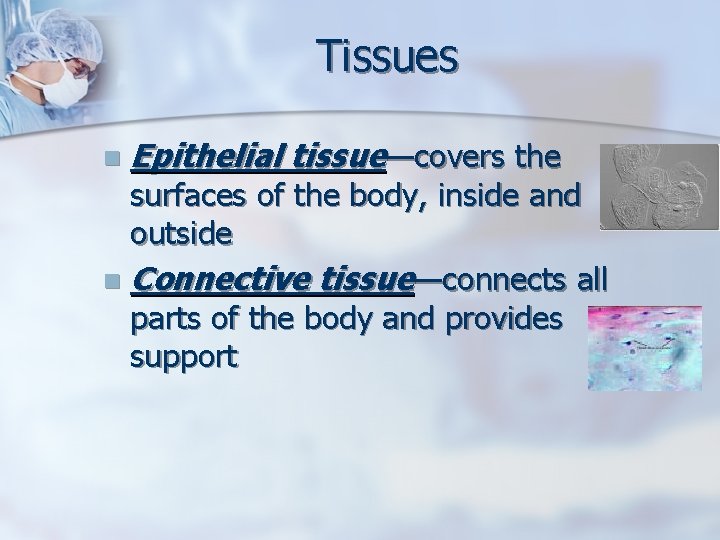
Tissues n Epithelial tissue—covers the surfaces of the body, inside and outside n Connective tissue—connects all parts of the body and provides support
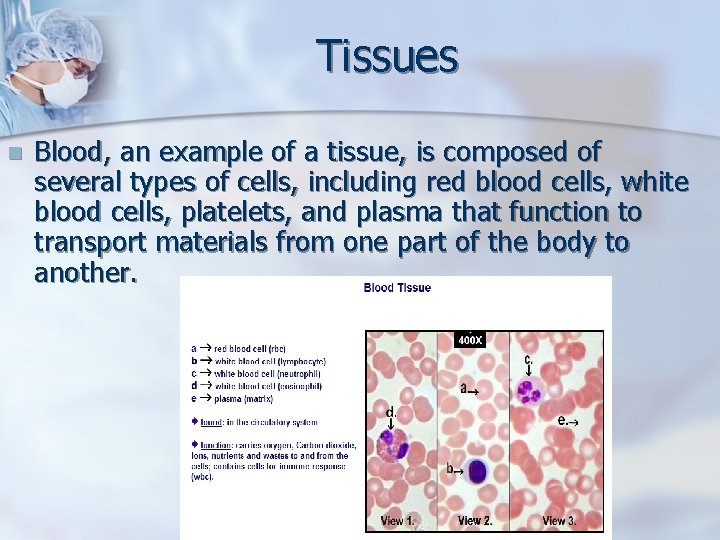
Tissues n Blood, an example of a tissue, is composed of several types of cells, including red blood cells, white blood cells, platelets, and plasma that function to transport materials from one part of the body to another.
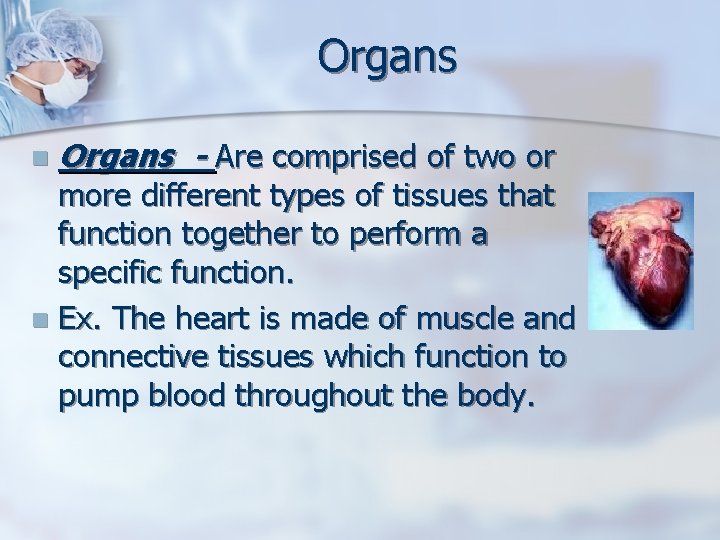
Organs n Organs - Are comprised of two or more different types of tissues that function together to perform a specific function. n Ex. The heart is made of muscle and connective tissues which function to pump blood throughout the body.
Systems - A group of two or more organs that work together to perform a specific function for the human body. n All of the different organ systems work together and depend on one another. n
Systems ELEVEN ORGAN SYSTEMS n Skeletal (Bones) n Digestive (Stomach, Intestines) n Muscular (Muscles) n Nervous (Brain, Spinal cord) n Circulatory (Heart, Blood vessels) n Excretory (urinary)(Kidney) n Respiratory (Lungs) n Endocrine (Glands) n Integumentary (Skin) n Immune (lymph nodes) n Reproductive (ovaries, testes) Some Dumb Man Named Cletus Eats Raw Eggs Inside Icky Restrooms
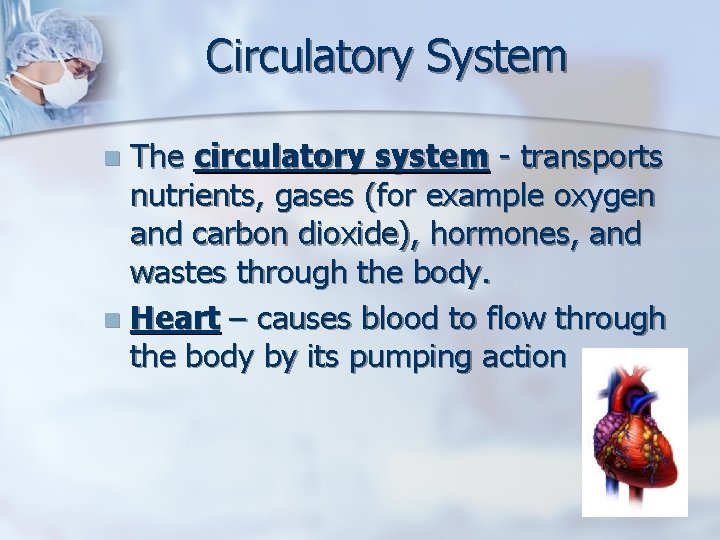
Circulatory System The circulatory system - transports nutrients, gases (for example oxygen and carbon dioxide), hormones, and wastes through the body. n Heart – causes blood to flow through the body by its pumping action n
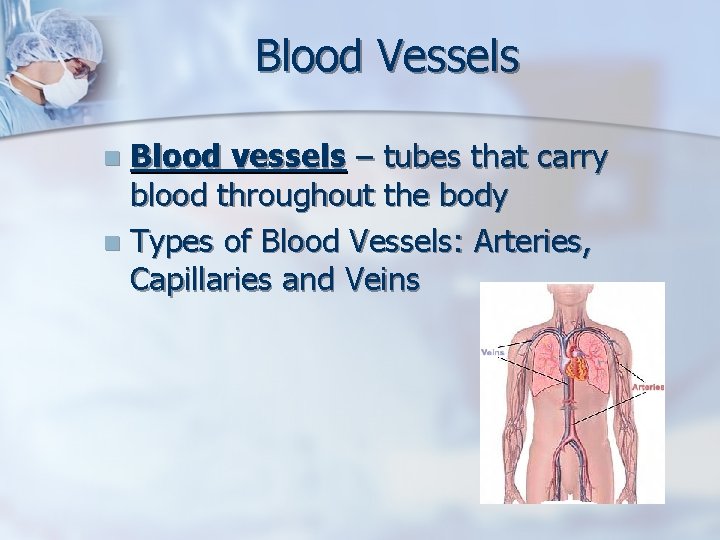
Blood Vessels Blood vessels – tubes that carry blood throughout the body n Types of Blood Vessels: Arteries, Capillaries and Veins n
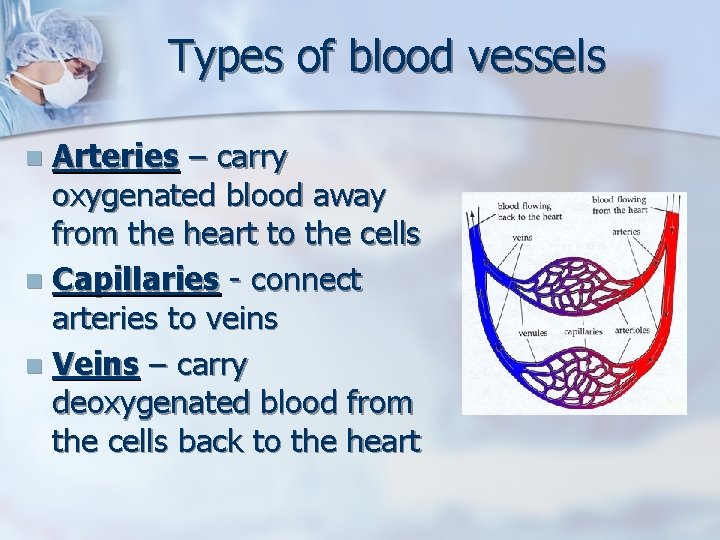
Types of blood vessels Arteries – carry oxygenated blood away from the heart to the cells n Capillaries - connect arteries to veins n Veins – carry deoxygenated blood from the cells back to the heart n
Oxygenated & Deoxygenated n n n The body cells need oxygen to function. Taking in oxygen and transporting it to cells are the jobs of the respiratory and circulatory systems. Oxygenated blood – is high in oxygen, is red on charts and in your body, and is usually carried by arteries Deoxygenated blood – is low in oxygen, blue on charts, dark red in your body, and is usually carried by veins
Circulatory Connections n The circulatory and digestive systems work together to ensure that nutrients made available by digestion get to the cells of the body.
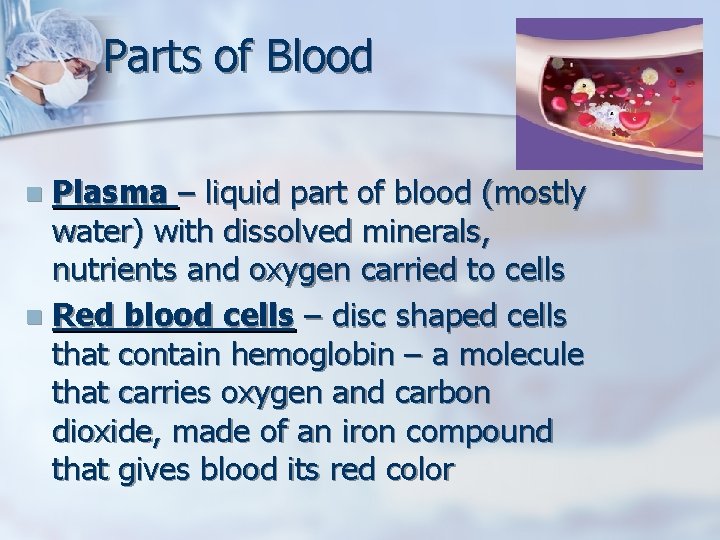
Parts of Blood Plasma – liquid part of blood (mostly water) with dissolved minerals, nutrients and oxygen carried to cells n Red blood cells – disc shaped cells that contain hemoglobin – a molecule that carries oxygen and carbon dioxide, made of an iron compound that gives blood its red color n
Parts of Blood White blood cells – large cells that fight bacteria, viruses and other invaders of your body n Platelets – irregularly shaped cell fragments that help clot blood n
The Heart n The heart pumps the blood from the heart to the lungs back to the heart then all over the body. View at http: //www. fda. gov/hearthealth/flash/fda_03. html
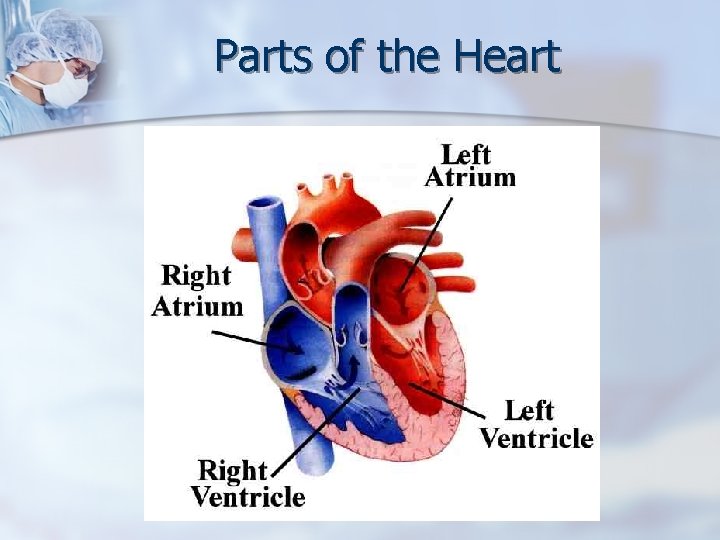
Parts of the Heart
Parts of the Heart Atria – collecting chambers n Ventricles – pumping chambers n n The heart at work: http: //library. med. utah. edu/kw/pharm/hyper_heart 1. html
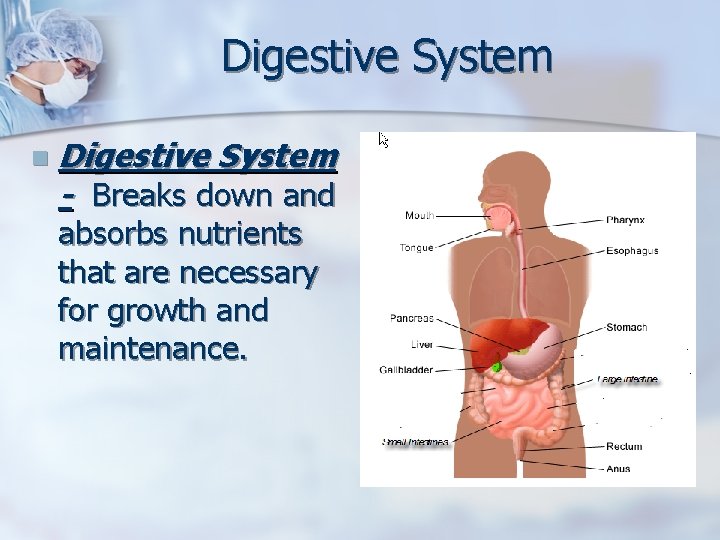
Digestive System n Digestive System - Breaks down and absorbs nutrients that are necessary for growth and maintenance.
Parts of the Digestive System Mouth – Begins to break down food into smaller pieces through mechanical digestion; saliva in the mouth starts the process of chemical digestion n Esophagus – The transport tube that carries chewed food to the stomach n
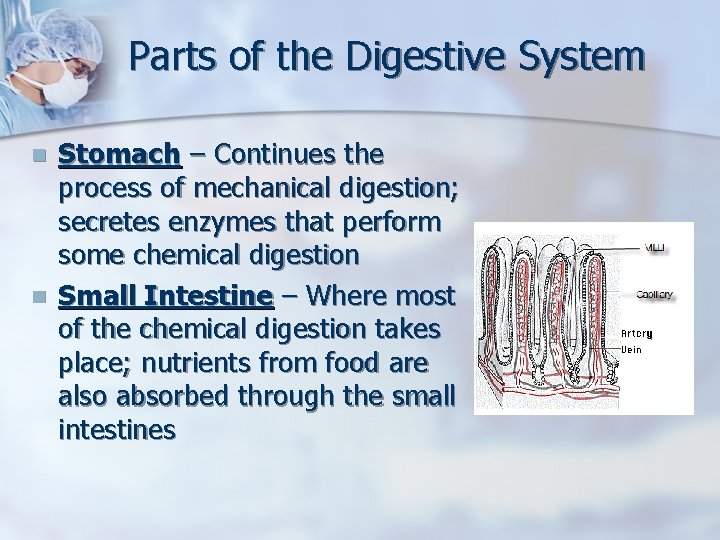
Parts of the Digestive System n n Stomach – Continues the process of mechanical digestion; secretes enzymes that perform some chemical digestion Small Intestine – Where most of the chemical digestion takes place; nutrients from food are also absorbed through the small intestines
Parts of the Digestive System Large Intestine - The organ where water is absorbed from the food and taken into the bloodstream; prepares the remaining food material for elimination from the body n Rectum - a short tube that stores solid waste until it is eliminated from the body through the anus. n
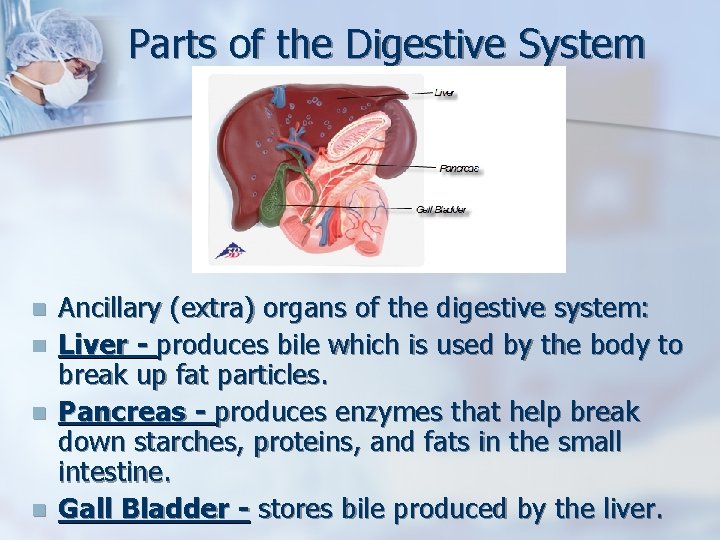
Parts of the Digestive System n n Ancillary (extra) organs of the digestive system: Liver - produces bile which is used by the body to break up fat particles. Pancreas - produces enzymes that help break down starches, proteins, and fats in the small intestine. Gall Bladder - stores bile produced by the liver.
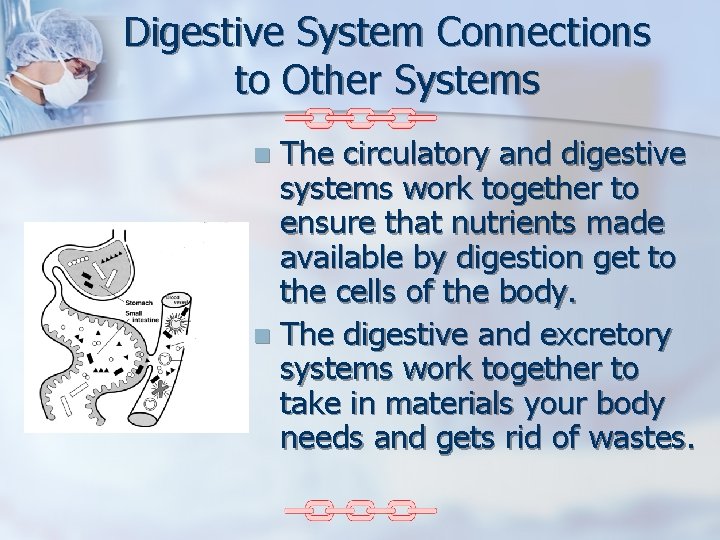
Digestive System Connections to Other Systems The circulatory and digestive systems work together to ensure that nutrients made available by digestion get to the cells of the body. n The digestive and excretory systems work together to take in materials your body needs and gets rid of wastes. n
Respiratory System n Respiratory System - provides gas exchange between the blood and the environment. n Primarily, oxygen is absorbed from the atmosphere into the body and carbon dioxide is expelled from the body.
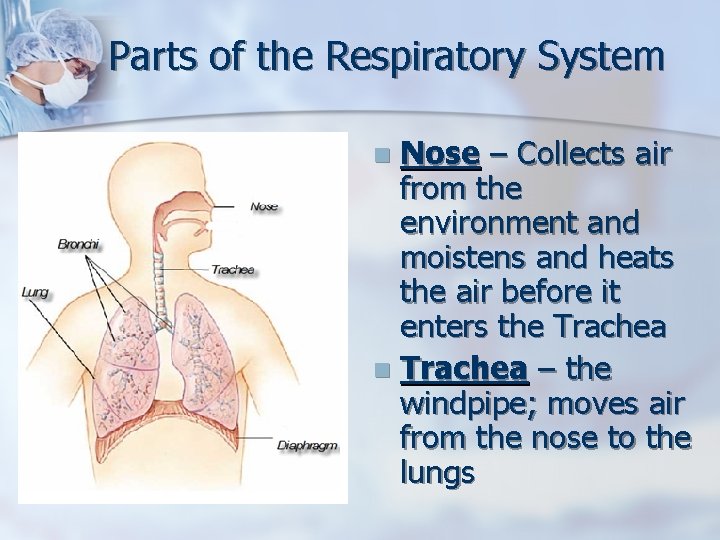
Parts of the Respiratory System Nose – Collects air from the environment and moistens and heats the air before it enters the Trachea n Trachea – the windpipe; moves air from the nose to the lungs n
Parts of the Respiratory System n Bronchi – Tubes that move air from the trachea to the lungs; n one bronchus leads to each lung; n part of each bronchus is outside the lung and part is inside n What do you think “bronchitis” is?
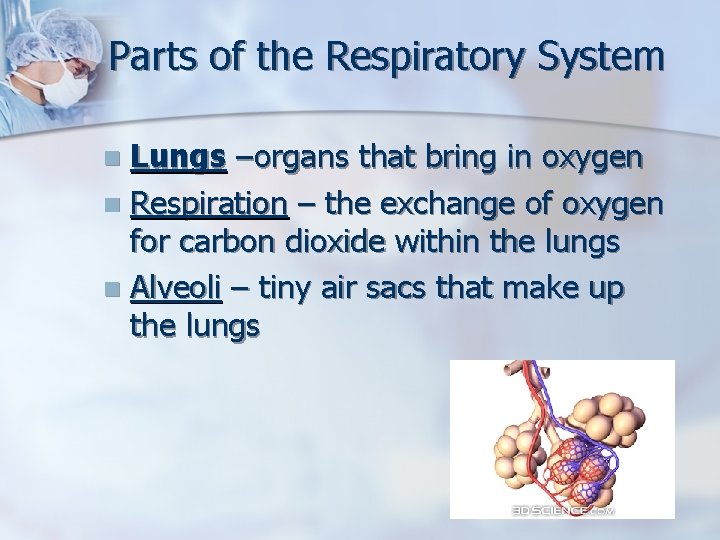
Parts of the Respiratory System Lungs –organs that bring in oxygen n Respiration – the exchange of oxygen for carbon dioxide within the lungs n Alveoli – tiny air sacs that make up the lungs n
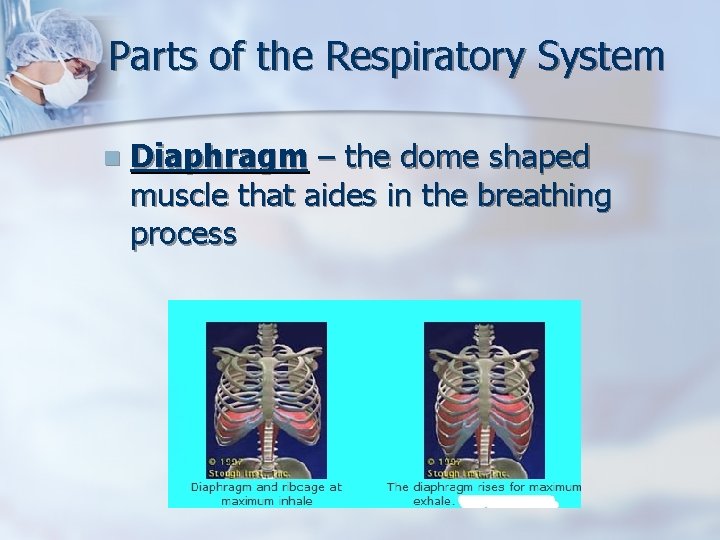
Parts of the Respiratory System n Diaphragm – the dome shaped muscle that aides in the breathing process
Excretory (Urinary) System n Excretory System- filters out cellular wastes, toxins and excess water or nutrients from the circulatory system. n There are many excretory structures: skin (sweat), lungs (water vapor), but the main structure is the kidney (urine).
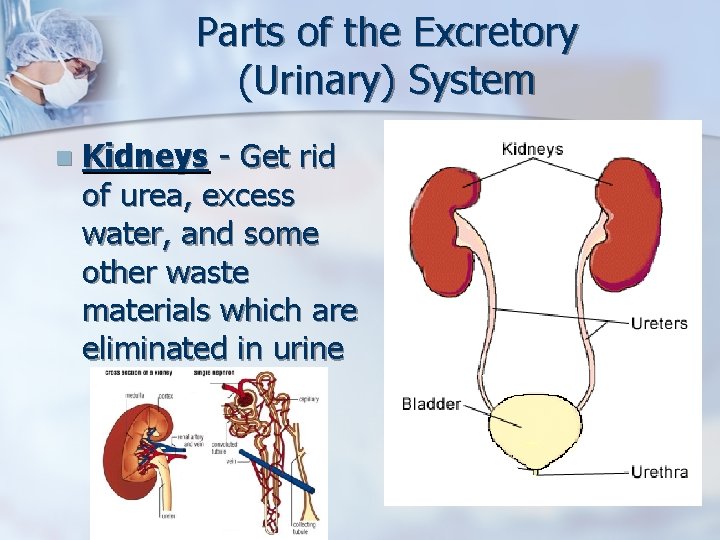
Parts of the Excretory (Urinary) System n Kidneys - Get rid of urea, excess water, and some other waste materials which are eliminated in urine
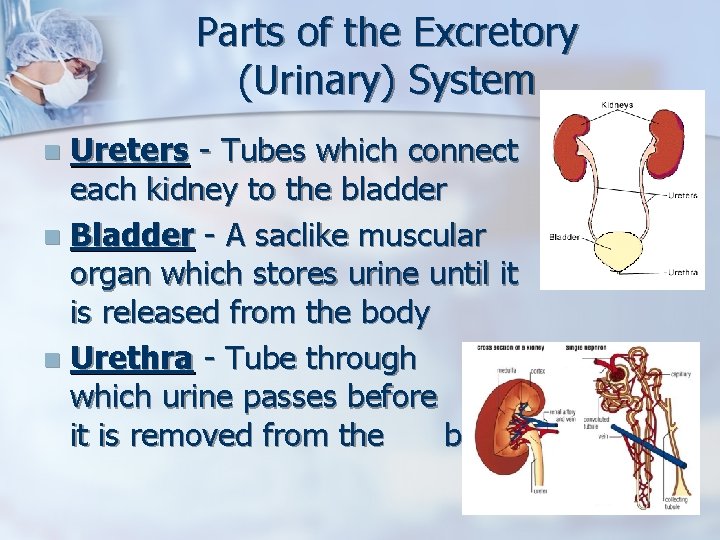
Parts of the Excretory (Urinary) System Ureters - Tubes which connect each kidney to the bladder n Bladder - A saclike muscular organ which stores urine until it is released from the body n Urethra - Tube through which urine passes before it is removed from the body. n
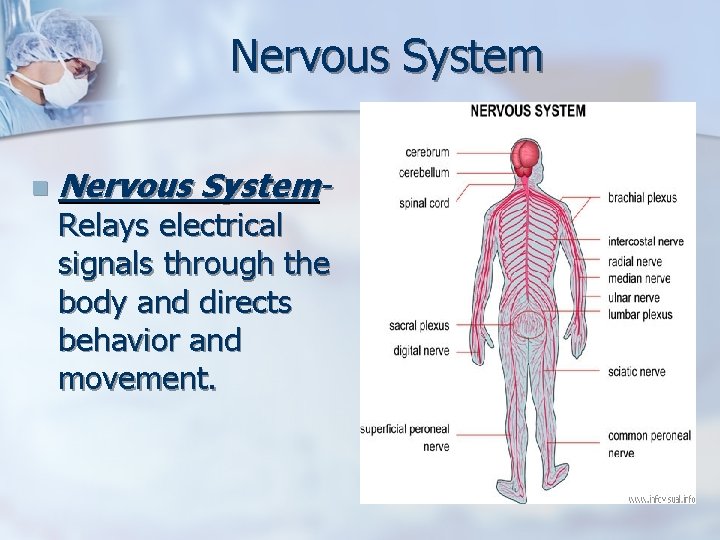
Nervous System n Nervous System. Relays electrical signals through the body and directs behavior and movement.
Nervous System Connections n Along with the endocrine system, the nervous system also controls physiological processes, for example digestion, circulation, or movement.
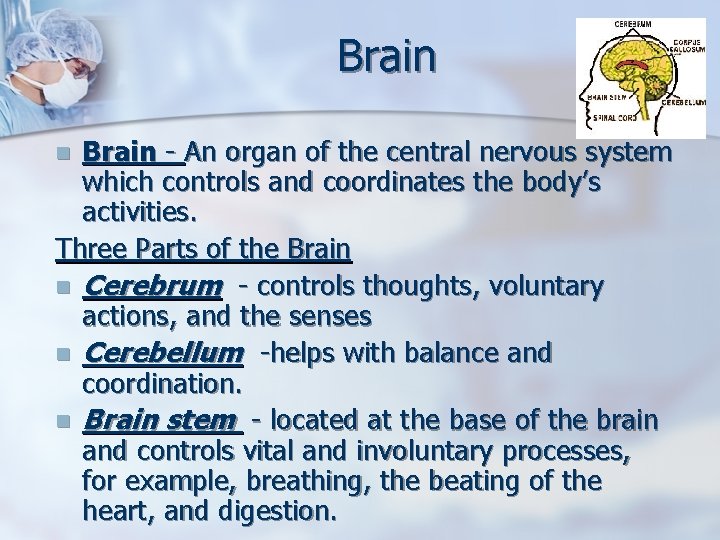
Brain - An organ of the central nervous system which controls and coordinates the body’s activities. Three Parts of the Brain n Cerebrum - controls thoughts, voluntary actions, and the senses n Cerebellum -helps with balance and coordination. n Brain stem - located at the base of the brain and controls vital and involuntary processes, for example, breathing, the beating of the heart, and digestion. n
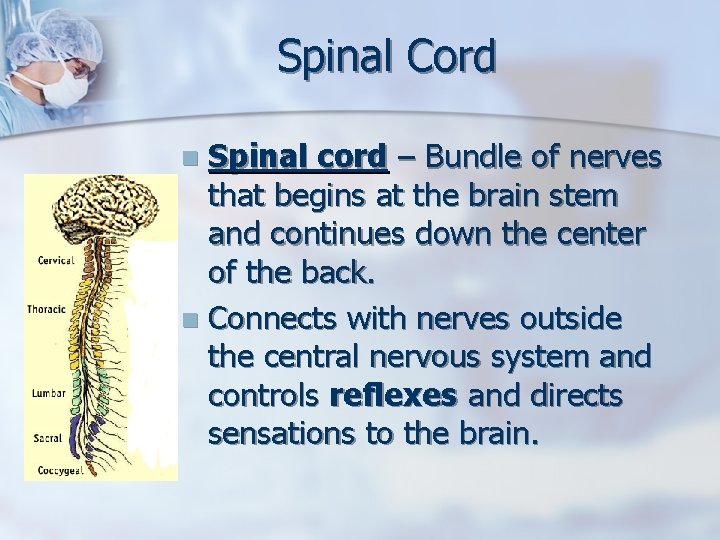
Spinal Cord Spinal cord – Bundle of nerves that begins at the brain stem and continues down the center of the back. n Connects with nerves outside the central nervous system and controls reflexes and directs sensations to the brain. n
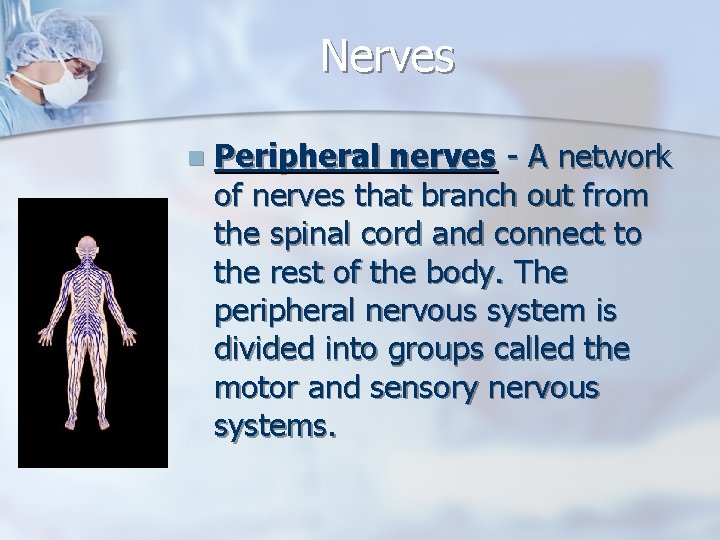
Nerves n Peripheral nerves - A network of nerves that branch out from the spinal cord and connect to the rest of the body. The peripheral nervous system is divided into groups called the motor and sensory nervous systems.
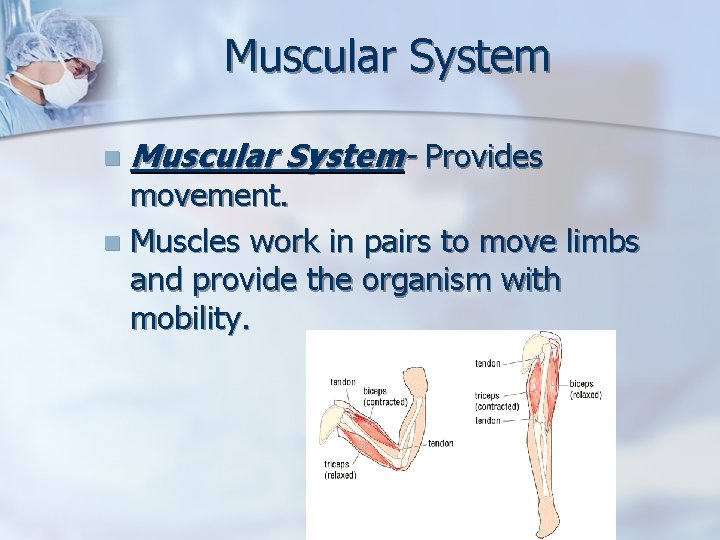
Muscular System n Muscular System- Provides movement. n Muscles work in pairs to move limbs and provide the organism with mobility.
Muscular System Connections Muscles also control the movement of materials through some organs, for example the stomach and intestine, and the heart and circulatory system. n The muscular and skeletal systems work together to help the body move. n
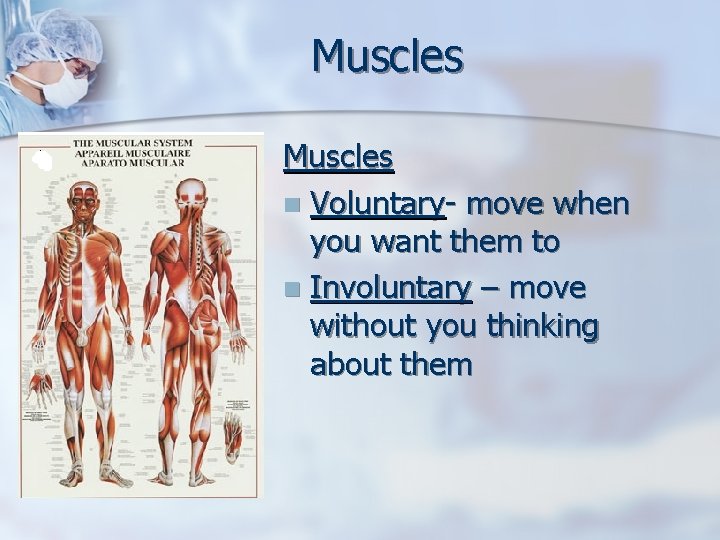
Muscles n Voluntary- move when you want them to n Involuntary – move without you thinking about them
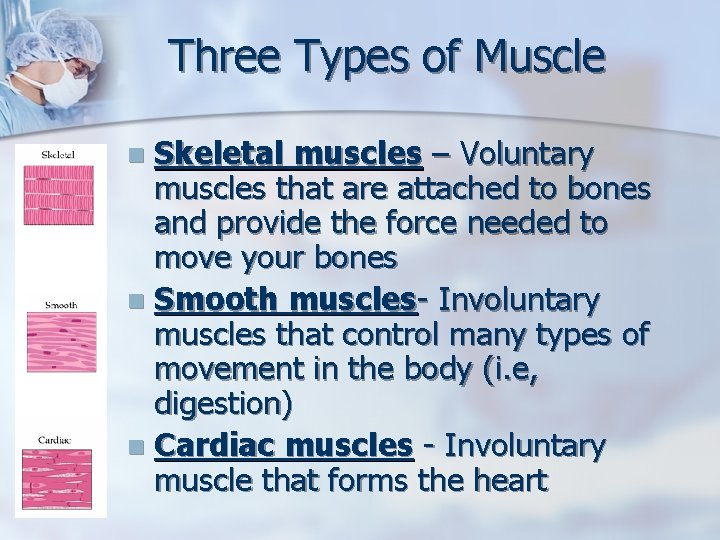
Three Types of Muscle Skeletal muscles – Voluntary muscles that are attached to bones and provide the force needed to move your bones n Smooth muscles- Involuntary muscles that control many types of movement in the body (i. e, digestion) n Cardiac muscles - Involuntary muscle that forms the heart n
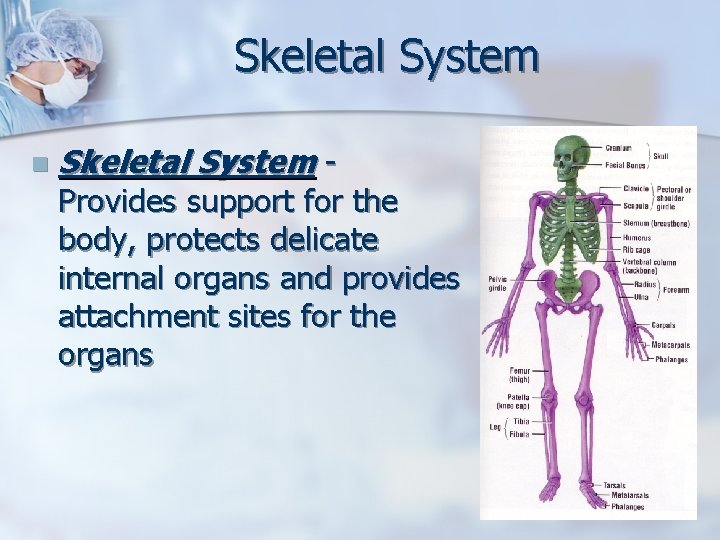
Skeletal System n Skeletal System - Provides support for the body, protects delicate internal organs and provides attachment sites for the organs
Bones - Provide shape and support for the body and protection for many organs and structures; some bones produce blood cells; some store minerals n What system(s) connects to the skeletal system? n
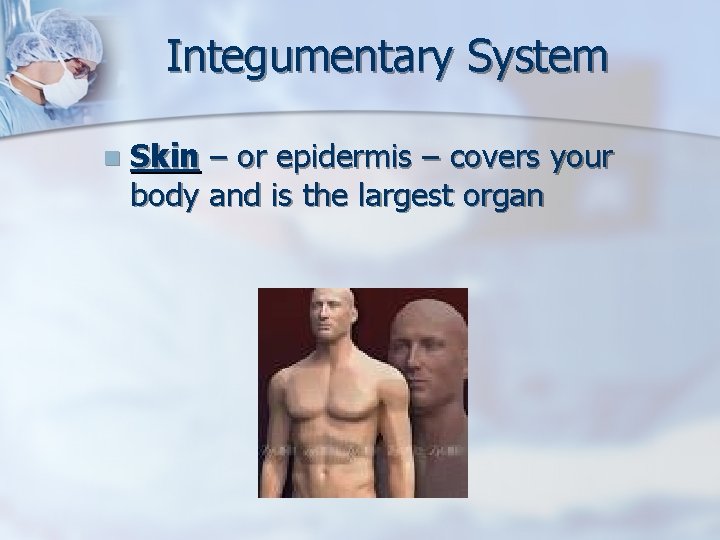
Integumentary System n Skin – or epidermis – covers your body and is the largest organ
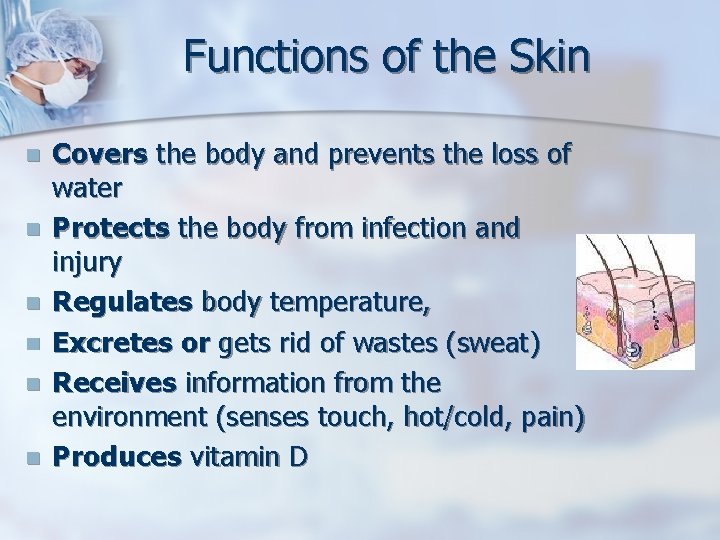
Functions of the Skin n n n Covers the body and prevents the loss of water Protects the body from infection and injury Regulates body temperature, Excretes or gets rid of wastes (sweat) Receives information from the environment (senses touch, hot/cold, pain) Produces vitamin D
Review – The relationships of the major body systems. n Different organs systems in the human body function together and depend on one another for the human body to function successfully, even though each system performs its own unique function.
Review Connections Nervous System – controls all other systems n Circulatory System-transports n nutrients, gases (oxygen and carbon dioxide), hormones, and wastes through the body. n Respiratory and Circulatory – take in and transport oxygen
Review Connections n n Respiratory System- provides gas exchange between the blood and the environment. Digestive System - breakdown and absorb nutrients that are necessary for growth and maintenance. Circulatory and Digestive systems - work together to ensure that nutrients made available by digestion get to the cells of the body. Digestive and excretory systems - work together to take in materials your body needs and gets rid of wastes.
Review Connections n n Excretory System- filters out cellular wastes, toxins and excess water or nutrients from the circulatory system. Muscular System- provides movement. Muscular and Skeletal systems - work together to help the body move Skeletal System- provides support for the body, protects delicate internal organs and provides attachment sites for the organs.
Effects of Disease on the Major Organs and Body Systems Disease - a condition that does not allow the body to function normally. n Diseases can affect either an individual organ or an entire body system. n Diseases are divided into two groups —infectious and noninfectious.
Infectious Disease n Infectious diseases – diseases caused by a pathogen and spread an infected organism usually through direct contact (see below).
Pathogens n Pathogens cause infectious diseases. n Ex. pathogens can be bacteria, viruses, fungi, or protists Pathogens can come from: n another person n a contaminated object n an animal bite n or the environment
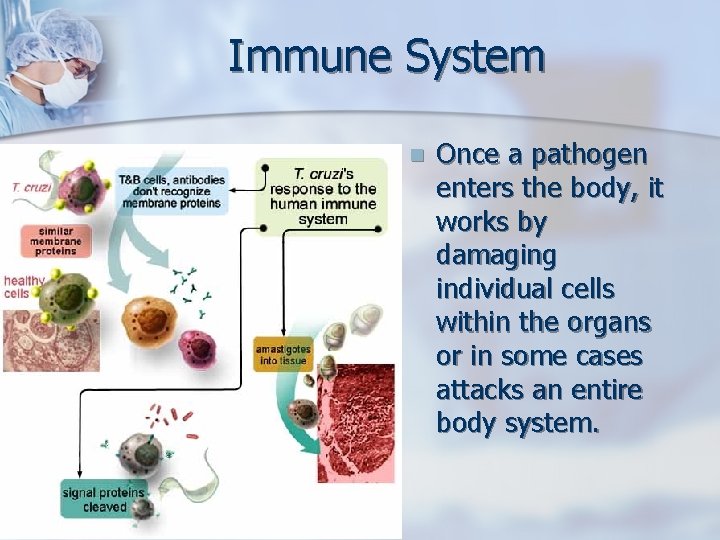
Immune System n Once a pathogen enters the body, it works by damaging individual cells within the organs or in some cases attacks an entire body system.
The Immune Response – How Your Body Defends Itself First Line of Defense n Skin – keeps out pathogens n Mucous Membranes – (nose, throat, ears, eyes) -traps pathogens with sticky fluid (mucous/snot) n Cilia - (nose/throat) - filters out pathogens
The Immune Response – How Your Body Defends Itself Second Line of Defense n Inflammation – swelling – rushes blood to infected area to get white blood cells there to kill the pathogen n Fever – temperature goes up to kill pathogens
The Immune Response – How Your Body Defends Itself Other Defenses n White blood cells – attack and eat invading pathogens n Interferon – chemical body makes to “interfere” with a virus n Antibodies – protein produced in response to invading pathogen, take up space on a cell where virus normally attaches
Symptoms n Symptoms – things you can name that tells you that you are sick ex. Sore throat, fever, chills, rash, pain
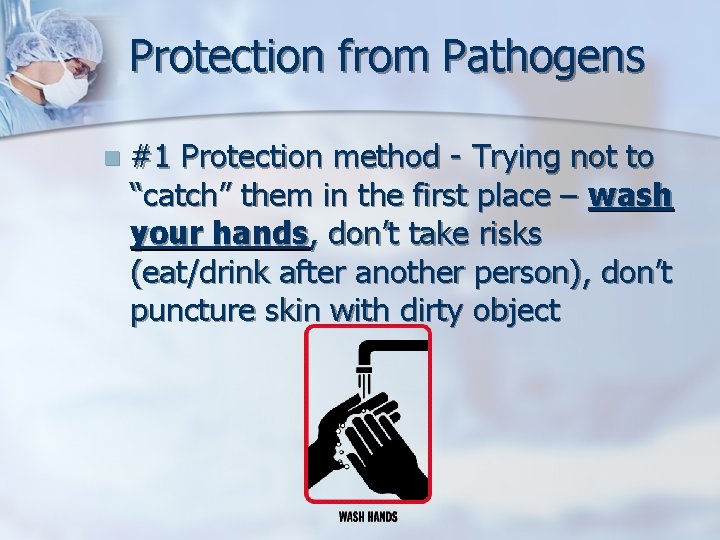
Protection from Pathogens n #1 Protection method - Trying not to “catch” them in the first place – wash your hands, don’t take risks (eat/drink after another person), don’t puncture skin with dirty object
Protection from Pathogens Vaccines – Prevent some viruses from making you sick n Ex. Chicken pox, small pox, mumps, rabies, tetanus n
Protection from Pathogens Antibiotics – if you get sick with some types of bacteria antibiotics will kill them n Ex. Penicillin for strep throat n Antibiotics do not kill viruses. Bacteria can become used to antibiotics so stronger antibiotics have to be used to kill them. n
Infectious Diseases Colds n Flu n Strep Throat n Athlete’s Foot n AIDS n
Colds - (virus) A common cold is an infection located in the respiratory system. n Cold viruses can only reproduce when they are inside living cells. n Cold viruses cannot reproduce on environmental surfaces (doorknobs) n Can be infectious and transported from environmental surfaces to the nose or mouth.
Flu n Flu or Influenza – (virus) a highly contagious infection of the respiratory system. n Symptoms: fever, muscle aches, and a more severe cough than the common cold and usually last longer.
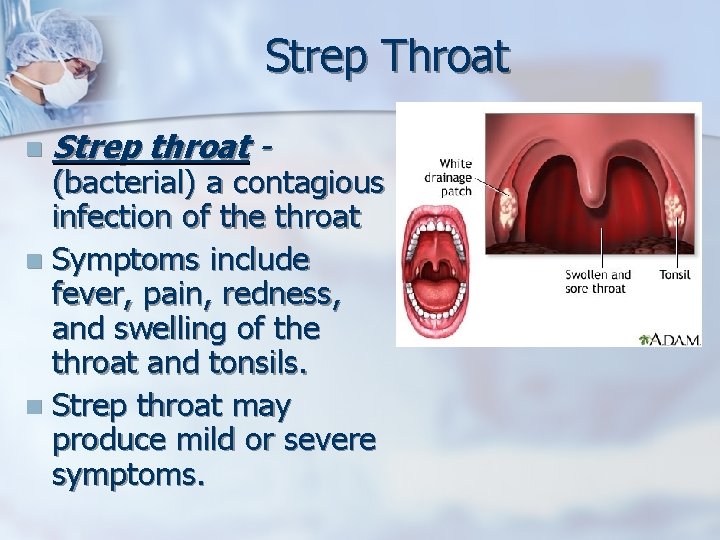
Strep Throat n Strep throat - (bacterial) a contagious infection of the throat n Symptoms include fever, pain, redness, and swelling of the throat and tonsils. n Strep throat may produce mild or severe symptoms.
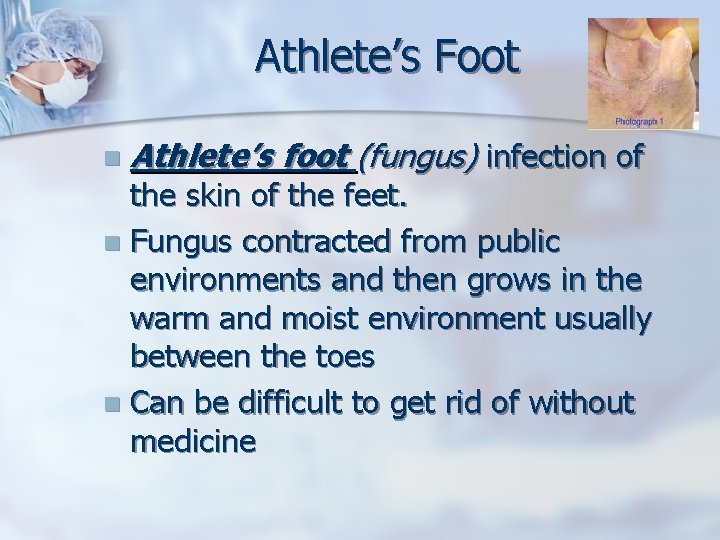
Athlete’s Foot n Athlete’s foot (fungus) infection of the skin of the feet. n Fungus contracted from public environments and then grows in the warm and moist environment usually between the toes n Can be difficult to get rid of without medicine
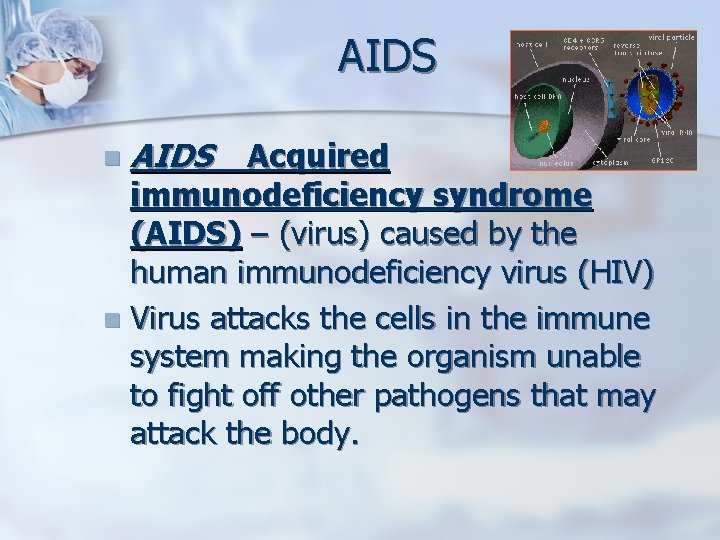
AIDS n AIDS Acquired immunodeficiency syndrome (AIDS) – (virus) caused by the human immunodeficiency virus (HIV) n Virus attacks the cells in the immune system making the organism unable to fight off other pathogens that may attack the body.

Noninfectious Diseases n Noninfectious diseases are diseases that are not caused by pathogens in the body and are not spread from organism to organism. Examples: n Cardiovascular disease n Allergies n Diabetes n Cancer
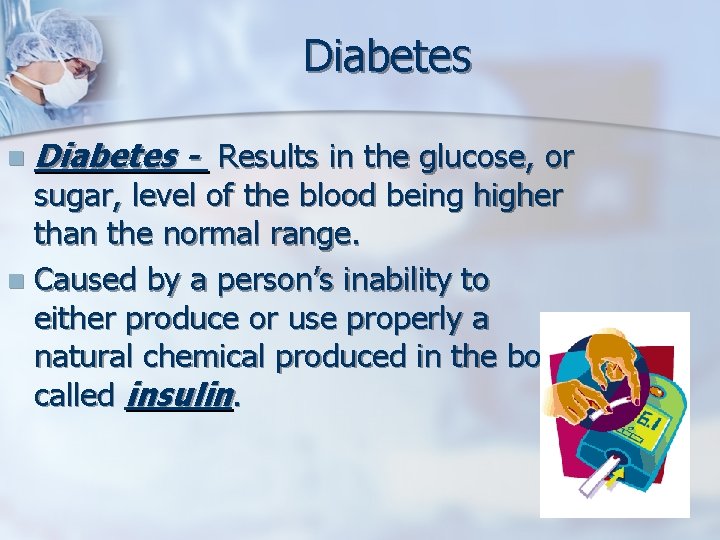
Diabetes n Diabetes - Results in the glucose, or sugar, level of the blood being higher than the normal range. n Caused by a person’s inability to either produce or use properly a natural chemical produced in the body called insulin.
Diabetes n The higher level of blood sugar results many disorders of the body, for example it increases problems with circulation of blood, and it can lead to kidney disease and heart disease, or cause vision problems.
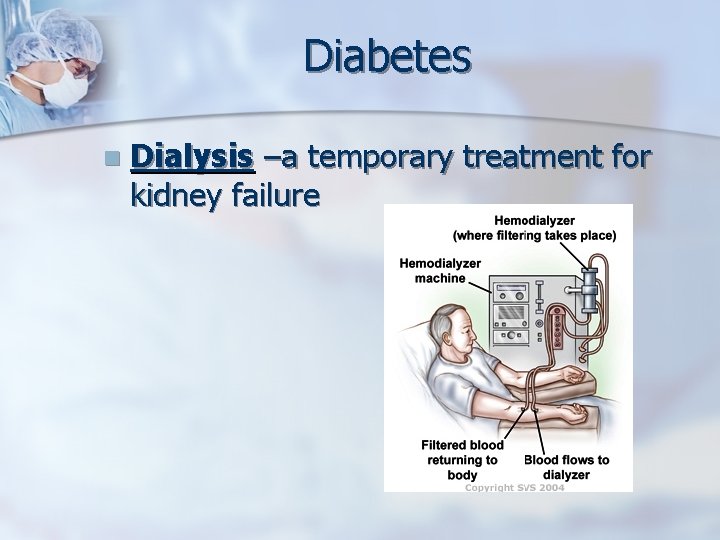
Diabetes n Dialysis –a temporary treatment for kidney failure
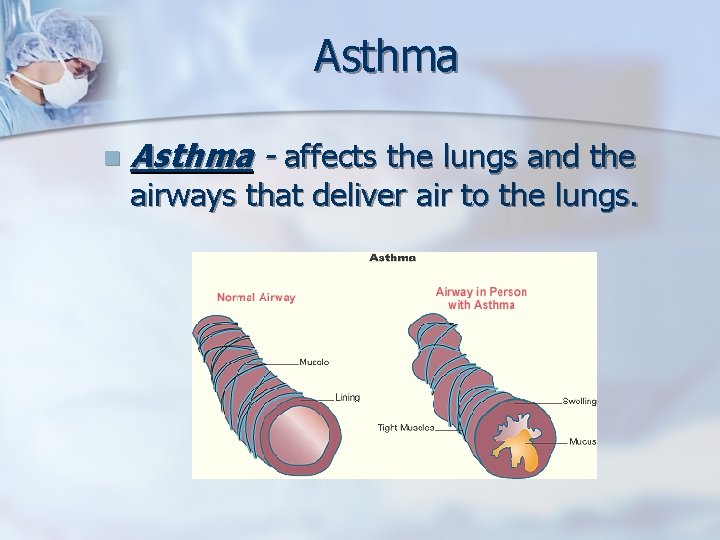
Asthma n Asthma - affects the lungs and the airways that deliver air to the lungs.
Asthma Causes periodic attacks of wheezing and difficult breathing. n An asthma attack occurs when the airways become inflamed in response to a trigger, such as dust, mold, pets, exercise, or cold weather. However, some attacks start for no apparent reason n
Parkinson’s Disease n Parkinson’s disease - Certain nerve cells in the brain die or become damaged.
Parkinson’s Disease Does not affect everyone the same way n Some people develop the disease quickly, in others it does not. n Some people become severely disabled others experience only minor motor disruptions. n
Parkinson’s Disease Tremor is the major symptom for some people, while for others tremor is only a minor complaint and different symptoms are more troublesome. n At present, there is no cure for Parkinson's disease. n
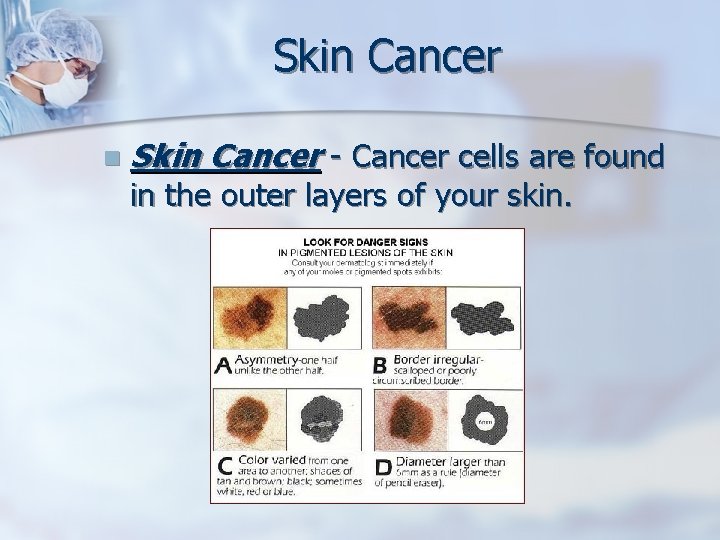
Skin Cancer n Skin Cancer - Cancer cells are found in the outer layers of your skin.
Skin Cancer n n Your skin protects your body against heat, light, infection, and injury. It also stores water, fat, and vitamin D. Sunburn and UV light can damage your skin, and this damage can lead to skin cancer. However, there are other determining factors, including heredity and the environment.
- Slides: 79