
Human Body Anatomy and Physiology Biology large branch
Human Body Anatomy and Physiology �Biology ( large branch of science) � Study of all forms of life (plants, animals and humans) �Anatomy � Shape and structure � Relationship of one body part to another �Physiology � Function � Coordinate to form a complete living organism 1. 01 Remember structural organization 1
Branches of Anatomy � Gross Anatomy � Large, easily observable structures � Naked eye � Microscopic Anatomy � Small structures with use of microscope � Cytology (cells) � Histology (tissues) � Developmental Anatomy � Growth and development throughout lifetime � Embryology (fertilized egg to birth) � Comparative Anatomy � Comparing humans to animals � Systematic Anatomy � Organs or parts of organ system � Dermatology, Endocrinology, Neurology 1. 01 Remember structural organization 2
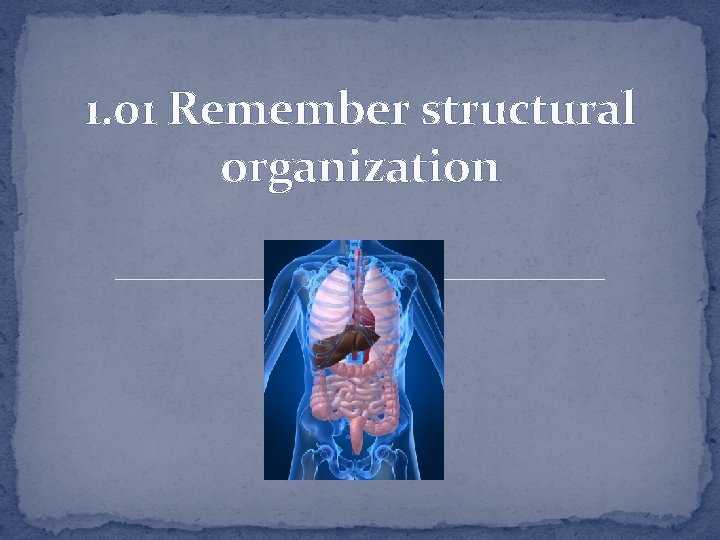
1. 01 Remember structural organization
1. 01 Remember the body’s structural organization Essential Questions �How is the human body organized? �What are the structural components of the body? �How does the body’s structural organization relate to its support and movement? 1. 01 Remember structural organization 4
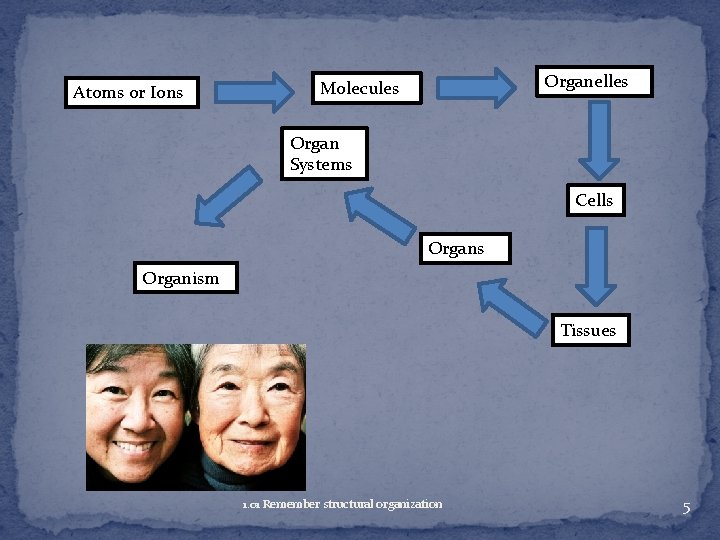
Atoms or Ions Organelles Molecules Organ Systems Cells Organism Tissues 1. 01 Remember structural organization 5
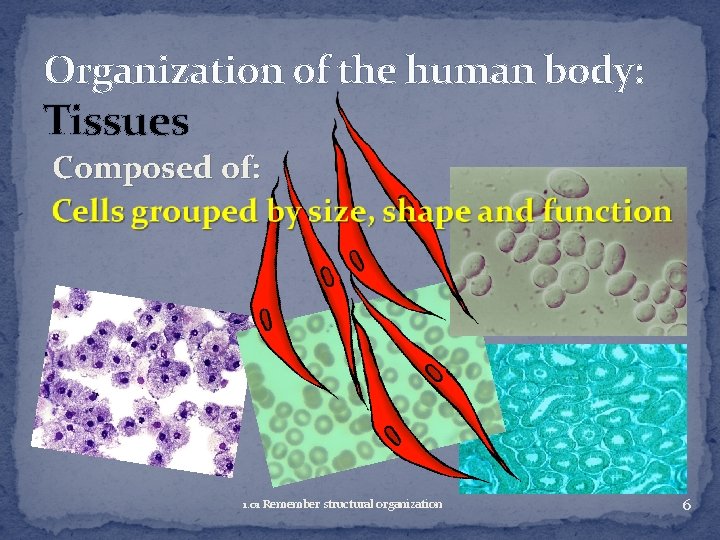
Organization of the human body: Tissues Composed of: 1. 01 Remember structural organization 6
Organization of the human body: Tissues Types of tissues: � Epithelial tissue � Connective tissue � Muscle tissue � Nervous tissue 1. 01 Remember structural organization 7
Organization of the human body: Tissues Epithelial Tissue- protects the body by covering internal and external surfaces, and produces secretions � Skin �covers the outside of the body �lines the inside of the body � Membrane �two thin layers of tissue that join together �cells may secrete a fluid 1. 01 Remember structural organization 8
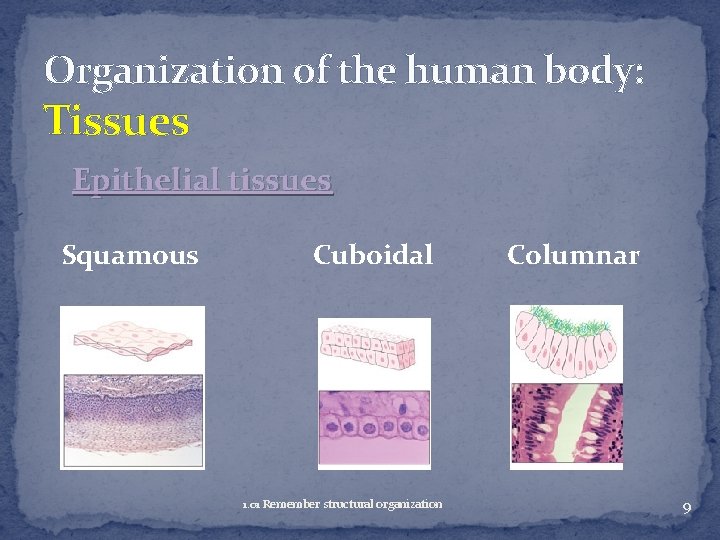
Organization of the human body: Tissues Epithelial tissues Squamous Cuboidal 1. 01 Remember structural organization Columnar 9
Organization of the human body: Tissues Connective tissue- supports and connects organs and tissue in the body � Adipose- type of connective tissue that stores fat cells. Cushions, supports and insulates the body � Cartilage- firm, flexible support of the embryonic skeleton and part of the adult skeleton � Tendons- white bands of connective tissue attaching skeletal muscle to bone � Ligaments -strong, flexible bands of connective tissue that hold bones firmly together at the joints 1. 01 Remember structural organization 10
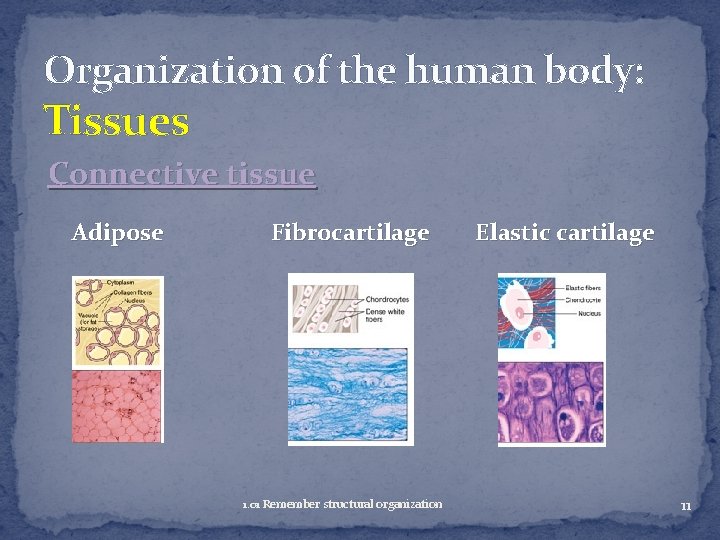
Organization of the human body: Tissues Connective tissue Adipose Fibrocartilage 1. 01 Remember structural organization Elastic cartilage 11
Organization of the human body: Tissues Muscle tissue- contracts and moves a body part Cardiac involuntary contracts the heart muscle to pump blood Skeletal voluntary attached to the movable parts of the skeleton Smooth involuntary � provides movement in various body systems (digestive, genitourinary, respiratory tract, blood and lymphatic vessels 1. 01 Remember structural organization 12
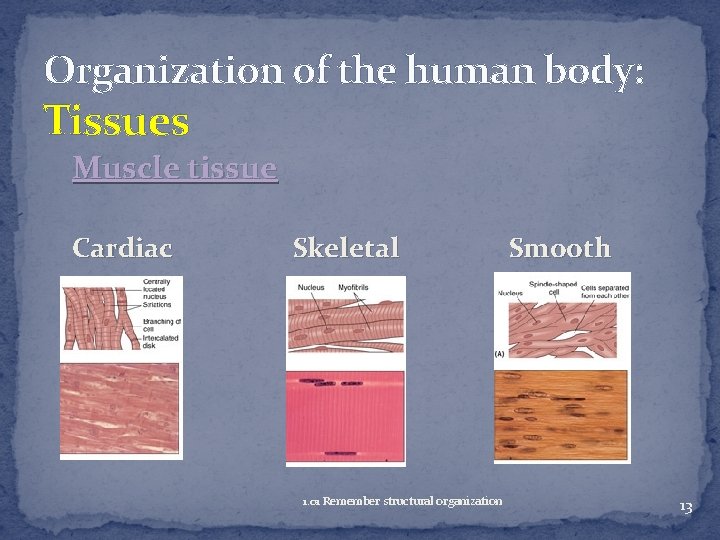
Organization of the human body: Tissues Muscle tissue Cardiac Skeletal 1. 01 Remember structural organization Smooth 13
Organization of the human body: Tissues �Nervous tissue- reacts to stimulation and conducts an impulse �Neurons in brain, spinal cord and nerves 1. 01 Remember structural organization 14
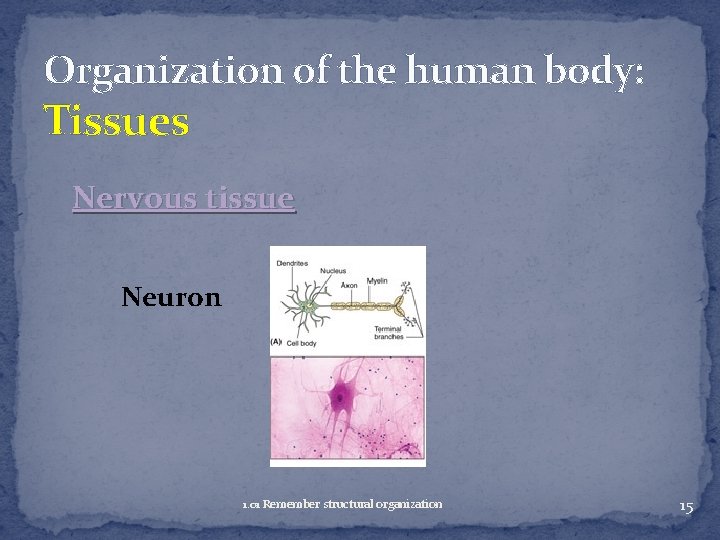
Organization of the human body: Tissues Nervous tissue Neuron 1. 01 Remember structural organization 15
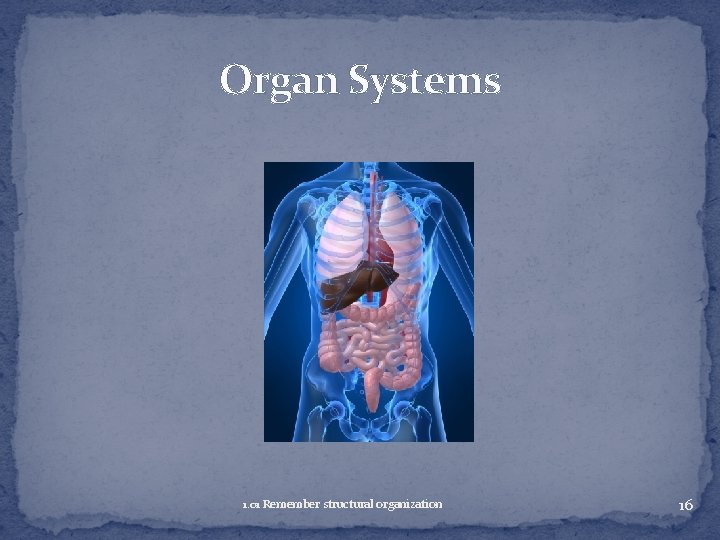
Organ Systems 1. 01 Remember structural organization 16
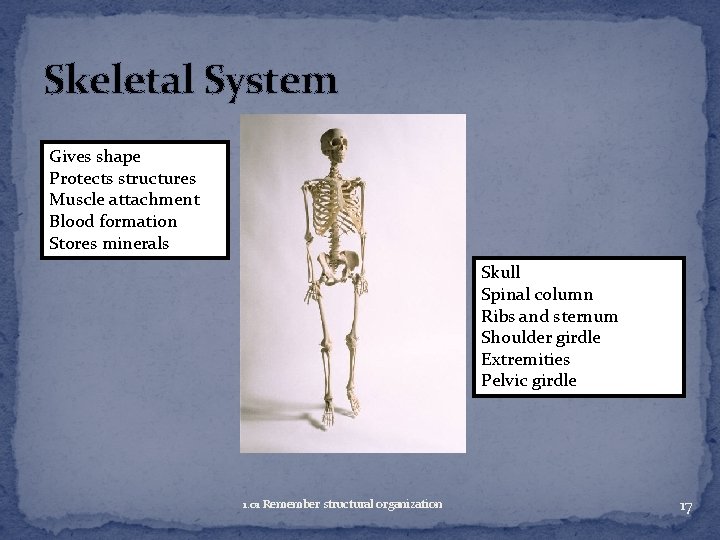
Skeletal System Gives shape Protects structures Muscle attachment Blood formation Stores minerals Skull Spinal column Ribs and sternum Shoulder girdle Extremities Pelvic girdle 1. 01 Remember structural organization 17
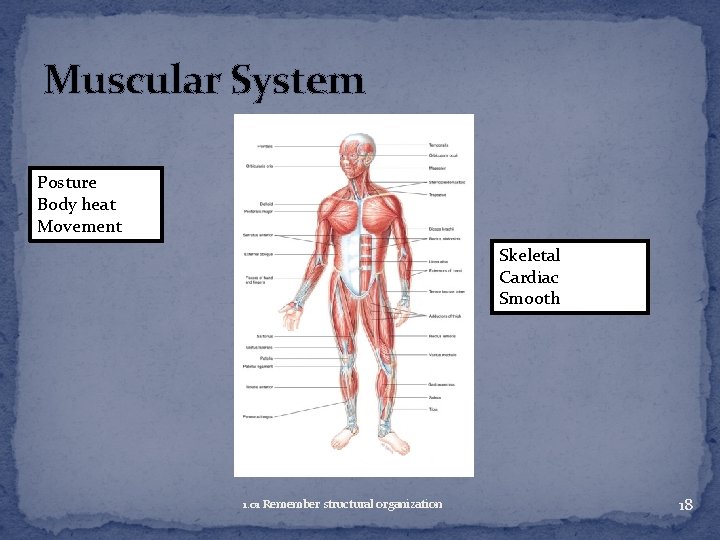
Muscular System Posture Body heat Movement Skeletal Cardiac Smooth 1. 01 Remember structural organization 18
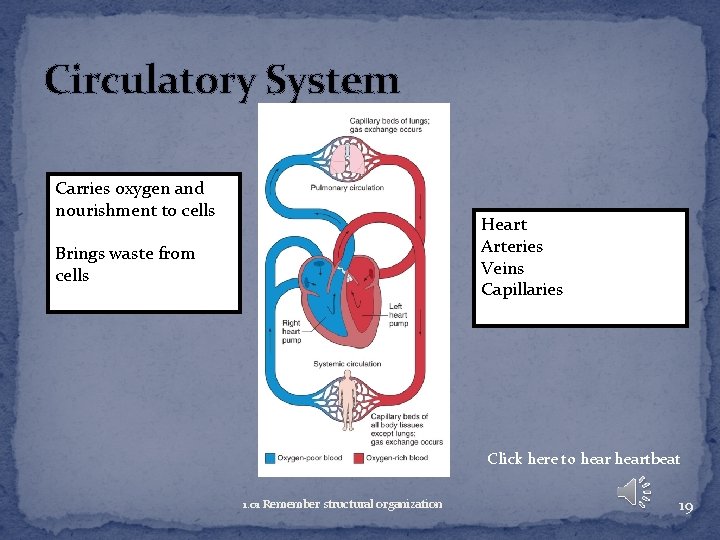
Circulatory System Carries oxygen and nourishment to cells Heart Arteries Veins Capillaries Brings waste from cells Click here to heartbeat 1. 01 Remember structural organization 19
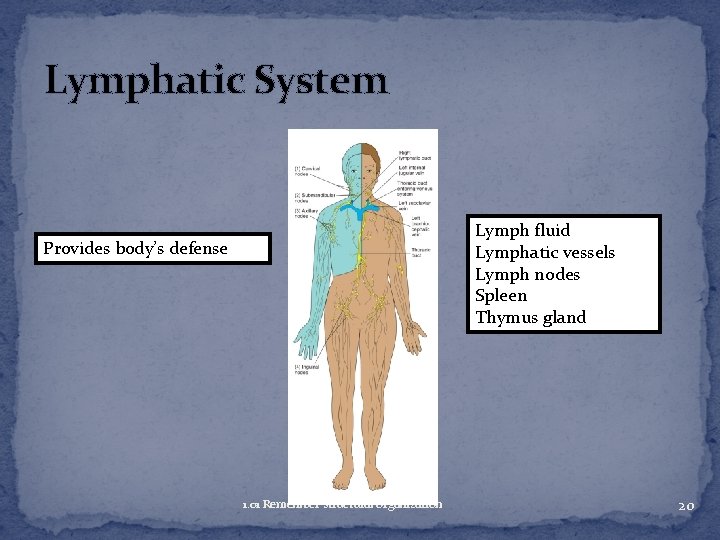
Lymphatic System Lymph fluid Lymphatic vessels Lymph nodes Spleen Thymus gland Provides body’s defense 1. 01 Remember structural organization 20
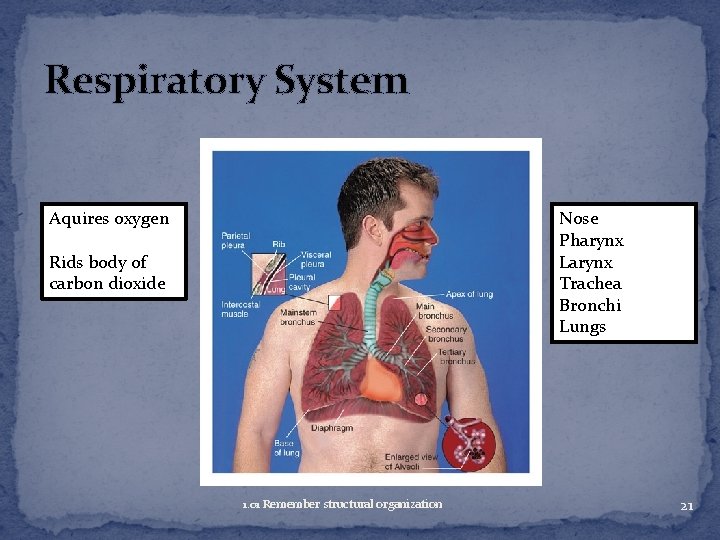
Respiratory System Aquires oxygen Nose Pharynx Larynx Trachea Bronchi Lungs Rids body of carbon dioxide 1. 01 Remember structural organization 21
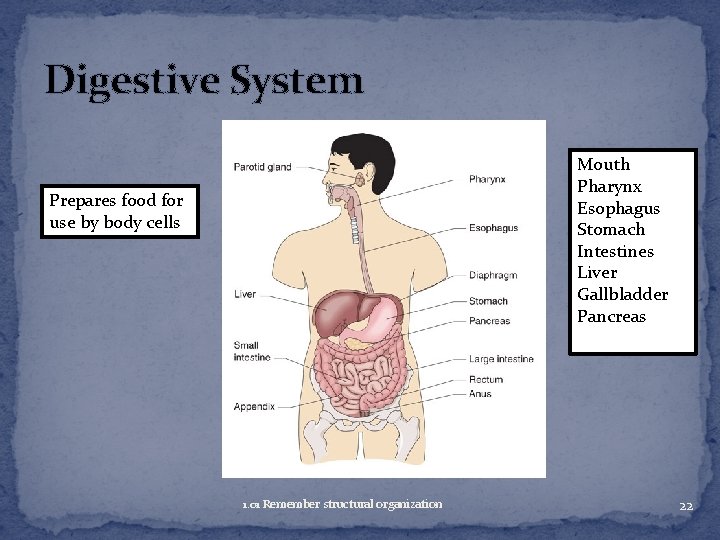
Digestive System Mouth Pharynx Esophagus Stomach Intestines Liver Gallbladder Pancreas Prepares food for use by body cells 1. 01 Remember structural organization 22
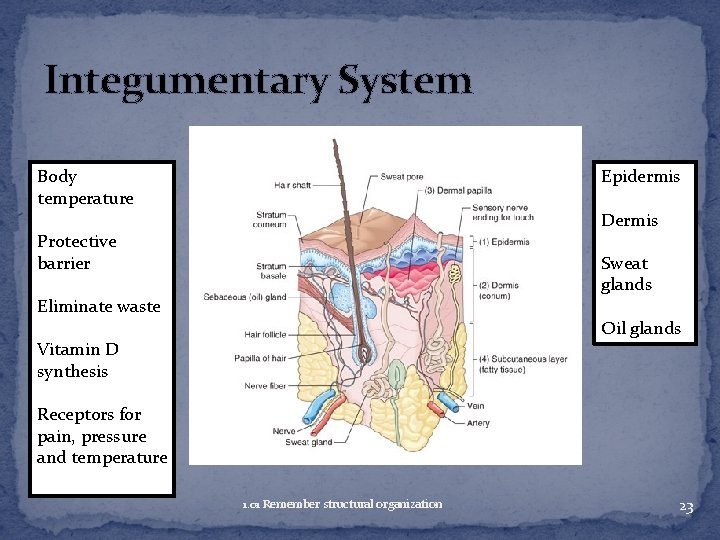
Integumentary System Epidermis Body temperature Dermis Protective barrier Sweat glands Eliminate waste Oil glands Vitamin D synthesis Receptors for pain, pressure and temperature 1. 01 Remember structural organization 23
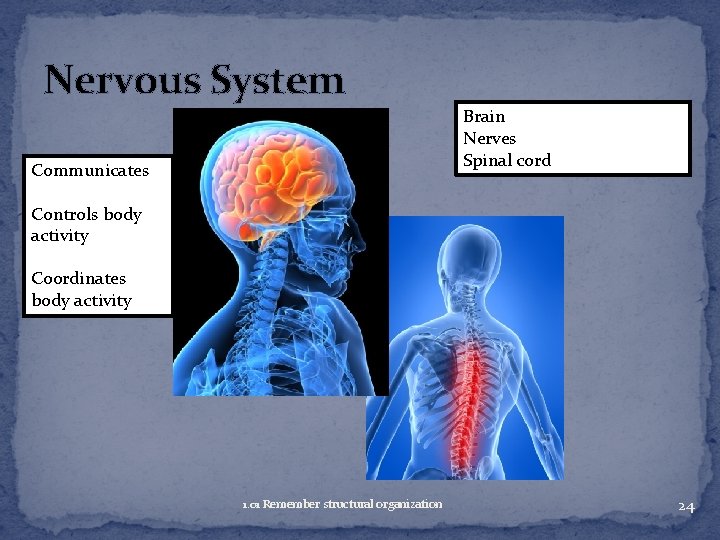
Nervous System Brain Nerves Spinal cord Communicates Controls body activity Coordinates body activity 1. 01 Remember structural organization 24
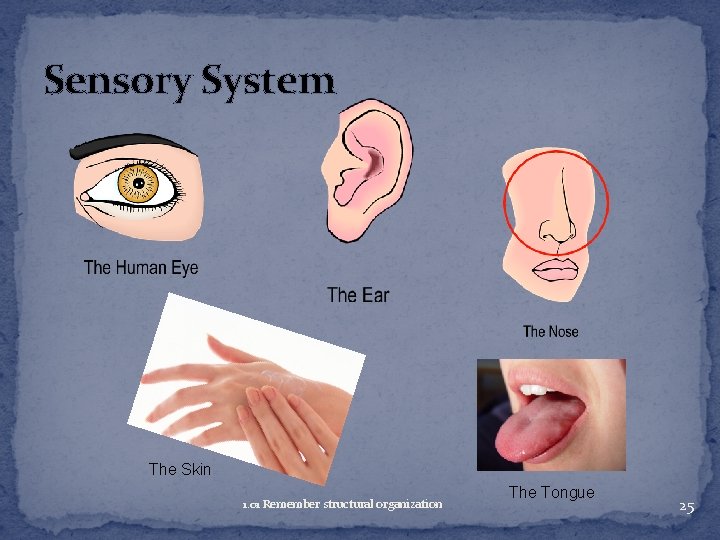
Sensory System The Skin 1. 01 Remember structural organization The Tongue 25
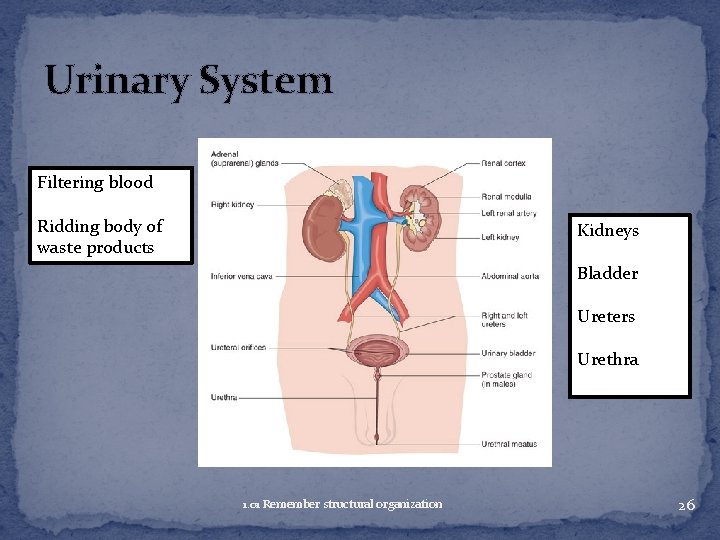
Urinary System Filtering blood Ridding body of waste products Kidneys Bladder Ureters Urethra 1. 01 Remember structural organization 26
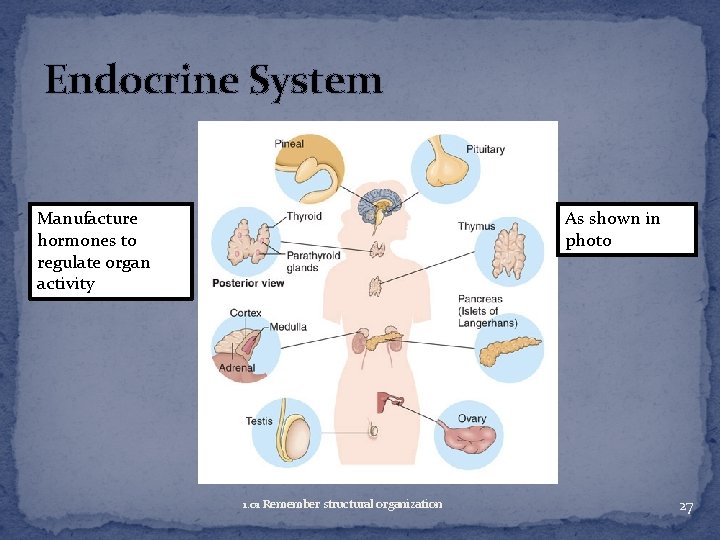
Endocrine System Manufacture hormones to regulate organ activity As shown in photo 1. 01 Remember structural organization 27
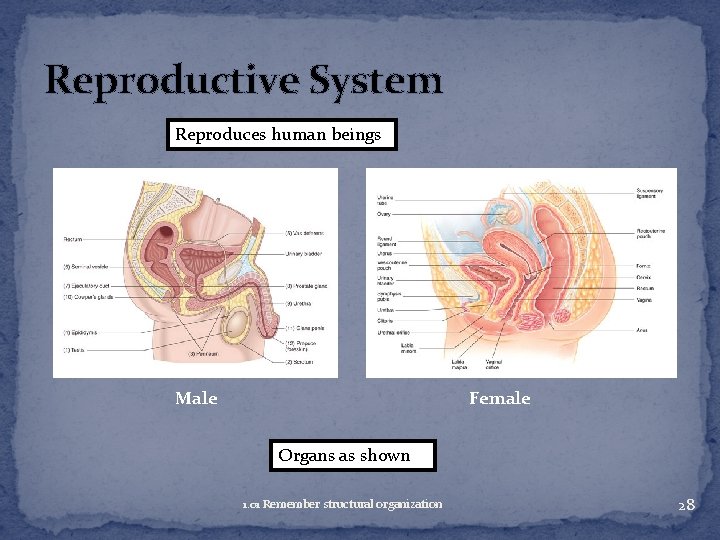
Reproductive System Reproduces human beings Male Female Organs as shown 1. 01 Remember structural organization 28
Structural organization units 1. 01 Remember structural organization 29
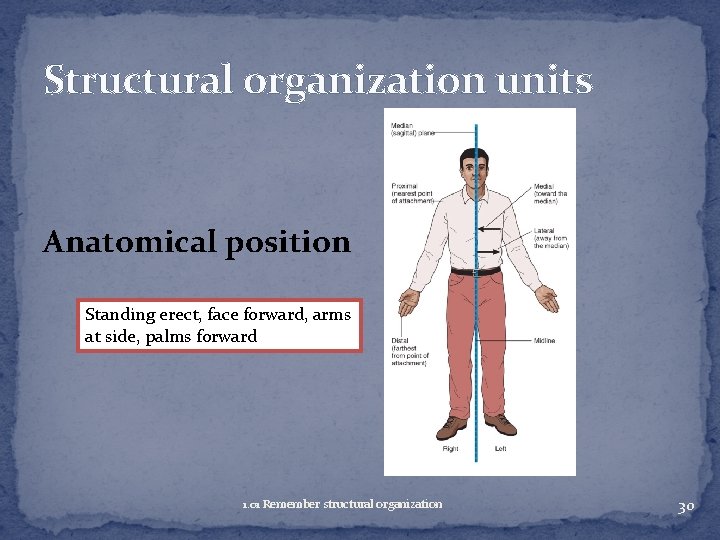
Structural organization units Anatomical position Standing erect, face forward, arms at side, palms forward 1. 01 Remember structural organization 30
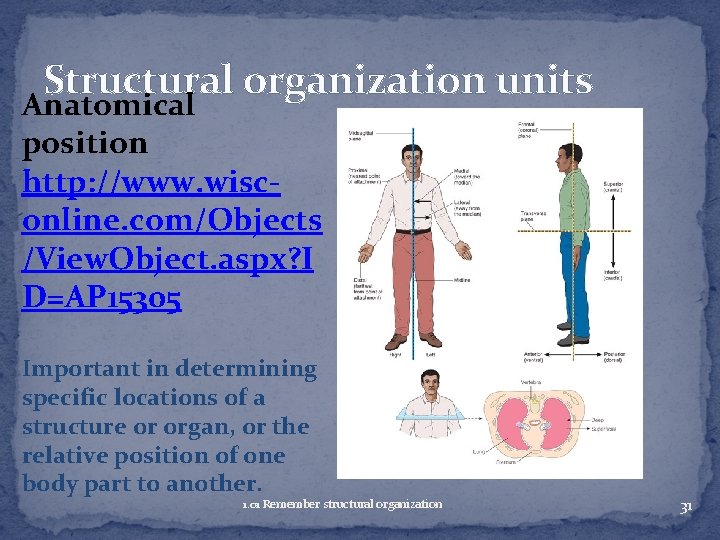
Structural organization units Anatomical position http: //www. wisconline. com/Objects /View. Object. aspx? I D=AP 15305 Important in determining specific locations of a structure or organ, or the relative position of one body part to another. 1. 01 Remember structural organization 31
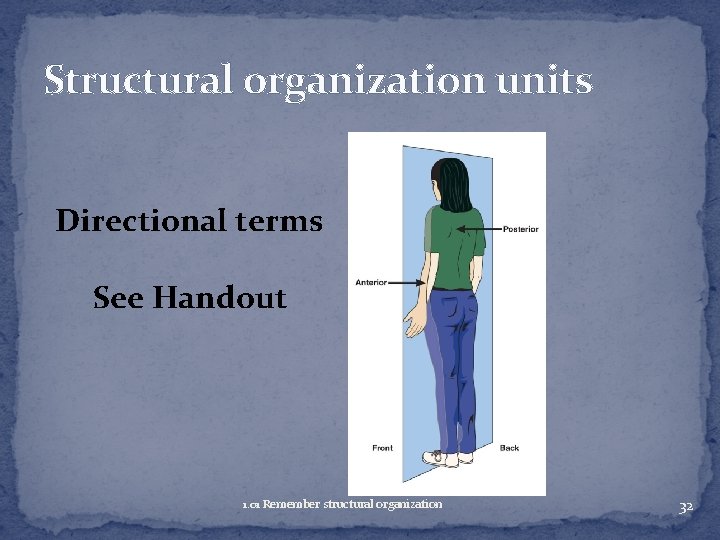
Structural organization units Directional terms See Handout 1. 01 Remember structural organization 32
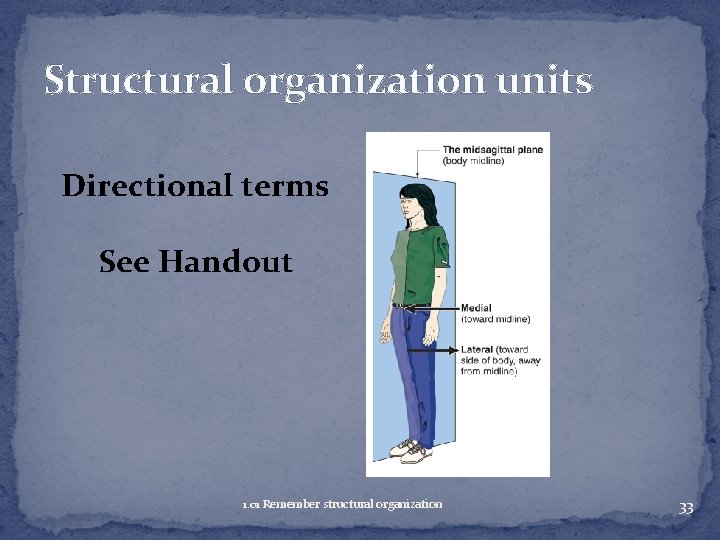
Structural organization units Directional terms See Handout 1. 01 Remember structural organization 33
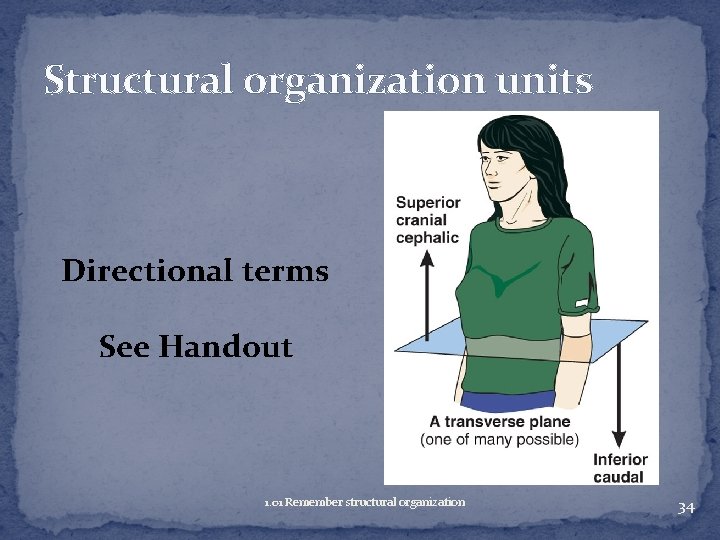
Structural organization units Directional terms See Handout 1. 01 Remember structural organization 34
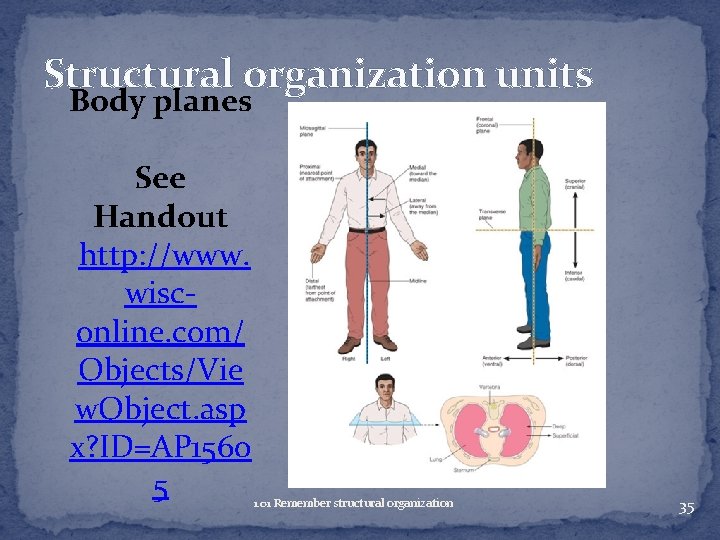
Structural organization units Body planes See Handout http: //www. wisconline. com/ Objects/Vie w. Object. asp x? ID=AP 1560 5 1. 01 Remember structural organization 35
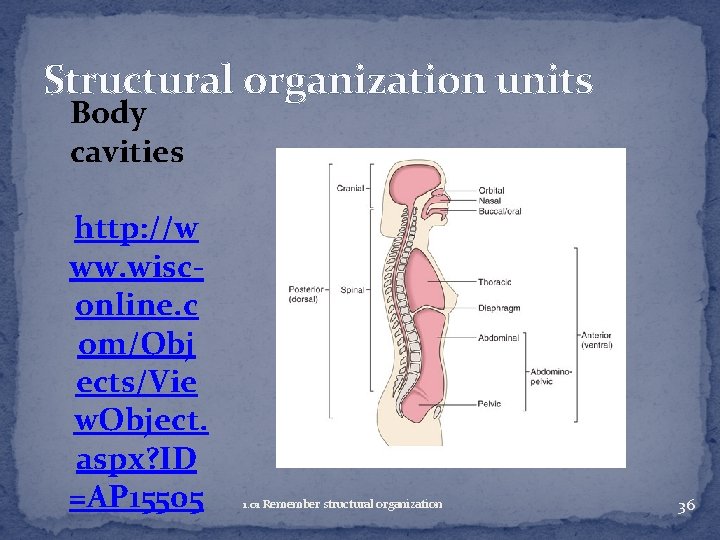
Structural organization units Body cavities http: //w ww. wisconline. c om/Obj ects/Vie w. Object. aspx? ID =AP 15505 1. 01 Remember structural organization 36
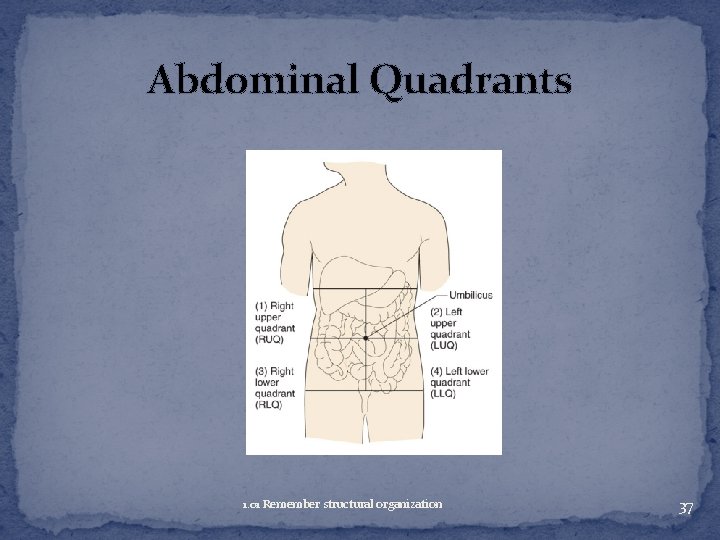
Abdominal Quadrants 1. 01 Remember structural organization 37
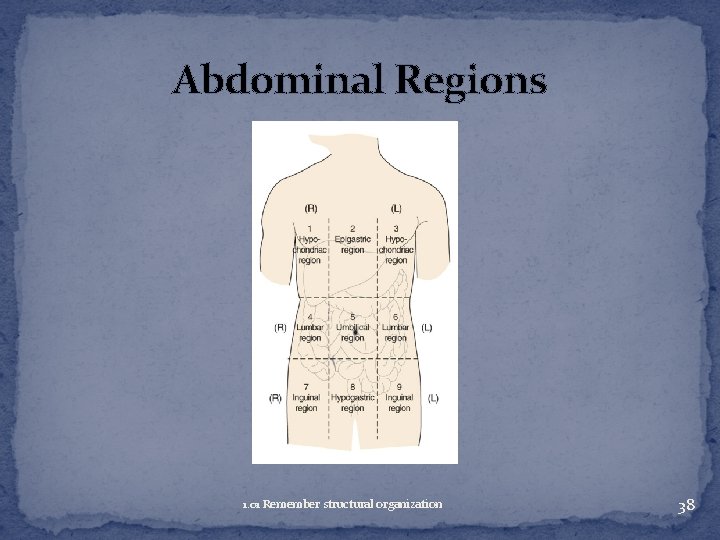
Abdominal Regions 1. 01 Remember structural organization 38
1. 01 Remember structural organization Essential Questions �How is the human body organized? �What are the structural components of the body? �How does the body’s structural organization relate to its support and movement? 1. 01 Remember structural organization 39
- Slides: 39