
Human Biology Sylvia S Mader Michael Windelspecht Chapter
Human Biology Sylvia S. Mader Michael Windelspecht Chapter 1 Exploring Life and Science Lecture Outline Part 2 Copyright © The Mc. Graw-Hill Companies, Inc. Permission required for reproduction or display. 1
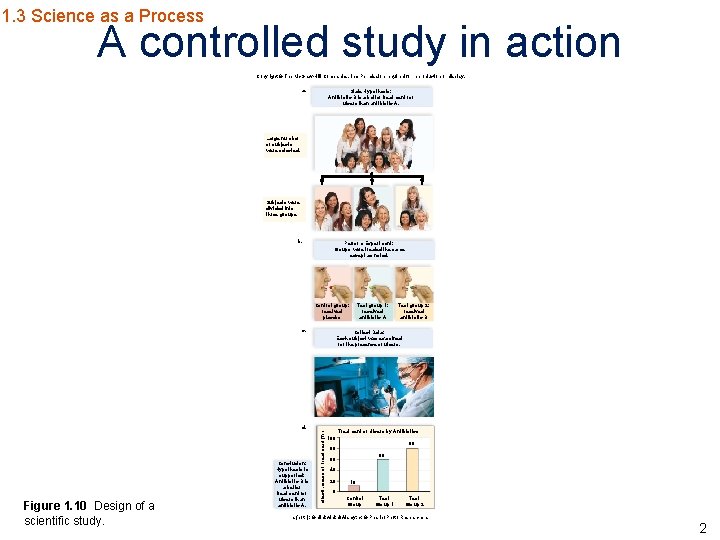
1. 3 Science as a Process A controlled study in action Copyright © The Mc. Graw-Hill Companies, Inc. Permission required for reproduction or display. a. State Hypothesis: Antibiotic B is a better treatment for ulcers than antibiotic A. Large number of subjects were selected. Subjects were divided into three groups. b. Perform Experiment: Groups were treated the same except as noted. Control group: received placebo c. Effectiveness of Treatment (%) Figure 1. 10 Design of a scientific study. Test group 2: received antibiotic B Collect Data: Each subject was examined for the presence of ulcers. d. Conclusion: Hypothesis is supported: Antibiotic B is a better treatment for ulcers than antibiotic A. Test group 1: received antibiotic A Treatment of Ulcers by Antibiotics 100 80 80 60 60 40 20 10 0 Control Group Test Group 1 Test Group 2 a (both): © blickwinkel/Alamy; c: © Phanie/Photo Researchers 2
1. 3 Science as a Process Reading about scientific information • Scientific journals are considered the best source of information but can be difficult for the _______to understand. • Often the lay person reads _______ and must be wary of information taken out of context. • Be careful of information on the _______ by using reliable sources such as URLs with. edu, . gov and. org. 3
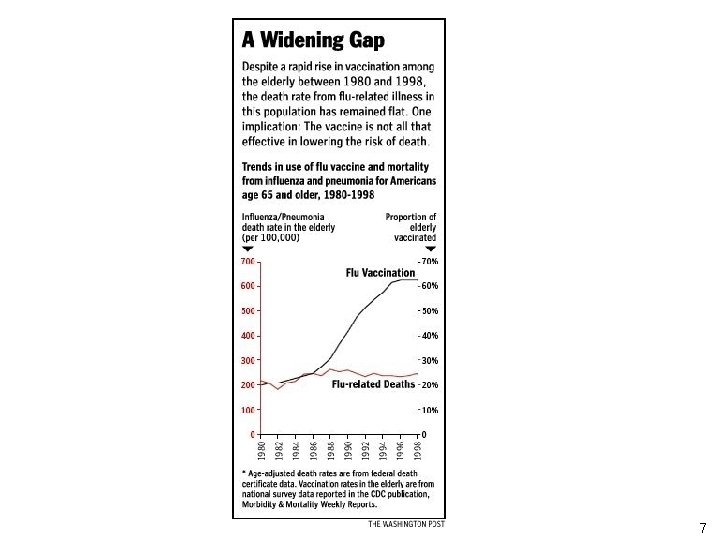
1. 4 Making Sense of a Scientific Study What should you look for when you read about science? • Beware of anecdotal data. • Understand methodology and results. • Does the data justify the conclusions inferred by the scientists? • Be able to read a graph. • Have some understanding of statistics. 4
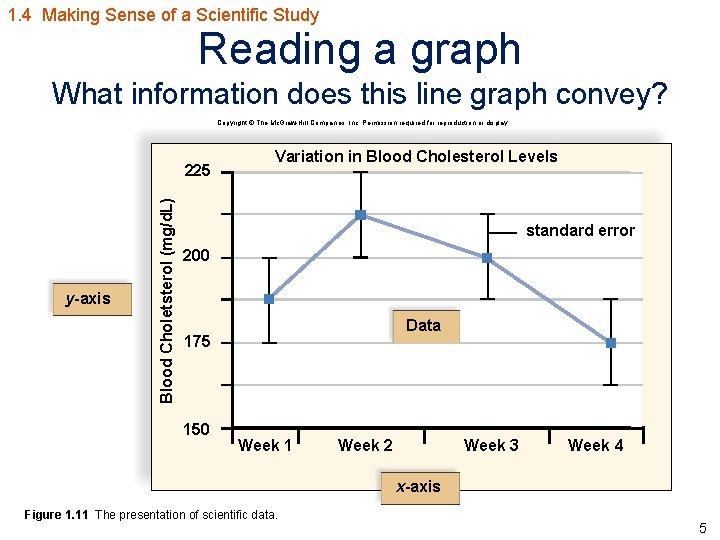
1. 4 Making Sense of a Scientific Study Reading a graph What information does this line graph convey? Copyright © The Mc. Graw-Hill Companies, Inc. Permission required for reproduction or display. y-axis Blood Choletsterol (mg/d. L) 225 Variation in Blood Cholesterol Levels standard error 200 Data 175 150 Week 1 Week 2 Week 3 Week 4 x-axis Figure 1. 11 The presentation of scientific data. 5
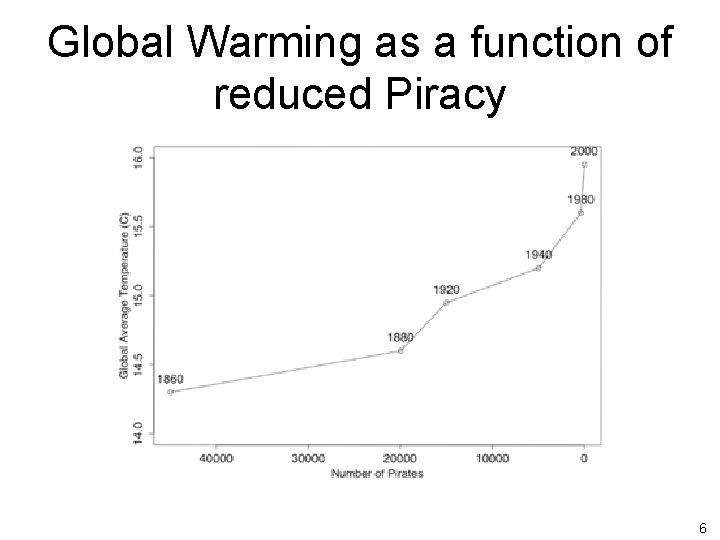
Global Warming as a function of reduced Piracy 6
7
1. 5 Science and Social Responsibility Does science have social responsibilities? • Science is a way of acquiring knowledge about the natural world through a ________ separating it from ethics, religion, and aesthetics. 8
1. 5 Science and Social Responsibility Does science have social responsibilities? • Technology is the application of scientific knowledge to human interests. - Biotechnology (genetically modified bacteria and genetically modified crops) - Gene technology (cloning of humans or gene therapy to modify inheritance) - Use of stem cells from embryos (embryonic stem cells) 9
1. 5 Science and Social Responsibility Everyone is responsible • The Western world believes that science and technology improve our lives. • All citizens should assume responsibility. • Everyone needs to be involved in making value judgments about the proper use of technology. • You will learn more about all of these as you venture through this text. Consider your opinions. 10
- Slides: 10