
Human Biology Digestive System Ch 38 1 True
Human Biology Digestive System Ch. 38 1
True or False 1. 2. 3. 4. 5. 6. 2 Your mouth digests sugar only. Your large intestine is involved in digestion of fat. Your stomach juice is basic. Most of the digestive enzymes are produced by pancreas. Most of the digestion takes place in the small intestine. The enzyme pepsin breaks down carbohydrates.
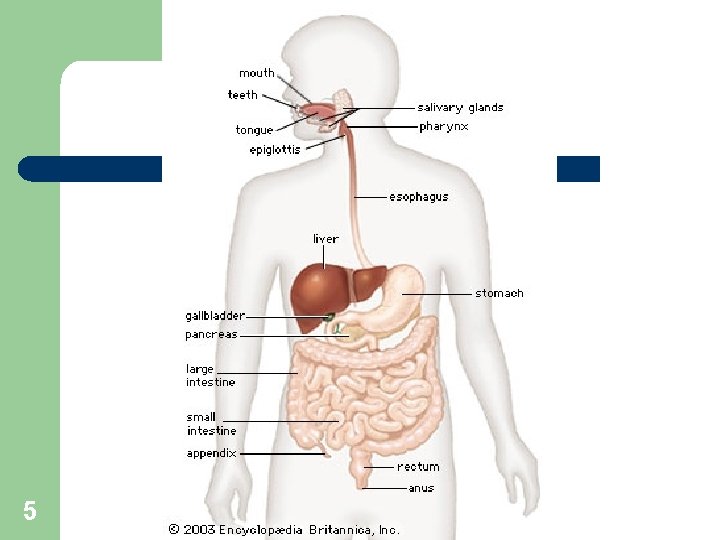
Function of Digestive System l l l 3 Digest food Absorb nutrients Eliminate wastes
Types of Digestion Mechanical Digestion -physical breaking down of food into smaller parts (chewing, grinding) -increases surface area to maximize rate of absorption. 1. 2. - 4 Chemical Digestion Breaking down of food into smaller substances by enzymes Ex. Carbohydrates can be broken down into simple sugar, glucose
5
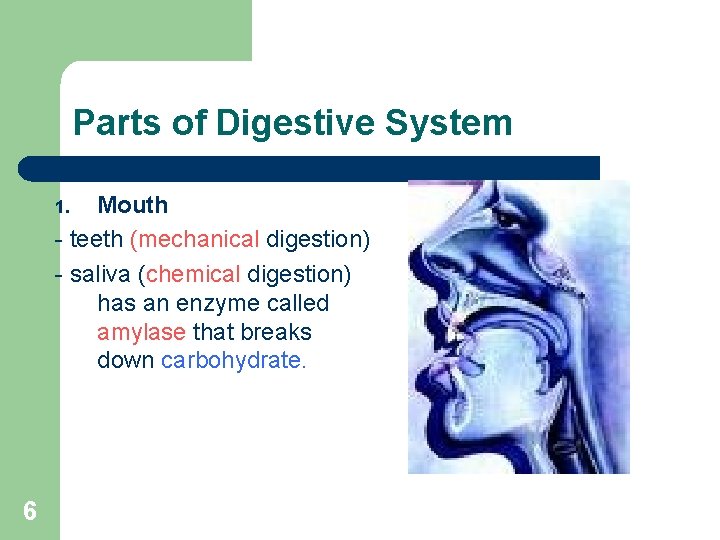
Parts of Digestive System Mouth - teeth (mechanical digestion) - saliva (chemical digestion) has an enzyme called amylase that breaks down carbohydrate. 1. 6
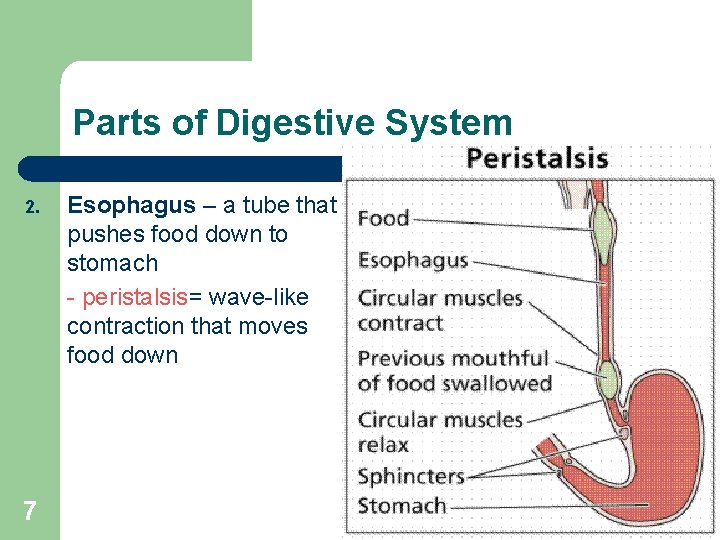
Parts of Digestive System 2. 7 Esophagus – a tube that pushes food down to stomach - peristalsis= wave-like contraction that moves food down
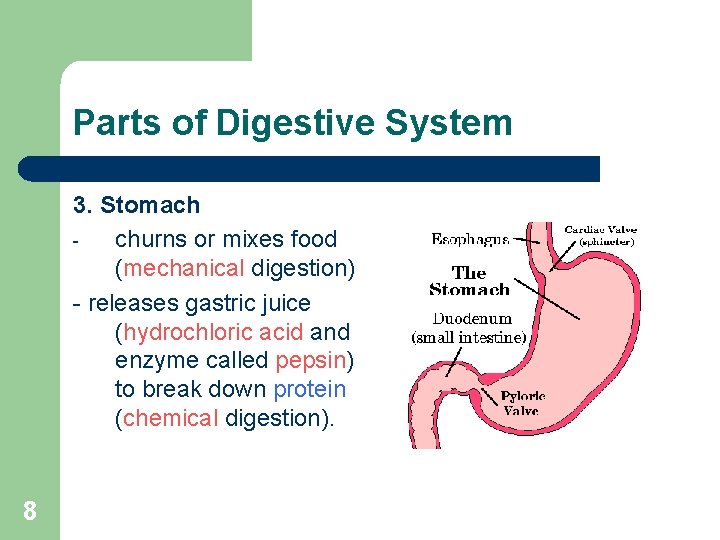
Parts of Digestive System 3. Stomach churns or mixes food (mechanical digestion) - releases gastric juice (hydrochloric acid and enzyme called pepsin) to break down protein (chemical digestion). 8
Parts of Digestive System 9 4. Small Intestine – most digestion takes place in the first part of small intestine called duodenum carbohydrates (amylase) fats (bile, lipase) nucleic acid (nuclease) proteins (protease, trypsin, carboxylpeptidase) - All the enzymes are released by pancreas and bile is produced by liver.
Parts of Digestive System 5. Large Intestine – water and vitamins absorbed 6. Rectum – stores wastes 7. Anus – opening for elimination of solid waste 10
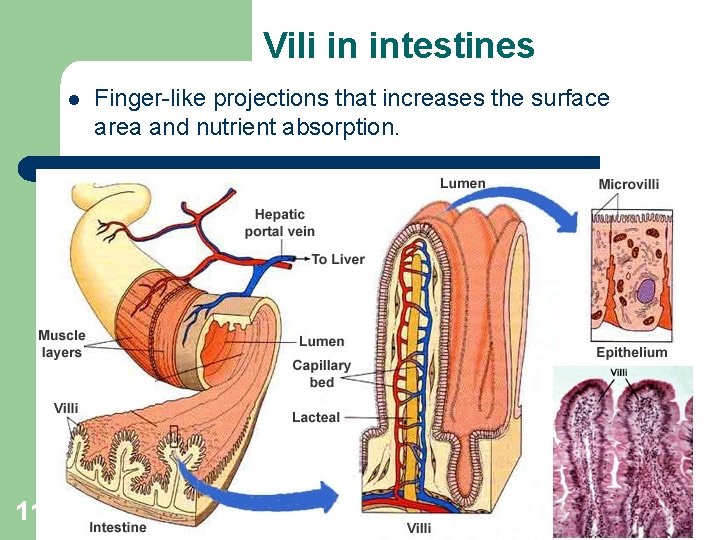
Vili in intestines l 11 Finger-like projections that increases the surface area and nutrient absorption.
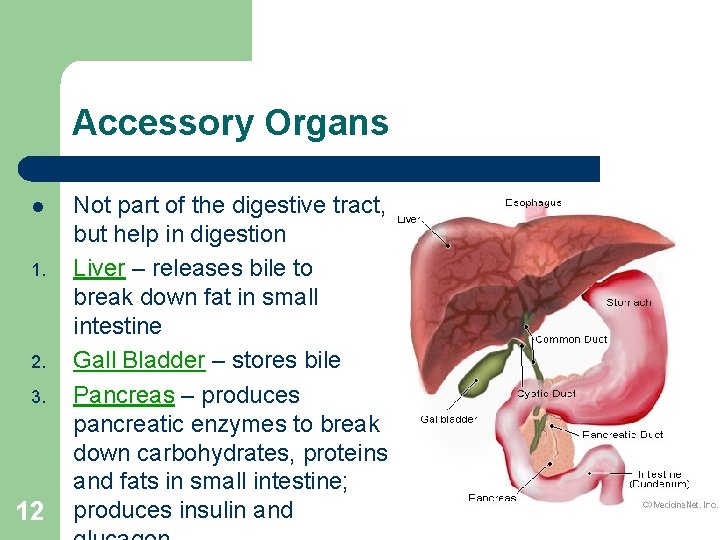
Accessory Organs l 1. 2. 3. 12 Not part of the digestive tract, but help in digestion Liver – releases bile to break down fat in small intestine Gall Bladder – stores bile Pancreas – produces pancreatic enzymes to break down carbohydrates, proteins and fats in small intestine; produces insulin and
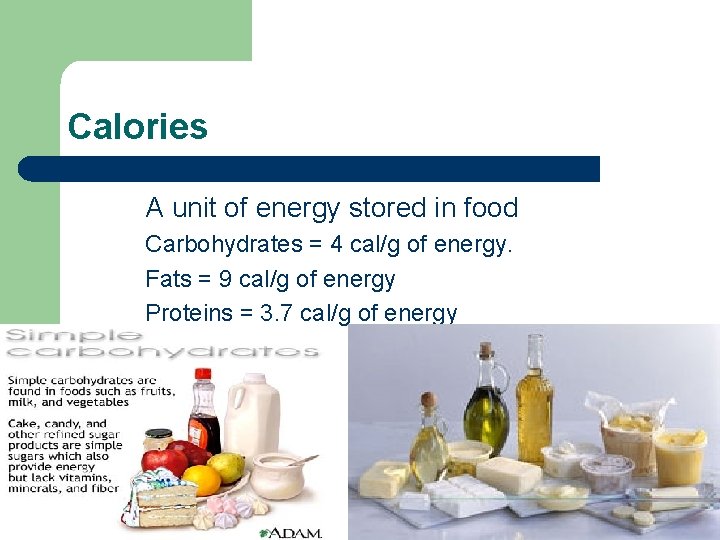
Calories A unit of energy stored in food Carbohydrates = 4 cal/g of energy. Fats = 9 cal/g of energy Proteins = 3. 7 cal/g of energy 13
Vitamins & Minerals l l l l 14 Necessary to carry out every day chemical reactions in human body. Vitamin A – good for skin & vision Vitamin B – metabolism (esp. fat & carbs) Vitamin C – antioxidant, tissue repair & would healing Vitamin D – makes the bones stronger by allowing bones to absorb calcium from the blood better Vitamin E – prevents cellular damage; good for skin Vitamin K – blood clotting
- Slides: 14