
Human AnatomyPhysiology Reproduction Slides HUMAN REPRODUCTION 27 2

- Slides: 14
Human Anatomy/Physiology Reproduction Slides
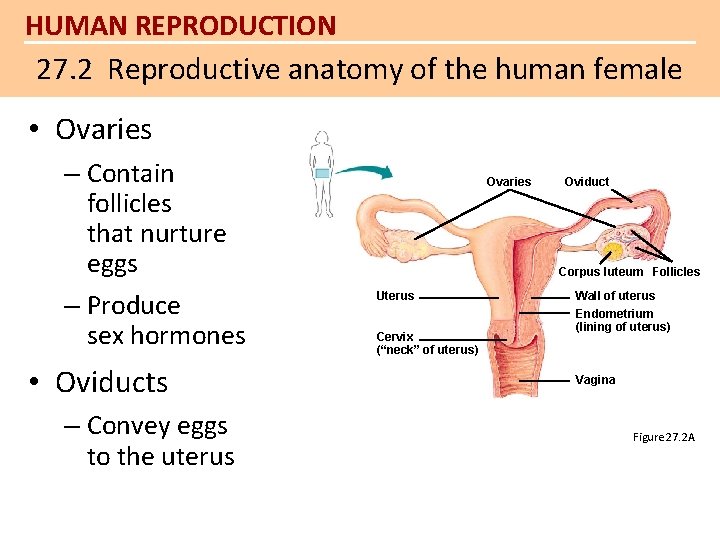
HUMAN REPRODUCTION 27. 2 Reproductive anatomy of the human female • Ovaries – Contain follicles that nurture eggs – Produce sex hormones • Oviducts – Convey eggs to the uterus Ovaries Oviduct Corpus luteum Follicles Uterus Cervix (“neck” of uterus) Wall of uterus Endometrium (lining of uterus) Vagina Figure 27. 2 A
• Uterus – Development of fertilized egg – Opens into the vagina Ovaries • Vagina – Receives penis during intercourse – Forms the birth canal Oviduct Corpus luteum Follicles Uterus Cervix (“neck” of uterus) Wall of uterus Endometrium (lining of uterus) Vagina Figure 27. 2 A
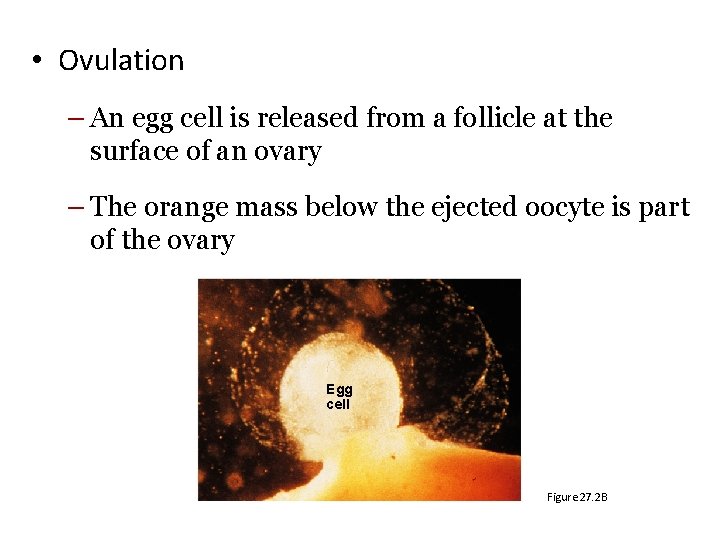
• Ovulation – An egg cell is released from a follicle at the surface of an ovary – The orange mass below the ejected oocyte is part of the ovary Egg cell Figure 27. 2 B
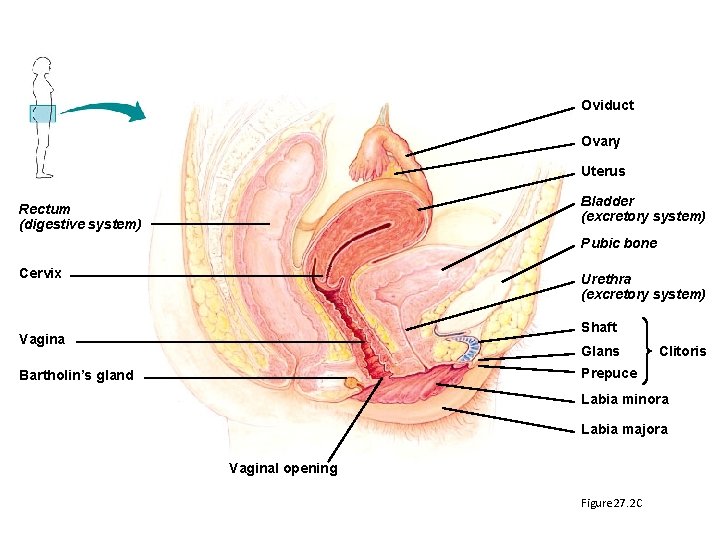
Oviduct Ovary Uterus Bladder (excretory system) Rectum (digestive system) Pubic bone Cervix Urethra (excretory system) Shaft Vagina Glans Clitoris Prepuce Bartholin’s gland Labia minora Labia majora Vaginal opening Figure 27. 2 C
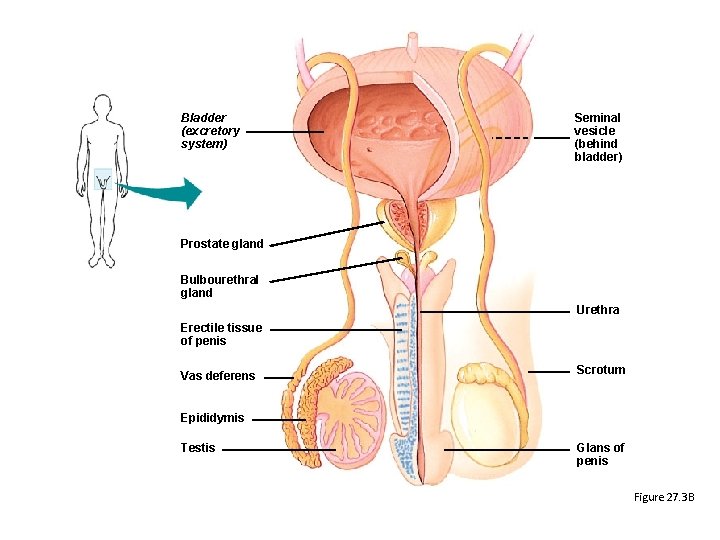
Bladder (excretory system) Seminal vesicle (behind bladder) Prostate gland Bulbourethral gland Urethra Erectile tissue of penis Vas deferens Scrotum Epididymis Testis Glans of penis Figure 27. 3 B
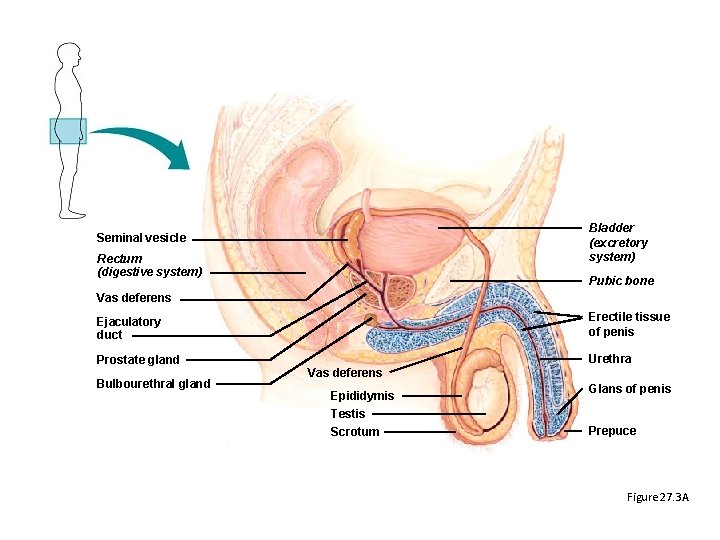
Bladder (excretory system) Seminal vesicle Rectum (digestive system) Pubic bone Vas deferens Ejaculatory duct Erectile tissue of penis Prostate gland Urethra Bulbourethral gland Vas deferens Epididymis Testis Scrotum Glans of penis Prepuce Figure 27. 3 A
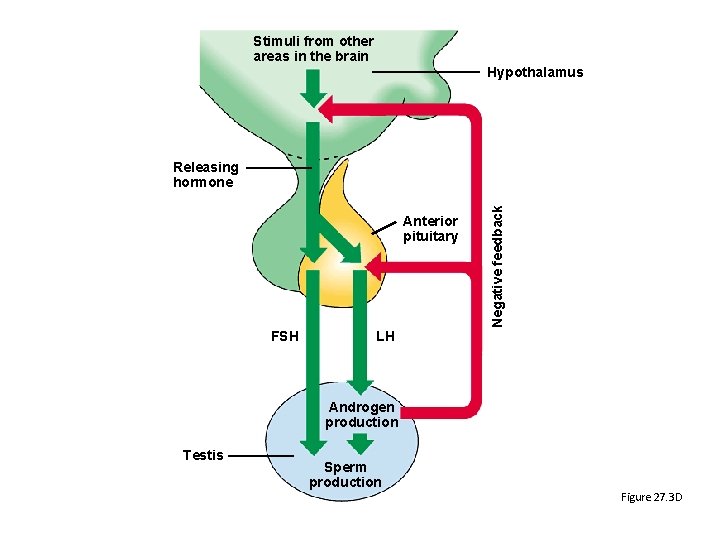
Stimuli from other areas in the brain Hypothalamus Anterior pituitary FSH Negative feedback Releasing hormone LH Androgen production Testis Sperm production Figure 27. 3 D
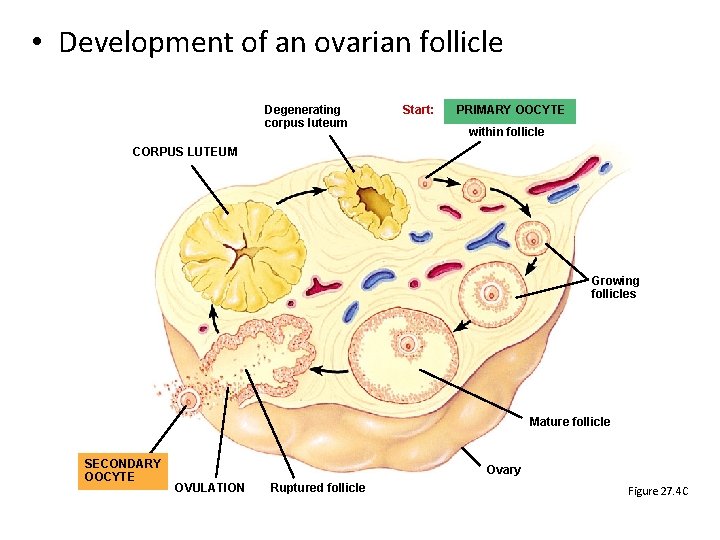
• Development of an ovarian follicle Degenerating corpus luteum Start: PRIMARY OOCYTE within follicle CORPUS LUTEUM Growing follicles Mature follicle SECONDARY OOCYTE Ovary OVULATION Ruptured follicle Figure 27. 4 C
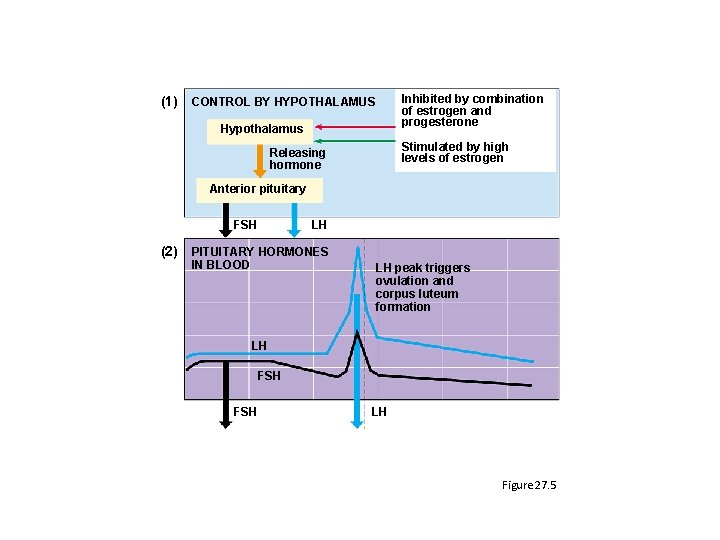
(1) Inhibited by combination of estrogen and progesterone CONTROL BY HYPOTHALAMUS Hypothalamus Stimulated by high levels of estrogen Releasing hormone Anterior pituitary FSH (2) LH PITUITARY HORMONES IN BLOOD LH peak triggers ovulation and corpus luteum formation LH FSH LH Figure 27. 5
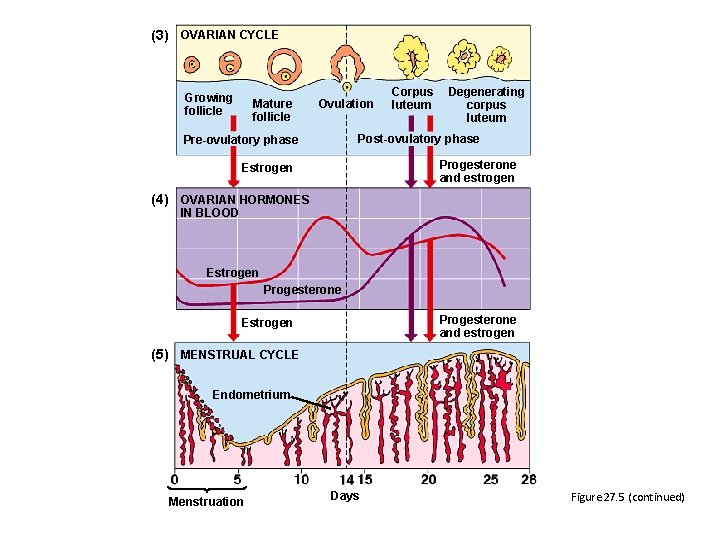
(3) OVARIAN CYCLE Growing follicle Mature follicle Ovulation Corpus luteum Degenerating corpus luteum Post-ovulatory phase Pre-ovulatory phase Progesterone and estrogen Estrogen (4) OVARIAN HORMONES IN BLOOD Estrogen Progesterone and estrogen Estrogen (5) MENSTRUAL CYCLE Endometrium Menstruation Days Figure 27. 5 (continued)
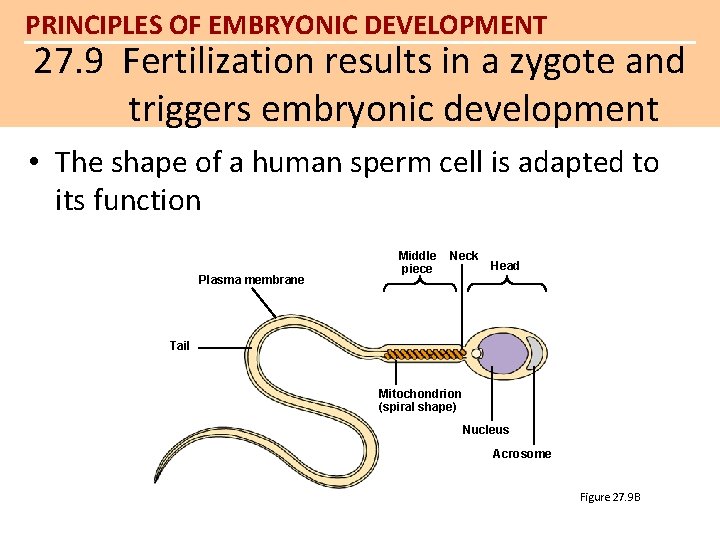
PRINCIPLES OF EMBRYONIC DEVELOPMENT 27. 9 Fertilization results in a zygote and triggers embryonic development • The shape of a human sperm cell is adapted to its function Plasma membrane Middle piece Neck Head Tail Mitochondrion (spiral shape) Nucleus Acrosome Figure 27. 9 B
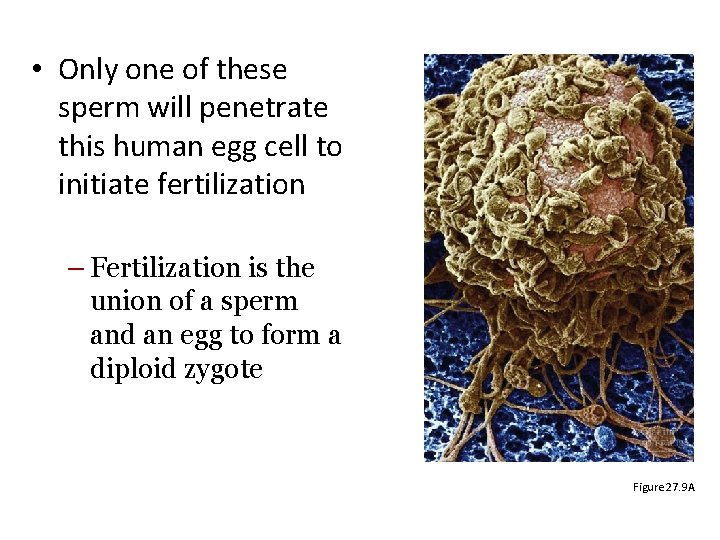
• Only one of these sperm will penetrate this human egg cell to initiate fertilization – Fertilization is the union of a sperm and an egg to form a diploid zygote Figure 27. 9 A
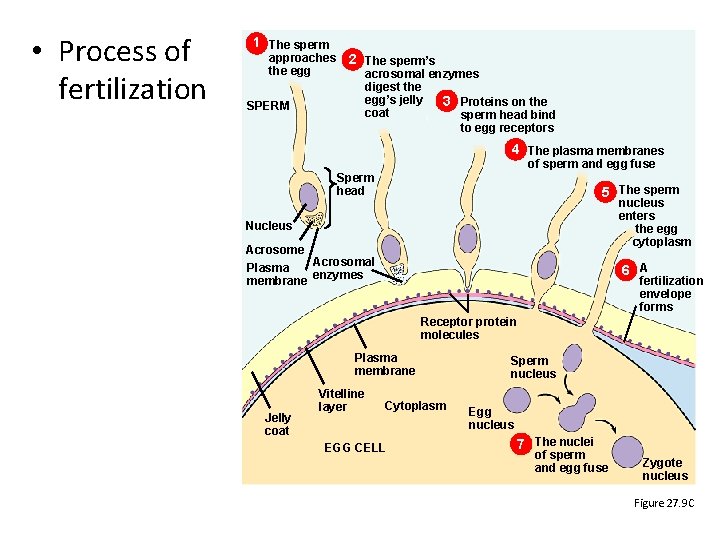
• Process of fertilization 1 The sperm approaches the egg 2 The sperm’s acrosomal enzymes digest the egg’s jelly 3 Proteins on the coat sperm head bind to egg receptors SPERM 4 The plasma membranes of sperm and egg fuse Sperm head 5 The sperm nucleus enters the egg cytoplasm Nucleus Acrosome Acrosomal Plasma membrane enzymes 6 A fertilization envelope forms Receptor protein molecules Plasma membrane Jelly coat Vitelline layer Cytoplasm EGG CELL Sperm nucleus Egg nucleus 7 The nuclei of sperm and egg fuse Zygote nucleus Figure 27. 9 C