
Human Anatomy Physiology I Chapter 1 Instructor Quinn
- Slides: 22
Human Anatomy & Physiology I Chapter 1 Instructor: Quinn V. Bui, DC, MPH, MS Semester: Fall, 2005 Credit: 4 Introduction to Human Anatomy and Physiology chap 1 student 1 -1
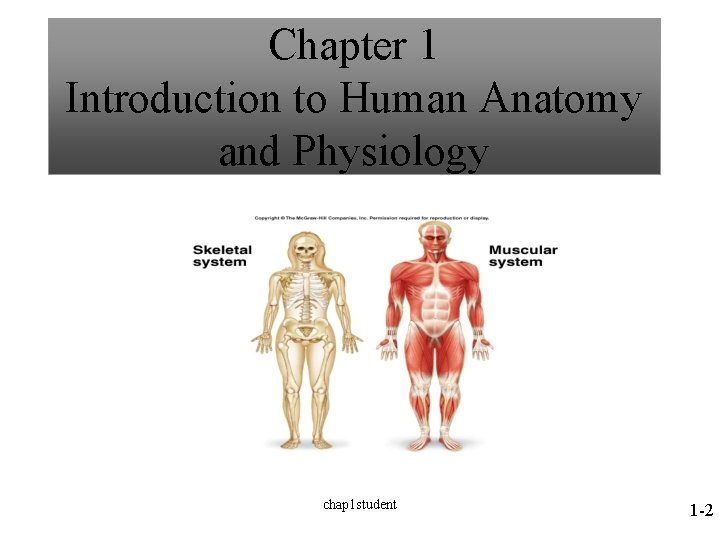
Chapter 1 Introduction to Human Anatomy and Physiology chap 1 student 1 -2
Anatomy and Physiology Anatomy – __________ Physiology – _________ Structure is always related to function chap 1 student 1 -3
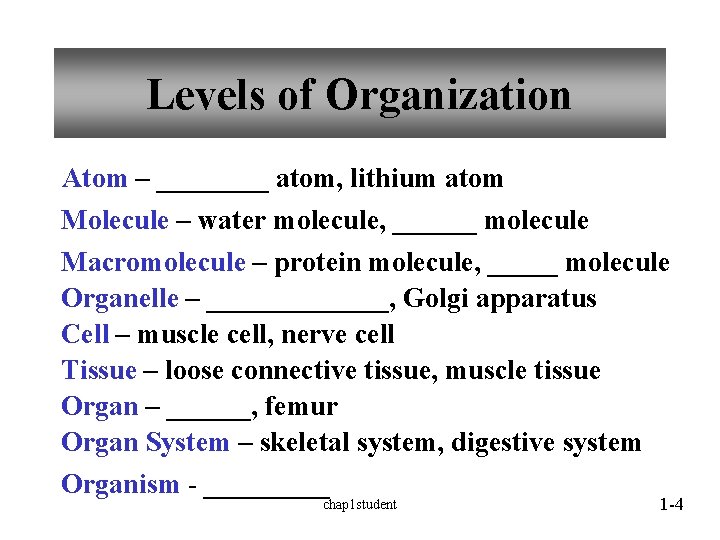
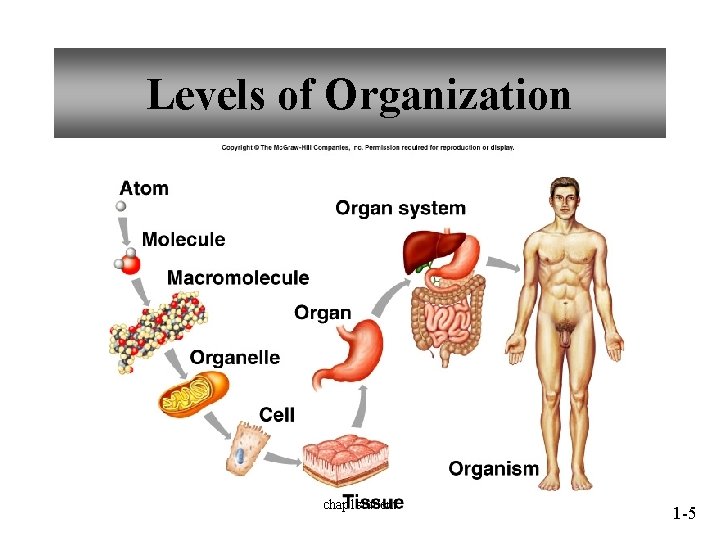
Levels of Organization Atom – ____ atom, lithium atom Molecule – water molecule, ______ molecule Macromolecule – protein molecule, _____ molecule Organelle – _______, Golgi apparatus Cell – muscle cell, nerve cell Tissue – loose connective tissue, muscle tissue Organ – ______, femur Organ System – skeletal system, digestive system Organism - _____ chap 1 student 1 -4
Levels of Organization chap 1 student 1 -5
Characteristics of Life Movement – ________; motion Responsiveness – _______ a change Growth – increase in size Reproduction – production of new organisms and new cells Respiration – obtaining _____; removing carbon dioxide; releasing energy from foods chap 1 student 1 -6
Characteristics of Life Digestion – breakdown of food substances Absorption – passage of ______ through membranes and into body fluids Circulation – movement of substances in body fluids Assimilation – changing of _________ into different substances Excretion – removal of wastes chap 1 student 1 -7
Requirements of Organisms Water - _______ substance in body - required for ________ processes - required for transport - regulates __________ Food - supply energy - supply raw materials chap 1 student 1 -8
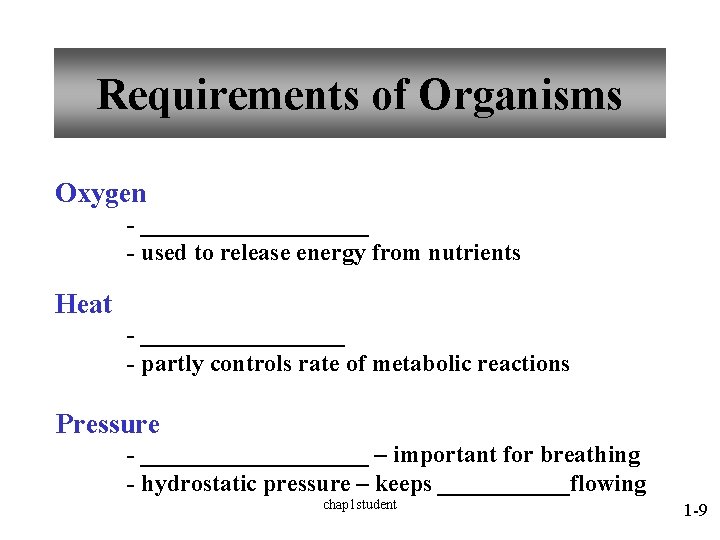
Requirements of Organisms Oxygen - __________ - used to release energy from nutrients Heat - _________ - partly controls rate of metabolic reactions Pressure - __________ – important for breathing - hydrostatic pressure – keeps ______flowing chap 1 student 1 -9
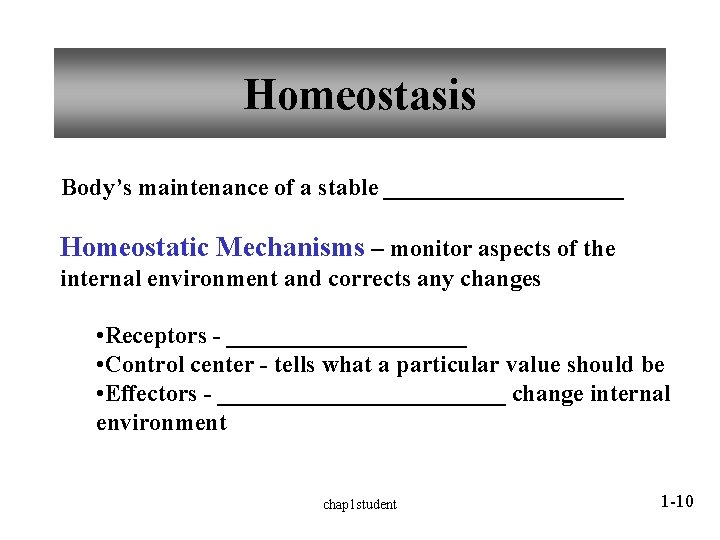
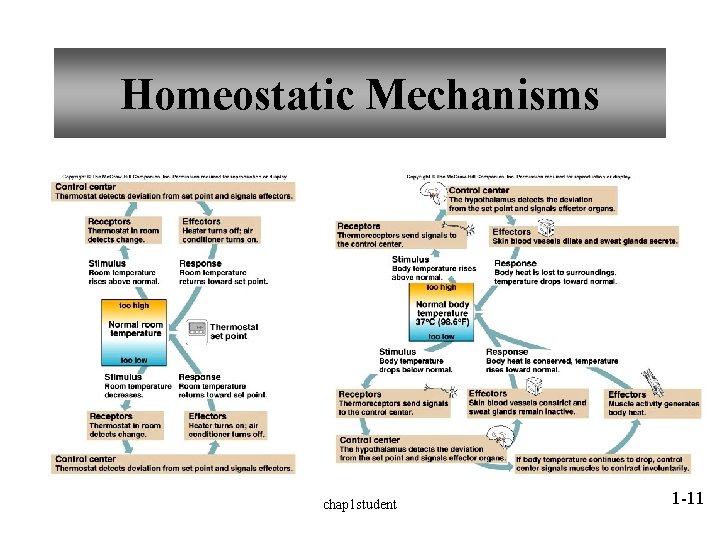
Homeostasis Body’s maintenance of a stable __________ Homeostatic Mechanisms – monitor aspects of the internal environment and corrects any changes • Receptors - __________ • Control center - tells what a particular value should be • Effectors - ____________ change internal environment chap 1 student 1 -10
Homeostatic Mechanisms chap 1 student 1 -11
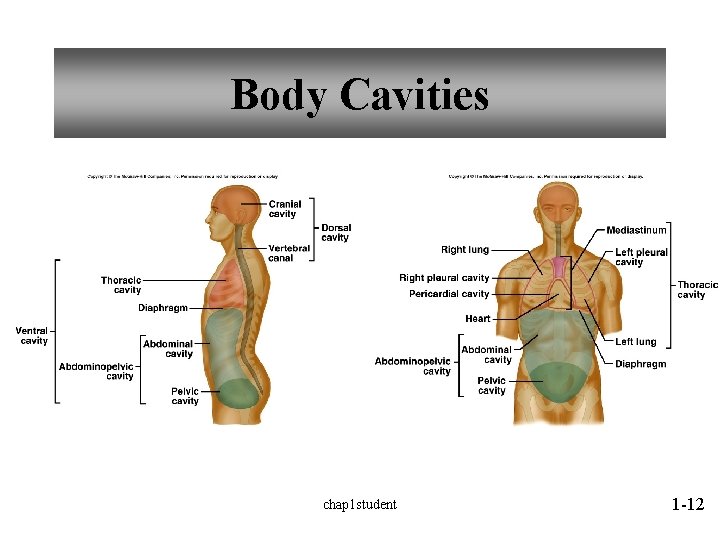
Body Cavities chap 1 student 1 -12
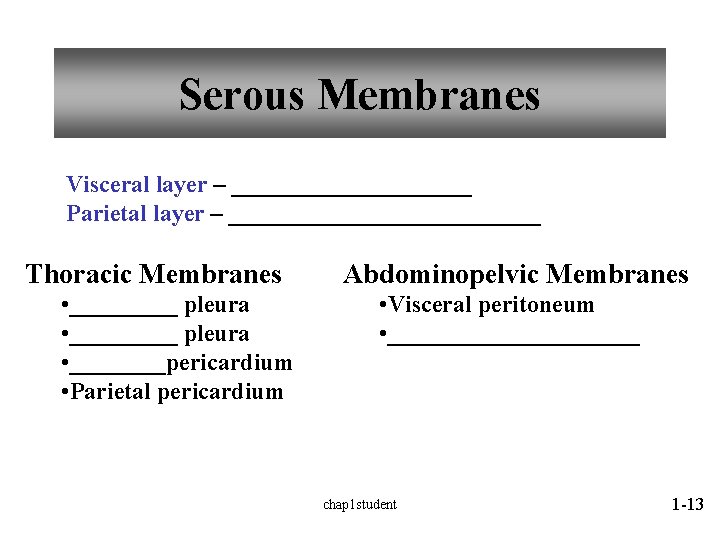
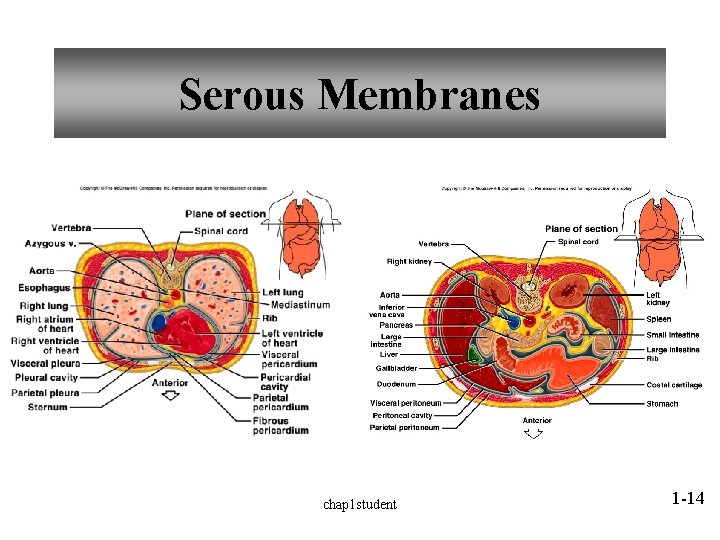
Serous Membranes Visceral layer – __________ Parietal layer – _____________ Thoracic Membranes • _________ pleura • ____pericardium • Parietal pericardium Abdominopelvic Membranes • Visceral peritoneum • ___________ chap 1 student 1 -13
Serous Membranes chap 1 student 1 -14
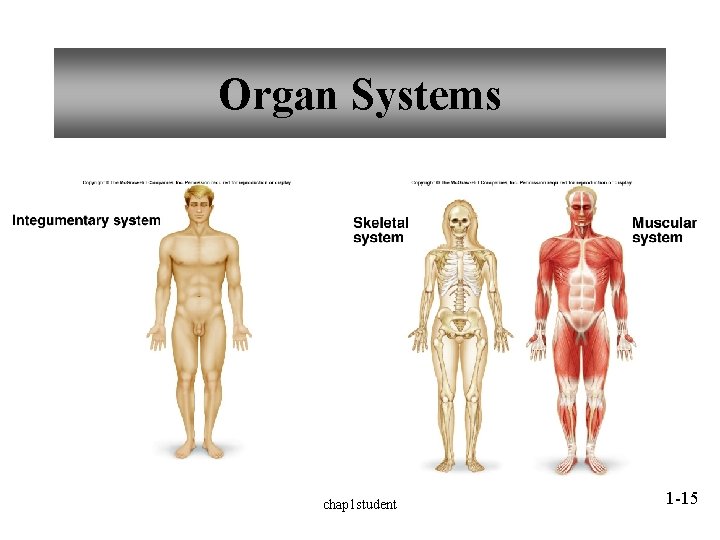
Organ Systems chap 1 student 1 -15
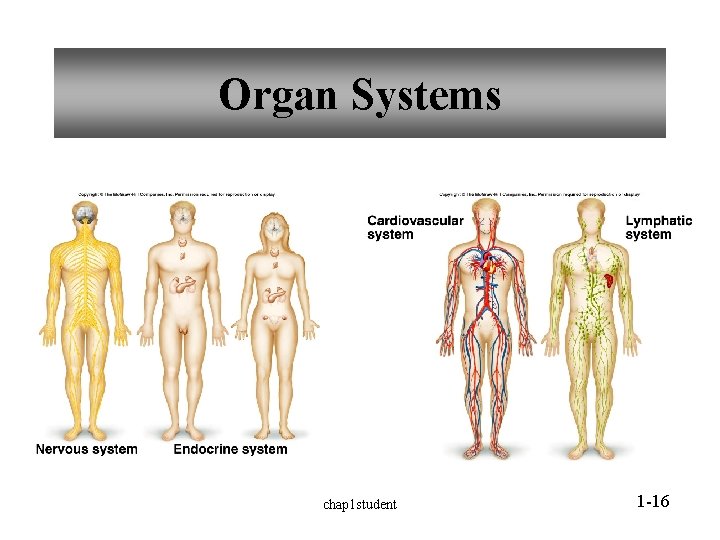
Organ Systems chap 1 student 1 -16
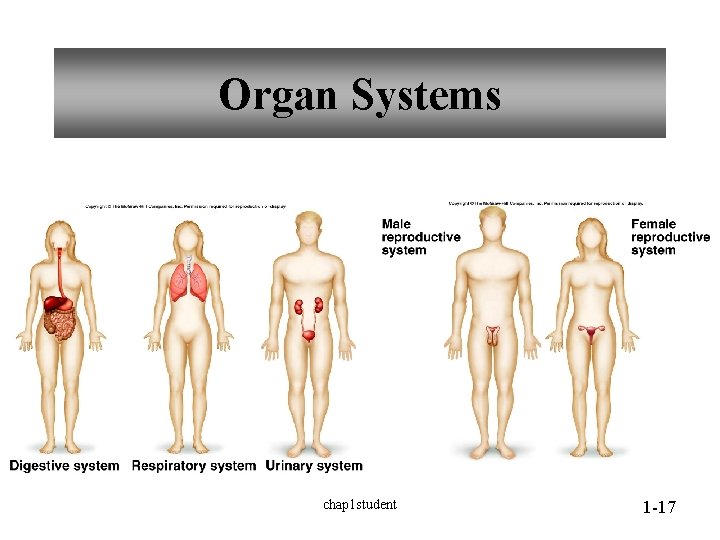
Organ Systems chap 1 student 1 -17
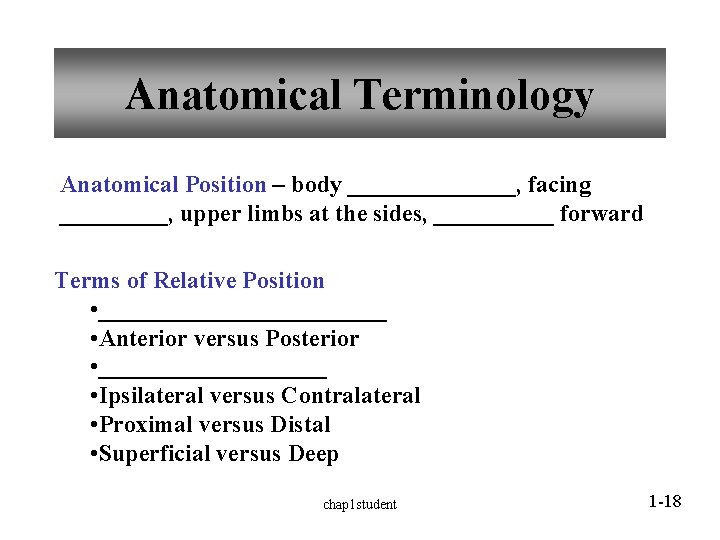
Anatomical Terminology Anatomical Position – body _______, facing _____, upper limbs at the sides, _____ forward Terms of Relative Position • ____________ • Anterior versus Posterior • __________ • Ipsilateral versus Contralateral • Proximal versus Distal • Superficial versus Deep chap 1 student 1 -18
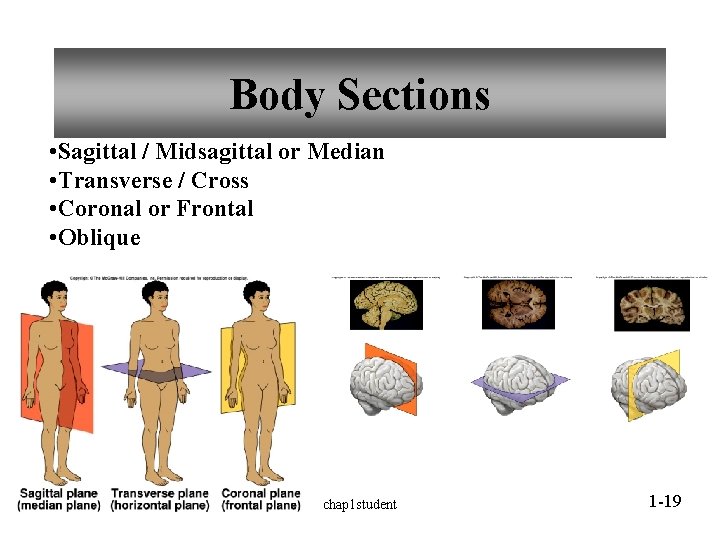
Body Sections • Sagittal / Midsagittal or Median • Transverse / Cross • Coronal or Frontal • Oblique chap 1 student 1 -19
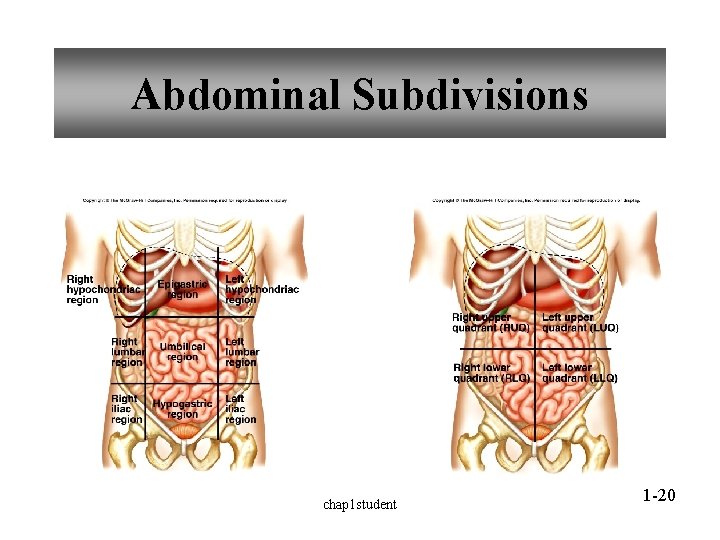
Abdominal Subdivisions chap 1 student 1 -20
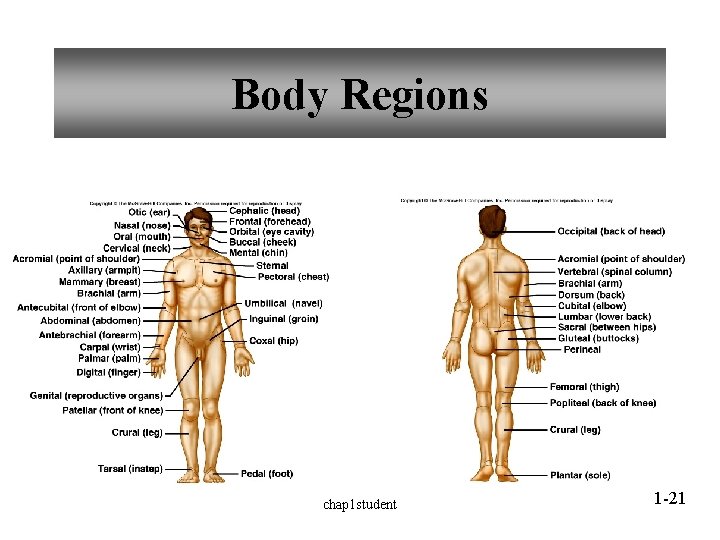
Body Regions chap 1 student 1 -21
Clinical Application Medical Imaging • Noninvasive procedures • Provide images of __________ structures ________ • Use of highfrequency sound waves • Relatively _____ and inexpensive Magnetic Resonance Imaging • Requires _______ • Produces computerized ______, and _____ sections of area being studied chap 1 student 1 -22