
HUMAN ANATOMY LECTURE TWO THE CELL TYPES OF

- Slides: 24
HUMAN ANATOMY LECTURE TWO THE CELL
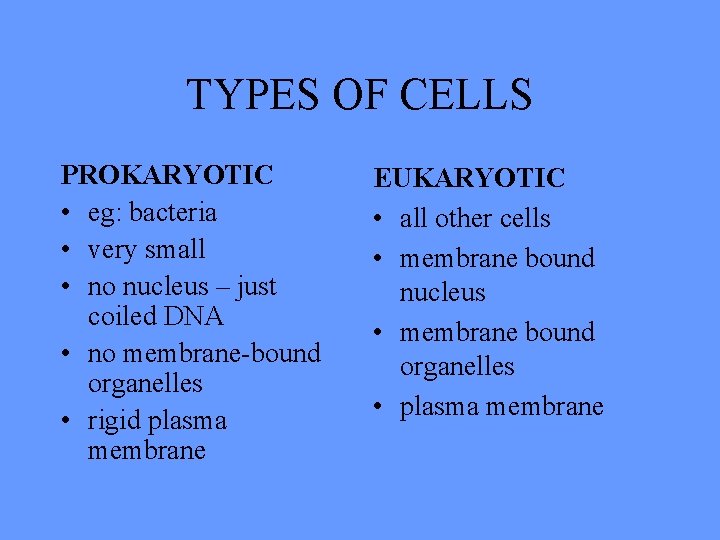
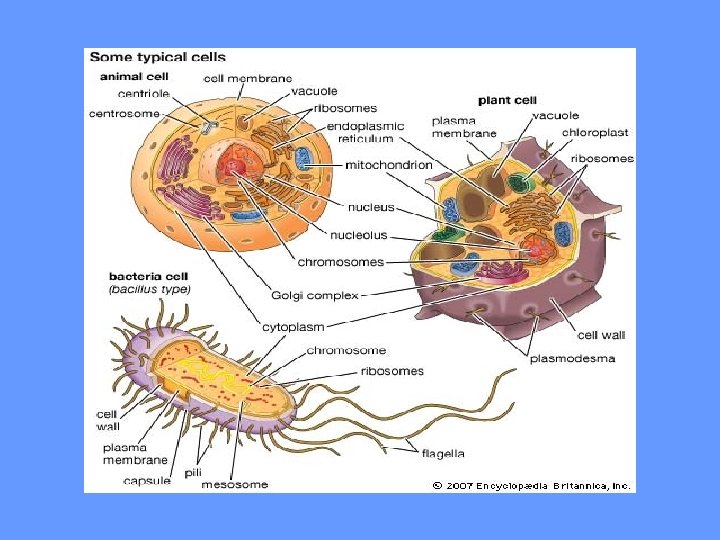
TYPES OF CELLS PROKARYOTIC • eg: bacteria • very small • no nucleus – just coiled DNA • no membrane-bound organelles • rigid plasma membrane EUKARYOTIC • all other cells • membrane bound nucleus • membrane bound organelles • plasma membrane
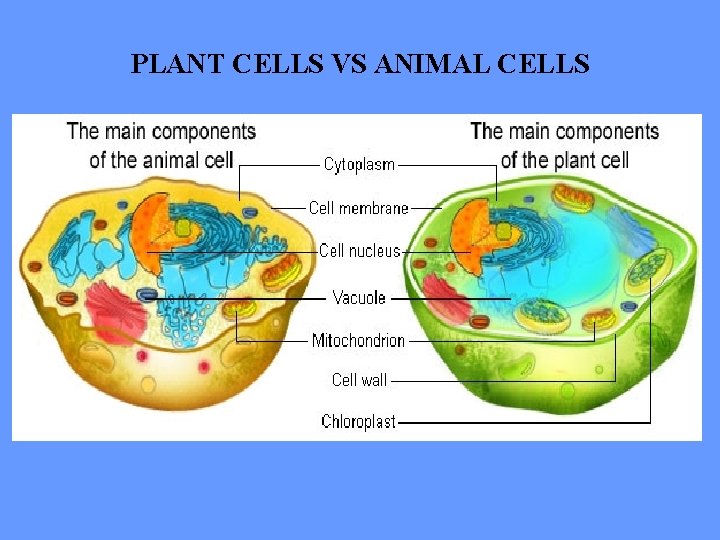
PLANT CELLS VS ANIMAL CELLS
CELL FUNCTIONS • • • Basic unit of life Protection and Support Movement Communication Metabolism and Energy Inheritance
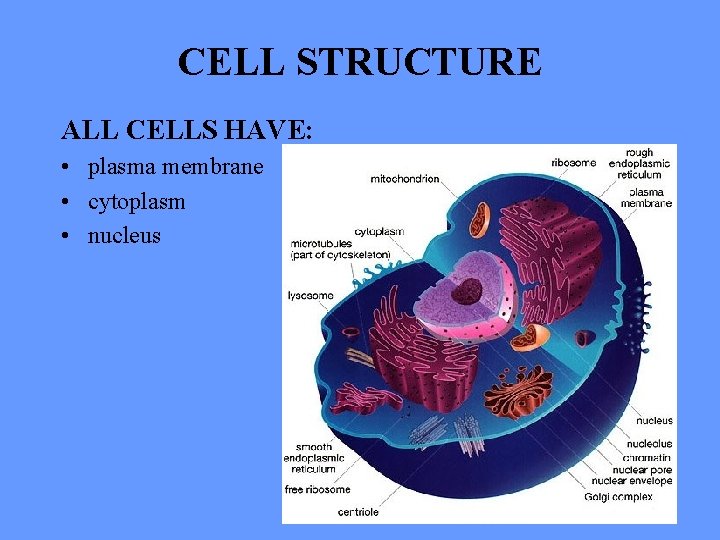
CELL STRUCTURE ALL CELLS HAVE: • plasma membrane • cytoplasm • nucleus
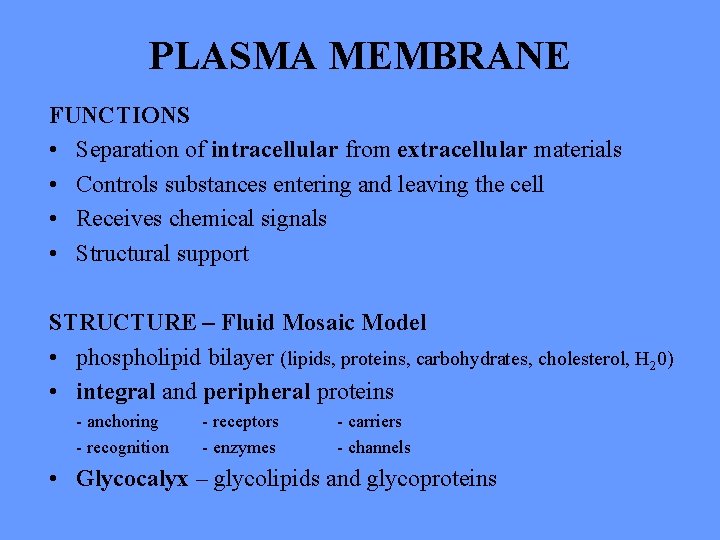
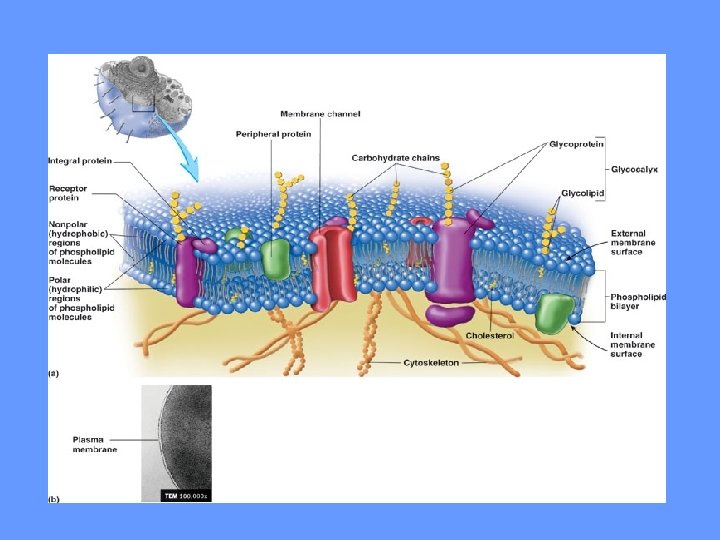
PLASMA MEMBRANE FUNCTIONS • Separation of intracellular from extracellular materials • Controls substances entering and leaving the cell • Receives chemical signals • Structural support STRUCTURE – Fluid Mosaic Model • phospholipid bilayer (lipids, proteins, carbohydrates, cholesterol, H 20) • integral and peripheral proteins - anchoring - recognition - receptors - enzymes - carriers - channels • Glycocalyx – glycolipids and glycoproteins
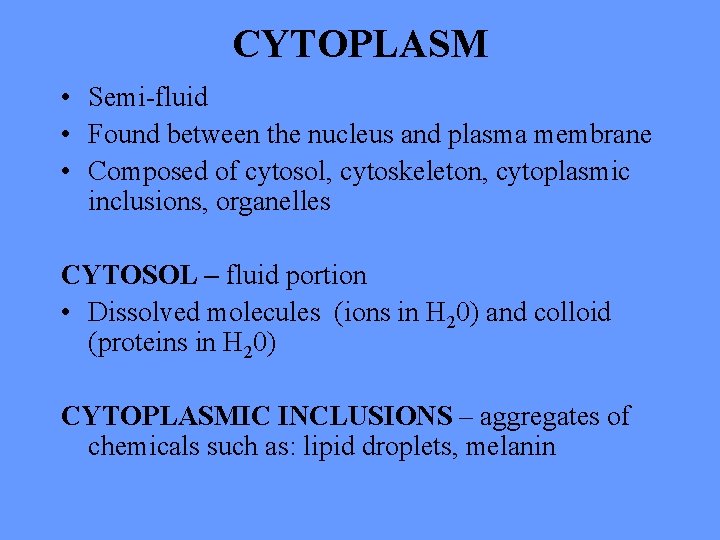
CYTOPLASM • Semi-fluid • Found between the nucleus and plasma membrane • Composed of cytosol, cytoskeleton, cytoplasmic inclusions, organelles CYTOSOL – fluid portion • Dissolved molecules (ions in H 20) and colloid (proteins in H 20) CYTOPLASMIC INCLUSIONS – aggregates of chemicals such as: lipid droplets, melanin
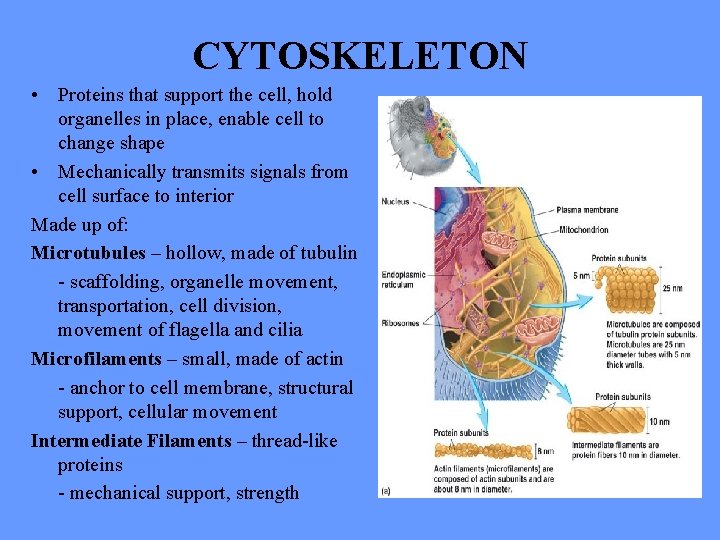
CYTOSKELETON • Proteins that support the cell, hold organelles in place, enable cell to change shape • Mechanically transmits signals from cell surface to interior Made up of: Microtubules – hollow, made of tubulin - scaffolding, organelle movement, transportation, cell division, movement of flagella and cilia Microfilaments – small, made of actin - anchor to cell membrane, structural support, cellular movement Intermediate Filaments – thread-like proteins - mechanical support, strength
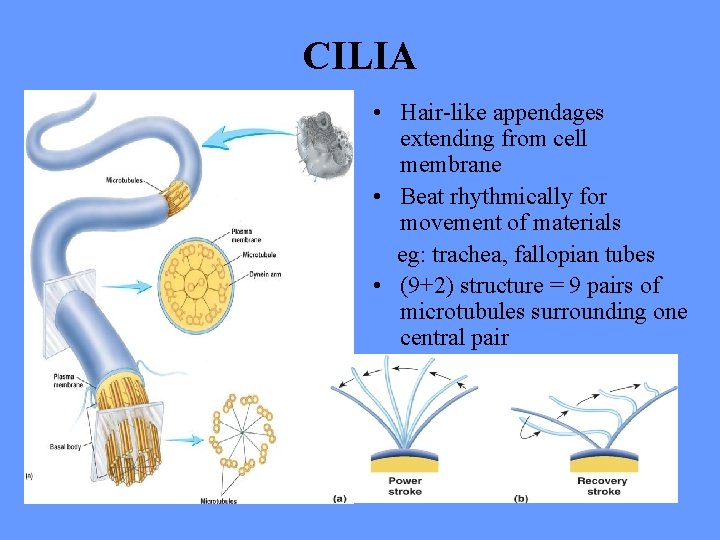
CILIA • Hair-like appendages extending from cell membrane • Beat rhythmically for movement of materials eg: trachea, fallopian tubes • (9+2) structure = 9 pairs of microtubules surrounding one central pair
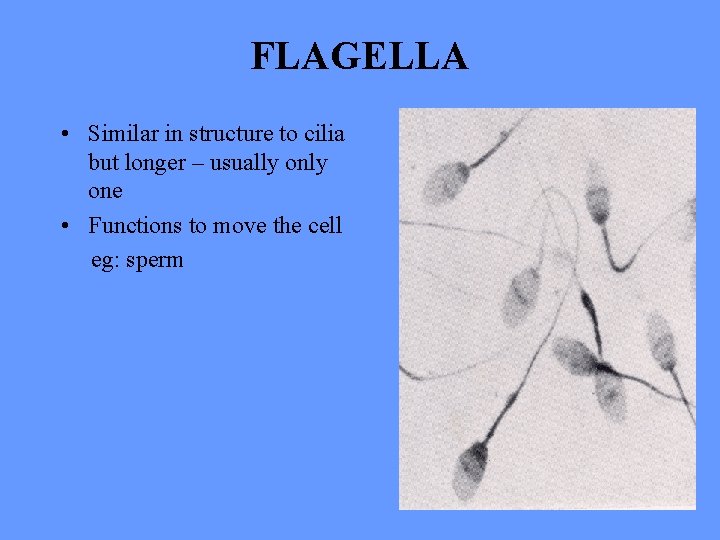
FLAGELLA • Similar in structure to cilia but longer – usually one • Functions to move the cell eg: sperm
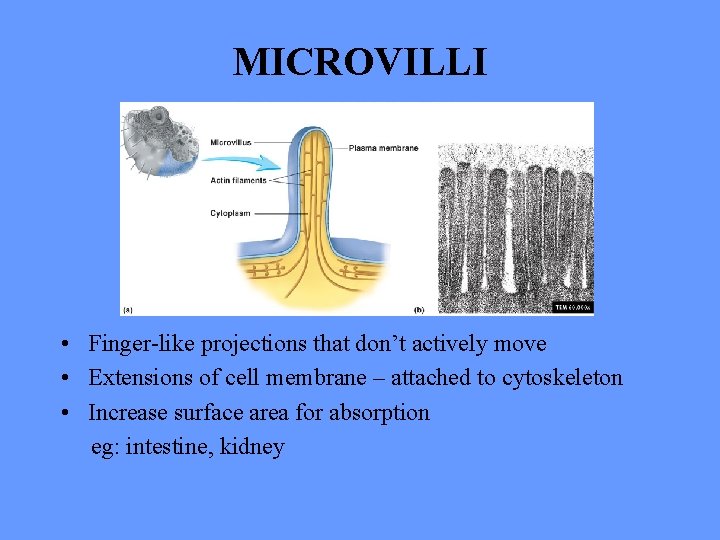
MICROVILLI • Finger-like projections that don’t actively move • Extensions of cell membrane – attached to cytoskeleton • Increase surface area for absorption eg: intestine, kidney
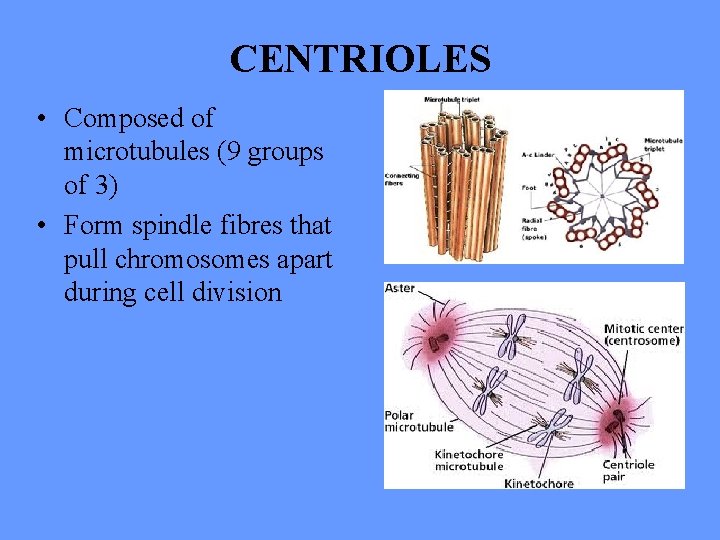
CENTRIOLES • Composed of microtubules (9 groups of 3) • Form spindle fibres that pull chromosomes apart during cell division
ORGANELLES “little organs” • Small specialized structures with particular functions • Most have membranes that separate interior of organelles from cytoplasm • Related to specific structure and function of the cell
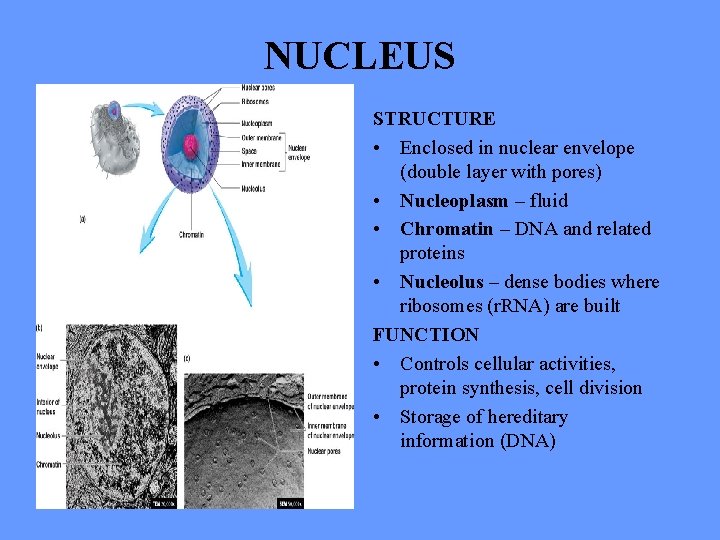
NUCLEUS STRUCTURE • Enclosed in nuclear envelope (double layer with pores) • Nucleoplasm – fluid • Chromatin – DNA and related proteins • Nucleolus – dense bodies where ribosomes (r. RNA) are built FUNCTION • Controls cellular activities, protein synthesis, cell division • Storage of hereditary information (DNA)
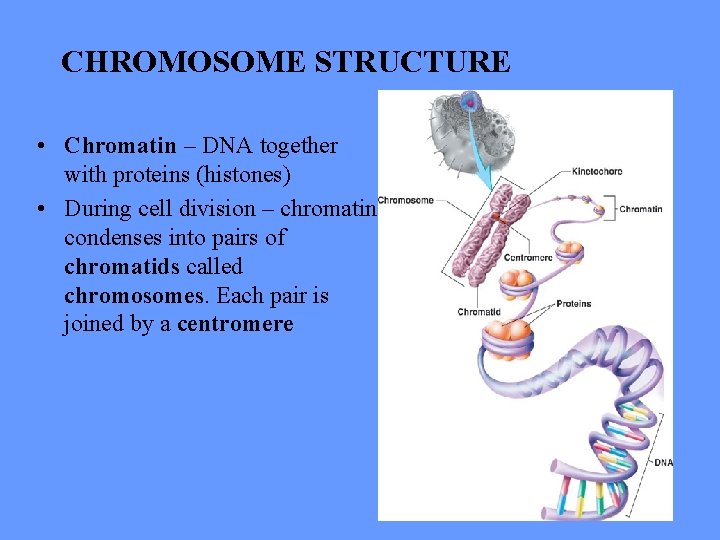
CHROMOSOME STRUCTURE • Chromatin – DNA together with proteins (histones) • During cell division – chromatin condenses into pairs of chromatids called chromosomes. Each pair is joined by a centromere
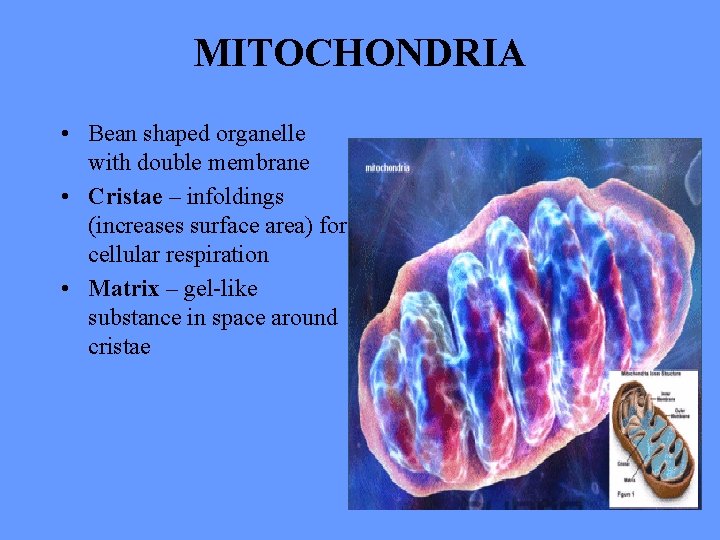
MITOCHONDRIA • Bean shaped organelle with double membrane • Cristae – infoldings (increases surface area) for cellular respiration • Matrix – gel-like substance in space around cristae
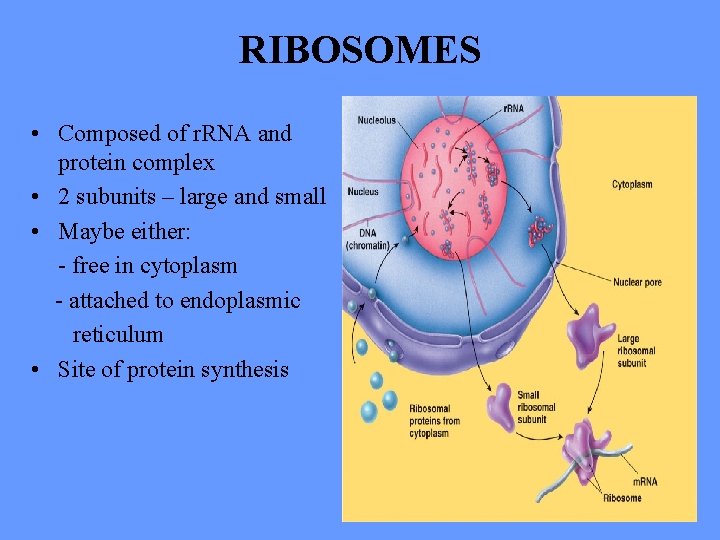
RIBOSOMES • Composed of r. RNA and protein complex • 2 subunits – large and small • Maybe either: - free in cytoplasm - attached to endoplasmic reticulum • Site of protein synthesis
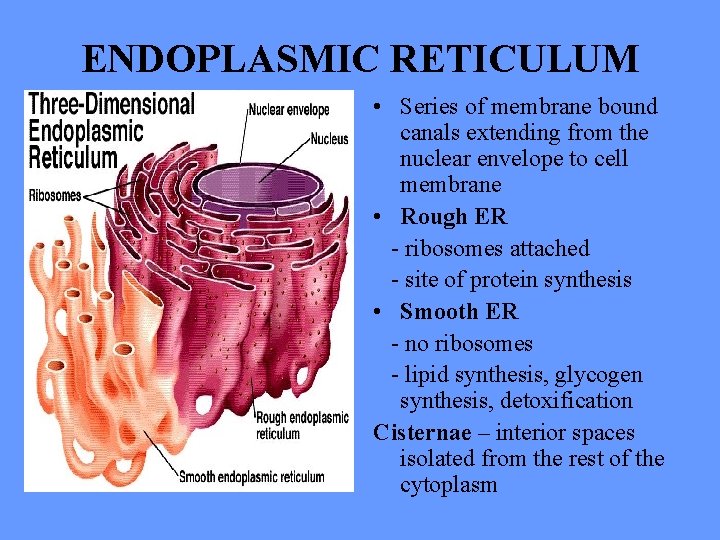
ENDOPLASMIC RETICULUM • Series of membrane bound canals extending from the nuclear envelope to cell membrane • Rough ER - ribosomes attached - site of protein synthesis • Smooth ER - no ribosomes - lipid synthesis, glycogen synthesis, detoxification Cisternae – interior spaces isolated from the rest of the cytoplasm
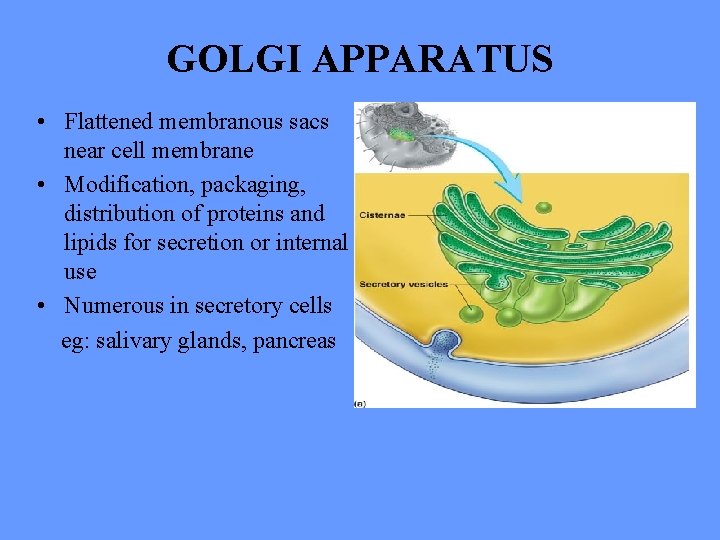
GOLGI APPARATUS • Flattened membranous sacs near cell membrane • Modification, packaging, distribution of proteins and lipids for secretion or internal use • Numerous in secretory cells eg: salivary glands, pancreas
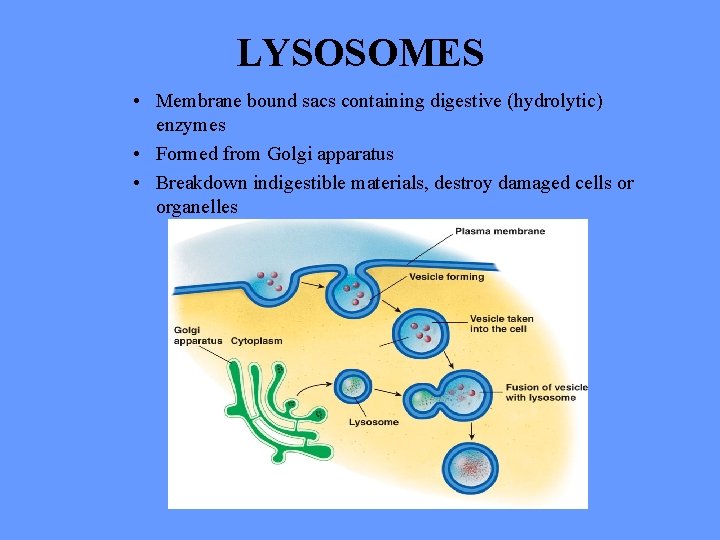
LYSOSOMES • Membrane bound sacs containing digestive (hydrolytic) enzymes • Formed from Golgi apparatus • Breakdown indigestible materials, destroy damaged cells or organelles
MEDICAL CONDITIONS Lysosomal Storage Diseases • lack of lysosomal enzymes resulting in buildup of unwanted substances eg: Gaucher’s, Tay Sachs, Pompe’s disease Mitochondrial Diseases • defective mitochondrial genes affect ATP production • common in muscles, neurons, receptor cells in eyes eg: Parkinson’s, some epilepsy, blindness Cell Membranes and Drugs • mechanism behind anesthetics – lipid soluble compounds that block ion channels (lower sensitivity of neurons) eg: tetrodotoxin, curare