
Human Anatomy Chapter 9 Articulations 1 Articulations n
- Slides: 89
Human Anatomy Chapter 9 Articulations 1
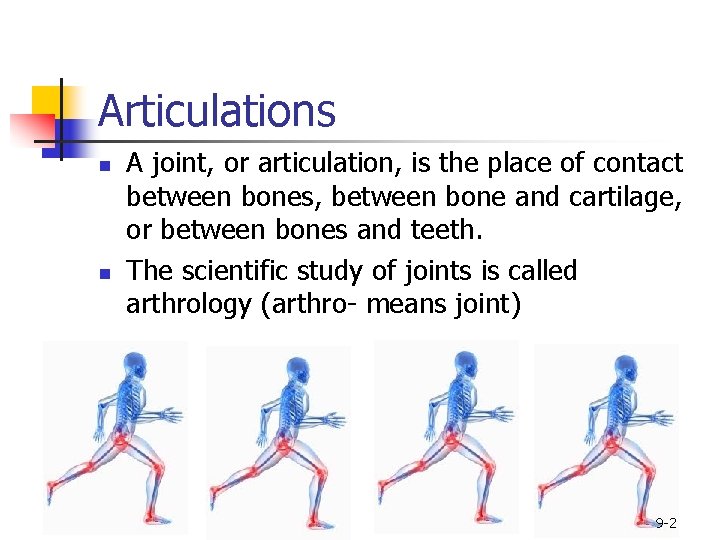
Articulations n n A joint, or articulation, is the place of contact between bones, between bone and cartilage, or between bones and teeth. The scientific study of joints is called arthrology (arthro- means joint) 9 -2
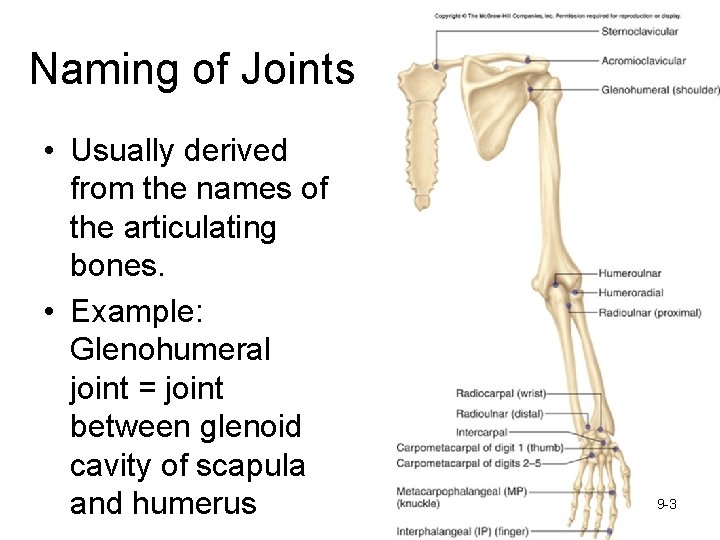
Naming of Joints • Usually derived from the names of the articulating bones. • Example: Glenohumeral joint = joint between glenoid cavity of scapula and humerus 9 -3
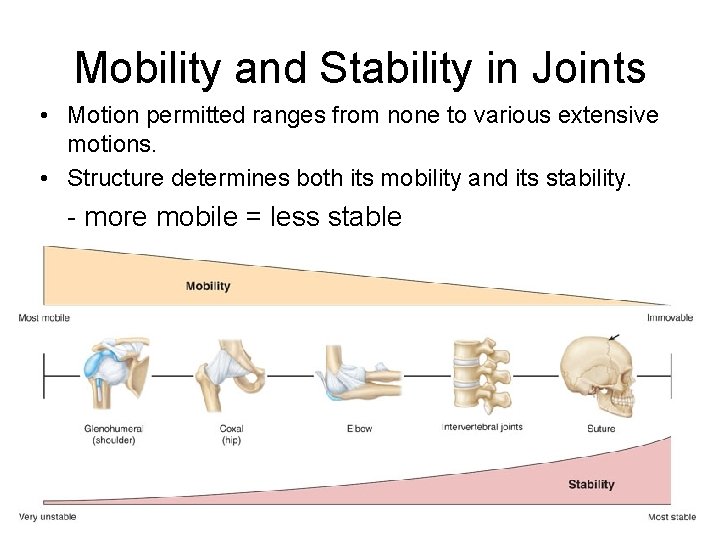
Mobility and Stability in Joints • Motion permitted ranges from none to various extensive motions. • Structure determines both its mobility and its stability. - more mobile = less stable 9 -4
Classification of Joints n n Type of connective tissue that binds the articulating surfaces of the bones. Whether a space occurs between the articulating bones. 9 -5
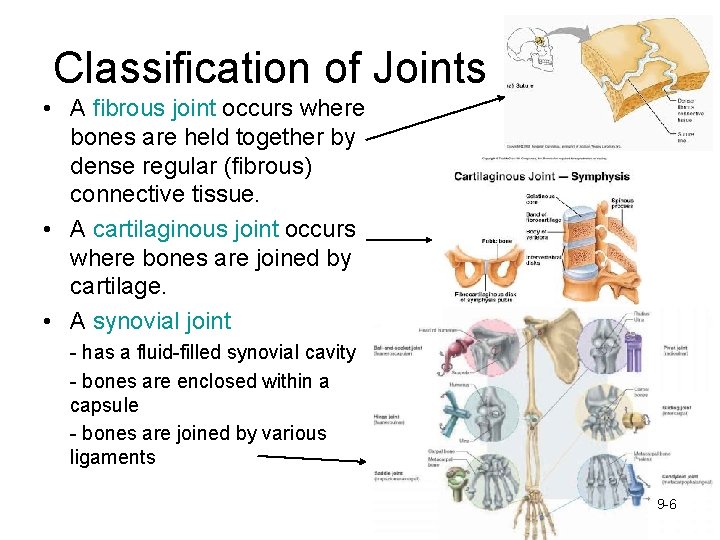
Classification of Joints • A fibrous joint occurs where bones are held together by dense regular (fibrous) connective tissue. • A cartilaginous joint occurs where bones are joined by cartilage. • A synovial joint - has a fluid-filled synovial cavity - bones are enclosed within a capsule - bones are joined by various ligaments 9 -6
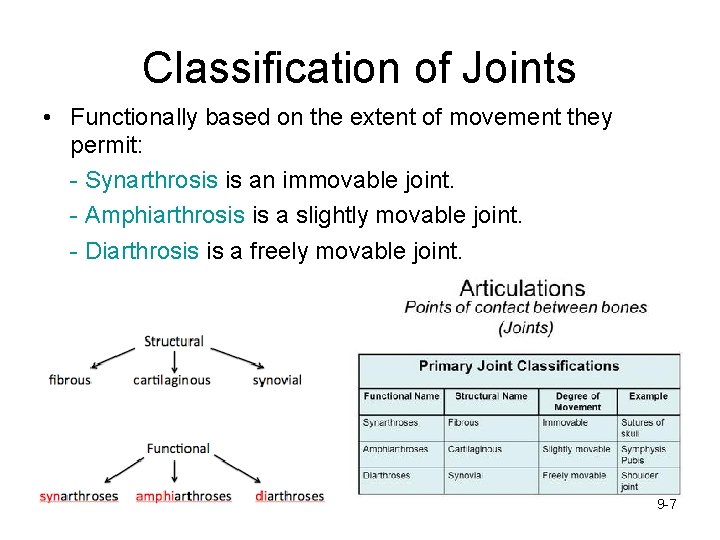
Classification of Joints • Functionally based on the extent of movement they permit: - Synarthrosis is an immovable joint. - Amphiarthrosis is a slightly movable joint. - Diarthrosis is a freely movable joint. 9 -7
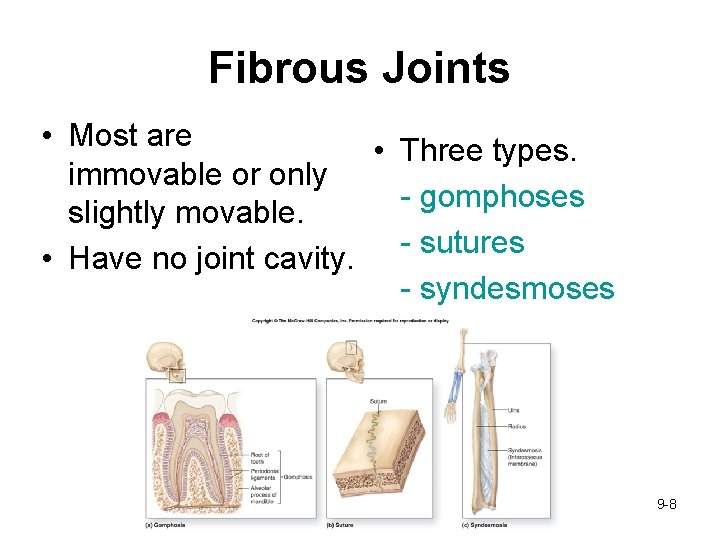
Fibrous Joints • Most are • Three types. immovable or only - gomphoses slightly movable. - sutures • Have no joint cavity. - syndesmoses 9 -8
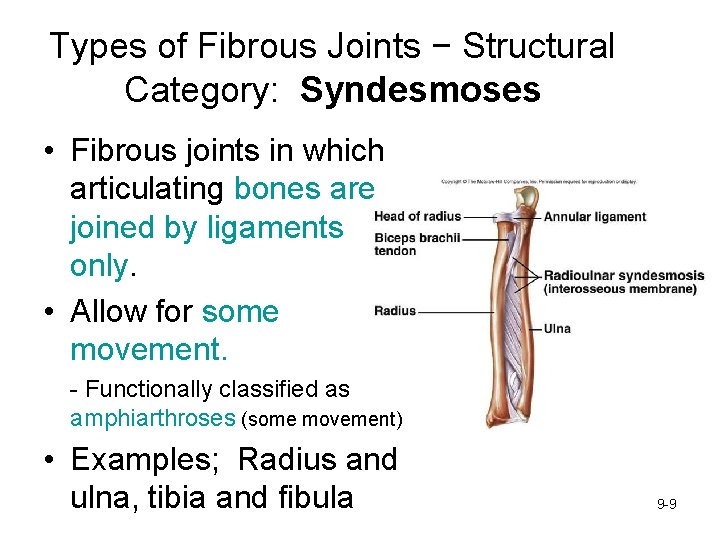
Types of Fibrous Joints − Structural Category: Syndesmoses • Fibrous joints in which articulating bones are joined by ligaments only. • Allow for some movement. - Functionally classified as amphiarthroses (some movement) • Examples; Radius and ulna, tibia and fibula 9 -9
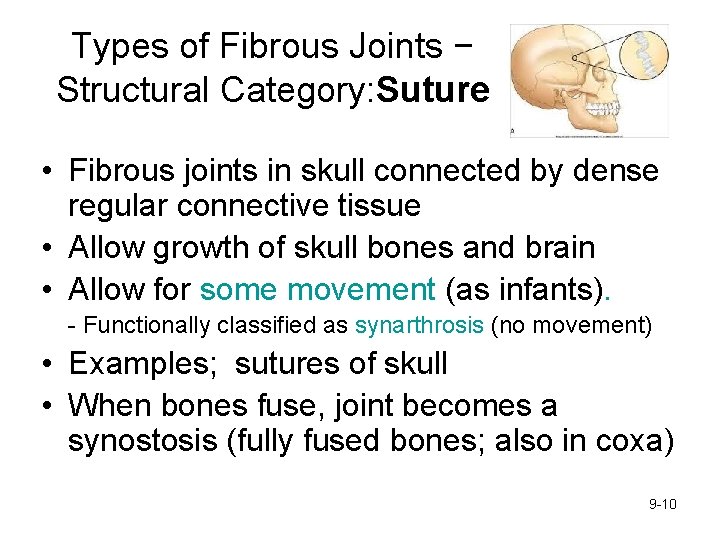
Types of Fibrous Joints − Structural Category: Suture • Fibrous joints in skull connected by dense regular connective tissue • Allow growth of skull bones and brain • Allow for some movement (as infants). - Functionally classified as synarthrosis (no movement) • Examples; sutures of skull • When bones fuse, joint becomes a synostosis (fully fused bones; also in coxa) 9 -10
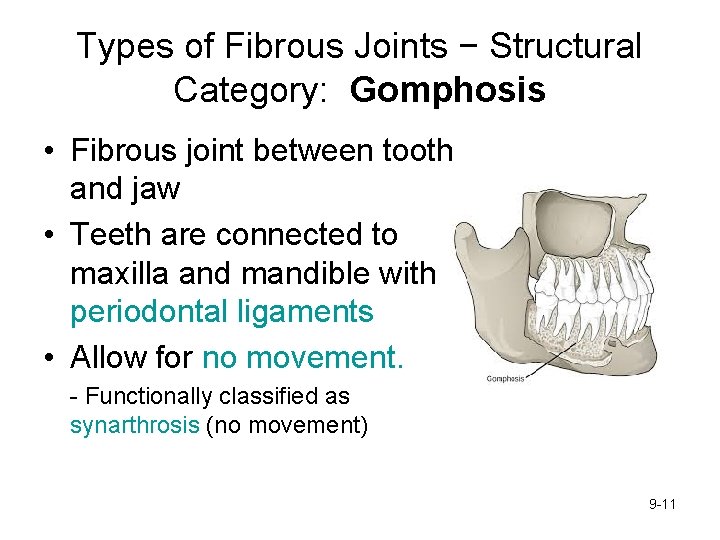
Types of Fibrous Joints − Structural Category: Gomphosis • Fibrous joint between tooth and jaw • Teeth are connected to maxilla and mandible with periodontal ligaments • Allow for no movement. - Functionally classified as synarthrosis (no movement) 9 -11
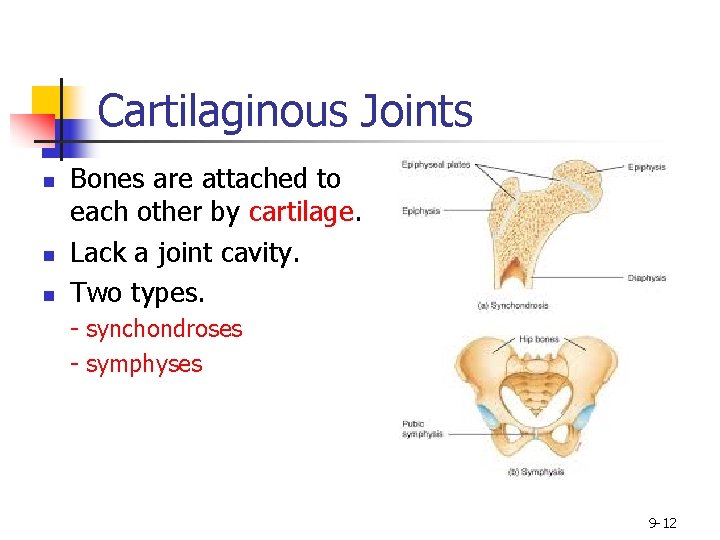
Cartilaginous Joints n n n Bones are attached to each other by cartilage. Lack a joint cavity. Two types. - synchondroses - symphyses 9 -12
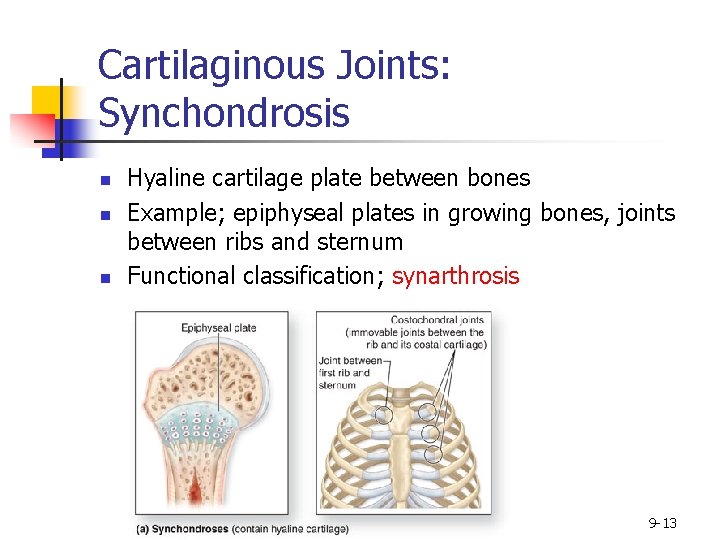
Cartilaginous Joints: Synchondrosis n n n Hyaline cartilage plate between bones Example; epiphyseal plates in growing bones, joints between ribs and sternum Functional classification; synarthrosis 9 -13
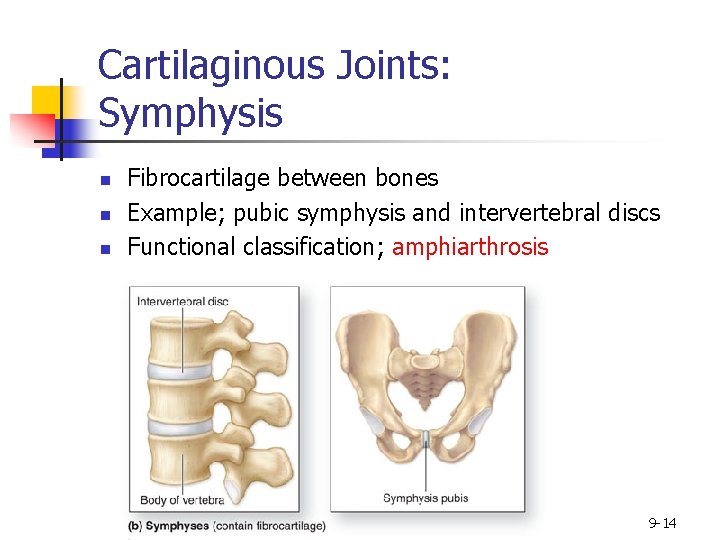
Cartilaginous Joints: Symphysis n n n Fibrocartilage between bones Example; pubic symphysis and intervertebral discs Functional classification; amphiarthrosis 9 -14
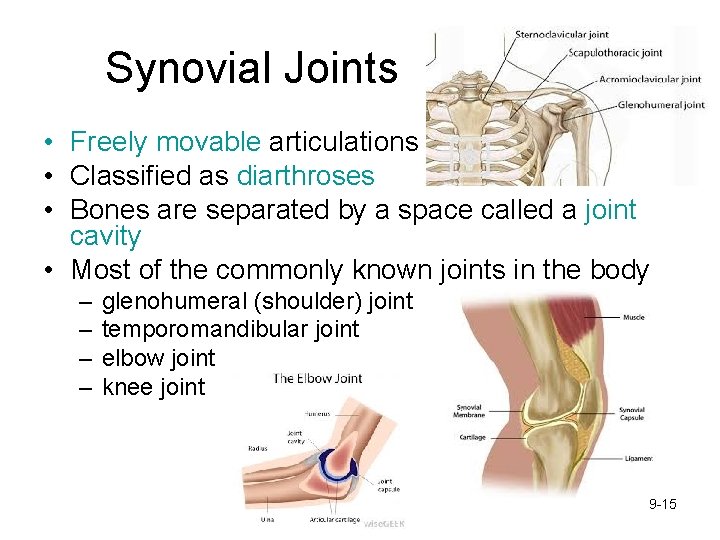
Synovial Joints • Freely movable articulations • Classified as diarthroses • Bones are separated by a space called a joint cavity • Most of the commonly known joints in the body – – glenohumeral (shoulder) joint temporomandibular joint elbow joint knee joint 9 -15
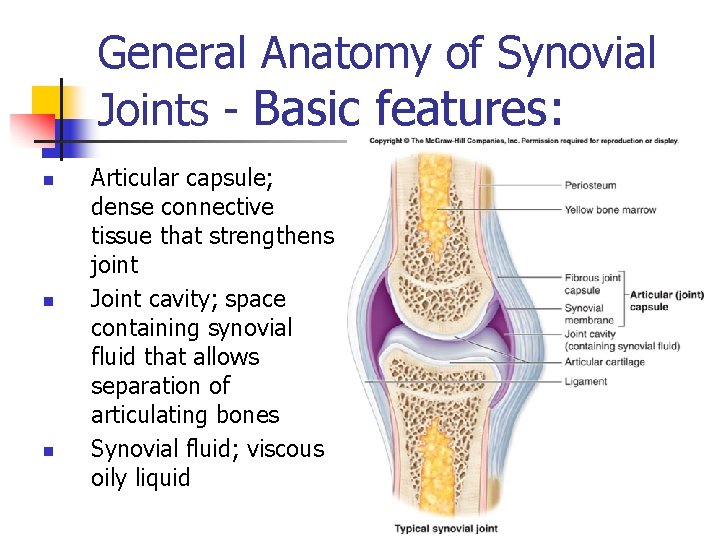
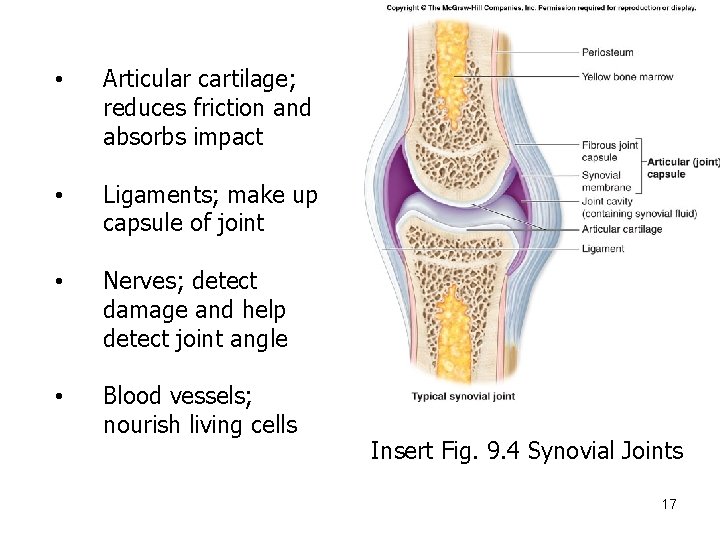
General Anatomy of Synovial Joints - Basic features: n n n Articular capsule; dense connective tissue that strengthens joint Joint cavity; space containing synovial fluid that allows separation of articulating bones Synovial fluid; viscous oily liquid 9 -16
• Articular cartilage; reduces friction and absorbs impact • Ligaments; make up capsule of joint • Nerves; detect damage and help detect joint angle • Blood vessels; nourish living cells Insert Fig. 9. 4 Synovial Joints 17
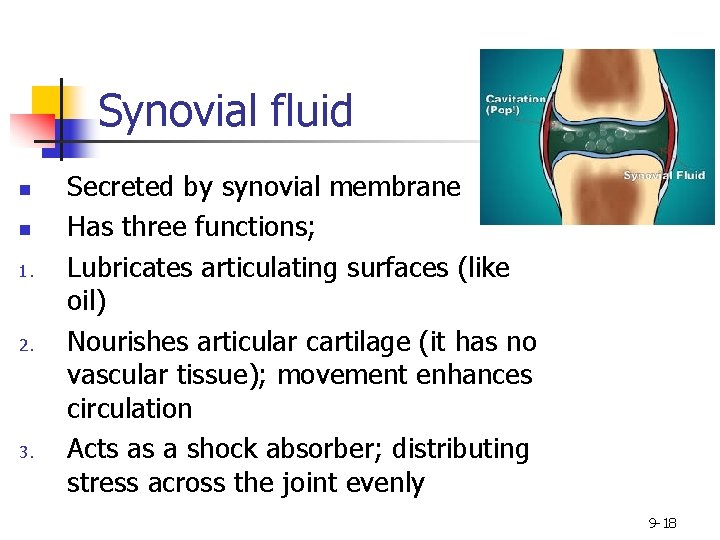
Synovial fluid n n 1. 2. 3. Secreted by synovial membrane Has three functions; Lubricates articulating surfaces (like oil) Nourishes articular cartilage (it has no vascular tissue); movement enhances circulation Acts as a shock absorber; distributing stress across the joint evenly 9 -18
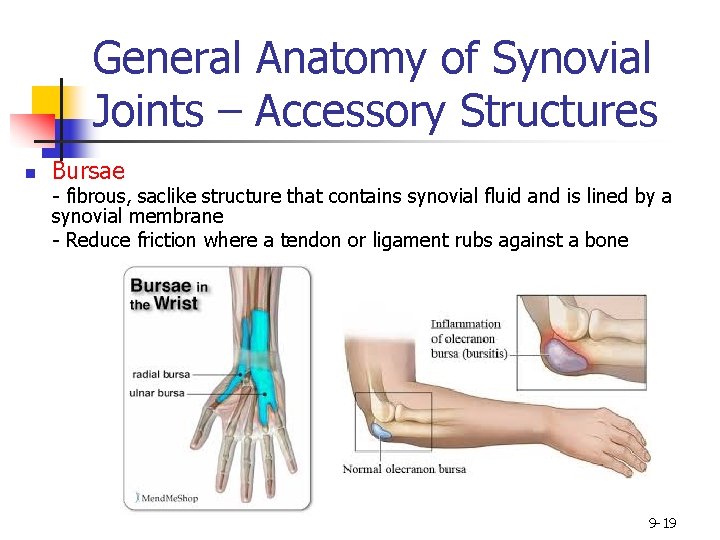
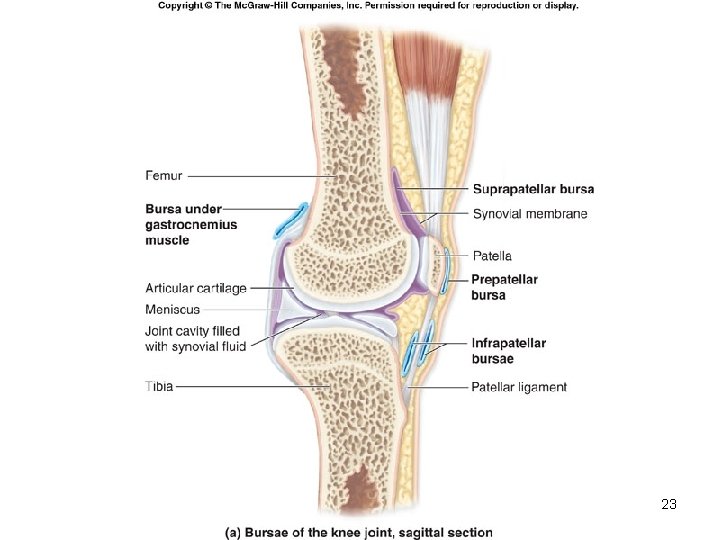
General Anatomy of Synovial Joints – Accessory Structures n Bursae - fibrous, saclike structure that contains synovial fluid and is lined by a synovial membrane - Reduce friction where a tendon or ligament rubs against a bone 9 -19
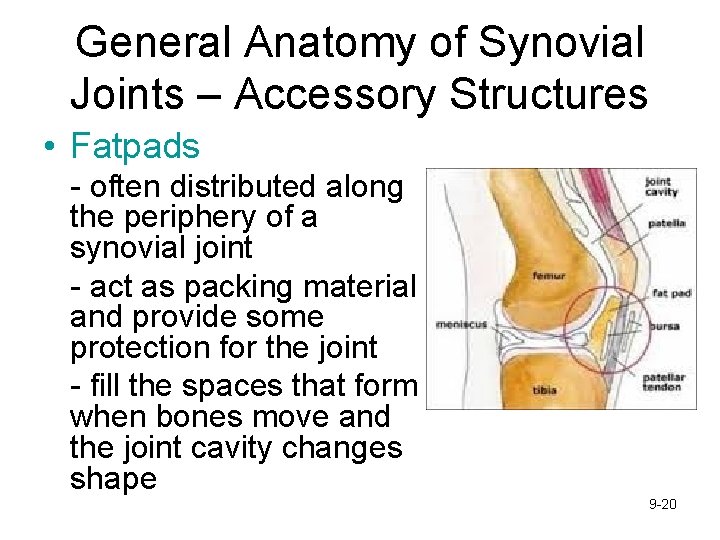
General Anatomy of Synovial Joints – Accessory Structures • Fatpads - often distributed along the periphery of a synovial joint - act as packing material and provide some protection for the joint - fill the spaces that form when bones move and the joint cavity changes shape 9 -20
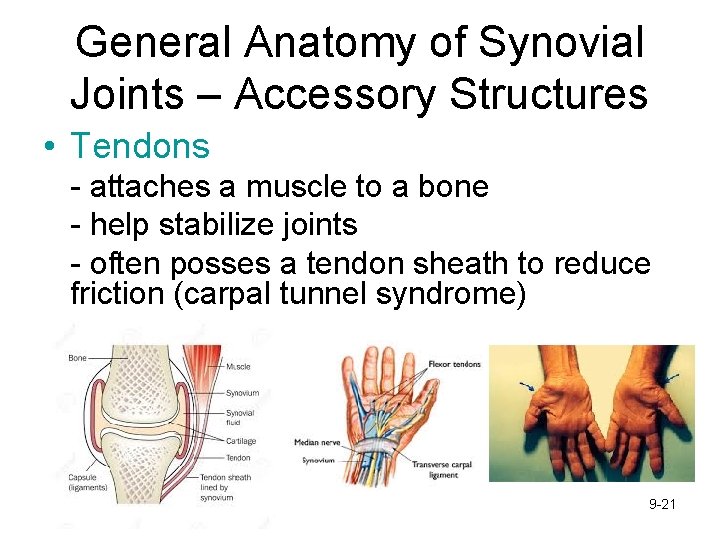
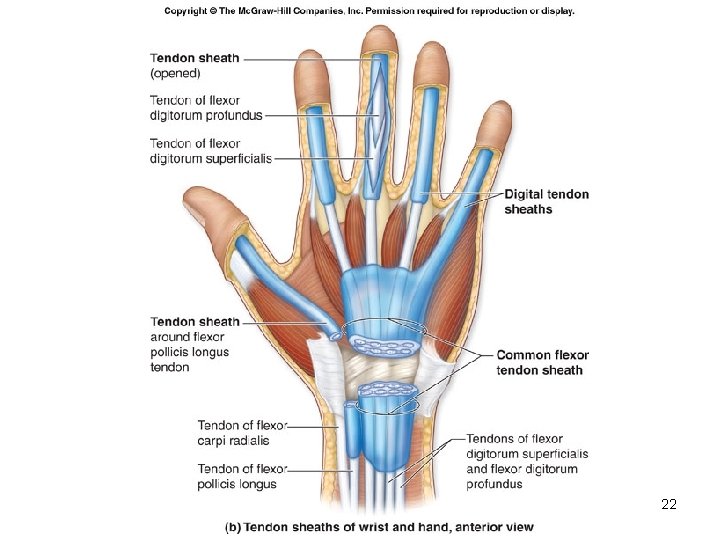
General Anatomy of Synovial Joints – Accessory Structures • Tendons - attaches a muscle to a bone - help stabilize joints - often posses a tendon sheath to reduce friction (carpal tunnel syndrome) 9 -21
22
23
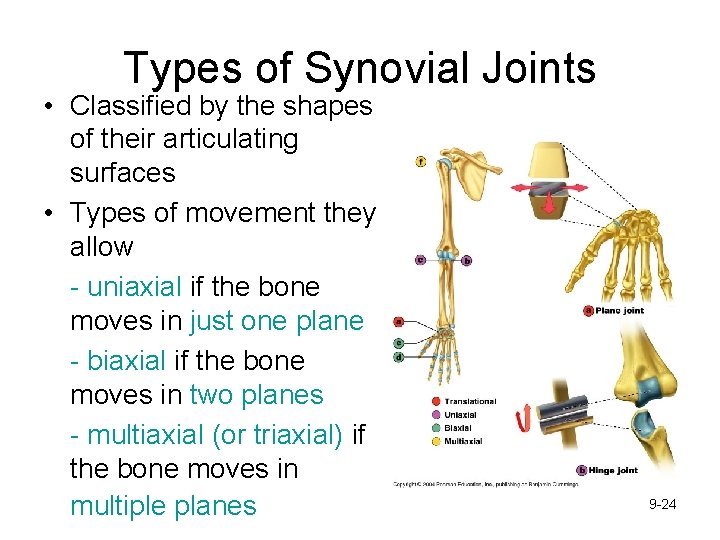
Types of Synovial Joints • Classified by the shapes of their articulating surfaces • Types of movement they allow - uniaxial if the bone moves in just one plane - biaxial if the bone moves in two planes - multiaxial (or triaxial) if the bone moves in multiple planes 9 -24
Types of Synovial Joints n 1. 2. 3. 4. 5. 6. From least movable to most freely movable, the six specific types of synovial joints are: planar (gliding) joints hinge joints pivot joints condyloid (ellipsoid) joints saddle joints ball-and-socket joints 9 -25
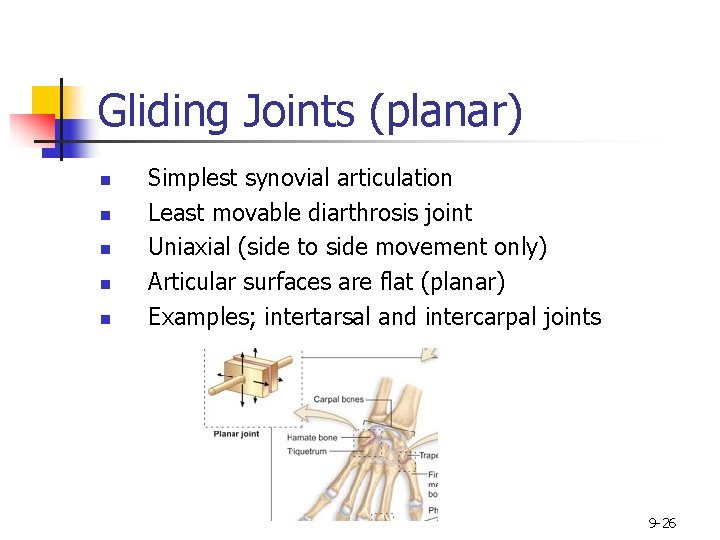
Gliding Joints (planar) n n n Simplest synovial articulation Least movable diarthrosis joint Uniaxial (side to side movement only) Articular surfaces are flat (planar) Examples; intertarsal and intercarpal joints 9 -26
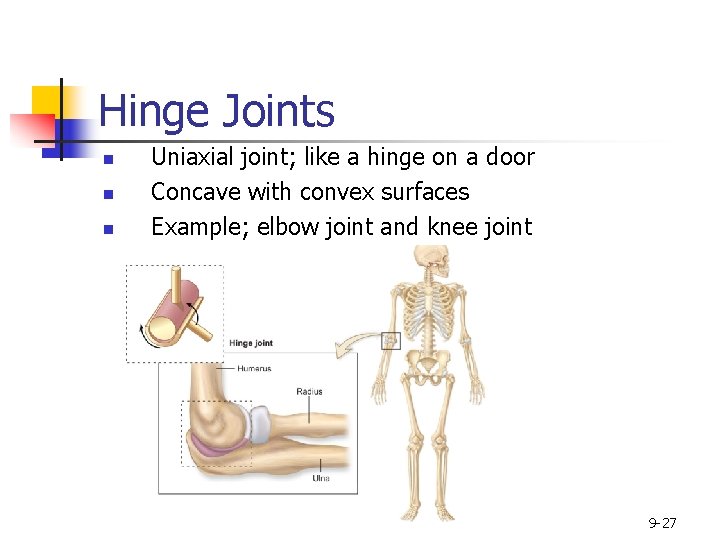
Hinge Joints n n n Uniaxial joint; like a hinge on a door Concave with convex surfaces Example; elbow joint and knee joint 9 -27
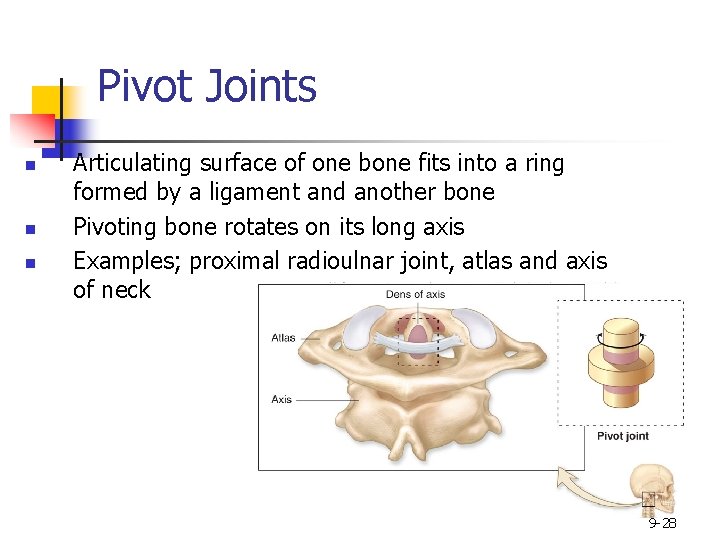
Pivot Joints n n n Articulating surface of one bone fits into a ring formed by a ligament and another bone Pivoting bone rotates on its long axis Examples; proximal radioulnar joint, atlas and axis of neck 9 -28
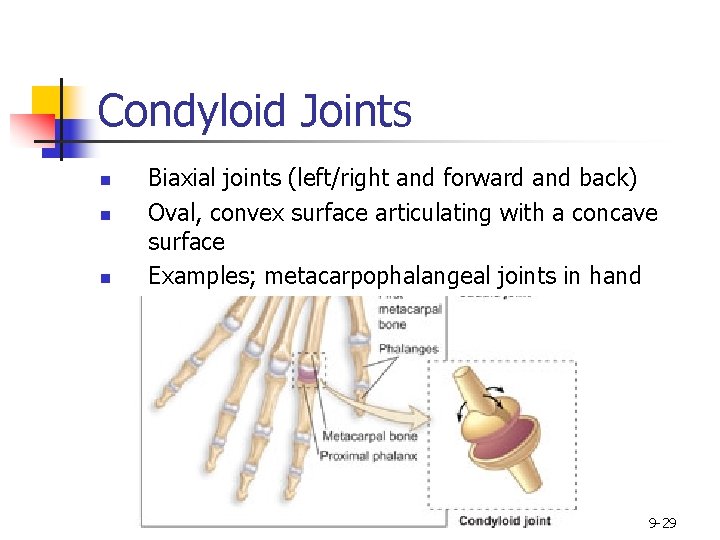
Condyloid Joints n n n Biaxial joints (left/right and forward and back) Oval, convex surface articulating with a concave surface Examples; metacarpophalangeal joints in hand 9 -29
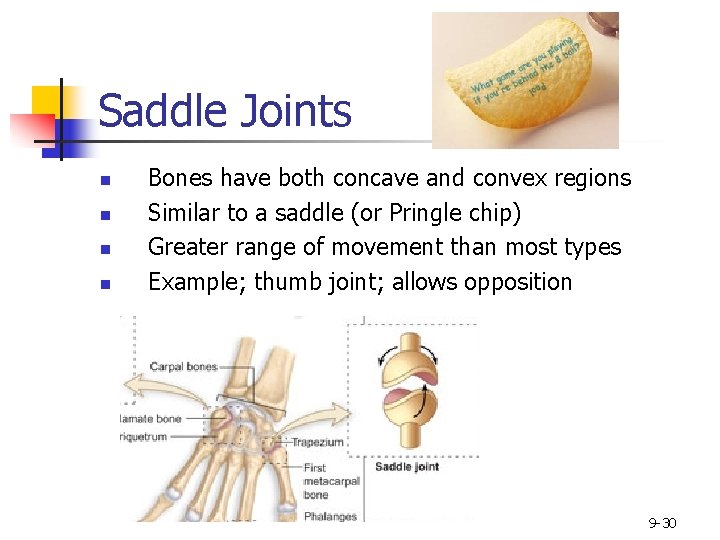
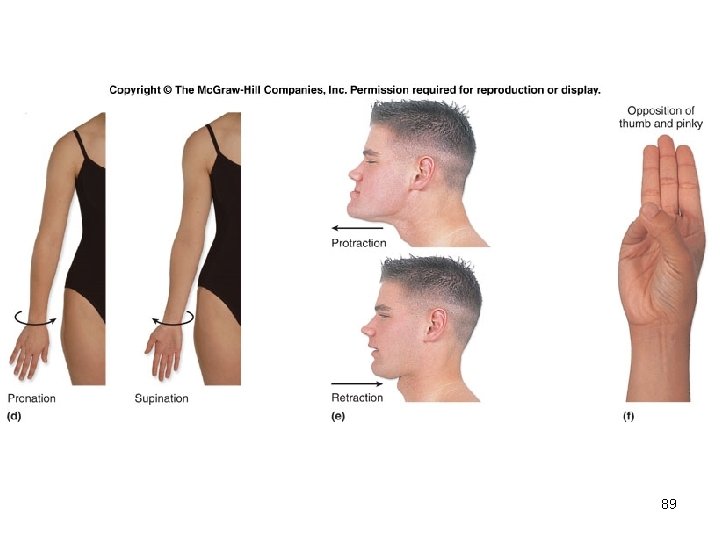
Saddle Joints n n Bones have both concave and convex regions Similar to a saddle (or Pringle chip) Greater range of movement than most types Example; thumb joint; allows opposition 9 -30
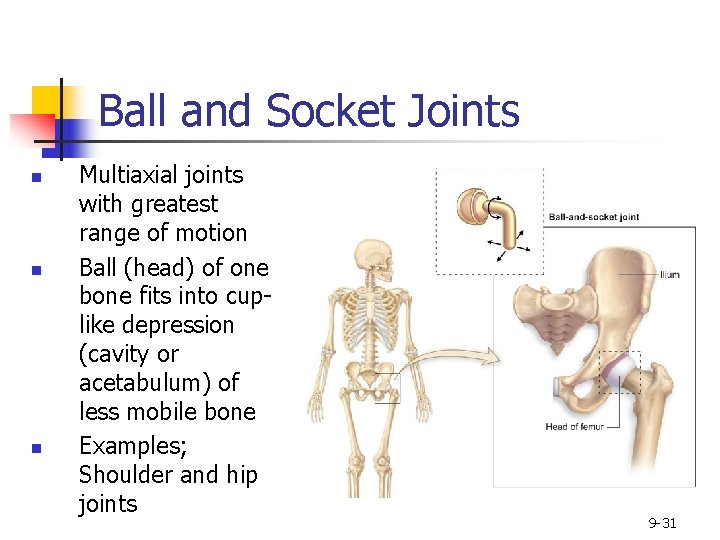
Ball and Socket Joints n n n Multiaxial joints with greatest range of motion Ball (head) of one bone fits into cuplike depression (cavity or acetabulum) of less mobile bone Examples; Shoulder and hip joints 9 -31
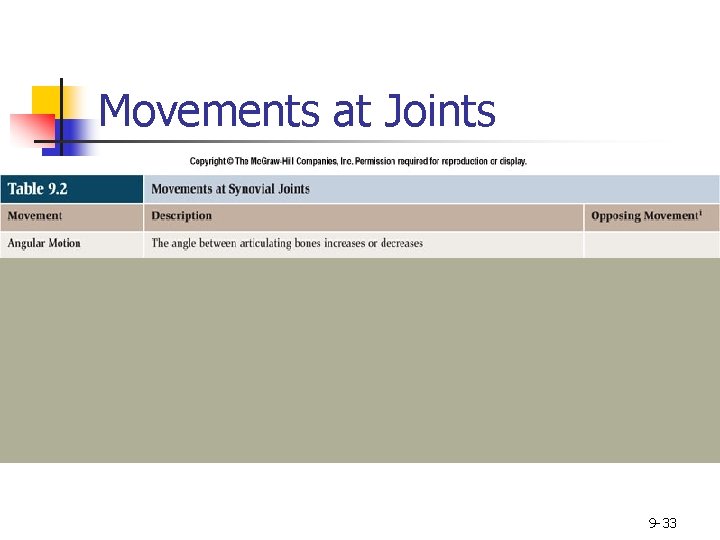
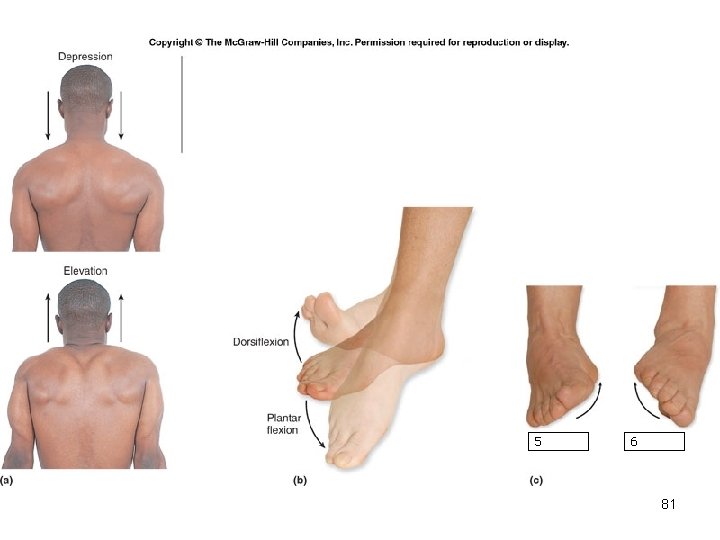
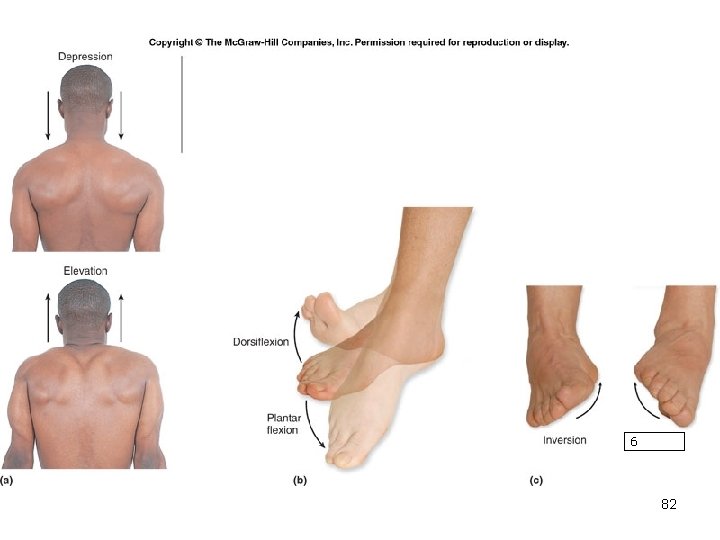
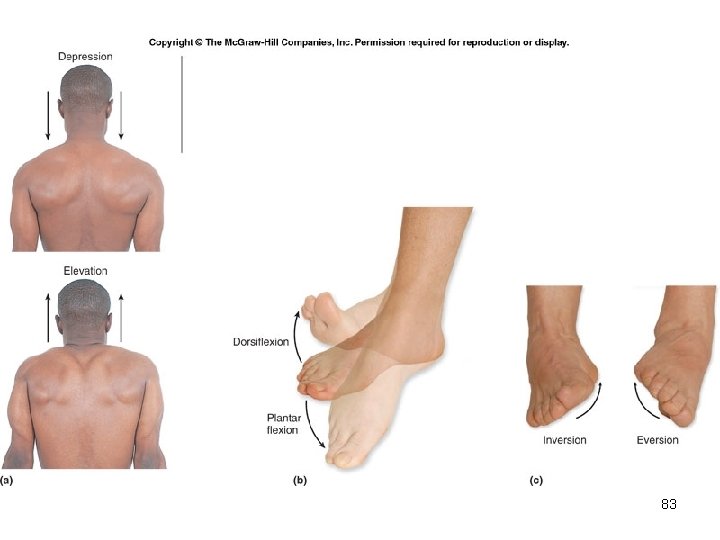
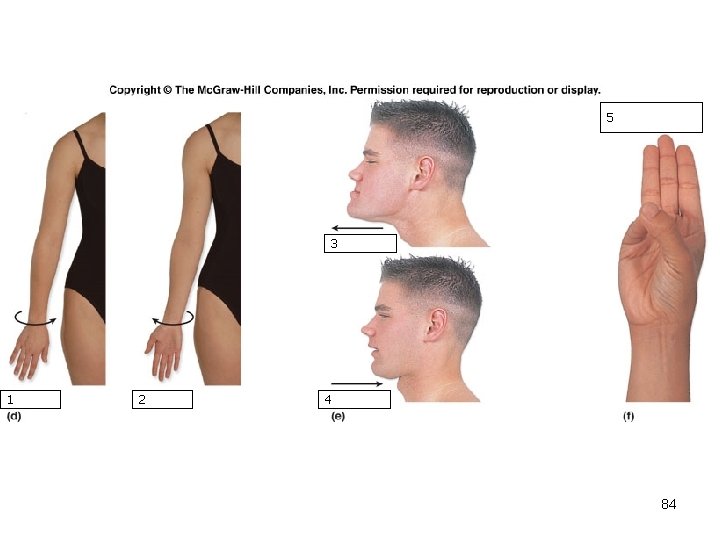
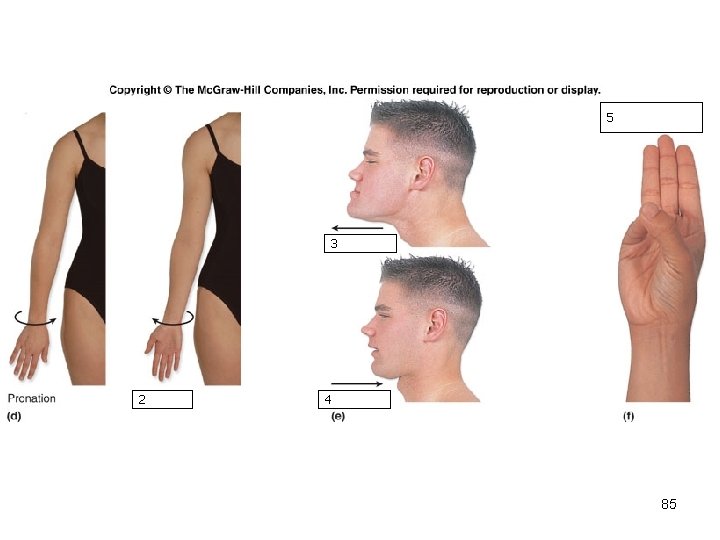
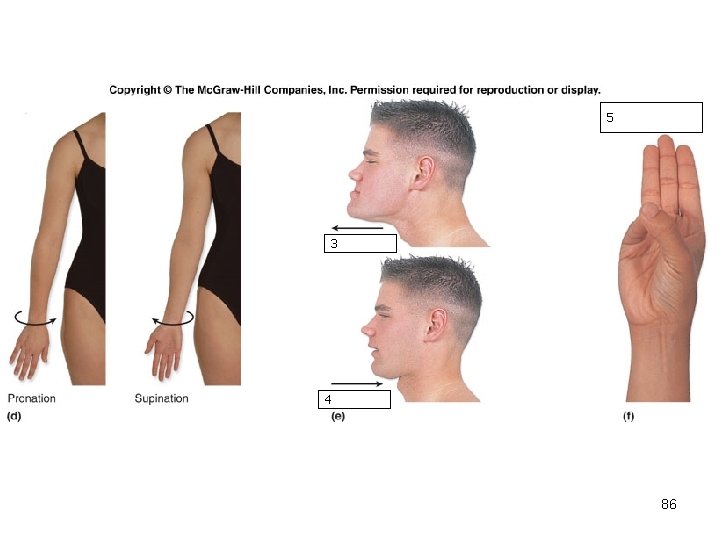
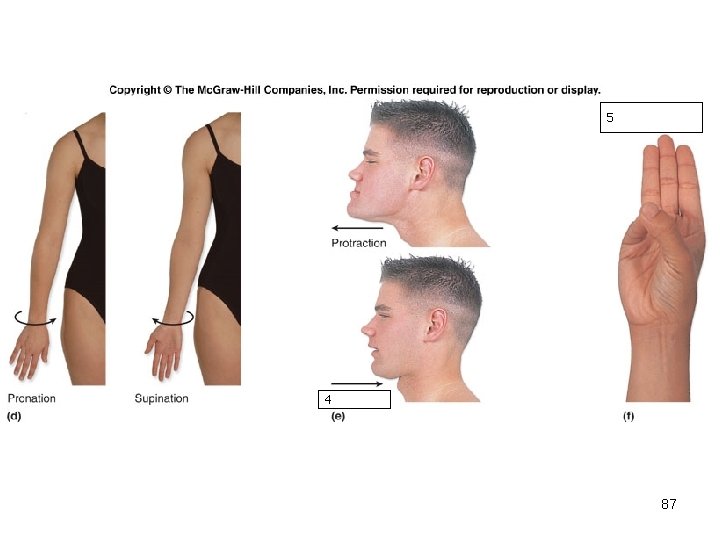
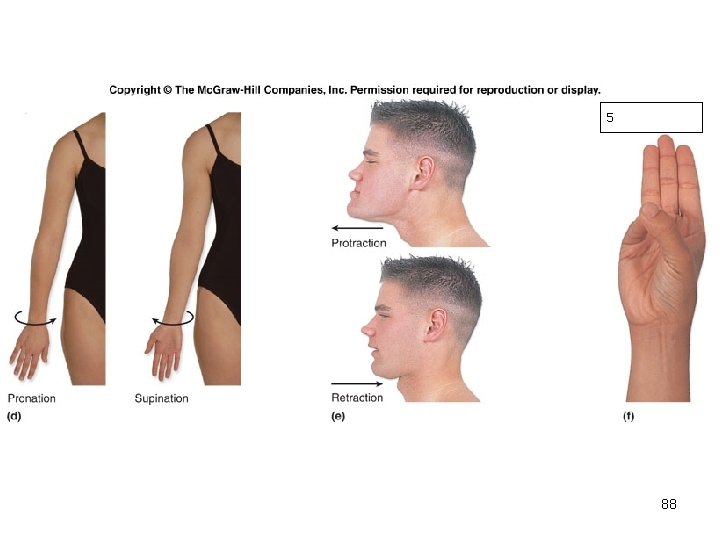
Movements at Joints 9 -32
Movements at Joints 9 -33
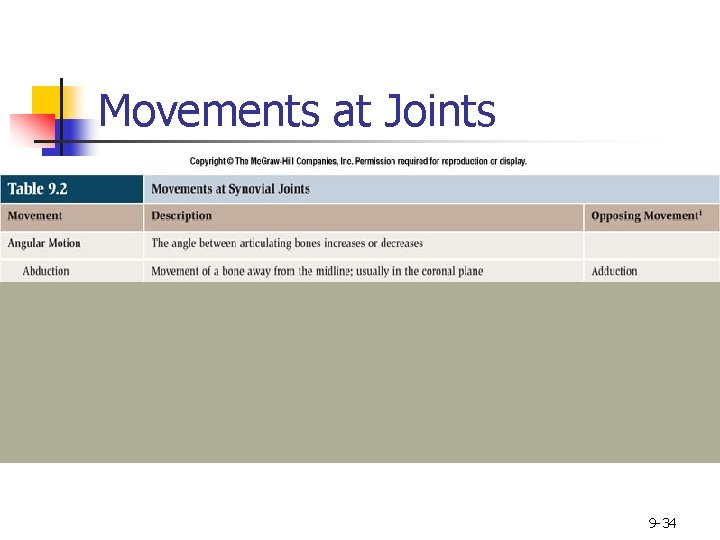
Movements at Joints 9 -34
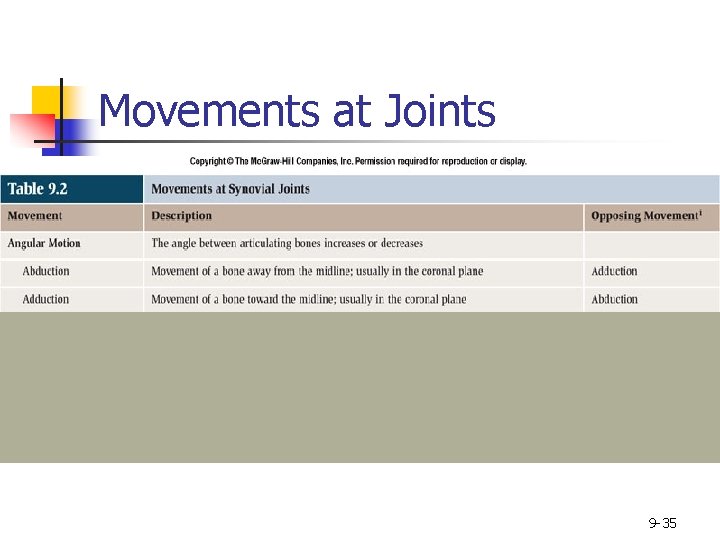
Movements at Joints 9 -35
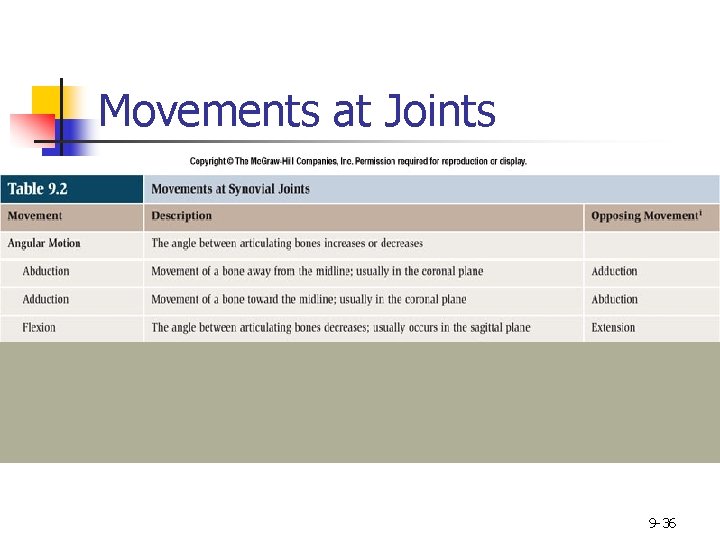
Movements at Joints 9 -36
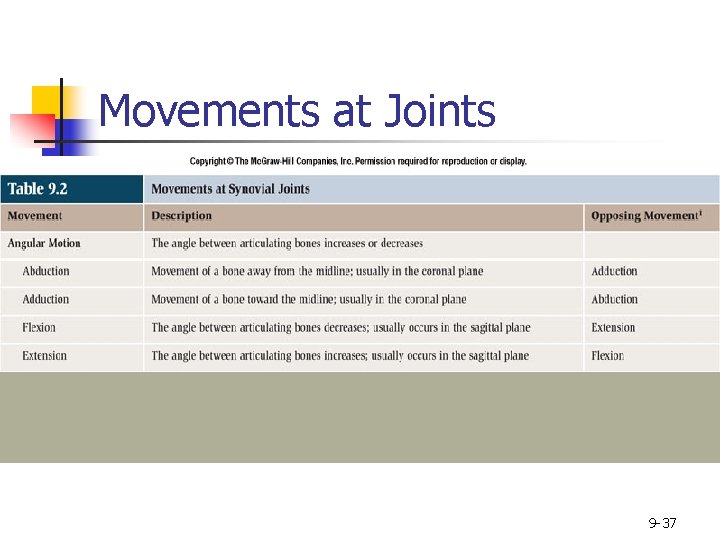
Movements at Joints 9 -37
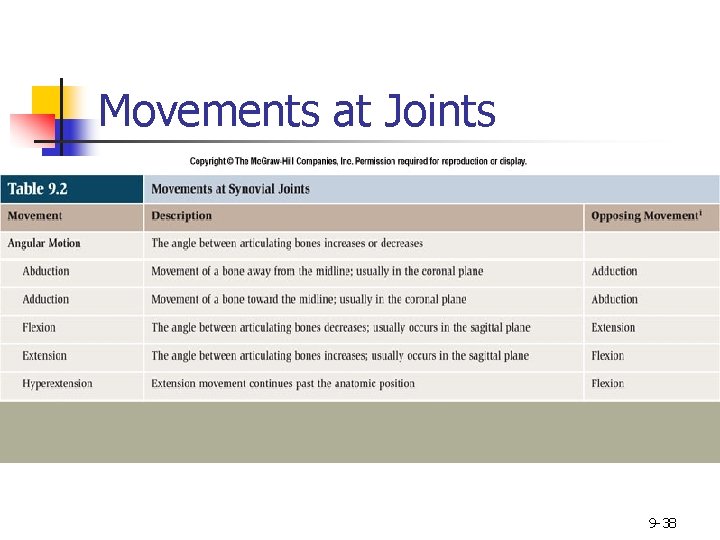
Movements at Joints 9 -38
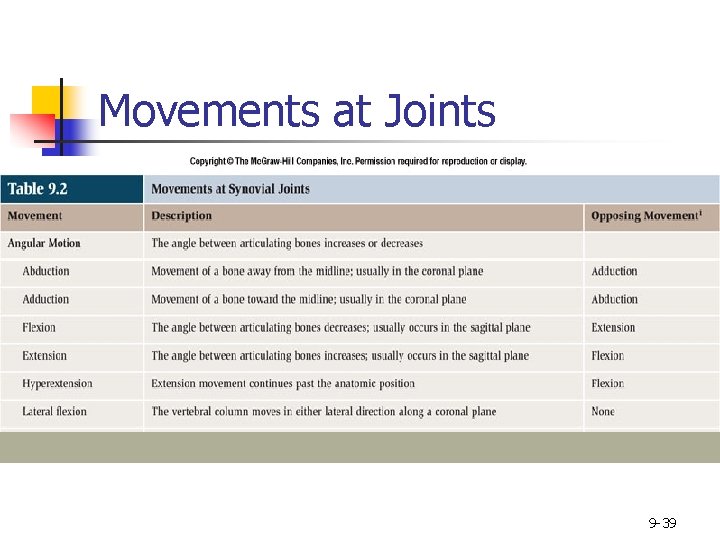
Movements at Joints 9 -39
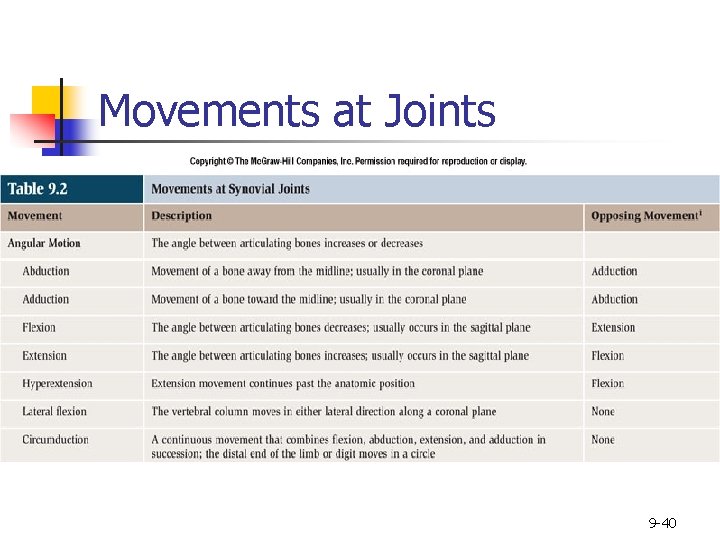
Movements at Joints 9 -40
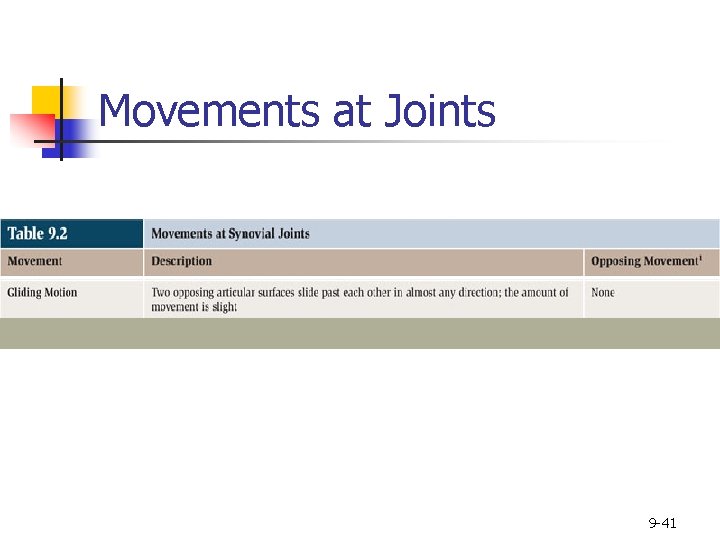
Movements at Joints 9 -41
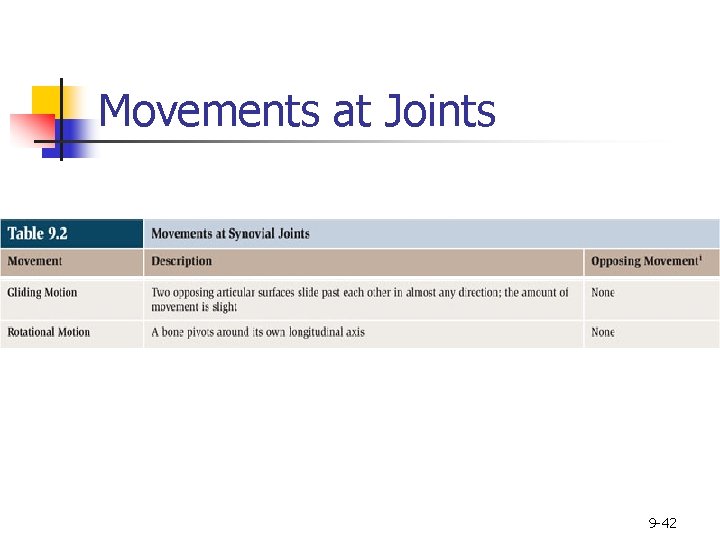
Movements at Joints 9 -42
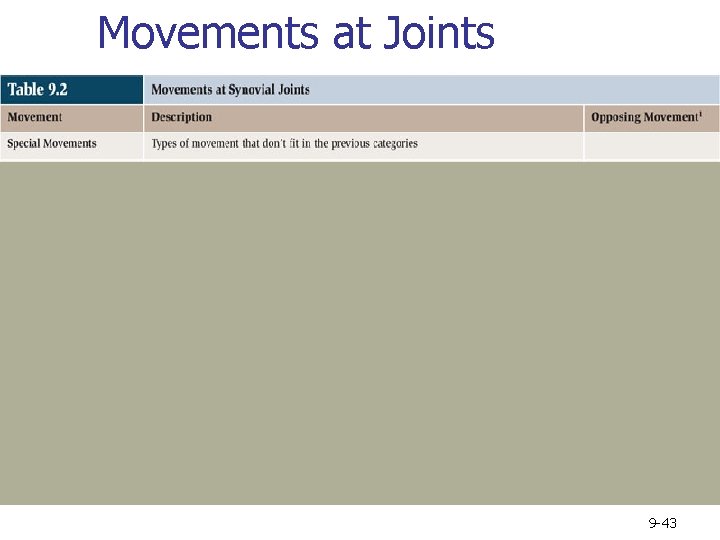
Movements at Joints 9 -43
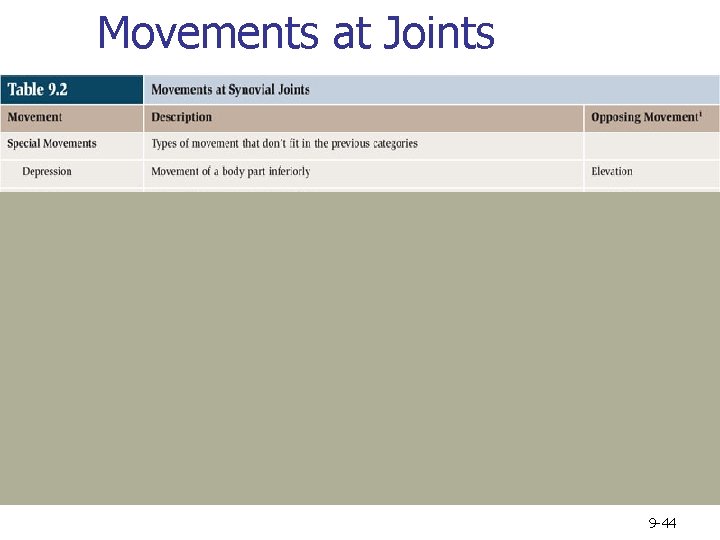
Movements at Joints 9 -44
Movements at Joints 9 -45
Movements at Joints 9 -46
Movements at Joints 9 -47
Movements at Joints 9 -48
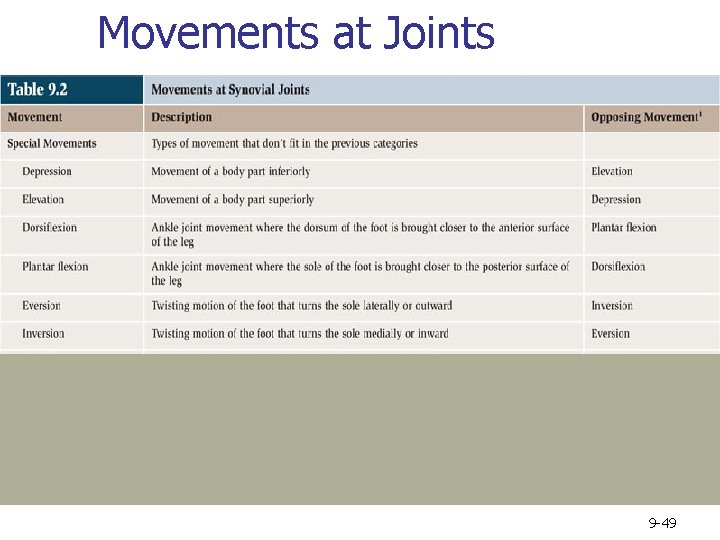
Movements at Joints 9 -49
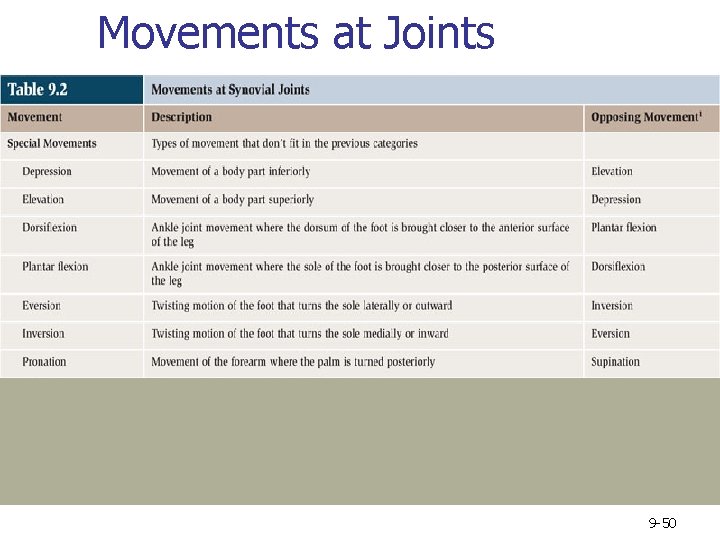
Movements at Joints 9 -50
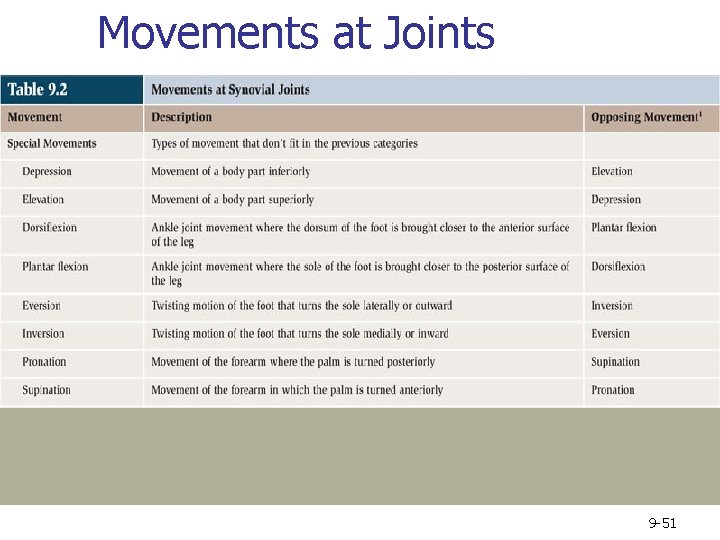
Movements at Joints 9 -51
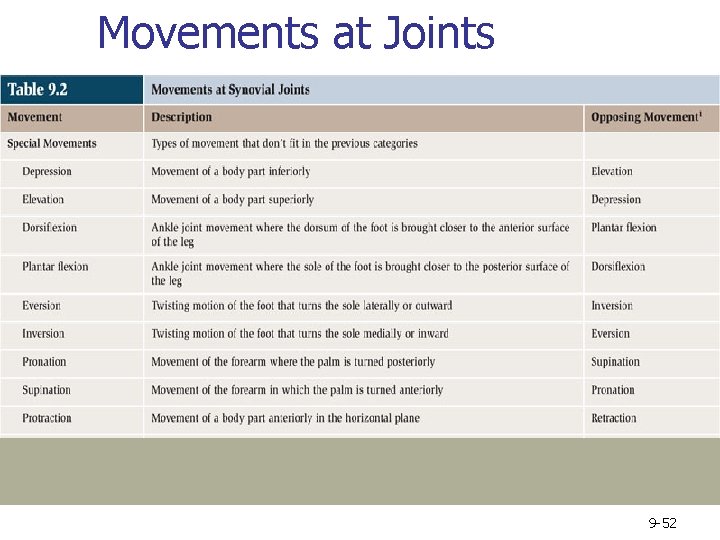
Movements at Joints 9 -52
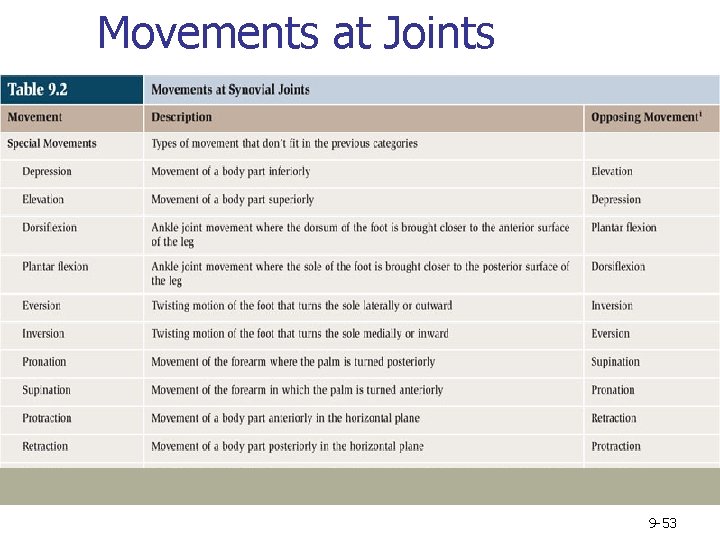
Movements at Joints 9 -53
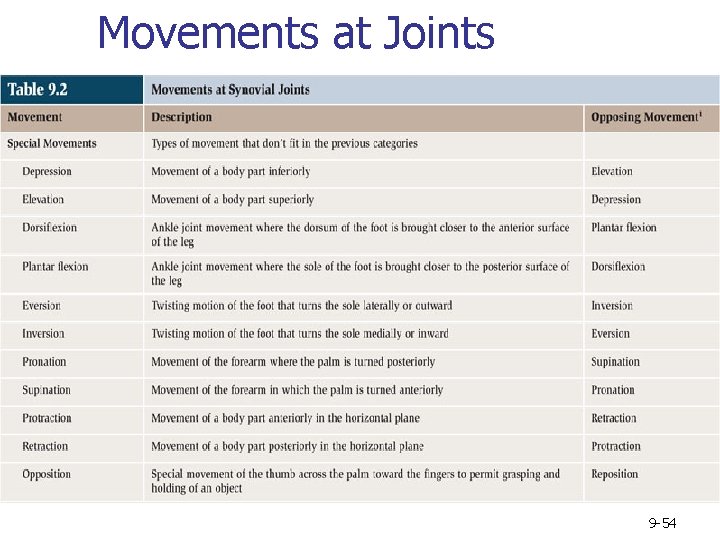
Movements at Joints 9 -54
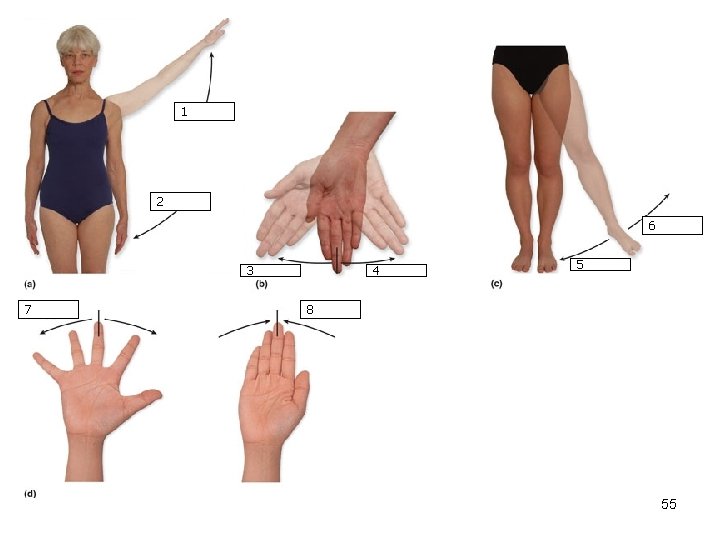
1 2 6 3 7 4 5 8 55
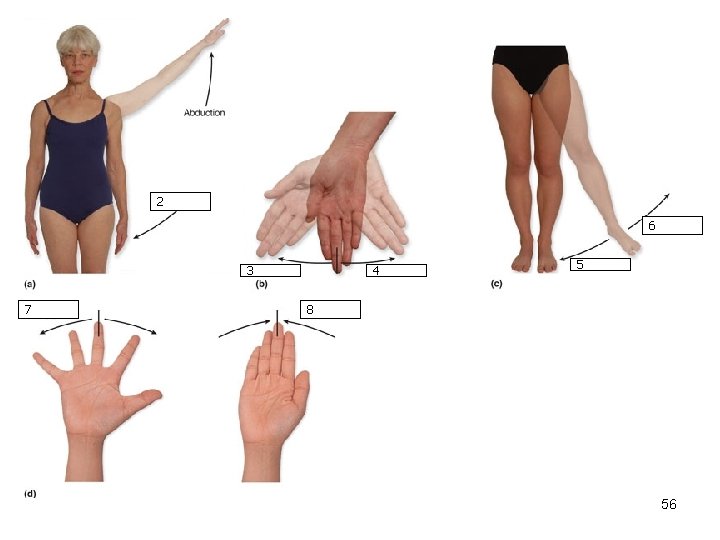
2 6 3 7 4 5 8 56
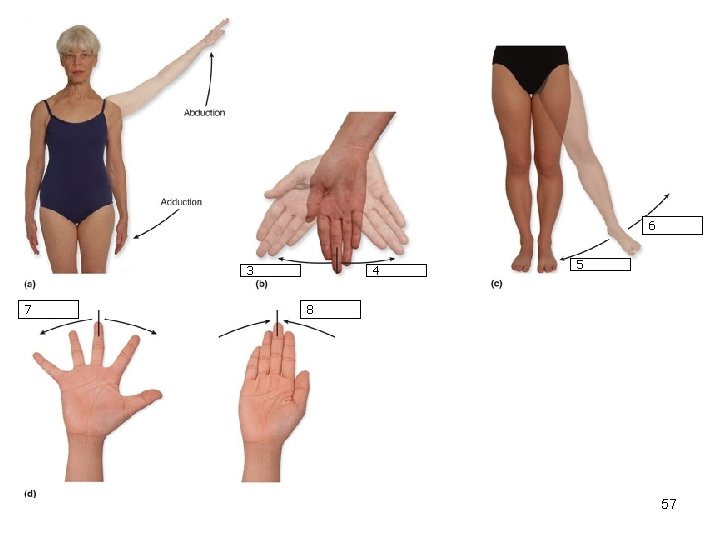
6 3 7 4 5 8 57
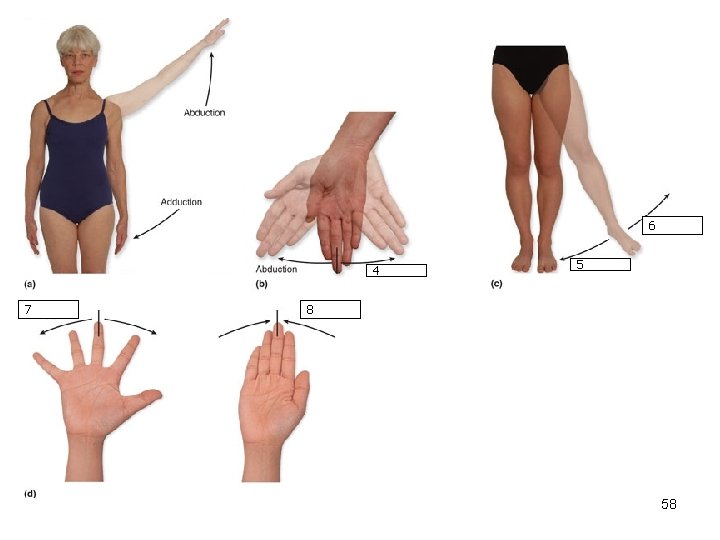
6 4 7 5 8 58
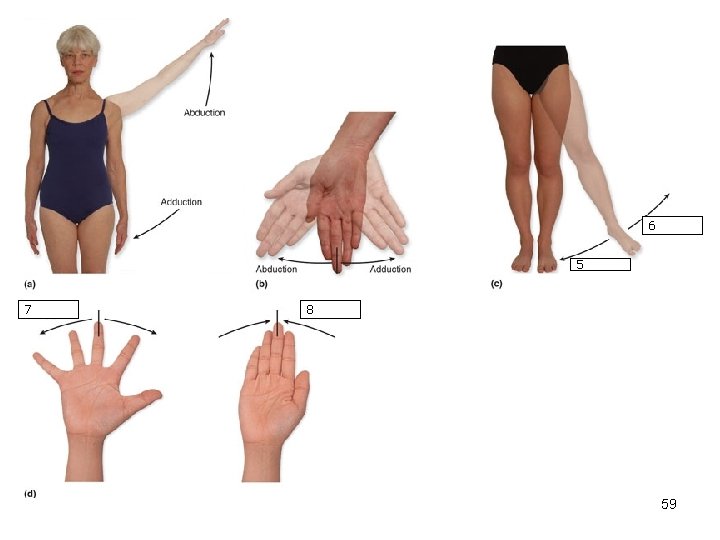
6 5 7 8 59
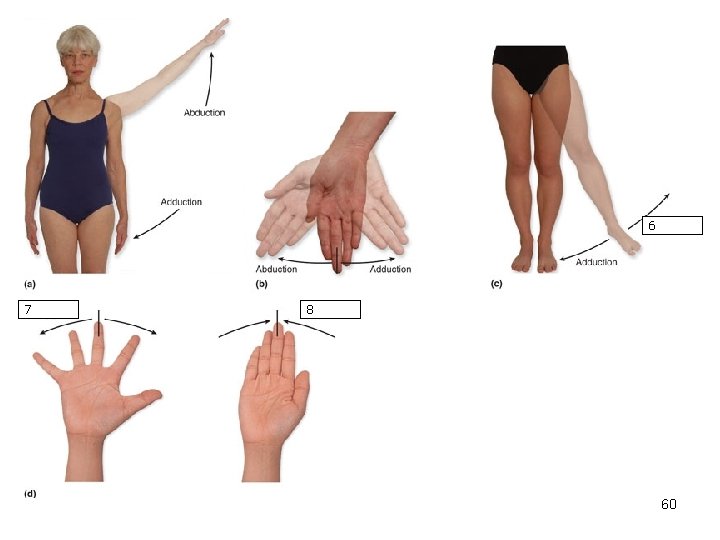
6 7 8 60
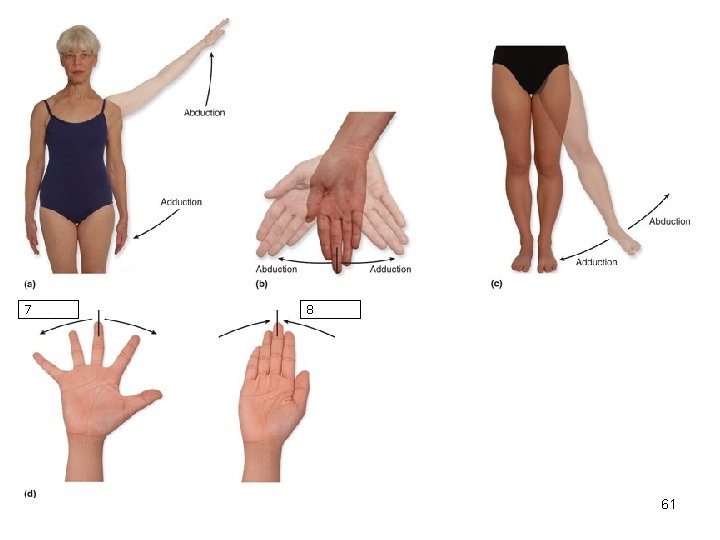
7 8 61
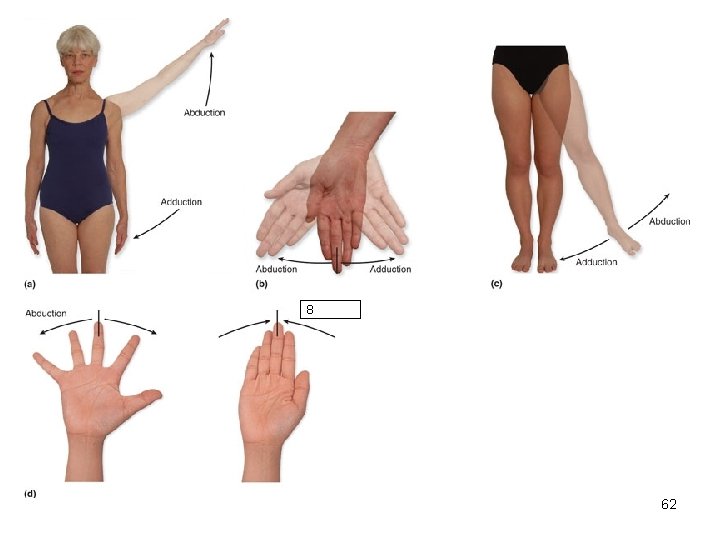
8 62
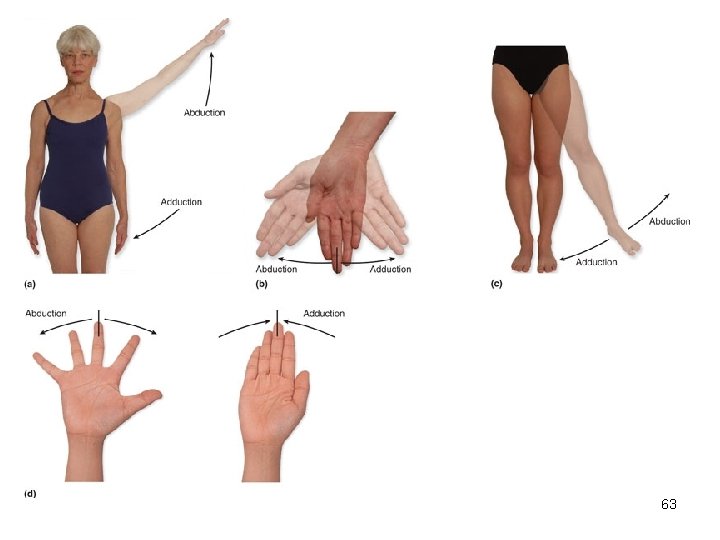
63
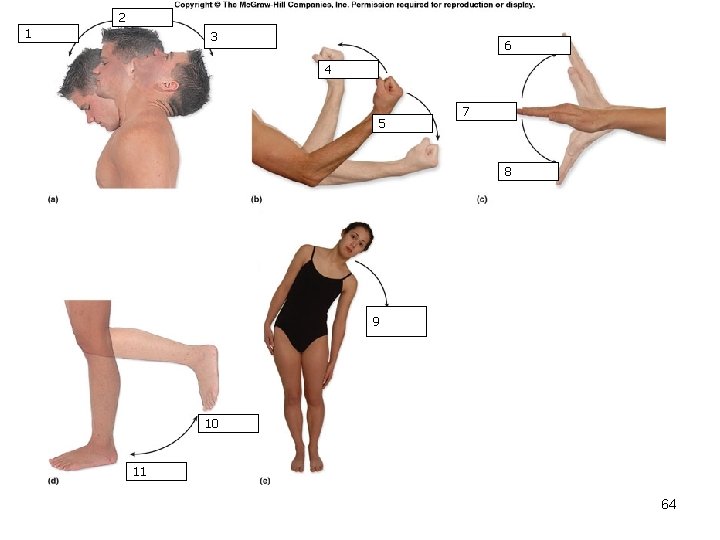
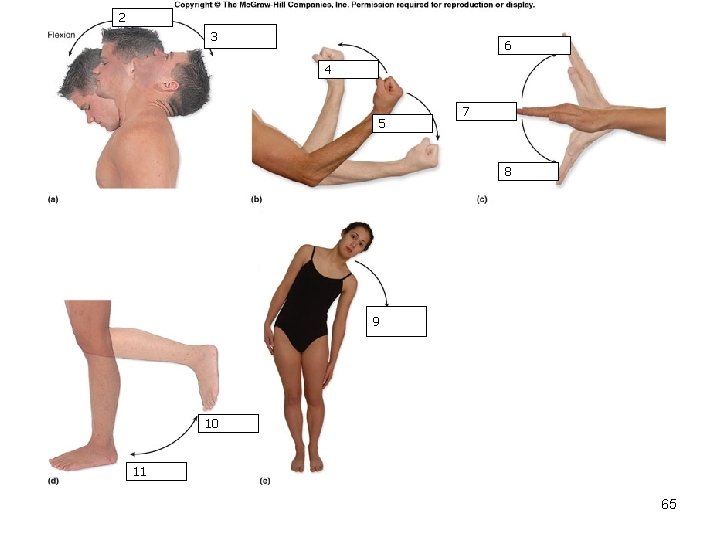
2 1 3 6 4 5 7 8 9 10 11 64
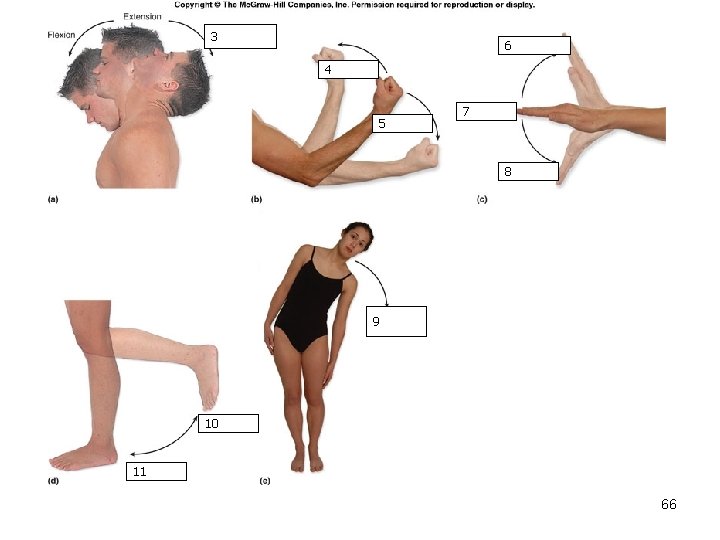
2 3 6 4 5 7 8 9 10 11 65
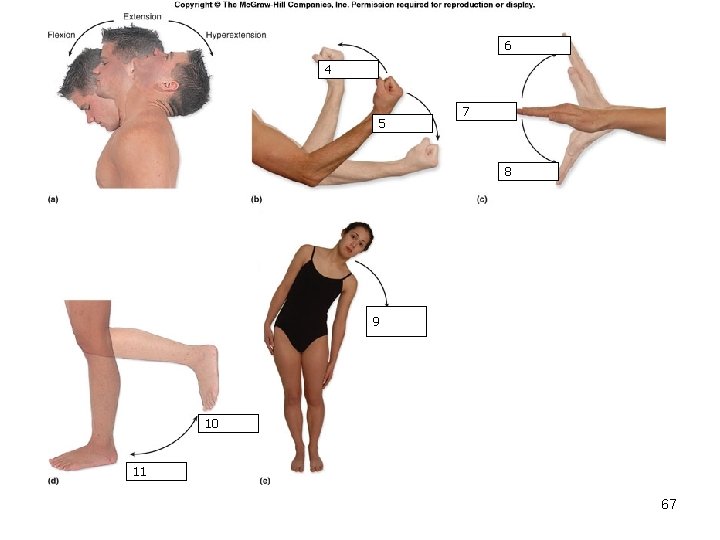
3 6 4 5 7 8 9 10 11 66
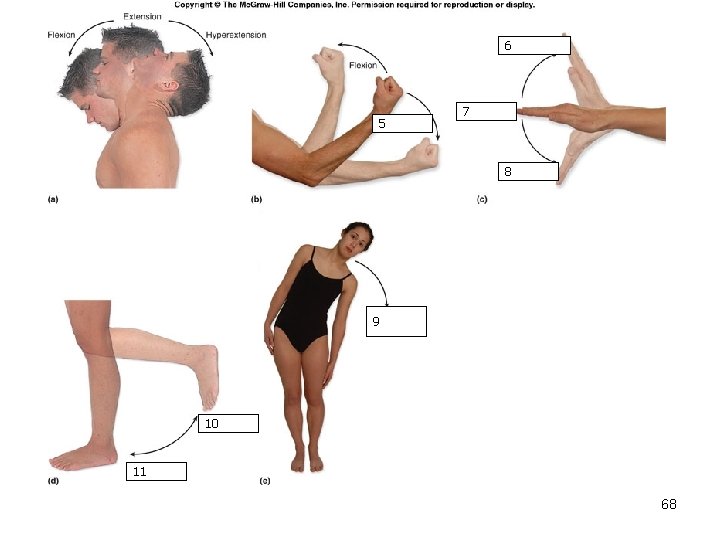
6 4 5 7 8 9 10 11 67
6 5 7 8 9 10 11 68
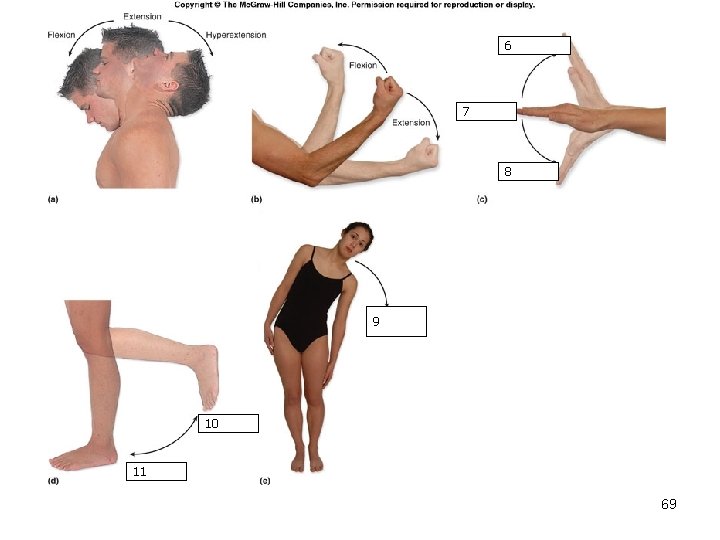
6 7 8 9 10 11 69
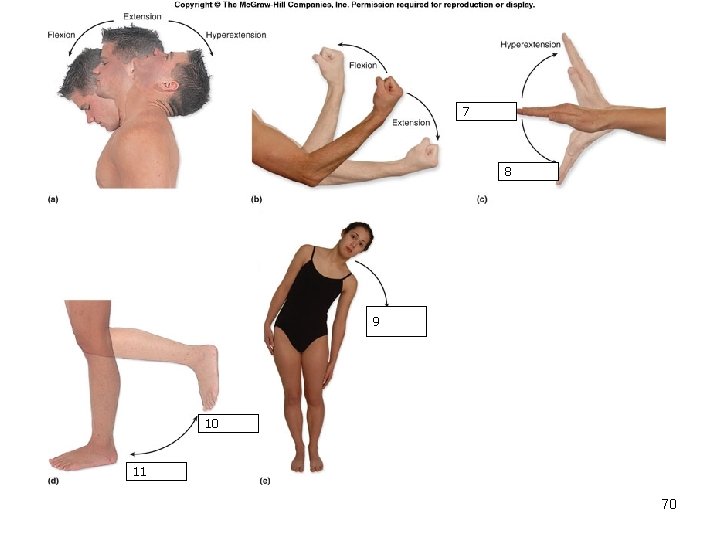
7 8 9 10 11 70
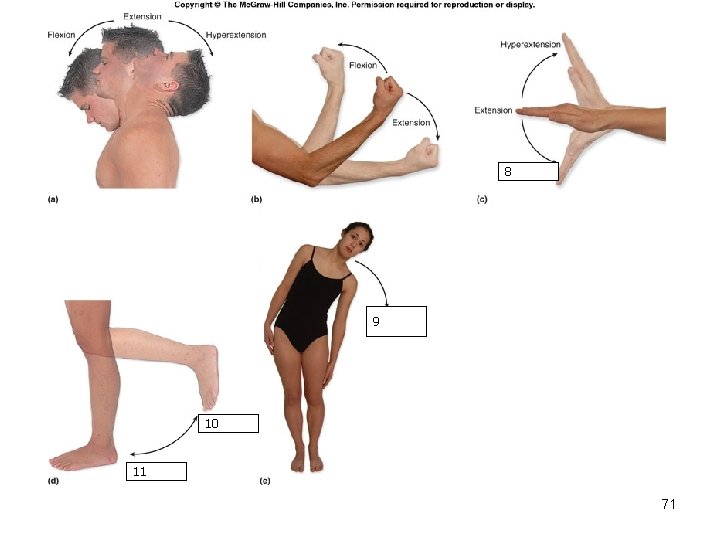
8 9 10 11 71
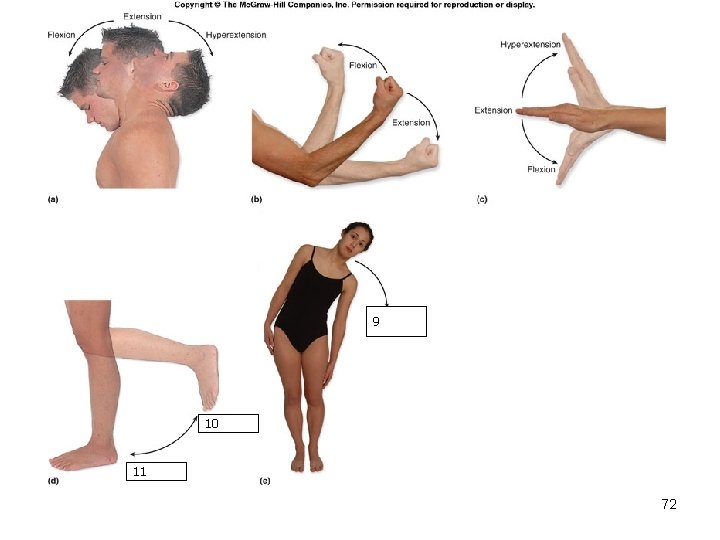
9 10 11 72
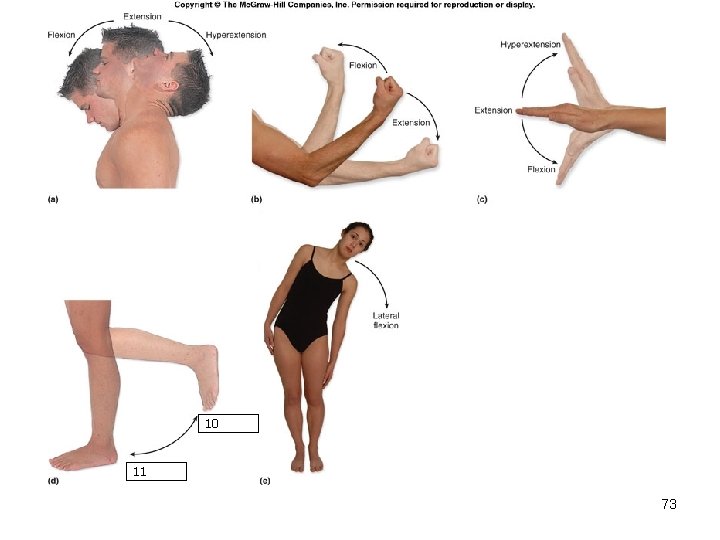
10 11 73
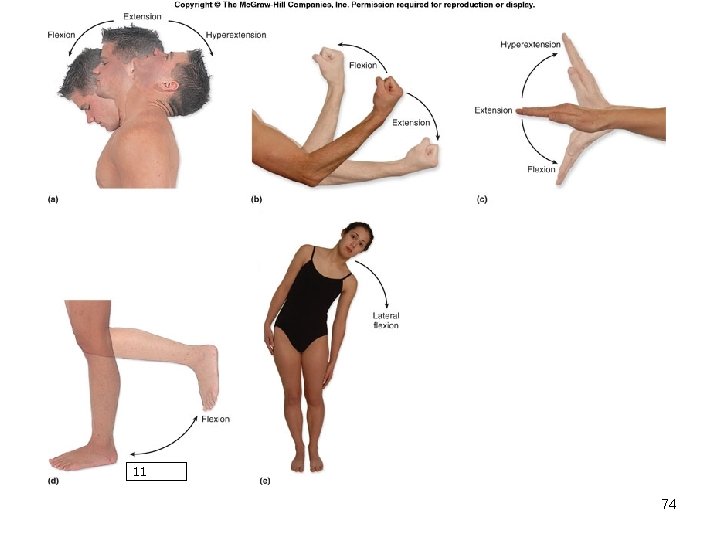
11 74
75
76
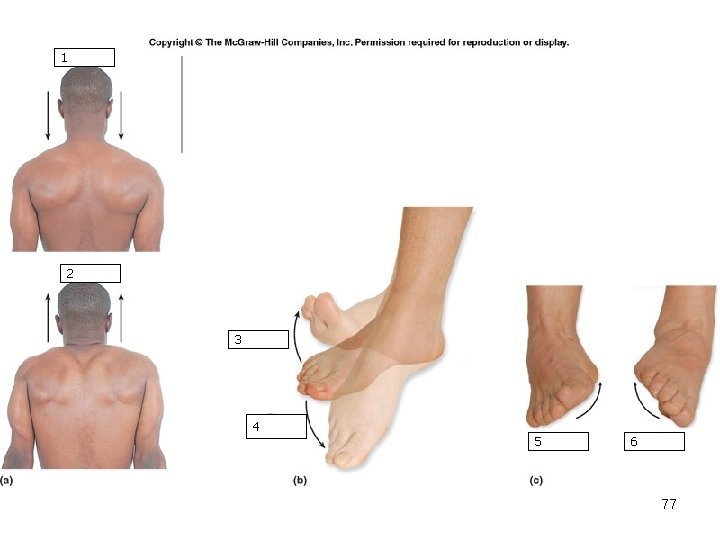
1 2 3 4 5 6 77
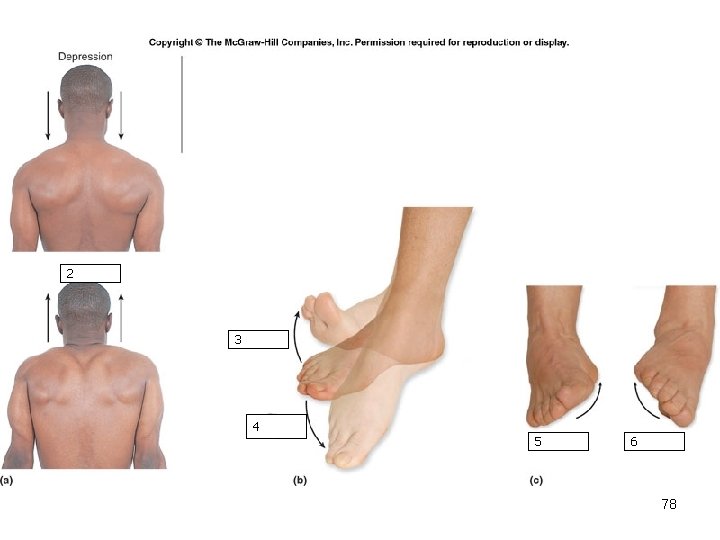
2 3 4 5 6 78
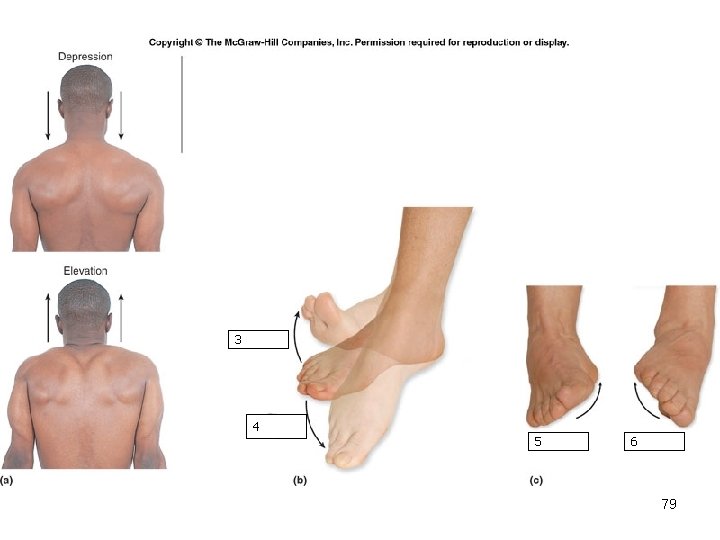
3 4 5 6 79
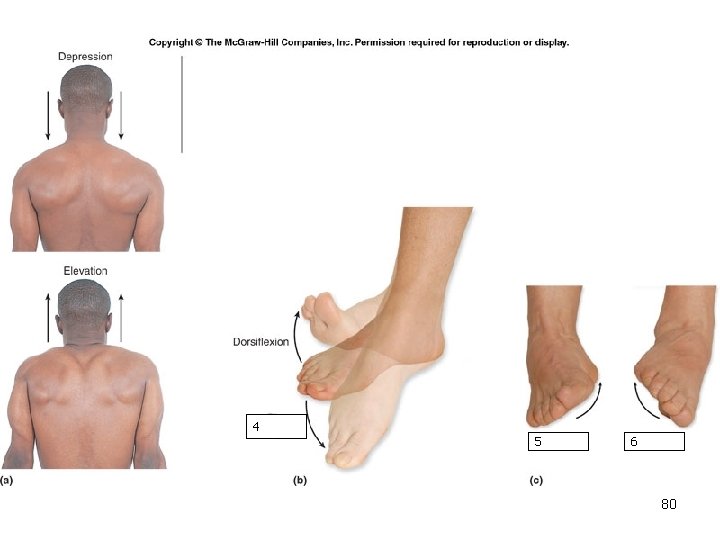
4 5 6 80
5 6 81
6 82
83
5 3 1 2 4 84
5 3 2 4 85
5 3 4 86
5 4 87
5 88
89