
HUMAN ANATOMY Ch 9 JOINTS aka articulations Per
- Slides: 12
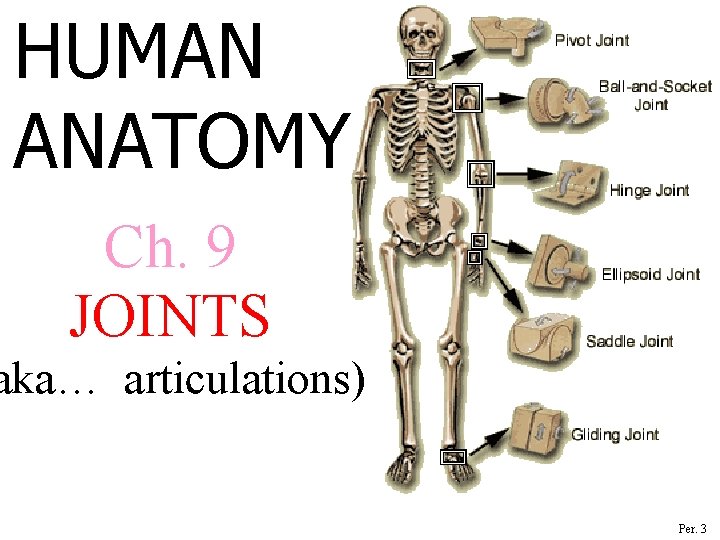
HUMAN ANATOMY Ch. 9 JOINTS aka… articulations) Per. 3
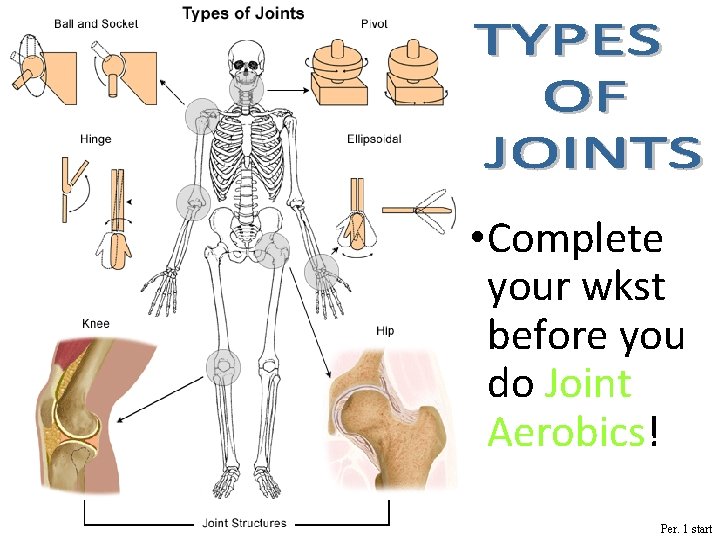
• Complete your wkst before you do Joint Aerobics! Per. 1 start
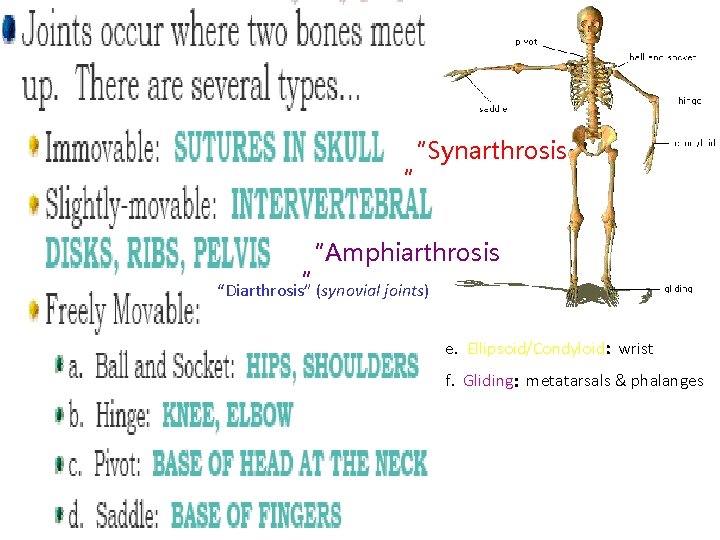
“Synarthrosis ” “Amphiarthrosis ”(synovial joints) “Diarthrosis” e. Ellipsoid/Condyloid: wrist f. Gliding: metatarsals & phalanges
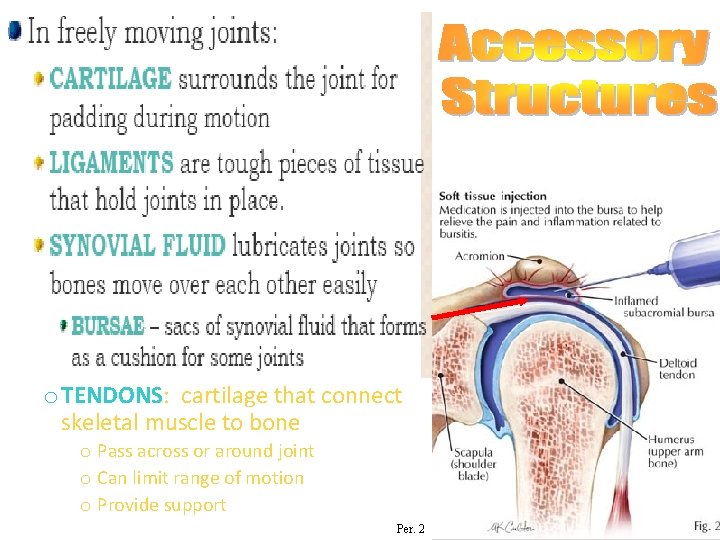
o TENDONS: cartilage that connect skeletal muscle to bone o Pass across or around joint o Can limit range of motion o Provide support Per. 2
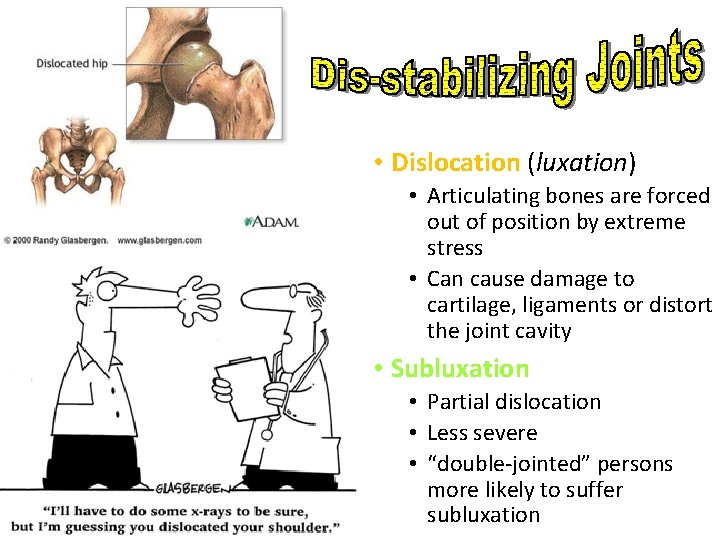
• Dislocation (luxation) • Articulating bones are forced out of position by extreme stress • Can cause damage to cartilage, ligaments or distort the joint cavity • Subluxation • Partial dislocation • Less severe • “double-jointed” persons more likely to suffer subluxation
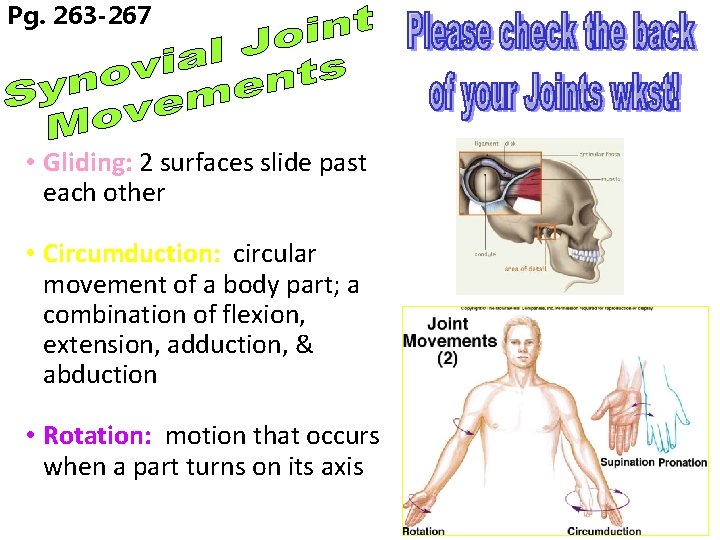
Pg. 263 -267 • Gliding: 2 surfaces slide past each other • Circumduction: circular movement of a body part; a combination of flexion, extension, adduction, & abduction • Rotation: motion that occurs when a part turns on its axis
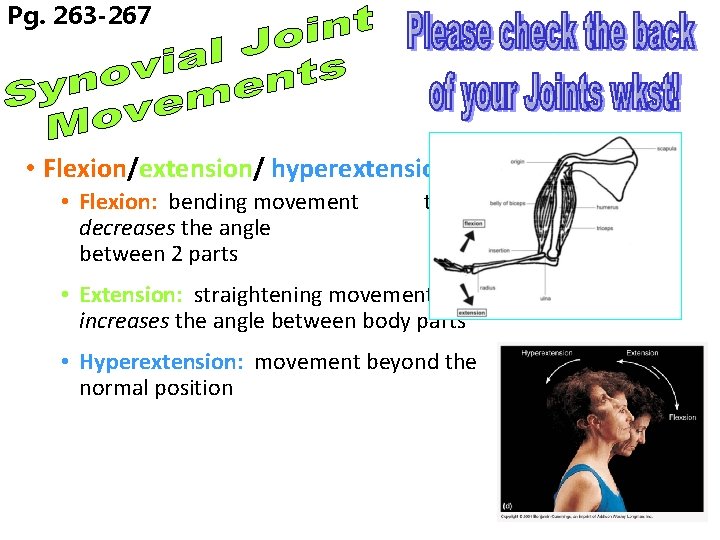
Pg. 263 -267 • Flexion/extension/ hyperextension • Flexion: bending movement decreases the angle between 2 parts that • Extension: straightening movement that increases the angle between body parts • Hyperextension: movement beyond the normal position
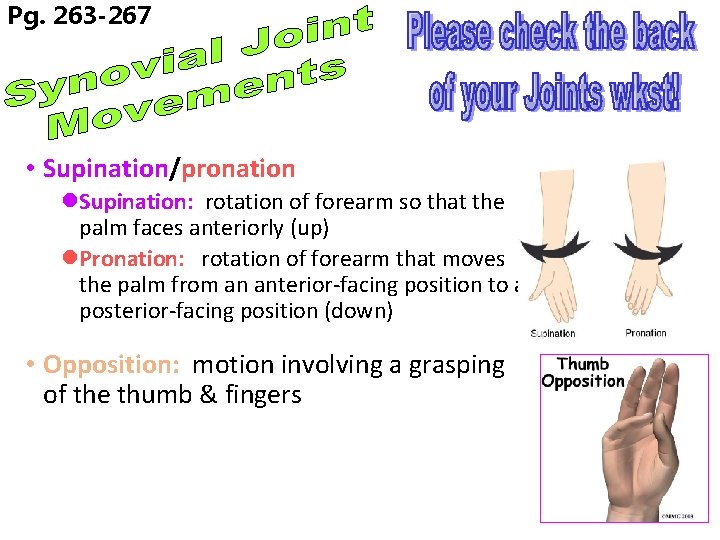
Pg. 263 -267 • Supination/pronation l. Supination: rotation of forearm so that the palm faces anteriorly (up) l. Pronation: rotation of forearm that moves the palm from an anterior-facing position to a posterior-facing position (down) • Opposition: motion involving a grasping of the thumb & fingers
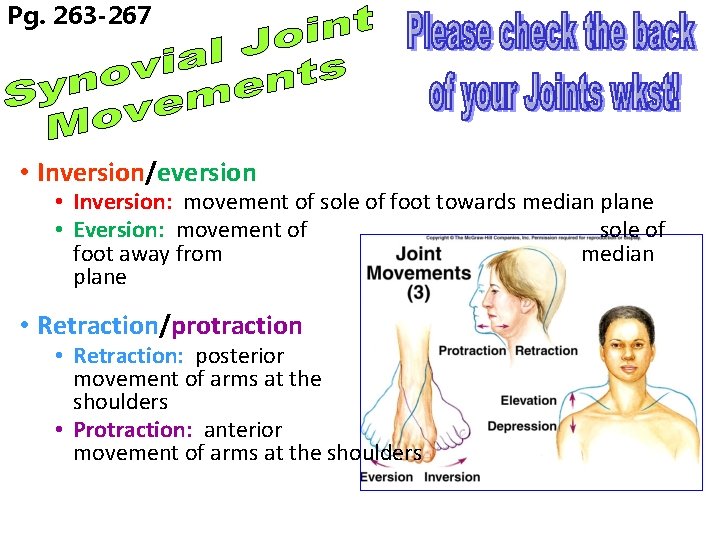
Pg. 263 -267 • Inversion/eversion • Inversion: movement of sole of foot towards median plane • Eversion: movement of sole of foot away from median plane • Retraction/protraction • Retraction: posterior movement of arms at the shoulders • Protraction: anterior movement of arms at the shoulders
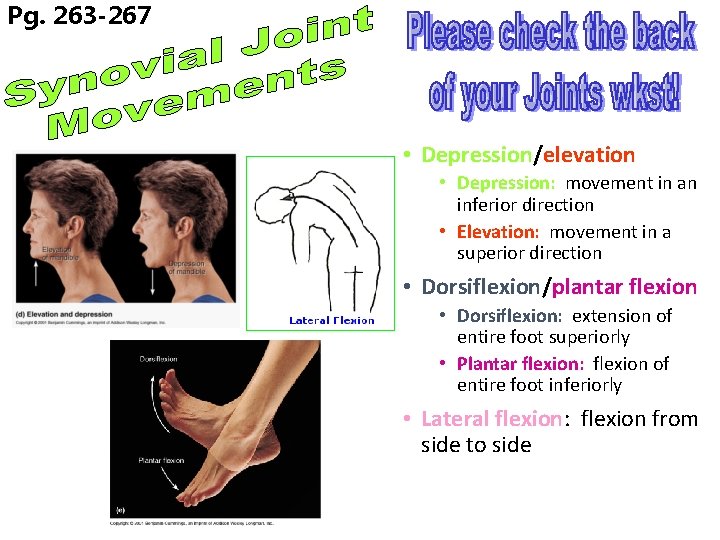
Pg. 263 -267 • Depression/elevation • Depression: movement in an inferior direction • Elevation: movement in a superior direction • Dorsiflexion/plantar flexion • Dorsiflexion: extension of entire foot superiorly • Plantar flexion: flexion of entire foot inferiorly • Lateral flexion: flexion from side to side
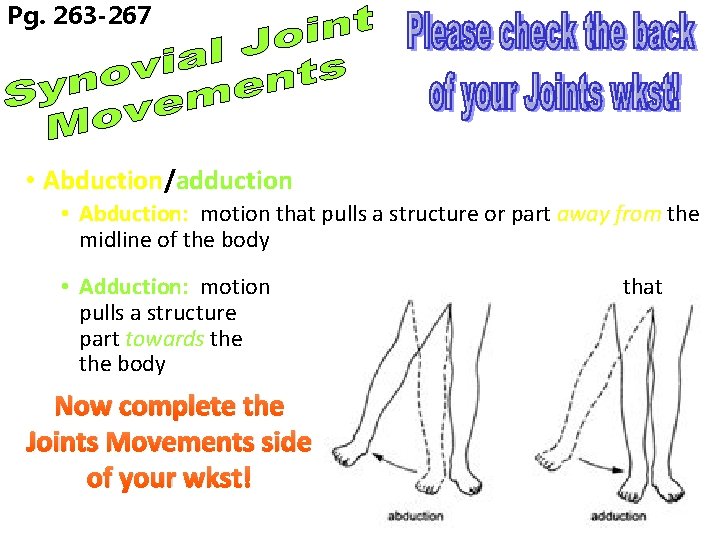
Pg. 263 -267 • Abduction/adduction • Abduction: motion that pulls a structure or part away from the midline of the body • Adduction: motion pulls a structure part towards the body Now complete the Joints Movements side of your wkst! that or midline of
Skull Decorating Contest • Each group will have one skull to decorate • There will be 2 winners: most creative and most anatomically correct • Winners get extra credit! • Requirements: Sutures are identified with lines, bones need to be labeled or colored, all group members names need to be listed, and you must use at least 4 colors