
Human Anatomy Central Nervous System CNS Part I


- Slides: 49
Human Anatomy Central Nervous System CNS Part I
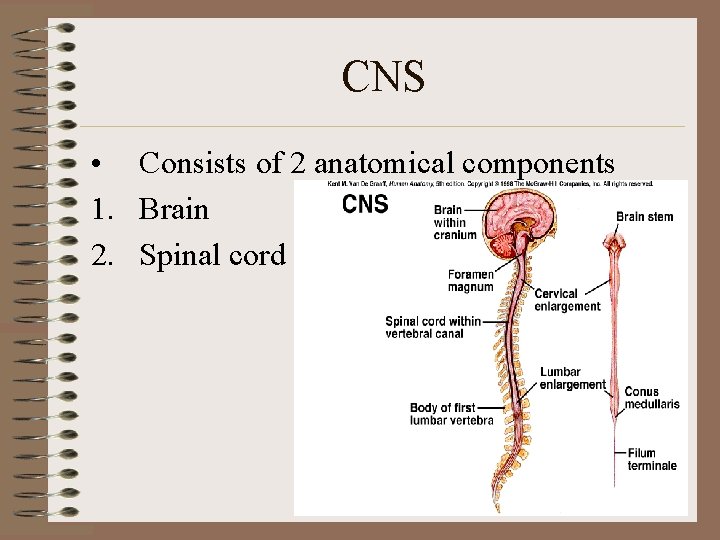
CNS • Consists of 2 anatomical components 1. Brain 2. Spinal cord
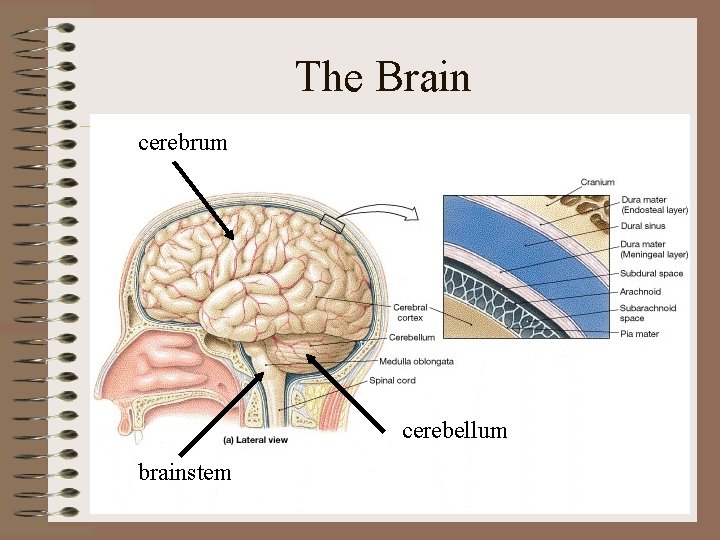
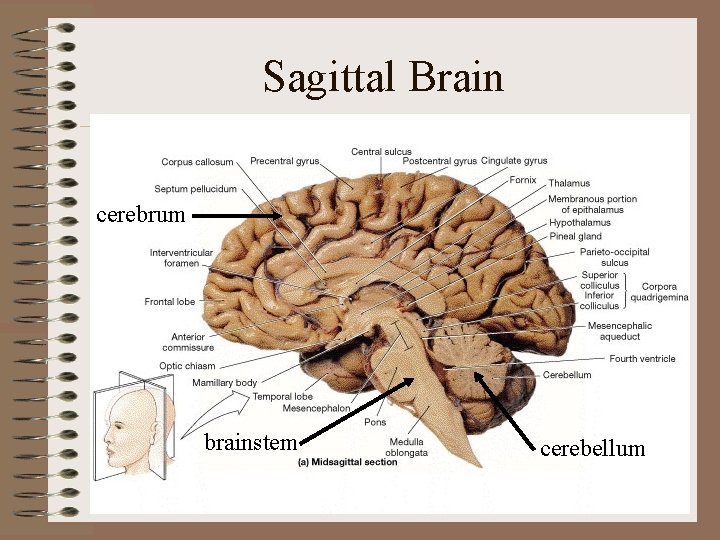
The Brain • A. B. C. 3 components Cerebrum Cerebellum Brainstem
The Brain cerebrum cerebellum brainstem
Sagittal Brain cerebrum brainstem cerebellum
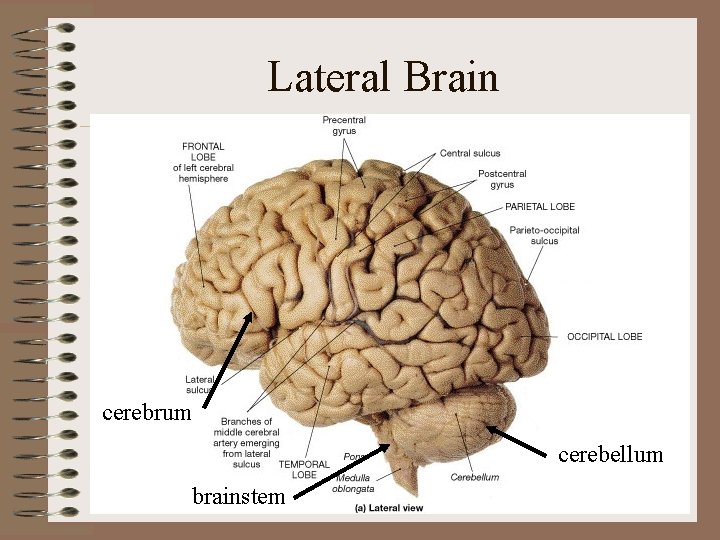
Lateral Brain cerebrum cerebellum brainstem
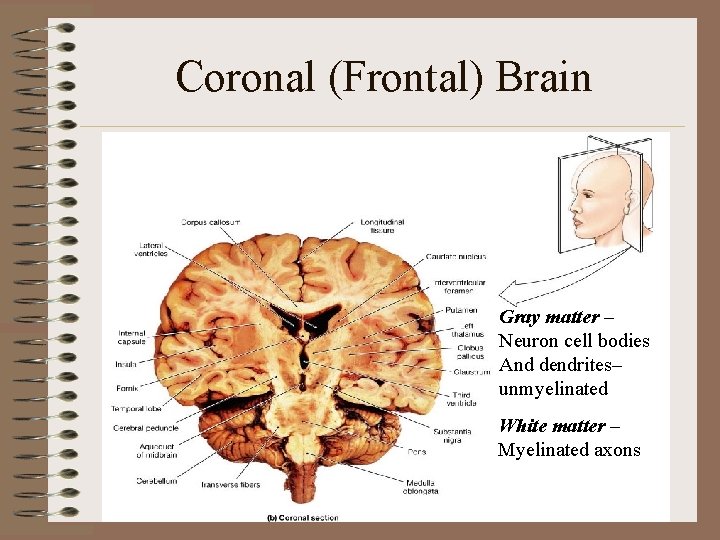
Coronal (Frontal) Brain Gray matter – Neuron cell bodies And dendrites– unmyelinated White matter – Myelinated axons
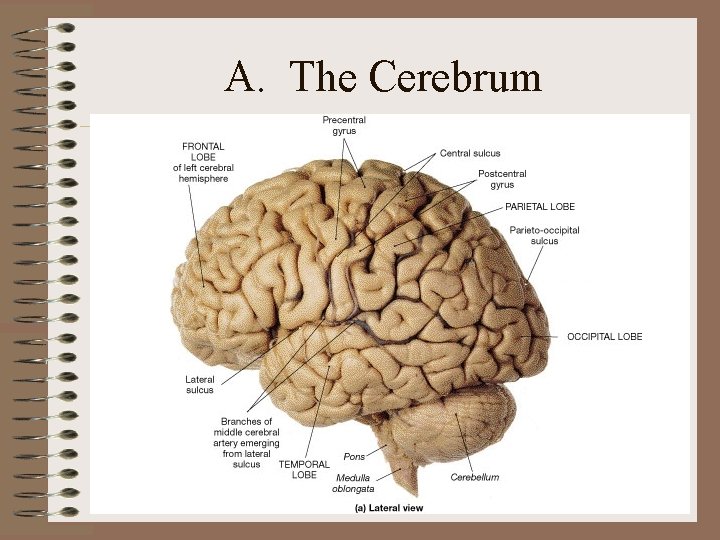
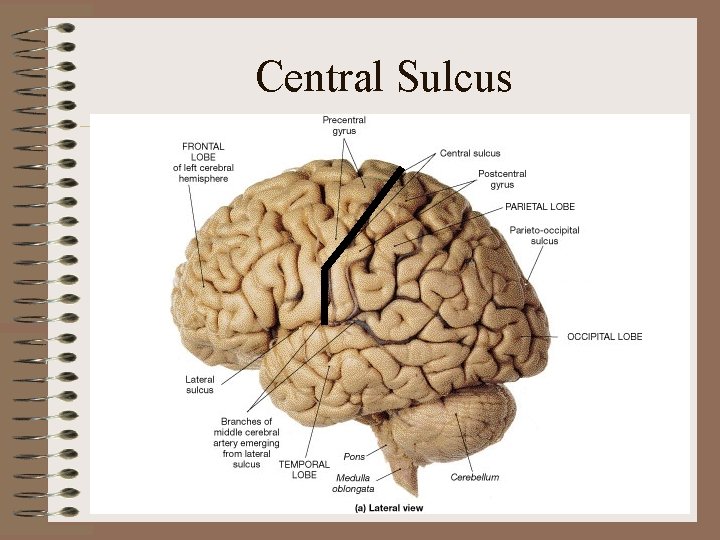
A. The Cerebrum • Surface forms a series of elevated ridges – gyri (gyrus, sng. ) • Surface also has shallow depressions – sulci (sulcus, sng. )
A. The Cerebrum
Central Sulcus
Lateral Sulcus
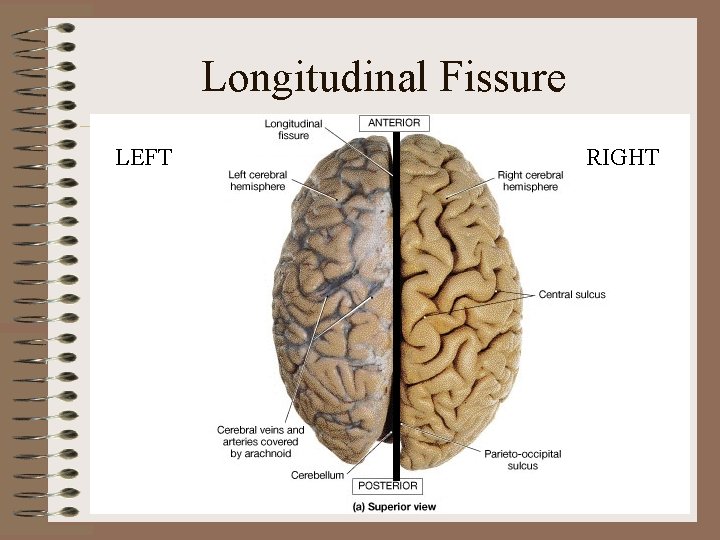
Longitudinal Fissure LEFT RIGHT
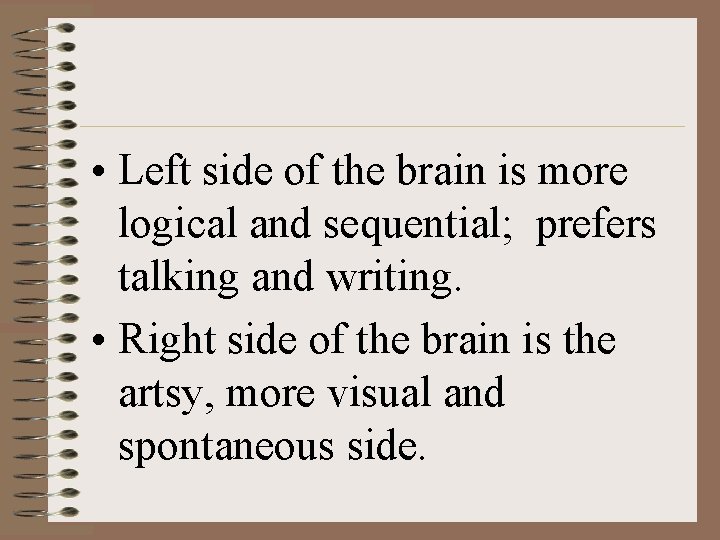
• Left side of the brain is more logical and sequential; prefers talking and writing. • Right side of the brain is the artsy, more visual and spontaneous side.
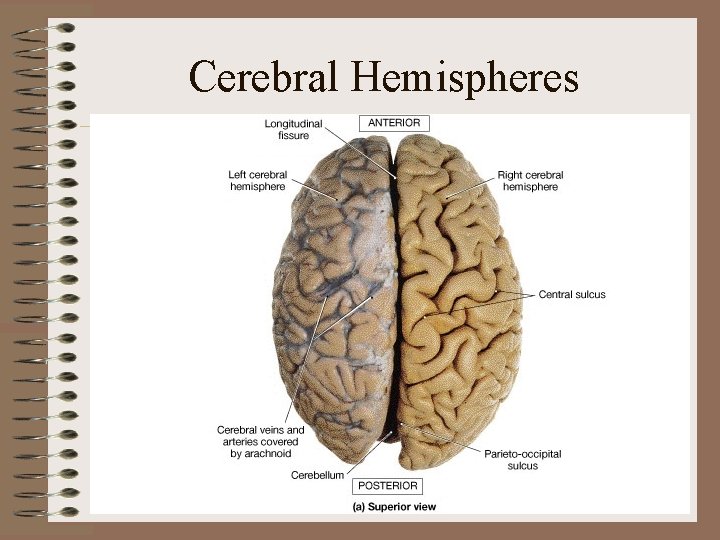
Cerebral Hemispheres • Cerebrum consists of two cerebral hemispheres
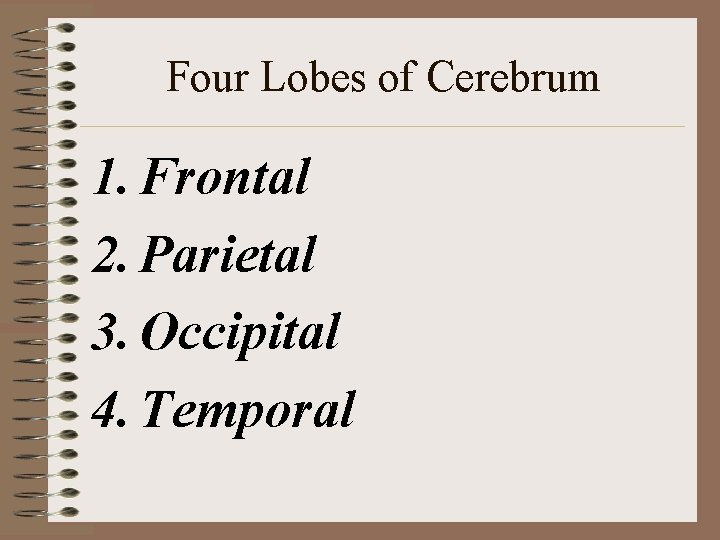
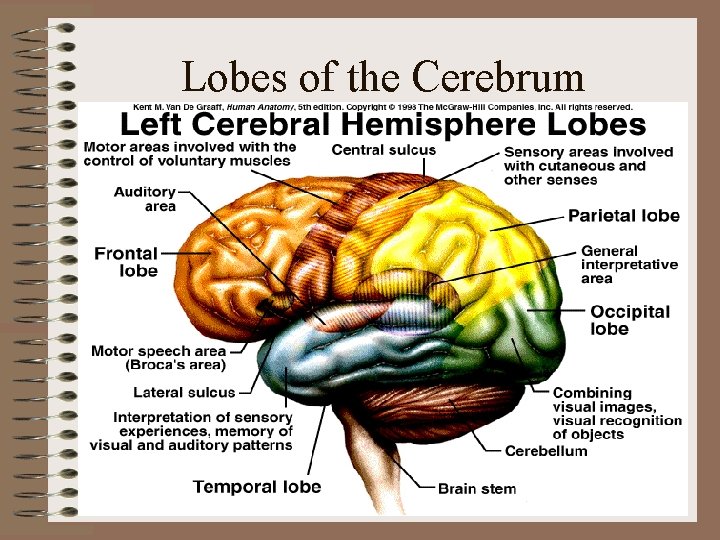
Four Lobes of Cerebrum 1. Frontal 2. Parietal 3. Occipital 4. Temporal
Lobes of the Cerebrum
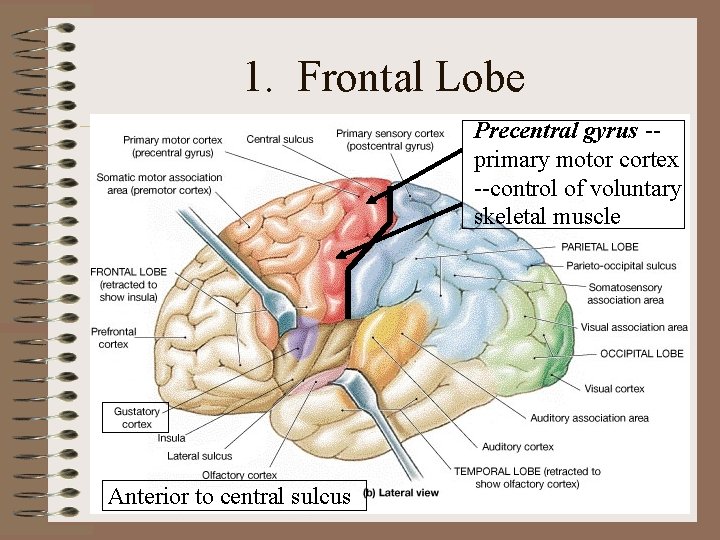
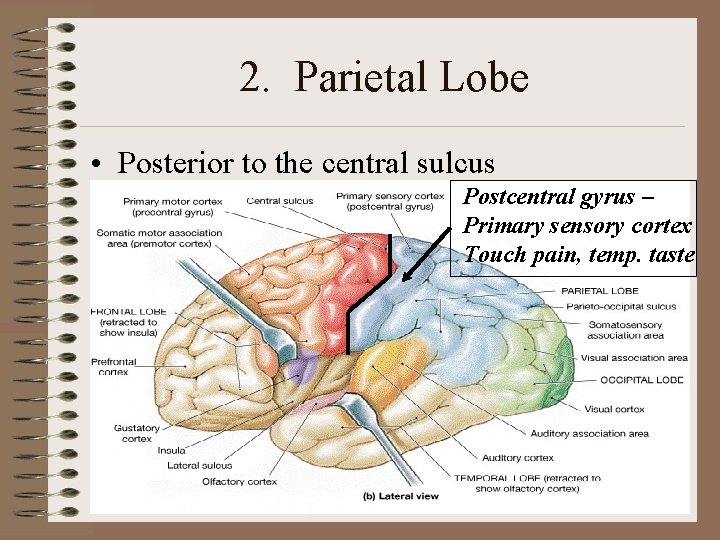
1. Frontal Lobe • Anterior to the central Anterior to central sulcus Precentral gyrus -sulcusprimary motor cortex --control of voluntary skeletal muscle
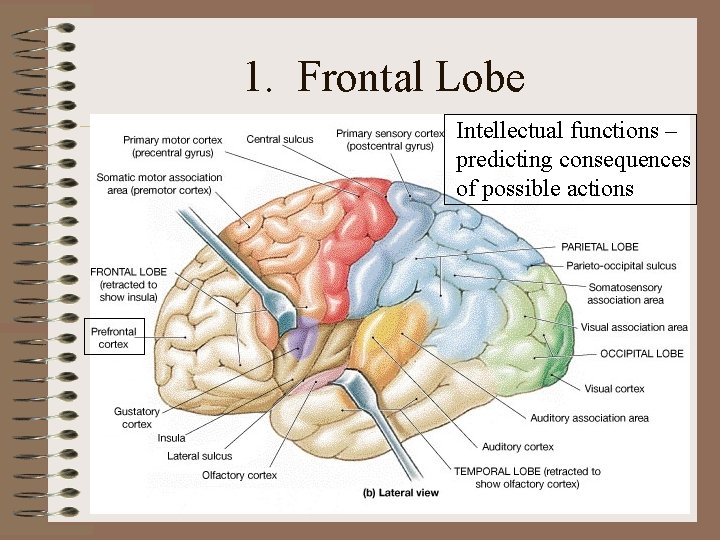
1. Frontal Lobe Intellectual functions – predicting consequences of possible actions
2. Parietal Lobe • Posterior to the central sulcus Postcentral gyrus – Primary sensory cortex Touch pain, temp. taste
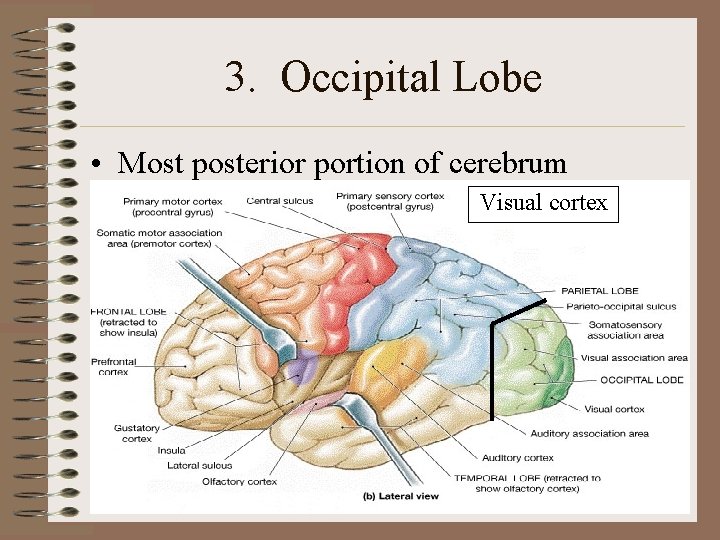
3. Occipital Lobe • Most posterior portion of cerebrum Visual cortex
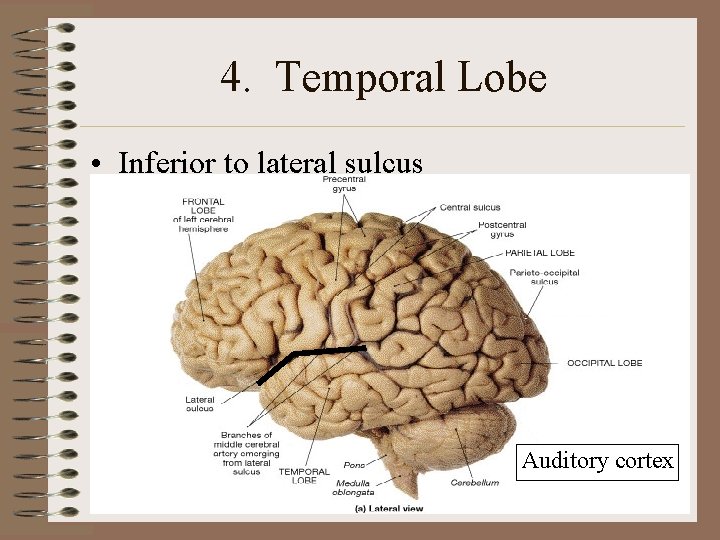
4. Temporal Lobe • Inferior to lateral sulcus Auditory cortex
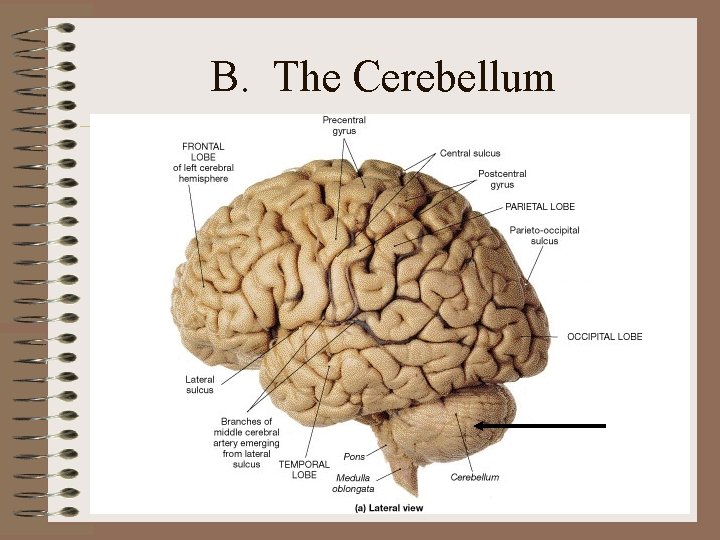
B. The Cerebellum
B. The Cerebellum • 2 cerebellar hemispheres • Functions 1. Coordinates rapid, automatic adjustments to skeletal muscle 2. This maintains body balance and equilibrium 3. Stores memories of learned movement patterns
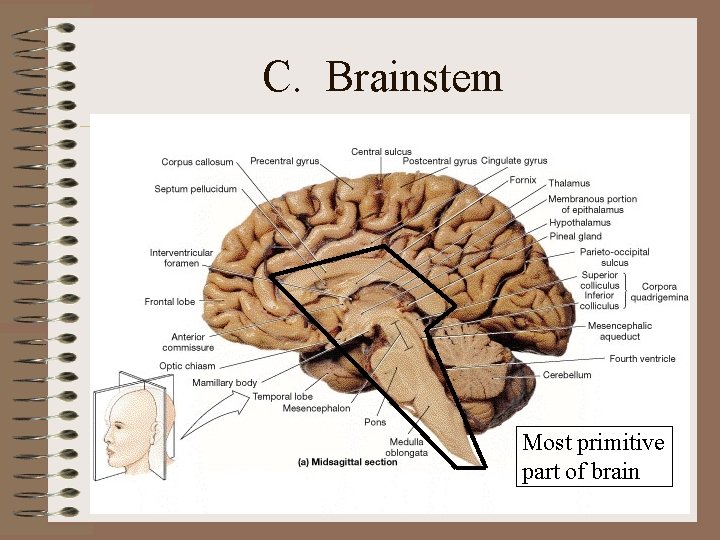
C. Brainstem Most primitive part of brain
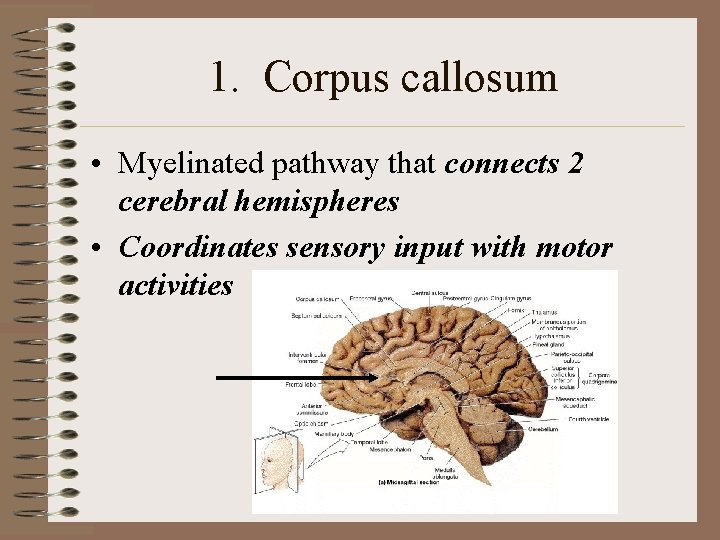
1. Corpus callosum • Myelinated pathway that connects 2 cerebral hemispheres • Coordinates sensory input with motor activities
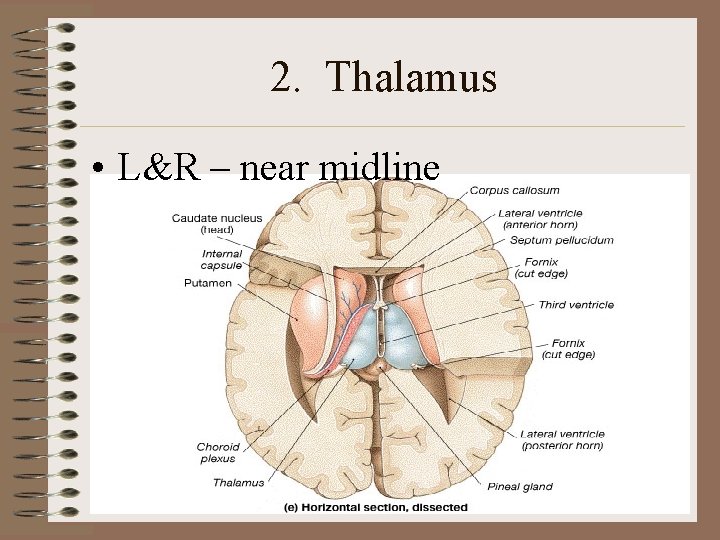
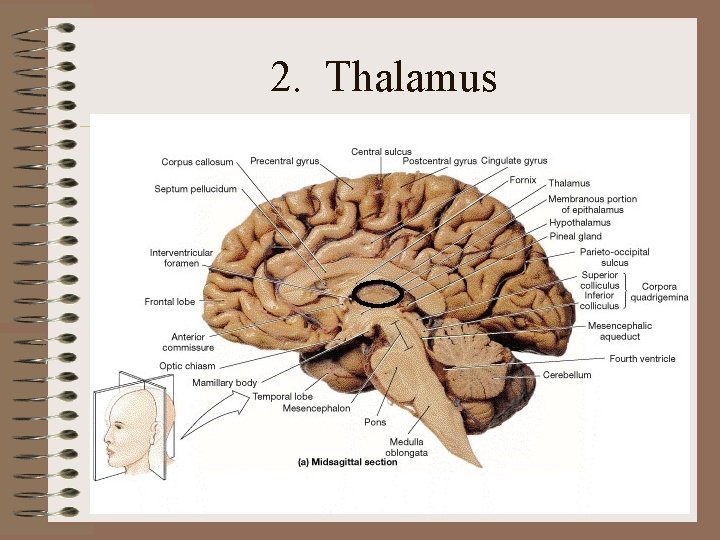
2. Thalamus • L&R – near midline
2. Thalamus
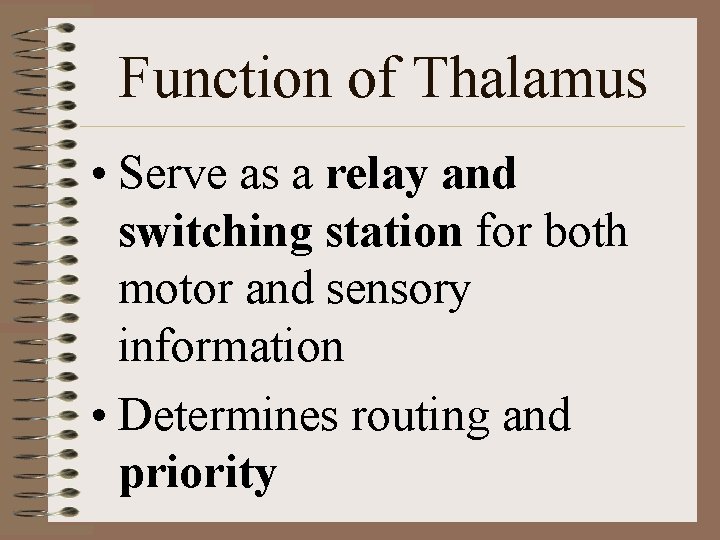
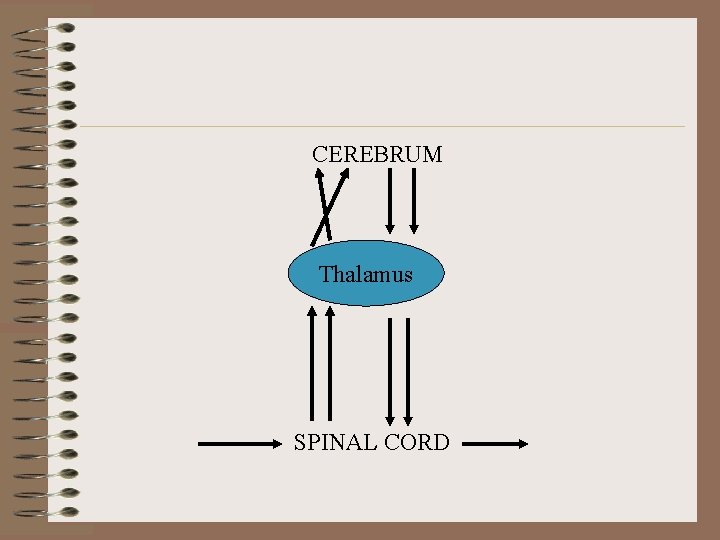
Function of Thalamus • Serve as a relay and switching station for both motor and sensory information • Determines routing and priority
CEREBRUM Thalamus SPINAL CORD
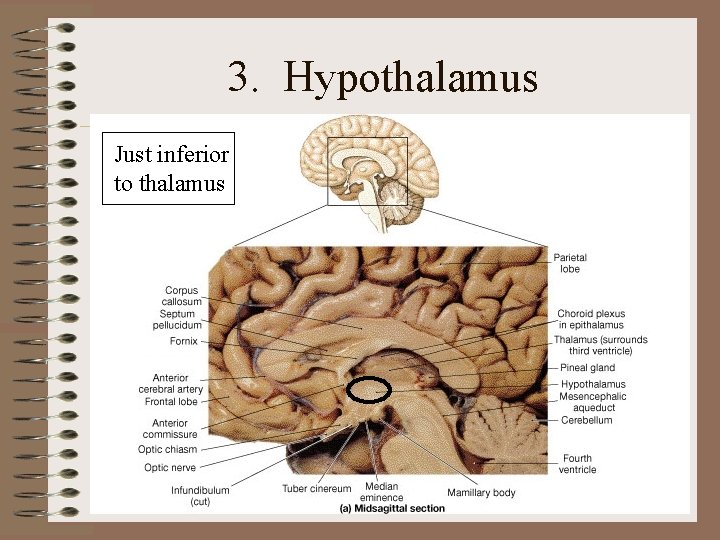
3. Hypothalamus Just inferior to thalamus
Functions of Hypothalamus 1. Controls motor functions associated with rage, pleasure, pain and sexual arousal 2. Regulates hormone secretion of the pituitary gland 3. Feeding and thirst centers
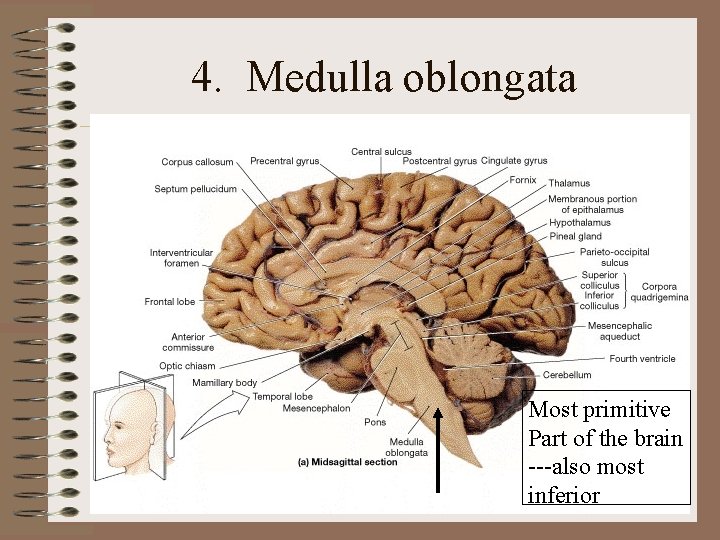
4. Medulla oblongata Most primitive Part of the brain ---also most inferior
Functions of medulla oblongata • 1. 2. 3. Regulation of: Heart rate Respiration rate Distribution of blood flow and blood pressure 4. Connects brain to spinal cord • Ends at foramen magnum
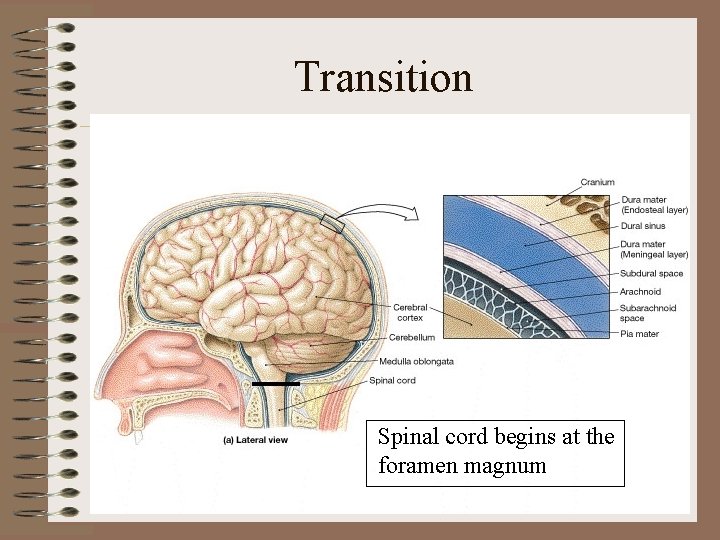
Transition Spinal cord begins at the foramen magnum
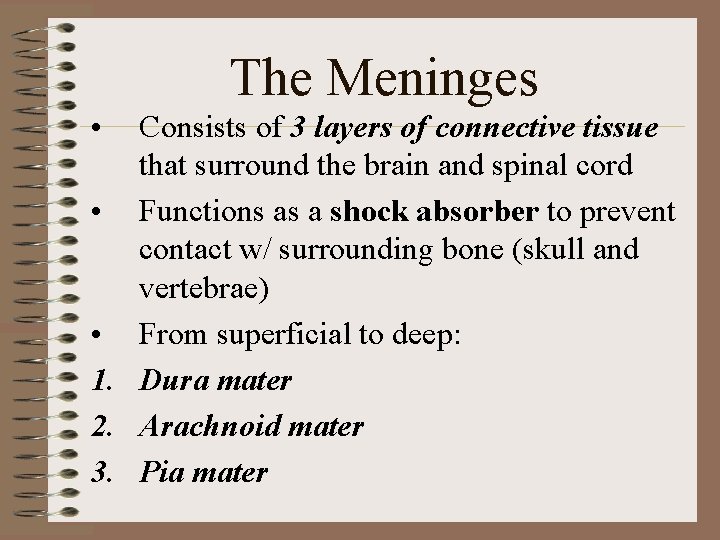
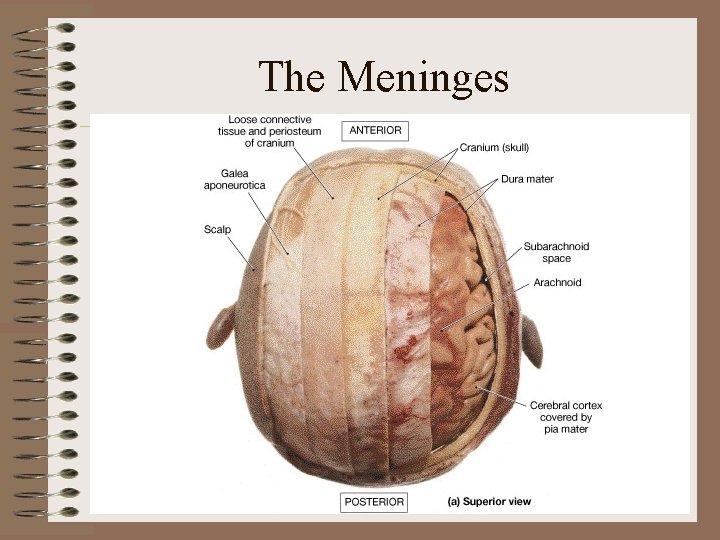
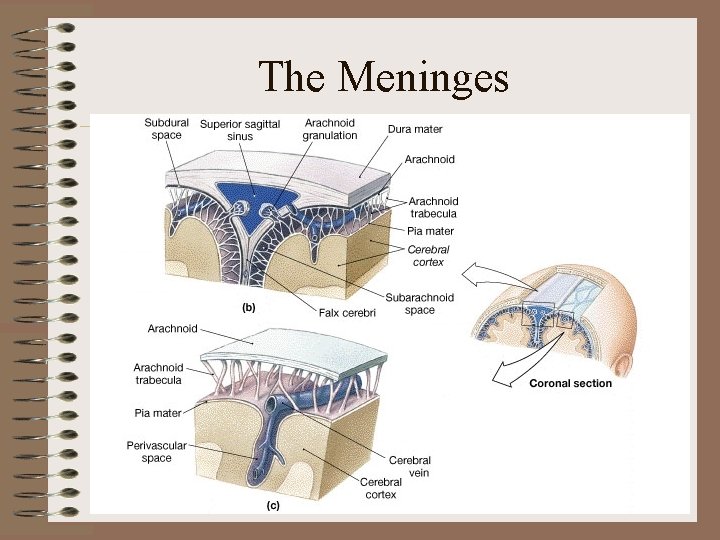
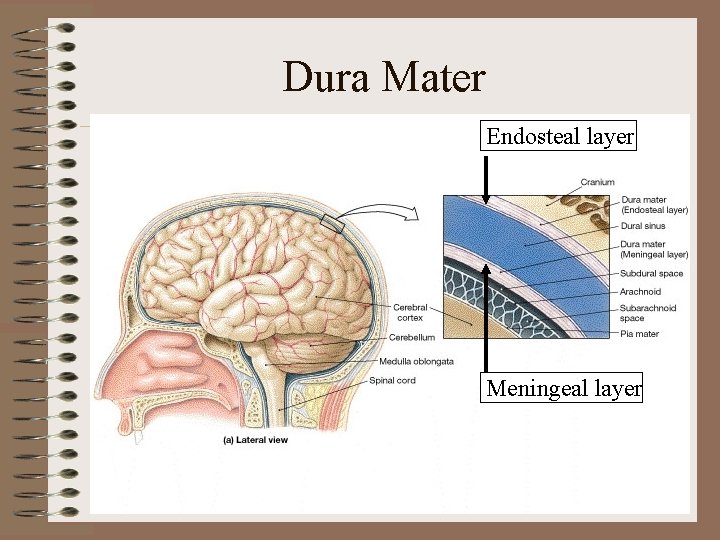
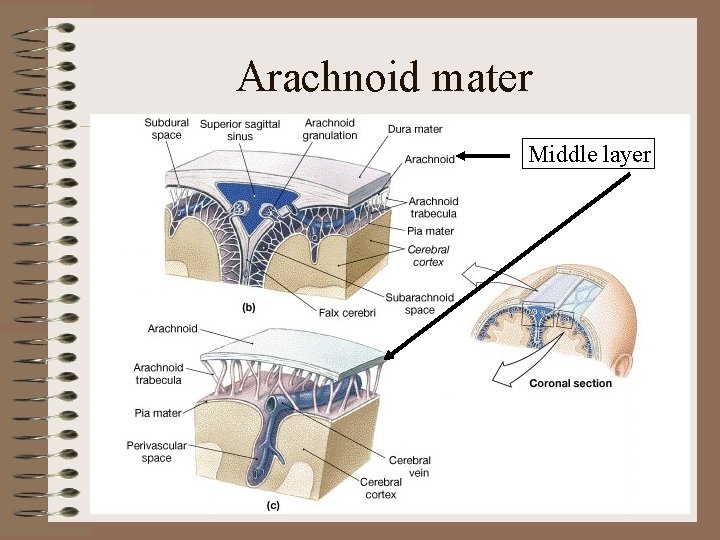
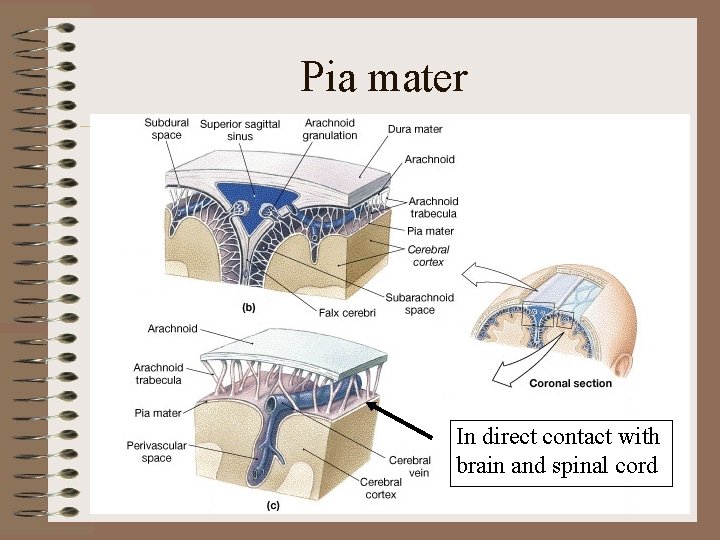
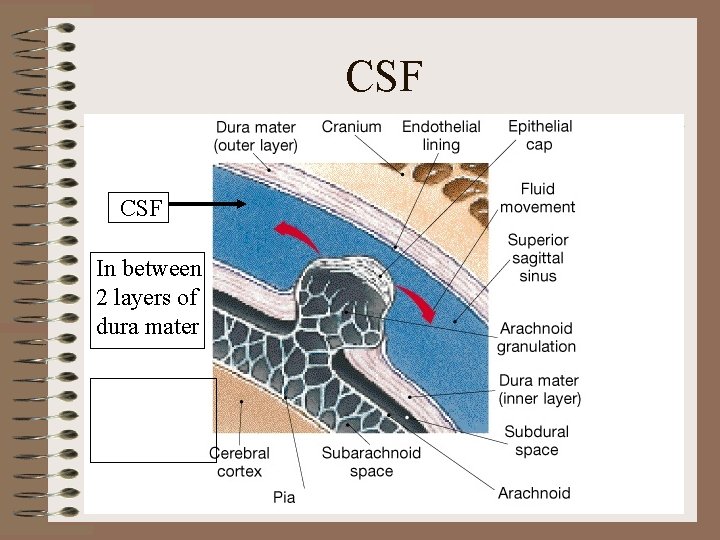
The Meninges • Consists of 3 layers of connective tissue that surround the brain and spinal cord • Functions as a shock absorber to prevent contact w/ surrounding bone (skull and vertebrae) • From superficial to deep: 1. Dura mater 2. Arachnoid mater 3. Pia mater
The Meninges
The Meninges
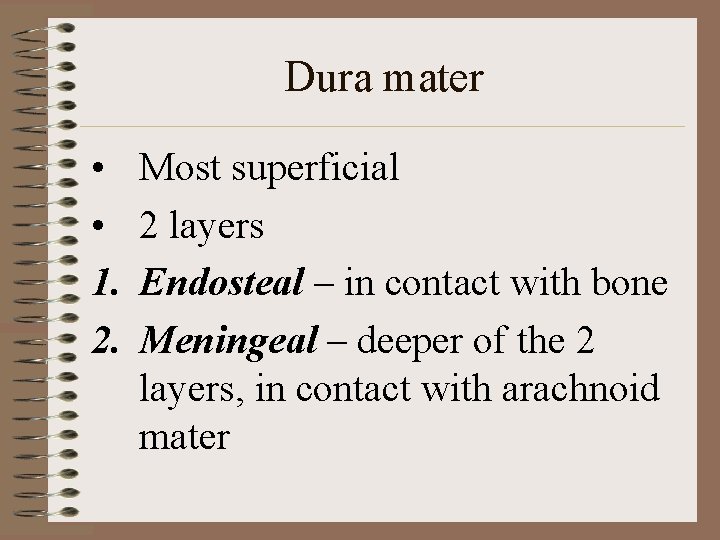
Dura mater • • 1. 2. Most superficial 2 layers Endosteal – in contact with bone Meningeal – deeper of the 2 layers, in contact with arachnoid mater
Dura Mater Endosteal layer Meningeal layer
Arachnoid mater Middle layer
Pia mater In direct contact with brain and spinal cord
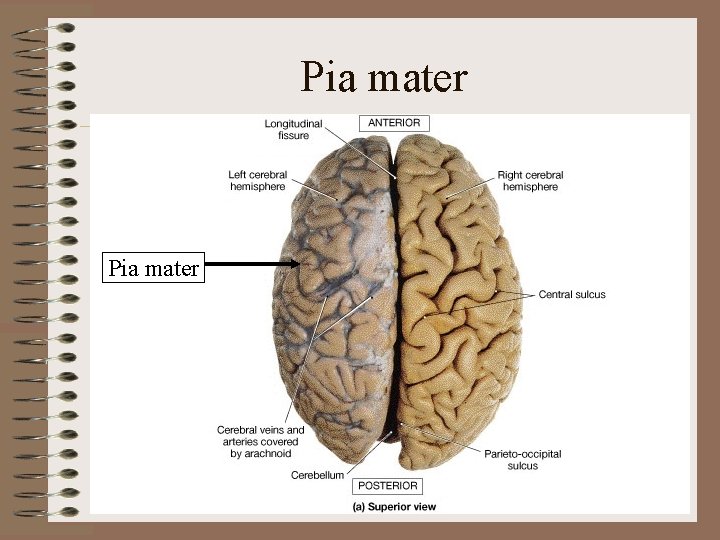
Pia mater
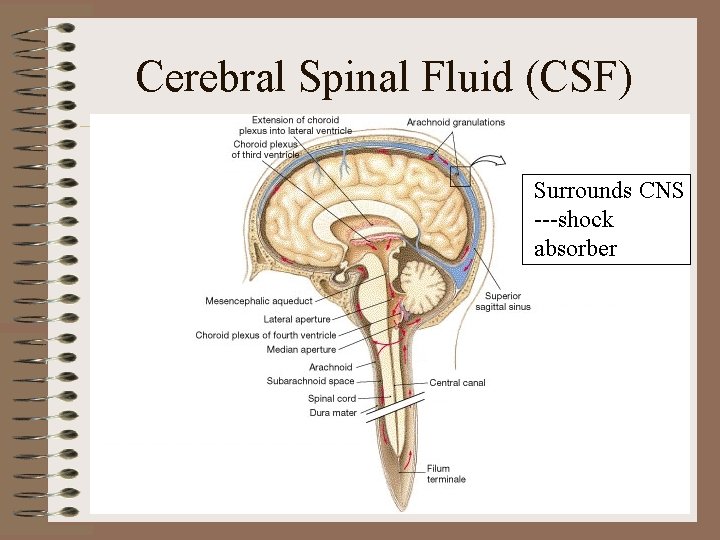
Cerebral Spinal Fluid (CSF) Surrounds CNS ---shock absorber
CSF In between 2 layers of dura mater
CSF • Three functions 1. Cushioning of CNS 2. Support of brain…. brain actually floats in cranial cavity 3. Transport of nutrients, chemical messages and waste products
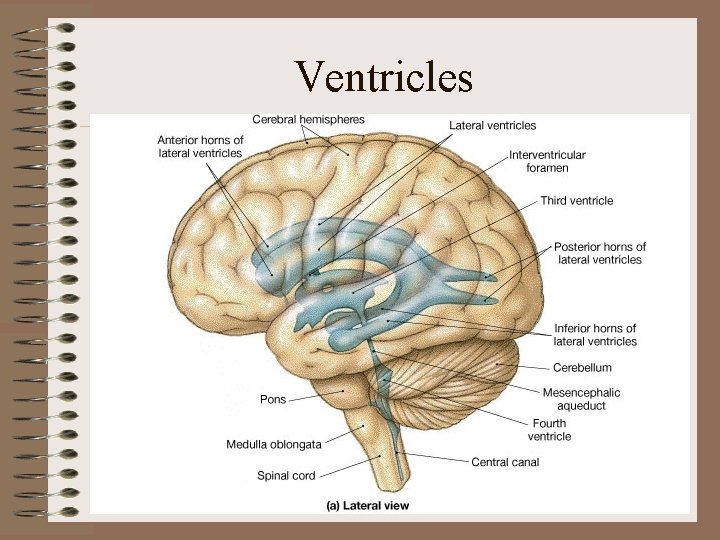
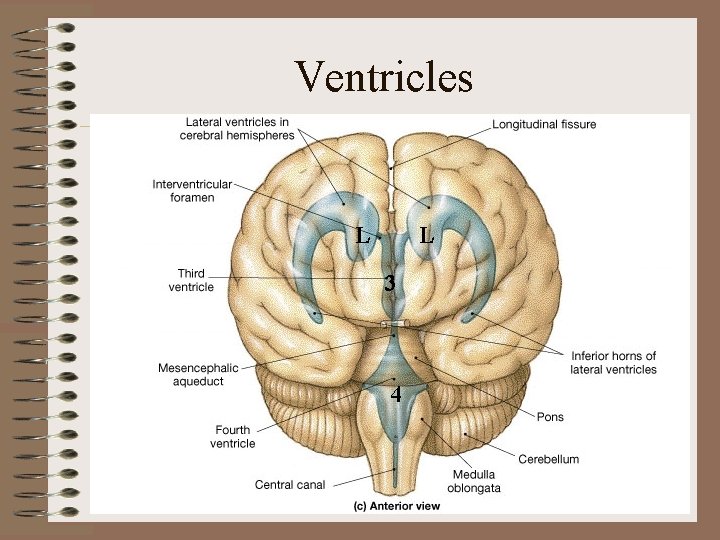
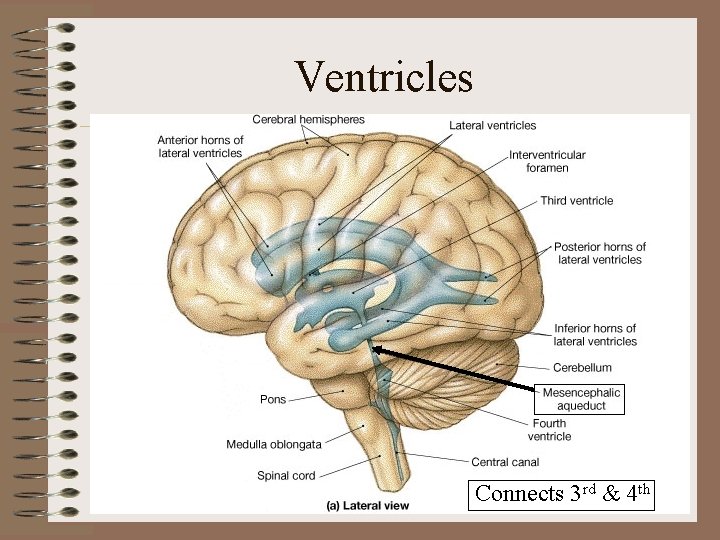
Ventricles of the Brain • Fluid-filled cavities within the brain • Filled with CSF • Store CSF – not make it • 4 ventricles
Ventricles
Ventricles L L 3 4
Ventricles Connects 3 rd & 4 th