
Human Anatomy Assessment in Memory Recall Certificate of



- Slides: 24
Human Anatomy: Assessment in Memory Recall Certificate of College Teaching and Learning Khameeka Kitt-Hopper 1/6/16
Human Anatomy Course • • • Bio 2205 – Upper Division (lecture-based) Biology, Kinesiology, Pre-nursing majors 23 students – Fall 2015 Met 2 x per week – 75 min Lab accompanied lecture - 1. 5 hours/week
Learning Outcomes • Locate and characterize the gross anatomical features of human organ systems and relate their structure to function and disease. • Identify and name tissue types and locate their presence within major organs. • Demonstrate practicable analytical skills and study habits consistent with success in a detailed, challenging science course.
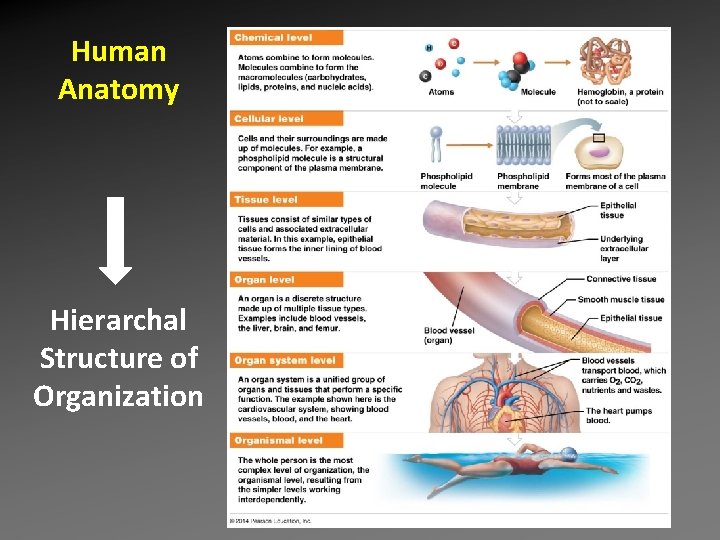
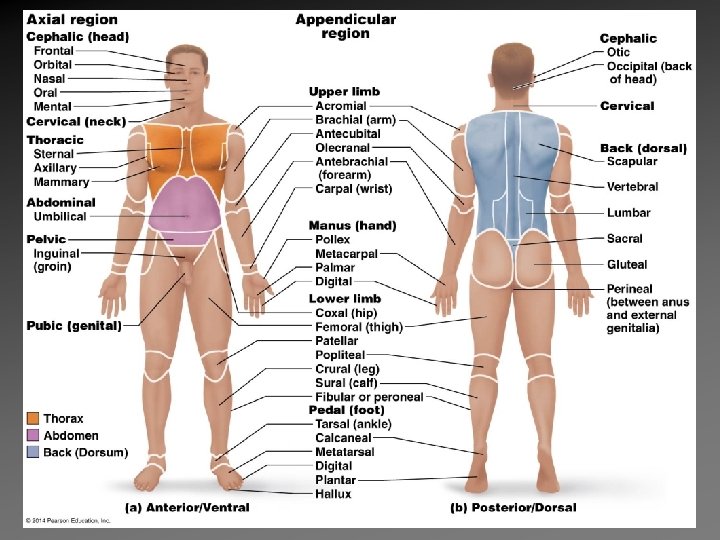
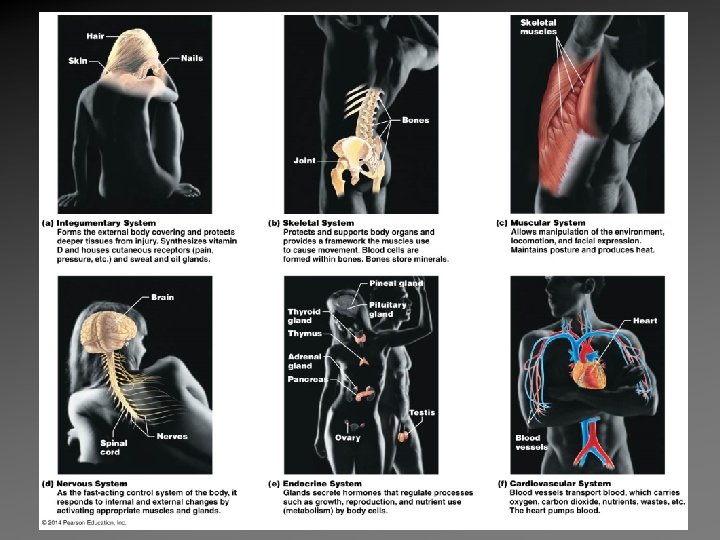
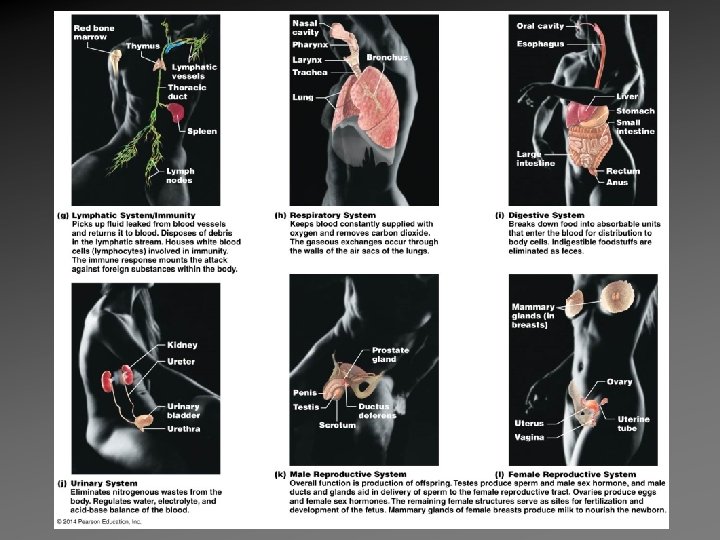
Human Anatomy Hierarchal Structure of Organization
The Human Skeleton The Cranial Nerves.
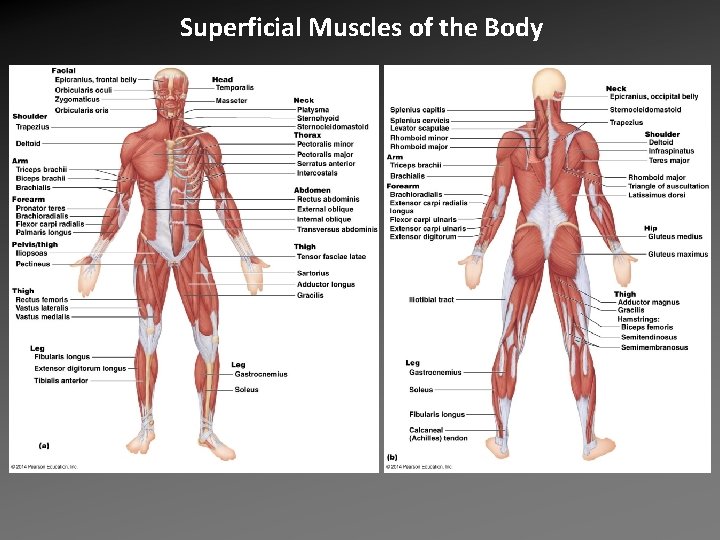
Superficial Muscles of the Body
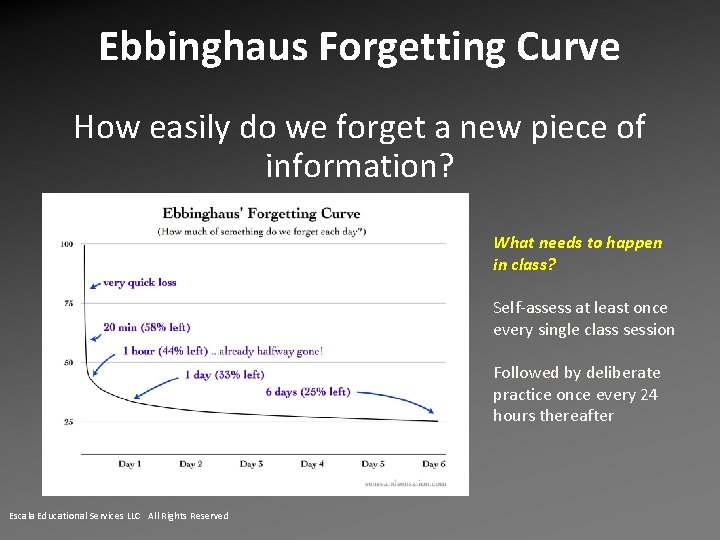
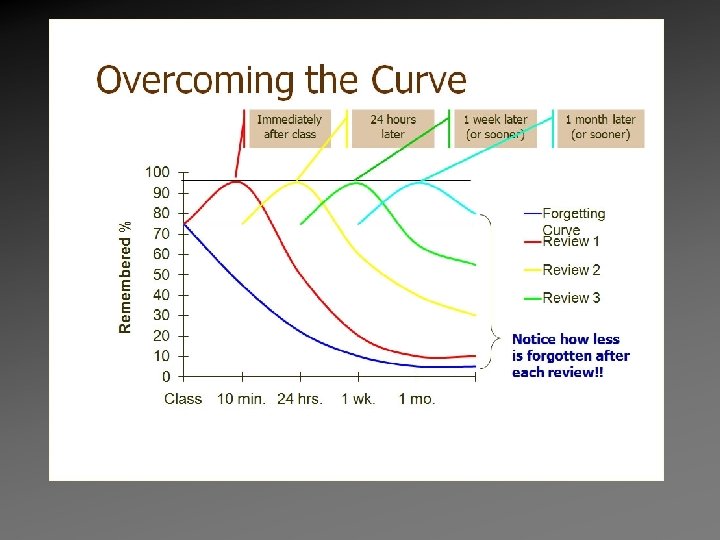
Ebbinghaus Forgetting Curve How easily do we forget a new piece of information? What needs to happen in class? Self-assess at least once every single class session Followed by deliberate practice once every 24 hours thereafter Escala Educational Services LLC All Rights Reserved
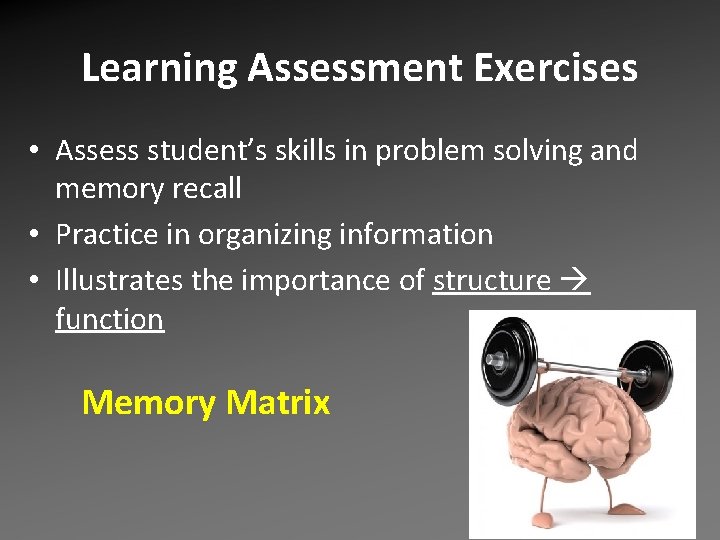
Learning Assessment Exercises • Assess student’s skills in problem solving and memory recall • Practice in organizing information • Illustrates the importance of structure function Memory Matrix
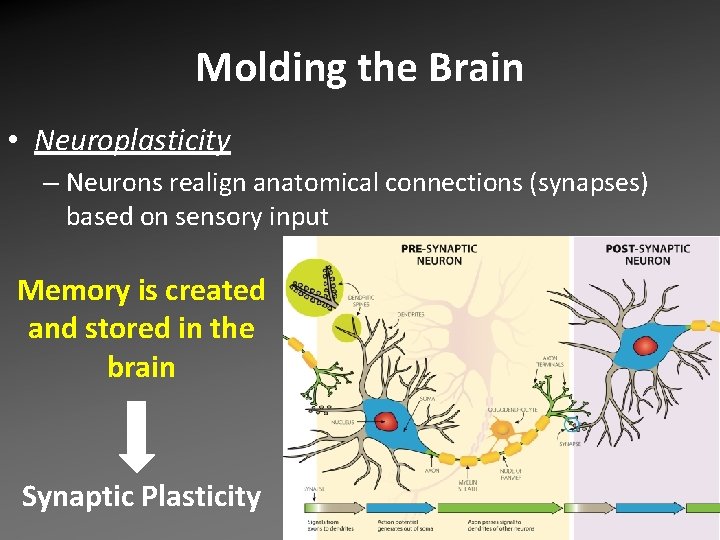
Molding the Brain • Neuroplasticity – Neurons realign anatomical connections (synapses) based on sensory input Memory is created and stored in the brain Synaptic Plasticity
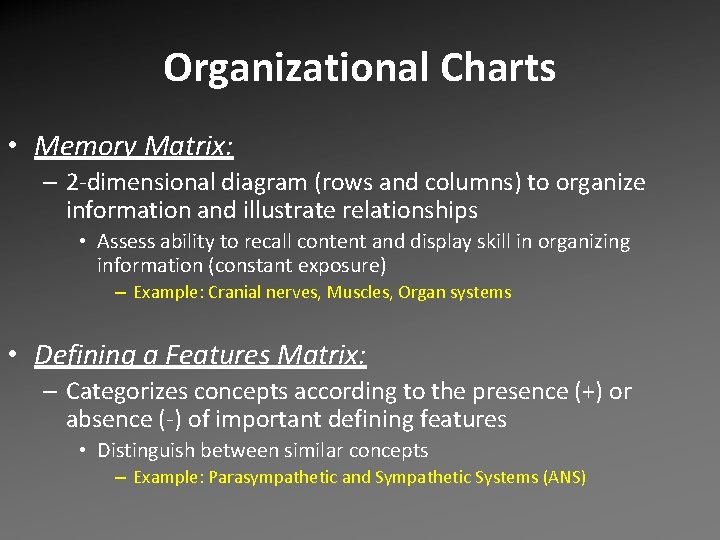
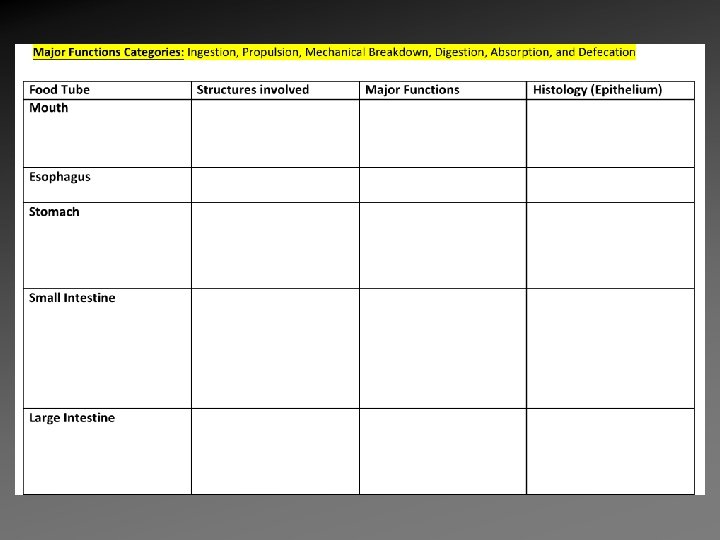
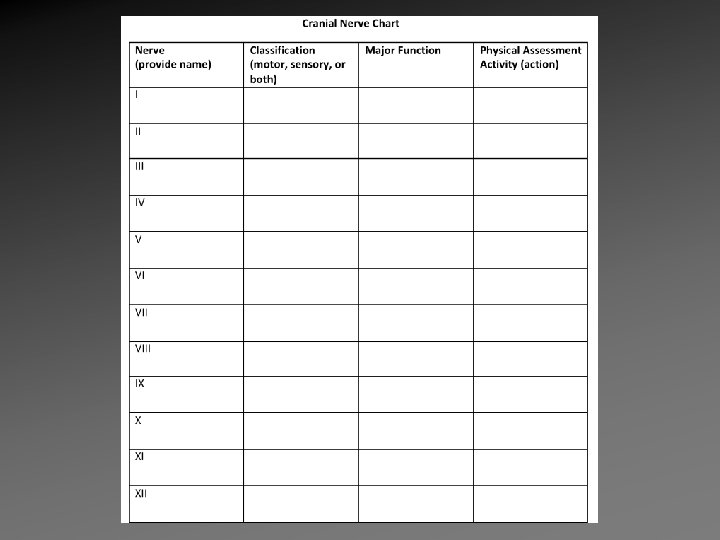
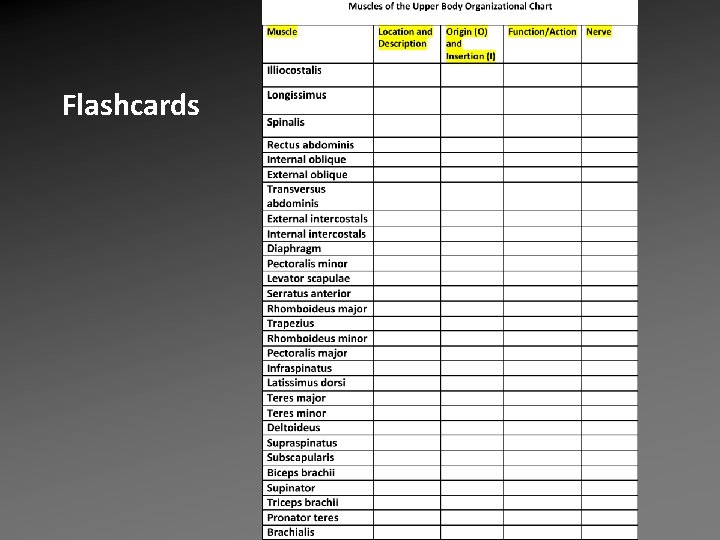
Organizational Charts • Memory Matrix: – 2 -dimensional diagram (rows and columns) to organize information and illustrate relationships • Assess ability to recall content and display skill in organizing information (constant exposure) – Example: Cranial nerves, Muscles, Organ systems • Defining a Features Matrix: – Categorizes concepts according to the presence (+) or absence (-) of important defining features • Distinguish between similar concepts – Example: Parasympathetic and Sympathetic Systems (ANS)
Flashcards
Exam Study Questions
The Numbers… Exam Breakdown: - Exam 1: Tissues and Bones - Exam 2: Muscles and Nerves - Exam 3: Organ Systems Part 1 - Exam 4: Organ Systems Part 2 Exam Content: • Multiple choice • True/False • Fill-in-Blanks • Short Answer • Organizational/Defining Charts • Compare/Contrast N = 23
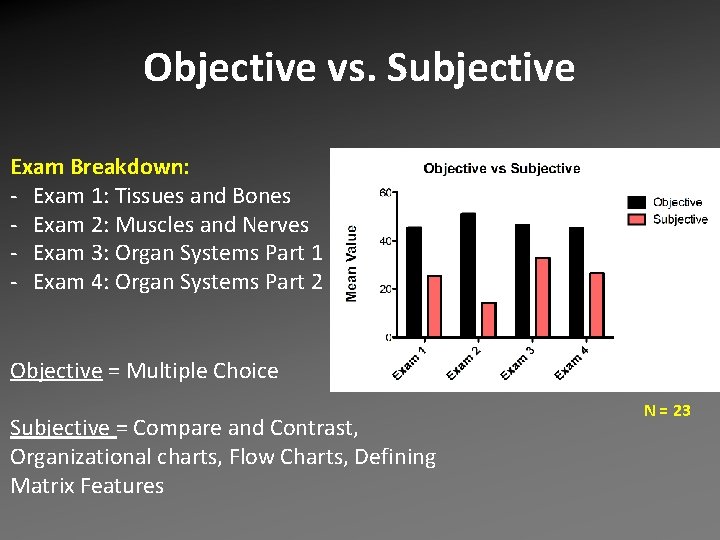
Objective vs. Subjective Exam Breakdown: - Exam 1: Tissues and Bones - Exam 2: Muscles and Nerves - Exam 3: Organ Systems Part 1 - Exam 4: Organ Systems Part 2 Objective = Multiple Choice Subjective = Compare and Contrast, Organizational charts, Flow Charts, Defining Matrix Features N = 23
Final Conclusions • Incorporating memory matrix organizational charts increased overall student understanding – Significant increase in overall exam scores (after Exam 2) • Organizational charts and compare/contrast diagrams improved subjective exam scores – Objective scores maintained throughout semester • Passing rate = 75% (not bad considering all the whining )
Future Work • Practice incorporating memory matrix charts during lecture • Implement homework assignment to be completed before lecture – familiarize students with content • Memory recall exercises at beginning of lecture – Questions, flow charts, etc.
Questions?