
Human Anatomy and Physiology Skeletal Muscular and Integumentary


- Slides: 14
Human Anatomy and Physiology Skeletal, Muscular, and Integumentary Systems
Anatomy: Skeletal, Muscular, and Integumentary Systems Integumentary system - Skin, hair, and nails What is the purpose of the integumentary system? • Skin serves to protect the body from injury, disease, drying out, and abnormal temperature • Hair (which is made of dead, keratin-filled cells with melanin for color) serves as an insulator • Nails (which made of many layers of dead, keratin-filled cells) are an evolutionary leftover (vestigial structure) of claws
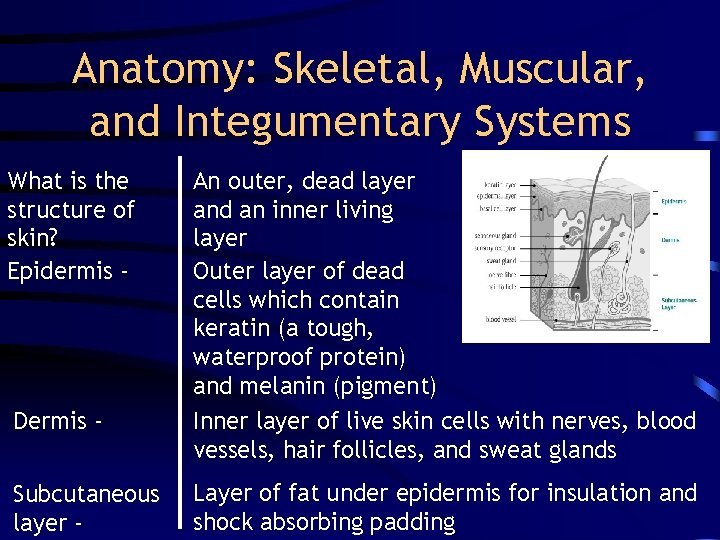
Anatomy: Skeletal, Muscular, and Integumentary Systems What is the structure of skin? Epidermis - Dermis Subcutaneous layer - An outer, dead layer and an inner living layer Outer layer of dead cells which contain keratin (a tough, waterproof protein) and melanin (pigment) Inner layer of live skin cells with nerves, blood vessels, hair follicles, and sweat glands Layer of fat under epidermis for insulation and shock absorbing padding
Anatomy: Skeletal, Muscular, and Integumentary Systems What is acne? Glands in skin release sweat and sebum (an oily secretion that keeps skin lubricated). When these glands are blocked with dirt, oil, bacteria, makeup, etc. the result is an infection of the gland.
Anatomy: Skeletal, Muscular, and Integumentary Systems
Anatomy: Skeletal, Muscular, and Integumentary Systems What is the purpose of the skeleton? • Support the body • Protect organs • Connect with muscles to allow movement • Produce red and white blood cells and platelets
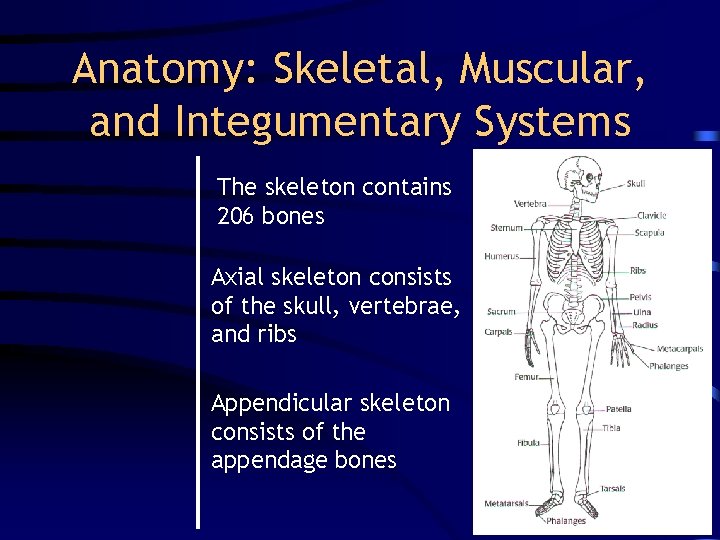
Anatomy: Skeletal, Muscular, and Integumentary Systems The skeleton contains 206 bones Axial skeleton consists of the skull, vertebrae, and ribs Appendicular skeleton consists of the appendage bones
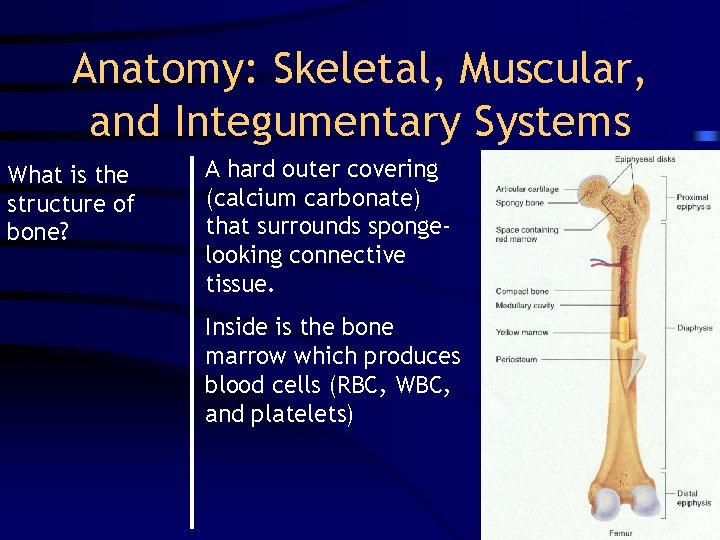
Anatomy: Skeletal, Muscular, and Integumentary Systems What is the structure of bone? A hard outer covering (calcium carbonate) that surrounds spongelooking connective tissue. Inside is the bone marrow which produces blood cells (RBC, WBC, and platelets)
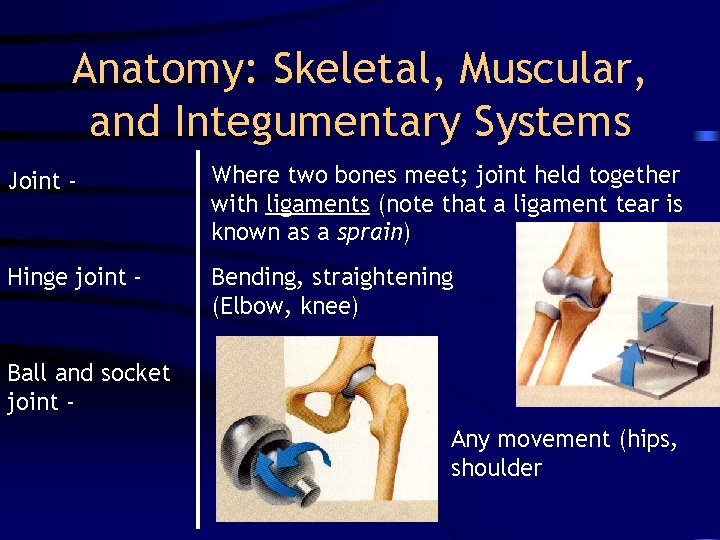
Anatomy: Skeletal, Muscular, and Integumentary Systems Joint - Where two bones meet; joint held together with ligaments (note that a ligament tear is known as a sprain) Hinge joint - Bending, straightening (Elbow, knee) Ball and socket joint Any movement (hips, shoulder
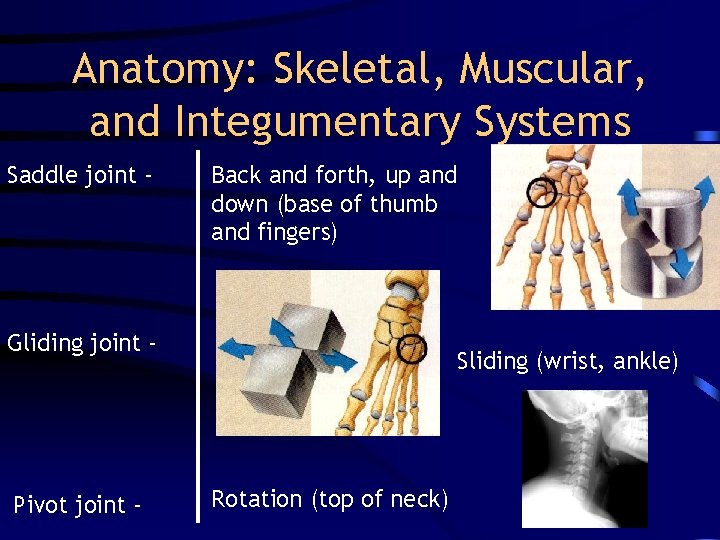
Anatomy: Skeletal, Muscular, and Integumentary Systems Saddle joint - Back and forth, up and down (base of thumb and fingers) Gliding joint - Pivot joint - Sliding (wrist, ankle) Rotation (top of neck)
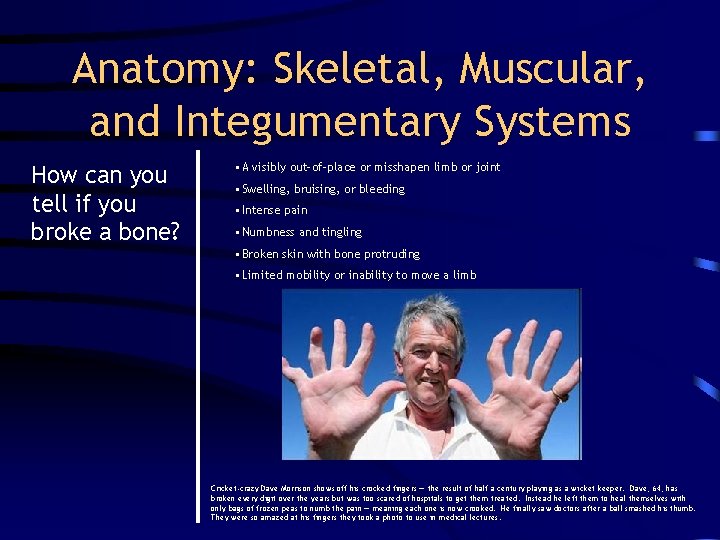
Anatomy: Skeletal, Muscular, and Integumentary Systems How can you tell if you broke a bone? • A visibly out-of-place or misshapen limb or joint • Swelling, bruising, or bleeding • Intense pain • Numbness and tingling • Broken skin with bone protruding • Limited mobility or inability to move a limb Cricket-crazy Dave Morrison shows off his crocked fingers — the result of half a century playing as a wicket keeper. Dave, 64, has broken every digit over the years but was too scared of hospitals to get them treated. Instead he left them to heal themselves with only bags of frozen peas to numb the pain — meaning each one is now crooked. He finally saw doctors after a ball smashed his thumb. They were so amazed at his fingers they took a photo to use in medical lectures.
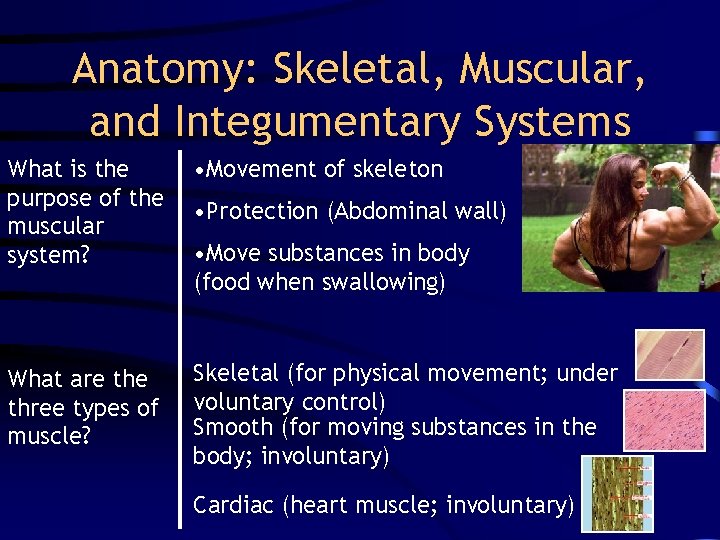
Anatomy: Skeletal, Muscular, and Integumentary Systems What is the purpose of the muscular system? • Movement of skeleton What are three types of muscle? Skeletal (for physical movement; under voluntary control) Smooth (for moving substances in the body; involuntary) • Protection (Abdominal wall) • Move substances in body (food when swallowing) Cardiac (heart muscle; involuntary)
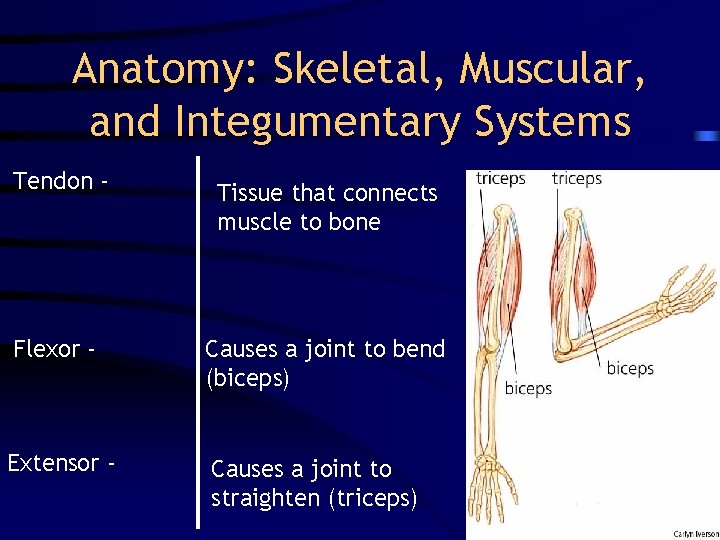
Anatomy: Skeletal, Muscular, and Integumentary Systems Tendon - Tissue that connects muscle to bone Flexor - Causes a joint to bend (biceps) Extensor - Causes a joint to straighten (triceps)
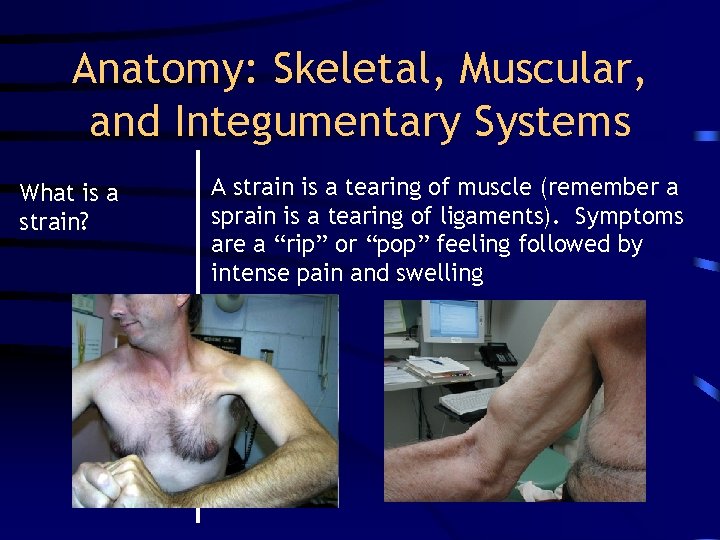
Anatomy: Skeletal, Muscular, and Integumentary Systems What is a strain? A strain is a tearing of muscle (remember a sprain is a tearing of ligaments). Symptoms are a “rip” or “pop” feeling followed by intense pain and swelling