
Human Anatomy and Physiology Lymphatic system Components l
- Slides: 9
Human Anatomy and Physiology Lymphatic system
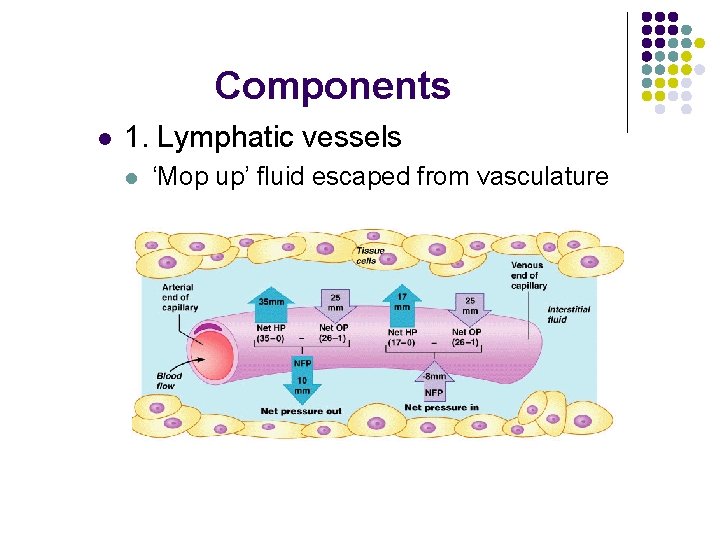
Components l 1. Lymphatic vessels l ‘Mop up’ fluid escaped from vasculature
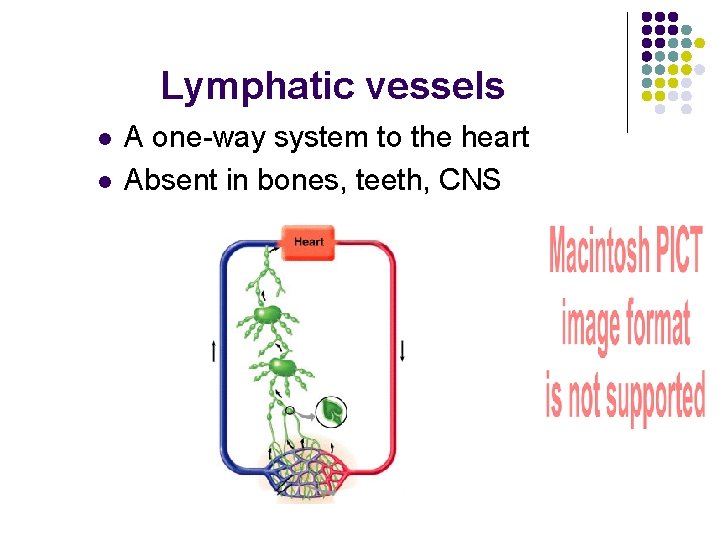
Lymphatic vessels l l A one-way system to the heart Absent in bones, teeth, CNS
Lymphatic vessels l Structure l l Minivalves and collagen fibers Valve opens when interstitial pressure rises
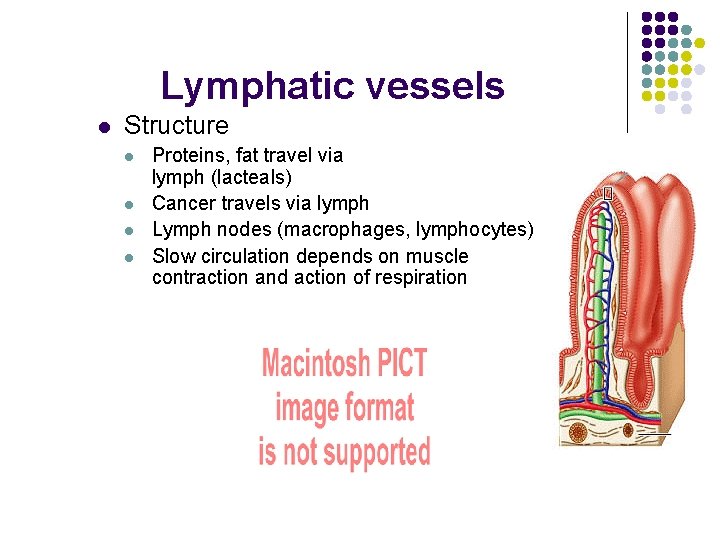
Lymphatic vessels l Structure l l Proteins, fat travel via lymph (lacteals) Cancer travels via lymph Lymph nodes (macrophages, lymphocytes) Slow circulation depends on muscle contraction and action of respiration
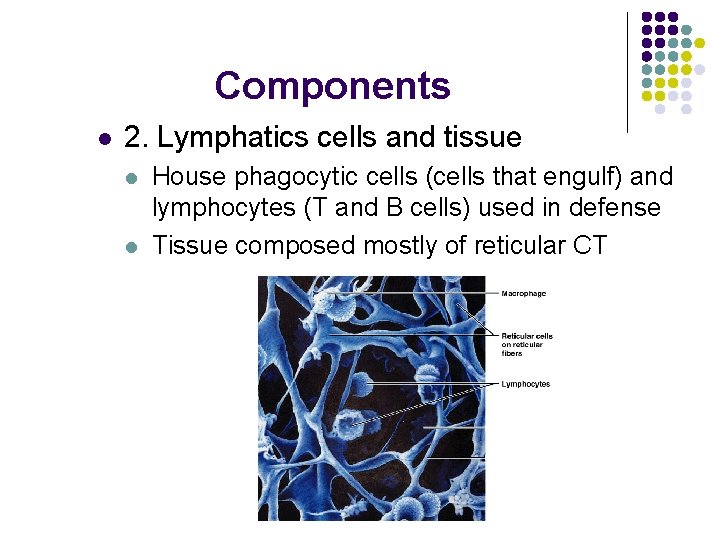
Components l 2. Lymphatics cells and tissue l l House phagocytic cells (cells that engulf) and lymphocytes (T and B cells) used in defense Tissue composed mostly of reticular CT
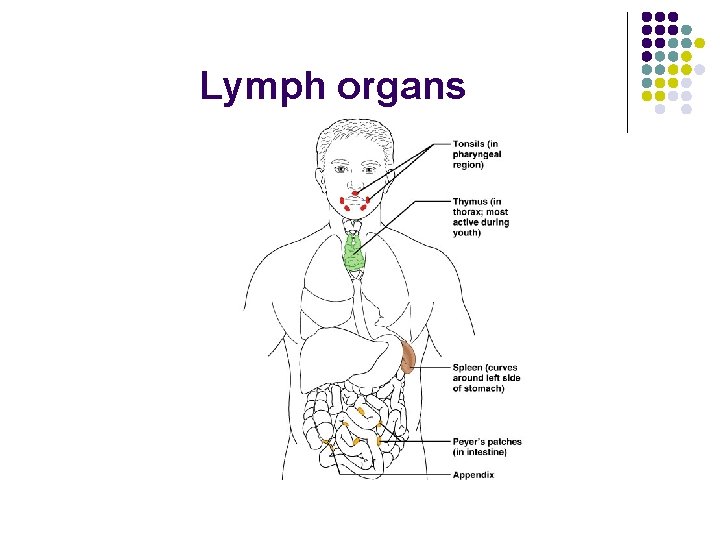
Lymph organs
Lymph organs l 1. Lymph nodes l l l 2. Spleen l l Macrophages in nodes destroy microorganisms Contain lymphocytes that destroy antigens Provides for lymphocyte proliferation and immune surveillance because it filters blood 3. Thymus l Causes T lymphocytes to become immunocompetent
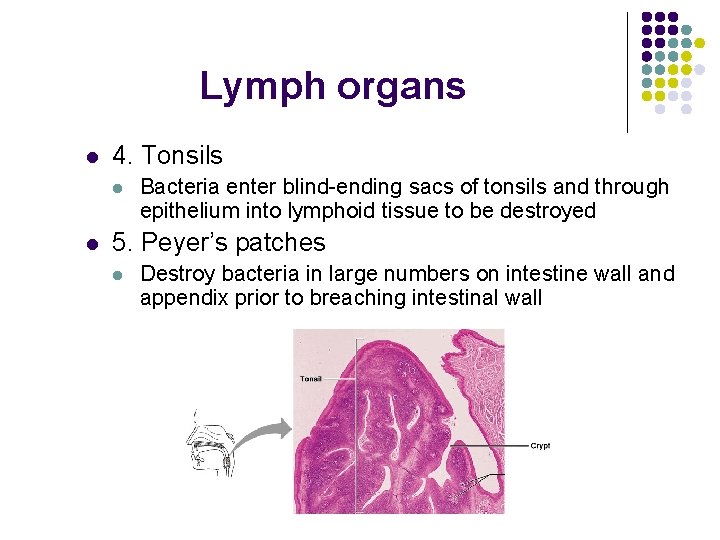
Lymph organs l 4. Tonsils l l Bacteria enter blind-ending sacs of tonsils and through epithelium into lymphoid tissue to be destroyed 5. Peyer’s patches l Destroy bacteria in large numbers on intestine wall and appendix prior to breaching intestinal wall