
Human Anatomy and Physiology Circulatory and Respiratory Systems
- Slides: 10
Human Anatomy and Physiology Circulatory and Respiratory Systems
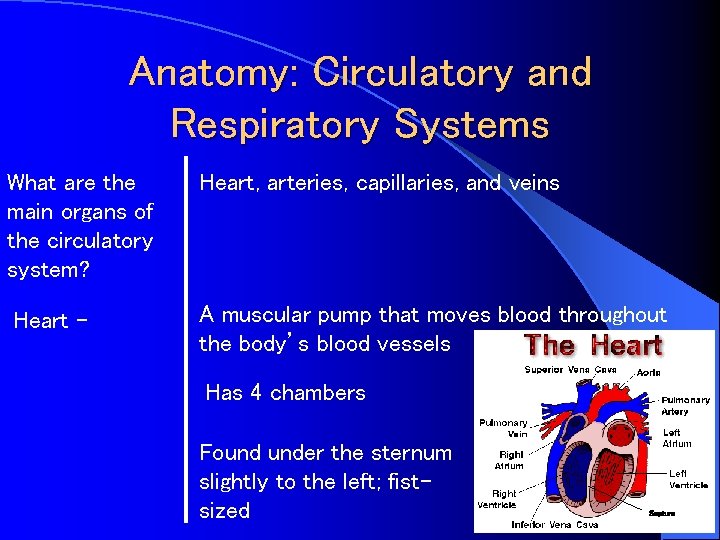
Anatomy: Circulatory and Respiratory Systems What are the main organs of the circulatory system? Heart, arteries, capillaries, and veins Heart - A muscular pump that moves blood throughout the body’s blood vessels Has 4 chambers Found under the sternum slightly to the left; fistsized Septum
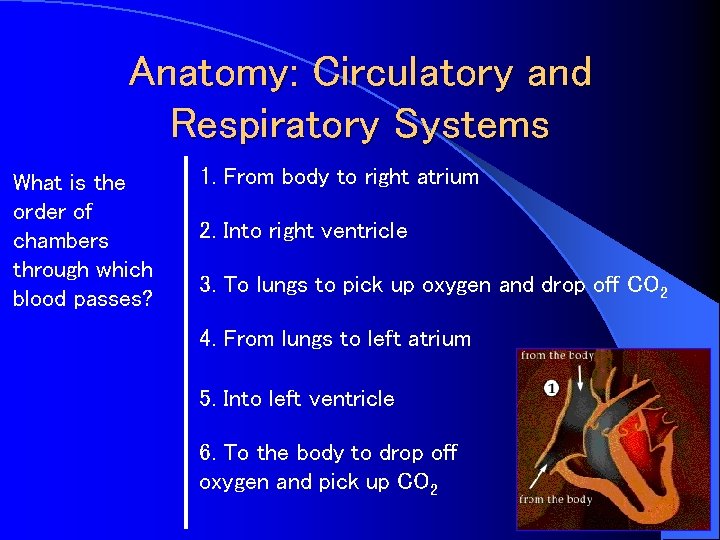
Anatomy: Circulatory and Respiratory Systems What is the order of chambers through which blood passes? 1. From body to right atrium 2. Into right ventricle 3. To lungs to pick up oxygen and drop off CO 2 4. From lungs to left atrium 5. Into left ventricle 6. To the body to drop off oxygen and pick up CO 2
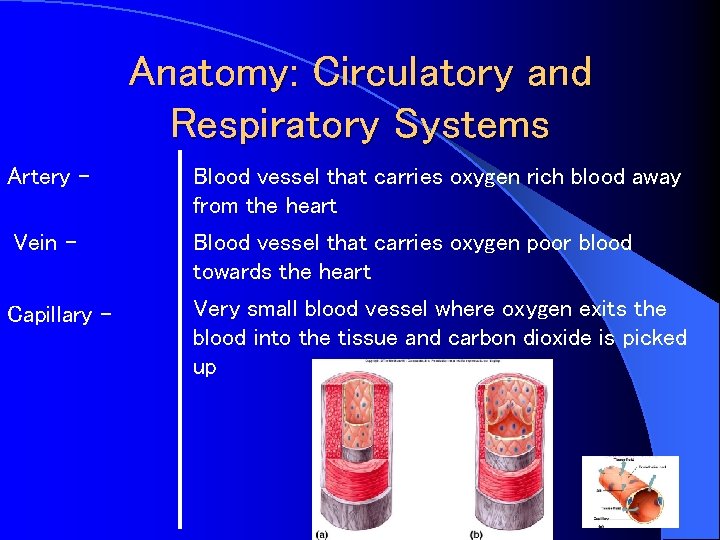
Anatomy: Circulatory and Respiratory Systems Artery - Blood vessel that carries oxygen rich blood away from the heart Vein - Blood vessel that carries oxygen poor blood towards the heart Capillary - Very small blood vessel where oxygen exits the blood into the tissue and carbon dioxide is picked up
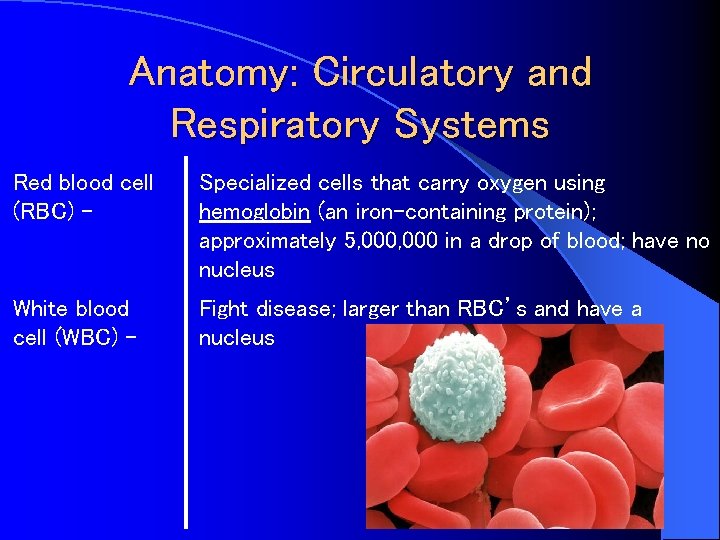
Anatomy: Circulatory and Respiratory Systems Red blood cell (RBC) - Specialized cells that carry oxygen using hemoglobin (an iron-containing protein); approximately 5, 000 in a drop of blood; have no nucleus White blood cell (WBC) - Fight disease; larger than RBC’s and have a nucleus
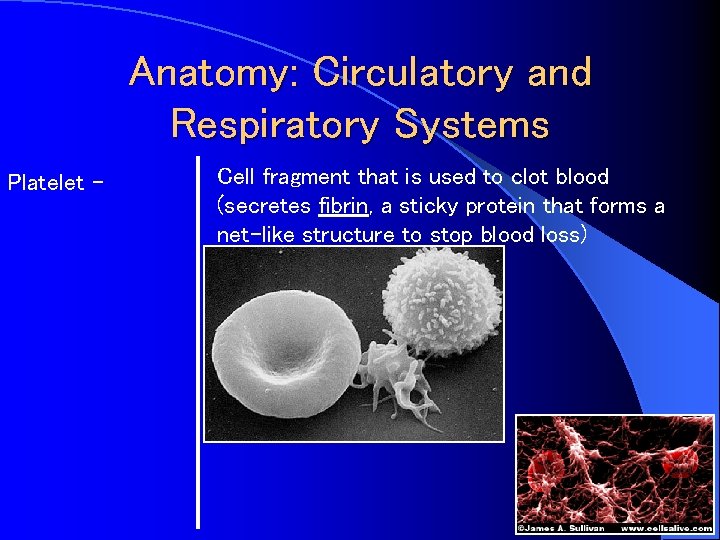
Anatomy: Circulatory and Respiratory Systems Platelet - Cell fragment that is used to clot blood (secretes fibrin, a sticky protein that forms a net-like structure to stop blood loss)
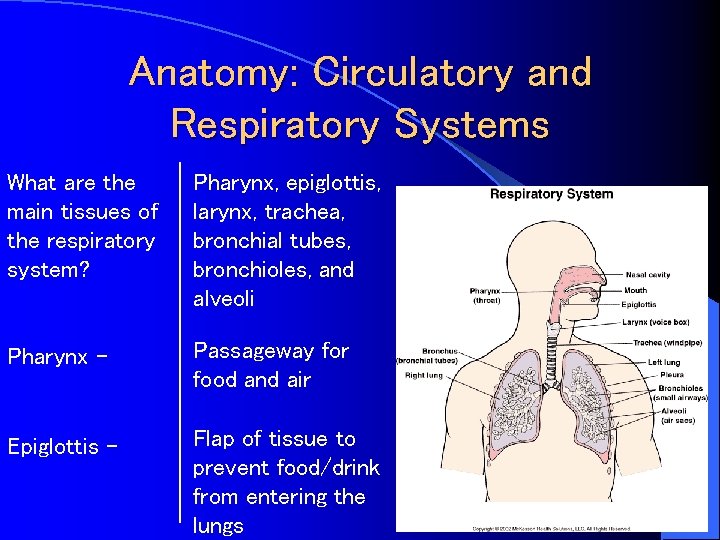
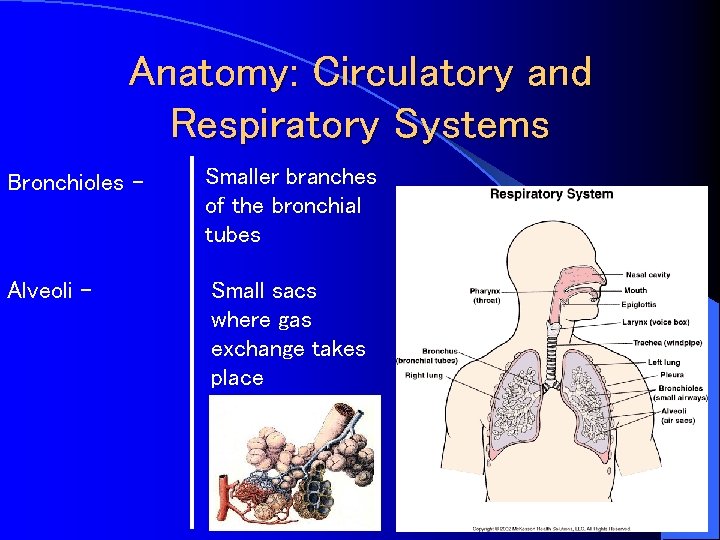
Anatomy: Circulatory and Respiratory Systems What are the main tissues of the respiratory system? Pharynx, epiglottis, larynx, trachea, bronchial tubes, bronchioles, and alveoli Pharynx - Passageway for food and air Epiglottis - Flap of tissue to prevent food/drink from entering the lungs
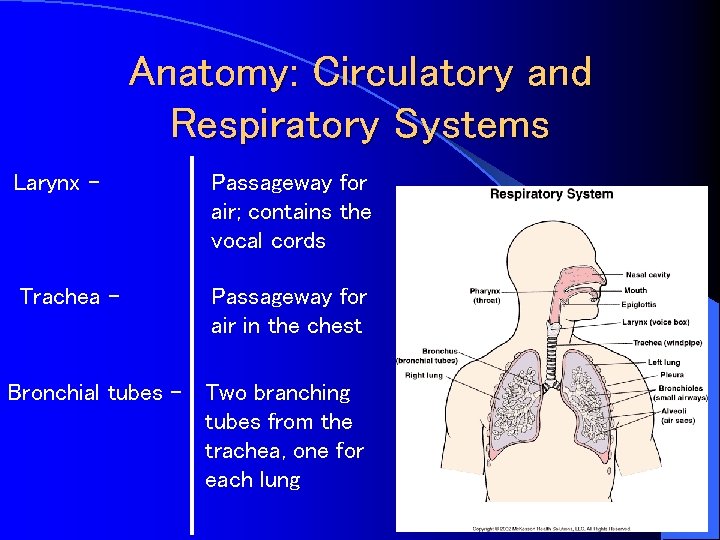
Anatomy: Circulatory and Respiratory Systems Larynx - Passageway for air; contains the vocal cords Trachea - Passageway for air in the chest Bronchial tubes - Two branching tubes from the trachea, one for each lung
Anatomy: Circulatory and Respiratory Systems Bronchioles - Smaller branches of the bronchial tubes Alveoli - Small sacs where gas exchange takes place
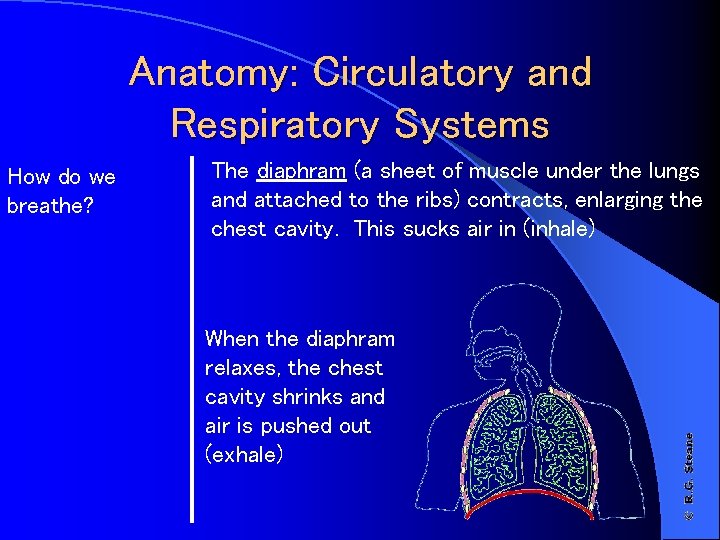
Anatomy: Circulatory and Respiratory Systems How do we breathe? The diaphram (a sheet of muscle under the lungs and attached to the ribs) contracts, enlarging the chest cavity. This sucks air in (inhale) When the diaphram relaxes, the chest cavity shrinks and air is pushed out (exhale)