
Human Anatomy An overview of the human body
Human Anatomy An overview of the human body systems
Anatomy n Anatomy is the scientific discipline that investigates the body’s structure. n It examines the relationship between the structure of a body part and its function.
Levels of organization n Chemical level n Cell level n Tissue level n Organ system level n Organism level
Chemical level n Smallest level of organization. n It involves atoms & molecules.
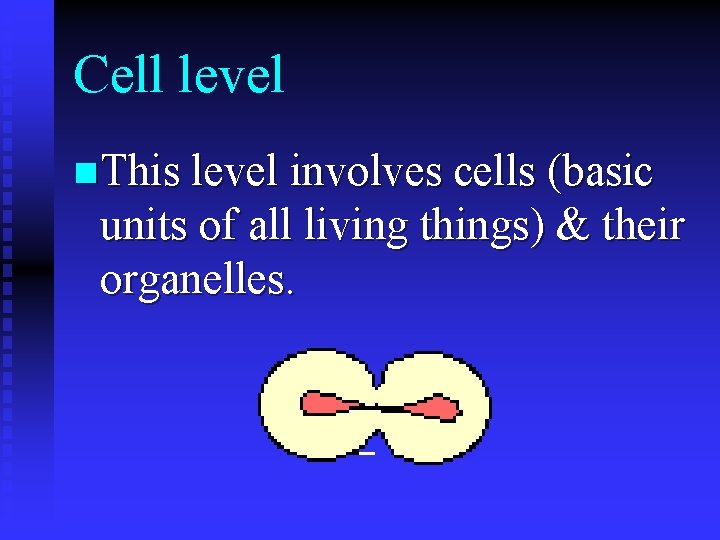
Cell level n This level involves cells (basic units of all living things) & their organelles.
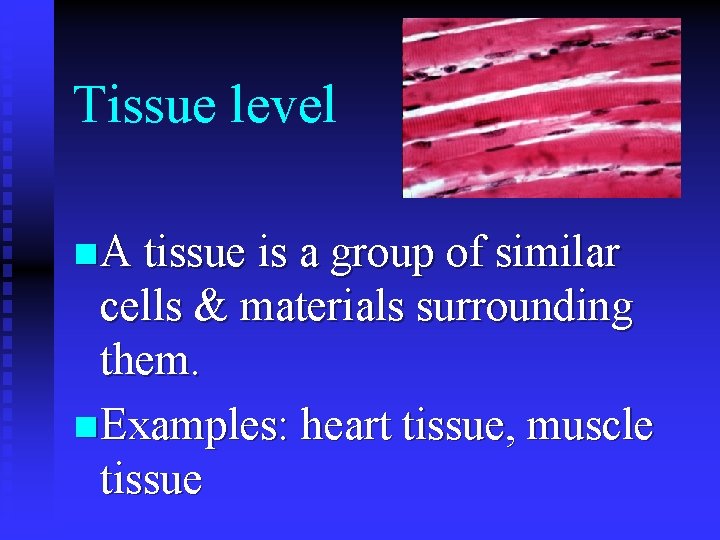
Tissue level n A tissue is a group of similar cells & materials surrounding them. n Examples: heart tissue, muscle tissue
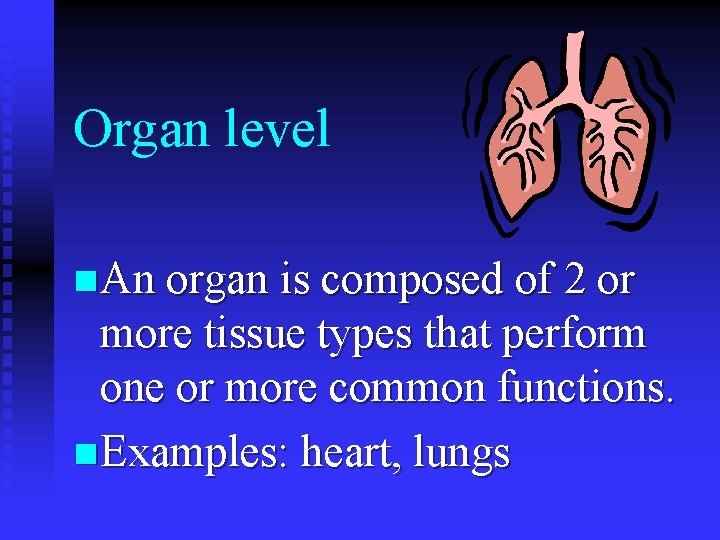
Organ level n An organ is composed of 2 or more tissue types that perform one or more common functions. n Examples: heart, lungs
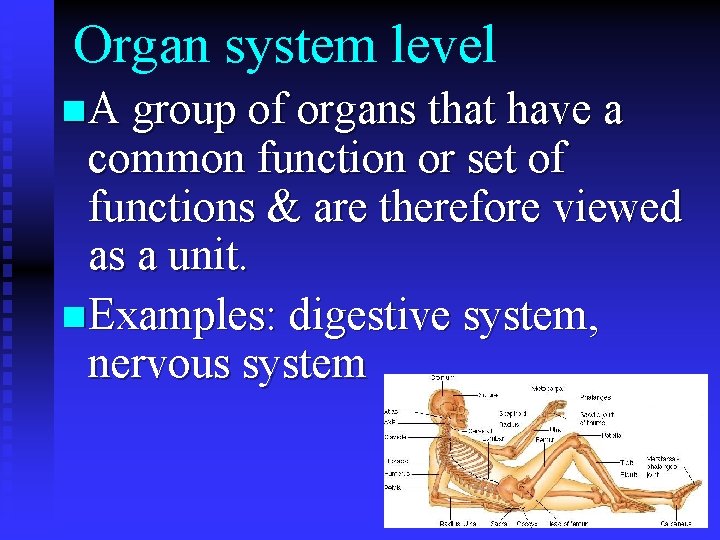
Organ system level n A group of organs that have a common function or set of functions & are therefore viewed as a unit. n Examples: digestive system, nervous system

Organism level n An organism is any living thing considered as a whole, whether composed of one cell or trillions of cells. n Examples: bacterium, human
Integumentary system n Organs of the integumentary system: Skin u. Accessory structures—hair, nails & sweat glands u
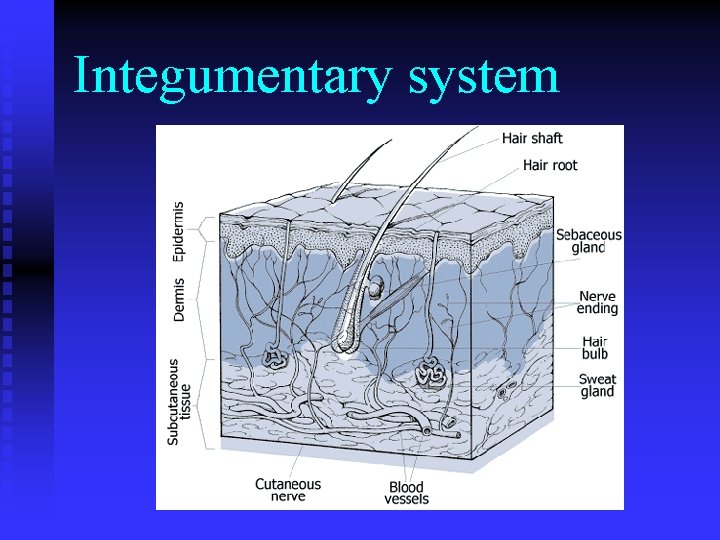
Integumentary system
Integumentary system n This system, in particular the skin, forms a protective barrier around the body. n The skin also helps prevent water loss & control body temperature.
Integumentary system n The skin also gathers information about the surroundings.
Skeletal system – Organs n Bones n Cartilage n Tendons n Ligaments
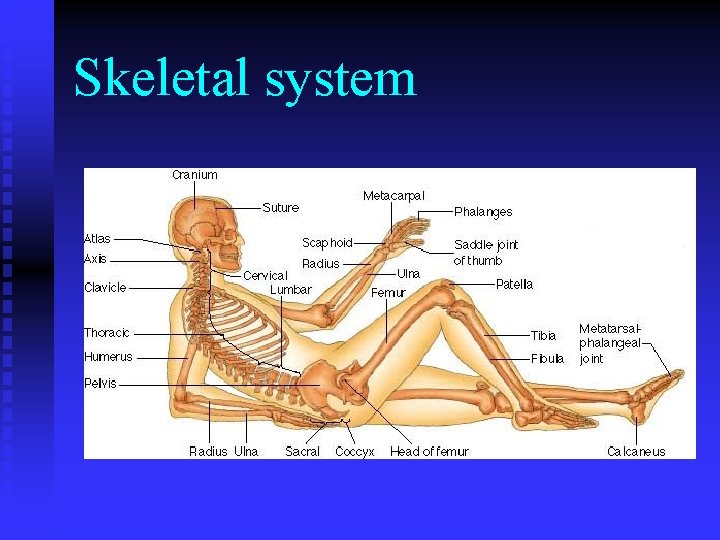
Skeletal system

Skeletal system n This system… Helps you move. u. Protects your internal organs. u. Gives your body shape & support. u. Stores minerals. u. Produces blood cells. u
Muscular system – Organs n Muscles Skeletal (voluntary movement) t Smooth (involuntary movement) t Cardiac (involuntary movement) t
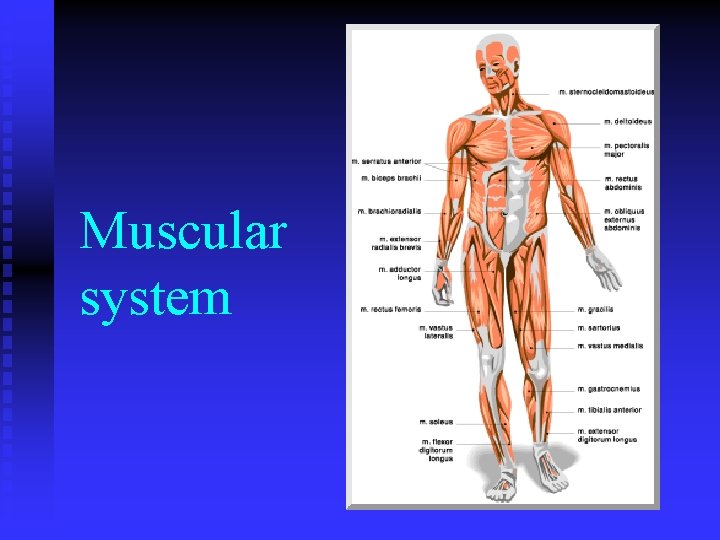
Muscular system
Muscular system n This system is responsible for voluntary movements (I. e. , jumping & pointing) and involuntary movements (I. e. , beating of your heart and the churning of your stomach).
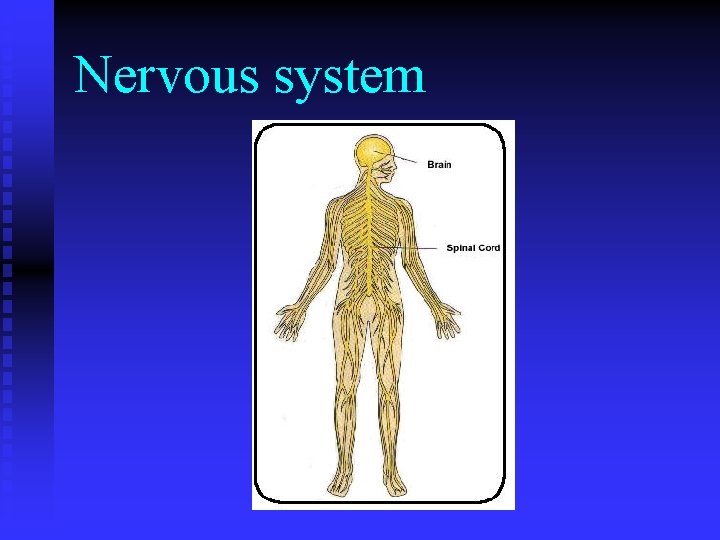
Nervous system – Organs n Brain n Spinal cord n Nerves n Sensory receptors
Nervous system
Nervous system n This system detects changes outside and inside the body and controls the way the body responds to these changes.
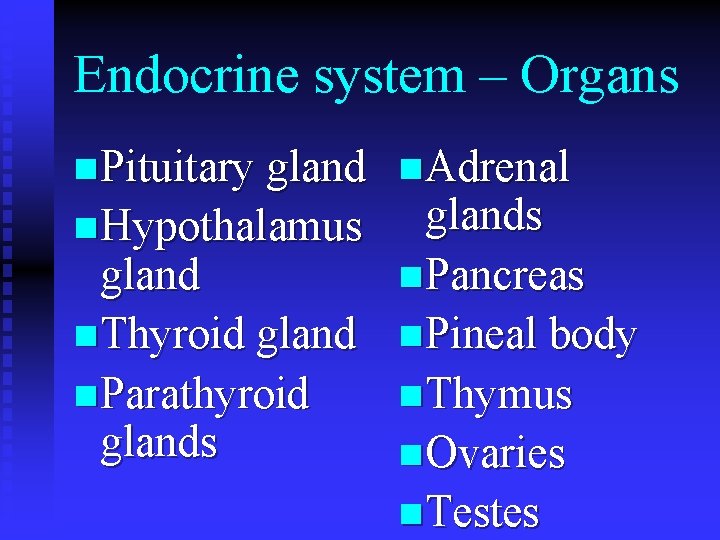
Endocrine system – Organs n Pituitary gland n Adrenal glands gland n Pancreas n Thyroid gland n Pineal body n Parathyroid n Thymus glands n Ovaries n Testes n Hypothalamus
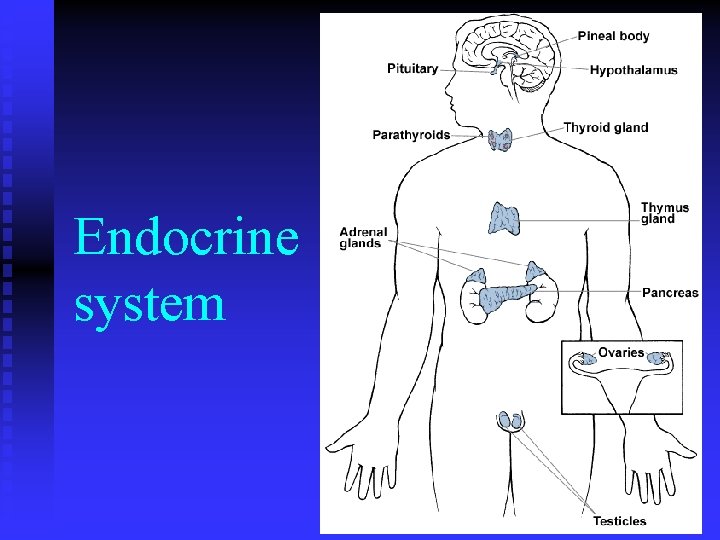
Endocrine system
Endocrine system n This system produces chemical messengers called hormones. n Some hormones help to maintain homeostasis. n Other hormones control development & growth.
Circulatory system– Organs n Heart n Blood vessels—veins & arteries
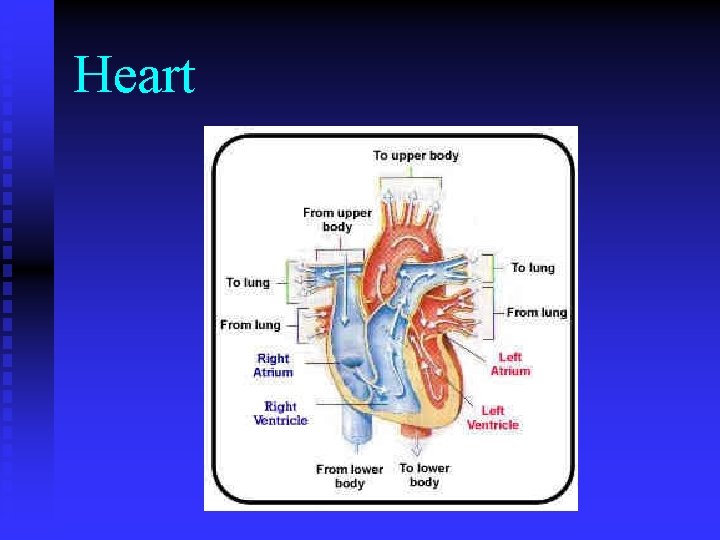
Heart
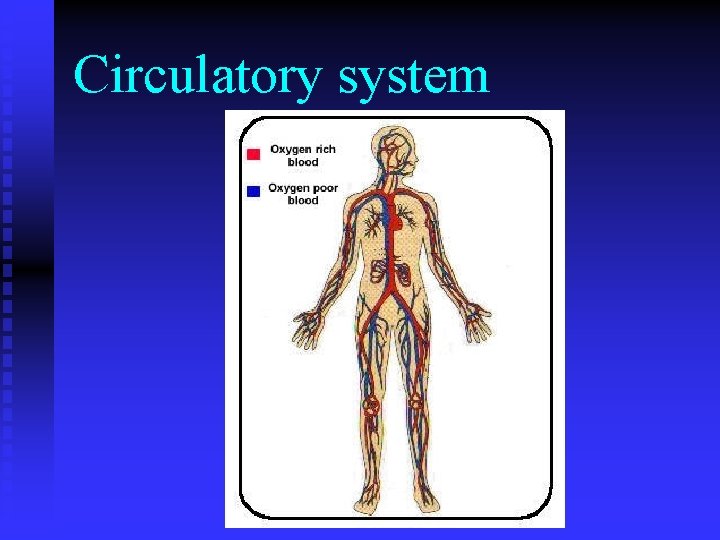
Circulatory system
Circulatory system n This system transports oxygen and nutrients to the cells and carries wastes away from cells.
Lymphatic system – Organs n Lymphatic vessels n Lymph nodes n Lymphocytes n Spleen n Tonsils
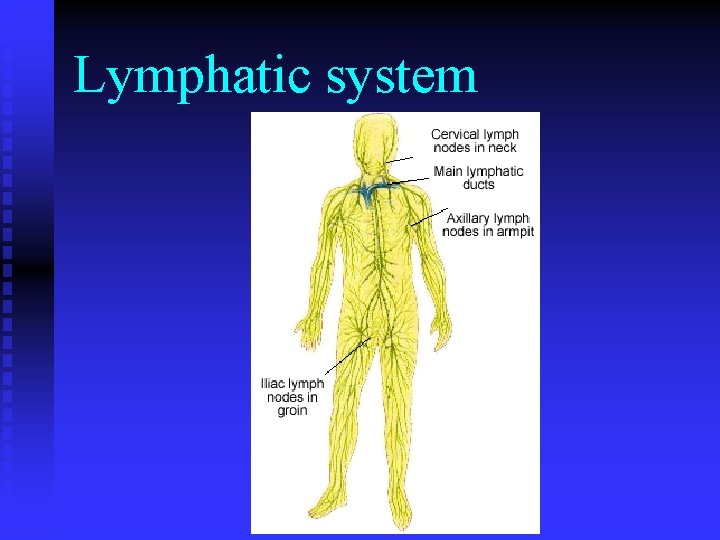
Lymphatic system
Lymphatic system n This system takes fluid from the spaces between cells and returns it to the circulatory system. n It also filters bacteria and other microorganisms from this fluid.
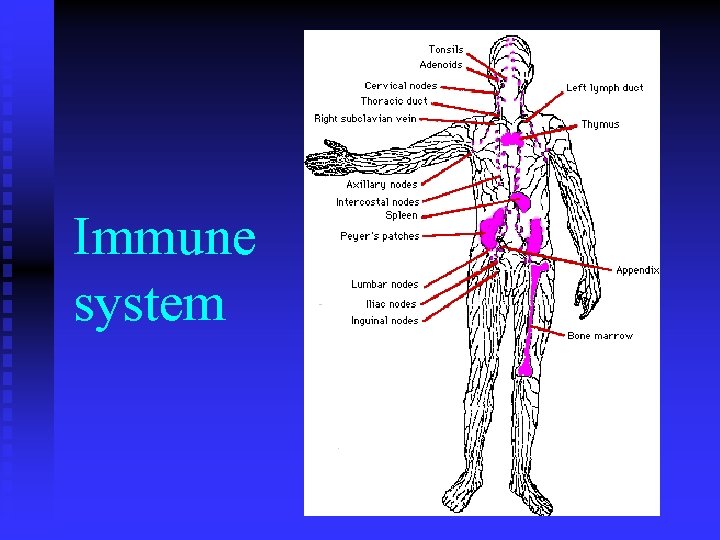
Immune system n The immune system is a functional system rather than an organ system in an anatomical sense. n Certain organs of the body (lymphatic & circulatory systems) are intimately involved with the immune response.
Immune system
Immune system n This system protects the body from infection.
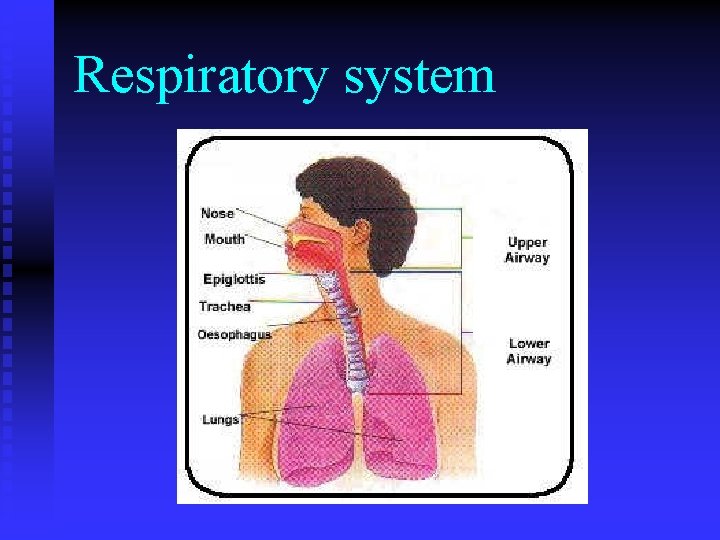
Respiratory system–Organs n Nasal cavity n Pharynx n Trachea n Bronchi n Lungs
Respiratory system
Respiratory system n This system moves oxygen into the body and carbon dioxide out of the body.
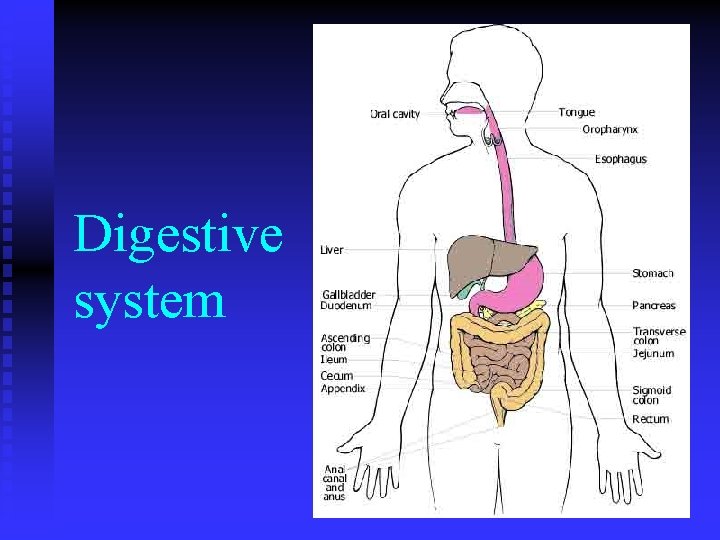
Digestive system – Organs n Gastrointestinal tract—mouth, esophagus, stomach, small intestine & large intestine n Accessory organs—liver, gallbladder & pancreas
Digestive system
Digestive system n This system digests (breaks down) food and absorbs nutrients.
Excretory system – Organs n Kidneys n Ureters n Bladder n Urethra
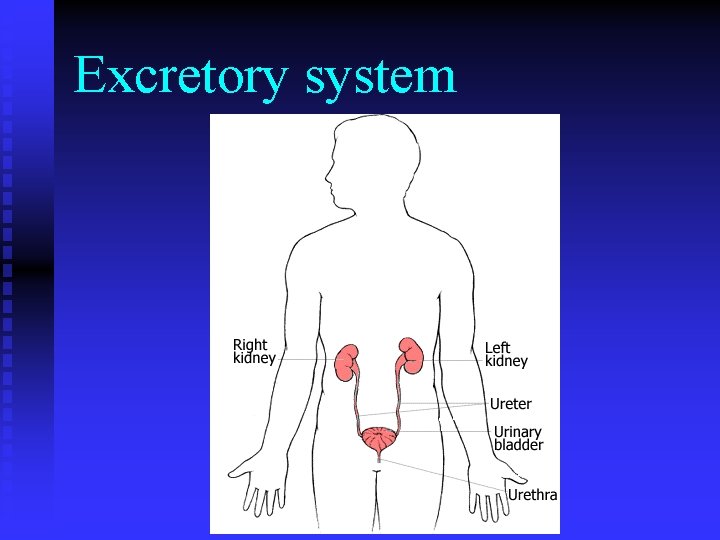
Excretory system
Excretory system n This system removes wastes from the body & helps maintain homeostasis.
Reproductive system– Organs n Testes n Prostate gland n Epididymis n Cowper’s n Vas deferens glands n Urethra n Penis n Seminal vesicles
Reproductive system– Organs n External parts: Vulva u Labia majora u Labia minora u n Internal parts: Ovaries u Fallopian tubes u Uterus u Vagina u
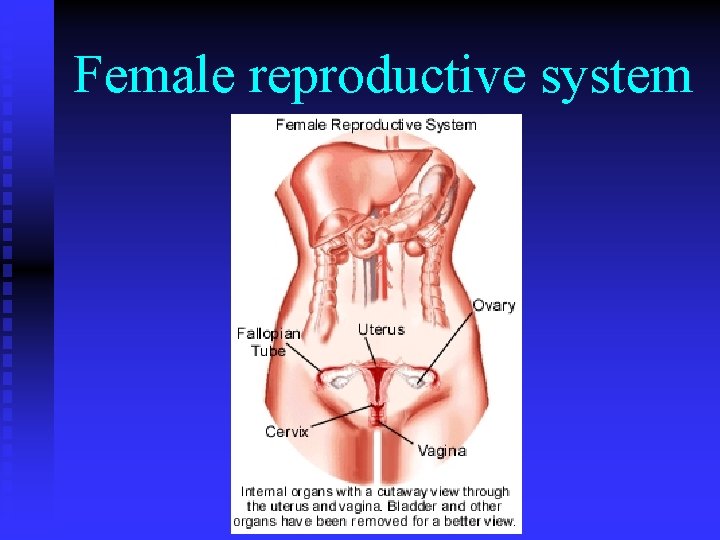
Female reproductive system
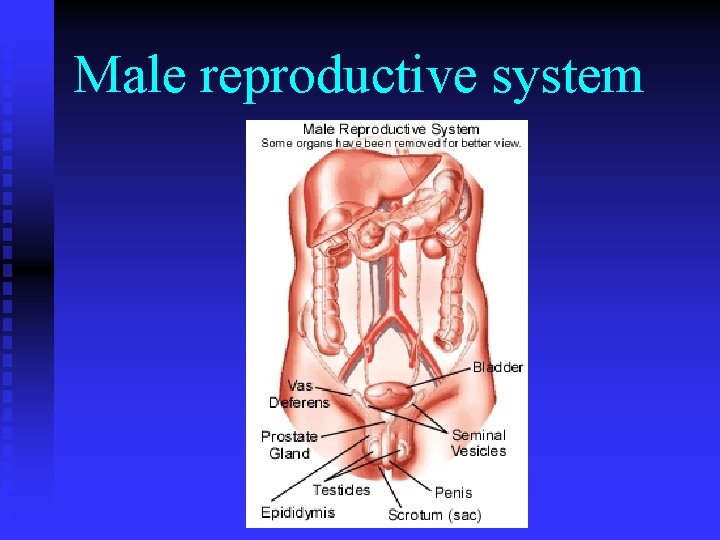
Male reproductive system
Reproductive system n In males, this system produces sperm. n In females, this system produces eggs.
- Slides: 49