
https www yenepoya edu in 10302020 9 08




- Slides: 68
https: //www. yenepoya. edu. in 10/30/2020 9: 08 PM Yenepoya Nursing College Dr. Padma Priya S 1
Presented by Dr. Padma Priya s Reviewed by Mrs. Janet Miranda Mrs. Vinaya Topic: High risk pregnancy 10/30/2020 9: 08 PM (NAME) 2
High risk pregnancy • High risk pregnancy is broadly defined as a pregnancy in which there is or will be increased risk for morbidity or mortality of mother, fetus or neonate before or after delivery. In the developed countries, the maternal deaths have been brought down to irreducible minimum and as such it may be prudent to consider only perinatal morbidity and mortality in identifying high risk cases. 10/30/2020 9: 08 PM Dr. padma Priya s 3
• HYPERTENSIVE DISORDER OF PREGNANCY Hypertension is one of the common complications met with in pregnancy and contributes significantly to the cause of maternal and perinatal morbidity and mortality. 10/30/2020 9: 08 PM Dr. Padma Priya S 4
CLASSIFICATION OF HYPERTENSIVE DISORDER: • 1. Gestational hypertension: Blood pressure elevation (140/90 mm. Hg) identified after midpregnancy without proteinuria • 2. preeclampsia: Pregnancy-specific syndrome occurring after 20 weeks gestation with gestational hypertension plus proteinuria. • 2(a) Mild preeclampsia AND 2(b) Severe preeclampsia • 10/30/2020 9: 08 PM (NAME) 5
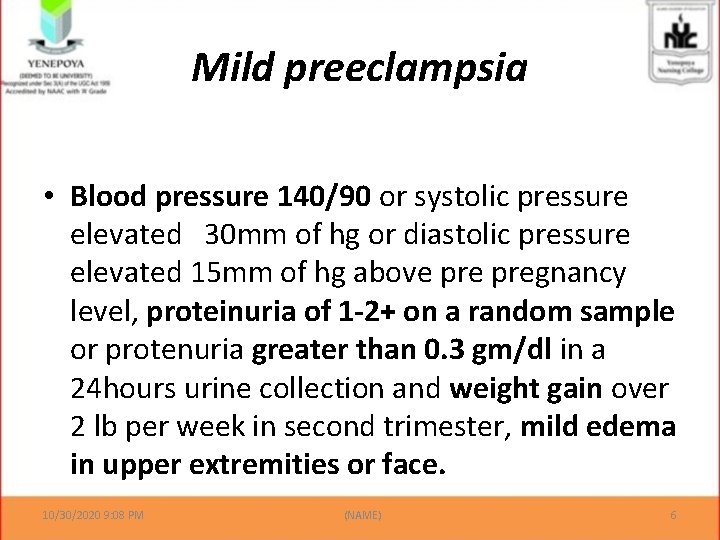
Mild preeclampsia • Blood pressure 140/90 or systolic pressure elevated 30 mm of hg or diastolic pressure elevated 15 mm of hg above pregnancy level, proteinuria of 1 -2+ on a random sample or protenuria greater than 0. 3 gm/dl in a 24 hours urine collection and weight gain over 2 lb per week in second trimester, mild edema in upper extremities or face. 10/30/2020 9: 08 PM (NAME) 6
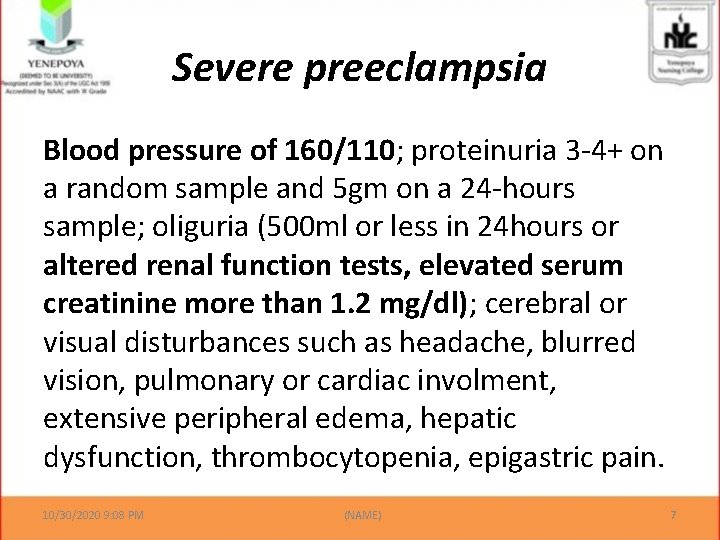
Severe preeclampsia Blood pressure of 160/110; proteinuria 3 -4+ on a random sample and 5 gm on a 24 -hours sample; oliguria (500 ml or less in 24 hours or altered renal function tests, elevated serum creatinine more than 1. 2 mg/dl); cerebral or visual disturbances such as headache, blurred vision, pulmonary or cardiac involment, extensive peripheral edema, hepatic dysfunction, thrombocytopenia, epigastric pain. 10/30/2020 9: 08 PM (NAME) 7
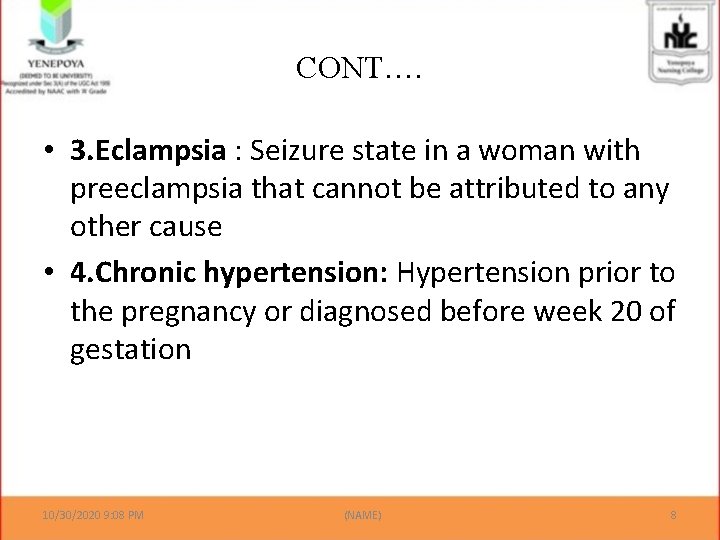
CONT…. • 3. Eclampsia : Seizure state in a woman with preeclampsia that cannot be attributed to any other cause • 4. Chronic hypertension: Hypertension prior to the pregnancy or diagnosed before week 20 of gestation 10/30/2020 9: 08 PM (NAME) 8
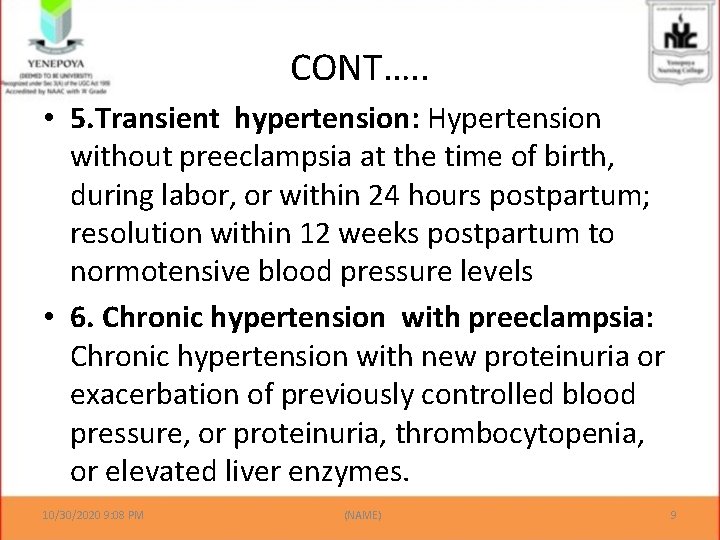
CONT…. . • 5. Transient hypertension: Hypertension without preeclampsia at the time of birth, during labor, or within 24 hours postpartum; resolution within 12 weeks postpartum to normotensive blood pressure levels • 6. Chronic hypertension with preeclampsia: Chronic hypertension with new proteinuria or exacerbation of previously controlled blood pressure, or proteinuria, thrombocytopenia, or elevated liver enzymes. 10/30/2020 9: 08 PM (NAME) 9
PIH • Pregnancy-induced hypertension (PIH) is a form of high blood pressure in pregnancy. It occurs in about 7 to 10 percent of all pregnancies. • Another type of high blood pressure is chronic hypertension - high blood pressure that is present before pregnancy begins. 10/30/2020 9: 08 PM (NAME) 10
CONT… • Pregnancy-induced hypertension is also called toxemia of pregnancy. However if already have a history of chronic hypertension prior to becoming pregnant, the risk of getting PIH is about 25%. 10/30/2020 9: 08 PM (NAME) 11
Risk factors of pre-eclampsia: – Primigravida (especially young teenagers and women over 35 years) – Obese women – Women with essential hypertension – Multiple pregnancy 10/30/2020 9: 08 PM (NAME) 12
• Diabetes • Hydatidiform mole • Polyhydramnios – Women with history of pre-eclampsia or eclampsia in a previous pregnancy • Family history of eclampsia. 10/30/2020 9: 08 PM (NAME) 13
Community Risk Factors include: • Lack of awareness about symptoms of preeclampsia and importance of prenatal care. • Transportation problems. • Low socioeconomic status (this is because teenage pregnancy is more common among the poor). • Community distrust of health care personnel. 10/30/2020 9: 08 PM (NAME) 14
Health Service Risk Factors include: – Failure to monitor blood pressure and urine during prenatal care. – Failure to counsel women and families about dangerous symptoms of preeclampsia and importance of prenatal care. – Delay in referral of eclamptic women. – Lack of clear-cut management strategy for dealing with pre-eclampsia and eclampsia. – Lack of proper equipment and drugs to treat eclampsia 10/30/2020 9: 08 PM (NAME) 15
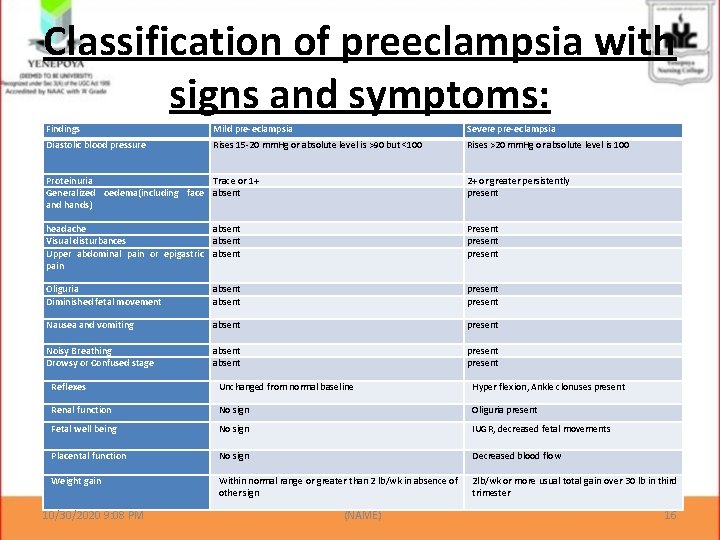
Classification of preeclampsia with signs and symptoms: Findings Mild pre-eclampsia Severe pre-eclampsia Diastolic blood pressure Rises 15 -20 mm. Hg or absolute level is >90 but <100 Rises >20 mm. Hg or absolute level is 100 Proteinuria Trace or 1+ Generalized oedema(including face absent and hands) 2+ or greater persistently present headache absent Visual disturbances absent Upper abdominal pain or epigastric absent pain Present present Oliguria Diminished fetal movement absent present Nausea and vomiting Noisy Breathing Drowsy or Confused stage absent present Reflexes Unchanged from normal baseline Hyper flexion, Ankle clonuses present Renal function No sign Oliguria present Fetal well being No sign IUGR, decreased fetal movements Placental function No sign Weight gain Within normal range or greater than 2 lb/wk in absence of other sign Decreased blood flow 2 lb/wk or more usual total gain over 30 lb in third trimester 10/30/2020 9: 08 PM (NAME) 16
Alarming symptoms • Headache: either located over the occipital or frontal region. • Disturbed sleep • Diminished urinary output: urinary output of less than 500 ml in 24 hours is very ominous. • Epigastric pain: Acute pain in the epigastric pain region associated with vomiting, at times coffee colour is due to hemorrhagic gastritis or due to sub capsular hemorrhage in the liver. 10/30/2020 9: 08 PM (NAME) 17
CONT…. • Eye symptoms: There may be blurring or dimness of vision or at times complete blindness. Vision is usually regained within 4 -6 weeks following delivery. The eye symptoms are due to spasm of retinal vessels, oedema and retinal detachment. 10/30/2020 9: 09 PM (NAME) 18
CONT…. . • Abnormal weight gain: A rapid weight gain more than 5 Ib a month. • Other signs symptoms may include Nausea, Vomiting, irritability, hyperreflexia, retinal edema (retinas appear wet and glistening), with narrowed segments on the retinal arterioles when examined with an ophthalmoscope 10/30/2020 9: 09 PM (NAME) 19
Pathophysiologic events • Vasospasm and hypoperfusion are the underlying mechanisms involved with this disorder. • Generalized vasospasm results in elevation of blood pressure and reduced blood flow to the brain, liver, kidneys, placenta, and lungs. • Decreased liver perfusion leads to impaired liver function and subcapsular hemorrhage. This is demonstrated by epigastric pain and elevated liver enzymes in the maternal serum. 10/30/2020 9: 09 PM (NAME) 20
• Decreased brain perfusion leads to small cerebral hemorrhages and symptoms of arterial vasospasm such as headaches, visual disturbances, blurred vision, and hyperactive deep tendon reflexes (DTRs). • Decreased kidney perfusion reduces GFR, resulting in decreased urine output and increased serum levels of sodium, BUN, uric acid, and creatinine, which further increases extracellular fluid and edema. 10/30/2020 9: 09 PM (NAME) 21
• Increased capillary permeability in the kidneys allows albumin to escape, which reduces plasma colloid osmotic pressure and moves more fluid into extracellular spaces, and leads to pulmonary edema and generalized edema. • Poor placental perfusion resulting from prolonged vasoconstriction helps to contribute to intrauterine growth restriction, premature separation of the placenta (abruptio placenta), persistent fetal hypoxia, and acidosis. 10/30/2020 9: 09 PM (NAME) 22
• In addition, hemo concentration (resulting from decreased intravascular volume) causes increased blood viscosity and elevated hematocrit. • Other pathological changes are Blood vessels: there is intense vasospasm. Circulation in the vasa vasorum is impaired leading to damage of the vascular walls including the endothelial integrity 10/30/2020 9: 09 PM (NAME) 23
Theories endothelial cell injury immune rejection of the placenta compromised placental perfusion altered vascular reactivity imbalance between prostacyclin and thromboxane • decreased glomerular filtration rate with retention of salt and water • decreased intravascular volume • • • 10/30/2020 9: 09 PM (NAME) 24
• • • increased central nervous system irritability disseminated intravascular coagulation uterine muscle stretch (ischemia) dietary factors, including vitamin deficiency genetic factors 10/30/2020 9: 09 PM (NAME) 25
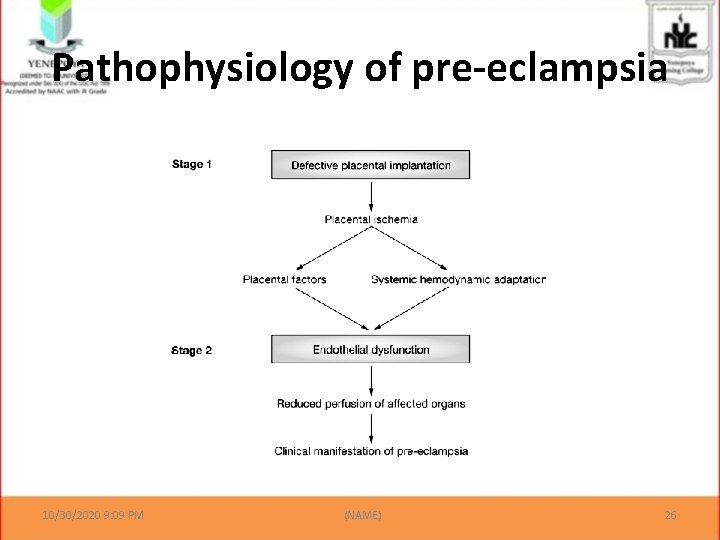
Pathophysiology of pre-eclampsia 10/30/2020 9: 09 PM (NAME) 26
CONT…. • Abnormal placentation (stage 1), particularly lack of dilatation of the uterine spiral arterioles, is the common starting point in the genesis of pre-eclampsia, which compromises blood flow to the maternal–fetal interface. Reduced placental perfusion activates placental factors and induces systemic hemodynamic changes. 10/30/2020 9: 09 PM (NAME) 27
CONT… • The maternal syndrome (stage 2) is a function of the circulatory disturbance caused by systemic maternal endothelial cell dysfunction resulting in vascular reactivity, activation of coagulation cascade and loss of vascular integrity. Pre-eclampsia has effects on most maternal organ systems, but predominantly on the vasculature of the kidneys, liver and brain 10/30/2020 9: 09 PM (NAME) 28
10/30/2020 9: 09 PM (NAME) 29
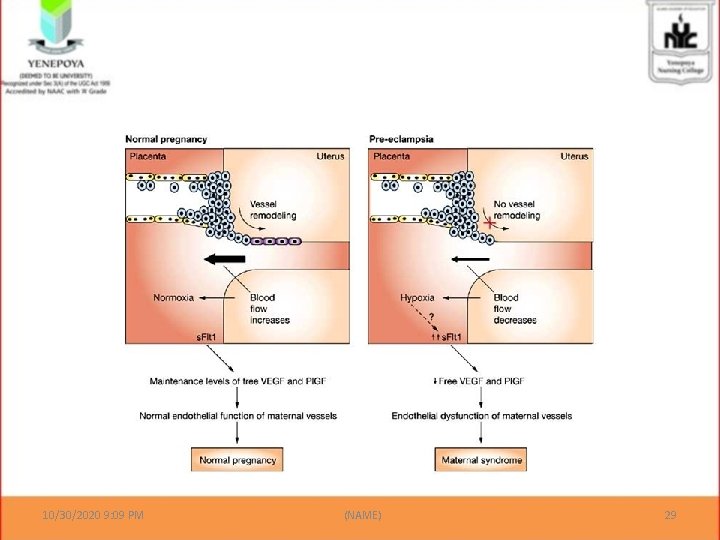
• Pre-eclamptic placenta releases higher amounts of soluble Fms-like tyrosine kinase 1 than normal placenta (right panel), depriving the vasculature of kidney, liver, brain and other organs of essential maintenance signals, thereby triggering the maternal vascular dysfunction of pre-eclampsia. 10/30/2020 9: 09 PM (NAME) 30
Diagnostic evaluation of preeclampsia: • Three major areas for consideration when screening for pre- eclampsia are Blood pressure, urine analysis and edema. • Laboratory findings with pregnancy induced hypertension 10/30/2020 9: 09 PM (NAME) 31
• 1. Complete blood count • Hematocrit value: Hematocrit >40% is Significant • 2. Renal function tests • Serum uric acid. Levels >6. 0 mg/100 ml Indicates Severe PIH 10/30/2020 9: 09 PM (NAME) 32
• Serum protein level decreased • Serum Creatinine 2. 0 to 3. 0 mg/dl indicates Severe PIH • Blood urea nitrogen 10 mg 16 mg/100 ml indicates Severe PIH • Creatinine clearance <150 ml/min, elevated in Severe PIH • Blood urea raised 10/30/2020 9: 09 PM (NAME) 33
• Coagulation Tests • Platelets usually reduced because of aggregation and decreased <100, 000 u. L indicates severe PIH or HELLP • Prothrombin time (PT)usually normal levels. May increase (>16 s) with severe PIH 10/30/2020 9: 09 PM (NAME) 34
• Opthalmoscopic examination: in severe cases there may be retinal edema, constriction of the arterioles, and alteration of normal ratio of vein arteriole diameter from 3: 2 to 3: 1 and nicking of the veins where crossed by the arterioles. • Cardiotocography: A normal tracing after 32 weeks would show baseline heart rate of 110150 beats/minute with a variability 5 -25 bpm. • 10/30/2020 9: 09 PM (NAME) 35
• Ultrasonography: IUGR can be diagnosed accurately by USG with serial measurement of BPD, AC, HC and amniotic fluid volume. BPD increases 1. 7 mm per week and BPD 9. 8 cm indicates maturity. Adequate amniotic fluid volume evidenced by one or more larger pockets of fluid greater than 1 cm in vertical diameter is normal. 10/30/2020 9: 09 PM (NAME) 36
Management • If the diastolic blood pressure is 80 -90 mm. Hg or rises less than 15 mm. Hg and there is no proteinuria, the woman is allowed to stay at home and told to rest as much as possible. She must return to the clinic every week. At each visit: • Check the blood pressure • Test the urine for protein • Weigh the patient • Check for the edema 10/30/2020 9: 09 PM (NAME) 37
Cont…. • Exclude symptoms of severe pre-eclampsia • Monitor fetal growth, ask mother about fetal movements • Check fetal heart rate. • Book the woman for delivery in hospital. 10/30/2020 9: 09 PM (NAME) 38
Management cont… • If the diastolic blood pressure is 90 mm. Hg or more rises by more than 15 mm. Hg, if there are symptoms of severe pre-eclampsia. Or if there is evidence of poor fetal growth, the woman must be admitted to hospital for observation and management in hospital: • Have the woman rest in bed in quiet room: Rest should always be in a lateral recumbent position to avoid uterine pressure on the vena cava and prevent supine hypotension syndrome. 10/30/2020 9: 09 PM (NAME) 39
• Monitor the fetal heart rate twice daily: The woman may have a non-stress test or biophysical profile done daily to assess uteroplacental sufficiency. Oxygen administration to the monitor may be necessary to maintain adequate fetal oxygenation and prevent bradycardia. 10/30/2020 9: 09 PM (NAME) 40
• Give sedation—To cut down emotional factor, even in the mild cases sedative is to be given orally as phenobarbitone 60 mg or diazepam 5 mg at bed time or more frequently. In severe cases, the patient is to be sedated using phenothiazine derivatives (Largactil or sparine) 25 mg with phenergan 25 mg intramuscularly to be repeated at frequent levels (6 -8 hrs). 10/30/2020 9: 09 PM (NAME) 41
• Give antihypertensive drugs: The common oral drugs used are Adelphane (reserpine 0. 1 mg and dihydralazine sulfate 10 mg) and Aldoment (methyldopa) 250 mg given 1 -3 tablets, a day. • In severe cases: The common drugs used are Aldomat 250 -500 mg every 6 -8 hours or hydralazine (Apresoline) 15 -25 mg every 3 -4 hours given intramuscularly under close supervision. 10/30/2020 9: 09 PM (NAME) 42
• Progress chart: • blood pressure – at least twice daily or more frequently • state of edema and daily weight • fluid intake and urinary output • urinary examination for protein daily and if present, to estimate its amount in 24 hours urine • 10/30/2020 9: 09 PM (NAME) 43
Prevention: • Regular antenatal check-up from the beginning of pregnancy to detect at the earliest, the rapid gain in weight or a tendency of rising blood pressure specially the diastolic one. • The patient is advised to take adequate rest in bed on her side atleast extra 2 hours at noon from the 20 th week of pregnancy onwards. 10/30/2020 9: 09 PM (NAME) 44
• She should be on a well balanced diet rich in protein. Restriction of salt in the diet or use of diuretics is not help in the prevention of preeclampsia. 10/30/2020 9: 09 PM (NAME) 45
Roll over test • Place the patient on her side and after a few minutes rest (say 15 minutes) • Roll the patient on her back and check the bloodpressure again. • Wait for 5 minutes and check the blood pressure once more. • Inference: an increase of 20 mm of Hg in diastolic pressure from the side position indicates a positive “roll over test” 10/30/2020 9: 09 PM (NAME) 46
Cont… • Significance: (1) if the test is negative, the chance of preeclampsia is less than 1 in 100. (2) If the test is positive, even though the blood pressure is within normal limits, there is a 60% to 90% chance of developing preeclampsia. The test is especially of value where the prevalence of pre-eclampsia is more and antenatal care is meagre. • 10/30/2020 9: 09 PM (NAME) 47
manage mild preeclampsia at home in the last few week of pregnancy: • Drink at least 8 glasses of fluids per day • Add fiber to your diet to prevent constipation. • Do gentle stretching exercises of your legs, feet, arms and hands to improve circulation and increase muscle tone. • Keep your mind active by reading, doing puzzles, using your laptop for online correspondence, or do crafts, photo albums, etc. . 10/30/2020 9: 09 PM (NAME) 48
• Keep a cordless phone or cell phone near the bed to call family and friends. • Recruit family and friends to help with laundry, shopping and preparing the nursery. 10/30/2020 9: 10 PM (NAME) 49
ECLAMPSIA • Eclampsia can lead to cerebral hemorrhage, pulmonary edema, and renal failure, and is associated with HELLP syndrome. • The woman may have one or more seizures, generally lasting 60 to 75 seconds. 10/30/2020 9: 10 PM (NAME) 50
Signs and symptoms of eclampsia: • • Include tonic–clonic seizure activity, Headache, Hyperactive reflexes, Marked proteinuria, Generalized edema, Visual disturbances, And right upper quadrant pain or epigastric pain. 10/30/2020 9: 10 PM (NAME) 51
The stages of eclamptic seizure • In the stage of invasion facial twitching can be observed around the mouth. • In the stage of contraction tonic contractions render the body rigid; this stage may last about 15 to 20 seconds. • The next stage is the stage of convulsion when involuntary and forceful muscular movements occur, the tongue may be bitten, foam appears at the mouth. 10/30/2020 9: 10 PM (NAME) 52
• The final stage is a more or less prolonged coma When the patient awakens, she is unlikely to remember the event. • In some rare cases there are no convulsions and the patient falls directly into a coma. Some patients when they awake from the coma may have temporary blindness. 10/30/2020 9: 10 PM (NAME) 53
Management of severe preeclampsia: • The management of Eclampsia involves six stages: • 1. Making sure the women can breathe. • 2. Controlling the fits. • 3. Controlling the blood pressure. • 4. Controlling the fluid balance. • 5. Delivering the baby. • 6. Monitoring carefully to prevent further fits and identify complications. 10/30/2020 9: 10 PM (NAME) 54
• Making sure the women can breathe: this is achieved in four steps: • Place the woman on her side (in the semi prone position) so that mucous or saliva will drain out, for with deep breathing there is a grave danger of the inhalation of mucous and saliva. • Clean the mouth and nostrils gently and remove secretions. 10/30/2020 9: 10 PM (NAME) 55
Cont…. . • Give oxygen (if available) and continue for five minutes after each fit, or longer if cyanosis persists. • Stay with the woman to make sure that: • Her airway remains clear; • Injury is prevented during the clonic stage. 10/30/2020 9: 10 PM (NAME) 56
Cont…. . • Controlling the fits: Magnesium sulfate: For the first dose , give a slow intravenous injection of magnesium sulfate 4 g (20 ml of 20% solution), at the rate of 1 g every 5 minutes for 20 minutes, • Magnesium sulfate should not be given as a bolus!. • Repeat doses can be given every 4 hours 10/30/2020 9: 10 PM (NAME) 57
• Monitoring for magnesium toxicity: • urine output should be at least 30 ml/hour • deep tendon reflexes (knee jerk)should be present • respiration rate should be >14 breaths/mts • pulse oximetry should be >_ 96% • READY WITH a solution of 10 ml of 10% 0 f calcium gluconate 1 gm solution should be kept ready. 10/30/2020 9: 10 PM (NAME) 58
Eliciting reflexes: • Deep tendon reflexes: The evaluation of deep tendon reflexes is important especially if the women are being treated with magnesium sulfate. Absence of DTR is an early indication of impending magnesium sulfate. 10/30/2020 9: 10 PM (NAME) 59
• Delivering the baby: Latent phase: Labour will be induced by rupturing the membranes and giving oxytocin, only if: The cervix is very ripe(almost fully effaced, dialatation 2 -3 cm); • The fetus is of normal or small size; • The pelvis appears of normal size by vaginal examination; • No other contra-indications for vaginal delivery exist. 10/30/2020 9: 10 PM (NAME) 60
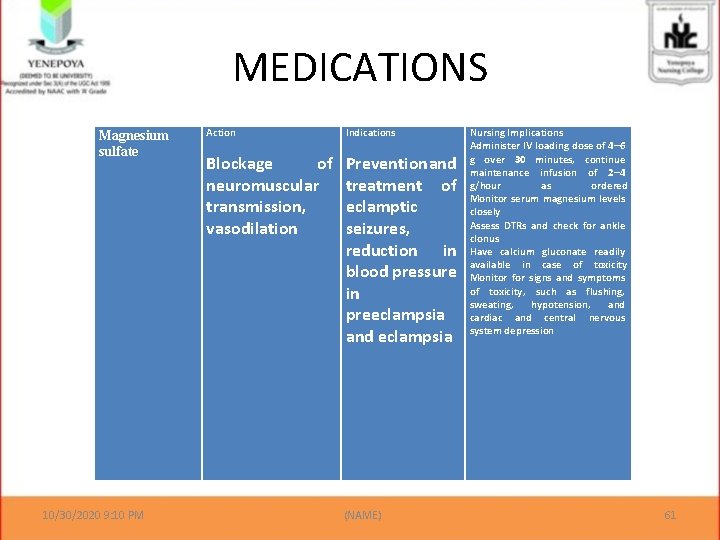
MEDICATIONS Magnesium sulfate 10/30/2020 9: 10 PM Action Indications Blockage of neuromuscular transmission, vasodilation Prevention and treatment of eclamptic seizures, reduction in blood pressure in preeclampsia and eclampsia (NAME) Nursing Implications Administer IV loading dose of 4– 6 g over 30 minutes, continue maintenance infusion of 2– 4 g/hour as ordered Monitor serum magnesium levels closely Assess DTRs and check for ankle clonus Have calcium gluconate readily available in case of toxicity Monitor for signs and symptoms of toxicity, such as flushing, sweating, hypotension, and cardiac and central nervous system depression 61
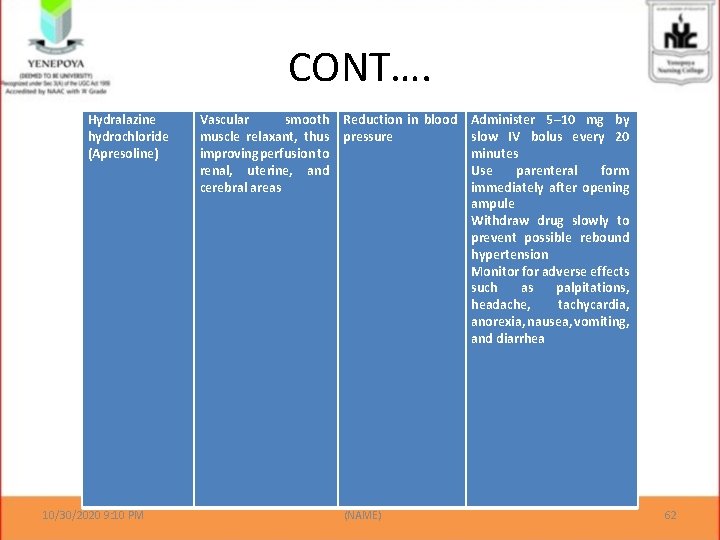
CONT…. Hydralazine hydrochloride (Apresoline) 10/30/2020 9: 10 PM Vascular smooth Reduction in blood muscle relaxant, thus pressure improving perfusion to renal, uterine, and cerebral areas (NAME) Administer 5– 10 mg by slow IV bolus every 20 minutes Use parenteral form immediately after opening ampule Withdraw drug slowly to prevent possible rebound hypertension Monitor for adverse effects such as palpitations, headache, tachycardia, anorexia, nausea, vomiting, and diarrhea 62
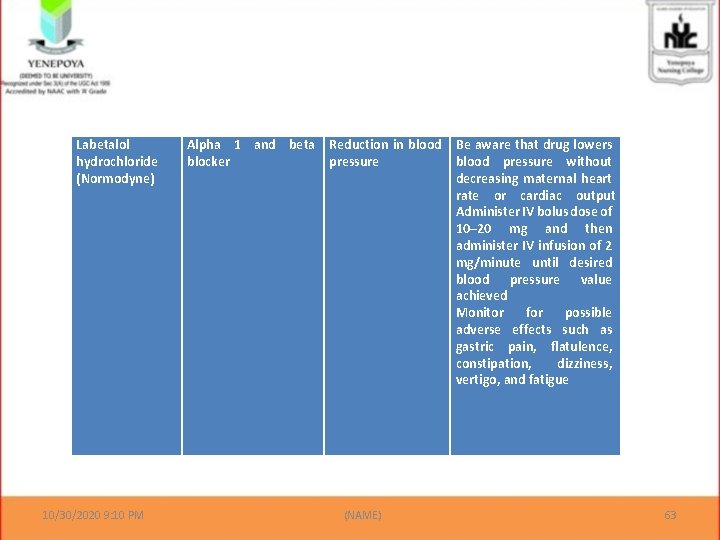
Labetalol hydrochloride (Normodyne) 10/30/2020 9: 10 PM Alpha 1 and beta Reduction in blood Be aware that drug lowers blocker pressure blood pressure without decreasing maternal heart rate or cardiac output Administer IV bolus dose of 10– 20 mg and then administer IV infusion of 2 mg/minute until desired blood pressure value achieved Monitor for possible adverse effects such as gastric pain, flatulence, constipation, dizziness, vertigo, and fatigue (NAME) 63
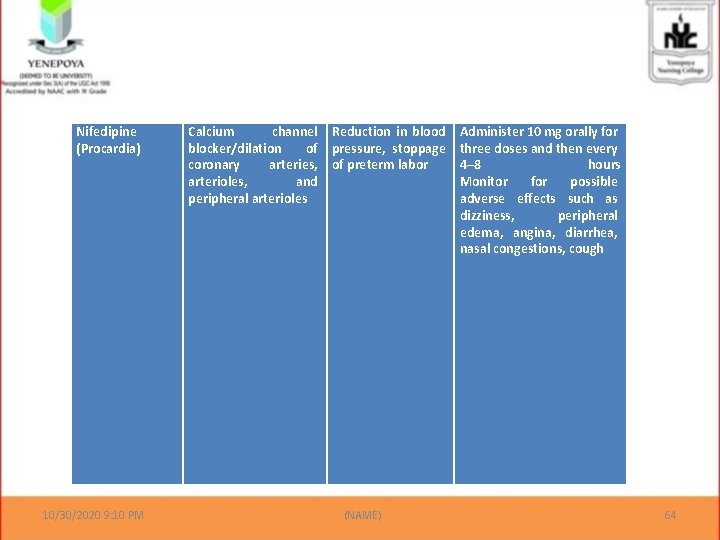
Nifedipine (Procardia) 10/30/2020 9: 10 PM Calcium channel Reduction in blood blocker/dilation of pressure, stoppage coronary arteries, of preterm labor arterioles, and peripheral arterioles (NAME) Administer 10 mg orally for three doses and then every 4– 8 hours Monitor for possible adverse effects such as dizziness, peripheral edema, angina, diarrhea, nasal congestions, cough 64
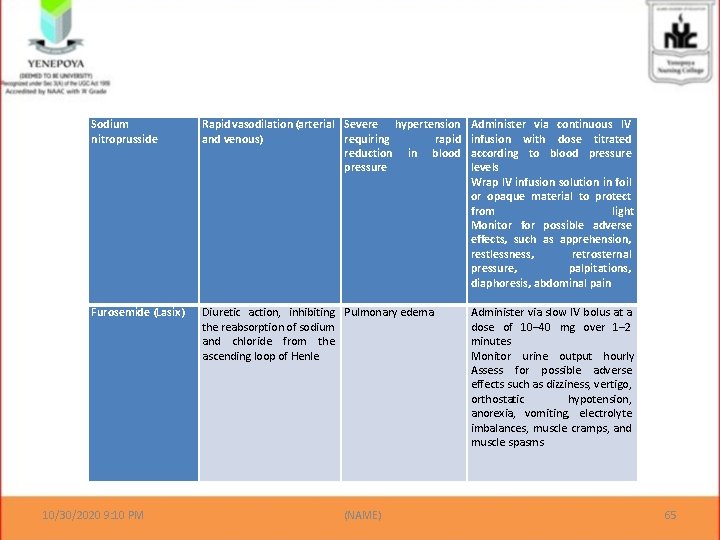
Sodium nitroprusside Rapid vasodilation (arterial Severe hypertension and venous) requiring rapid reduction in blood pressure Administer via continuous IV infusion with dose titrated according to blood pressure levels Wrap IV infusion solution in foil or opaque material to protect from light Monitor for possible adverse effects, such as apprehension, restlessness, retrosternal pressure, palpitations, diaphoresis, abdominal pain Furosemide (Lasix) Diuretic action, inhibiting Pulmonary edema the reabsorption of sodium and chloride from the ascending loop of Henle Administer via slow IV bolus at a dose of 10– 40 mg over 1– 2 minutes Monitor urine output hourly Assess for possible adverse effects such as dizziness, vertigo, orthostatic hypotension, anorexia, vomiting, electrolyte imbalances, muscle cramps, and muscle spasms 10/30/2020 9: 10 PM (NAME) 65
Conclusion • Pregnancy induced hypertension accounts for 12% of all maternal death in developing countries. It is very important for midwifes to be able to prevent death from PIH by adequate prenatal monitoring of blood pressure and other assessment and prompt management of complication when they arise. Identification of the risk, together with appropriate and timely intervention during the perinatal period, can prevent mortality and morbidity rate among mothers and infants. 10/30/2020 9: 10 PM (NAME) 66
Reference • London L, Patrica. Maternal and child nursing care. 2 nded. Pearson publication. • Lowerdermilk, Wong, Perry. Maternal child nursing care. 3 rd ed. Newyork: mosby publication. • Dutta D C. Text book of obstetrics. 5 th ed. Calcutta: New central book agency. • 10/30/2020 9: 10 PM (NAME) 67
Cont… • Dawn CS. Text book of obstetrics and neonatology. 6 th ed. Kolkata: Dawns books. • Bhide G, Patki S, Levi M. A text book of midwifes. 1 st ed. New Delhi: Jaypee brothers. 10/30/2020 9: 10 PM (NAME) 68