
https en wikipedia orgwikiElectromagneticspectrum Types of Spectra Continuous






- Slides: 25
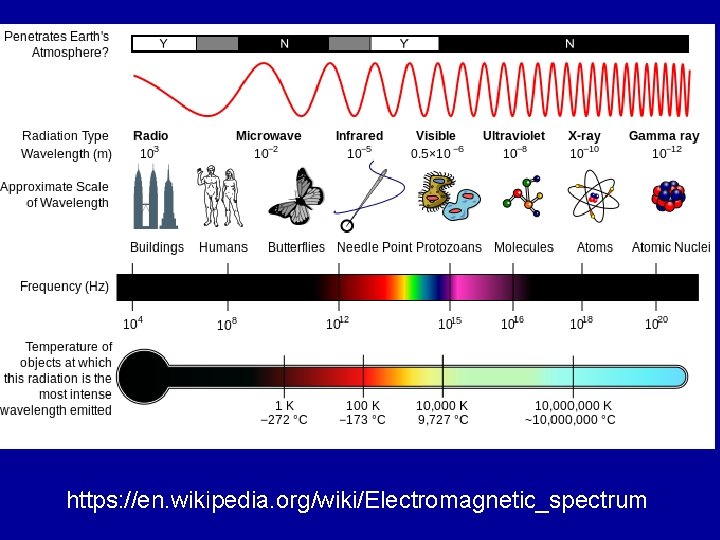
https: //en. wikipedia. org/wiki/Electromagnetic_spectrum
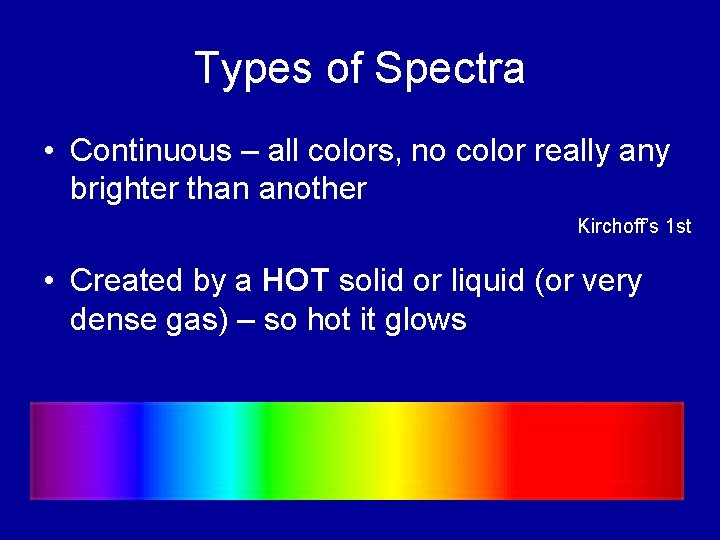
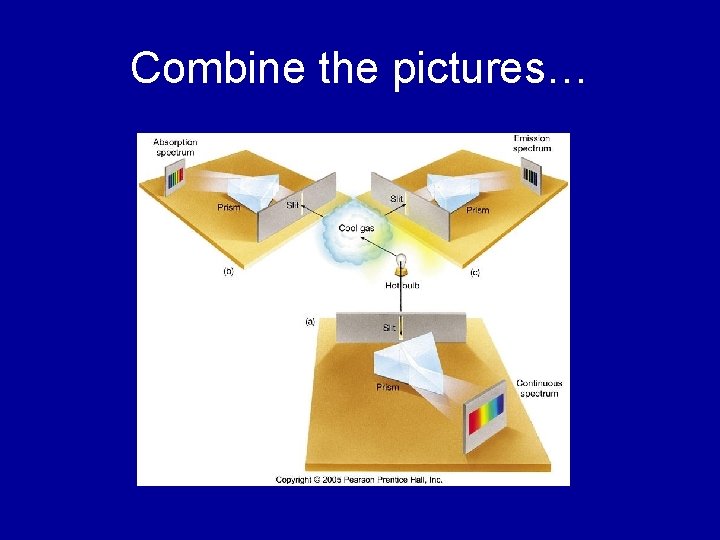
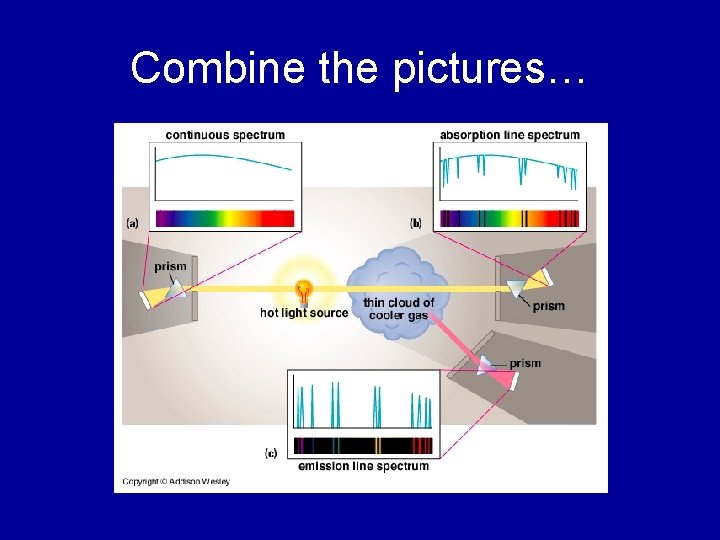
Types of Spectra • Continuous – all colors, no color really any brighter than another Kirchoff’s 1 st • Created by a HOT solid or liquid (or very dense gas) – so hot it glows
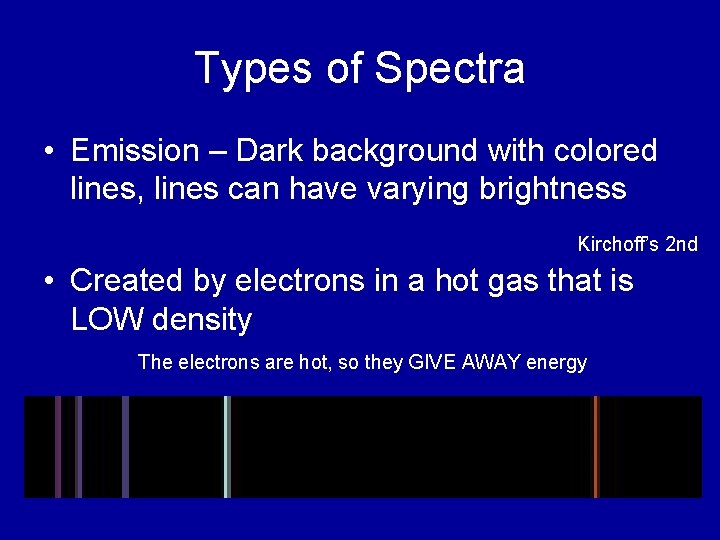
Types of Spectra • Emission – Dark background with colored lines, lines can have varying brightness Kirchoff’s 2 nd • Created by electrons in a hot gas that is LOW density The electrons are hot, so they GIVE AWAY energy
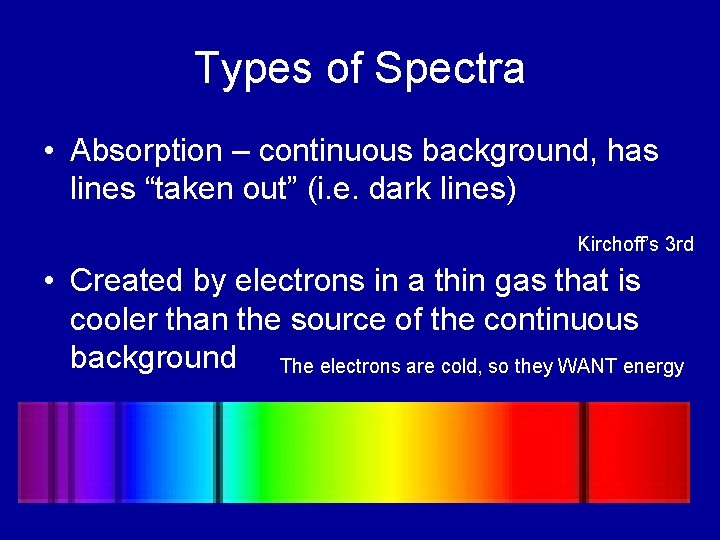
Types of Spectra • Absorption – continuous background, has lines “taken out” (i. e. dark lines) Kirchoff’s 3 rd • Created by electrons in a thin gas that is cooler than the source of the continuous background The electrons are cold, so they WANT energy
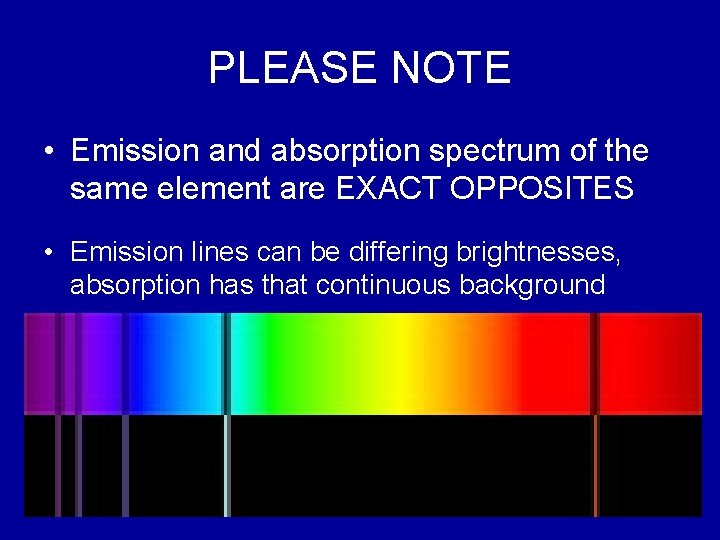
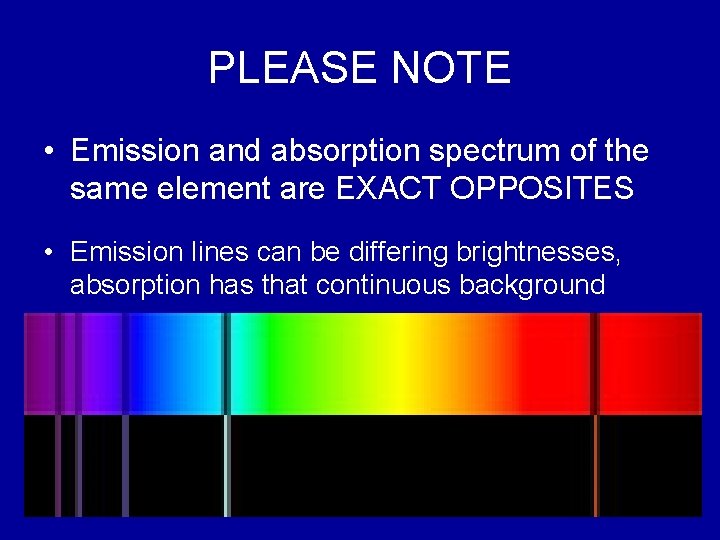
PLEASE NOTE • Emission and absorption spectrum of the same element are EXACT OPPOSITES • Emission lines can be differing brightnesses, absorption has that continuous background
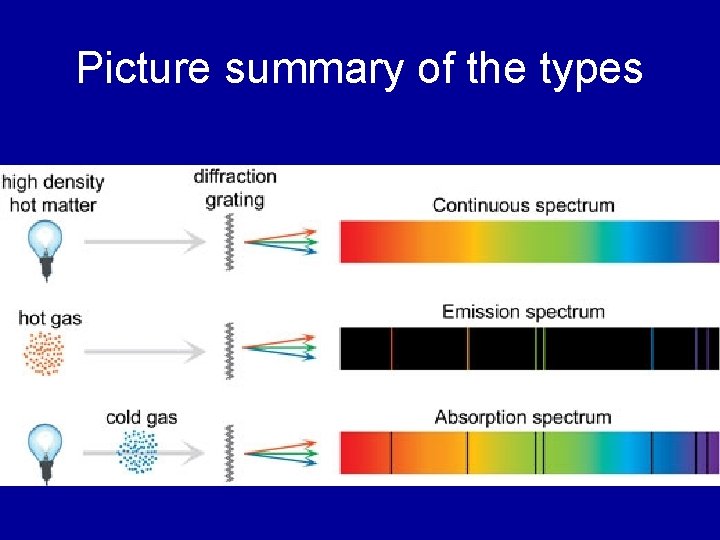
Picture summary of the types
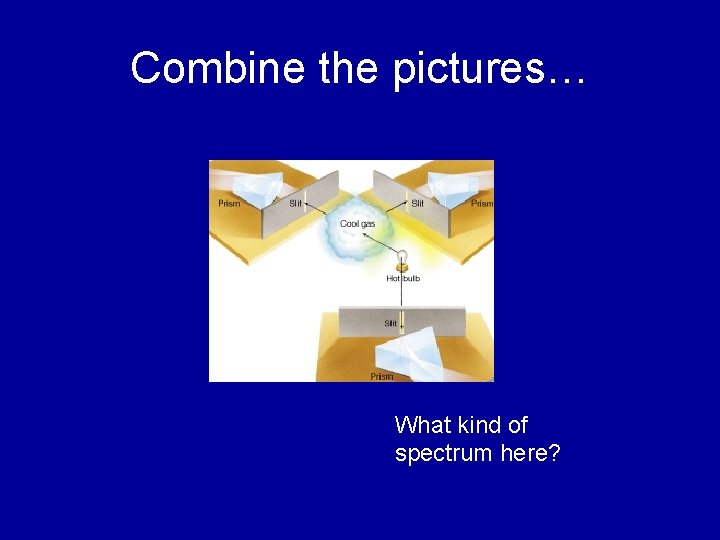
Combine the pictures… What kind of spectrum here?
Combine the pictures…
Combine the pictures…
PLEASE NOTE • Emission and absorption spectrum of the same element are EXACT OPPOSITES • Emission lines can be differing brightnesses, absorption has that continuous background
What makes up an atom?
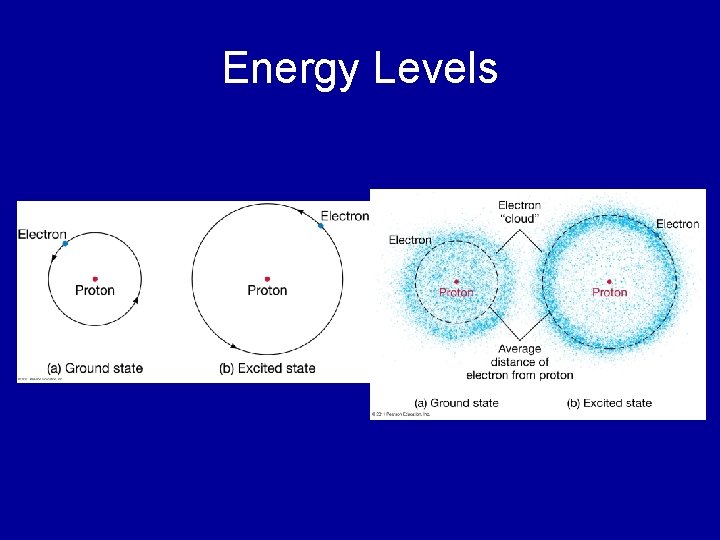
Energy Levels
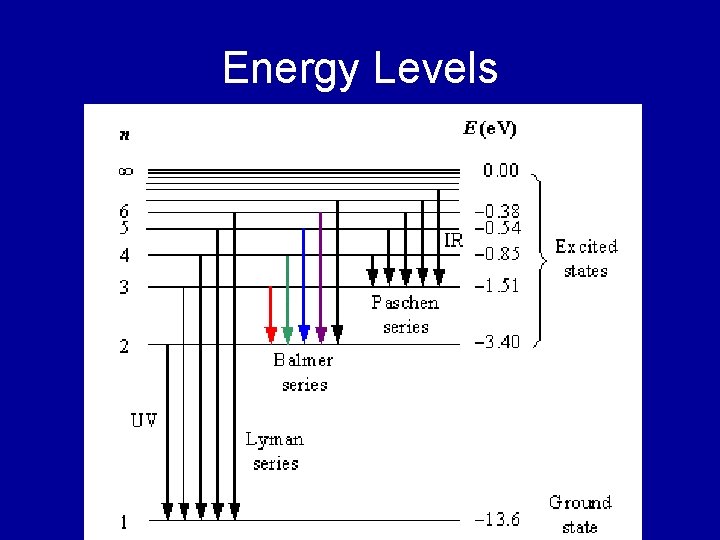
Energy Levels
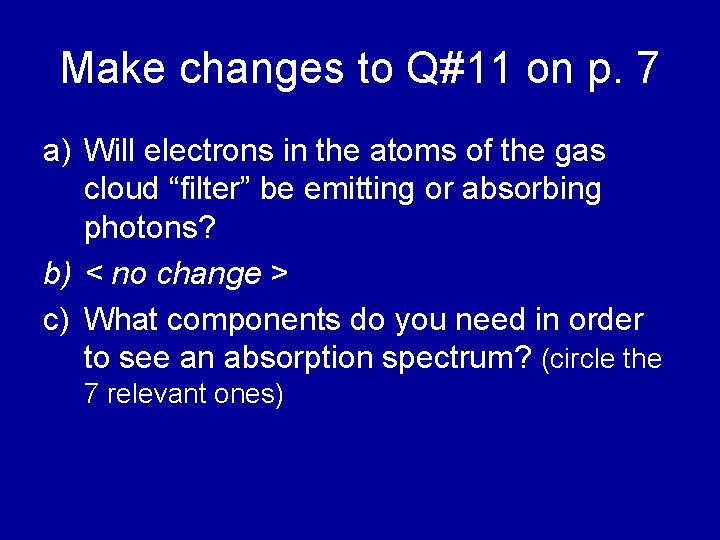
Make changes to Q#11 on p. 7 a) Will electrons in the atoms of the gas cloud “filter” be emitting or absorbing photons? b) < no change > c) What components do you need in order to see an absorption spectrum? (circle the 7 relevant ones)
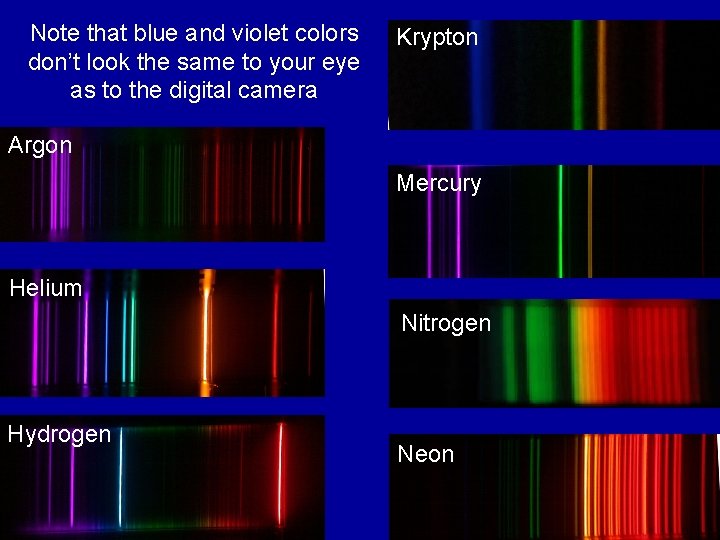
Note that blue and violet colors don’t look the same to your eye as to the digital camera Krypton Argon Mercury Helium Nitrogen Hydrogen Neon
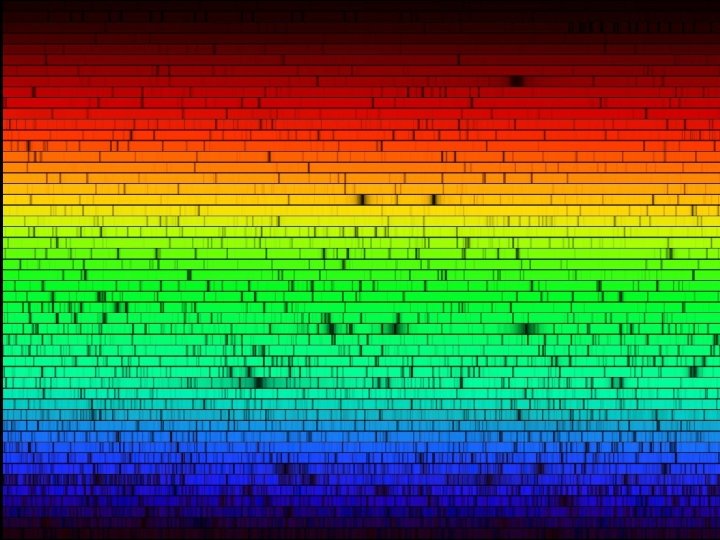
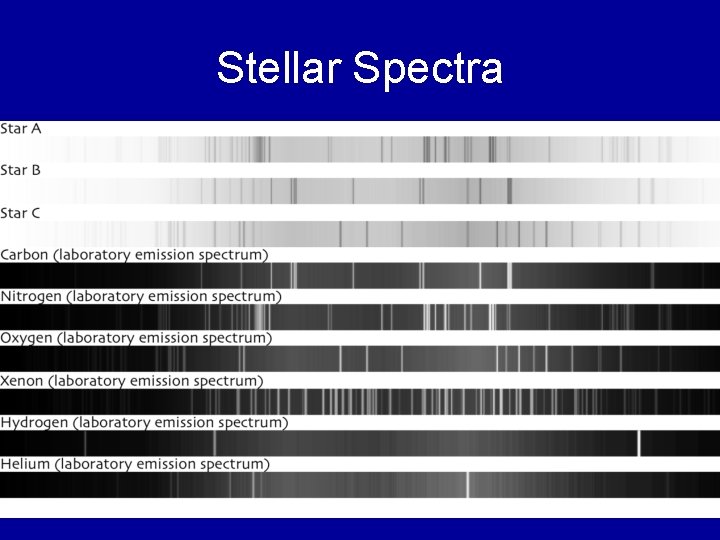
Stellar Spectra
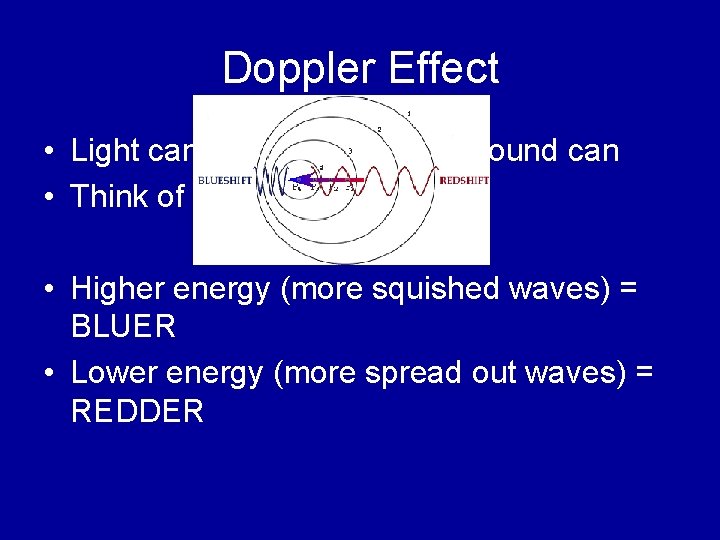
Doppler Effect • Light can do the same thing sound can • Think of a police siren • Higher energy (more squished waves) = BLUER • Lower energy (more spread out waves) = REDDER
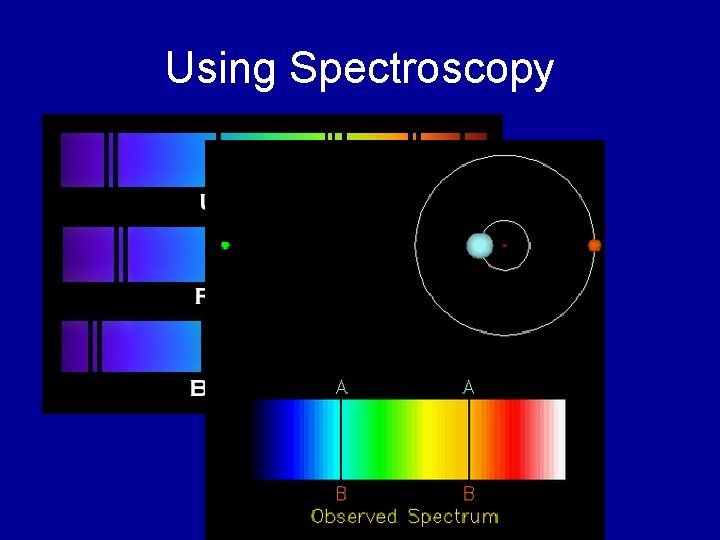
Using Spectroscopy