
http www nobelprize orgnobelprizesmedi cinelaureates1995illpresconsequences htm l Broad
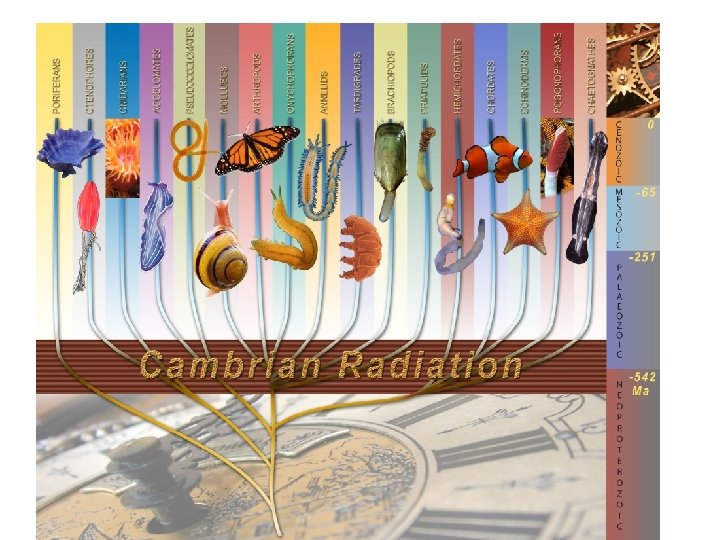
http: //www. nobelprize. org/nobel_prizes/medi cine/laureates/1995/illpres/consequences. htm l Broad Patterns of Evolution Fossils Speciation and Extinction Gene sequence and regulation change cause major change in body plans Goals of evolution
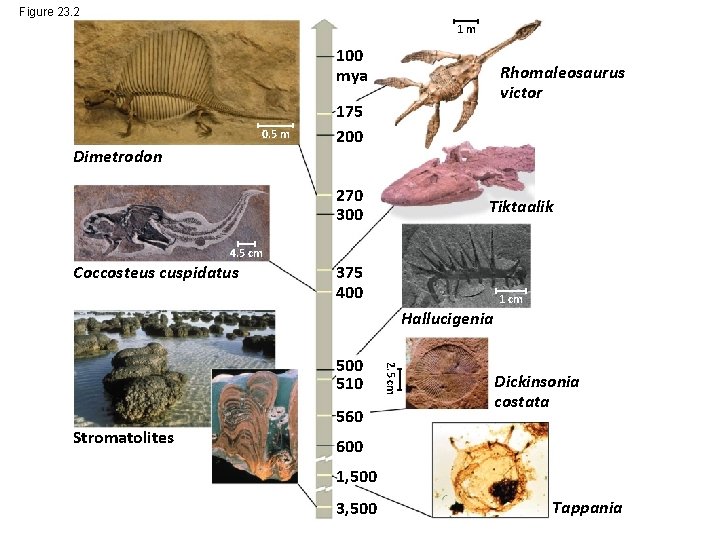
Figure 23. 2 1 m 100 mya 0. 5 m Dimetrodon Rhomaleosaurus victor 175 200 270 300 Tiktaalik 4. 5 cm Coccosteus cuspidatus 375 400 1 cm Hallucigenia Stromatolites 560 2. 5 cm 500 510 Dickinsonia costata 600 1, 500 3, 500 Tappania
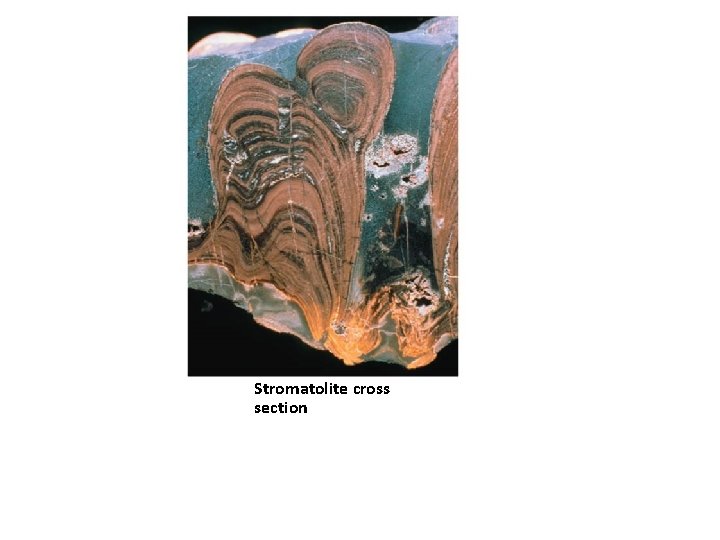
Stromatolite cross section
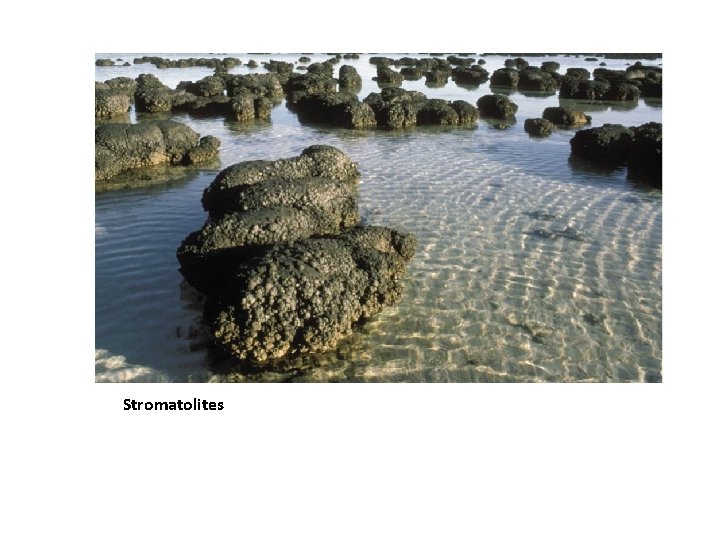
Stromatolites
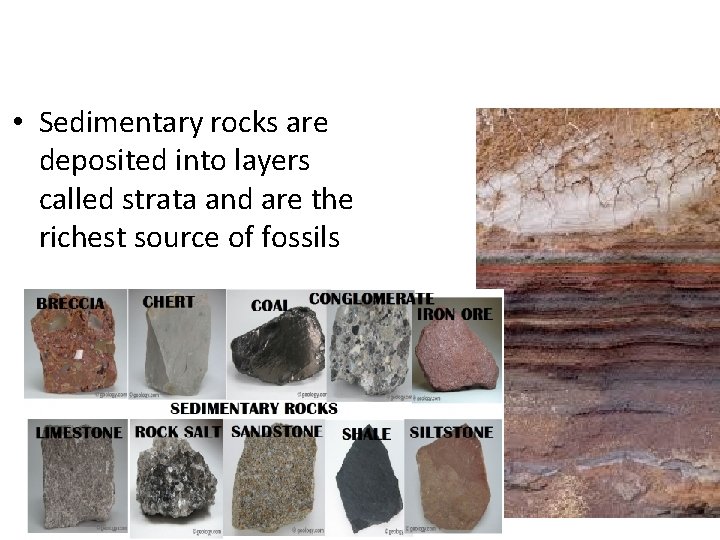
• Sedimentary rocks are deposited into layers called strata and are the richest source of fossils
Weakness of Fossils • Few individuals have fossilized, and even fewer have been discovered • The fossil record is biased in favor of species that – Existed for a long time – Were abundant and widespread – Had hard parts
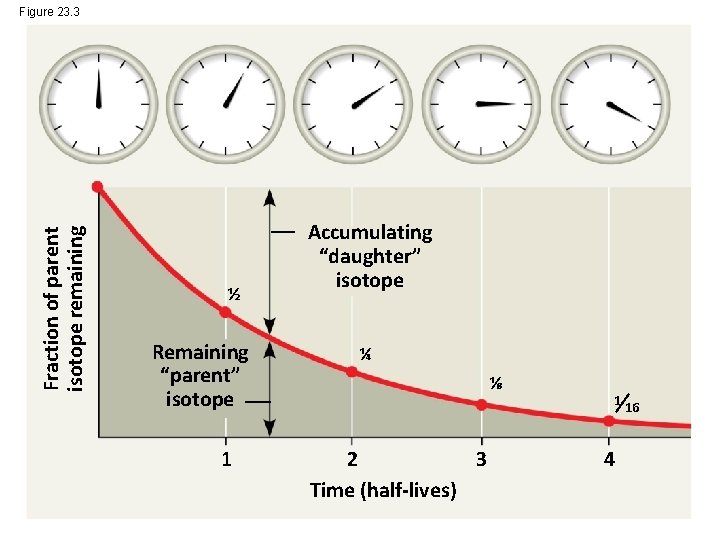
Fraction of parent isotope remaining Figure 23. 3 ½ Remaining “parent” isotope 1 Accumulating “daughter” isotope ¼ ⅛ 2 3 Time (half-lives) 1 16 4
The Origin of New Groups of Organisms • Mammals belong to the group of animals called tetrapods • The evolution of unique mammalian features can be traced through gradual changes over time
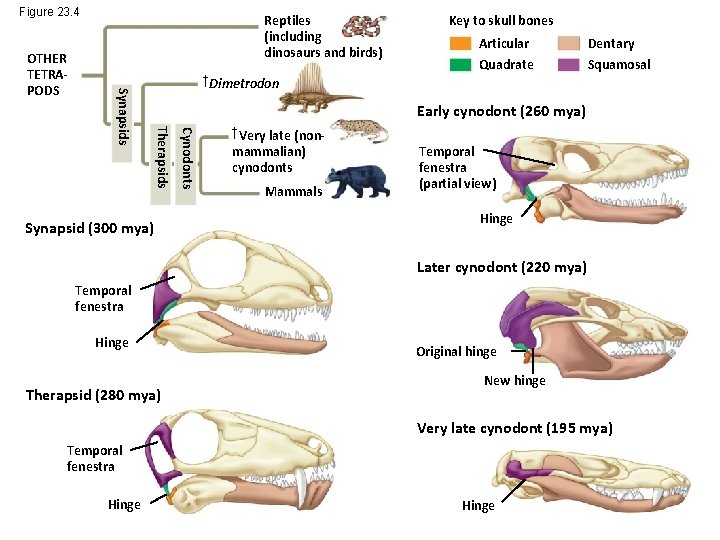
Figure 23. 4 †Dimetrodon Key to skull bones Articular Dentary Quadrate Squamosal Early cynodont (260 mya) Synapsid (300 mya) Cynodonts Therapsids Synapsids OTHER TETRAPODS Reptiles (including dinosaurs and birds) †Very late (non- mammalian) cynodonts Mammals Temporal fenestra (partial view) Hinge Later cynodont (220 mya) Temporal fenestra Hinge Therapsid (280 mya) Original hinge New hinge Very late cynodont (195 mya) Temporal fenestra Hinge
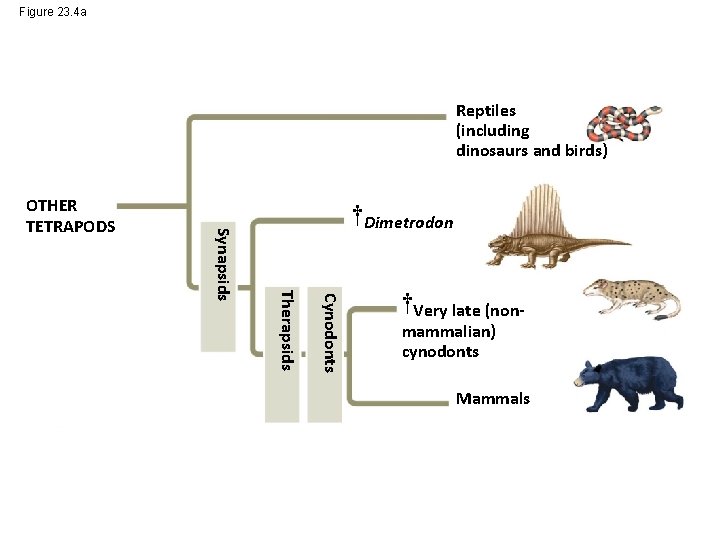
Figure 23. 4 a Reptiles (including dinosaurs and birds) †Dimetrodon Cynodonts Therapsids Synapsids OTHER TETRAPODS †Very late (nonmammalian) cynodonts Mammals
• Synapsids (300 mya) had single-pointed teeth, large temporal fenestra, and a jaw hinge between the articular and quadrate bones
• Therapsids (280 mya) had large dentary bones, long faces, and specialized teeth, including large canines
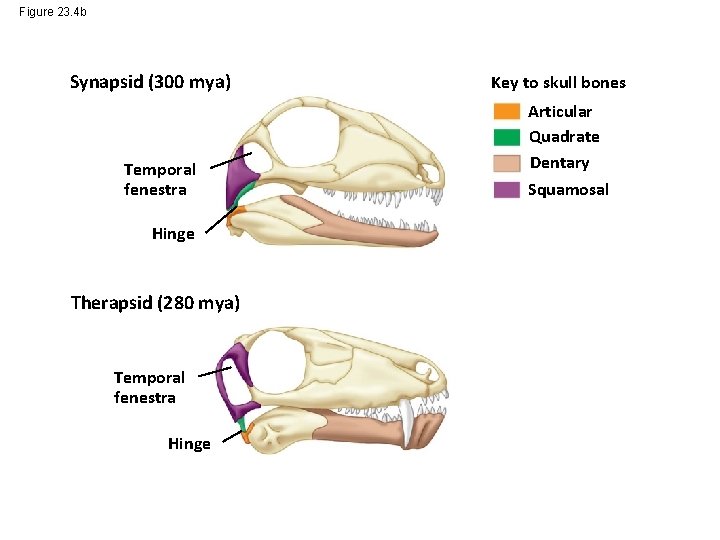
Figure 23. 4 b Synapsid (300 mya) Temporal fenestra Hinge Therapsid (280 mya) Temporal fenestra Hinge Key to skull bones Articular Quadrate Dentary Squamosal
• Early cynodonts (260 mya) had large dentary bones in the lower jaw, large temporal fenestra in front of the jaw hinge, and teeth with several cusps
• Later cynodonts (220 mya) had teeth with complex cusp patterns and an additional jaw hinge between the dentary and squamosal bones
• Very late cynodonts (195 mya) lost the original articular-quadrate jaw hinge • The articular and quadrate bones formed inner ear bones that functioned in transmitting sound • In mammals, these bones became the hammer (malleus) and anvil (incus) bones of the ear
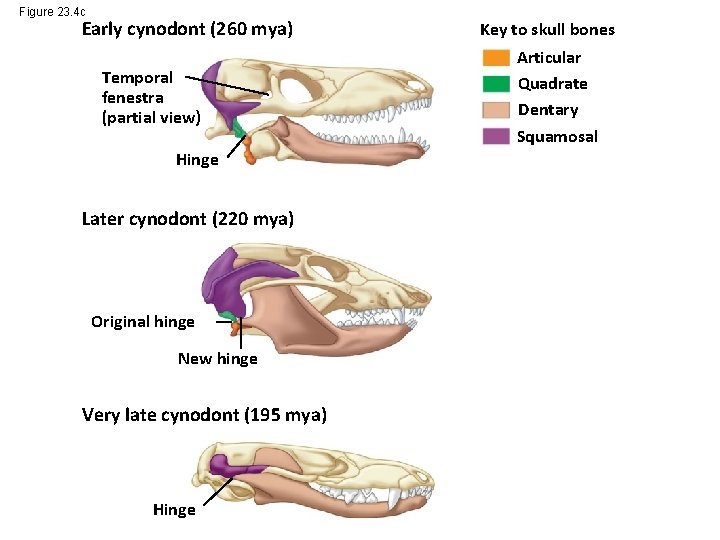
Figure 23. 4 c Early cynodont (260 mya) Temporal fenestra (partial view) Hinge Later cynodont (220 mya) Original hinge New hinge Very late cynodont (195 mya) Hinge Key to skull bones Articular Quadrate Dentary Squamosal
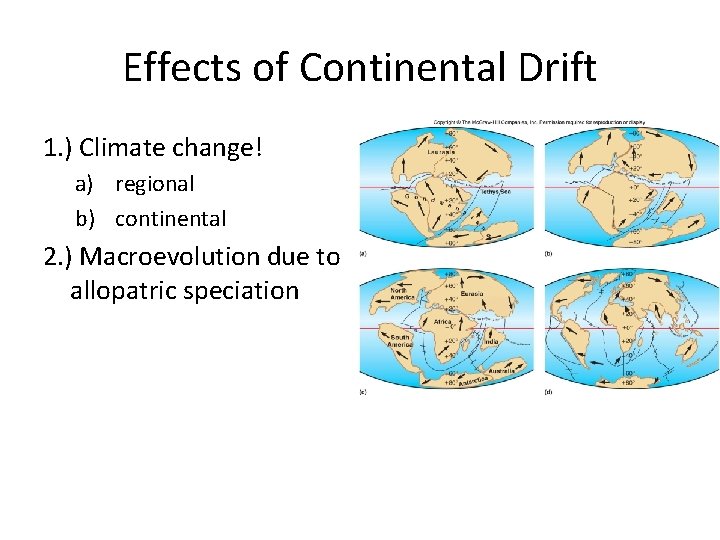
Effects of Continental Drift 1. ) Climate change! a) regional b) continental 2. ) Macroevolution due to allopatric speciation
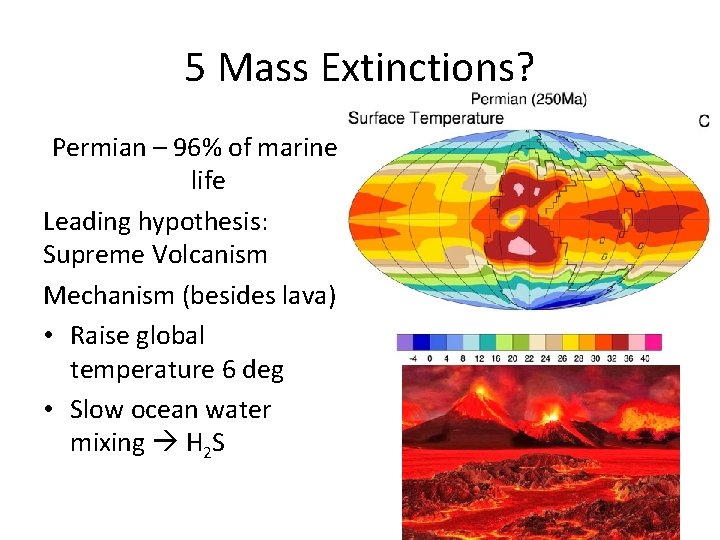
5 Mass Extinctions? Permian – 96% of marine life Leading hypothesis: Supreme Volcanism Mechanism (besides lava) • Raise global temperature 6 deg • Slow ocean water mixing H 2 S
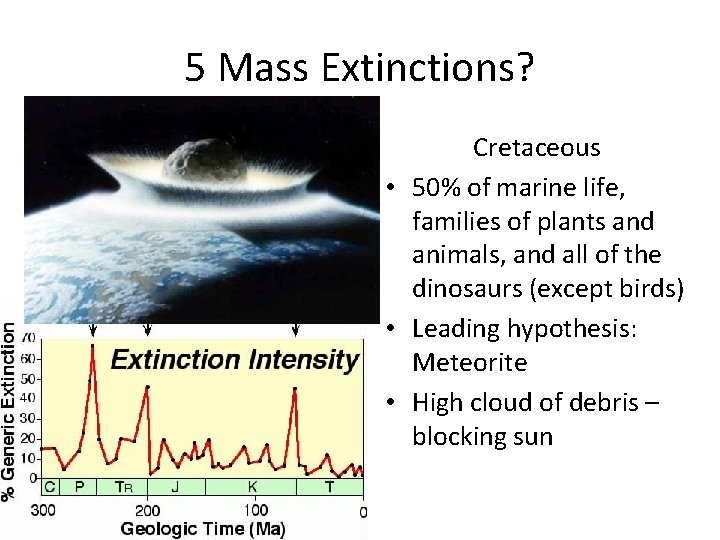
5 Mass Extinctions? Cretaceous • 50% of marine life, families of plants and animals, and all of the dinosaurs (except birds) • Leading hypothesis: Meteorite • High cloud of debris – blocking sun
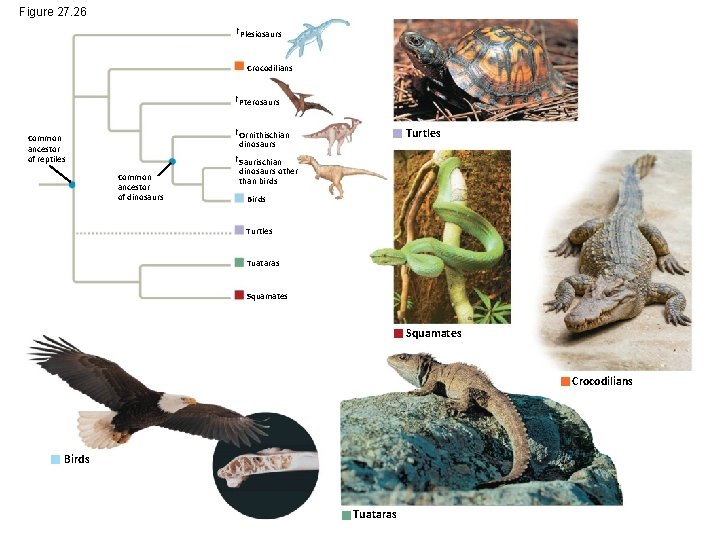
Figure 27. 26 † Plesiosaurs Crocodilians † Common ancestor of reptiles Common ancestor of dinosaurs Pterosaurs † Ornithischian dinosaurs † Saurischian dinosaurs other than birds Turtles Birds Turtles Tuataras Squamates Crocodilians Birds Tuataras
Effect of Mass Extinction • • Loss of novel traits Alter communities Loss of Diversity Adaptive Radiation
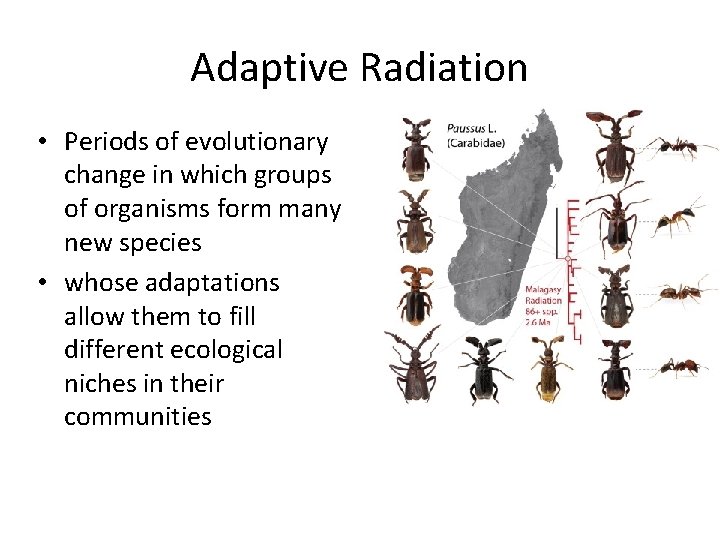
Adaptive Radiation • Periods of evolutionary change in which groups of organisms form many new species • whose adaptations allow them to fill different ecological niches in their communities
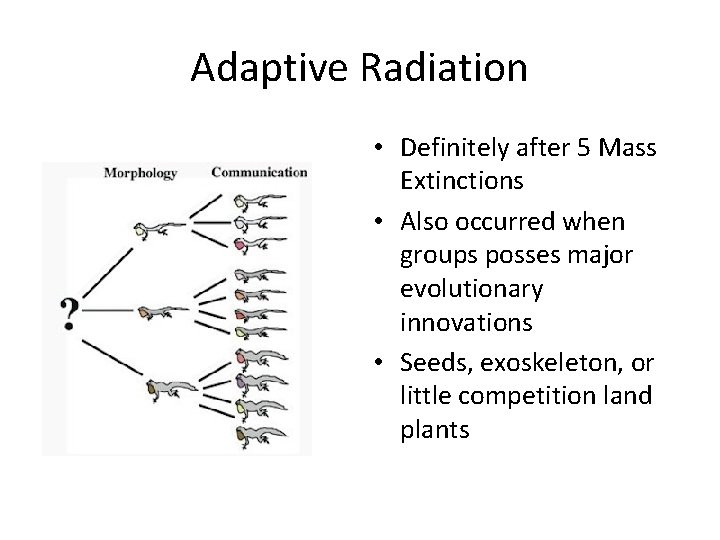
Adaptive Radiation • Definitely after 5 Mass Extinctions • Also occurred when groups posses major evolutionary innovations • Seeds, exoskeleton, or little competition land plants
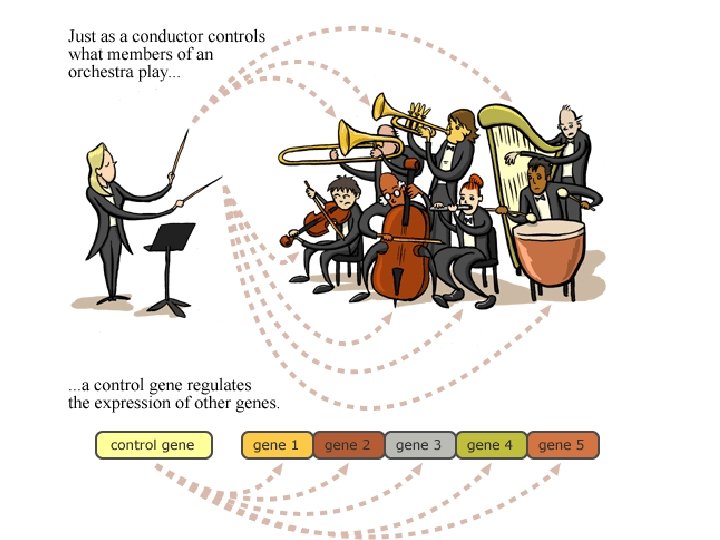
Major changes in body form can result from changes in the sequences and regulation of developmental genes • Studying genetic mechanisms of change can provide insight into large-scale evolutionary change
Effects of Development Genes • Genes that program development influence the rate, timing, and spatial pattern of changes in an organism’s form as it develops into an adult • Heterochrony is an evolutionary change in the rate or timing of developmental events
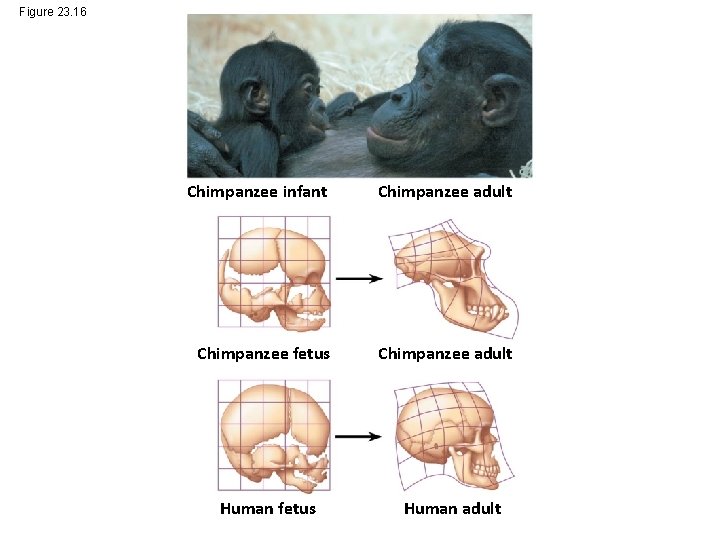
Figure 23. 16 Chimpanzee infant Chimpanzee adult Chimpanzee fetus Chimpanzee adult Human fetus Human adult
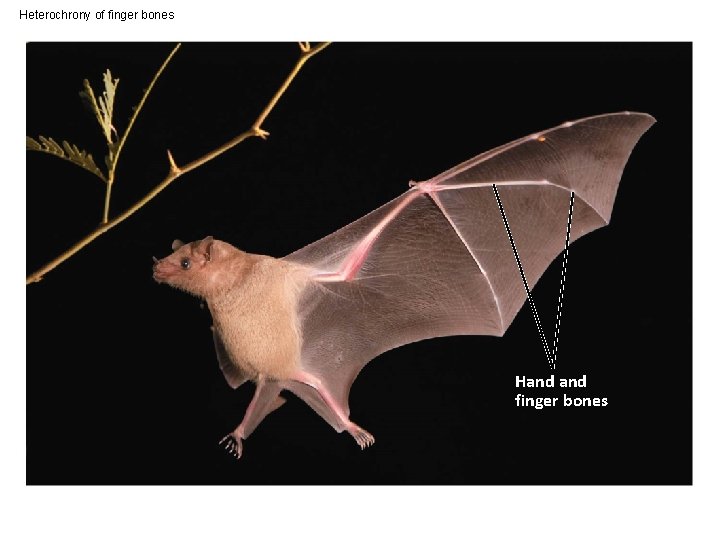
Heterochrony of finger bones Hand finger bones
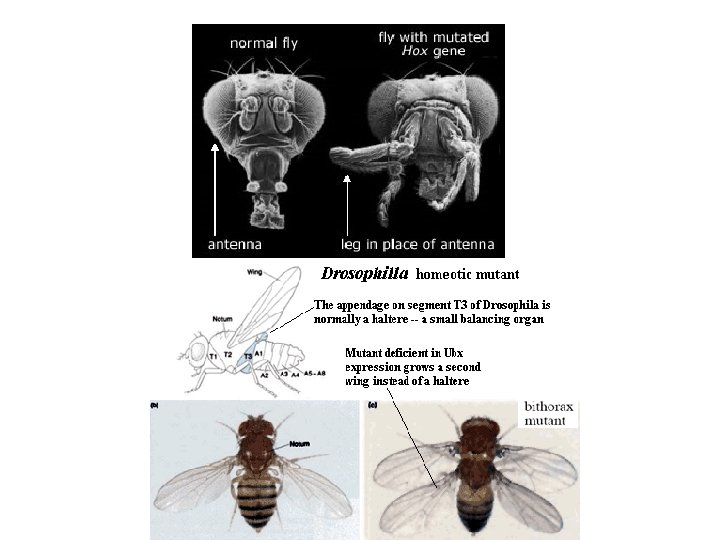
Changes in Spatial Pattern • Substantial evolutionary change can also result from alterations in genes that control the placement and organization of body parts • Homeotic genes determine such basic features as where wings and legs will develop on a bird or how a flower’s parts are arranged
• Hox genes are a class of homeotic genes that provide positional information during animal development • If Hox genes are expressed in the wrong location, body parts can be produced in the wrong location • For example, in crustaceans, a swimming appendage can be produced instead of a feeding appendage
The Evolution of Development • Adaptive evolution of both new and existing genes may have played a key role in shaping the diversity of life • Developmental genes may have been particularly important in this process
Changes in Gene Sequence • New morphological forms likely come from gene duplication events that produce new developmental genes • A possible mechanism for the evolution of sixlegged insects from a many-legged crustacean ancestor has been demonstrated in lab experiments • Specific changes in the Ubx gene have been identified that can “turn off” leg development
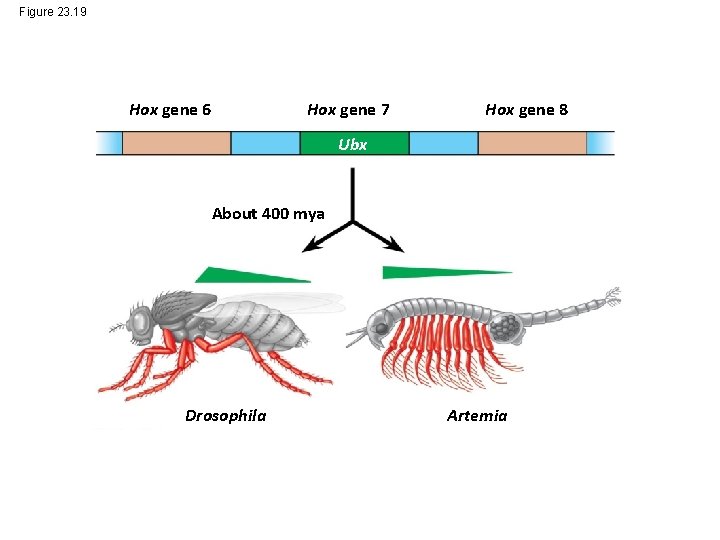
Figure 23. 19 Hox gene 6 Hox gene 7 Hox gene 8 Ubx About 400 mya Drosophila Artemia
Changes in Gene Regulation • Changes in morphology likely result from changes in the regulation of developmental genes rather than changes in the sequence of developmental genes – For example, threespine sticklebacks in lakes have fewer spines than their marine relatives – The gene sequence remains the same, but the regulation of gene expression is different in the two groups of fish
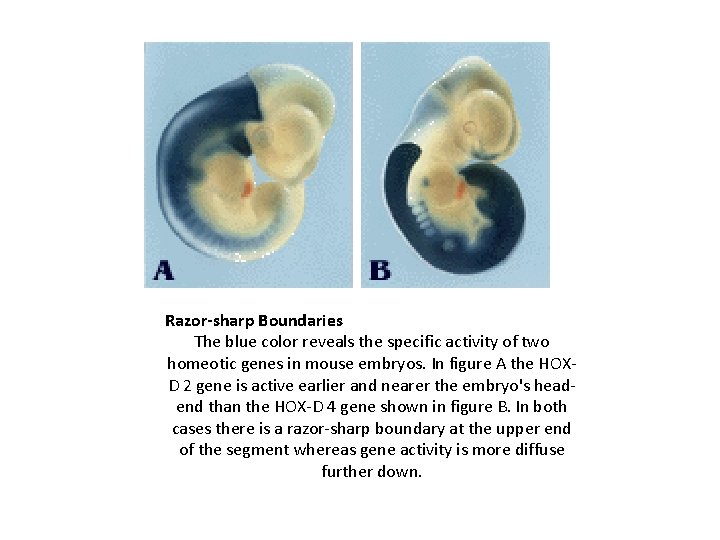
Razor-sharp Boundaries The blue color reveals the specific activity of two homeotic genes in mouse embryos. In figure A the HOXD 2 gene is active earlier and nearer the embryo's headend than the HOX-D 4 gene shown in figure B. In both cases there is a razor-sharp boundary at the upper end of the segment whereas gene activity is more diffuse further down.
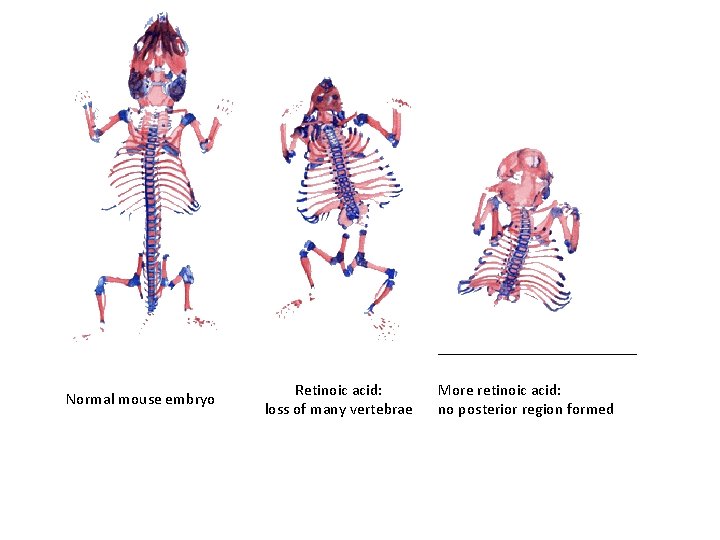
Normal mouse embryo Retinoic acid: loss of many vertebrae More retinoic acid: no posterior region formed
- Slides: 39