
http tinyurl com5 y 5 cbj In SiteConnect
http: //tinyurl. com/5 y 5 cbj
In. Site-Connect: A Model For Dynamic Interdisciplinary Interaction Gerry Mc. Kiernan Science and Technology Librarian Iowa State University Library Ames IA gerrymck@iastate. edu http: //www. public. iastate. edu/~gerrymck/In. Site 2009. ppt
In. Site 2009: Informing Science + Information Technology Education Joint Conference June 13 2009 / 9: 45 – 10: 30 AM Charles H. Jones Building Macon State College, Macon, Georgia http: //2009. informingscience. org/
! Thank You ! Eli Cohen, Director & Fellow Informing Science Institute Alex Koohang, Dean and Professor Macon State College, School of Information Technology

DISCLAIMER (1) The screen prints selected for this presentation are for educational purposes, and their inclusion does not constitute an endorsement of an associated person, product, service, or institution.

DISCLAIMER (2) The views and opinions expressed in this presentation are those of the presenter and do not constitute an endorsement by Iowa State University or its Library.
In. Site-Connect: A Model For Dynamic Interdisciplinary Interaction (1) As prominently stated on its homepage, the Informing Science Institute is “an organization of colleagues helping colleagues … [that] draw[s] together people … who teach, research, and use information technologies to inform clients … [and who] share their knowledge with others, ” regardless of [their respective] disciplines [http: //informingscience. org/]. While its meetings and publications provide opportunities to communicate, current and emerging online technologies have the potential of facilitating greater collaboration between and among scholars and their publics, regardless of location, time, or academic focus.
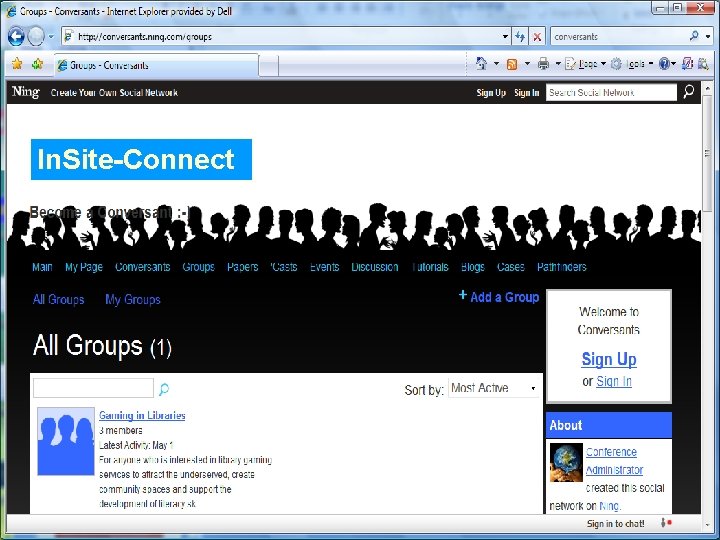
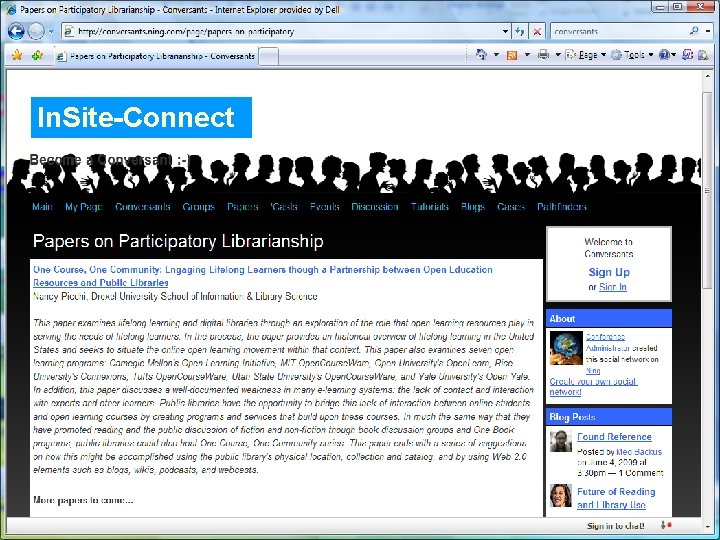
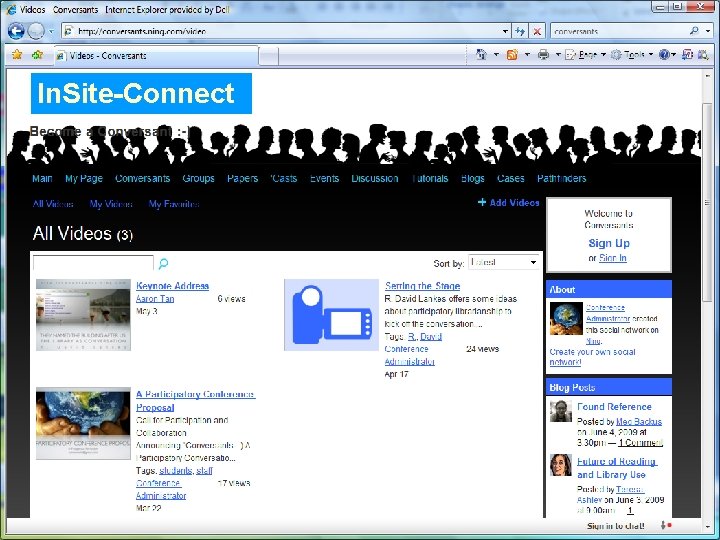
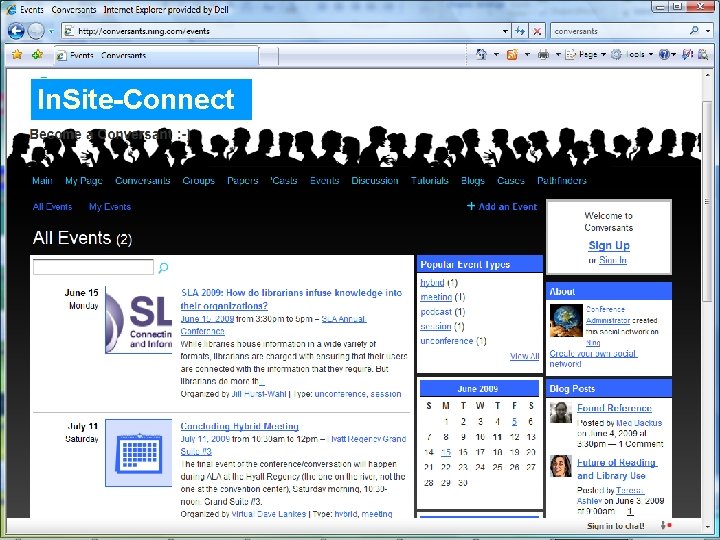
In. Site-Connect: A Model For Dynamic Interdisciplinary Interaction (2) In this presentation, we will provide an overview of select online professional and social networks, and describe the features and functionalities that can foster more dynamic interaction within the diverse In. SITE communities. The presentation will conclude with a demonstration of a proposed online professional network.
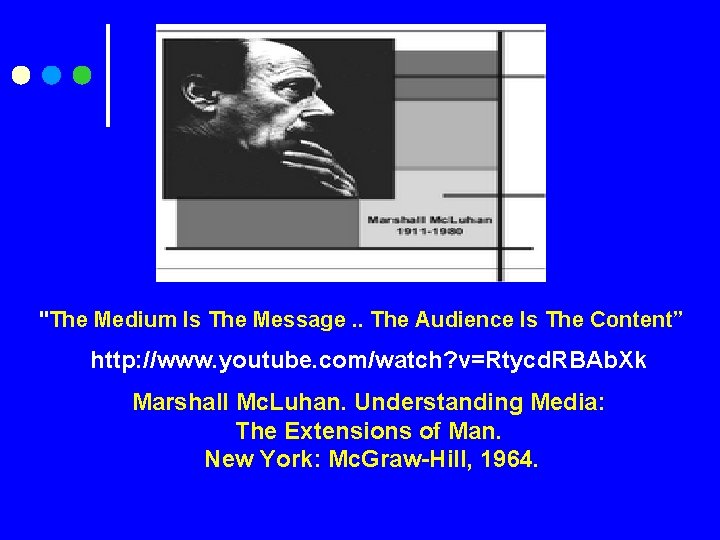
"The Medium Is The Message. . The Audience Is The Content” http: //www. youtube. com/watch? v=Rtycd. RBAb. Xk Marshall Mc. Luhan. Understanding Media: The Extensions of Man. New York: Mc. Graw-Hill, 1964.
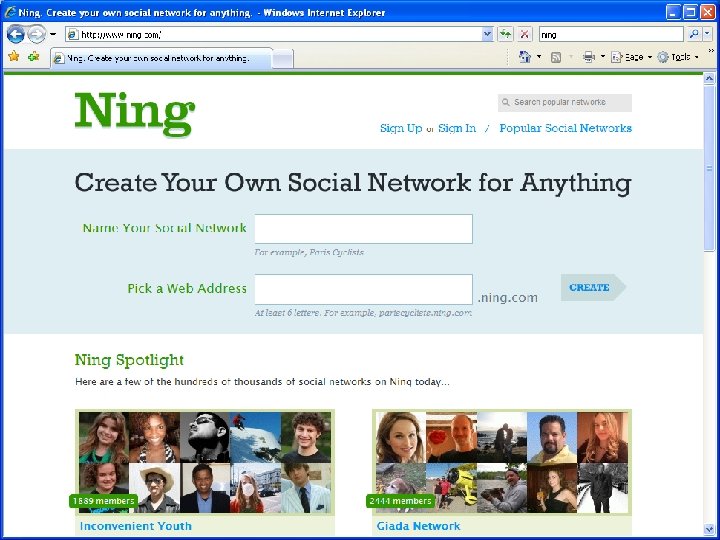
OUTLINE ¢ ¢ ¢ ¢ Informing Science Institute Web 2. 0 Social Networking Services Facebook Sci. Tech Online Social Networks Ning Mega-Sites News
OUTLINE ¢ l Demonstration In. Site-Connect
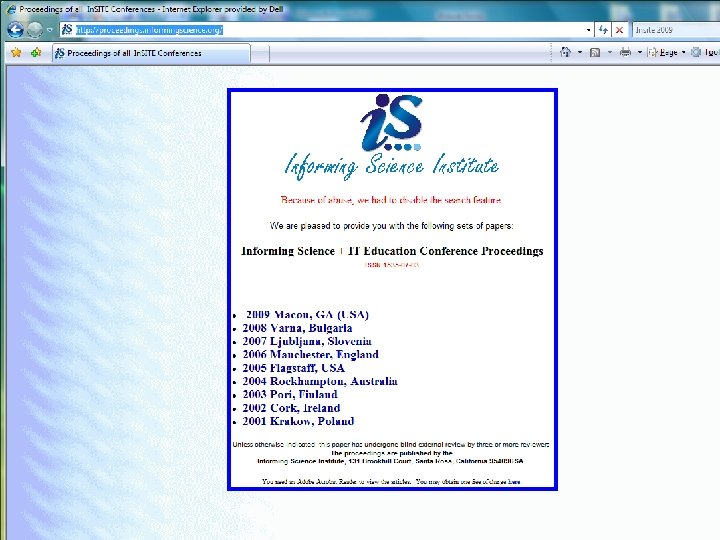
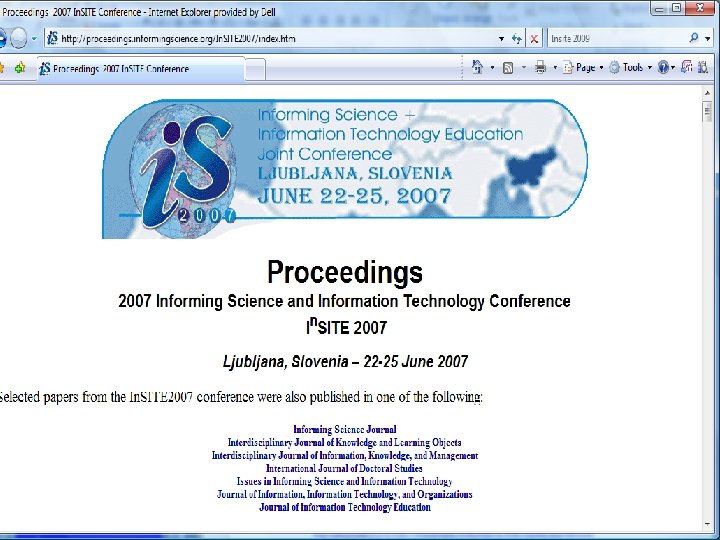
Who We Are We are an organization of colleagues helping colleagues. We draw together people who teach, research, and use information technologies to inform clients (regardless of academic discipline) to share their knowledge with others. Our mission has components both of production and retroduction. All our publications are available free online to everyone regardless of membership status. Our publications are also available in print at very reasonable prices. We are not a publishing company disguised as a professional organization nor are we a clique of insiders. http: //informingscience. org/
INFORMING SCIENCE (1) The purpose of Informing Science is to encourage and enable the sharing of knowledge and collaboration among the wide variety of fields that use information technology to inform clients. Here are some of these areas: Communications, Communicating Meaning, Community and Society, Computer Science, Data Communications, Distance Education, e. Commerce, Education, Government, Health Care, Medicine, History, Information Science & Library, Journalism, Justice and Law, Mathematics, Philosophical Issues, Psychology, Public Policy, Sociology, Technology, Working Together.
INFORMING SCIENCE (2) IT Education Papers that cover research in Information Technology Education, such as Curriculum and Techniques for teaching IT are invited. Knowledge &Learning Objects Papers that deal with any aspect of knowledge, e. Learning, m. Learning, and learning objects. (theory, practice, innovation, and research ) are invited.
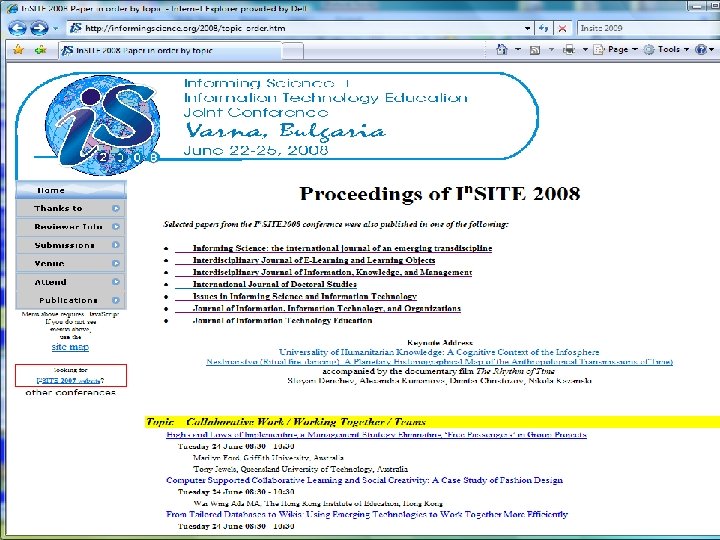
The purpose of Issues in Informing Science and Information Technology is to encourage the sharing of knowledge and collaboration among the wide variety of fields that use information technology to inform clients. These areas include: Communications, Communicating Meaning, Community and Society, Computer Science, Data Communications, Distance Education, E-Commerce, Education, Government, Health Care, Medicine, History, Information Science & Library, Journalism, Justice and Law, Mathematics, Philosophical Issues, Psychology, Public Policy, Sociology, Technology, Working Together. The articles in this publication provide insight into how best to inform clients using information technology and cover research in IT Education, such as Curriculum and Techniques for teaching IT. http: //iisit. org/
The academically peer refereed journal Informing Science endeavors to provide an understanding of the complexities in informing clientele. Fields from information systems, library science, journalism in all its forms to education all contribute to this science. These fields, which developed independently and have been researched in separate disciplines, are evolving to form a new transdiscipline, Informing Science. http: //inform. nu/
Informing Science publishes articles that provide insights into the nature, function and design of systems that inform clients. Authors may use epistemologies from engineering, computer science, education, psychology, business, anthropology, and such. The ideal paper will serve to inform fellow researchers, perhaps from other fields, of contributions to this area http: //inform. nu/
The mission of the Journal of Information Technology Education is to. . . improve IT education around the world by publishing high quality articles on best practices and other topics of use in improving IT education, expose the reader to a variety of epistemologies and types of articles, including primary, action, and secondary research, provide those who submit manuscripts for publication with useful, timely feedback by making the review process constructive, be for the reader the most authoritative journal on IT education, and acknowledge and embrace the diversity of teaching and learning models in use around the world. http: //jite. org/
The mission of the Interdisciplinary Journal of Information, Knowledge, and Management (IJIKM) is to provide readers around the world with the widest possible coverage of the use of information and technology to effectively create, apply, and communicate knowledge in organizations. IJIKM is an interdisciplinary forum that publishes high quality articles on theory, practice, innovation, cases, and research covering the use of information and technology to effectively create, apply, and communicate knowledge in organizations. Published articles will normally address one or more of the following major areas of inquiry: Business Intelligence / Communities of Practice / Innovation / Intellectual Capital /Knowledge Management Systems ; Tools / Learning Organization / Organizational Learning . http: //ijikm. org/
The mission of the Interdisciplinary Journal of E-Learning and Learning Objects (IJELLO) is to provide readers around the world with the widest possible coverage of developments in ELearning and Learning Objects. IJELLO is an interdisciplinary forum that publishes high quality articles on theory, practice, innovation, and research that cover all aspects of E-learning and Learning Objects. In addition, IJELLO provides those who submit manuscripts for publication with useful, timely feedback by making the review process constructive. IJELLO will strive to be the most authoritative journal on E-Learning and Learning Objects. http: //ijello. org/
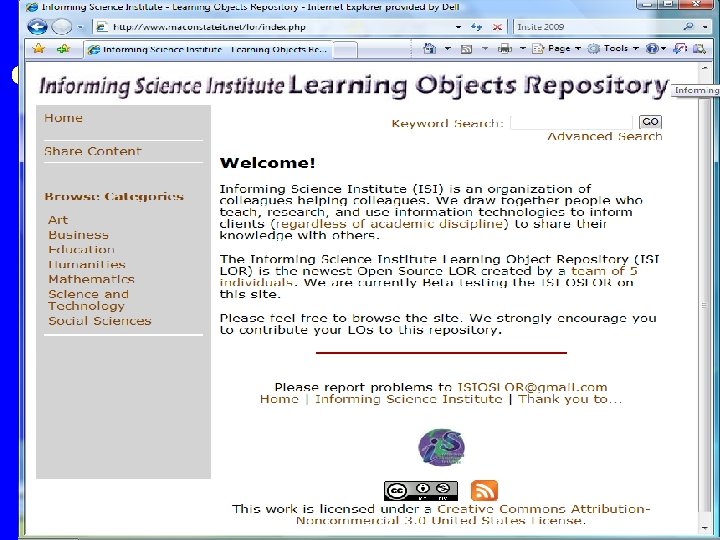
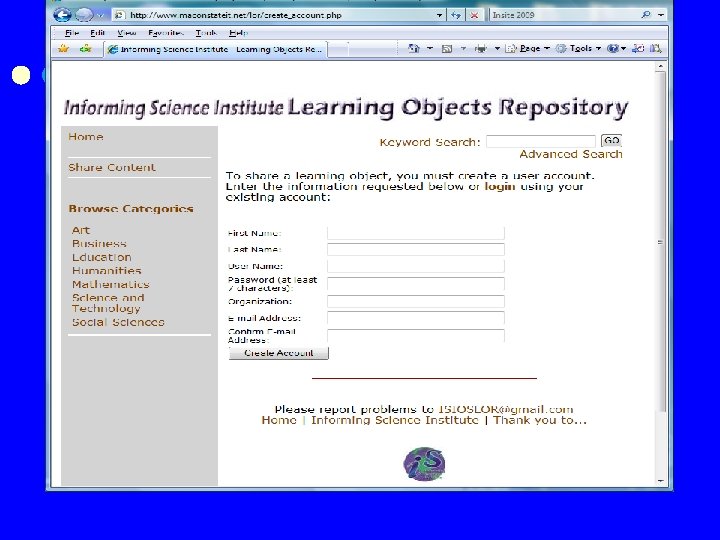
Informing Science Institute (ISI) is an organization of colleagues helping colleagues. We draw together people who teach, research, and use information technologies to inform clients (regardless of academic discipline) to share their knowledge with others. The Informing Science Institute Learning Object Repository (ISI LOR) is the newest Open Source LOR created by a team of 5 individuals. We are currently Beta testing the ISI OSLOR on this site. Please feel free to browse the site. We strongly encourage you to contribute your LOs to this repository.
The Journal of Information, Information Technology, and Organizations is an academically peer reviewed journal. We provide a fast review cycle and collegial mentoring. All submissions are blind refereed by three or more peers. We keep the right to copy edit articles in order to make them compliant with JIITO quality standards. JIITO covers a specialized area of information systems research indicated in its title. We are focused on empirical studies. Conceptual articles are published just exceptionally, if they provide an exhaustive and critical literature review of some key information system issue. http: //jiito. org/
Web 2. 0 ¢ ¢ Web 2. 0 refers to a perceived second generation of Web-based communities and hosted services — such as social-networking sites, wikis and folksonomies — which aim to ***facilitate collaboration and sharing*** between users. The term became popular following the first O'Reilly Media Web 2. 0 conference in 2004. Although the term suggests a new version of the World Wide Web, it does not refer to an update to any technical specifications, but to changes in the ***ways software developers and end-users use the Web*** http: //en. wikipedia. org/wiki/Web_2
SOCIAL NETWORKING (1) A social network service focuses on building online communities of people who share interests and/or activities, or who are interested in exploring the interests and activities of others. Most social network services are primarily Webbased and provide a collection of various ways for users to interact, such as chat, messaging, email, video, voice chat, file sharing, blogging, discussion groups, … [etc. ]. A social network service focuses on building online communities of people who share interests and/or activities, or who are interested in exploring the interests and activities of others. http: //en. wikipedia. org/wiki/Social_network_service
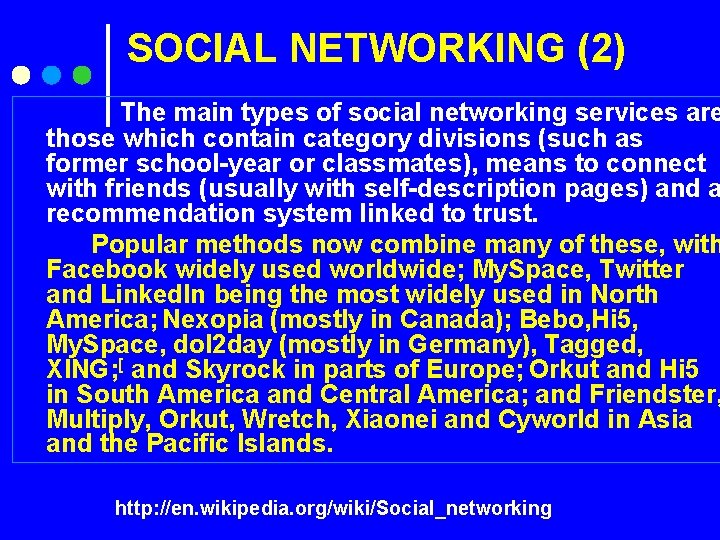
SOCIAL NETWORKING (2) The main types of social networking services are those which contain category divisions (such as former school-year or classmates), means to connect with friends (usually with self-description pages) and a recommendation system linked to trust. Popular methods now combine many of these, with Facebook widely used worldwide; My. Space, Twitter and Linked. In being the most widely used in North America; Nexopia (mostly in Canada); Bebo, Hi 5, My. Space, dol 2 day (mostly in Germany), Tagged, XING; [ and Skyrock in parts of Europe; Orkut and Hi 5 in South America and Central America; and Friendster, Multiply, Orkut, Wretch, Xiaonei and Cyworld in Asia and the Pacific Islands. http: //en. wikipedia. org/wiki/Social_networking
Social Networking Swiss Army Information Tools http: //tinyurl. com/3 gjdzw

NICHE Online Social Networking Services A Niche Online Social Network can be defined as : An online community whose members share specific or focused interests.
NICHE Online Social Networking Services ¢ ¢ ¢ ¢ Academe and Education Books Boomers Business Gay / Lesbian / Transgender / Bisexual People of Color Religion Researchers and Scientists
Researchers and Scientists (1) ¢ Biomed. Experts (1/08) [http: //www. biomedexperts. com/] Monthly people – 252 K [U. S. Only] (01/09) ¢ Muse: The National Internet 2 K 20 Initiative Online Social Network (4/08) [http: //k 20. internet 2. edu/] Monthly people – Not Profiled (01/09) ¢ Nature Network (2/07) [http: //network. nature. com/] Monthly people – 6. 3 K [U. S. Only] (01/09)
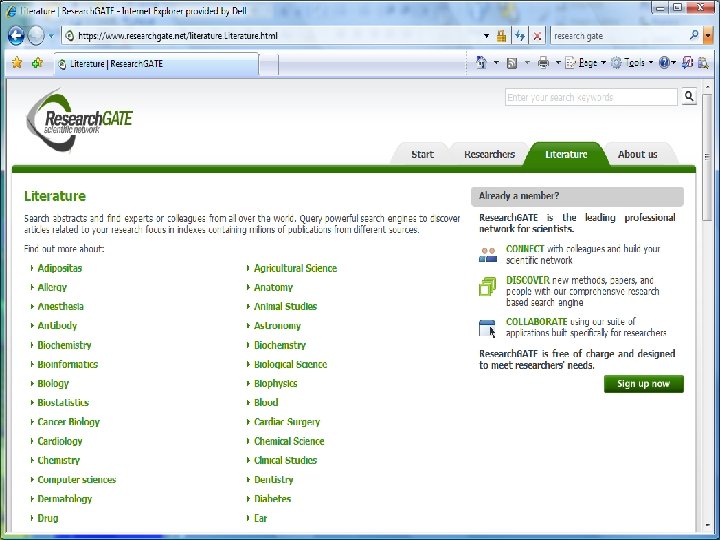
SOCIAL NETWORKING (3) Research. GATE Sci. Space. net Social Science Research Network
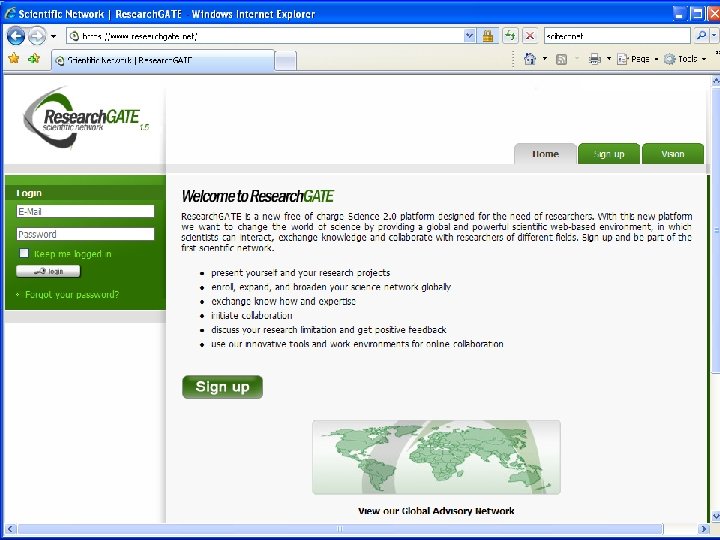
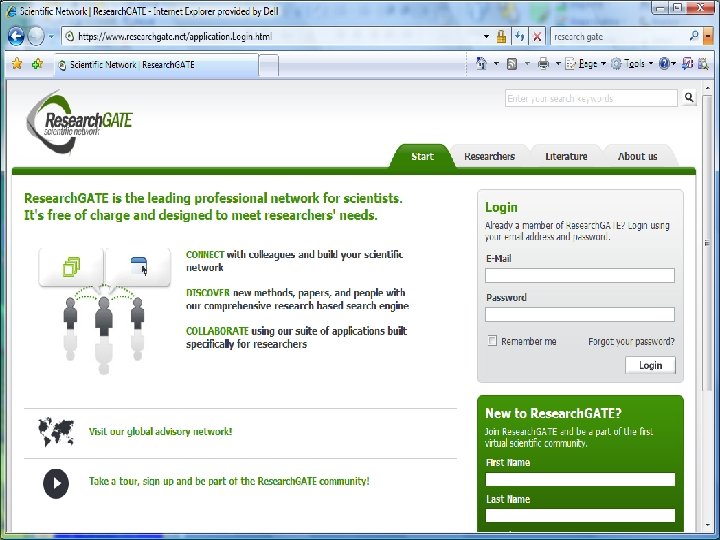
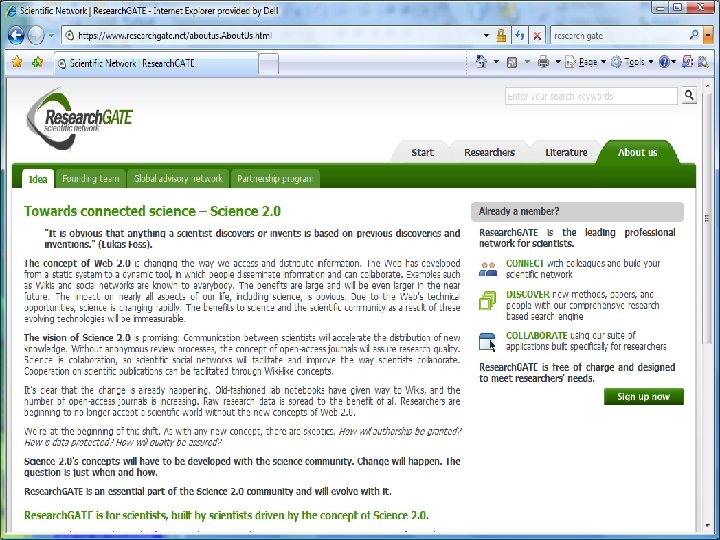
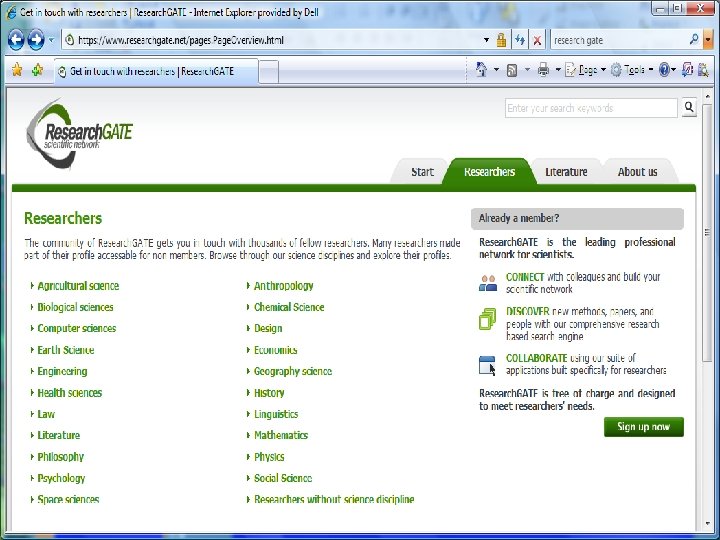
¢ ¢ Research. GATE is a new free of charge Science 2. 0 platform designed for the need of researchers. With this new platform we want to change the world of science by providing a global and powerful scientific webbased environment, in which scientists can interact, exchange knowledge and collaborate with researchers of different fields. https: //www. researchgate. net/
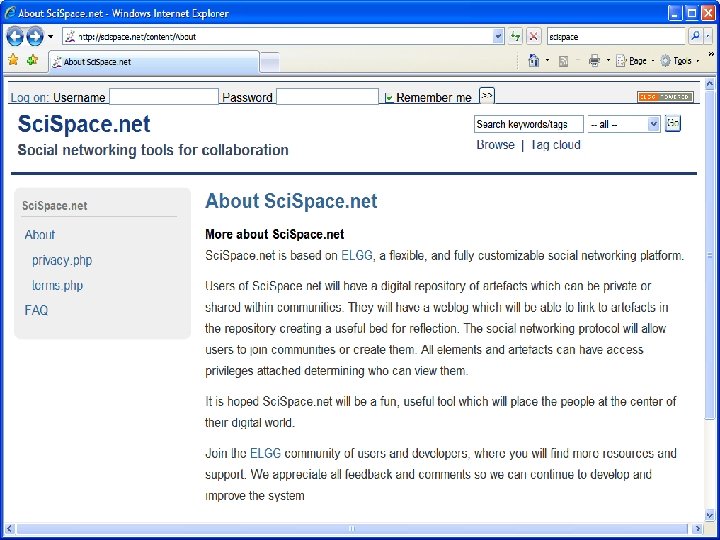
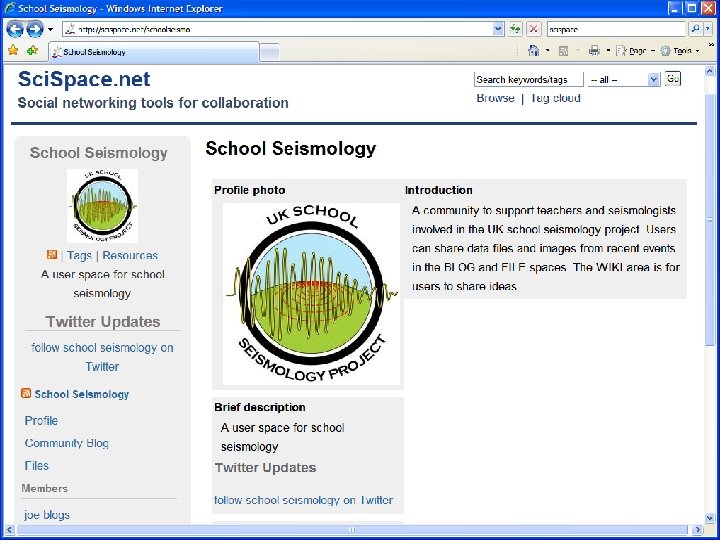
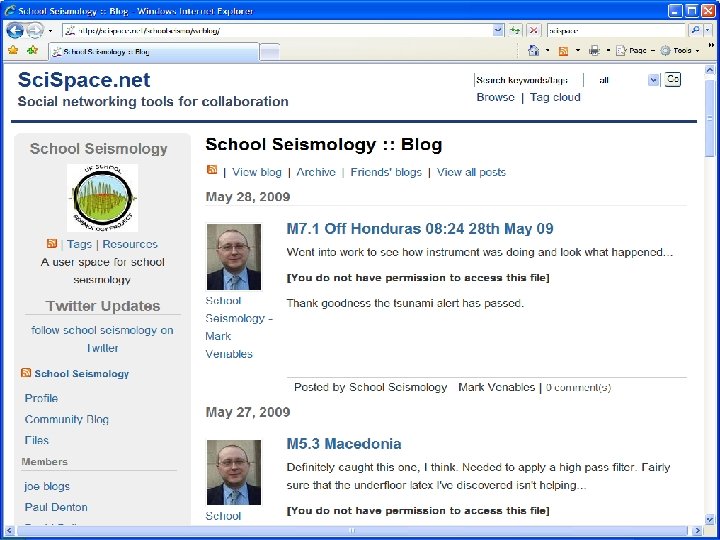
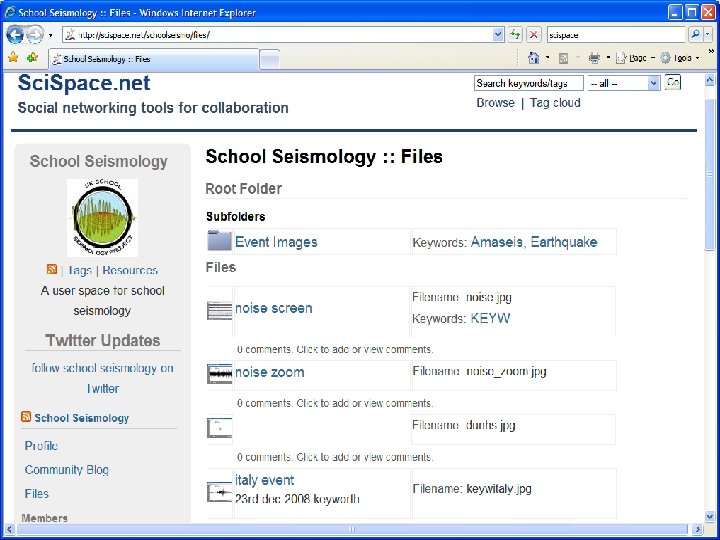
SCISPACE. NET (1) Scispace. net is a non-commercial, non-profit and free-touse social network service designed specifically for collaborating researchers. In several respects it builds on many of the tools found in standard social network service and elearning sites, such as the use of wikis, blogs, comments, tags, comment walls, and profiles. However, unlike many of these sites, privacy and fine grained access control is of paramount importance. For example, a small group of researchers using these tools. To develop a set of ideas that will ultimately lead to a publication or funding proposal need to be certain that their ideas, and th existence of these ideas, will not be seen by others. http: //en. wikipedia. org/wiki/Social_Science_Research_Network
SCISPACE. NET (2) Until the advent of social network service and related Web 2. 0 technologies, the primary tool for collaborators has been email, which the owners/authors feel serves this purpose only poorly. Scispace. net has been developed by scientists working within an academic environment, but the owners/authors believe that this approach should be able to meet the needs of collaborators working in different disciplines and different environments. In many ways scispace. net is an active experiment in how these tools can be used to support collaborative research, in what is actually a fast changing environment.
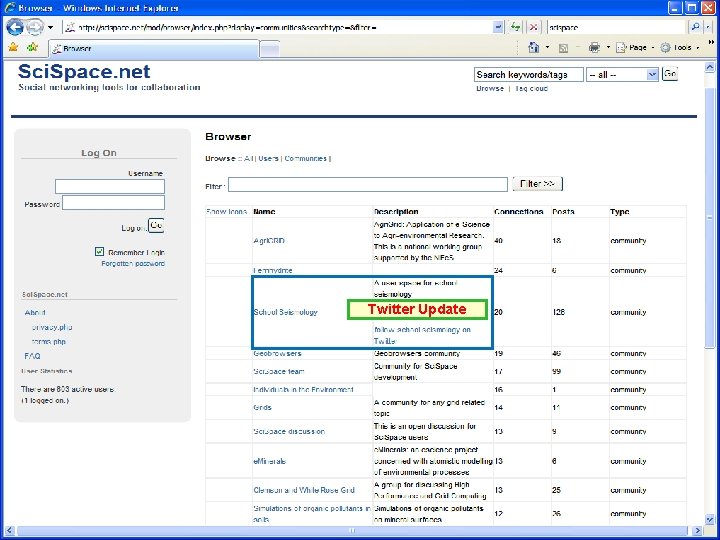
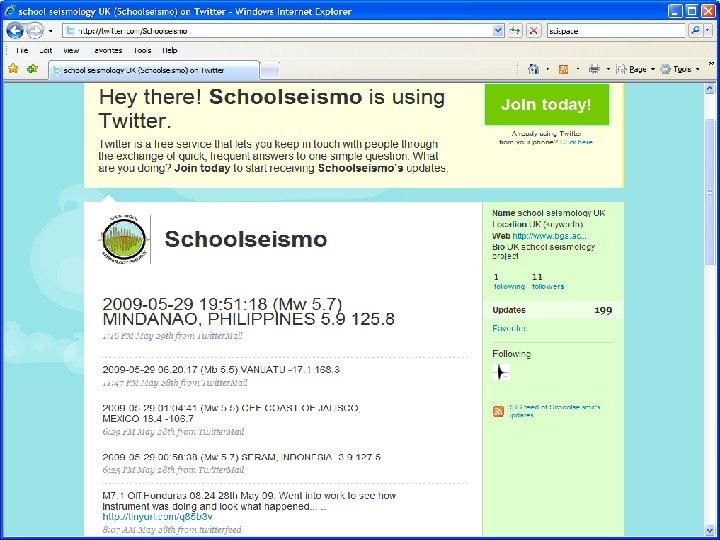
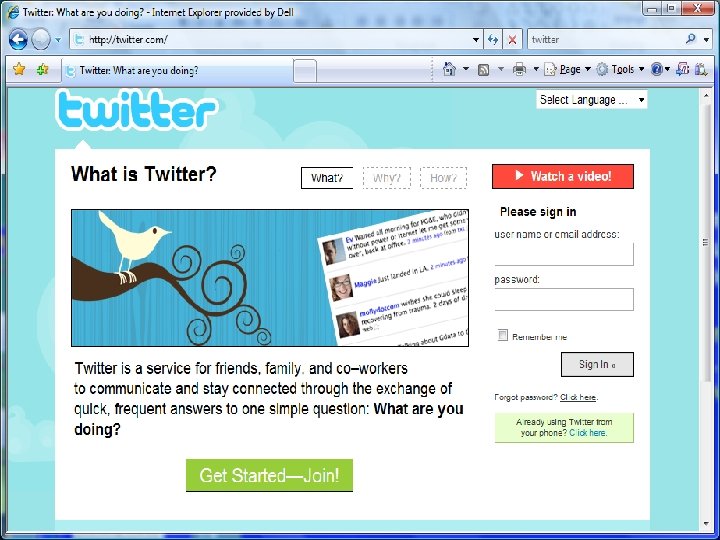
Twitter Update
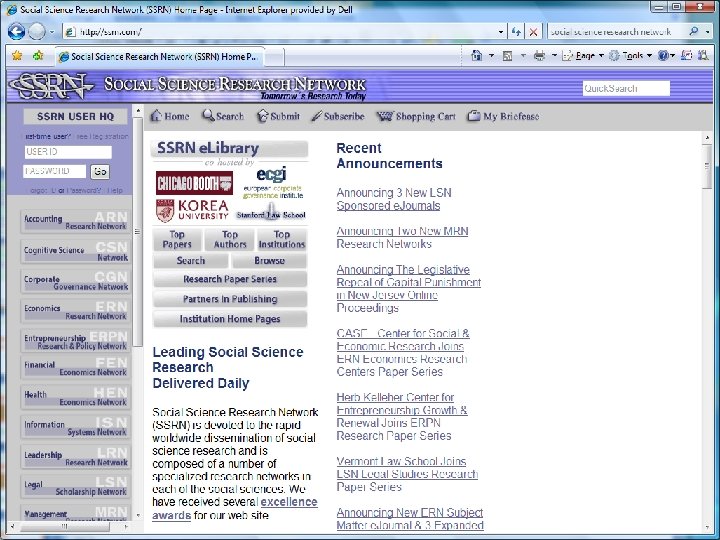
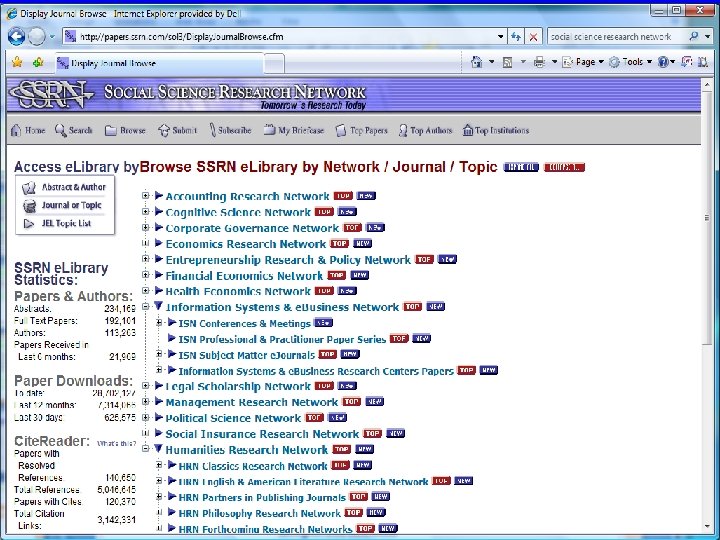
SOCIAL SCIENCE RESEARCH NETWORK (1) The Social Science Research Network (SSRN) is a Website devoted to the rapid dissemination of scholarly research in the social sciences and humanities. SSRN is viewed as particularly strong in the fields of economics, finance, accounting, management, and law. SSRN Networks Accounting / Classics / Cognitive Science / Corporate Governance / Economics / English & American Literature / Entrepreneurship Research & Policy / Financial Economics Health Economics / Information Systems & e. Business / Leadership / Legal Scholarship / Management / Marketing / Negotiations / Philosophy / Political Science / Social Insurance http: //en. wikipedia. org/wiki/Social_Science_Research_Network
SOCIAL SCIENCE RESEARCH NETWORK (2) Since its foundation in 1994, SSRN has grown in importance in the academic community. In economics, and to some degree in Law … almost all papers are now first published as preprints on SSRN and/or on other paper distribution networks such as Re. PEc before being submitted to an academic journal. Academic papers can be uploaded directly to the site by authors as PDF documents. All author-uploaded papers are available for worldwide free downloading. Users can also subscribe to abstracting e-mail journals covering a broad range of subject matters. These e. Journals then periodically distribute emails containing abstracts (with links to the full text where applicable) of papers recently submitted to SSRN in the respective field. http: //en. wikipedia. org/wiki/Social_Science_Research_Network
SOCIAL SCIENCE RESEARCH NETWORK (3) On SSRN, authors and papers are ranked by their number of downloads, which has become an informal indicator of popularity on prepress and open access sites. SSRN, like other preprint services, circulates publications throughout the scholarly community at an early stage, permitting the author to incorporate comments into the final version of the paper before its publication in a journal. http: //en. wikipedia. org/wiki/Social_Science_Research_Network
SOCIAL SCIENCE RESEARCH NETWORK (4) The SSRN e. Library consists of two parts: an Abstract Database containing abstracts on over 233, 600 Scholarly working papers and forthcoming papers and an Electronic Paper Collection currently containing over 191, 600 downloadable full text documents in Adobe Acrobat pdf format. The e. Library also includes the research papers of a number of Fee Based Partner Publications. http: //ssrn. com/
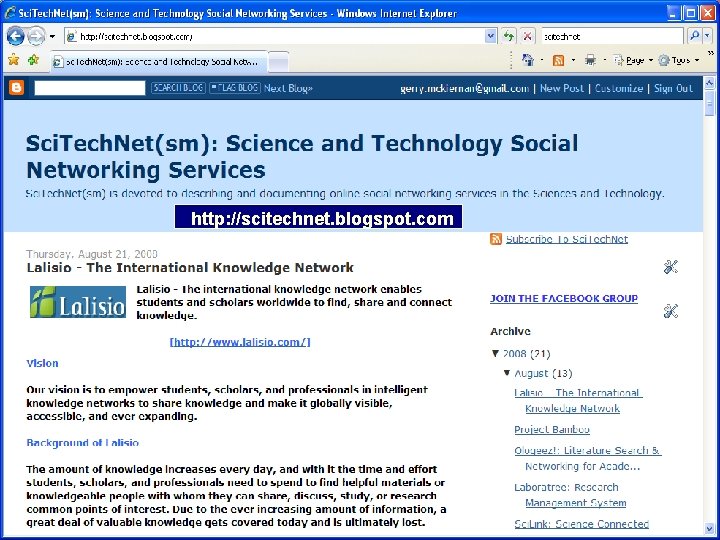
http: //scitechnet. blogspot. com
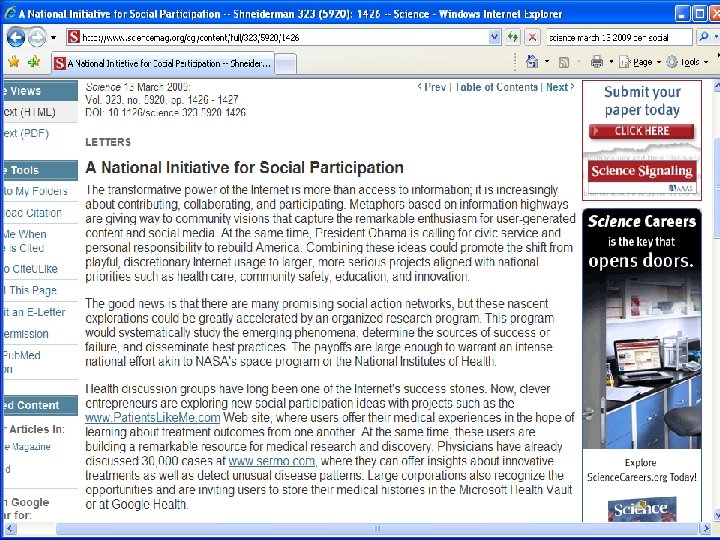
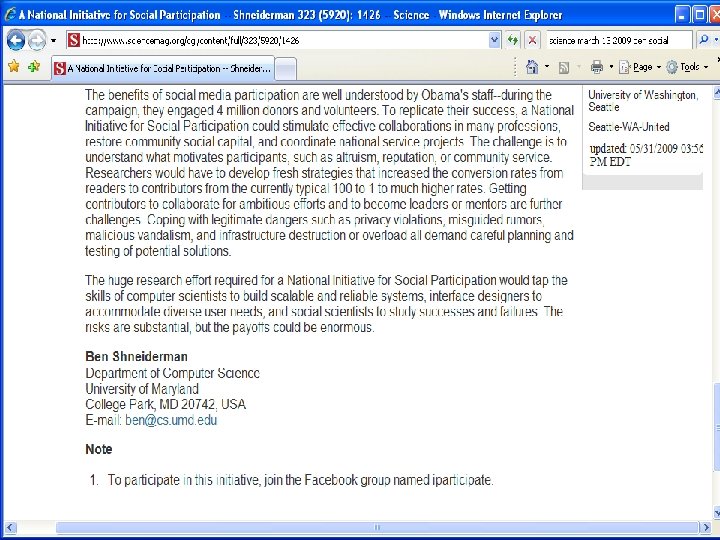
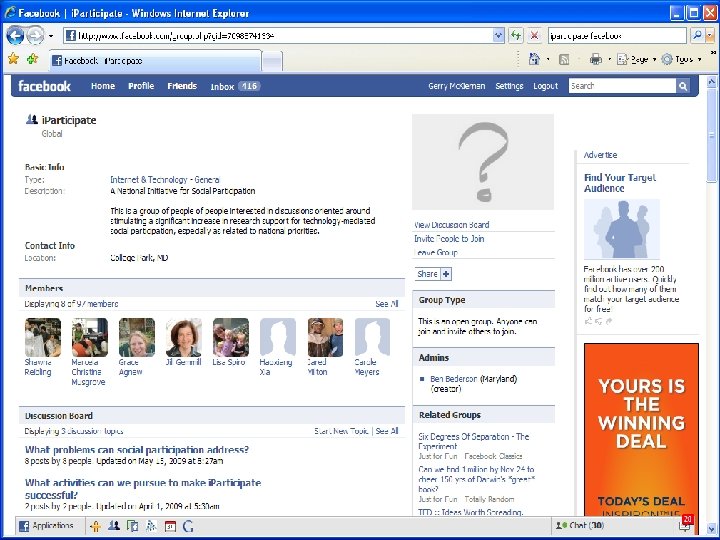
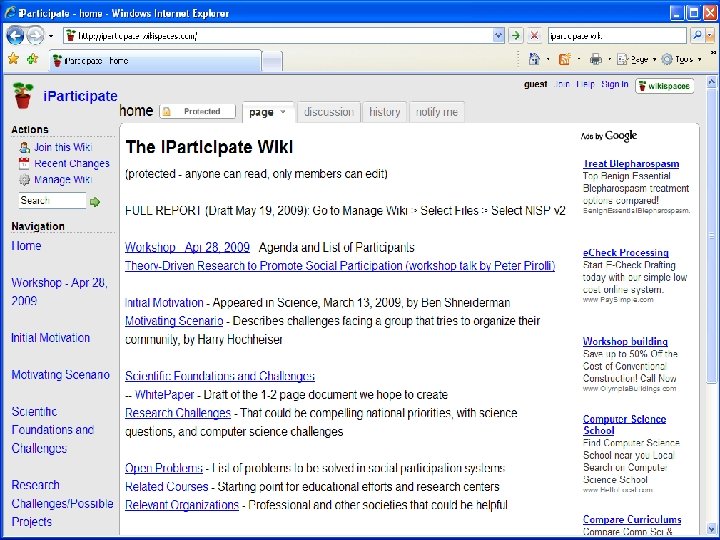
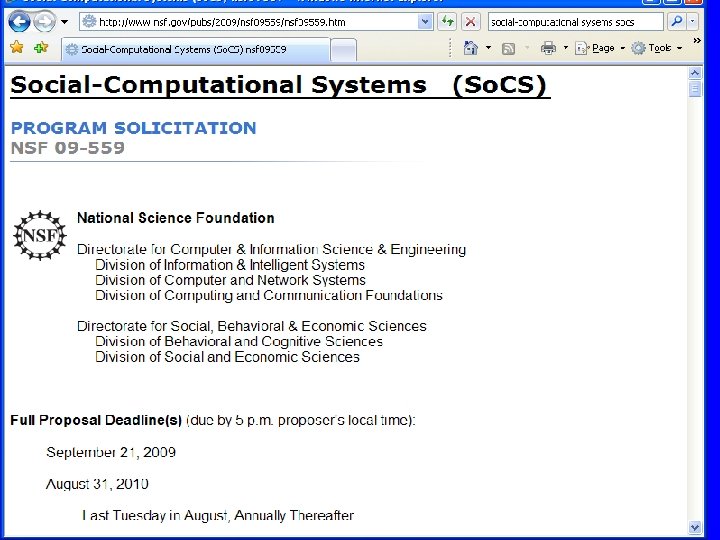
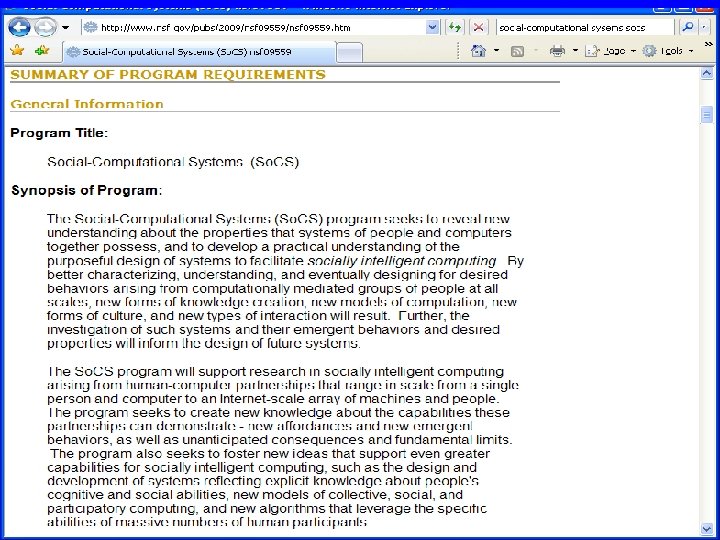
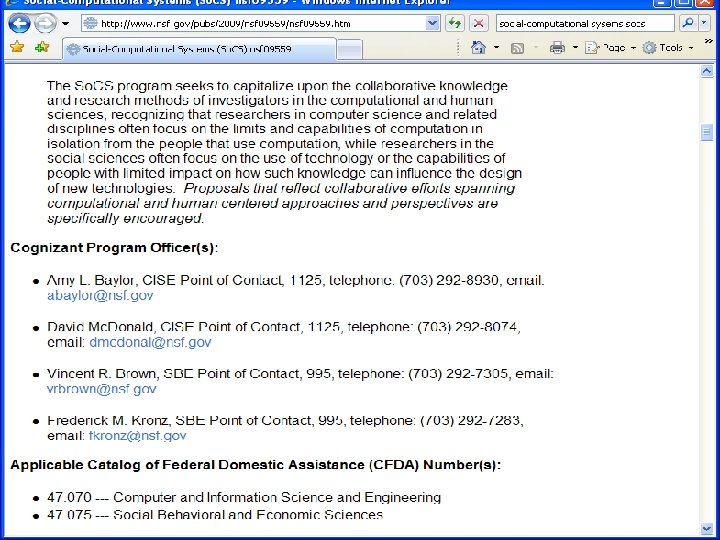
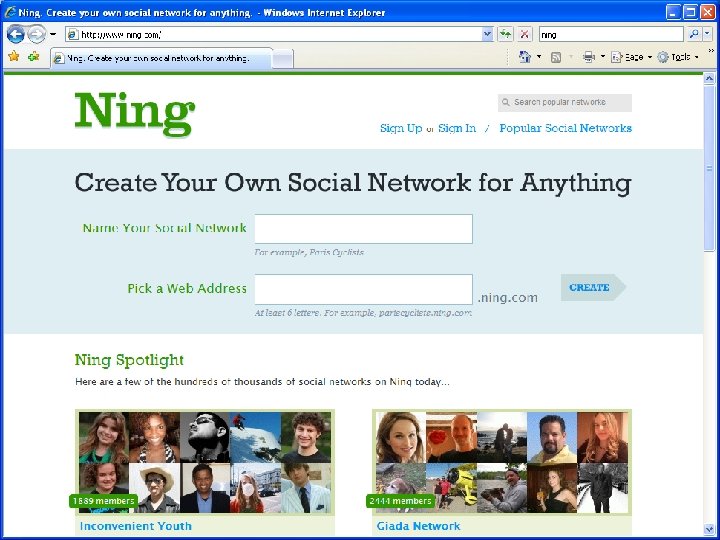
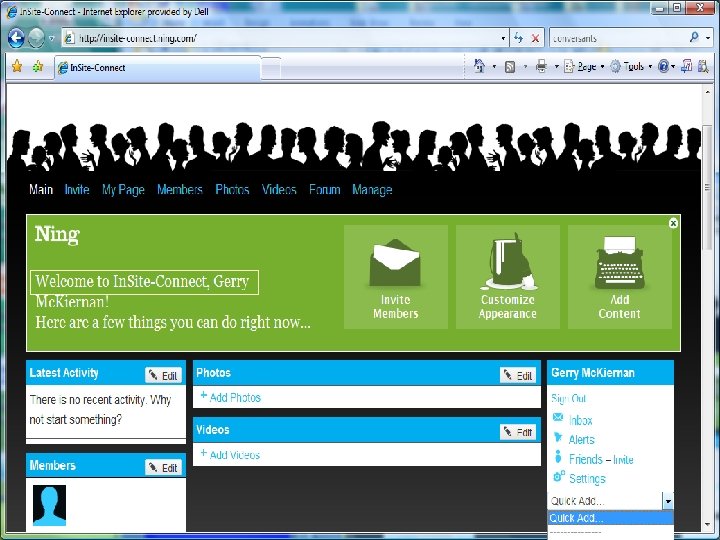
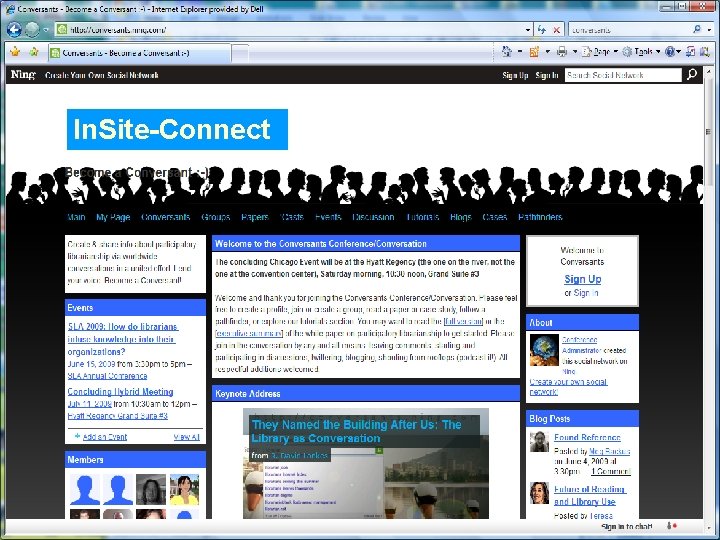
In. Site-Connect
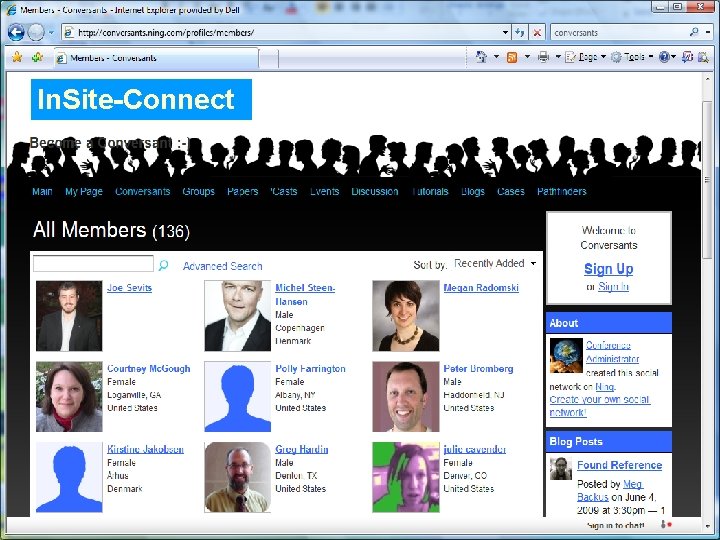
In. Site-Connect
In. Site-Connect
In. Site-Connect
In. Site-Connect
In. Site-Connect
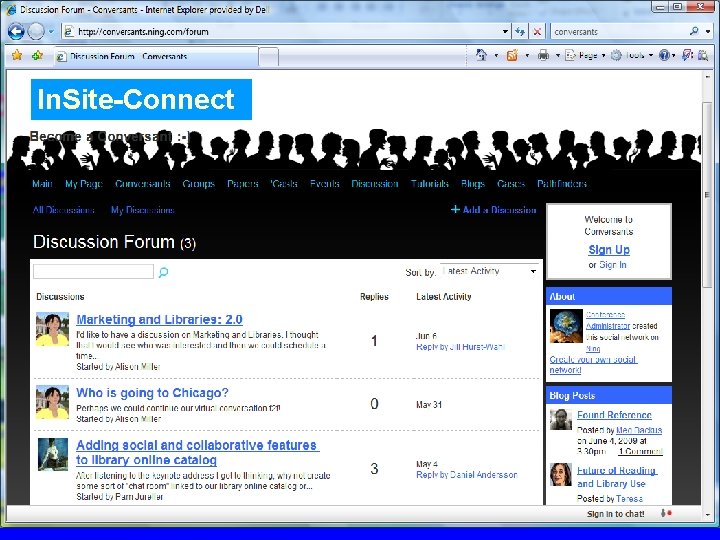
In. Site-Connect
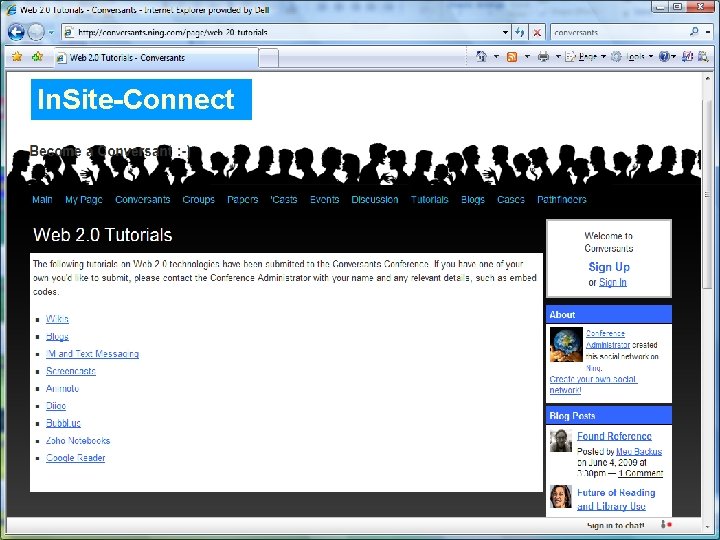
In. Site-Connect
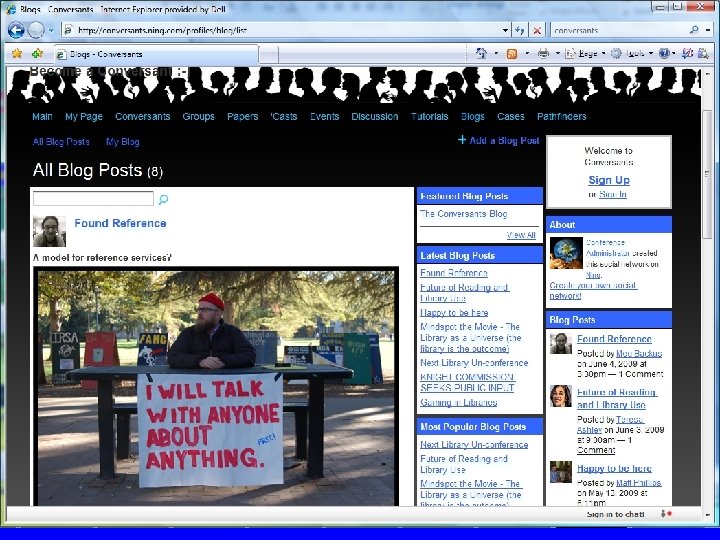
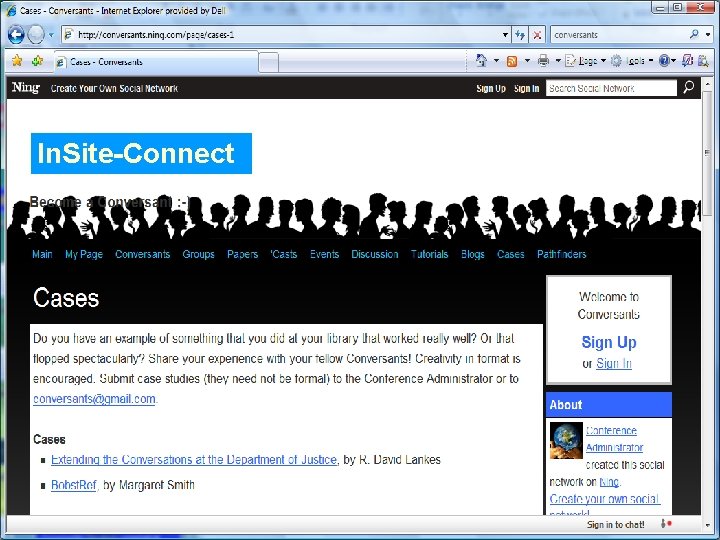
In. Site-Connect
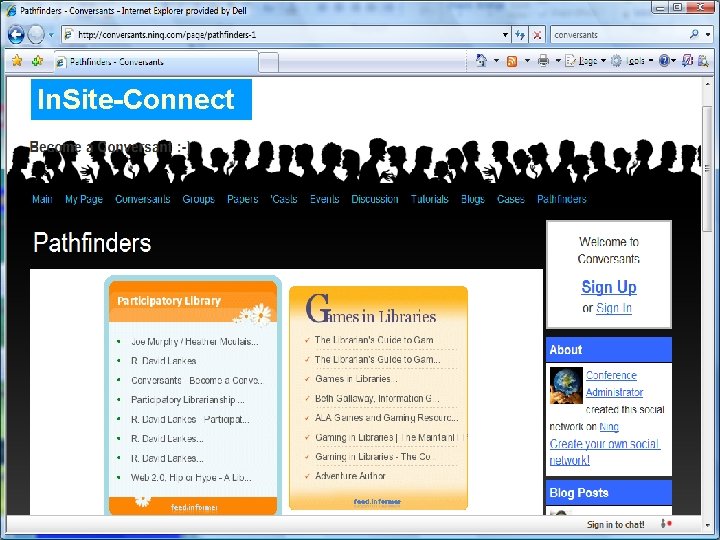
In. Site-Connect
The Future Is Already Here … It’s Just Not Evenly Distributed Attributed To William Gibson, Cyberpunk Science Fiction Author Coined Term: “Cyberspace” http: //en. wikipedia. org/wiki/William_Gibson
The Best Way To Predict The Future Is To Invent It Alan Kay Palo Alto Research Center (PARC) Meeting / 1971 http: //en. wikipedia. org/wiki/Alan_Kay
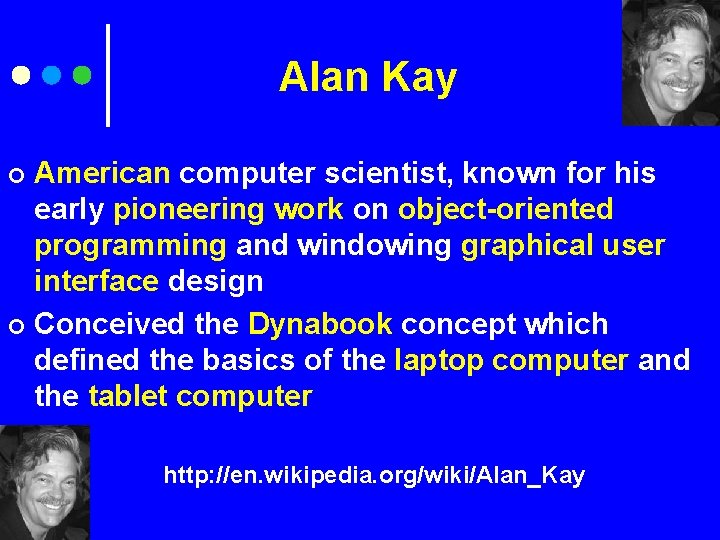
Alan Kay American computer scientist, known for his early pioneering work on object-oriented programming and windowing graphical user interface design ¢ Conceived the Dynabook concept which defined the basics of the laptop computer and the tablet computer ¢ http: //en. wikipedia. org/wiki/Alan_Kay
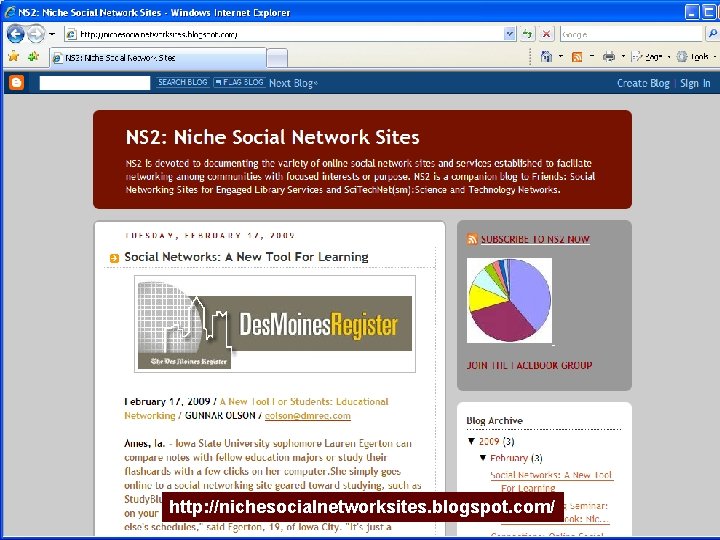
http: //nichesocialnetworksites. blogspot. com/
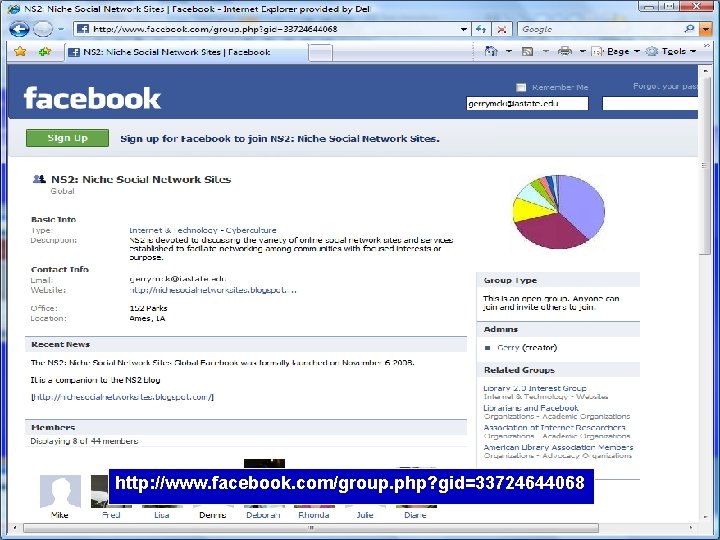
http: //www. facebook. com/group. php? gid=33724644068
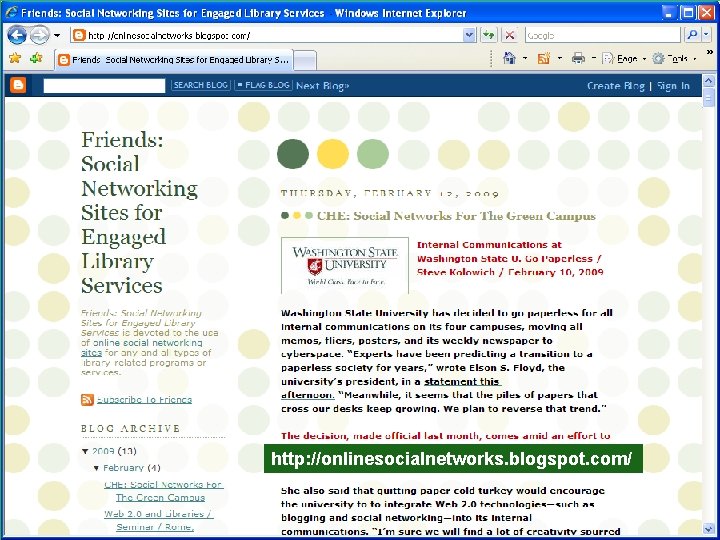
http: //onlinesocialnetworks. blogspot. com/
In. Site-Connect: A Model For Dynamic Interdisciplinary Interaction Gerry Mc. Kiernan Science and Technology Librarian Iowa State University Library Ames IA gerrymck@iastate. edu http: //www. public. iastate. edu/~gerrymck/In. Site 2009. ppt

Director’s Cut http: //www. public. iastate. edu/~gerrymck/In. Site 2009 -DC. ppt
!!! Thank You !!! Source For Your Attention
Corrected & Revised Final June 22 2009 | 15: 00 http: //www. public. iastate. edu/~gerrymck/In. Site 2009. ppt
- Slides: 91