
http ecology genebee msu ru3SOTRCVTerekhin htm 2 Dobzhansky

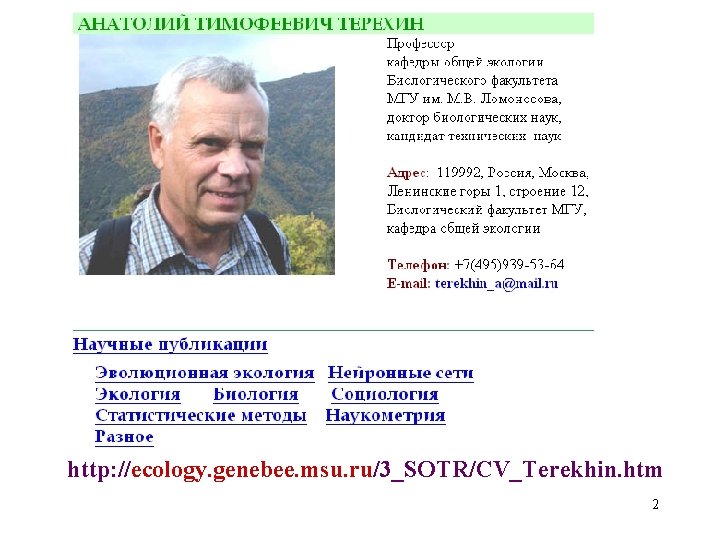
http: //ecology. genebee. msu. ru/3_SOTR/CV_Terekhin. htm 2
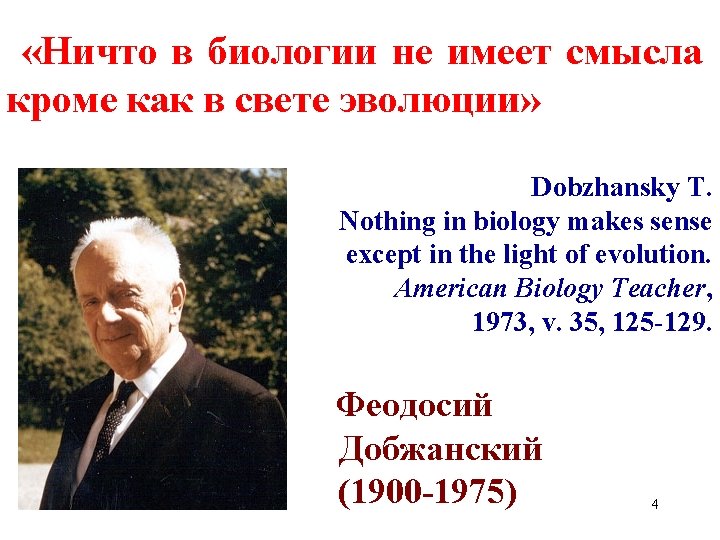
«Ничто в биологии не имеет смысла кроме как в свете эволюции» Dobzhansky T. Nothing in biology makes sense except in the light of evolution. American Biology Teacher, 1973, v. 35, 125 -129. Феодосий Добжанский (1900 -1975) 4
Монографии по эволюционной медицине Nesse R. M. , Williams G. C. Why We Get Sick: The New Science of Darwinian Medicine. Vantage Books, 1994. P. W. Ewald. Evolution of Infectious Disease. Oxford University Press, 1994. M. T. Mc. Guire and Troisi. Darwinian Psychiatry. Harvard University Press, 1998. S. Stearns (ed. ). Evolution in Health and Disease. Oxford University Press, 1998. W. R. Trevathan, Mc. Kenna J. J, Smith E. O. Evolutionary Medicine. Oxford University Press, 5 1999, 2007.
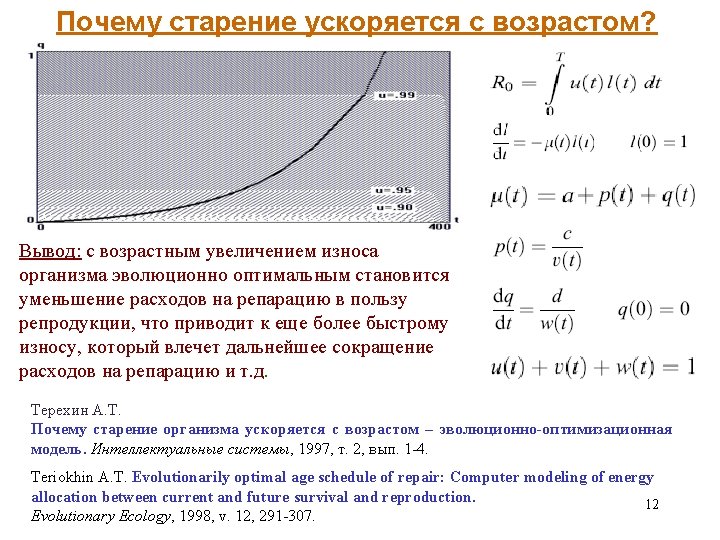
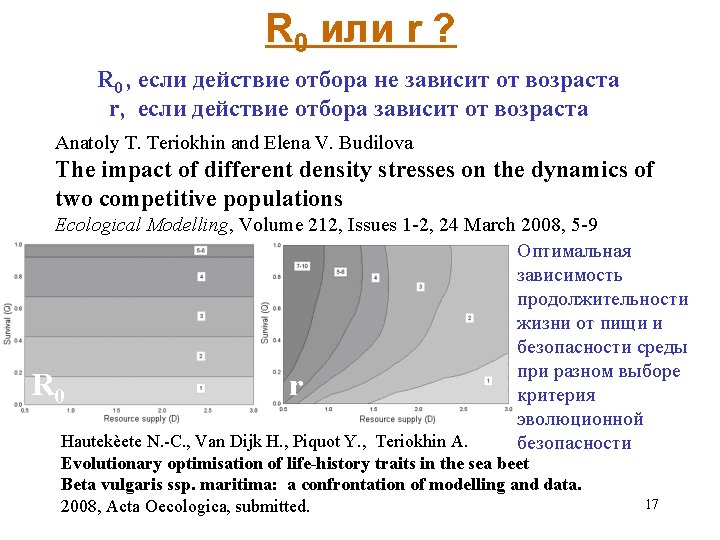
R 0 или r ? R 0 , если действие отбора не зависит от возраста r, если действие отбора зависит от возраста Anatoly T. Teriokhin and Elena V. Budilova The impact of different density stresses on the dynamics of two competitive populations R Ecological Modelling, Volume 212, Issues 1 -2, 24 March 2008, 5 -9 Оптимальная зависимость продолжительности жизни от пищи и безопасности среды при разном выборе критерия 0 эволюционной Hautekèete N. -C. , Van Dijk H. , Piquot Y. , Teriokhin A. безопасности r Evolutionary optimisation of life-history traits in the sea beet Beta vulgaris ssp. maritima: a confrontation of modelling and data. 2008, Acta Oecologica, submitted. 17
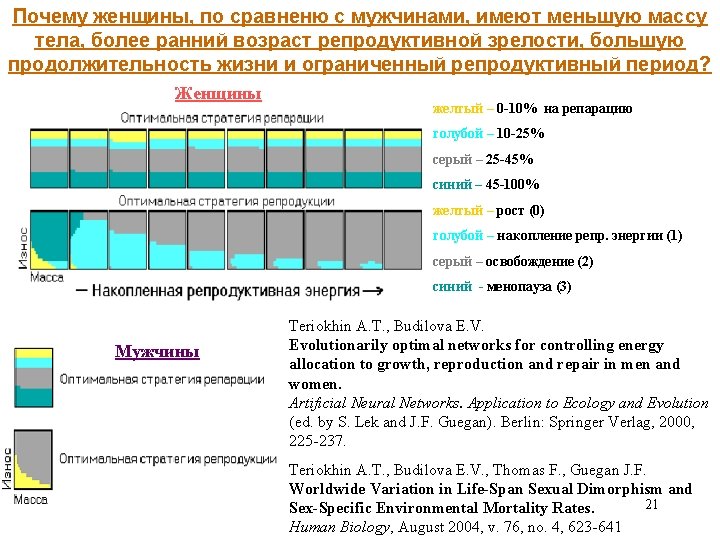
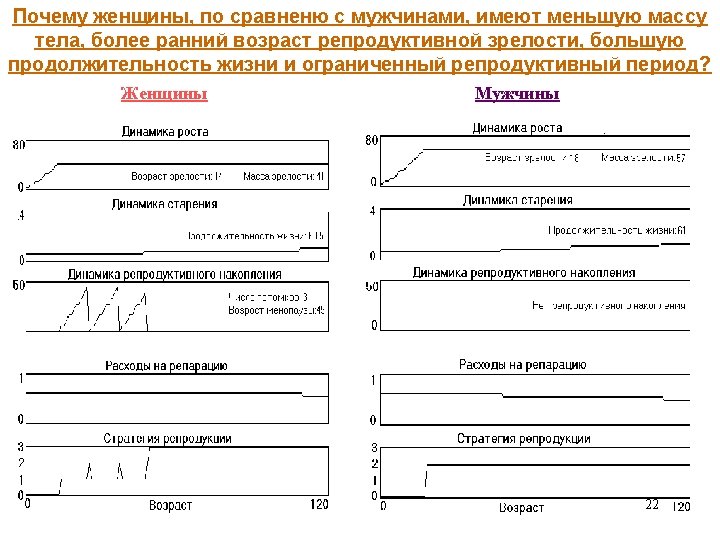
Почему женщины, по сравненю с мужчинами, имеют меньшую массу тела, более ранний возраст репродуктивной зрелости, большую продолжительность жизни и ограниченный репродуктивный период? Женщины желтый – 0 -10% на репарацию голубой – 10 -25% серый – 25 -45% синий – 45 -100% желтый – рост (0) голубой – накопление репр. энергии (1) серый – освобождение (2) синий - менопауза (3) Мужчины Teriokhin A. T. , Budilova E. V. Evolutionarily optimal networks for controlling energy allocation to growth, reproduction and repair in men and women. Artificial Neural Networks. Application to Ecology and Evolution (ed. by S. Lek and J. F. Guegan). Berlin: Springer Verlag, 2000, 225 -237. Teriokhin A. T. , Budilova E. V. , Thomas F. , Guegan J. F. Worldwide Variation in Life-Span Sexual Dimorphism and 21 Sex-Specific Environmental Mortality Rates. Human Biology, August 2004, v. 76, no. 4, 623 -641
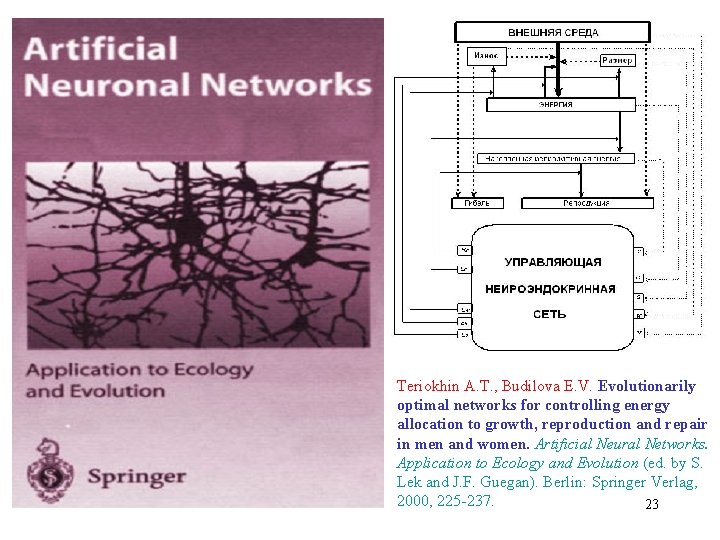
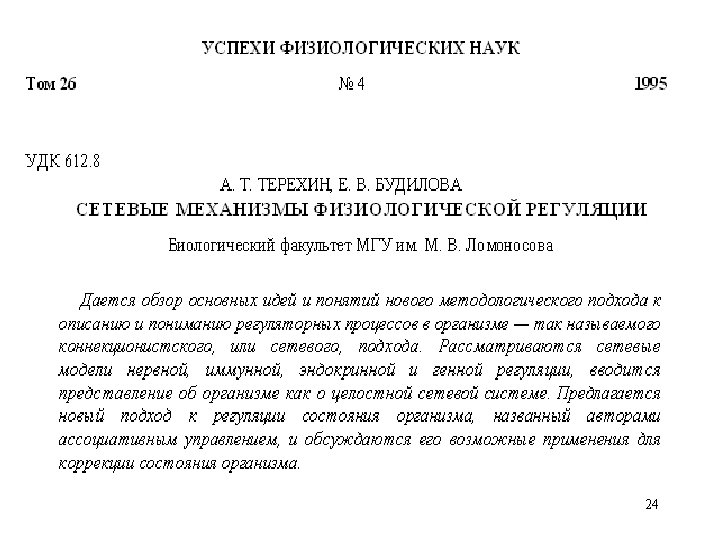
Teriokhin A. T. , Budilova E. V. Evolutionarily optimal networks for controlling energy allocation to growth, reproduction and repair in men and women. Artificial Neural Networks. Application to Ecology and Evolution (ed. by S. Lek and J. F. Guegan). Berlin: Springer Verlag, 2000, 225 -237. 23
24
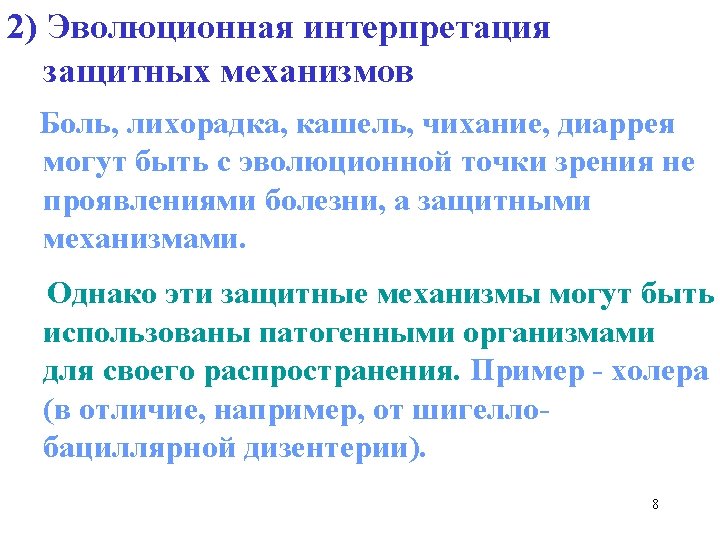
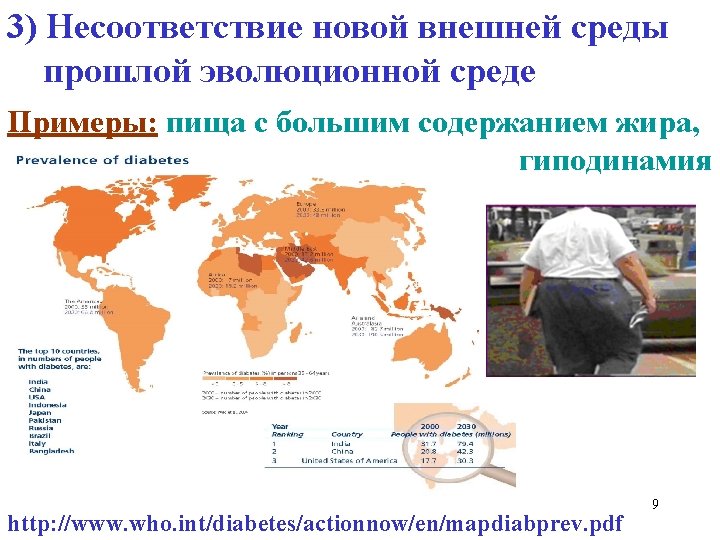
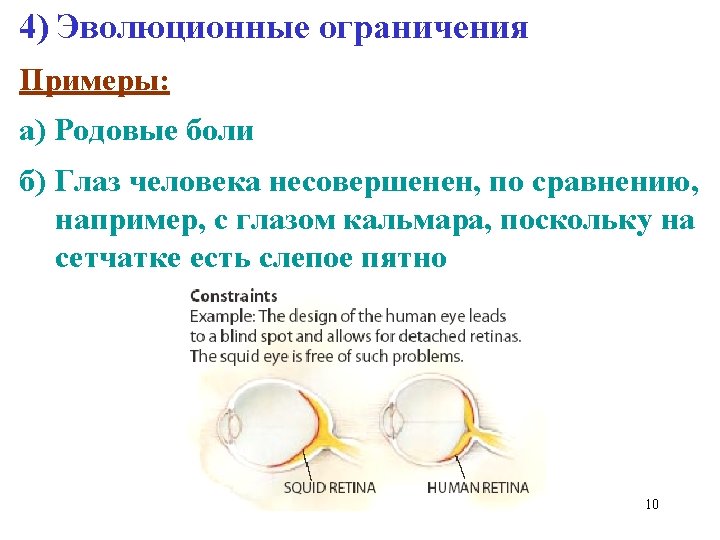
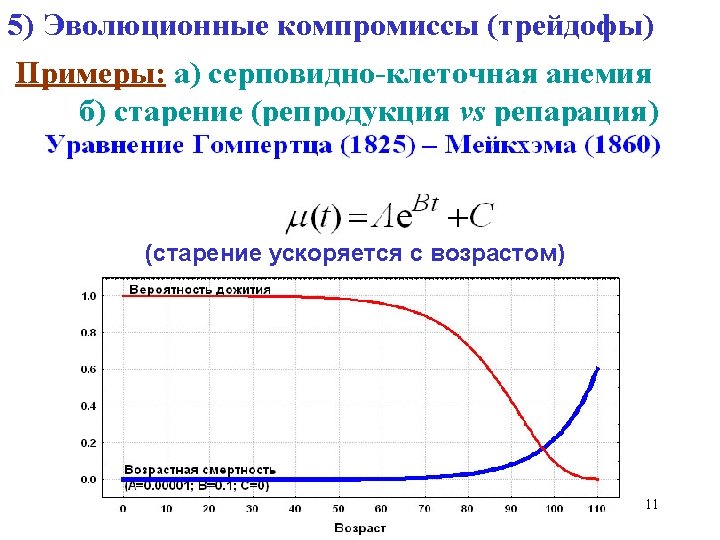
First, some discomforting conditions, such as pain, fever, cough, vomiting and anxiety, are actually neither diseases nor design defects but rather are evolved defenses. Second, conflicts with other organisms—Escherichia coli or crocodiles, for instance—are a fact of life. Third, some circumstances, such as the ready availability of dietary fats, are so recent that natural selection has not yet had a chance to deal with them. Fourth, the body may fall victim to tradeoffs between a trait’s benefits and its costs; a textbook example is the sickle cell gene, which also protects against malaria. Fifth, the process of natural selection is constrained in ways that leave us with suboptimal design features, as in the case of the mammalian eye. 26
Why hasn't natural selection eliminated a particular disease? Why do our bodies have certain flaws of engineering that make us susceptible to particular medical complications? Might certain modern diseases and ailments be the result of a mismatch between our biological heritage and our modern-day lifestyles? Are characteristic physiological responses to disease in fact adaptive defenses that have 27 developed over evolutionary time?
Principles of natural selection generally applicable to understanding human biology in health and disease. 1)Natural selection cannot build perfect designs because it compromises between different adaptations – bipedal walking vs. large brain size. 2) Will maintain a disease gene if it confers an advantage in a particular environment – sickle cell disease, alpha- & betathalassemia, Hb E syndrome, G 6 PD deficiency, Tay-sachs, cystic fibrosis. 3) Has shaped many human genes to ancient lifestyles (i. e. a hunter-gathering versus modern life-way) explaining chronic diseases like obesity, and type II diabetes. 4) Favors genes maximizing reproduction even if they compromise health (PKU, hemochromatosis, fragile X syndrome etc. ) or longevity (Alzheimer's, atherosclerosis, prostate hyperplasia) 5) Explains the "arms race" between pathogens and us. We have evolved defenses both natural – fever, diarrhea, vomiting, 28
- Slides: 28