
http biodeluna wordpress com IGCSE Revision Questions Cell

http: //biodeluna. wordpress. com IGCSE Revision Questions Cell Division Mainly based on the exercises from http: //www. biology-resources. com/biology-questions. html
• A cell in the basal layer of the skin contains 46 chromosomes and divides by mitosis to produce new skin cells. After ten successive divisions, how many chromosomes will the basal cell have?
• A cell in the basal layer of the skin contains 46 chromosomes and divides by mitosis to produce new skin cells. After ten successive divisions, how many chromosomes will the basal cell have? After ten successive mitotic divisions, a basal cell will still have 46 chromosomes
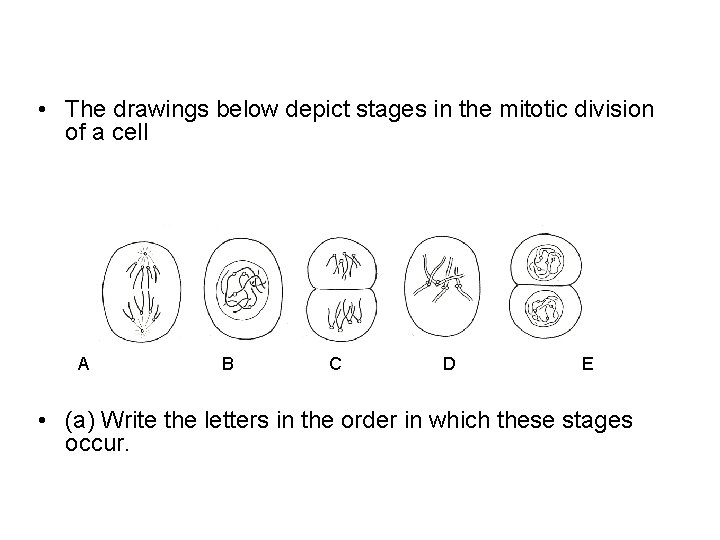
• The drawings below depict stages in the mitotic division of a cell A B C D E • (a) Write the letters in the order in which these stages occur.
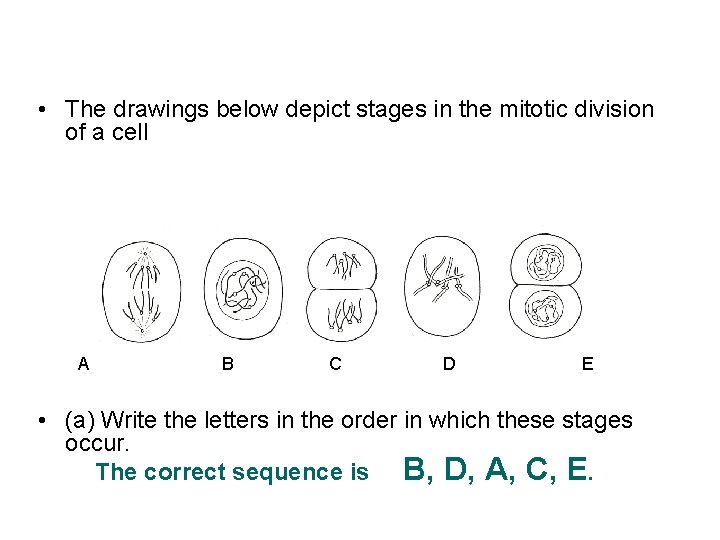
• The drawings below depict stages in the mitotic division of a cell A B C D E • (a) Write the letters in the order in which these stages occur. The correct sequence is B, D, A, C, E.
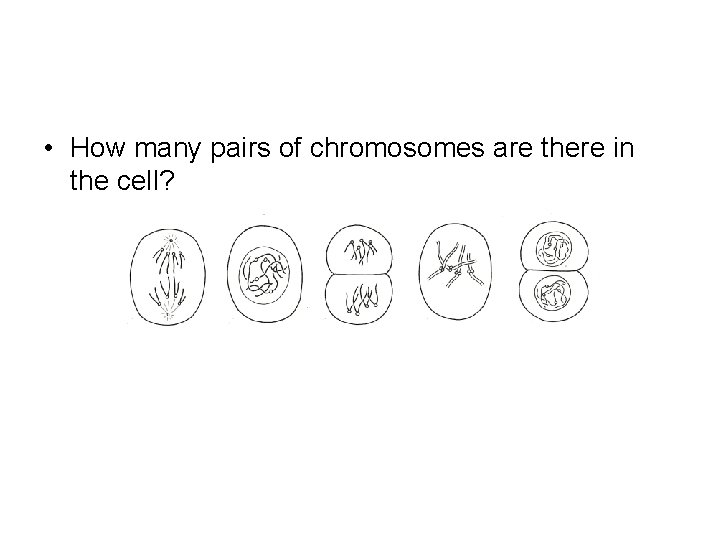
• How many pairs of chromosomes are there in the cell?
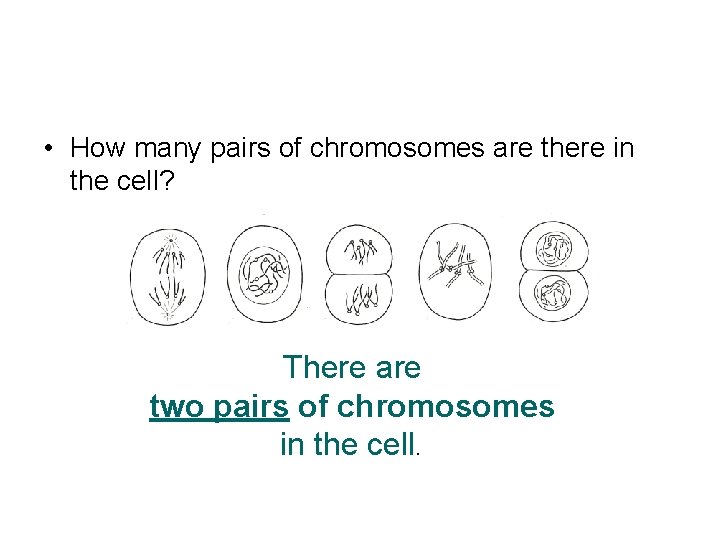
• How many pairs of chromosomes are there in the cell? There are two pairs of chromosomes in the cell.
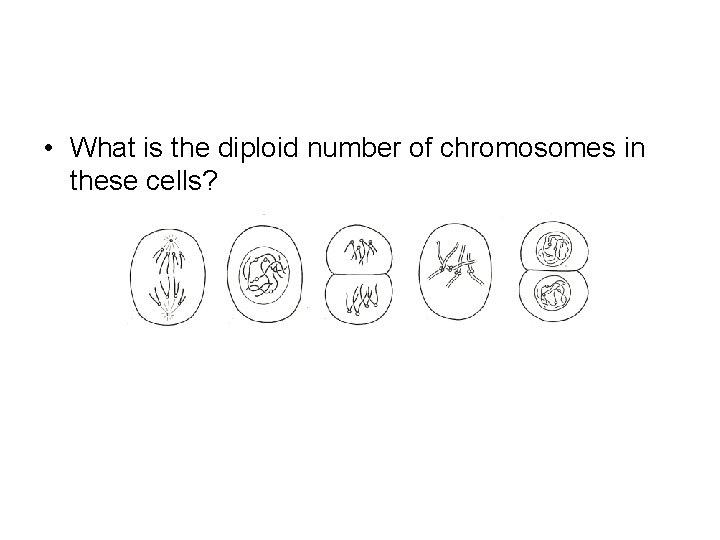
• What is the diploid number of chromosomes in these cells?
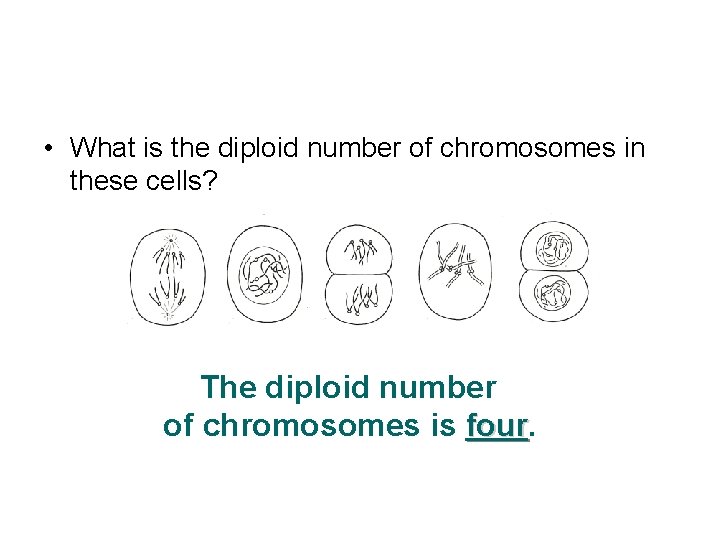
• What is the diploid number of chromosomes in these cells? The diploid number of chromosomes is four
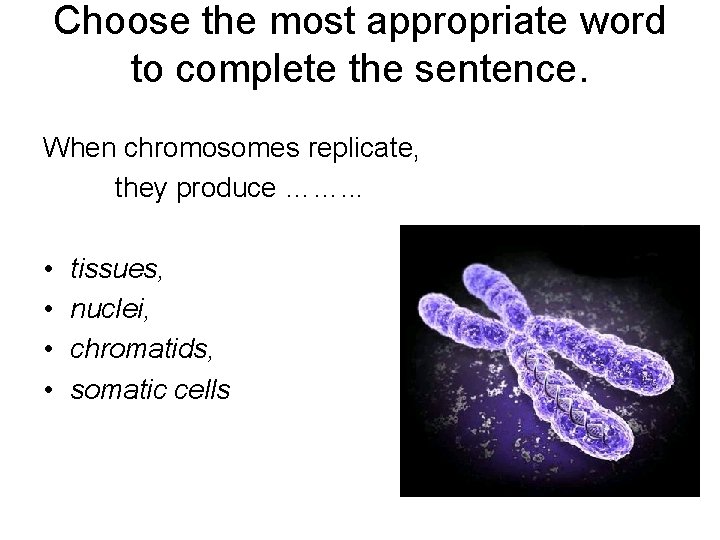
Choose the most appropriate word to complete the sentence. When chromosomes replicate, they produce ……. . . • • tissues, nuclei, chromatids, somatic cells
Choose the most appropriate word to complete the sentence. When chromosomes replicate, they produce ……. . . • • tissues, nuclei, chromatids, somatic cells
In which three of the following cells is mitosis unlikely to occur? • • • a sperm cell, an epithelial cell of a villus, a hair cell, a cell in the red bone marrow, a red blood cell, • a lymphocyte, • a cell in the basal layer of the skin
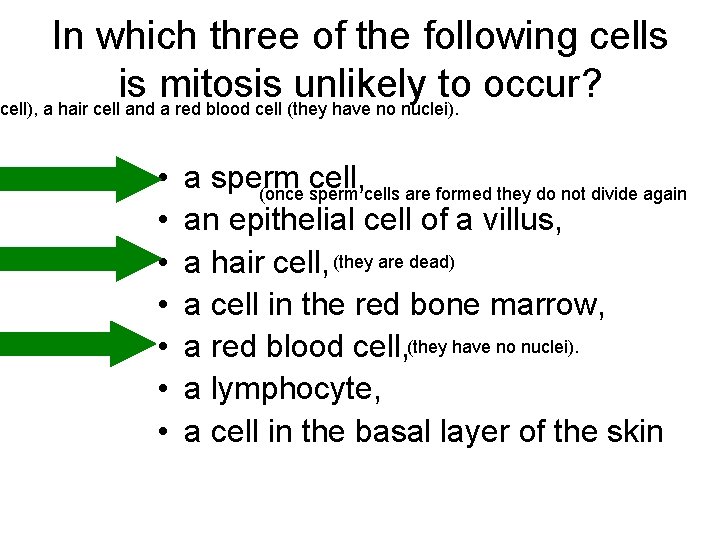
In which three of the following cells is mitosis unlikely to occur? cell), a hair cell and a red blood cell (they have no nuclei). • • a sperm cell, (once sperm cells are formed they do not divide again an epithelial cell of a villus, a hair cell, (they are dead) a cell in the red bone marrow, a red blood cell, (they have no nuclei). a lymphocyte, a cell in the basal layer of the skin

An animal has 36 chromosomes in each of its body cells. How many of these chromosomes came from its male parent?

An animal has 36 chromosomes in each of its body cells. How many of these chromosomes came from its male parent? • If an animal species has 36 chromosomes in its cells, 18 of these came from each parent.
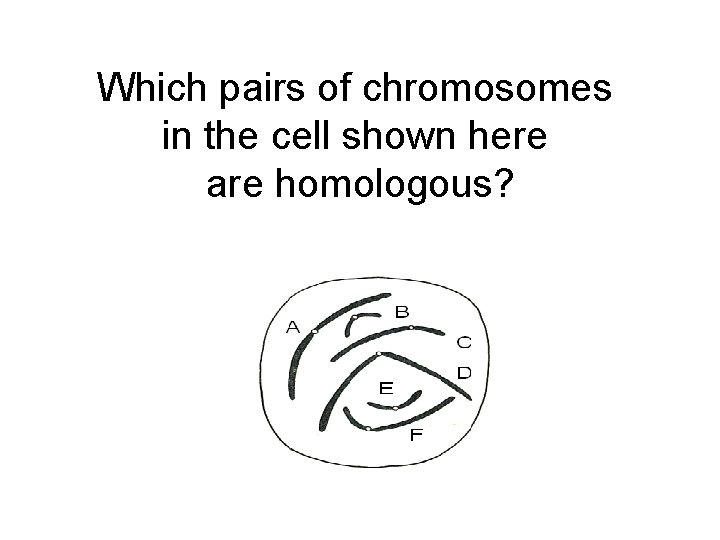
Which pairs of chromosomes in the cell shown here are homologous?
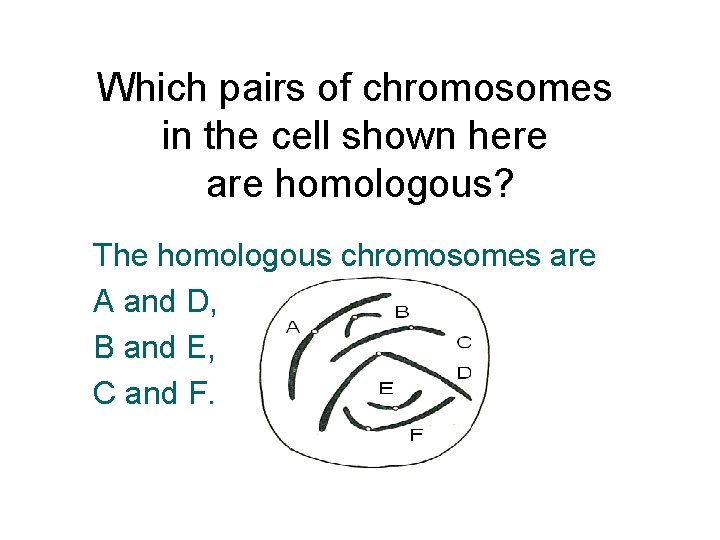
Which pairs of chromosomes in the cell shown here are homologous? The homologous chromosomes are A and D, B and E, C and F.
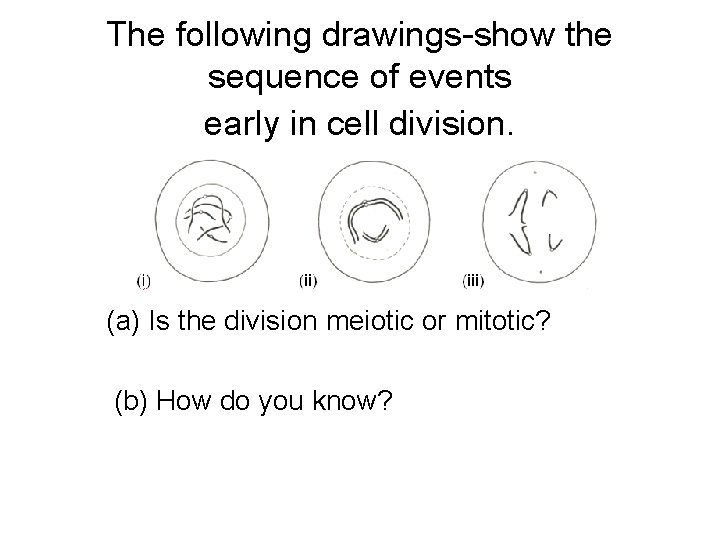
The following drawings-show the sequence of events early in cell division. (a) Is the division meiotic or mitotic? (b) How do you know?
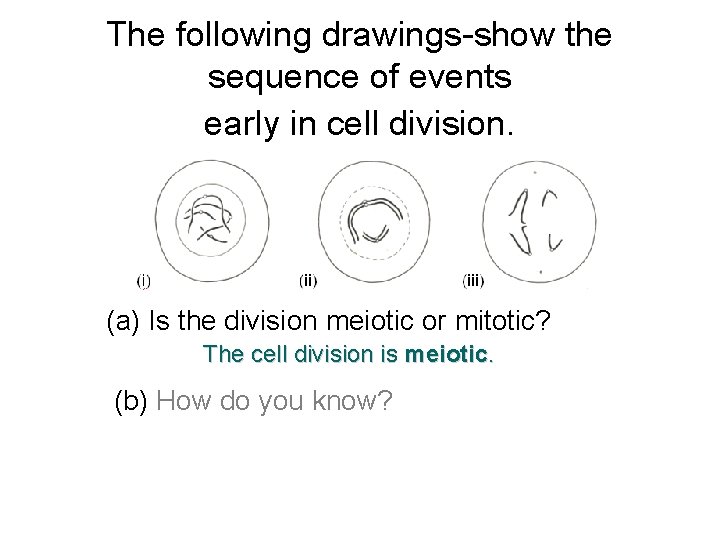
The following drawings-show the sequence of events early in cell division. (a) Is the division meiotic or mitotic? The cell division is meiotic. (b) How do you know?
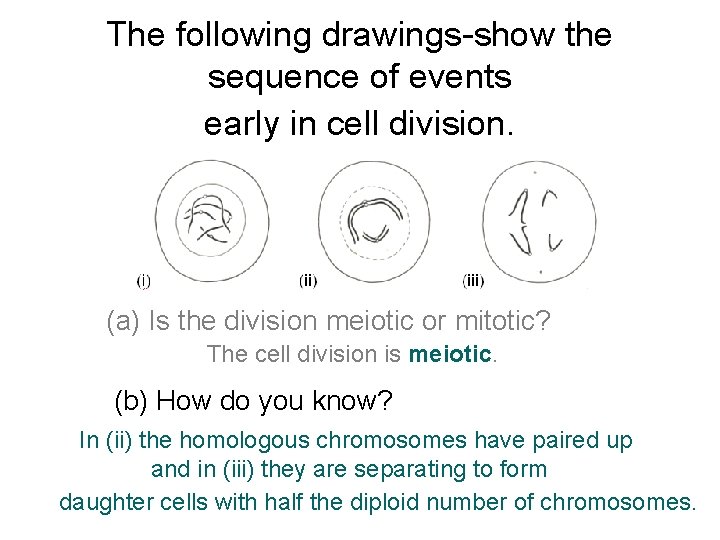
The following drawings-show the sequence of events early in cell division. (a) Is the division meiotic or mitotic? The cell division is meiotic. (b) How do you know? In (ii) the homologous chromosomes have paired up and in (iii) they are separating to form daughter cells with half the diploid number of chromosomes.
Give two examples in each case of organs or tissues in which you would expect • a) meiosis • b) mitosis to be taking place.
Give two examples in each case of organs or tissues in which you would expect • a) meiosis • b) mitosis to be taking place. in testes and ovaries.
Give two examples in each case of organs or tissues in which you would expect • a) meiosis • b) mitosis to be taking in testes and ovaries. in the red bone marrow of the skeleton (to produce blood cells), in the basal layer of the skin including hair follicles, in tissue place. where growth is occurring, e. g. ends of bone shafts, in the lining epithelium of the gut. . .
A fruit fly has three pairs of chromosomes in its cells. At meiosis, how many different combinations of maternal and paternal chromosomes are possible in the gametes? (do not take crossing over into account) http: //users. rcn. com/jkimball. ma. ultranet/Biology. Pages/M/Meiosis. html
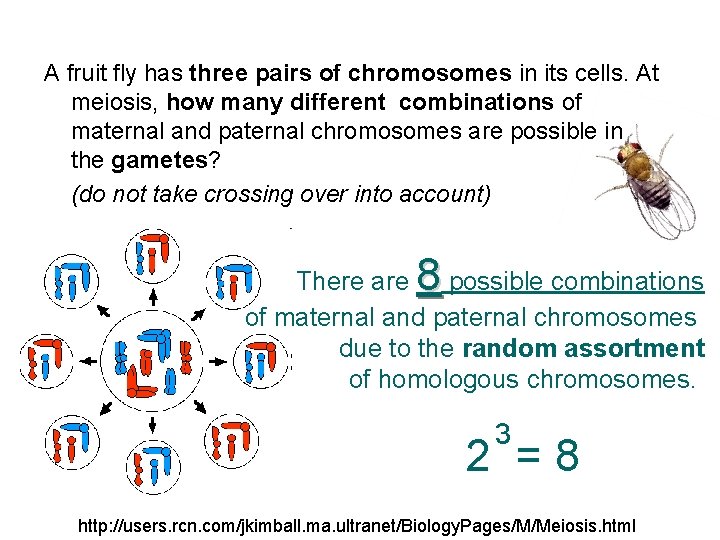
A fruit fly has three pairs of chromosomes in its cells. At meiosis, how many different combinations of maternal and paternal chromosomes are possible in the gametes? (do not take crossing over into account) 8 There are possible combinations of maternal and paternal chromosomes due to the random assortment of homologous chromosomes. 3 2 =8 http: //users. rcn. com/jkimball. ma. ultranet/Biology. Pages/M/Meiosis. html

From bbc. co. uk I recommend you this link: • http: //www. bbc. co. uk/schools/gcsebitesize/science /add_aqa/celldivisionact. shtml and TESTS. • http: //www. bbc. co. uk/apps/ifl/schools/gcsebitesize/ science/quizengine? quiz=add_aqa_celldivision_ft est; template. Style=science • http: //www. bbc. co. uk/apps/ifl/schools/gcsebitesize/ science/quizengine? quiz=add_aqa_celldivision_ht est; template. Style=science

Keep on studying, and good luck! http: //elsindromedediogenes. blogspot. com
- Slides: 27