
http archive fieldmuseum orgmendelpop Upsh 10 html I
- Slides: 82
http: //archive. fieldmuseum. org/mendel/pop. Ups/h 10. html
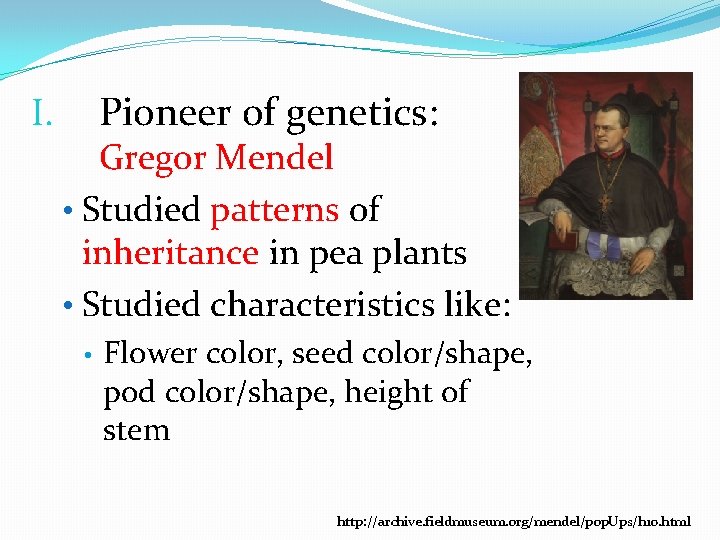
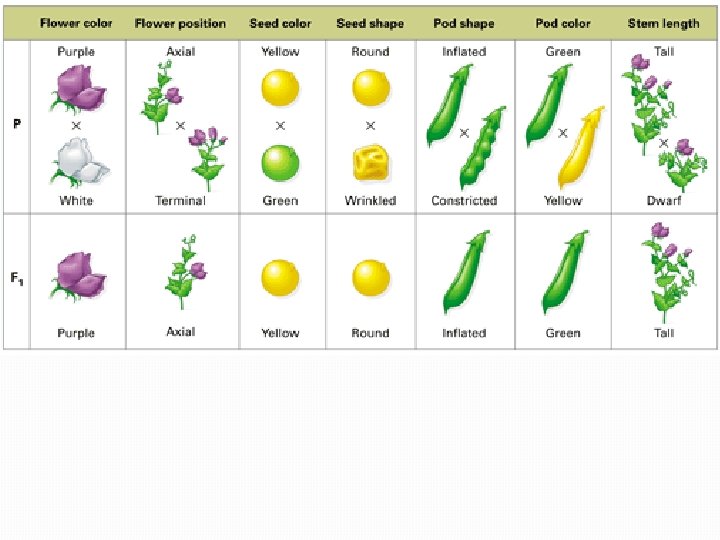
I. Pioneer of genetics: Gregor Mendel • Studied patterns of inheritance in pea plants • Studied characteristics like: • Flower color, seed color/shape, pod color/shape, height of stem http: //archive. fieldmuseum. org/mendel/pop. Ups/h 10. html
http: //archive. fieldmuseum. org/mendel/pop. Ups/h 10. html
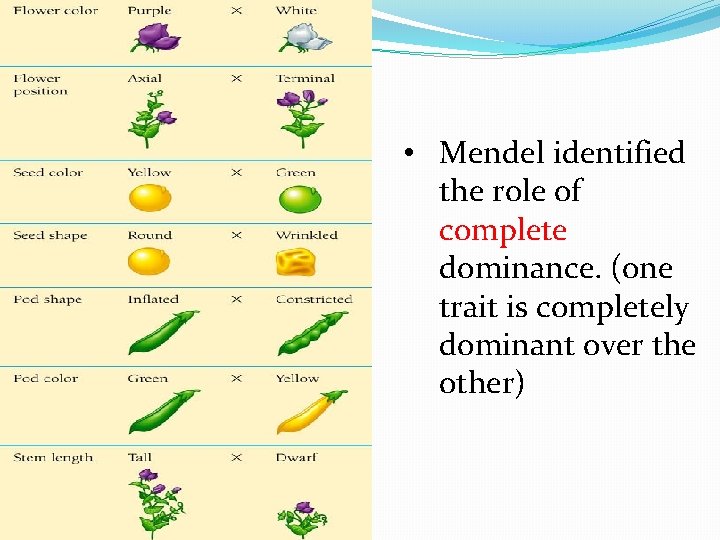
• Mendel identified the role of complete dominance. (one trait is completely dominant over the other)
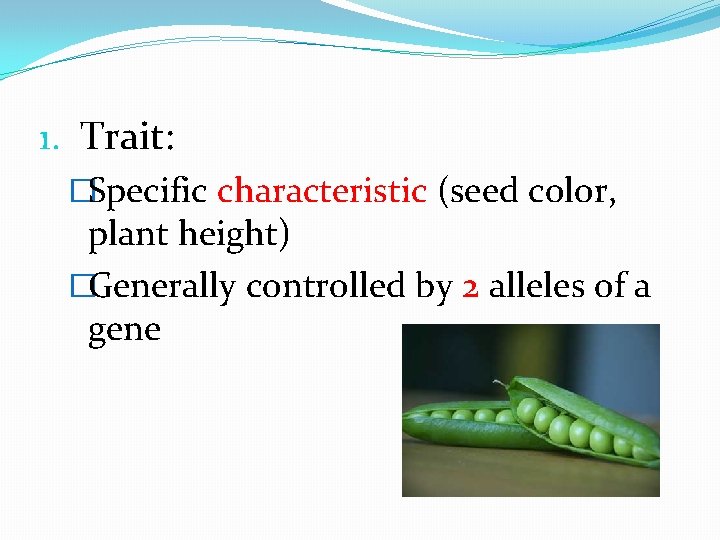
1. Trait: �Specific characteristic (seed color, plant height) �Generally controlled by 2 alleles of a gene
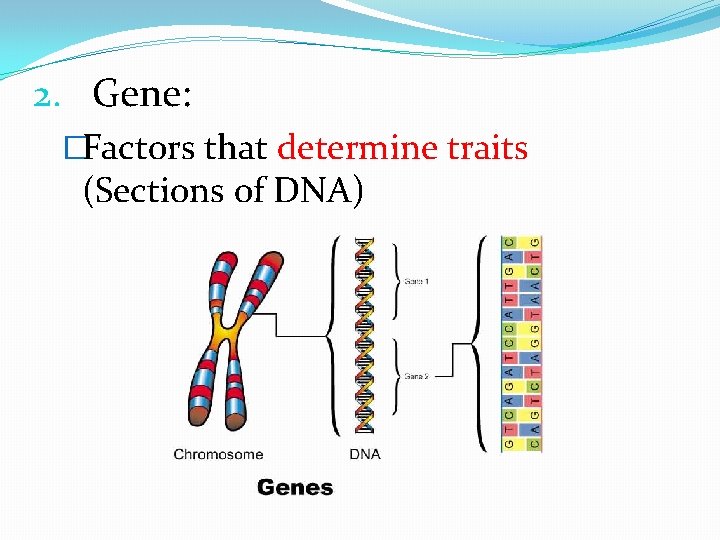
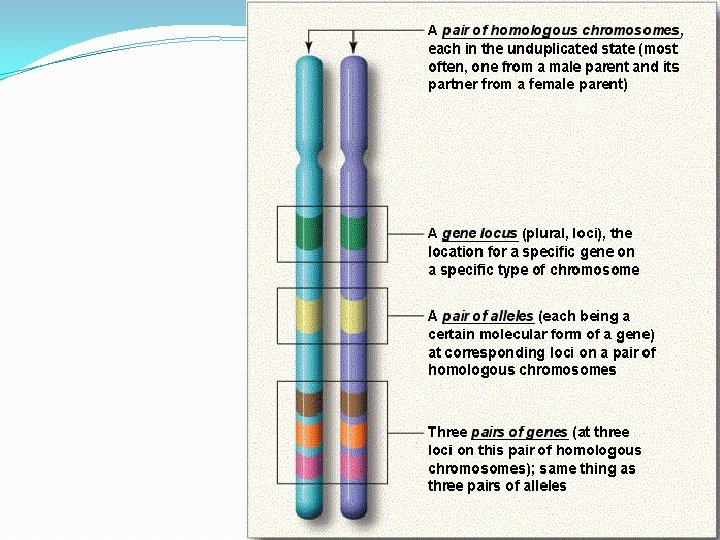
2. Gene: �Factors that determine traits (Sections of DNA)
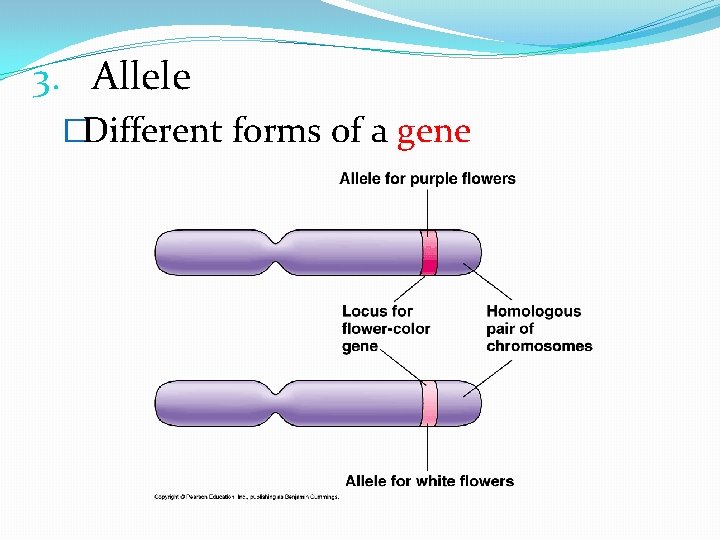
3. Allele �Different forms of a gene
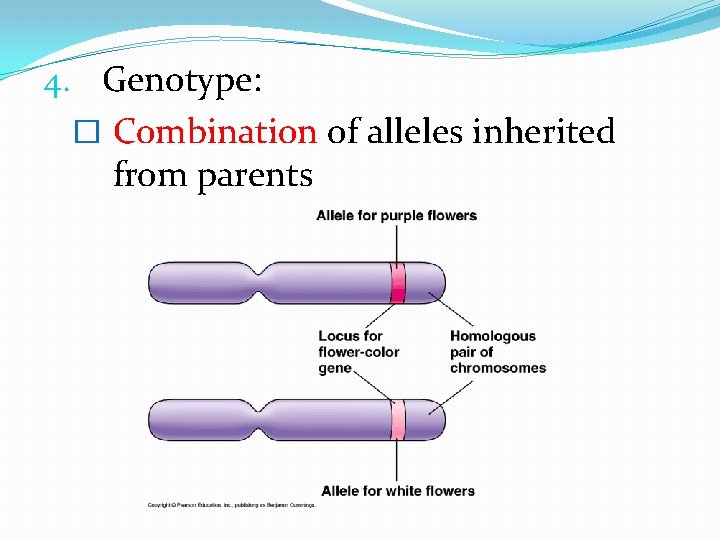
4. Genotype: � Combination of alleles inherited from parents
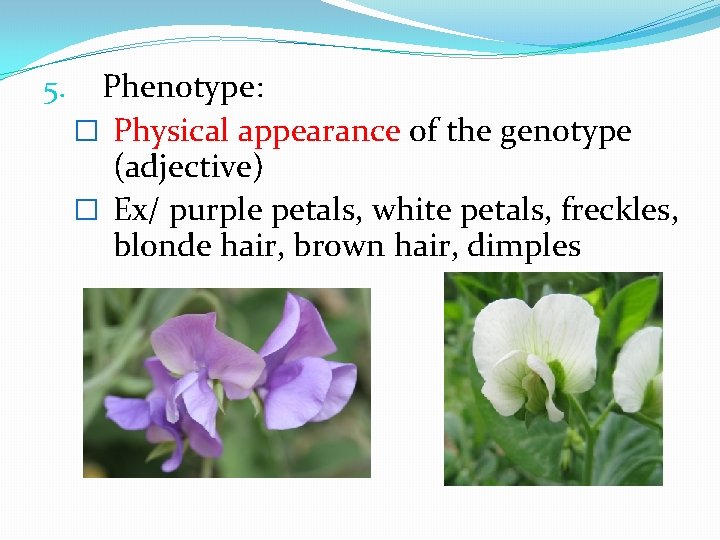
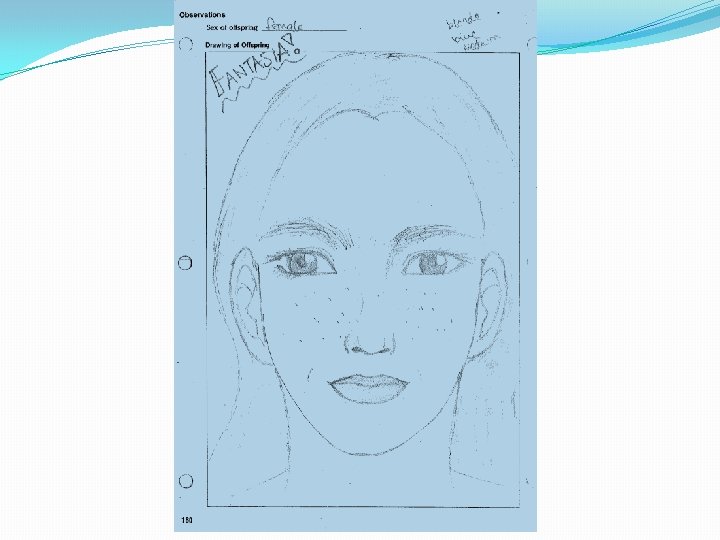
5. Phenotype: � Physical appearance of the genotype (adjective) � Ex/ purple petals, white petals, freckles, blonde hair, brown hair, dimples
Genotypes and Phenotypes can be found by determining the alleles that were passed down from the parents
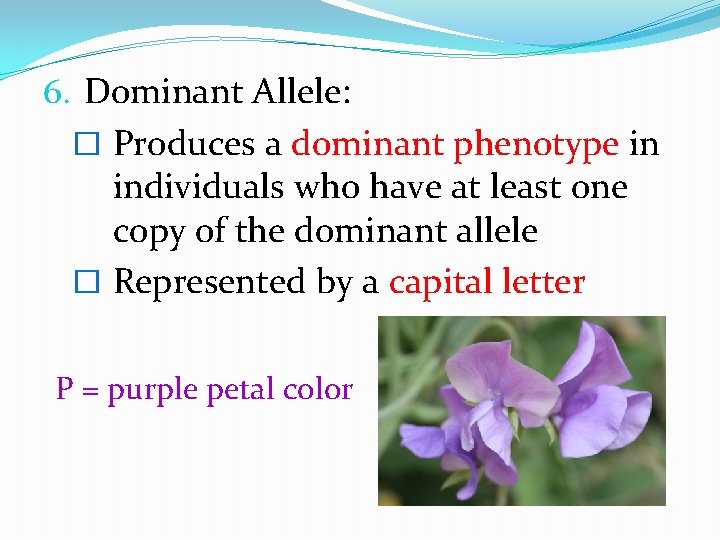
6. Dominant Allele: � Produces a dominant phenotype in individuals who have at least one copy of the dominant allele � Represented by a capital letter P = purple petal color
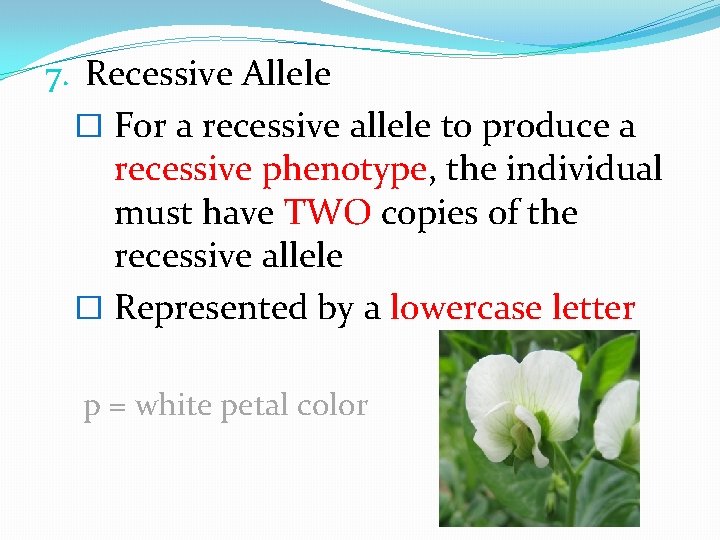
7. Recessive Allele � For a recessive allele to produce a recessive phenotype, the individual must have TWO copies of the recessive allele � Represented by a lowercase letter p = white petal color
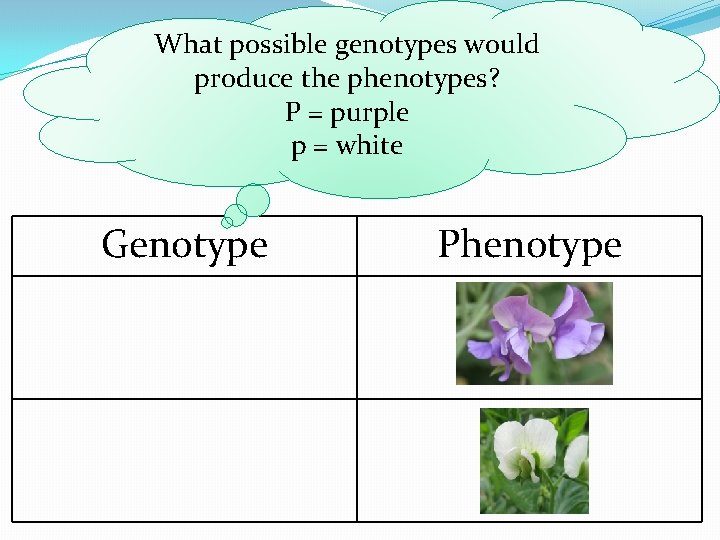
What possible genotypes would produce the phenotypes? P = purple p = white Genotype Phenotype
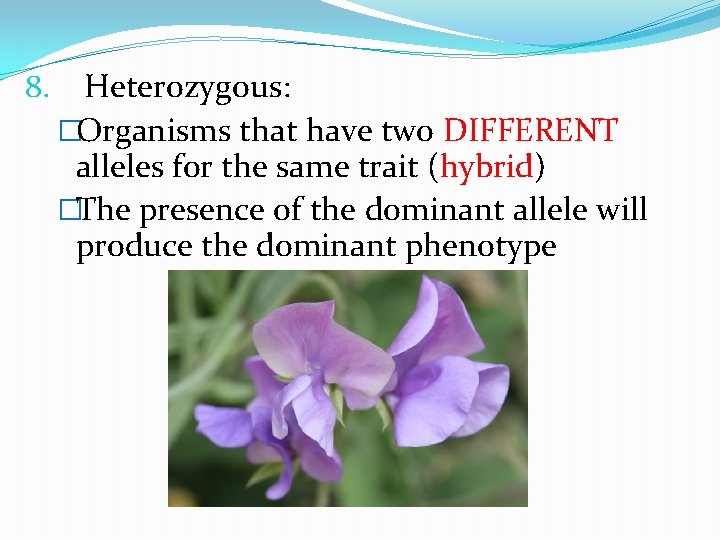
8. Heterozygous: �Organisms that have two DIFFERENT alleles for the same trait (hybrid) �The presence of the dominant allele will produce the dominant phenotype
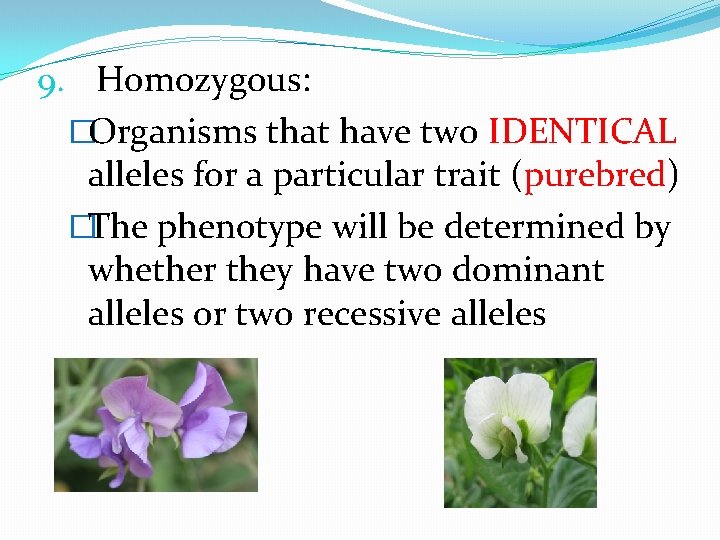
9. Homozygous: �Organisms that have two IDENTICAL alleles for a particular trait (purebred) �The phenotype will be determined by whether they have two dominant alleles or two recessive alleles
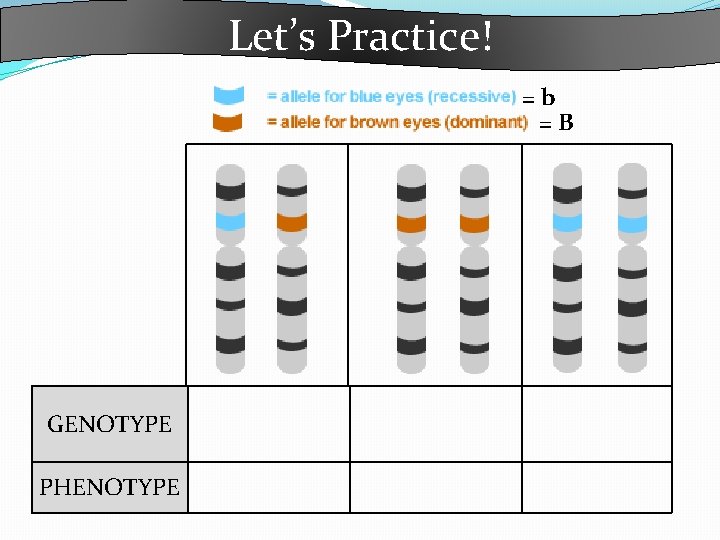
Let’s Practice! =b =B GENOTYPE PHENOTYPE
Can you predict the gentotypic and phenotypic outcome of a fertilization?
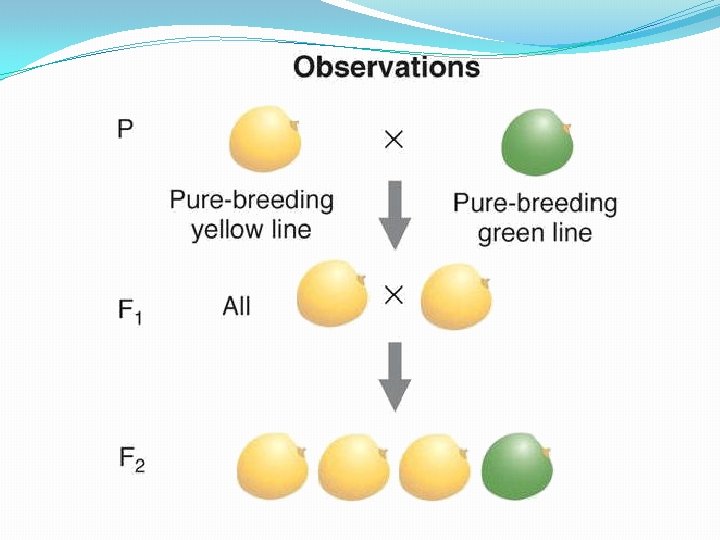
10. Following traits through generations: �P : Parent generation �F 1: 1 st filial (1 st set of offspring from parents) �F 2: 2 nd filial (offspring of second generation)
11. Punnett Square: � Grid that shows probable outcome of a genetic cross (fertilization)
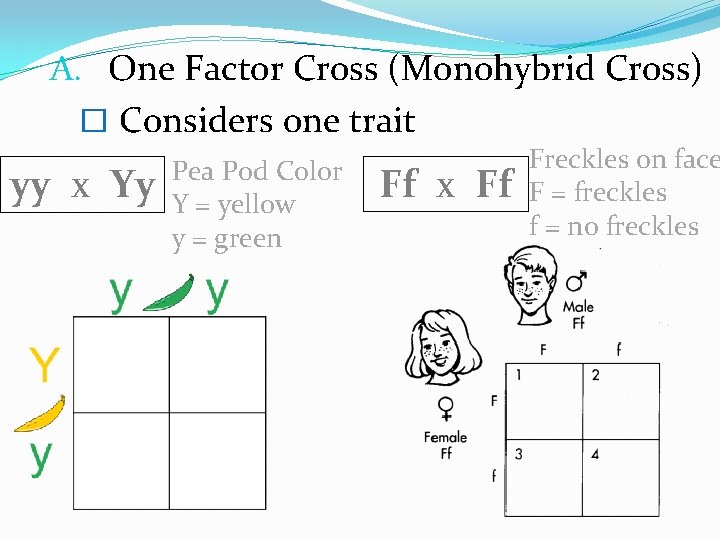
A. One Factor Cross (Monohybrid Cross) � Considers one trait yy x Yy Pea Pod Color Y = yellow y = green Ff x Ff Freckles on face F = freckles f = no freckles
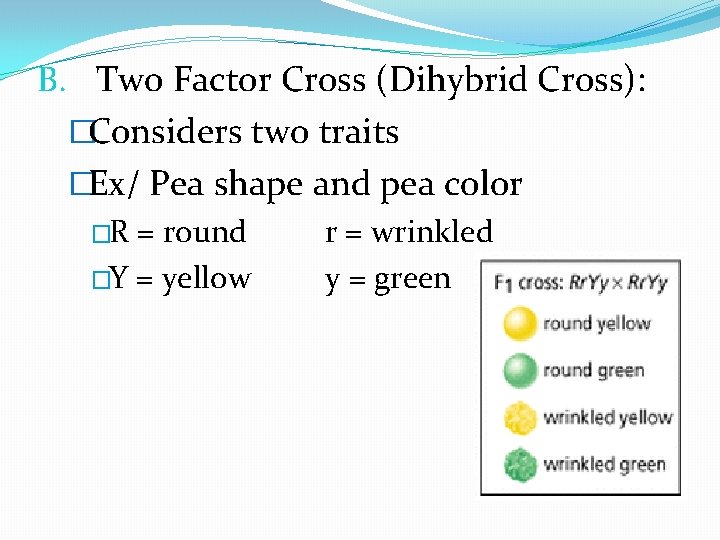
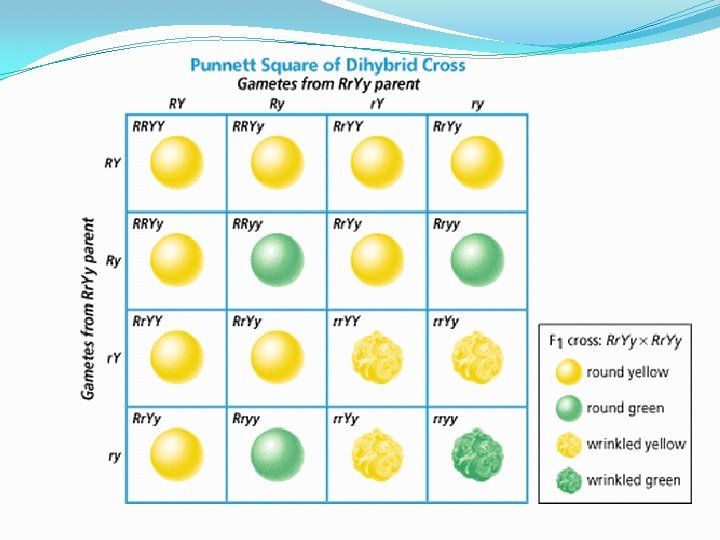
B. Two Factor Cross (Dihybrid Cross): �Considers two traits �Ex/ Pea shape and pea color �R = round �Y = yellow r = wrinkled y = green
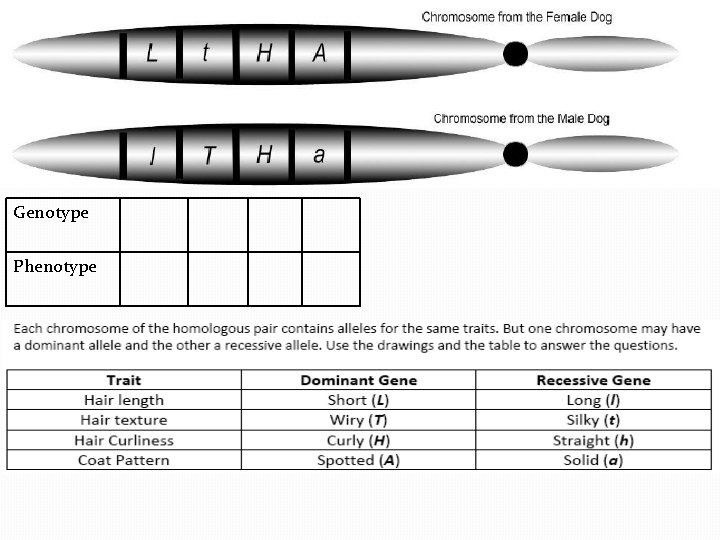
Should This Dog Be Called Spot? Practice
Genotype Phenotype
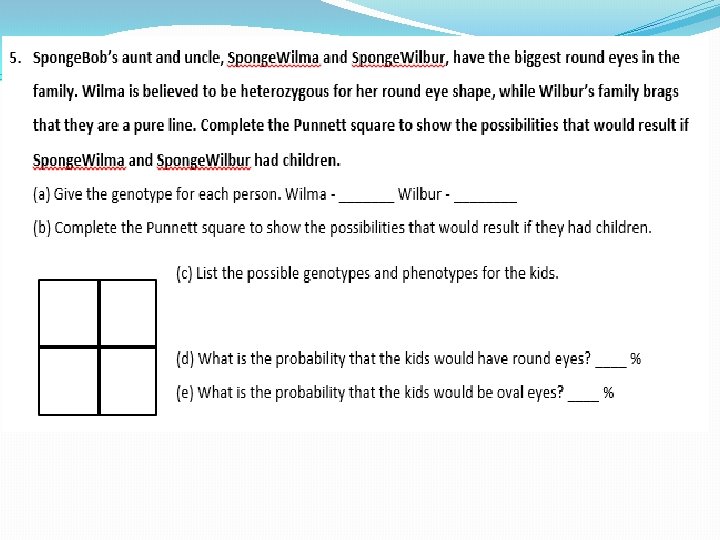
Sponge. Bob Square Pants Bikini Bottom Worksheet
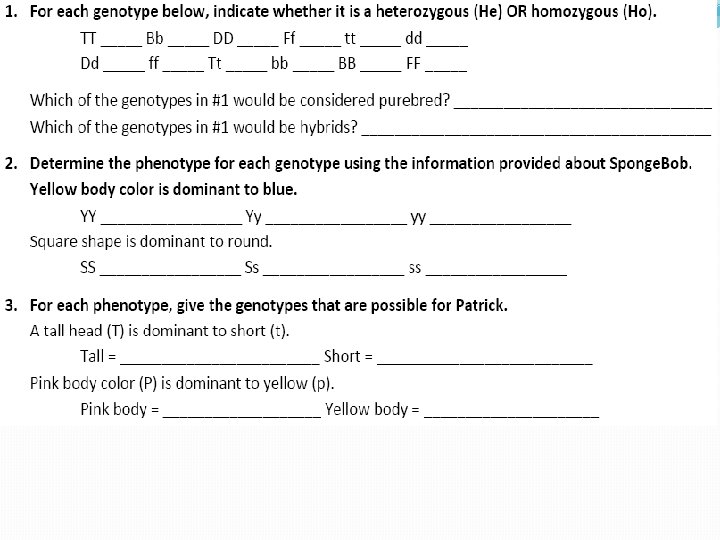
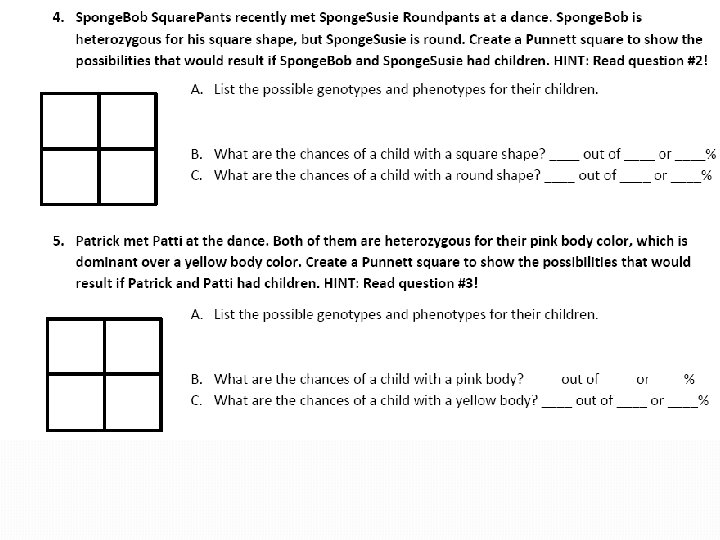
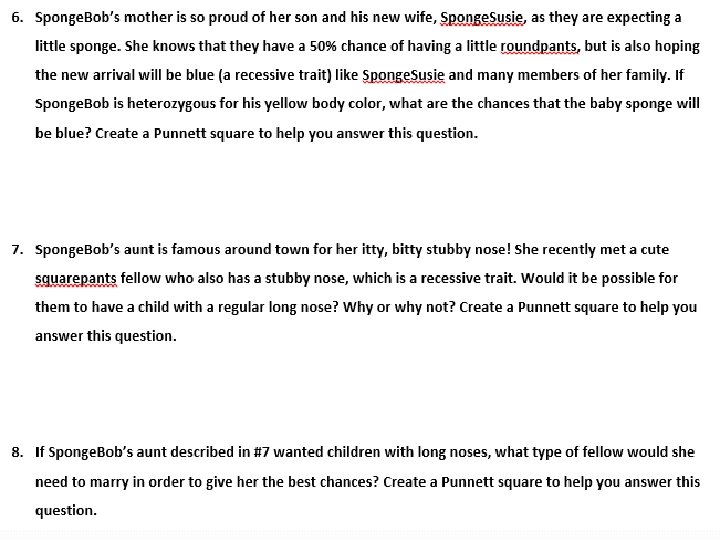
Sponge. Bob Square Pants Bikini Bottom Worksheet #2
Mendelian Inheritance in Humans
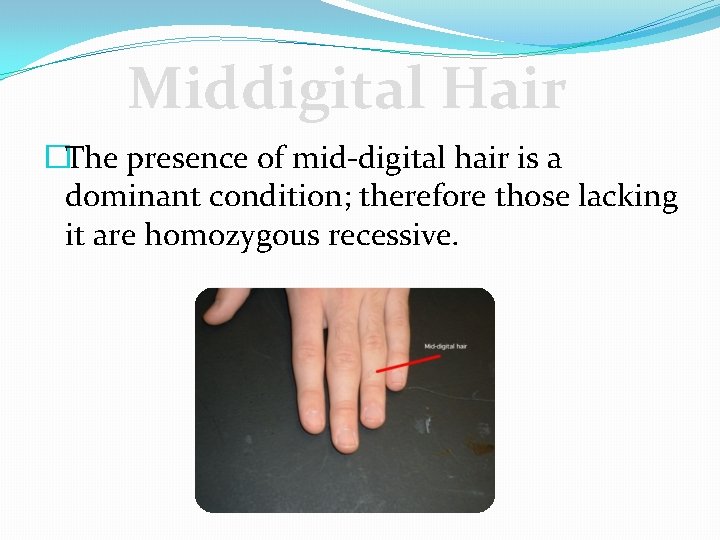
Middigital Hair �The presence of mid-digital hair is a dominant condition; therefore those lacking it are homozygous recessive.
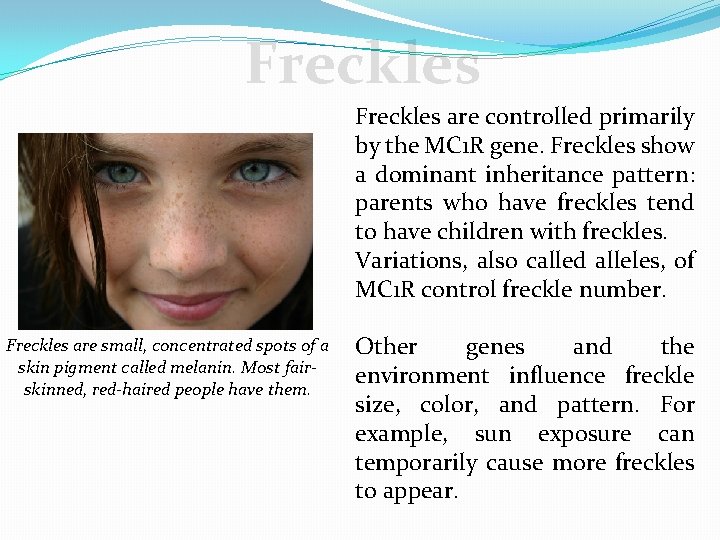
Freckles are controlled primarily by the MC 1 R gene. Freckles show a dominant inheritance pattern: parents who have freckles tend to have children with freckles. Variations, also called alleles, of MC 1 R control freckle number. Freckles are small, concentrated spots of a skin pigment called melanin. Most fairskinned, red-haired people have them. Other genes and the environment influence freckle size, color, and pattern. For example, sun exposure can temporarily cause more freckles to appear.
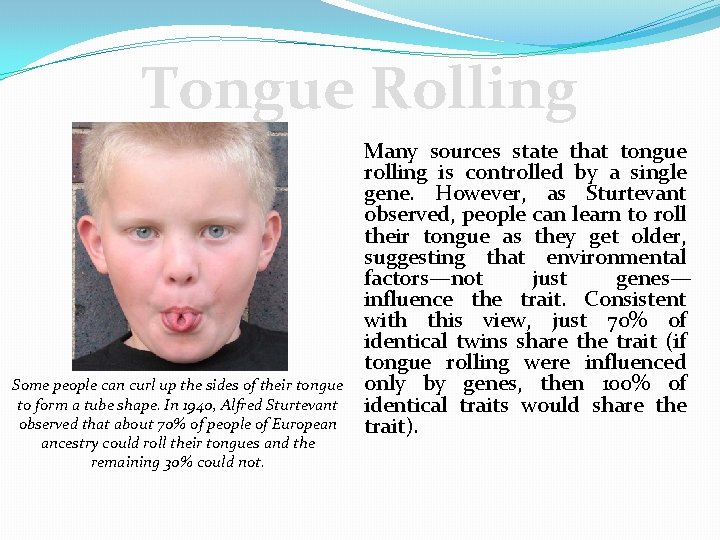
Tongue Rolling Some people can curl up the sides of their tongue to form a tube shape. In 1940, Alfred Sturtevant observed that about 70% of people of European ancestry could roll their tongues and the remaining 30% could not. Many sources state that tongue rolling is controlled by a single gene. However, as Sturtevant observed, people can learn to roll their tongue as they get older, suggesting that environmental factors—not just genes— influence the trait. Consistent with this view, just 70% of identical twins share the trait (if tongue rolling were influenced only by genes, then 100% of identical traits would share the trait).
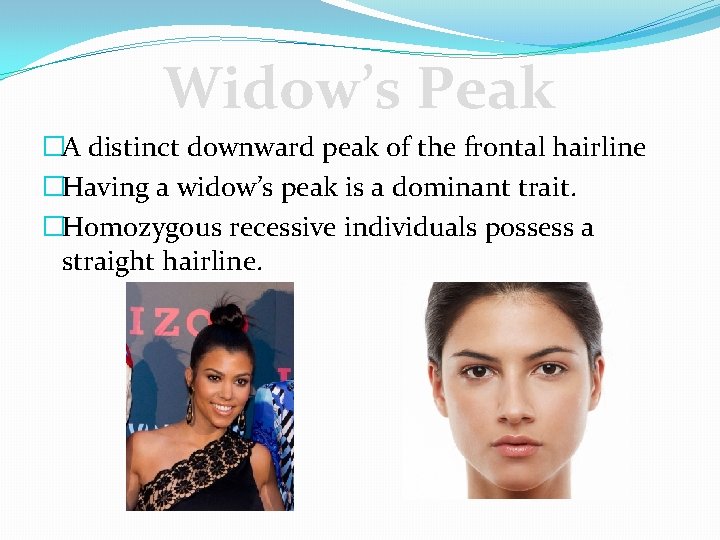
Widow’s Peak �A distinct downward peak of the frontal hairline �Having a widow’s peak is a dominant trait. �Homozygous recessive individuals possess a straight hairline.
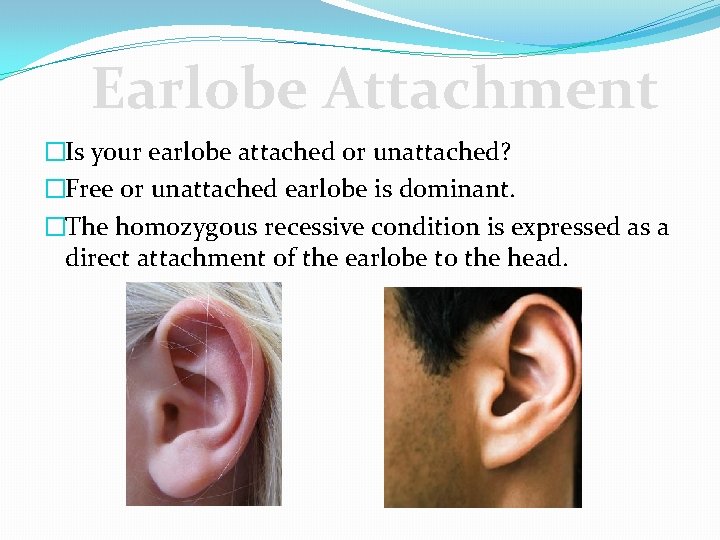
Earlobe Attachment �Is your earlobe attached or unattached? �Free or unattached earlobe is dominant. �The homozygous recessive condition is expressed as a direct attachment of the earlobe to the head.
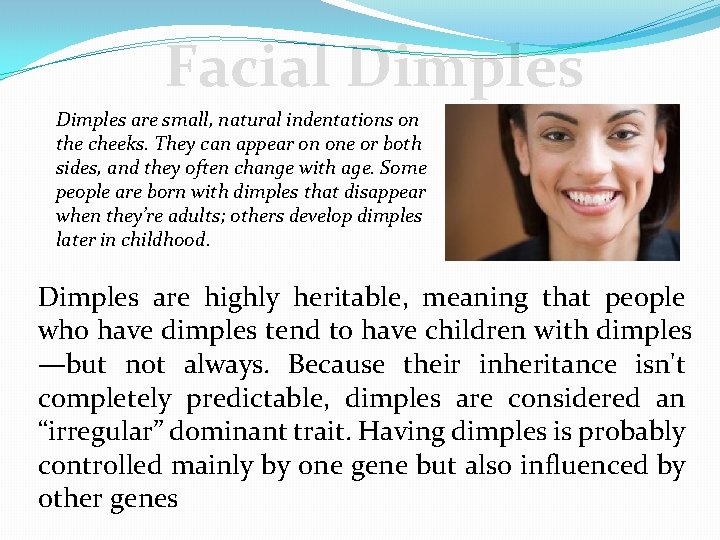
Facial Dimples are small, natural indentations on the cheeks. They can appear on one or both sides, and they often change with age. Some people are born with dimples that disappear when they’re adults; others develop dimples later in childhood. Dimples are highly heritable, meaning that people who have dimples tend to have children with dimples —but not always. Because their inheritance isn't completely predictable, dimples are considered an “irregular” dominant trait. Having dimples is probably controlled mainly by one gene but also influenced by other genes
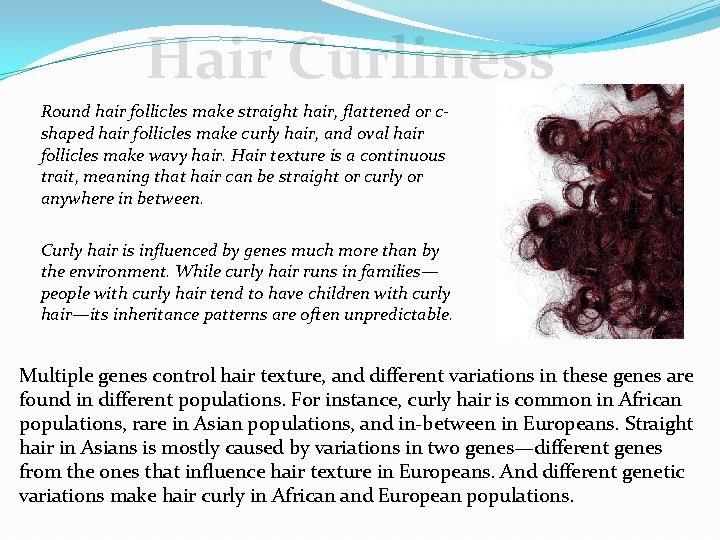
Hair Curliness Round hair follicles make straight hair, flattened or cshaped hair follicles make curly hair, and oval hair follicles make wavy hair. Hair texture is a continuous trait, meaning that hair can be straight or curly or anywhere in between. Curly hair is influenced by genes much more than by the environment. While curly hair runs in families— people with curly hair tend to have children with curly hair—its inheritance patterns are often unpredictable. Multiple genes control hair texture, and different variations in these genes are found in different populations. For instance, curly hair is common in African populations, rare in Asian populations, and in-between in Europeans. Straight hair in Asians is mostly caused by variations in two genes—different genes from the ones that influence hair texture in Europeans. And different genetic variations make hair curly in African and European populations.
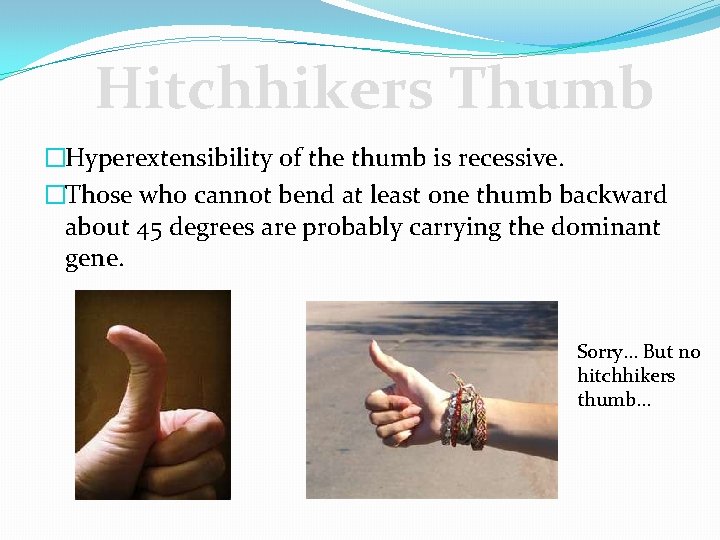
Hitchhikers Thumb �Hyperextensibility of the thumb is recessive. �Those who cannot bend at least one thumb backward about 45 degrees are probably carrying the dominant gene. Sorry… But no hitchhikers thumb…
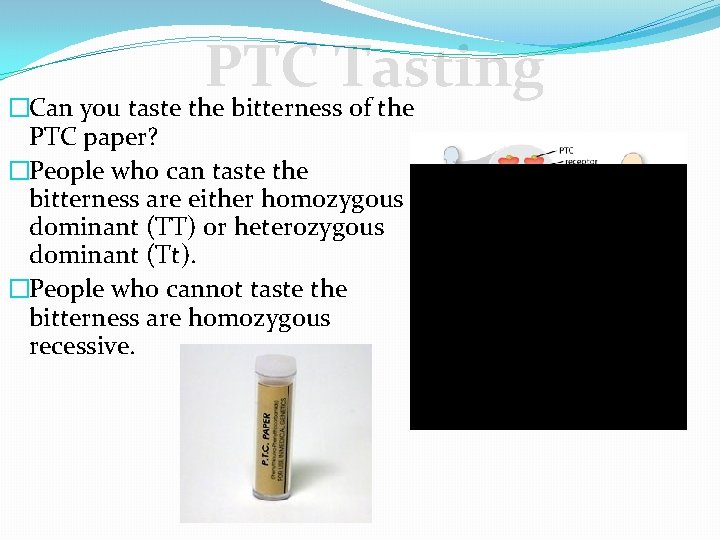
PTC Tasting �Can you taste the bitterness of the PTC paper? �People who can taste the bitterness are either homozygous dominant (TT) or heterozygous dominant (Tt). �People who cannot taste the bitterness are homozygous recessive.
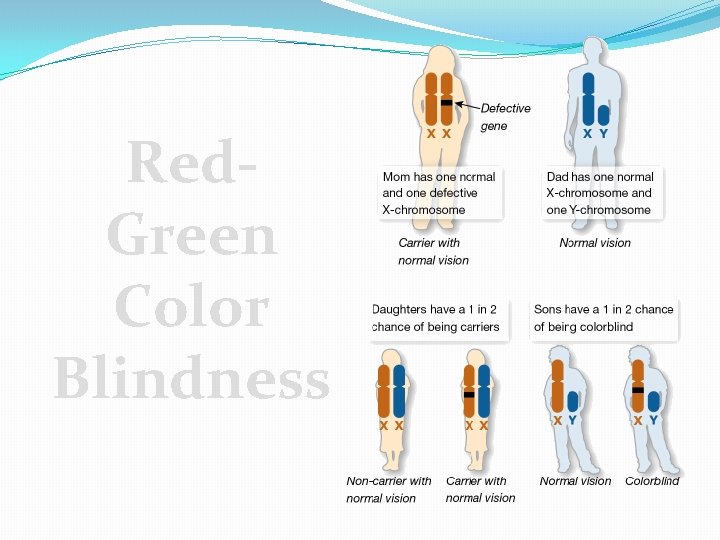
Red. Green Color Blindness
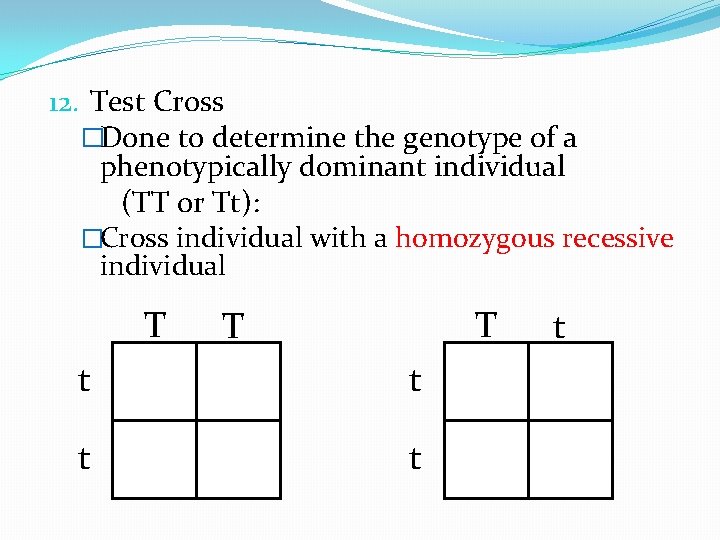
12. Test Cross �Done to determine the genotype of a phenotypically dominant individual (TT or Tt): �Cross individual with a homozygous recessive individual T T T t t t
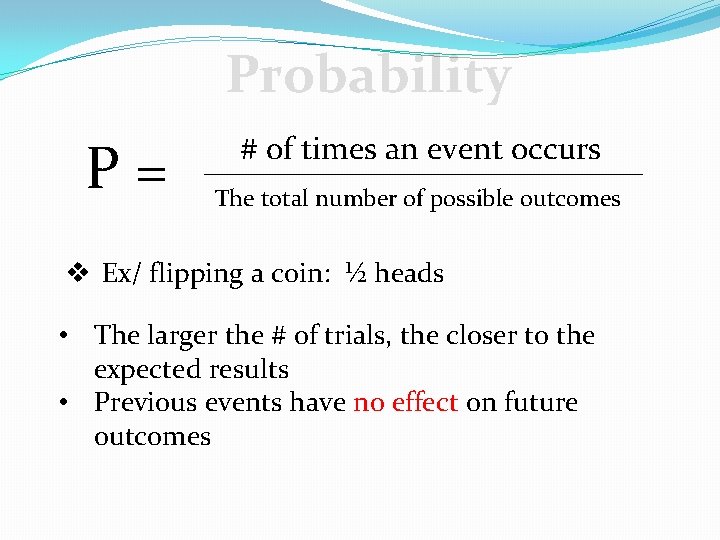
Probability P = # of times an event occurs The total number of possible outcomes v Ex/ flipping a coin: ½ heads • The larger the # of trials, the closer to the expected results • Previous events have no effect on future outcomes
Mendel’s Laws 1. Law of Segregation �Parental genes are randomly separated to the sex cells so that sex cells contain only one gene of the pair. Offspring therefore inherit one genetic allele from each parent when sex cells unite in fertilization.
Mendel’s Laws 2. Law of Independent Assortment �Genes for different traits are sorted separately from one another so that the inheritance of one trait is not dependent on the inheritance of another Not everyone with blonde hair will also inherit blue eyes!
Mendel’s Laws 3. Law of Dominance (complete dominance) �An organism with alternate forms of a gene will express the form that is dominant.
1. Incomplete Dominance �One allele is not completely dominant over the other �The heterozygous phenotype is somewhere in between the two homozygous phenotypes (blend)
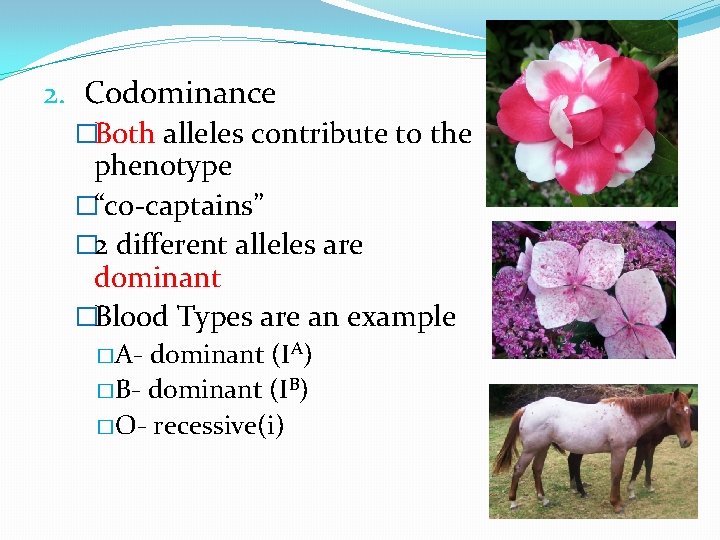
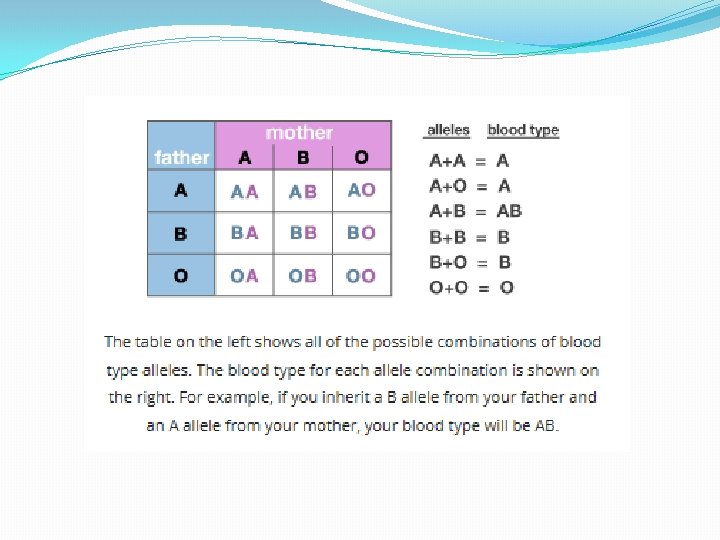
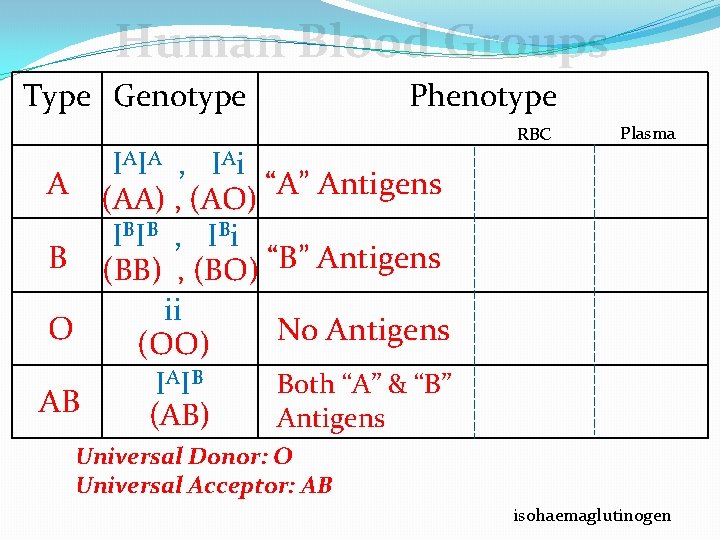
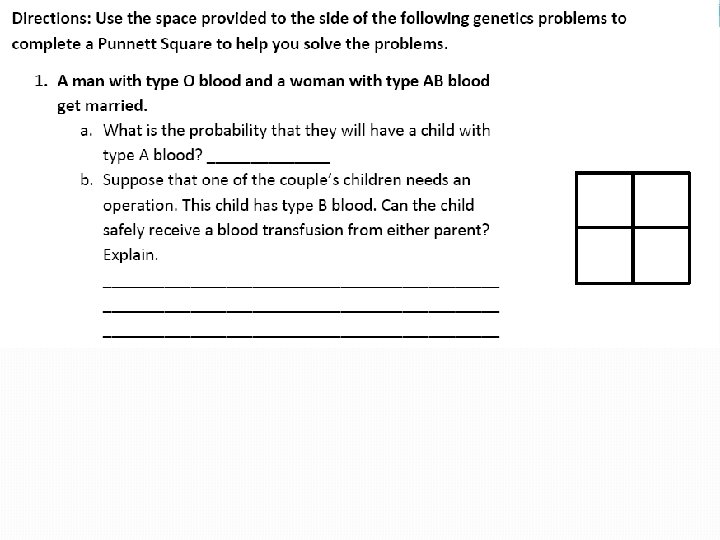
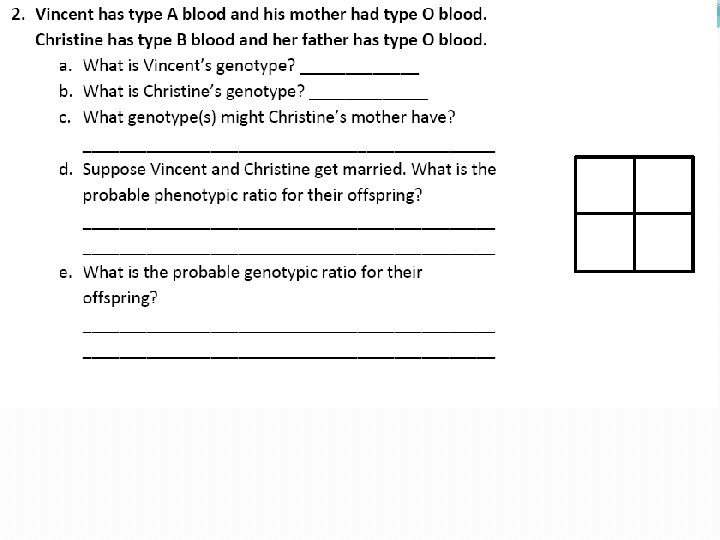
2. Codominance �Both alleles contribute to the phenotype �“co-captains” � 2 different alleles are dominant �Blood Types are an example �A- dominant (IA) �B- dominant (IB) �O- recessive(i)
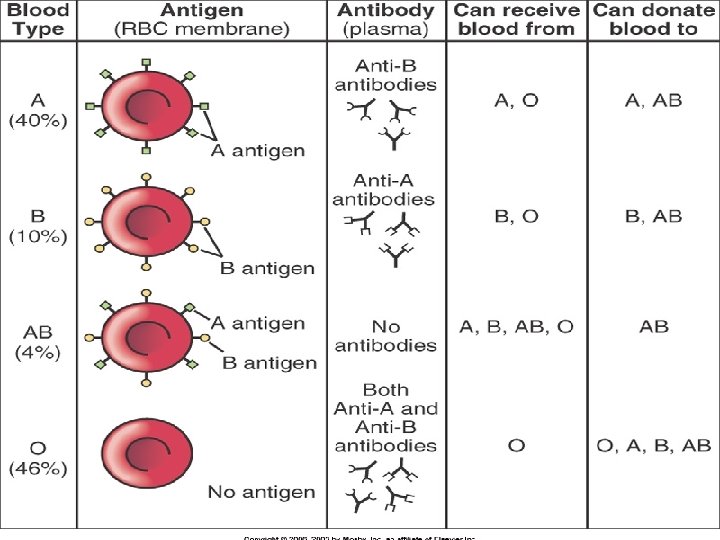
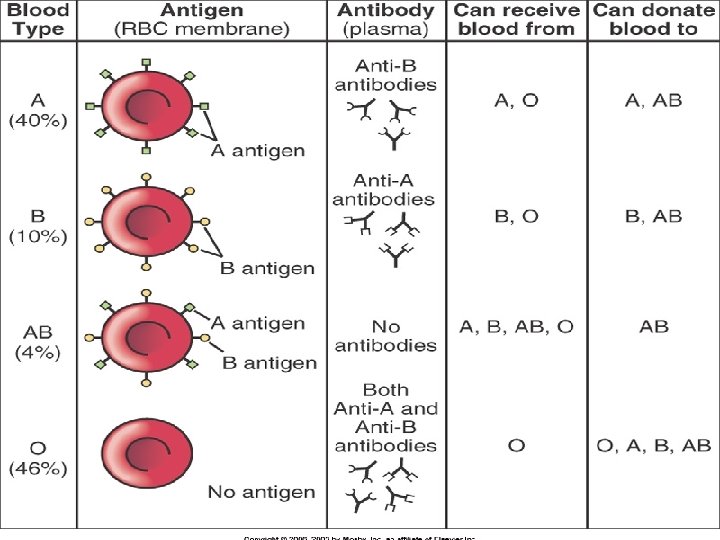
Human Blood Groups Type Genotype Phenotype IAIA , IAi A (AA) , (AO) “A” Antigens IBIB , IBi B (BB) , (BO) “B” Antigens ii O No Antigens (OO) Both “A” & “B” I AI B AB (AB) Antigens RBC Plasma Universal Donor: O Universal Acceptor: AB isohaemaglutinogen
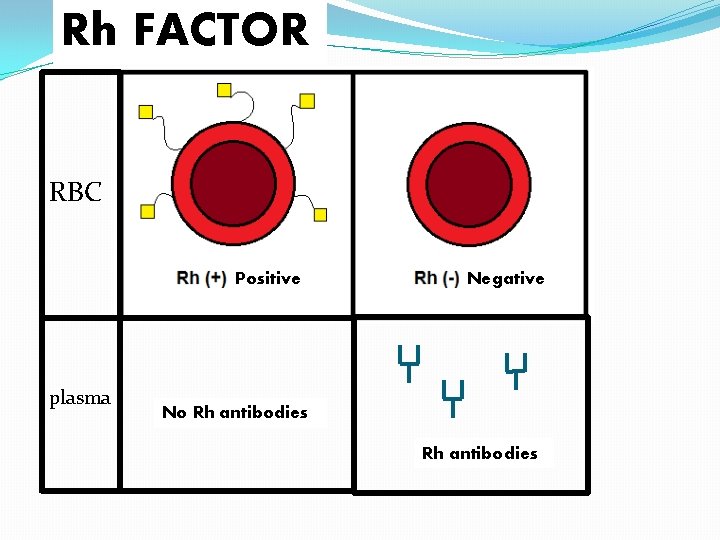
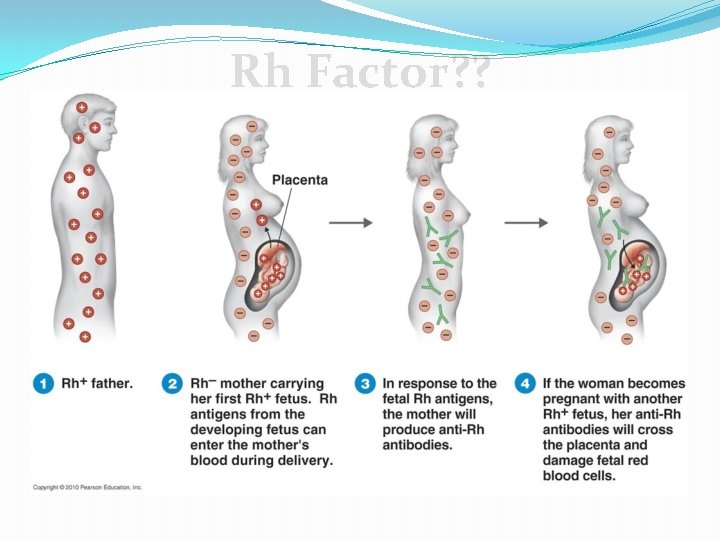
Rh FACTOR RBC Positive plasma Negative No Rh antibodies
Rh Factor? ?
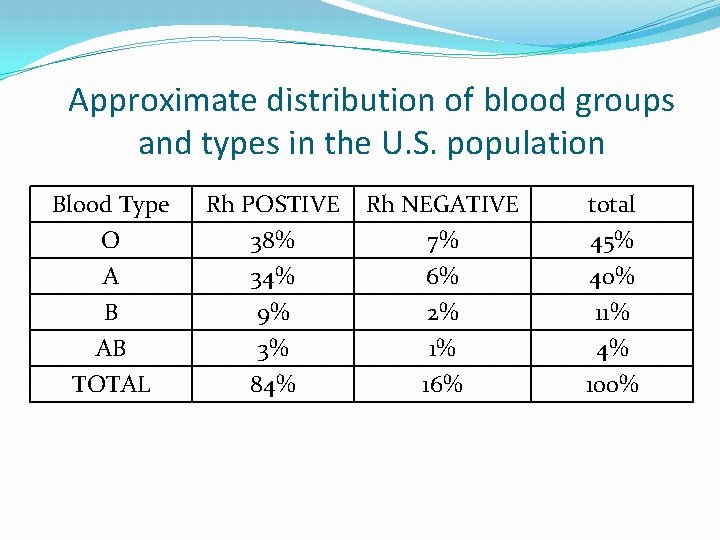
Approximate distribution of blood groups and types in the U. S. population Blood Type O A B AB TOTAL Rh POSTIVE Rh NEGATIVE 38% 7% 34% 6% 9% 2% 3% 84% 1% 16% total 45% 40% 11% 4% 100%
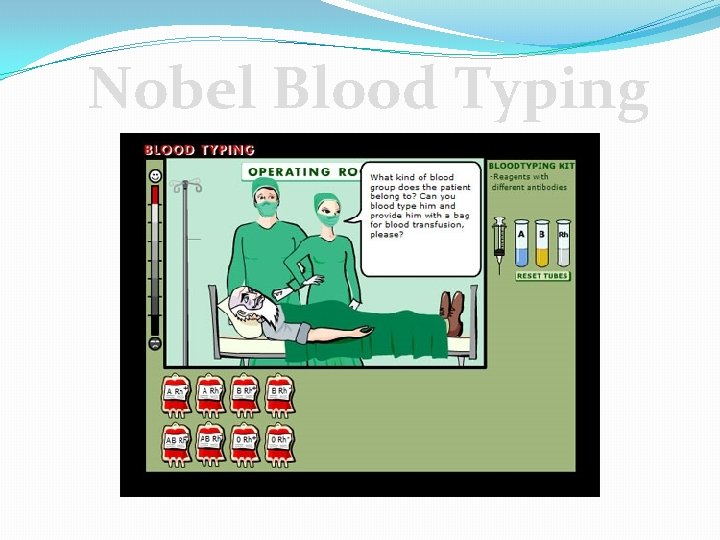
Nobel Blood Typing
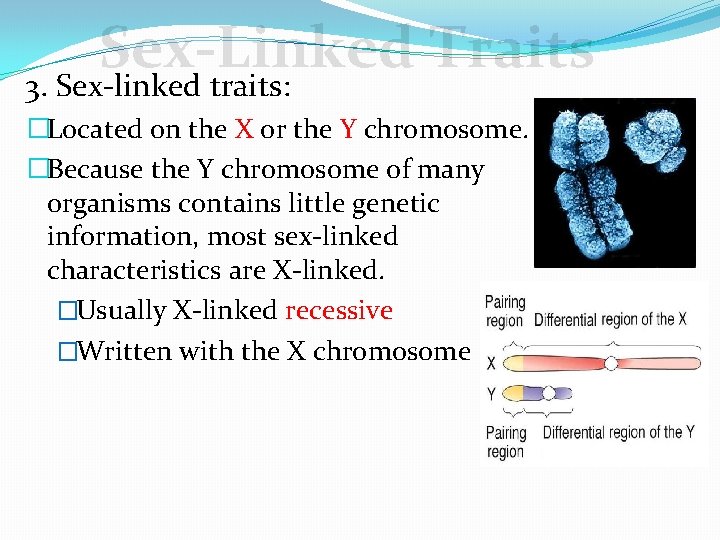
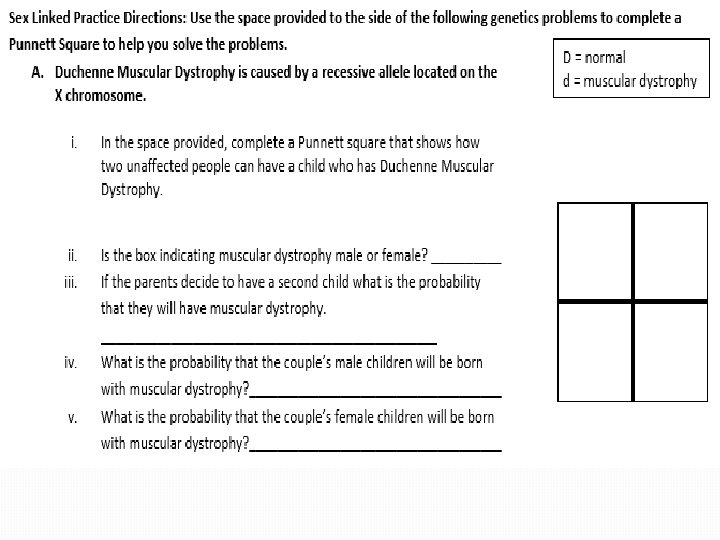
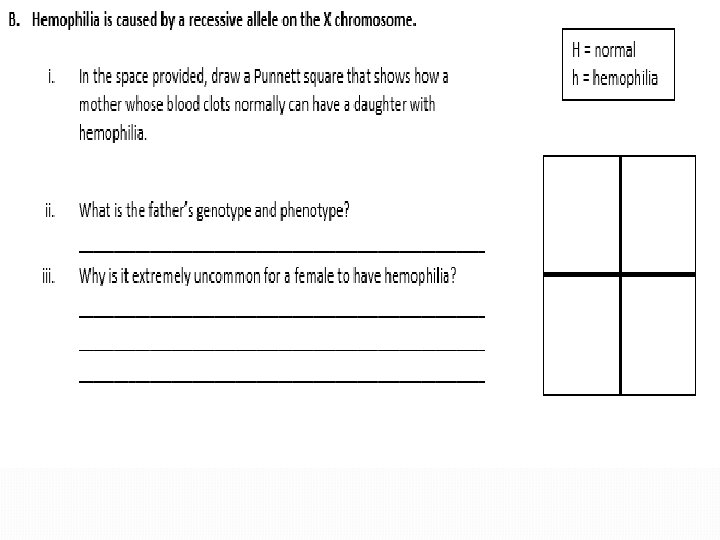
Sex-Linked Traits 3. Sex-linked traits: �Located on the X or the Y chromosome. �Because the Y chromosome of many organisms contains little genetic information, most sex-linked characteristics are X-linked. �Usually X-linked recessive �Written with the X chromosome
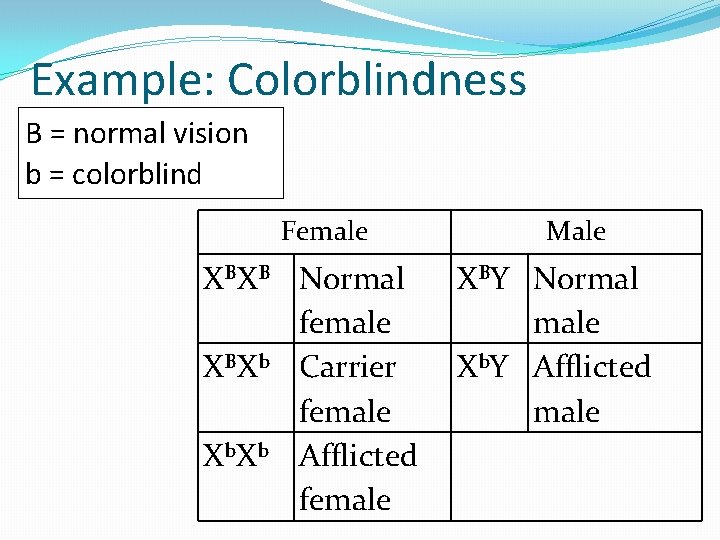
Example: Colorblindness B = normal vision b = colorblind Female XBXB Normal female XBXb Carrier female Xb. Xb Afflicted female Male XBY Normal male Xb. Y Afflicted male
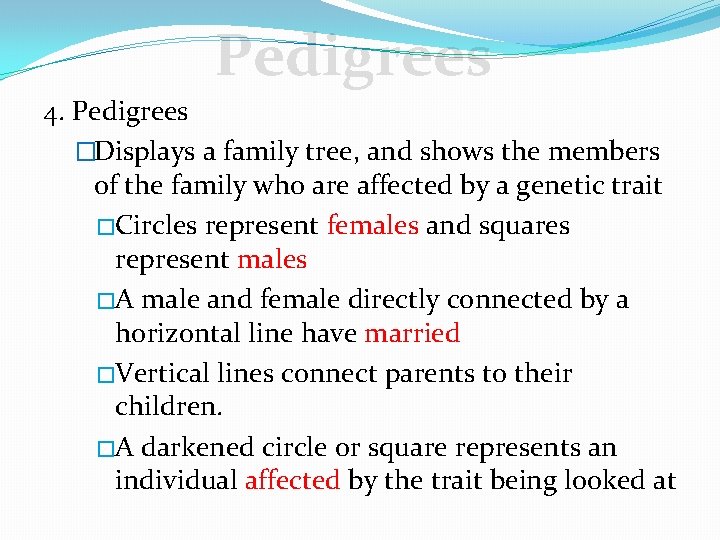
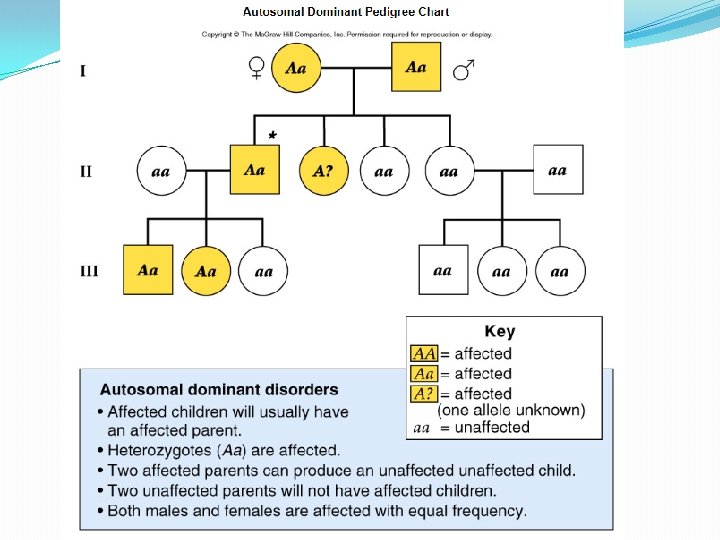
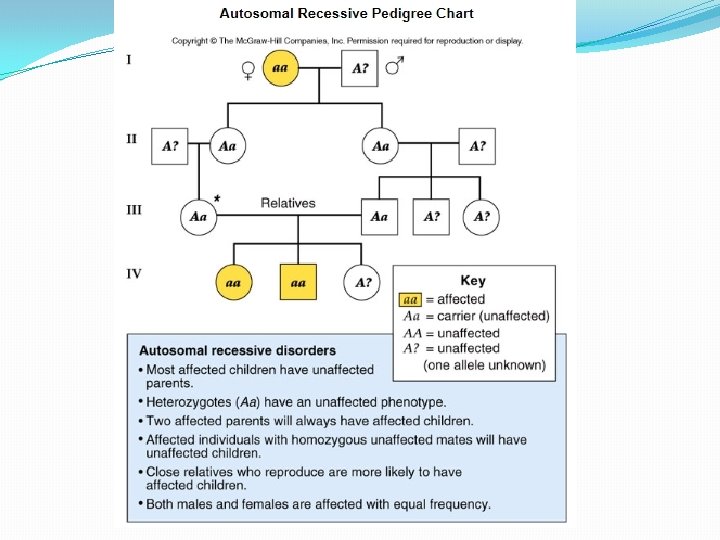
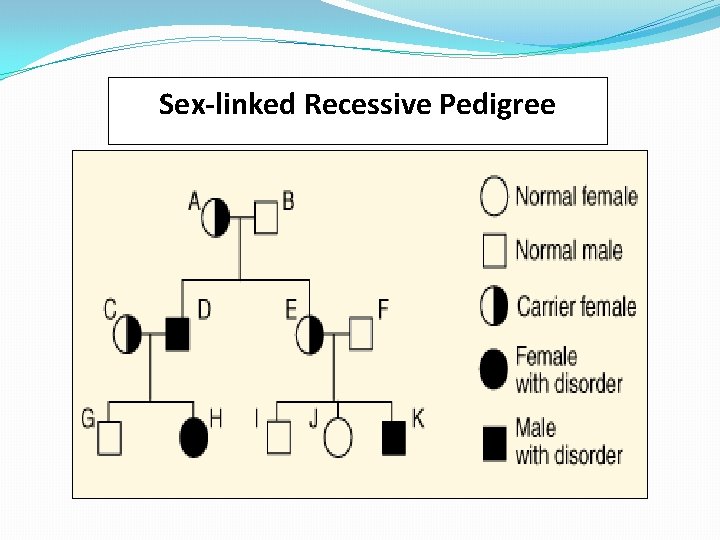
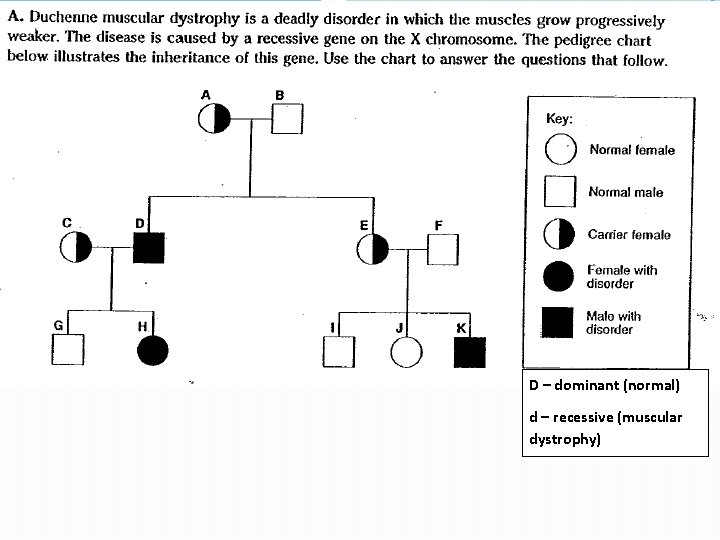
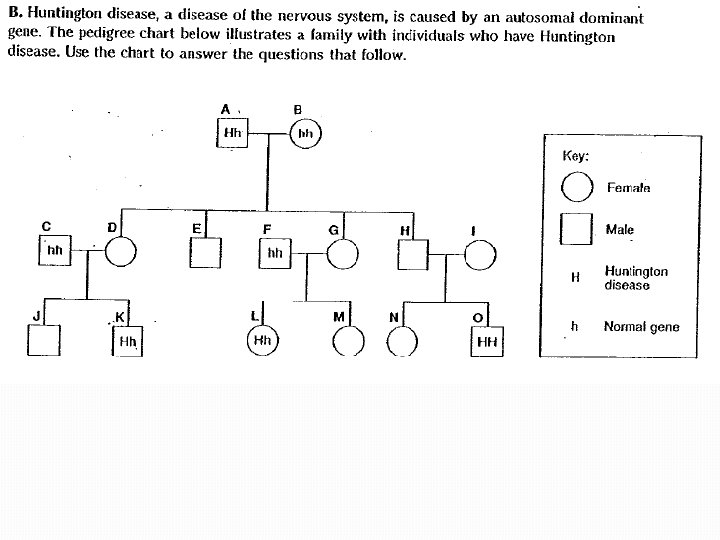
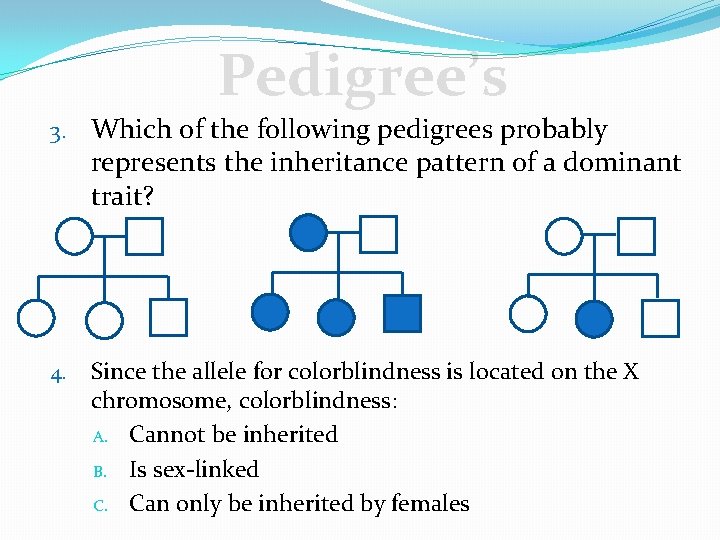
Pedigrees 4. Pedigrees �Displays a family tree, and shows the members of the family who are affected by a genetic trait �Circles represent females and squares represent males �A male and female directly connected by a horizontal line have married �Vertical lines connect parents to their children. �A darkened circle or square represents an individual affected by the trait being looked at
Sex-linked Recessive Pedigree
D – dominant (normal) d – recessive (muscular dystrophy)
60 minutes – Breeding out disease
What could you do now? �Try a review quia quiz: http: //www. quia. com/quiz/4000500. html �Work on genetics section of final review packet
Pedigree’s �Review: 1. A circle on a pedigree chart represents a: A. B. C. Male Female Person who expresses the trait 2. A shaded circle or square represents a: A. Person without the particular trait B. Female C. Person who expresses the particular trait
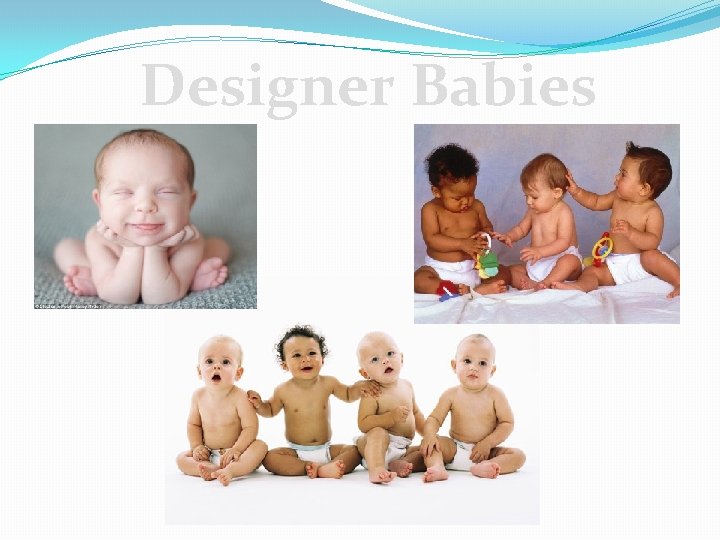
Designer Babies
Pedigree’s 3. Which of the following pedigrees probably represents the inheritance pattern of a dominant trait? 4. Since the allele for colorblindness is located on the X chromosome, colorblindness: A. Cannot be inherited B. Is sex-linked C. Can only be inherited by females
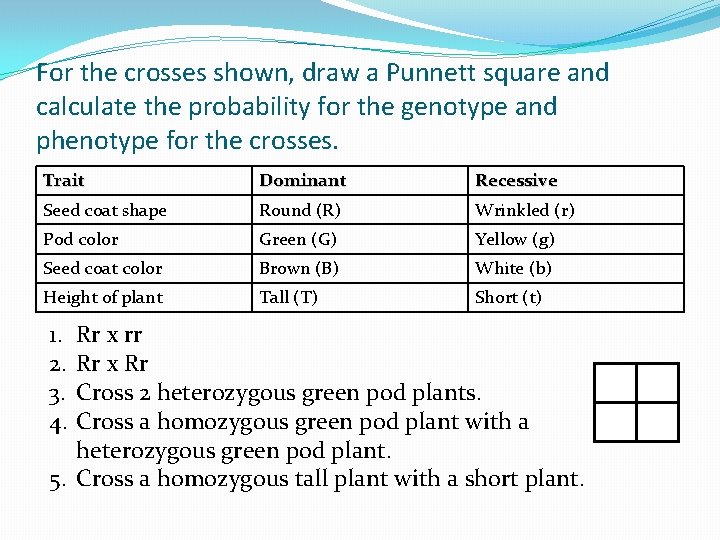
For the crosses shown, draw a Punnett square and calculate the probability for the genotype and phenotype for the crosses. Trait Dominant Recessive Seed coat shape Round (R) Wrinkled (r) Pod color Green (G) Yellow (g) Seed coat color Brown (B) White (b) Height of plant Tall (T) Short (t) 1. 2. 3. 4. Rr x rr Rr x Rr Cross 2 heterozygous green pod plants. Cross a homozygous green pod plant with a heterozygous green pod plant. 5. Cross a homozygous tall plant with a short plant.