
HTLV1 Associated Myelopathy Diagnosis and Treatment Reza Boostani
HTLV-1 Associated Myelopathy Diagnosis and Treatment Reza Boostani M. D Assistant Professor of Neurology Mashhad University of Medical Sciences Neyshabour Dec. 16, 2011
HTLV-1 HISTORY • HTLV 1 recognized for first time in a 28 Y/O black man with ATL in 1980 • Gessain and De The described a form of myelopathy caused by HTLV 1 in a patient from Martinique in 1985 • Tropical Spastic Paraparesis (TSP) • HTLV 1 Associated Myelopathy (HAM) • HAM/TSP • HTLV 1 is a RNA virus of Retroviridea family
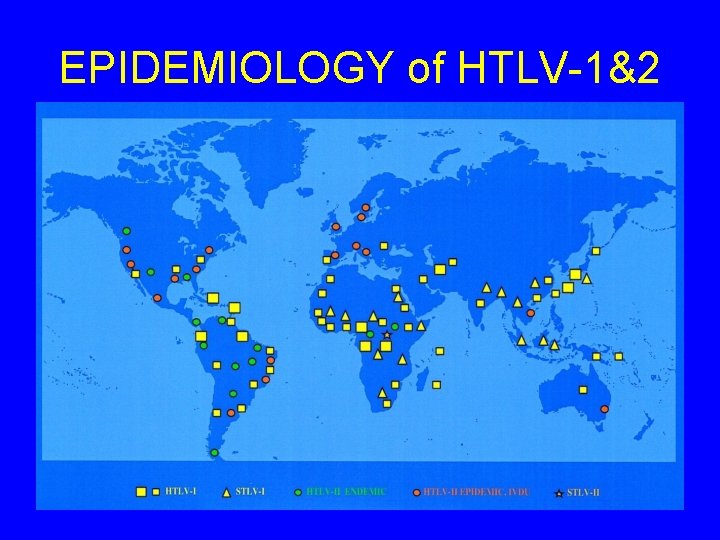
EPIDEMIOLOGY of HTLV-1&2
EPIDEMIOLOGY of HTLV-1 • Prevalence of seropositivity is different: south of Japan. . . . 10 -30% Africa. . . . . 1 -9% Caribbean islands. . . 1 -7% Neyshabour. . . 3% Mashhad. . . . 1. 3 -2. 6% • Only 1 -5% of healthy carriers lead to HAM • Incubation period: 6 months to 3 years • Mean age of onset: 30 y/o (4 th decade) • F to M ratio : 3/1 to 2/1
EPIDEMIOLOGY of HTLV-1 in IRAN • In 1992 (1370) WHO presented IRAN (Khorasan) as an endemic region of HTLV -1 • HTLV-1 is more common in the north of Khorasan province especially Neyshabour, Mashad and Ghoochan • Why Khorasan?
TRANSMISSION • Sexual contacts : M to F is more common than F to M (60/1) • Blood transfusion especially cell containing products • Perinatal • Breast feeding • I. V Drug abuse
PATHOGENESIS • Direct attack of virus to the neurons is not proved • Indirect contamination of nervous system by lymphocytes • Autoimmune mechanisms (humeral and cellular) is suspected • Main pathology is demyelination
HTLV-1 NEUROLOGICAL COMPLICATIONS • • Myelopathy Polyneuropathy ALS like syndrome Cerebellar ataxia Cranial neuropathy Dementia Myositis MS like presentation (rare)
SIGN & SYMPTOMS of HAM/TSP • • Motor weakness (spastic paraparesis) Sensory disturbances (paresthesia) Sensory ataxia Bladder dysfunction (spastic bladder) Bowl dysfunction Impotence Pain
DIAGNOSIS • SEROLOGICAL TESTS (blood & CSF): ELISA Western Blot • Polymeras Chain Reaction (PCR) • MRI (usually normal) • EMG/NCV
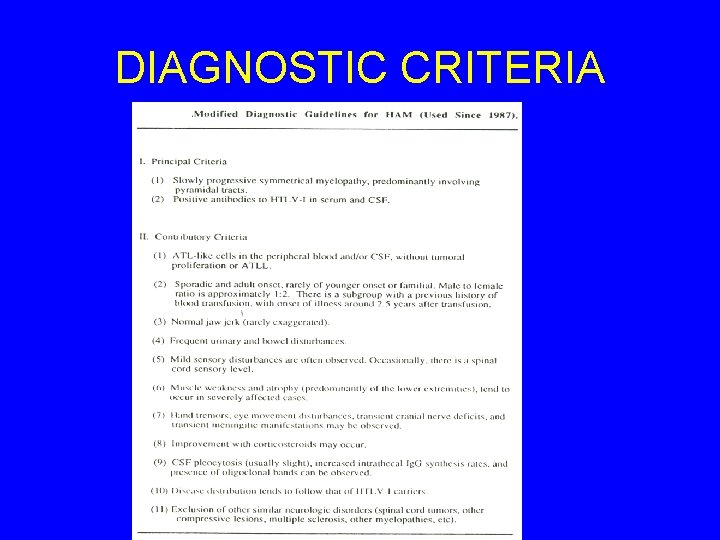
DIAGNOSTIC CRITERIA
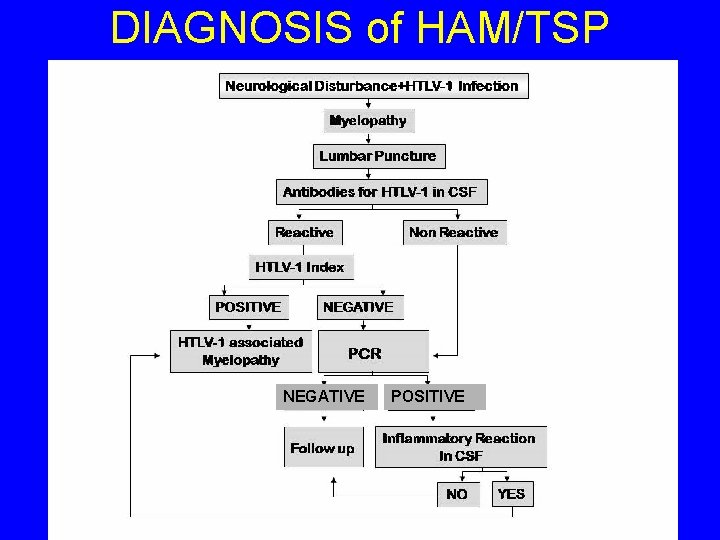
DIAGNOSIS of HAM/TSP NEGATIVE POSITIVE
TREATMENT • Symptomatic Tx: Antispastic agents Anticholinergic agents Physiotherapy • Etiological Tx: Corticosteroids Cytotoxics Alpha Interferon Other Immunomodulators
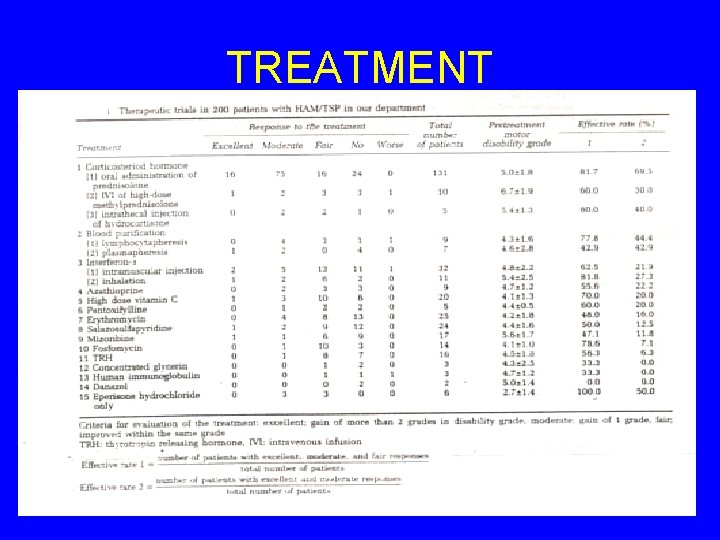
TREATMENT
New Treatment Protocol for HAM/TSP 1 - Alpha IFN 2 - Corticosteroid 3 - Sodium Valproate

55 Thank you
- Slides: 16