
HSRA HighSpeed Hierarchical Synchronous Reconfigurable Array William Tsu
HSRA: High-Speed, Hierarchical Synchronous Reconfigurable Array William Tsu, Kip Macy, Atul Joshi, Randy Huang, Norman Walker, Tony Tung, Omid Rowhani, Varghese George, John Wawrzynek, and André De. Hon BRASS Project University of California at Berkeley
Myth FPGAs inherently run at an order of magnitude lower clock rates than microprocessors.
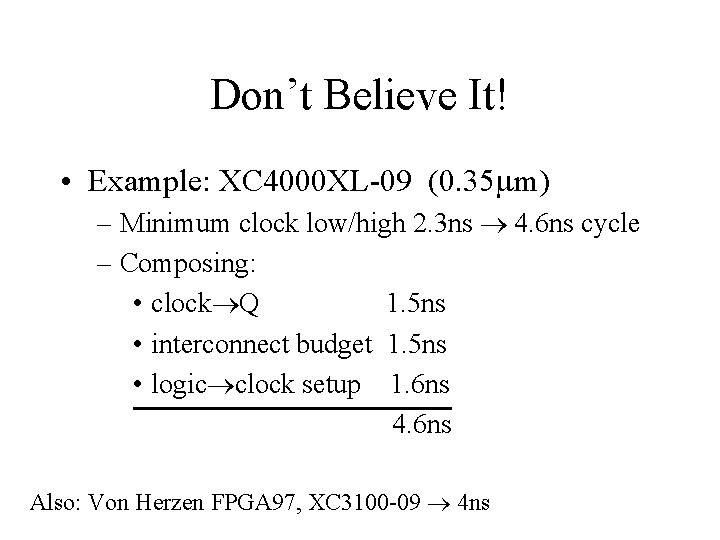
Don’t Believe It! • Example: XC 4000 XL-09 (0. 35 mm) – Minimum clock low/high 2. 3 ns 4. 6 ns cycle – Composing: • clock Q 1. 5 ns • interconnect budget 1. 5 ns • logic clock setup 1. 6 ns 4. 6 ns Also: Von Herzen FPGA 97, XC 3100 -09 4 ns
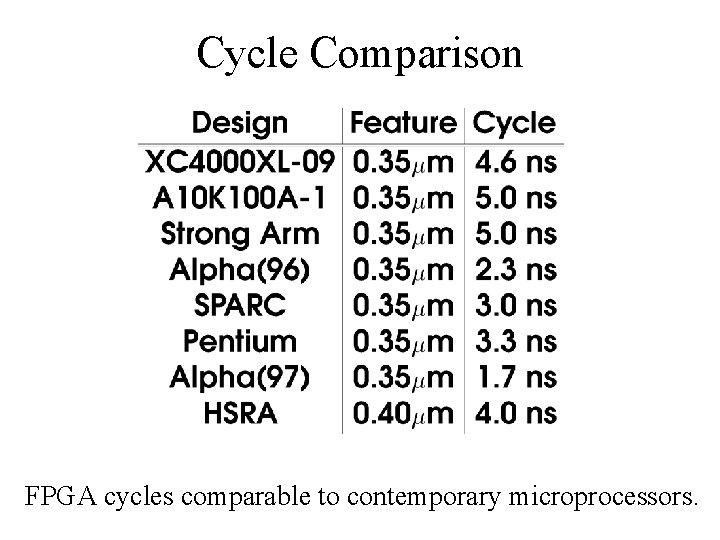
Cycle Comparison FPGA cycles comparable to contemporary microprocessors.

Outline • • • FPGA cycle times Why low frequency? Architecture and CAD for high frequency HSRA Experiments Assessment
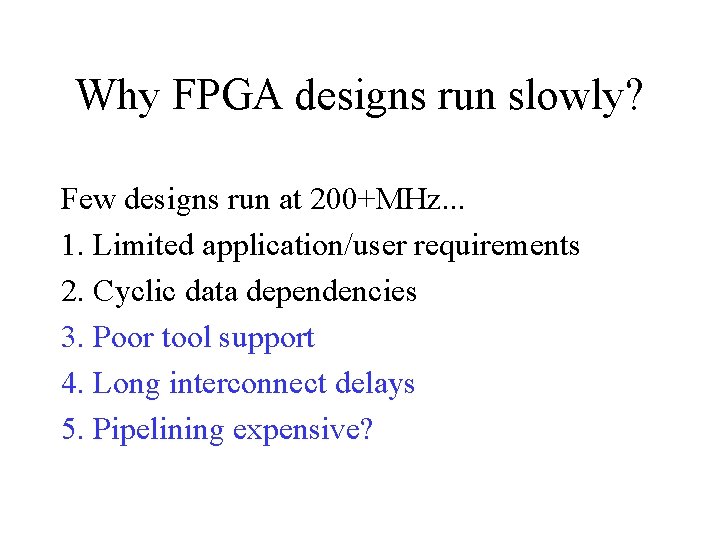
Why FPGA designs run slowly? Few designs run at 200+MHz. . . 1. Limited application/user requirements 2. Cyclic data dependencies 3. Poor tool support 4. Long interconnect delays 5. Pipelining expensive?
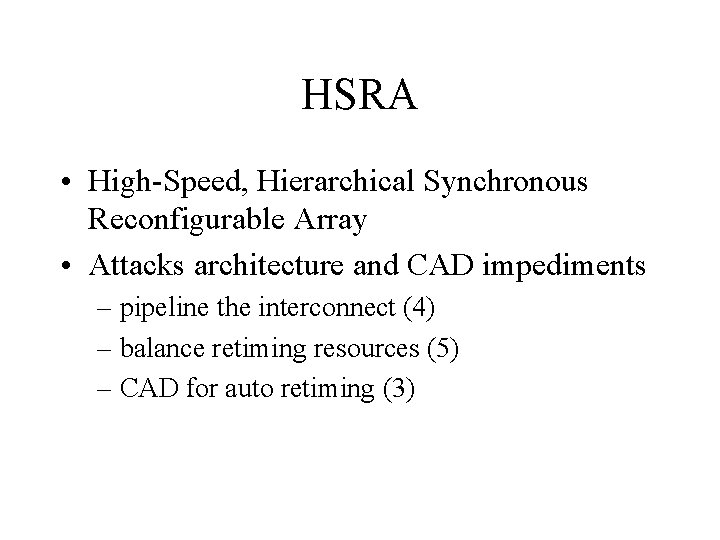
HSRA • High-Speed, Hierarchical Synchronous Reconfigurable Array • Attacks architecture and CAD impediments – pipeline the interconnect (4) – balance retiming resources (5) – CAD for auto retiming (3)
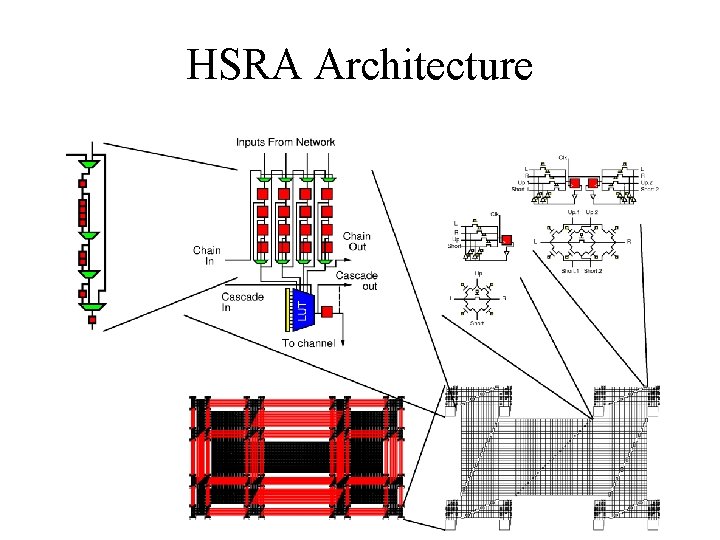
HSRA Architecture
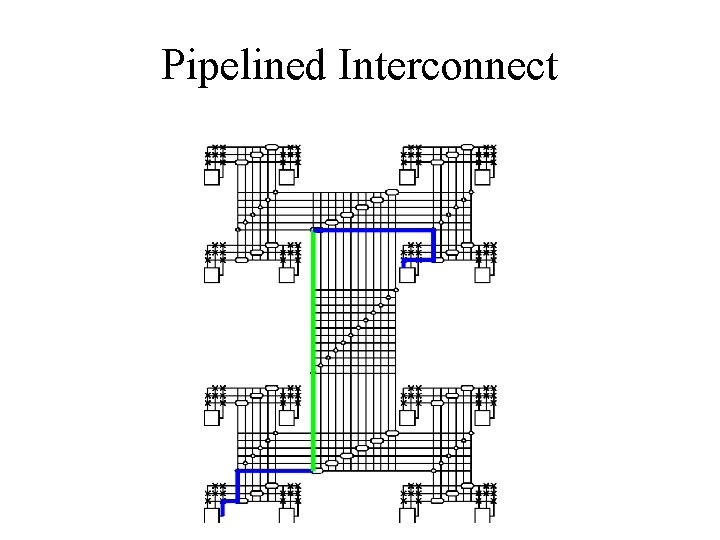
Pipelined Interconnect
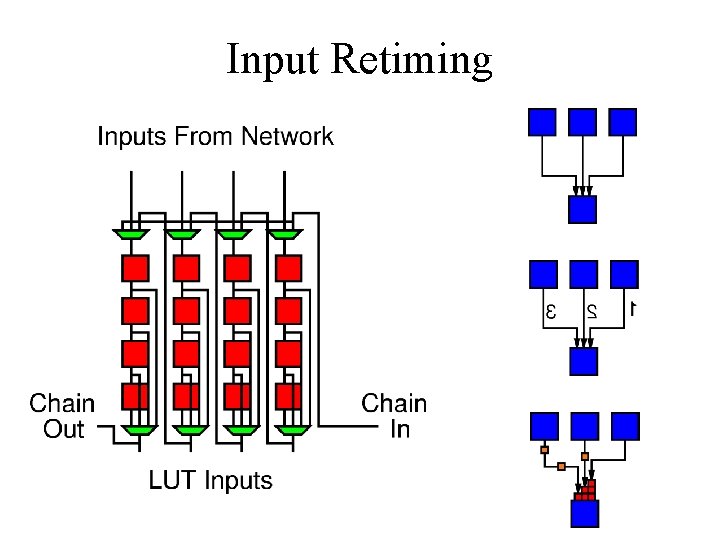
Input Retiming
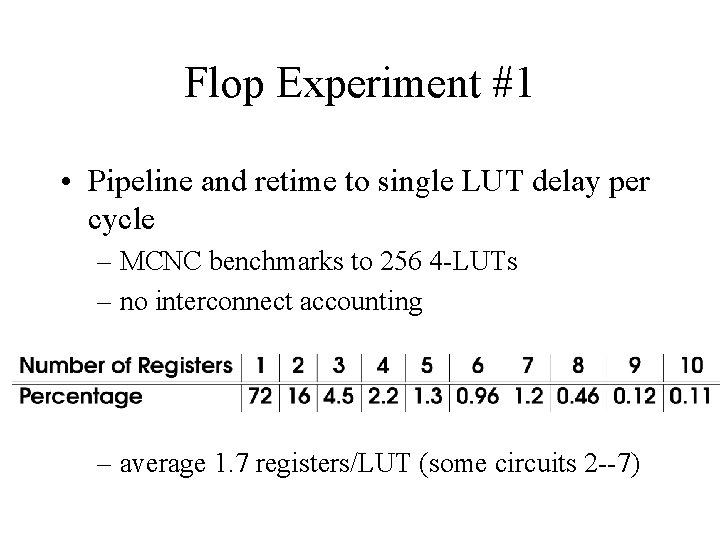
Flop Experiment #1 • Pipeline and retime to single LUT delay per cycle – MCNC benchmarks to 256 4 -LUTs – no interconnect accounting – average 1. 7 registers/LUT (some circuits 2 --7)
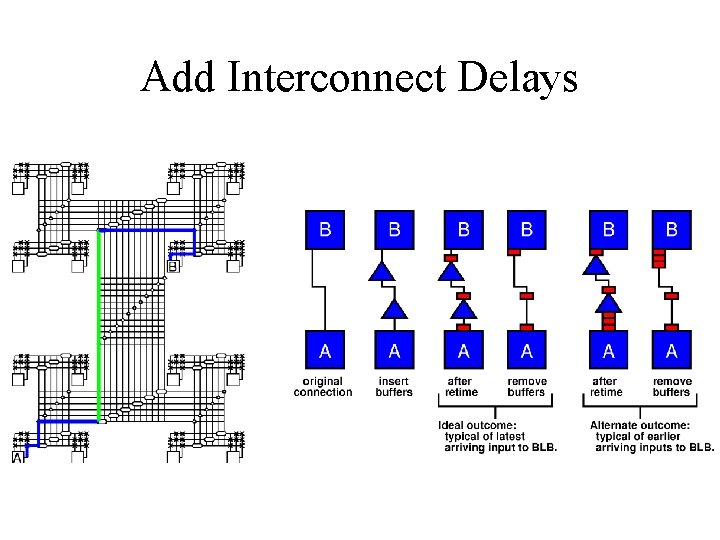
Add Interconnect Delays
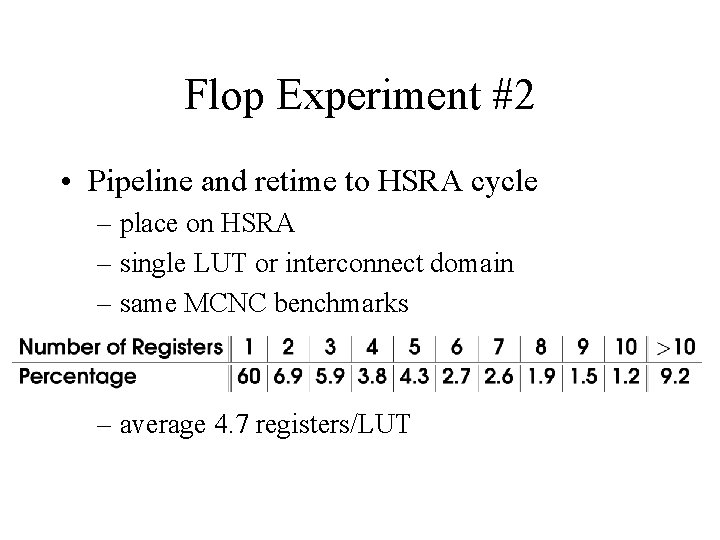
Flop Experiment #2 • Pipeline and retime to HSRA cycle – place on HSRA – single LUT or interconnect domain – same MCNC benchmarks – average 4. 7 registers/LUT
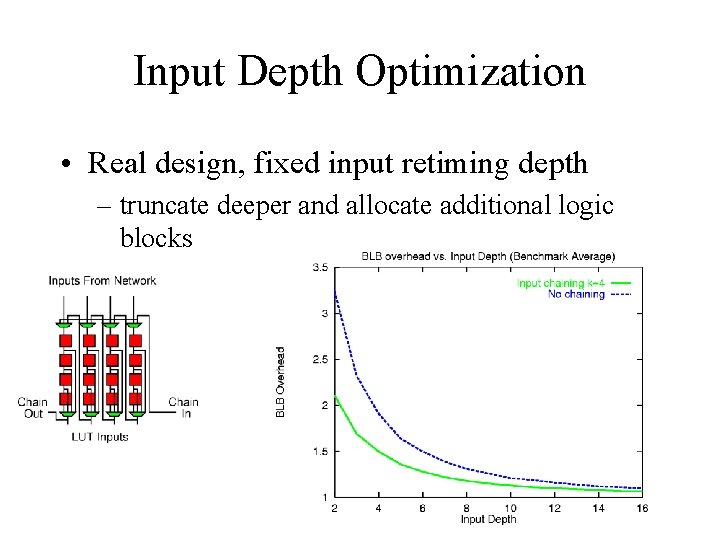
Input Depth Optimization • Real design, fixed input retiming depth – truncate deeper and allocate additional logic blocks
Assessment • Cost: – our designs: 1. 5 area of no pipelining – plausible ballpark for other designs – w/ 8 deep retiming, 20% BLB overhead – total: 1. 8 area • Running LUT delay on FPGA – 70% overhead for retiming – freq still vary with interconnect • Benefits – 2 --17 higher frequency operation than unpipelined Net Area-Time win + automation/consistency
Summary • No inherent reasons for FPGAs/RC arrays to run slower than microprocessors • Current FPGAs lack architectural and CAD support to reliably achieve high clock rates • HSRA demonstrates how to attack problems – retiming balance – interconnect pipelining – automated retiming
- Slides: 16