
HSEEP How Simple Exercises Explode Perpetually Karla Black
HSEEP How Simple Exercises Explode Perpetually? ? ? Karla Black, Kent County Health Department
What is HSEEP? “A consistent approach to capabilities-based exercise program management that uses a common methodology to measure progress toward building, sustaining, and delivering core capabilities. ” 2
HSEEP Guidance HSEEP Fundamentals • Program Management • Design and Development • Conduct • Evaluation • Improvement Planning • http: //www. fema. gov/media-library-data/20130726 -1914 -25045 -8890/hseep_apr 13_. pdf 3
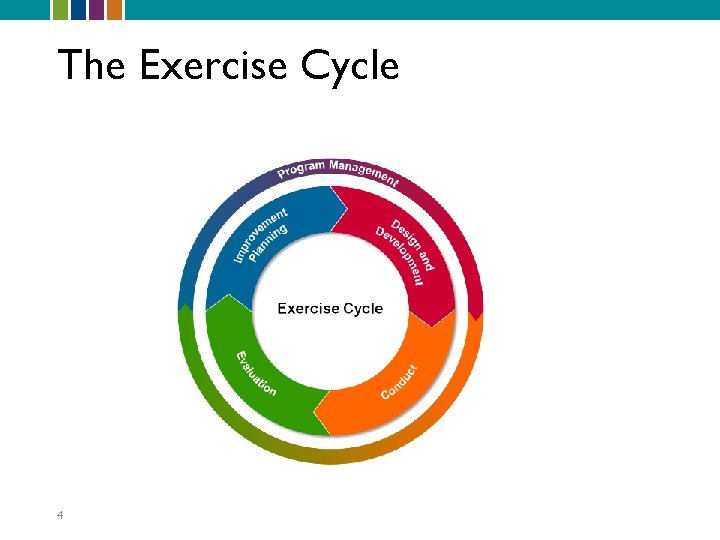
The Exercise Cycle 4
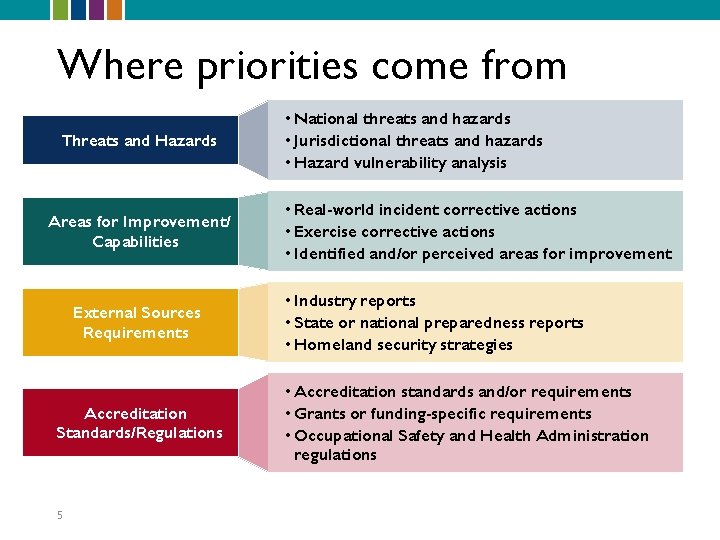
Where priorities come from Threats and Hazards Areas for Improvement/ Capabilities External Sources Requirements Accreditation Standards/Regulations 5 • National threats and hazards • Jurisdictional threats and hazards • Hazard vulnerability analysis • Real-world incident corrective actions • Exercise corrective actions • Identified and/or perceived areas for improvement • Industry reports • State or national preparedness reports • Homeland security strategies • Accreditation standards and/or requirements • Grants or funding-specific requirements • Occupational Safety and Health Administration regulations
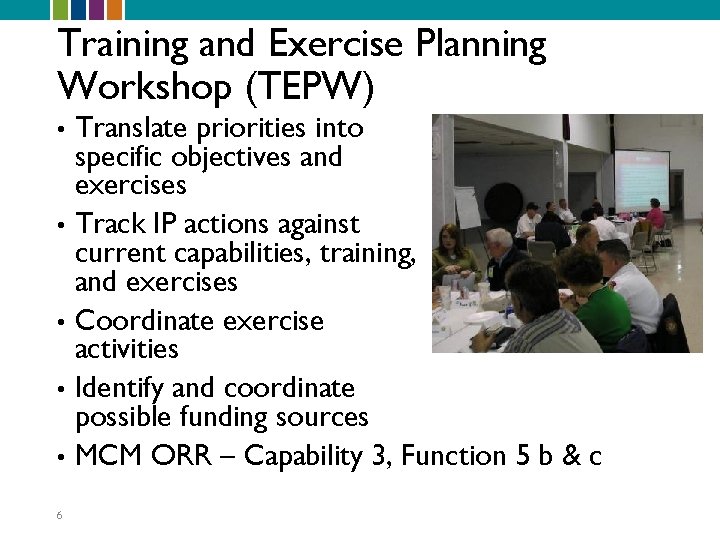
Training and Exercise Planning Workshop (TEPW) • • • 6 Translate priorities into specific objectives and exercises Track IP actions against current capabilities, training, and exercises Coordinate exercise activities Identify and coordinate possible funding sources MCM ORR – Capability 3, Function 5 b & c
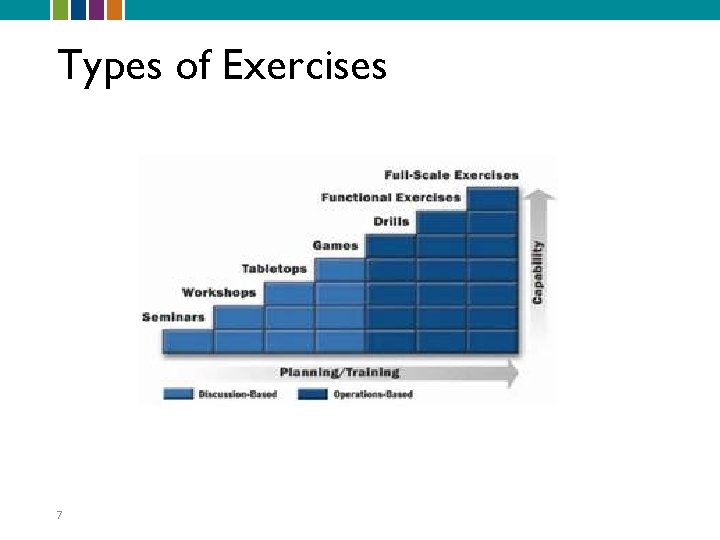
Types of Exercises 7
HSEEP is guidance, not law! At least according to FEMA • Not all exercises require the same amount of work/planning. • • Planning meetings Documentation Capabilities differ across disciplines • After Action Reports/Improvement Plans • Make it for you! • 8
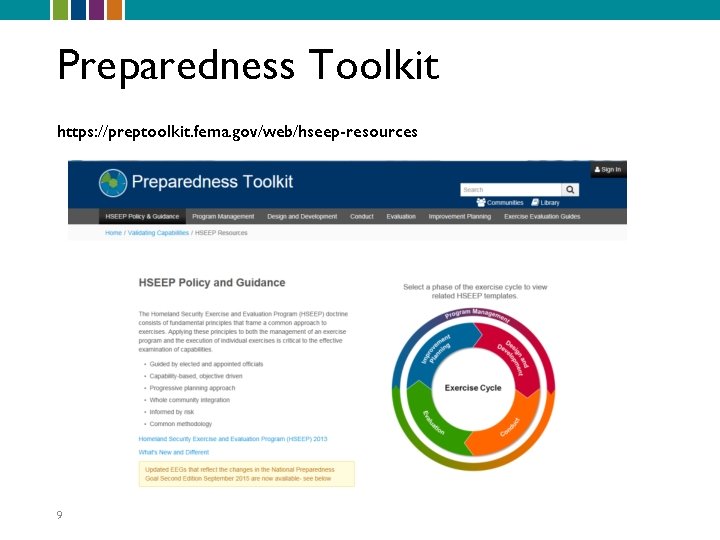
Preparedness Toolkit https: //preptoolkit. fema. gov/web/hseep-resources 9
Courses that are available • FEMA Independent Study Courses (Online) IS-120. a – An Introduction to Exercises IS-130 – Exercise Evaluation and Improvement Planning FEMA L 146 – HSEEP • • • Online delivery or in person FEMA’s Master Exercise Practitioner Program • • • 3 courses over 3 weeks at the Emergency Management Institute (EMI) Application period starts May 1 MCM ORR • 10 Capability 3, Function 5, Planning b: Advanced

AAR The After Agony Report Larry Zimmerman, MDHHS
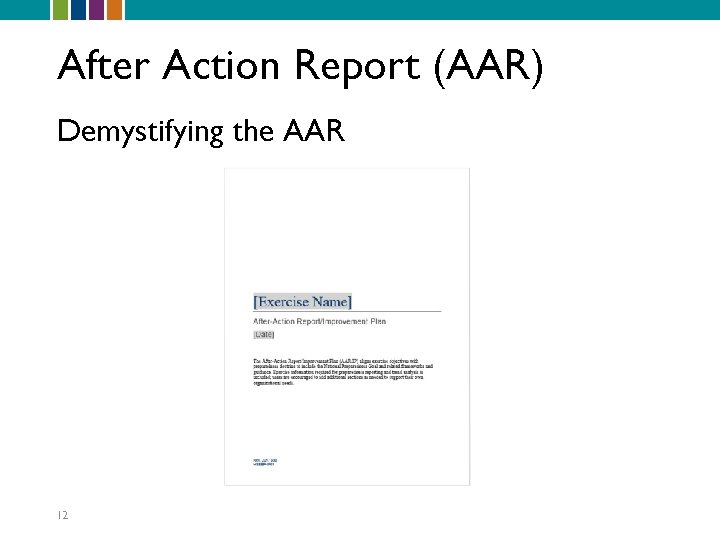
After Action Report (AAR) Demystifying the AAR 12
Why AAR? A few reasons: • To prove to the DEPR/CDC completion of training and exercise deliverables/requirements • To verify strengths or identify weaknesses in plans, training and equipment • To build a roadmap to correct identified gaps • Funding opportunities/Leadership buy-in 13
Why AAR? A few more reasons: • To learn from and share our experiences? • To document new ideas and unique processes? • To build community relationships? • Score ultimate level on the ORR 14
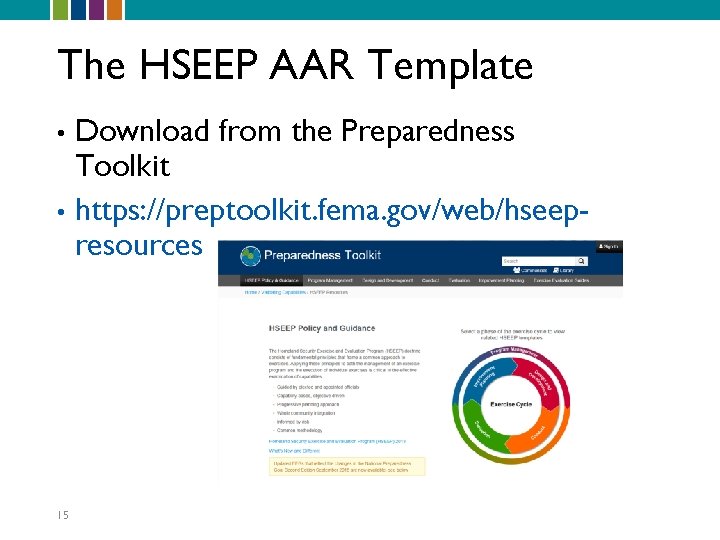
The HSEEP AAR Template Download from the Preparedness Toolkit • https: //preptoolkit. fema. gov/web/hseepresources • 15
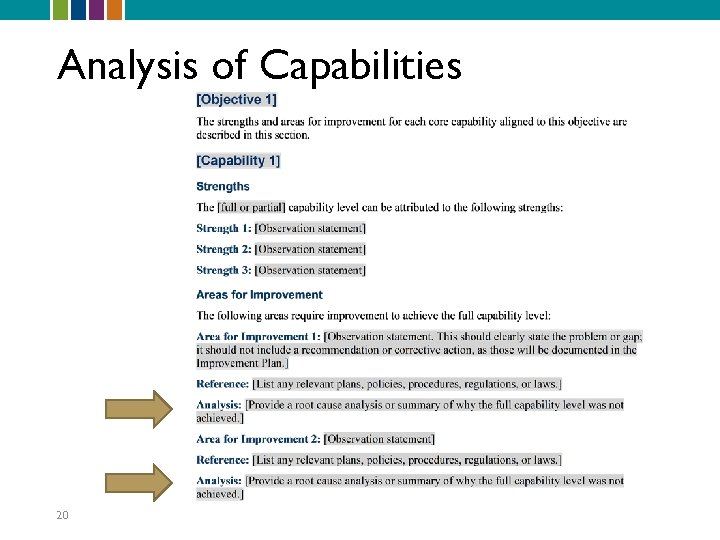
Basic sections of the HSEEP AAR Cover Page • Exercise Overview • Analysis of Capabilities • Improvement Plan • 16
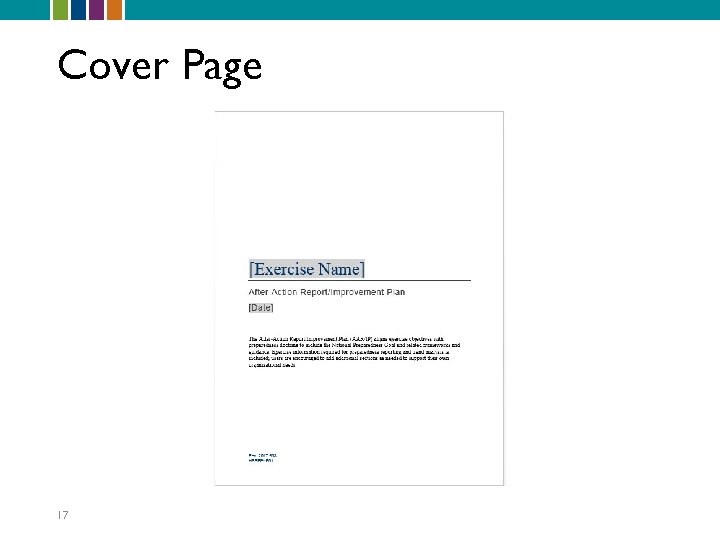
Cover Page 17
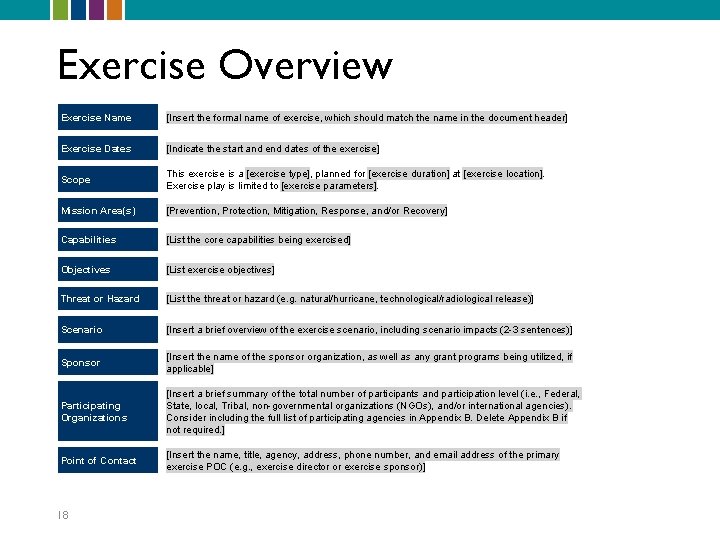
Exercise Overview Exercise Name [Insert the formal name of exercise, which should match the name in the document header] Exercise Dates [Indicate the start and end dates of the exercise] Scope This exercise is a [exercise type], planned for [exercise duration] at [exercise location]. Exercise play is limited to [exercise parameters]. Mission Area(s) [Prevention, Protection, Mitigation, Response, and/or Recovery] Capabilities [List the core capabilities being exercised] Objectives [List exercise objectives] Threat or Hazard [List the threat or hazard (e. g. natural/hurricane, technological/radiological release)] Scenario [Insert a brief overview of the exercise scenario, including scenario impacts (2 -3 sentences)] Sponsor [Insert the name of the sponsor organization, as well as any grant programs being utilized, if applicable] Participating Organizations [Insert a brief summary of the total number of participants and participation level (i. e. , Federal, State, local, Tribal, non-governmental organizations (NGOs), and/or international agencies). Consider including the full list of participating agencies in Appendix B. Delete Appendix B if not required. ] Point of Contact [Insert the name, title, agency, address, phone number, and email address of the primary exercise POC (e. g. , exercise director or exercise sponsor)] 18
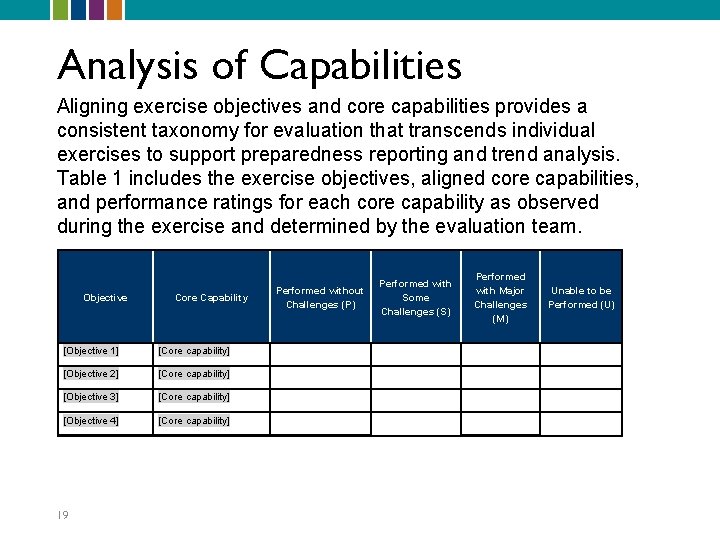
Analysis of Capabilities Aligning exercise objectives and core capabilities provides a consistent taxonomy for evaluation that transcends individual exercises to support preparedness reporting and trend analysis. Table 1 includes the exercise objectives, aligned core capabilities, and performance ratings for each core capability as observed during the exercise and determined by the evaluation team. Objective Core Capability [Objective 1] [Core capability] [Objective 2] [Core capability] [Objective 3] [Core capability] [Objective 4] [Core capability] 19 Performed without Challenges (P) Performed with Some Challenges (S) Performed with Major Challenges (M) Unable to be Performed (U)
Analysis of Capabilities 20
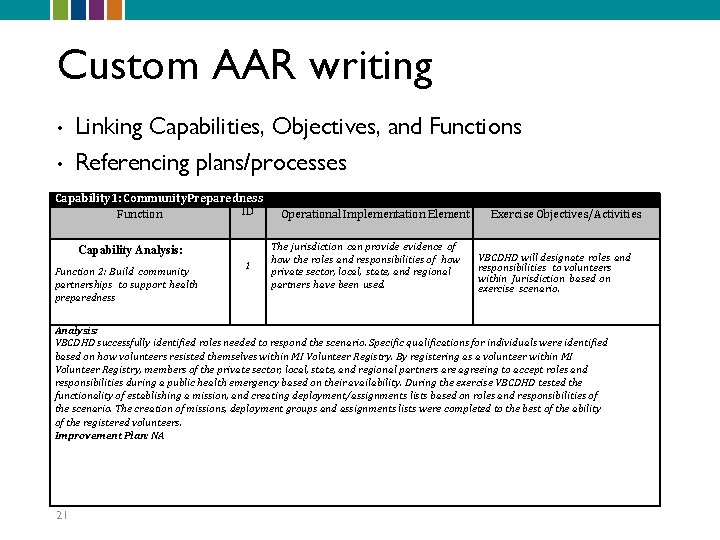
Custom AAR writing • • Linking Capabilities, Objectives, and Functions Referencing plans/processes Capability 1: Community. Preparedness ID Function Capability Analysis: Function 2: Build community partnerships to support health preparedness 1 Operational Implementation Element The jurisdiction can provide evidence of how the roles and responsibilities of how private sector, local, state, and regional partners have been used. Exercise Objectives/Activities VBCDHD will designate roles and responsibilities to volunteers within Jurisdiction based on exercise scenario. Analysis: VBCDHD successfully identified roles needed to respond the scenario. Specific qualifications for individuals were identified based on how volunteers resisted themselves within MI Volunteer Registry. By registering as a volunteer within MI Volunteer Registry, members of the private sector, local, state, and regional partners are agreeing to accept roles and responsibilities during a public health emergency based on their availability. During the exercise VBCDHD tested the functionality of establishing a mission, and creating deployment/assignments lists based on roles and responsibilities of the scenario. The creation of missions, deployment groups and assignments lists were completed to the best of the ability of the registered volunteers. Improvement Plan: NA 21
![Improvement Plan Core Capability Issue/Area for Improvement Corrective Action Capability 1: [Capability Name] 1.](http://slidetodoc.com/presentation_image_h2/5312f3c3eb194bc3bd8a590054891a5c/image-22.jpg "Improvement Plan Core Capability Issue/Area for Improvement Corrective Action Capability 1: [Capability Name] 1.")
Improvement Plan Core Capability Issue/Area for Improvement Corrective Action Capability 1: [Capability Name] 1. [Area for Improvement] [Corrective Action 1] Capability 1: [Capability Name] 1. [Area for Improvement] [Corrective Action 2] Capability 1: [Capability Name] 2. [Area for Improvement] [Corrective Action 1] Capability 1: [Capability Name] 2. [Area for Improvement] [Corrective Action 2] Capability 2: [Capability Name] 1. [Area for Improvement] [Corrective Action 1] Capability 2: [Capability Name] 1. [Area for Improvement] [Corrective Action 2] Capability 2: [Capability Name] 2. [Area for Improvement] [Corrective Action 1] Capability 2: [Capability Name] 2. [Area for Improvement] [Corrective Action 2] 22 Capability Element Primary Responsible Organization POC Start Date Completion Date
Tips for AAR writing starts at the beginning of the exercise design process • Measurable Objectives • Strong Evaluations • Collaboration and Teamwork • 23
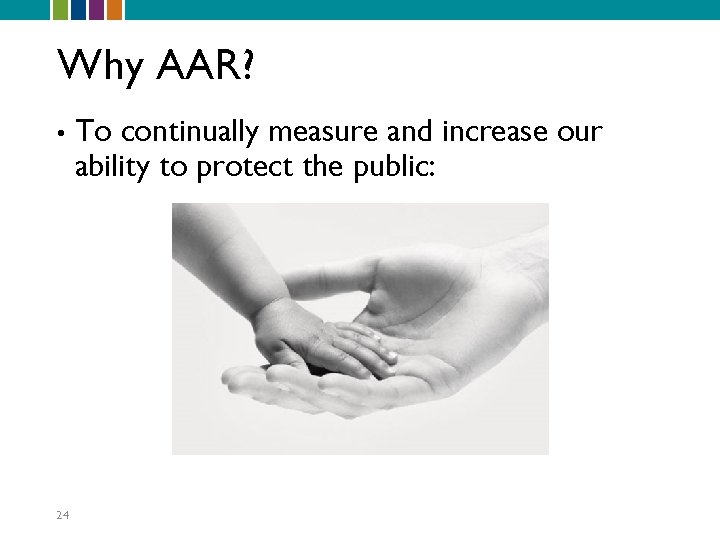
Why AAR? • 24 To continually measure and increase our ability to protect the public:

Open Discussion 25
- Slides: 25