
HSCT IN ADULT LEUKEMIA Dr Obieche J C
HSCT IN ADULT LEUKEMIA Dr Obieche J. C.
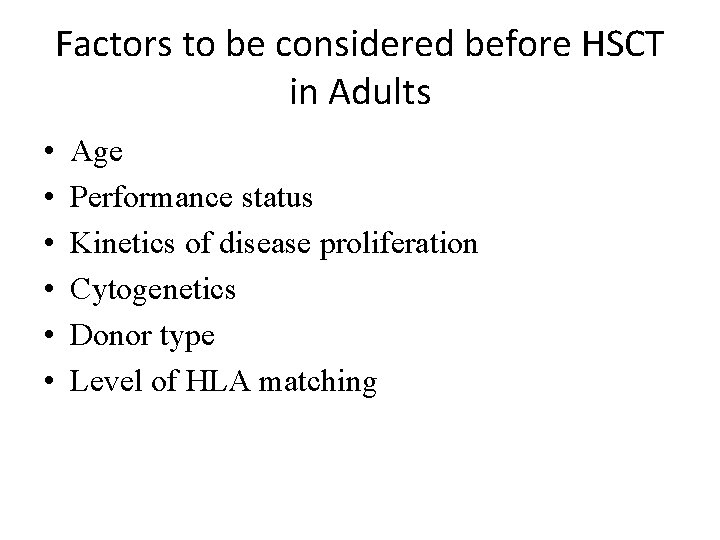
Factors to be considered before HSCT in Adults • • • Age Performance status Kinetics of disease proliferation Cytogenetics Donor type Level of HLA matching
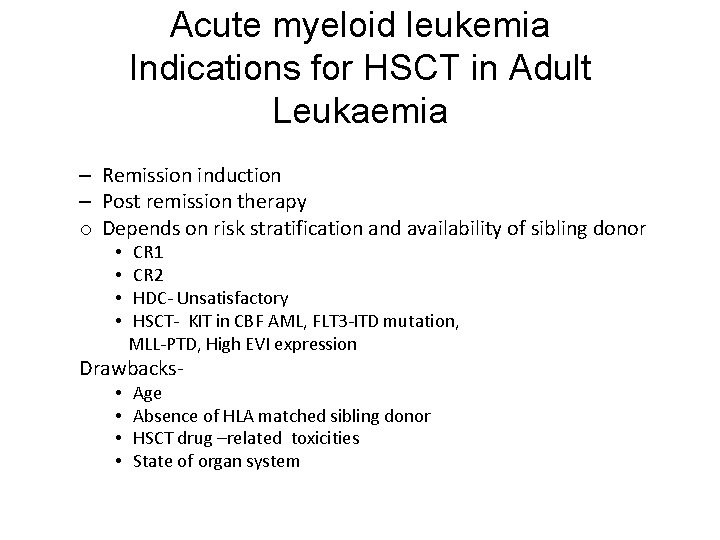
Acute myeloid leukemia Indications for HSCT in Adult Leukaemia – Remission induction – Post remission therapy o Depends on risk stratification and availability of sibling donor • • CR 1 CR 2 HDC- Unsatisfactory HSCT- KIT in CBF AML, FLT 3 -ITD mutation, MLL-PTD, High EVI expression Drawbacks • • Age Absence of HLA matched sibling donor HSCT drug –related toxicities State of organ system
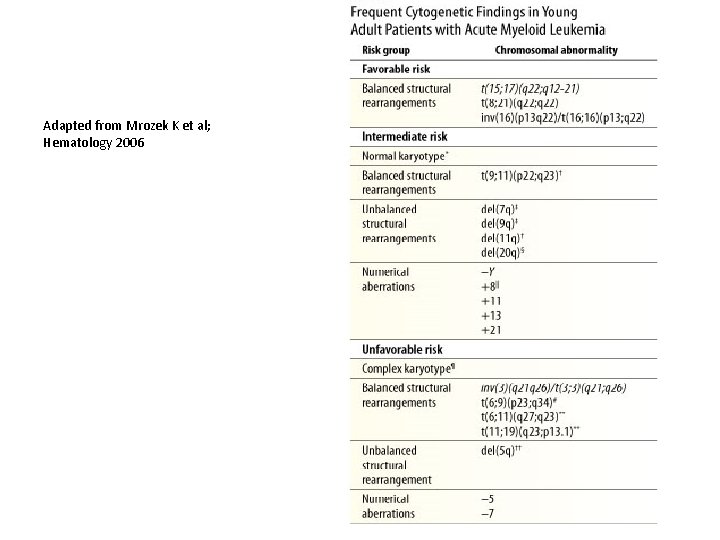
Adapted from Mrozek K et al; Hematology 2006
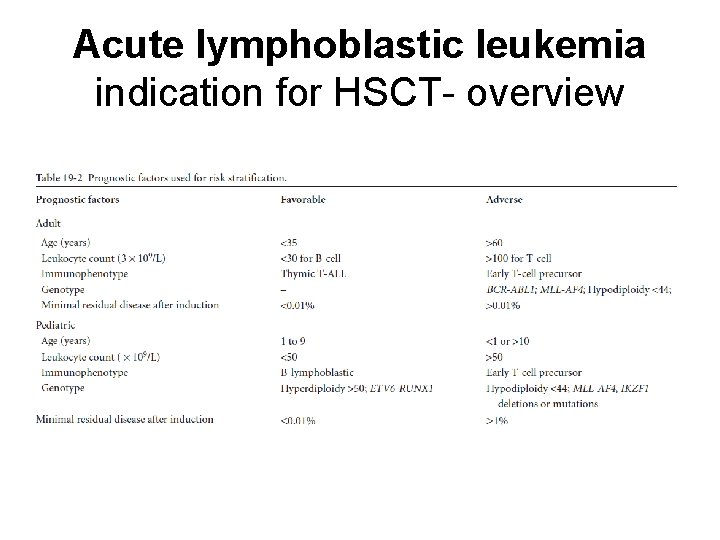
Acute lymphoblastic leukemia indication for HSCT- overview
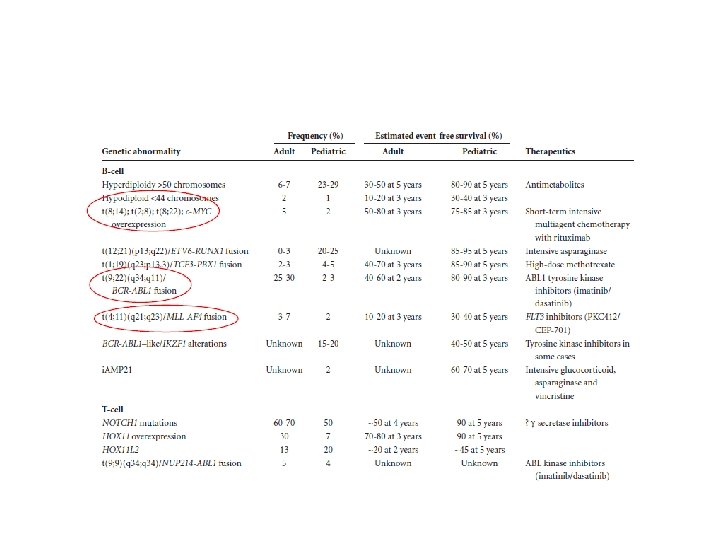
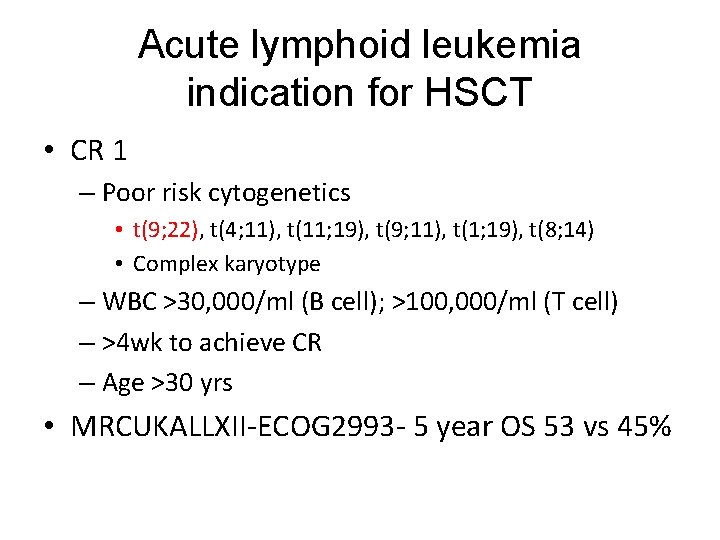
Acute lymphoid leukemia indication for HSCT • CR 1 – Poor risk cytogenetics • t(9; 22), t(4; 11), t(11; 19), t(9; 11), t(1; 19), t(8; 14) • Complex karyotype – WBC >30, 000/ml (B cell); >100, 000/ml (T cell) – >4 wk to achieve CR – Age >30 yrs • MRCUKALLXII-ECOG 2993 - 5 year OS 53 vs 45%
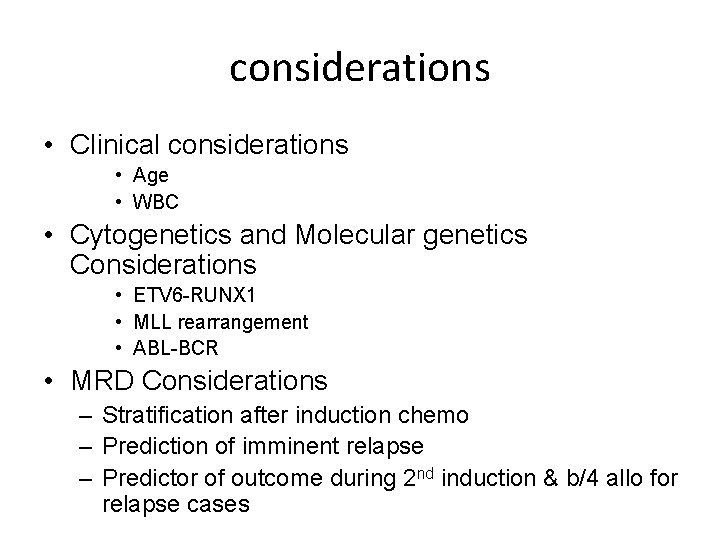
considerations • Clinical considerations • Age • WBC • Cytogenetics and Molecular genetics Considerations • ETV 6 -RUNX 1 • MLL rearrangement • ABL-BCR • MRD Considerations – Stratification after induction chemo – Prediction of imminent relapse – Predictor of outcome during 2 nd induction & b/4 allo for relapse cases
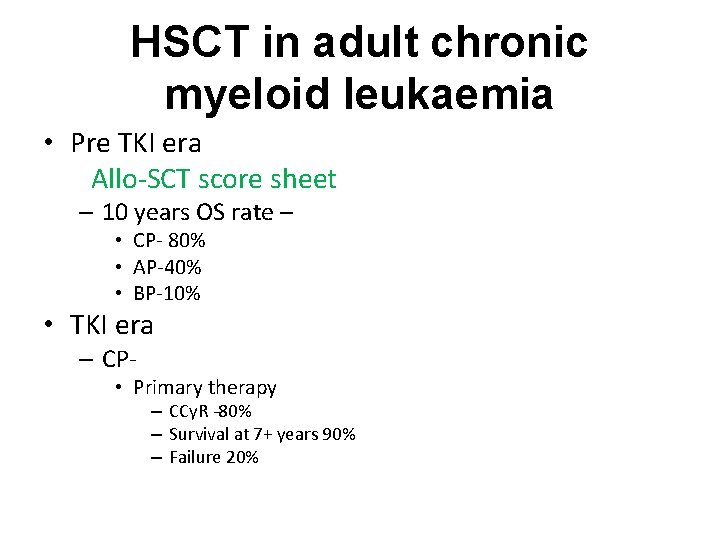
HSCT in adult chronic myeloid leukaemia • Pre TKI era Allo-SCT score sheet – 10 years OS rate – • CP- 80% • AP-40% • BP-10% • TKI era – CP- • Primary therapy – CCy. R -80% – Survival at 7+ years 90% – Failure 20%
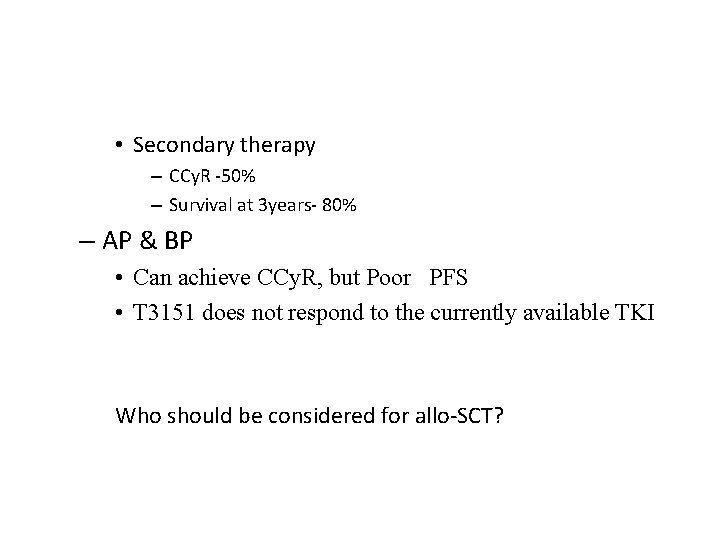
• Secondary therapy – CCy. R -50% – Survival at 3 years- 80% – AP & BP • Can achieve CCy. R, but Poor PFS • T 3151 does not respond to the currently available TKI Who should be considered for allo-SCT?
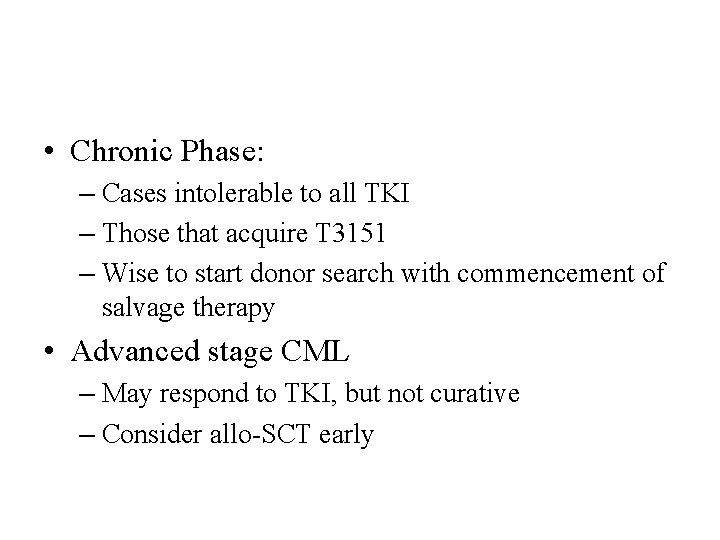
• Chronic Phase: – Cases intolerable to all TKI – Those that acquire T 3151 – Wise to start donor search with commencement of salvage therapy • Advanced stage CML – May respond to TKI, but not curative – Consider allo-SCT early
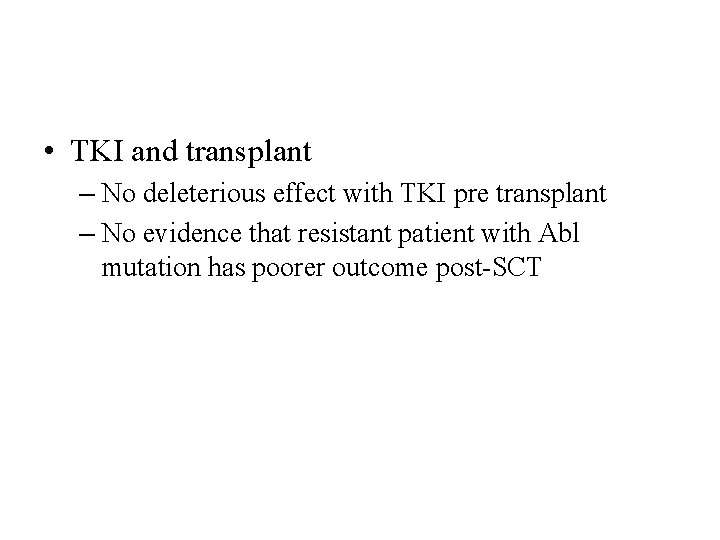
• TKI and transplant – No deleterious effect with TKI pre transplant – No evidence that resistant patient with Abl mutation has poorer outcome post-SCT
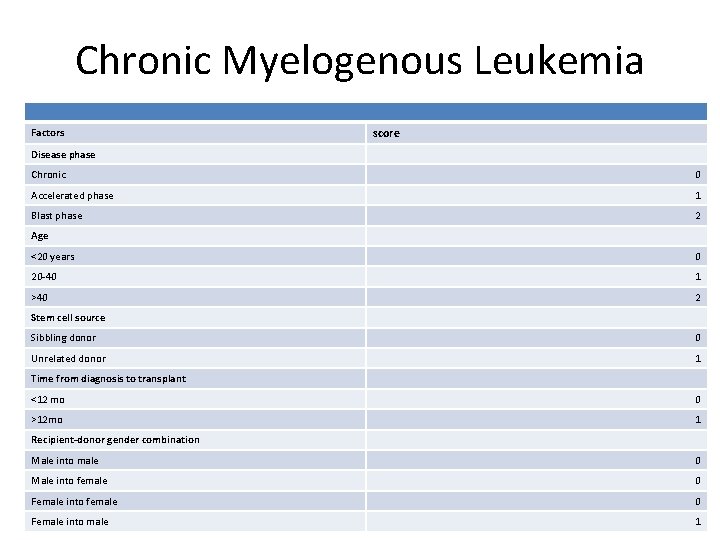
Chronic Myelogenous Leukemia Factors score Disease phase Chronic 0 Accelerated phase 1 Blast phase 2 Age <20 years 0 20 -40 1 >40 2 Stem cell source Sibbling donor 0 Unrelated donor 1 Time from diagnosis to transplant <12 mo 0 >12 mo 1 Recipient-donor gender combination Male into male 0 Male into female 0 Female into male 1
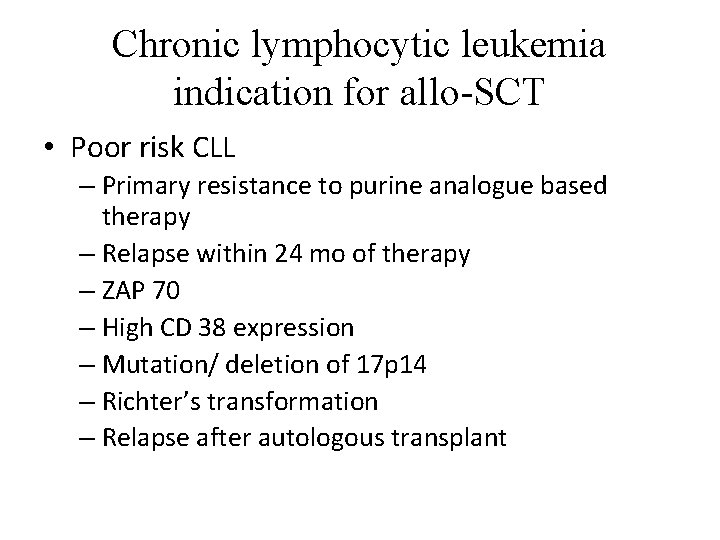
Chronic lymphocytic leukemia indication for allo-SCT • Poor risk CLL – Primary resistance to purine analogue based therapy – Relapse within 24 mo of therapy – ZAP 70 – High CD 38 expression – Mutation/ deletion of 17 p 14 – Richter’s transformation – Relapse after autologous transplant
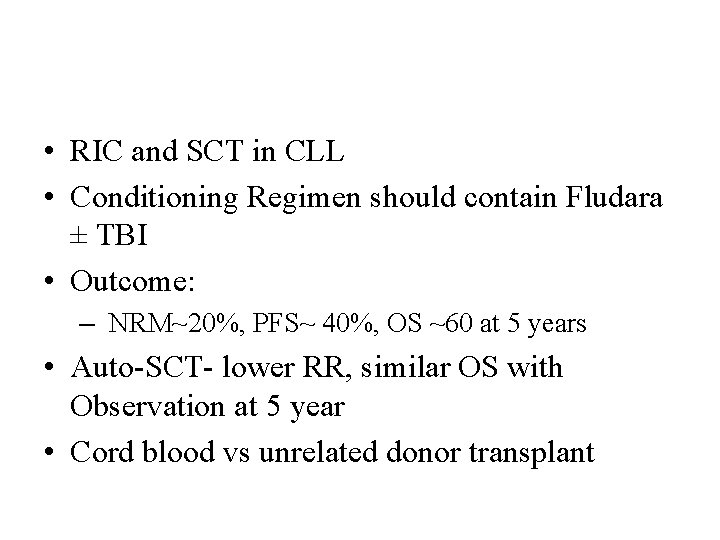
• RIC and SCT in CLL • Conditioning Regimen should contain Fludara ± TBI • Outcome: – NRM~20%, PFS~ 40%, OS ~60 at 5 years • Auto-SCT- lower RR, similar OS with Observation at 5 year • Cord blood vs unrelated donor transplant
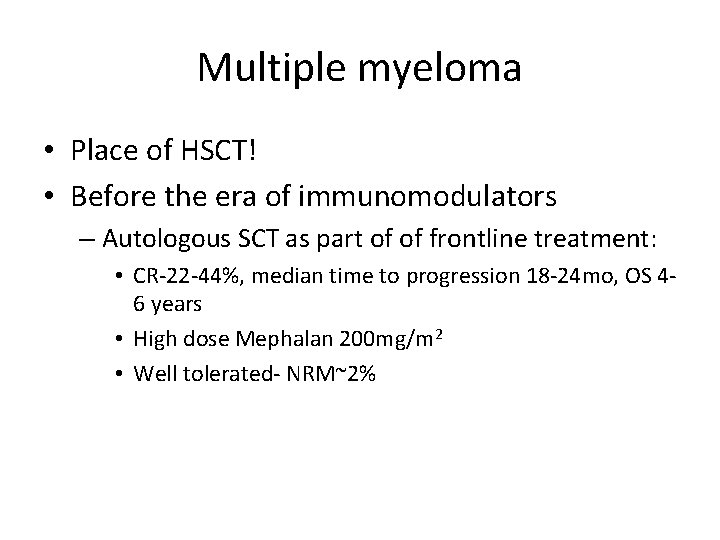
Multiple myeloma • Place of HSCT! • Before the era of immunomodulators – Autologous SCT as part of of frontline treatment: • CR-22 -44%, median time to progression 18 -24 mo, OS 46 years • High dose Mephalan 200 mg/m 2 • Well tolerated- NRM~2%
``````````````````````````` • Era of immunomodulators • Linelidomide • Thalidomide • Bortezomib – Currently used as frontline treatments • Higher CR, Current guideline • Autologous HSCT – Newly diagnosed, <65 years & good performance status – Patient with adverse prognostic factors • High β 2 microglobulin • Del 13 • Poor outcome following HSCT
• Other issues – Early transplantation vs delayed • • Improved PFS Similar OS Shorter period of chemo Improved QOL – Planned Tandem transplantation • Higher response rate • Higher relapse free, event free and OS
• Maintainance therapy after HSCT – Linelidomide – Less progression and death
Myelodysplastic syndrome • Traditional treatment- Not curative • Allo-SCT- only curative therapy • Auto-SCT- not advised • Key points to Note – Results are better for early stage disease – Outcome worse with MDS 2˚ to prior therapy – Matched related and unrelated donor give similar outcome – MAB and RIC give similar result.
Conclusion • With general improvement in economy and standard of living, it is expected that more people will live into old age in Nigeria. • It is also expected that increasing number of person will present with leukaemia in old age. • It therefore becomes wise that haematologist should plan for HSCT adult leukemia

Thank you for your audience
- Slides: 22