
HRM 601 Organizational Behavior Session 8 Communication in
HRM 601 Organizational Behavior Session 8 Communication in Organizations
THE COMMUNICATION PROCESS • The process by which a sender transmits information to the receiver. It consists of three components: • Sender who encodes • Channel • Receiver who decodes
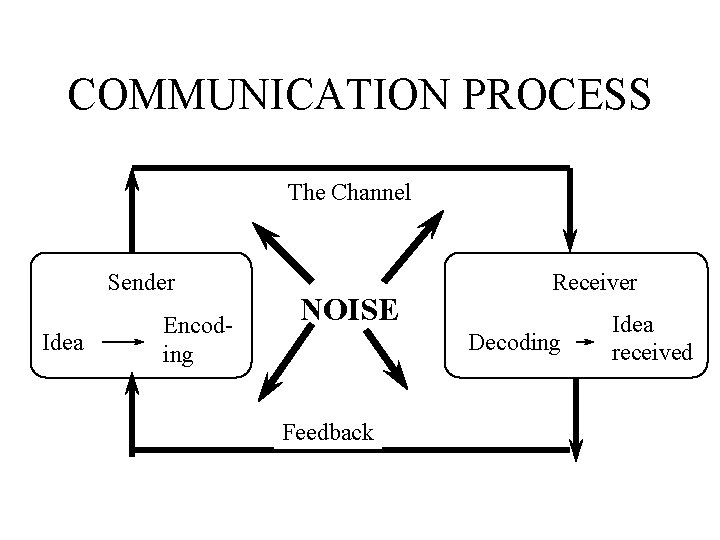
COMMUNICATION PROCESS The Channel Sender Idea Encoding NOISE Receiver Decoding Feedback Idea received
COMMUNICATION NETWORKS • Centralized: the information goes through a central gatekeeper (the chain or wheel). Best for simple tasks • Decentralized: all members are free to communicate with anyone else in the group (the circle or chain). Best for complicated tasks
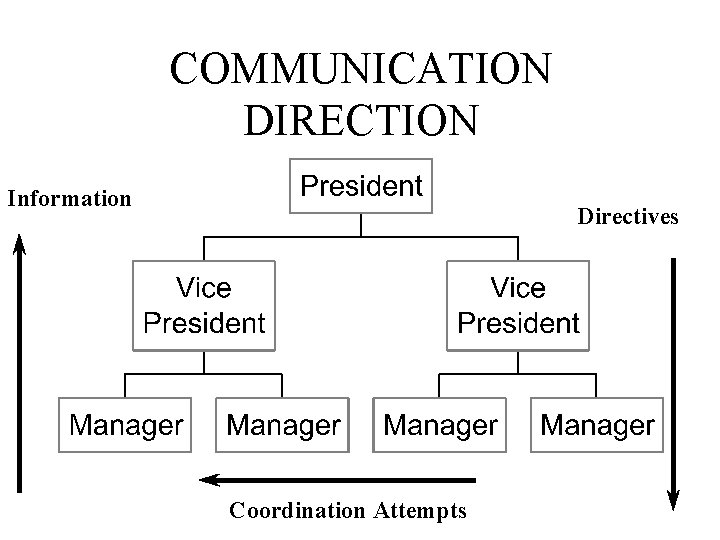
COMMUNICATION DIRECTION Information Directives Coordination Attempts

FUNCTION OF COMMUNICATION • • Knowledge Motivation Control Expression
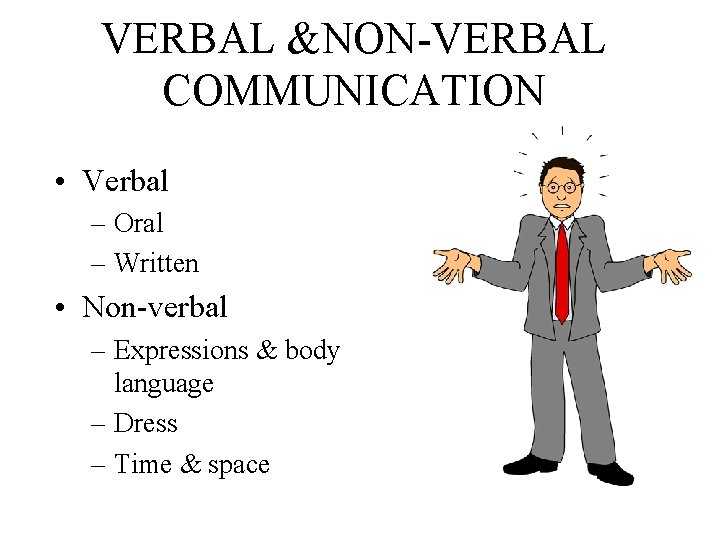
VERBAL &NON-VERBAL COMMUNICATION • Verbal – Oral – Written • Non-verbal – Expressions & body language – Dress – Time & space
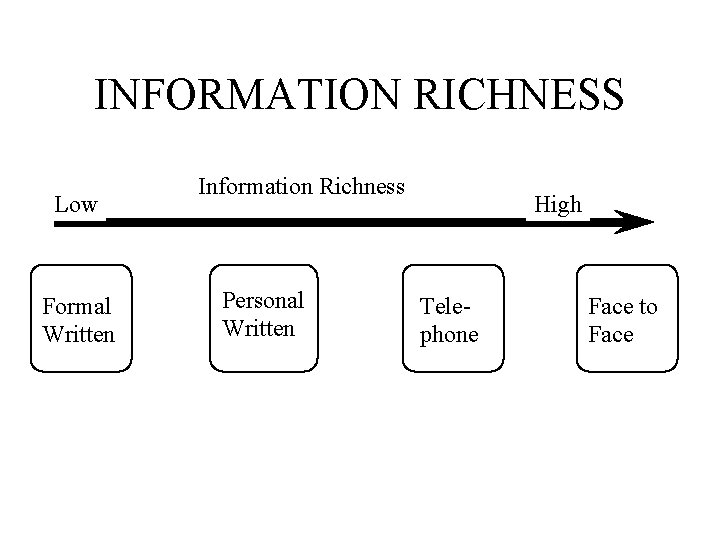
INFORMATION RICHNESS Low Formal Written Information Richness Personal Written High Telephone Face to Face
INFORMATION TECHNOLOGIES • • E-mail Audio teleconferencing Video conferencing Electronic conferencing – Asynchronous – Anytime – Anywhere
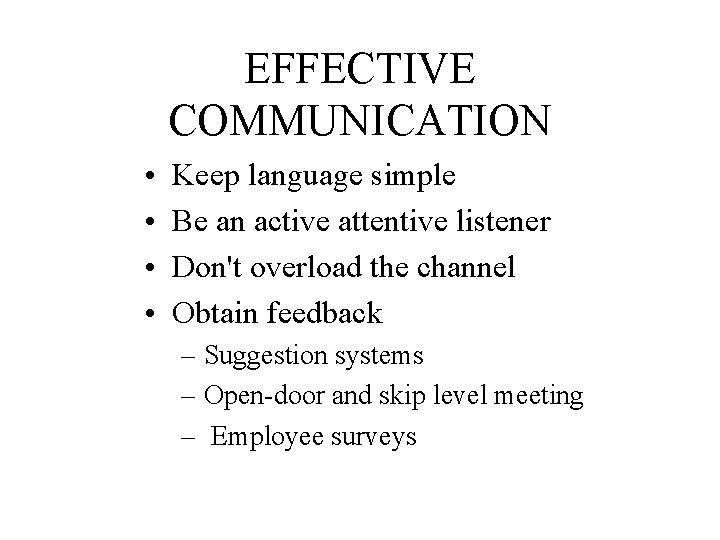
EFFECTIVE COMMUNICATION • • Keep language simple Be an active attentive listener Don't overload the channel Obtain feedback – Suggestion systems – Open-door and skip level meeting – Employee surveys
- Slides: 10