
HR Tools in Managing Knowledge Elena Dojranska Slabev
HR Tools in Managing Knowledge Elena Dojranska Slabev HR & Administration Director September, 2007
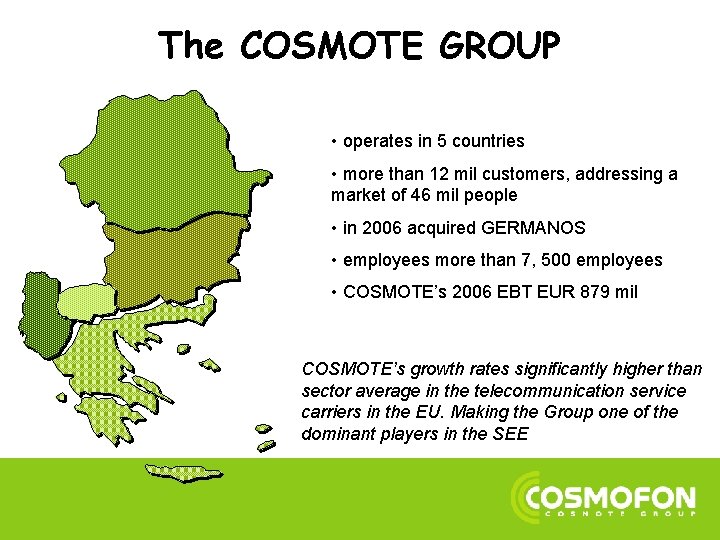
The COSMOTE GROUP • operates in 5 countries • more than 12 mil customers, addressing a market of 46 mil people • in 2006 acquired GERMANOS • employees more than 7, 500 employees • COSMOTE’s 2006 EBT EUR 879 mil COSMOTE’s growth rates significantly higher than sector average in the telecommunication service carriers in the EU. Making the Group one of the dominant players in the SEE
How does HR support the growth rate by managing knowledge? ? • How do we make sure that we know the capabilities and competencies that exist? • How do we nurture them and further develop them? • Are all information easily accessible to our employees when servicing a customer? • Do we have the right leadership that ensures customer satisfaction and invites innovation?
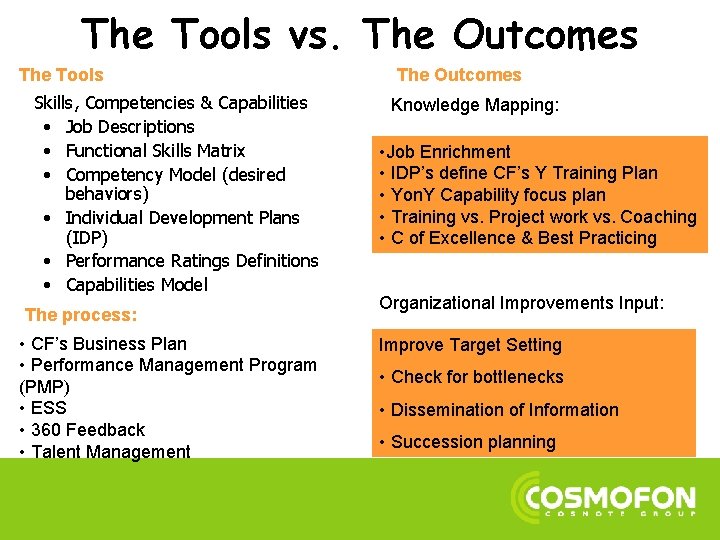
The Tools vs. The Outcomes The Tools Skills, Competencies & Capabilities • Job Descriptions • Functional Skills Matrix • Competency Model (desired behaviors) • Individual Development Plans (IDP) • Performance Ratings Definitions • Capabilities Model The process: • CF’s Business Plan • Performance Management Program (PMP) • ESS • 360 Feedback • Talent Management The Outcomes Knowledge Mapping: • Job Enrichment • IDP’s define CF’s Y Training Plan • Yon. Y Capability focus plan • Training vs. Project work vs. Coaching • C of Excellence & Best Practicing Organizational Improvements Input: Improve Target Setting • Check for bottlenecks • Dissemination of Information • Succession planning
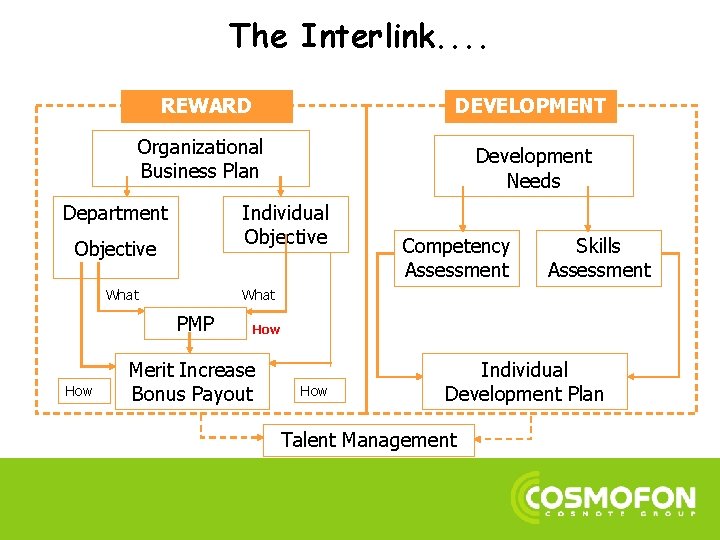
The Interlink. . REWARD DEVELOPMENT Organizational Business Plan Development Needs Department Individual Objective What Skills Assessment What PMP How Competency Assessment How Merit Increase Bonus Payout How Individual Development Plan Talent Management
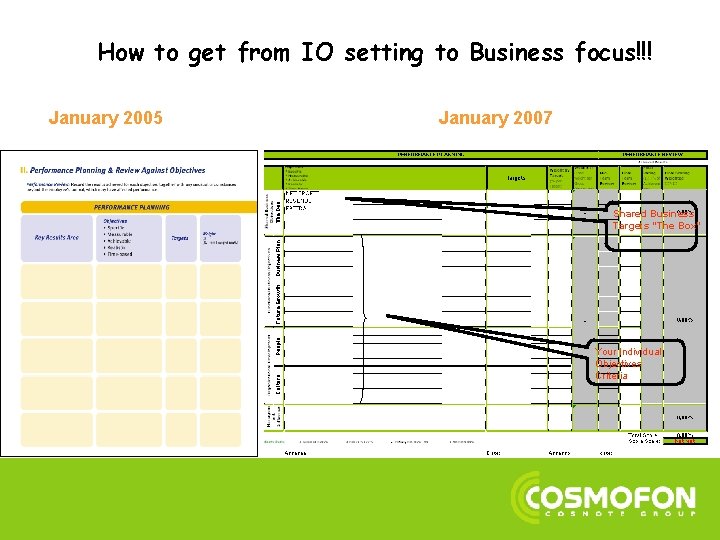
How to get from IO setting to Business focus!!! January 2005 January 2007 Shared Business Targets “The Box” Your Individual Objectives Criteria
If only Uniliver knew what Uniliver knows!
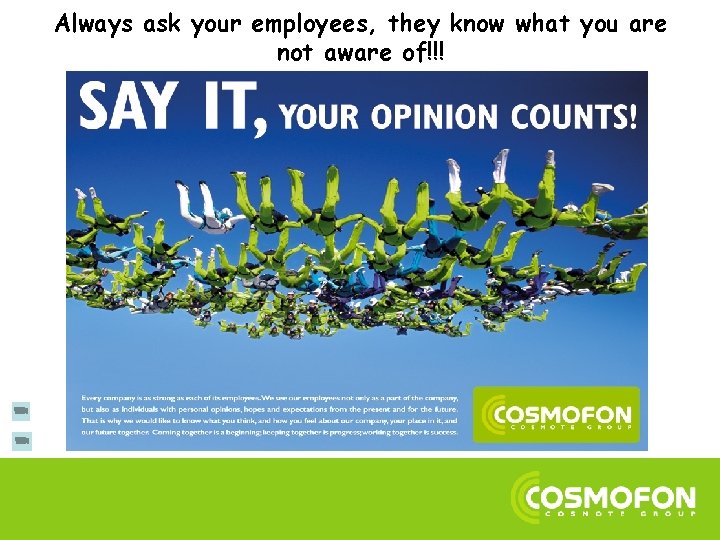
Always ask your employees, they know what you are not aware of!!!
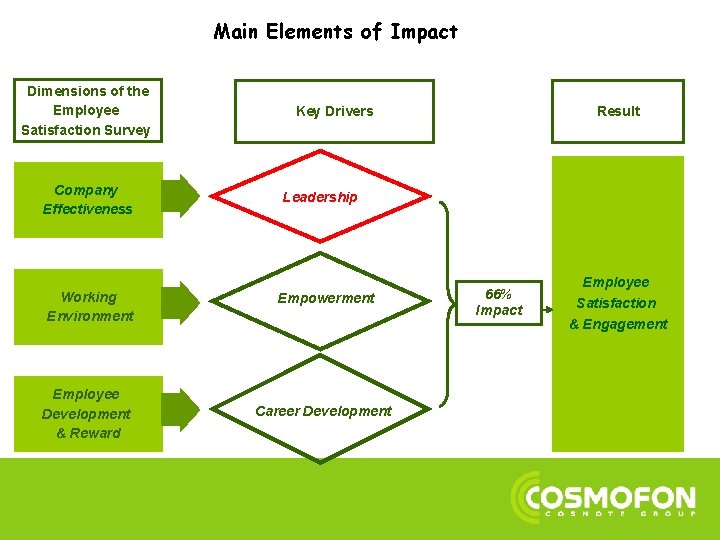
Main Elements of Impact Dimensions of the Employee Satisfaction Survey Company Effectiveness Working Environment Employee Development & Reward Key Drivers Result Leadership Empowerment Career Development 66% Impact Employee Satisfaction & Engagement
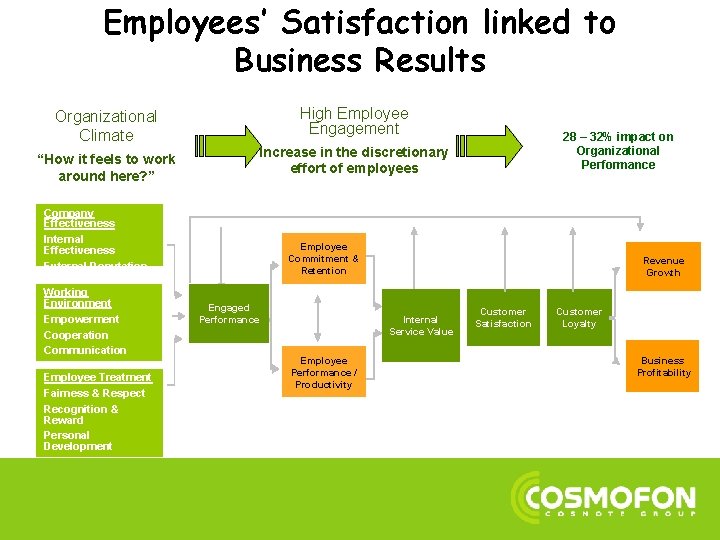
Employees’ Satisfaction linked to Business Results Organizational Climate “How it feels to work around here? ” High Employee Engagement Increase in the discretionary effort of employees Company Effectiveness Internal Effectiveness External Reputation Working Environment Empowerment Cooperation Communication Employee Treatment Fairness & Respect Recognition & Reward Personal Development 28 – 32% impact on Organizational Performance Employee Commitment & Retention Engaged Performance Revenue Growth Internal Service Value Employee Performance / Productivity Customer Satisfaction Customer Loyalty Business Profitability
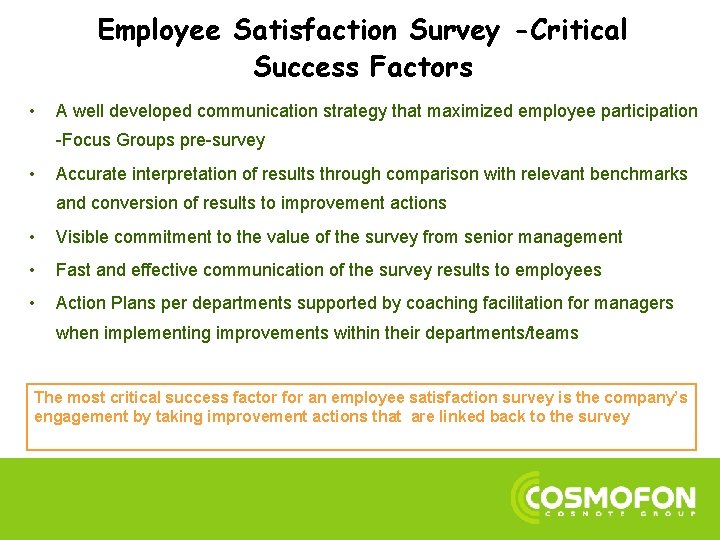
Employee Satisfaction Survey -Critical Success Factors • A well developed communication strategy that maximized employee participation -Focus Groups pre-survey • Accurate interpretation of results through comparison with relevant benchmarks and conversion of results to improvement actions • Visible commitment to the value of the survey from senior management • Fast and effective communication of the survey results to employees • Action Plans per departments supported by coaching facilitation for managers when implementing improvements within their departments/teams The most critical success factor for an employee satisfaction survey is the company’s engagement by taking improvement actions that are linked back to the survey
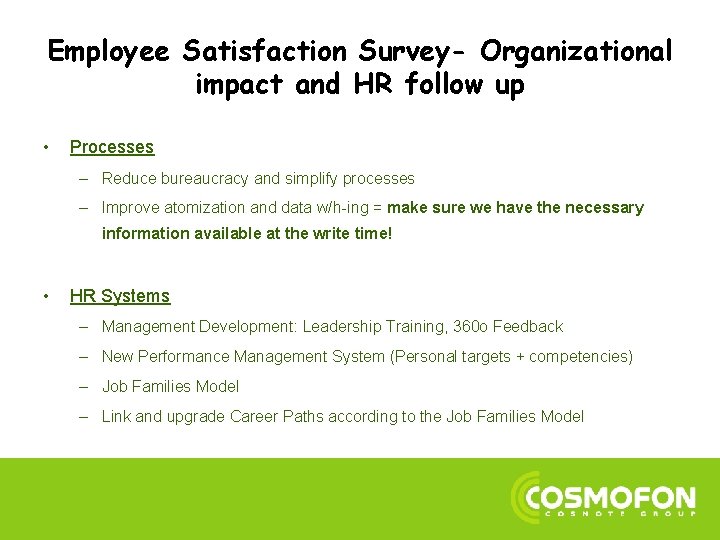
Employee Satisfaction Survey- Organizational impact and HR follow up • Processes – Reduce bureaucracy and simplify processes – Improve atomization and data w/h-ing = make sure we have the necessary information available at the write time! • HR Systems – Management Development: Leadership Training, 360 o Feedback – New Performance Management System (Personal targets + competencies) – Job Families Model – Link and upgrade Career Paths according to the Job Families Model
The Intranet It is a useful handy communication tool: • It is accessible to all employees • Provides basic information about the company • Supports faster dissemination of latest changes in the company and the market environment • A useful management tool for addressing the employees and passing a message • Provides valuable feedback and information through tools such as the Competition Box, Customer Complaints, The Forums… • Provides information of utilization of company assets • Allows the employees to interlink, share joint interests and hobbies

Thank you for your attention!
- Slides: 14