
HR Analytics Alexandra Dass and Mursal Nassimi Willamette

- Slides: 15
HR Analytics Alexandra Dass and Mursal Nassimi Willamette SHRM Student Chapter
What is HR Analytics? A form of business intelligence Correlates business data and people data Establishes a cause and effect relationship
Why HR Analytics? Engage in evidence-based decision making Improve employee performance Get a better return on investment Make relevant decisions
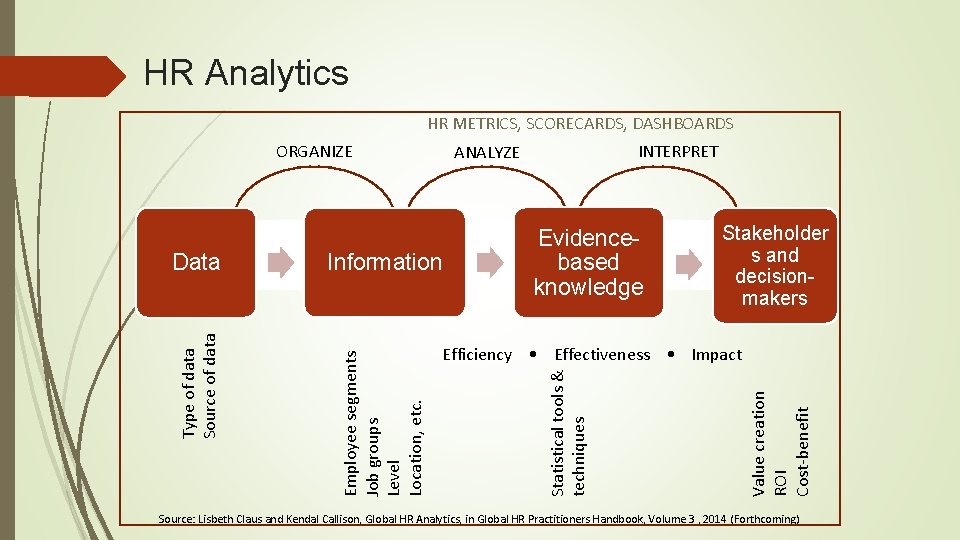
HR Analytics HR METRICS, SCORECARDS, DASHBOARDS Evidencebased knowledge Stakeholder s and decisionmakers Efficiency • Effectiveness • Impact Value creation ROI Cost-benefit Information Employee segments Job groups Level Location, etc. Type of data Source of data Data INTERPRET ANALYZE Statistical tools & techniques ORGANIZE Source: Lisbeth Claus and Kendal Callison, Global HR Analytics, in Global HR Practitioners Handbook, Volume 3 , 2014 (Forthcoming)
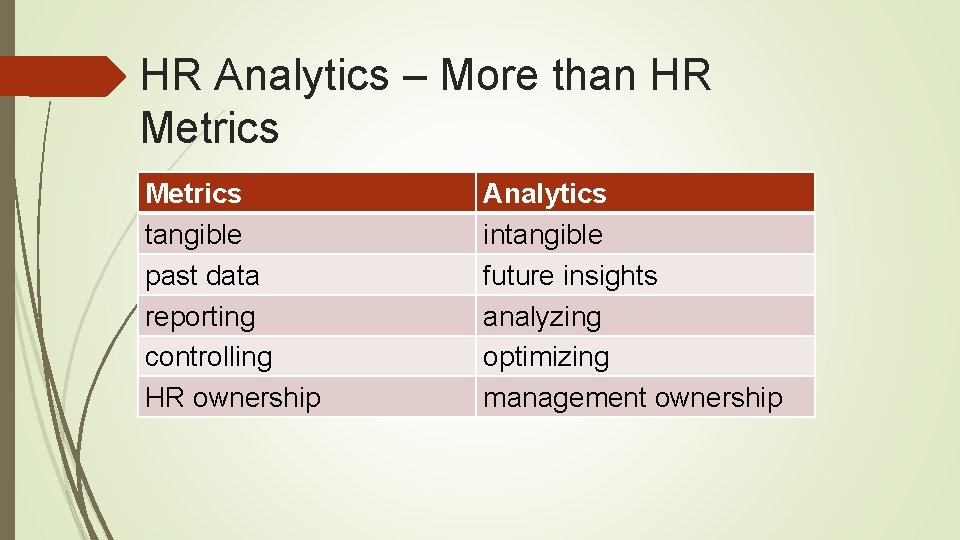
HR Analytics – More than HR Metrics tangible past data reporting controlling HR ownership Analytics intangible future insights analyzing optimizing management ownership
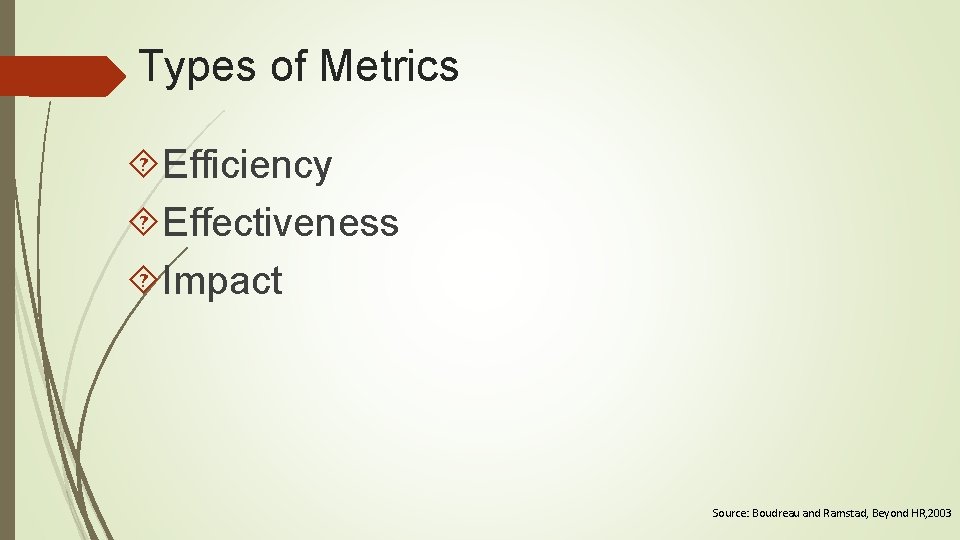
Types of Metrics Efficiency Effectiveness Impact Source: Boudreau and Ramstad, Beyond HR, 2003
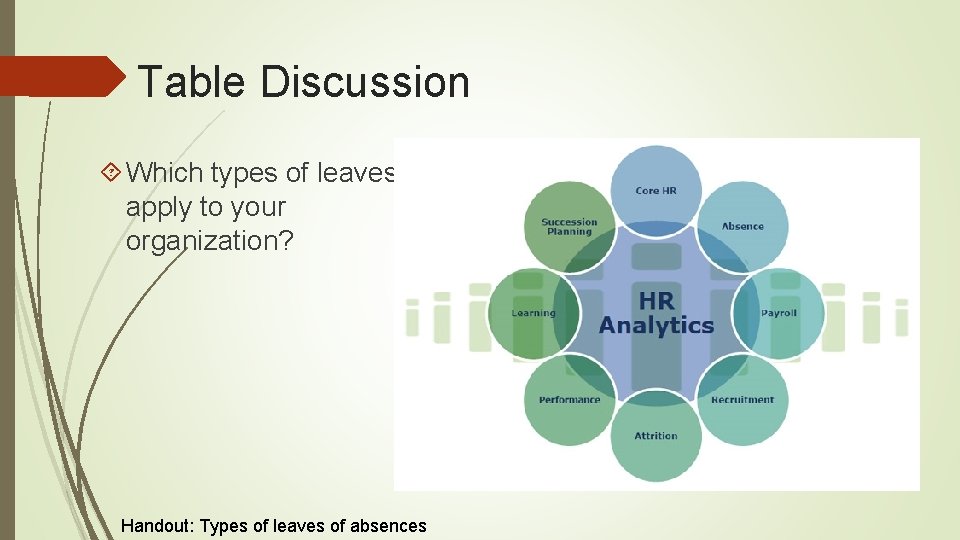
Table Discussion Which types of leaves apply to your organization? Handout: Types of leaves of absences
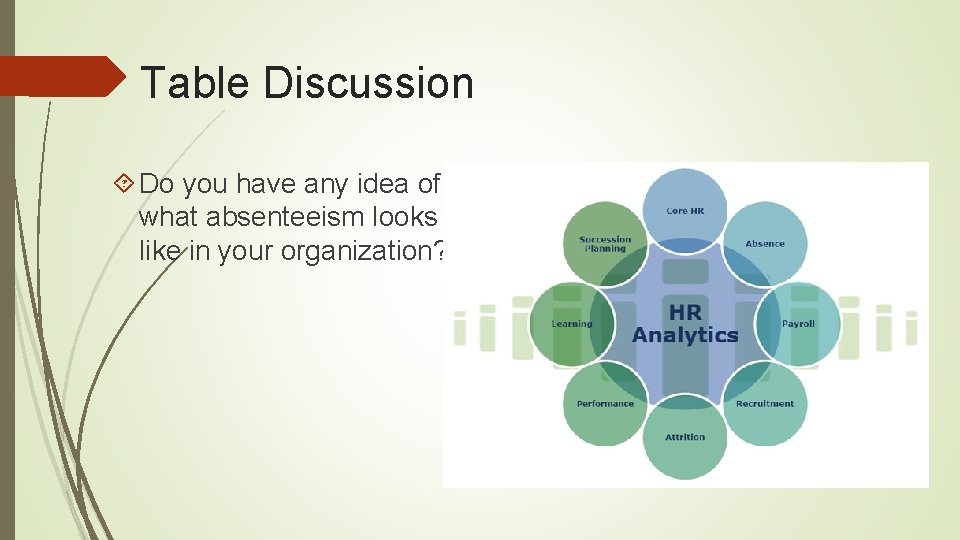
Table Discussion Do you have any idea of what absenteeism looks like in your organization?
The Process What specific (employee) data is needed to turn this topic into HR analytics? Where (internal/external) does HR get that data? Who ‘owns’ that data and how does HR get access to that data? What are common HR metrics related to this topic? What does your spreadsheet look like? What will your sample dashboards look like? What types of actions would you be able to take? Source: Lisbeth Claus and Kendal Callison, Global HR Analytics, in Global HR Practitioners Handbook, Volume 3 , 2014 (Forthcoming)
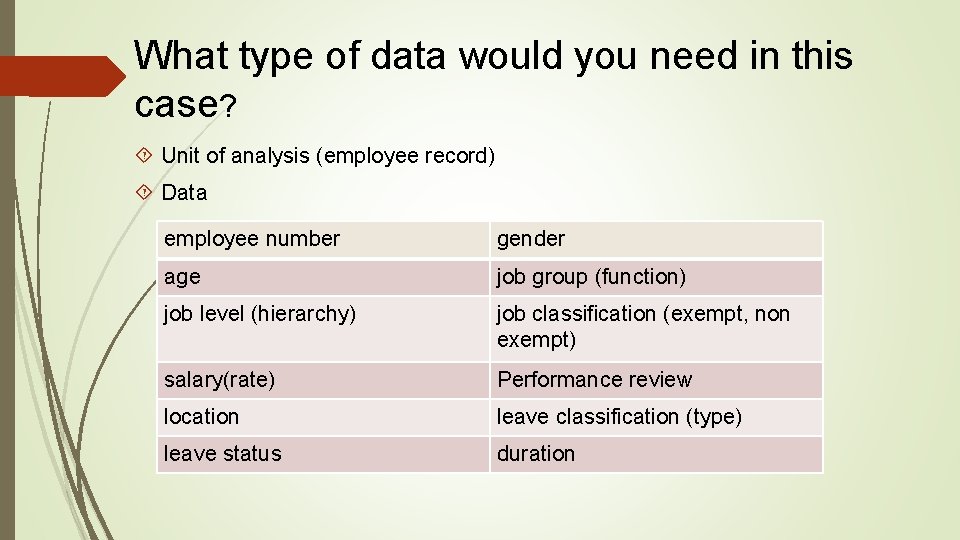
What type of data would you need in this case? Unit of analysis (employee record) Data employee number gender age job group (function) job level (hierarchy) job classification (exempt, non exempt) salary(rate) Performance review location leave classification (type) leave status duration
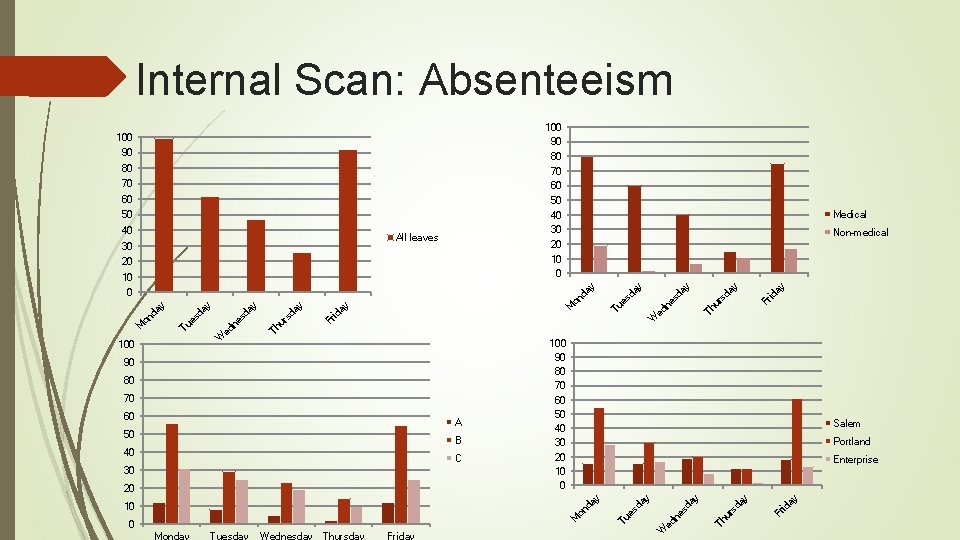
Internal Scan: Absenteeism 100 90 80 70 60 50 40 30 20 10 0 Tu W 0 Monday Tuesday Wednesday Thursday Friday ay id Fr Tu e M on da 10 sd y 20 Enterprise ay C 30 Portland ur sd B 40 Salem Th A 50 da y 60 es 70 ed n 80 W 90 100 90 80 70 60 50 40 30 20 10 0 ay 100 es on d M ay id Fr ay sd ur sd W ed ne es Tu Th y da ay on d M ay 0 da ay 10 ay 20 id 30 Non-medical Fr All leaves ay 40 Medical sd 50 ur 60 Th 70 ne sd ay 80 ed 90 y 100
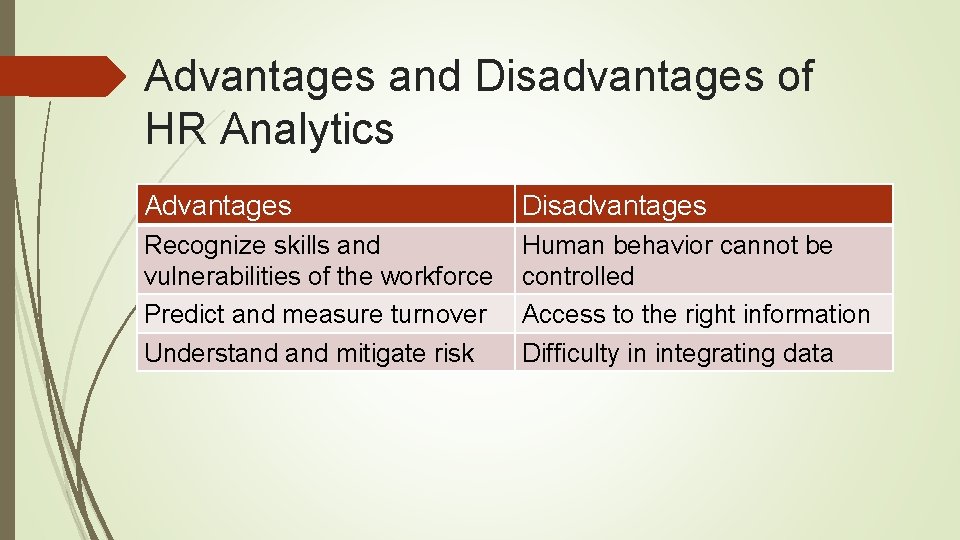
Advantages and Disadvantages of HR Analytics Advantages Disadvantages Recognize skills and vulnerabilities of the workforce Predict and measure turnover Understand mitigate risk Human behavior cannot be controlled Access to the right information Difficulty in integrating data
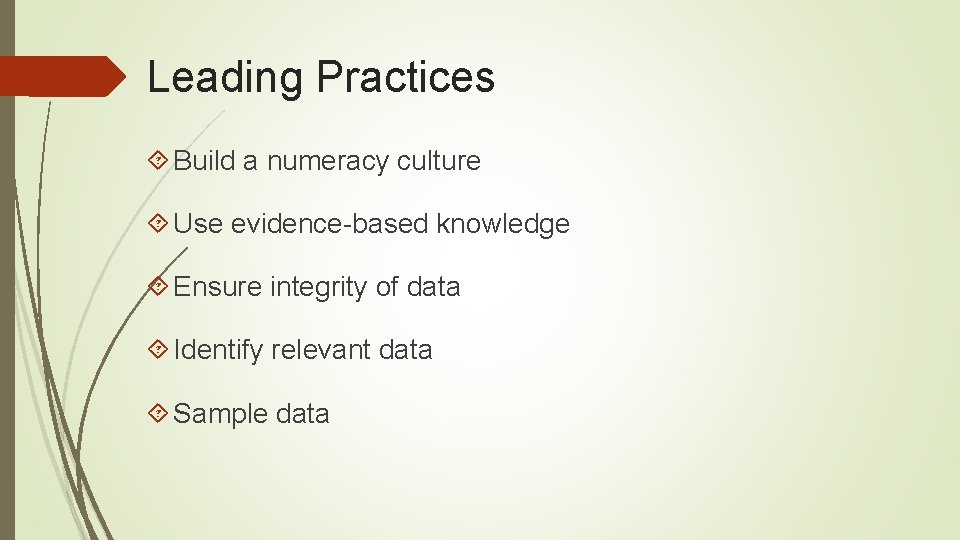
Leading Practices Build a numeracy culture Use evidence-based knowledge Ensure integrity of data Identify relevant data Sample data