
HPP HIGHPRESSURE PROCESSING HOST Bill Kinross Publisher Meatingplace
HPP: HIGH-PRESSURE PROCESSING

HOST Bill Kinross Publisher, Meatingplace MODERATOR Mike Fielding Managing Editor of Technical Content, Meatingplace
FUNDAMENTALS AND PACKAGING ASPECTS Tatiana Koutchma, Ph. D. Research Scientist Agriculture and Agri-Food Canada
Poll Question What research topics should federal government scientists focus on to assist faster implementation of HPP technology in the meat industry? 1. Microbial safety 2. Nutritional considerations 3. Chemical/Toxicological considerations 4. Raw meats functionality 5. HPP for control of emerging pathogens
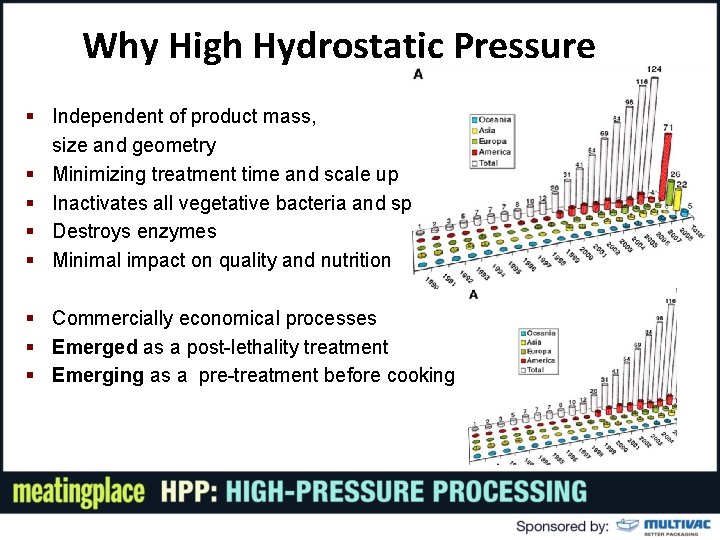
Why High Hydrostatic Pressure § Independent of product mass, size and geometry § Minimizing treatment time and scale up § Inactivates all vegetative bacteria and spores § Destroys enzymes § Minimal impact on quality and nutrition § Commercially economical processes § Emerged as a post-lethality treatment § Emerging as a pre-treatment before cooking
Regulatory Status of HHP USA • USDA has approved High Hydrostatic Pressure as an intervention method for Listeria contaminated prepacked ready-to-eat (RTE) meat products • U. S Food and Drug Administration (FDA) has accepted the commercial use of pressure-assisted thermal sterilization (PATS) processes for application in the production of low acid foods (LAF) ( February 2009) Canada § Use of High Hydrostatic Pressure for Processing Ready to Eat (RTE) Meat-containing Entrees, Meat-containing Salads and Meat Products (Maple Leaf, December 2006) § Use of High Hydrostatic Pressure for the Control of L. monocytogenes in Ready to Eat (RTE) Meats and Poultry (Santa-Maria, Foods, October 2006)
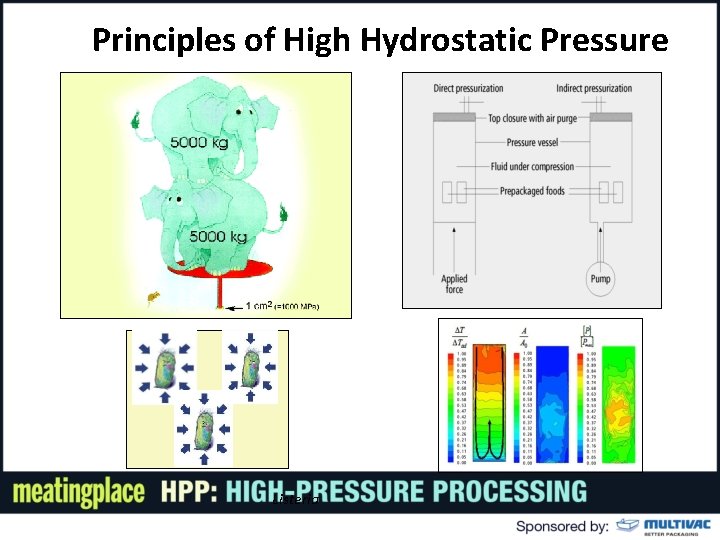
Principles of High Hydrostatic Pressure ( Listeria
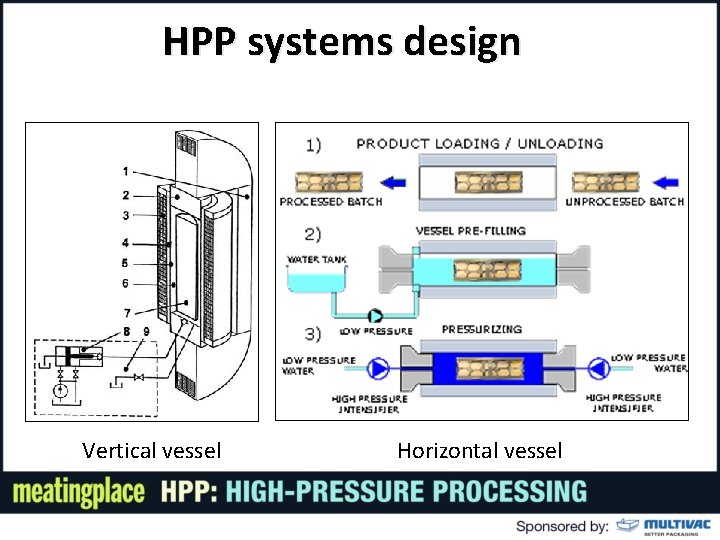
HPP systems design Vertical vessel Horizontal vessel
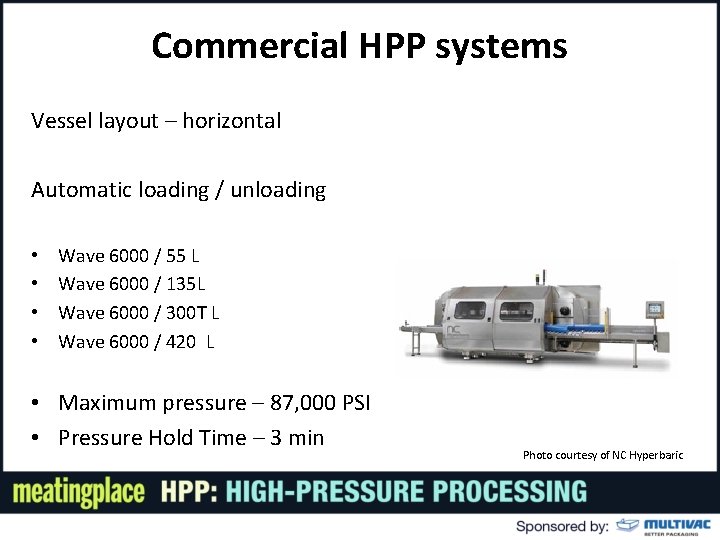
Commercial HPP systems Vessel layout – horizontal Automatic loading / unloading • • Wave 6000 / 55 L Wave 6000 / 135 L Wave 6000 / 300 T L Wave 6000 / 420 L • Maximum pressure – 87, 000 PSI • Pressure Hold Time – 3 min Photo courtesy of NC Hyperbaric
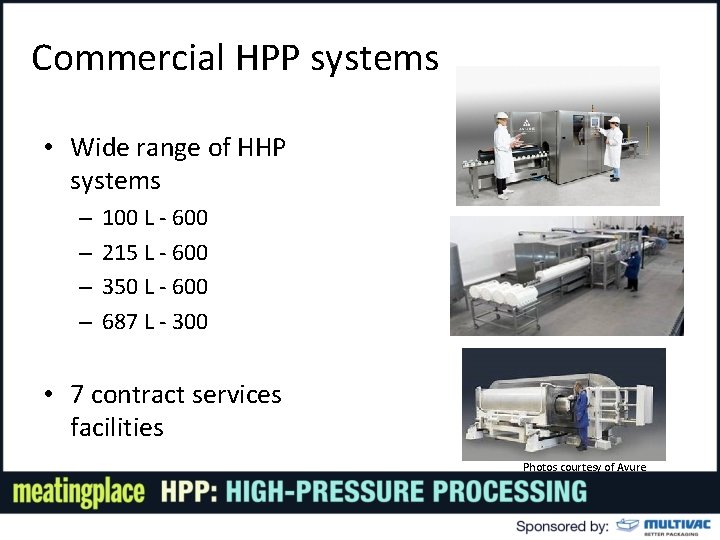
Commercial HPP systems • Wide range of HHP systems – – 100 L - 600 215 L - 600 350 L - 600 687 L - 300 • 7 contract services facilities Photos courtesy of Avure
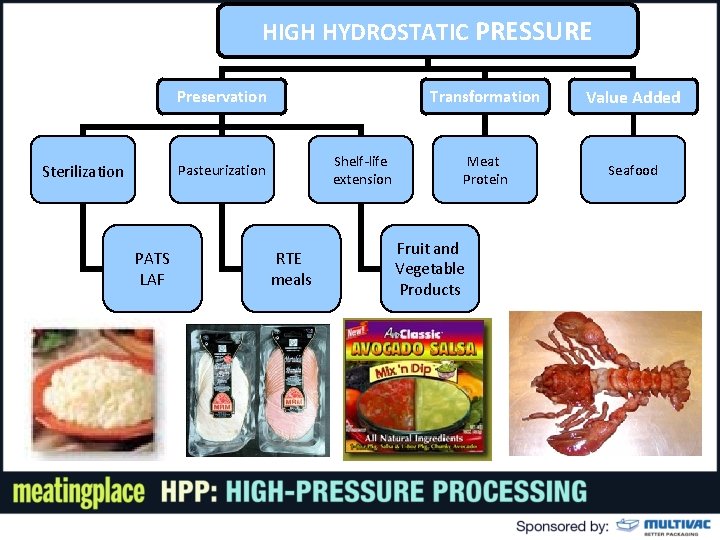
HIGH HYDROSTATIC PRESSURE Preservation Shelf-life extension Pasteurization Sterilization PATS LAF RTE meals Transformation Value Added Meat Protein Seafood Fruit and Vegetable Products

Product and process conditions for establishment of HPP preservation HPP pasteurization HPP sterilization Product parameters p. H, aw 3. 5 <p. H<4. 6; p. H<3. 5 p. H>4. 6; aw >0. 86 Process parameters Temperature, o. C ≤ 45 > 100 Pressure, MPa ≤ 600 > 700 Target microorganisms Pathogenic E. coli; Listeria; Salmonella C. botulinum spores Spoilage Lactic bacteria, yeasts, molds Geobacillus spp. Bacillus cereus Storage Refrigerated conditions Ambient temperature Hermetically sealed flexible containers Packaging
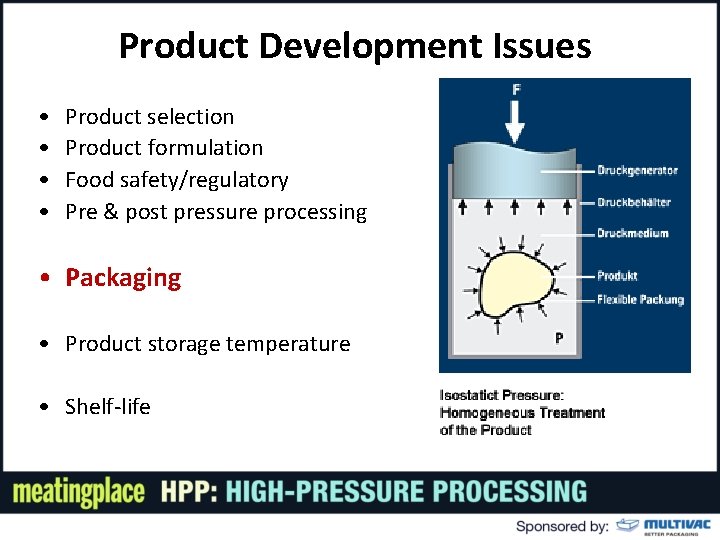
Product Development Issues • • Product selection Product formulation Food safety/regulatory Pre & post pressure processing • Packaging • Product storage temperature • Shelf-life

HPP In-Container Principles • Product is generally treated in its final primary package • Food and its packaging are treated together • Entire package remains a “secure unit” until the consumer opens it • Packaging must withstand a change of volume up to 18% followed by return to its original size – Without loosing package integrity – Seal integrity – Barrier properties • Packaging under vacuum or modified atmosphere
Food Packaging Materials • In general, traditional packaging materials are not intended to have any technical effect in the food, and considered as food additives because their components can migrate into the food that contacts the packaging • In the case of active and intelligent packaging, sometimes the package may be designed to deliver a chemical to the food for the purpose of exerting some technical effect in the food. Definition
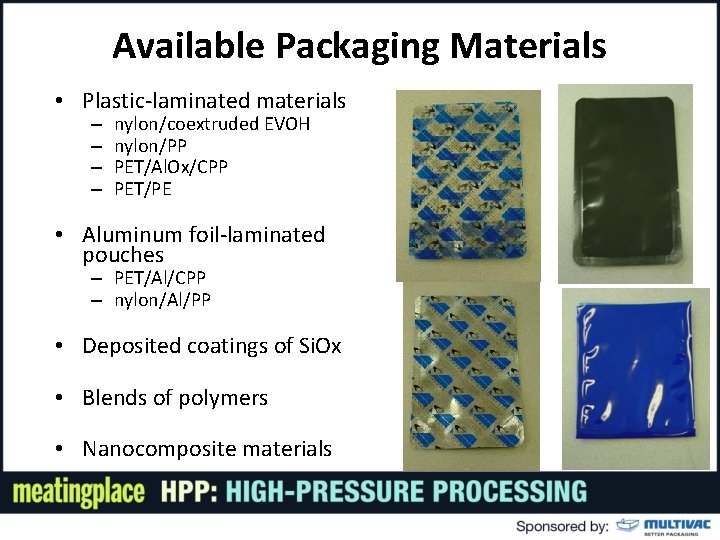
Available Packaging Materials • Plastic-laminated materials – – nylon/coextruded EVOH nylon/PP PET/Al. Ox/CPP PET/PE • Aluminum foil-laminated pouches – PET/Al/CPP – nylon/Al/PP • Deposited coatings of Si. Ox • Blends of polymers • Nanocomposite materials
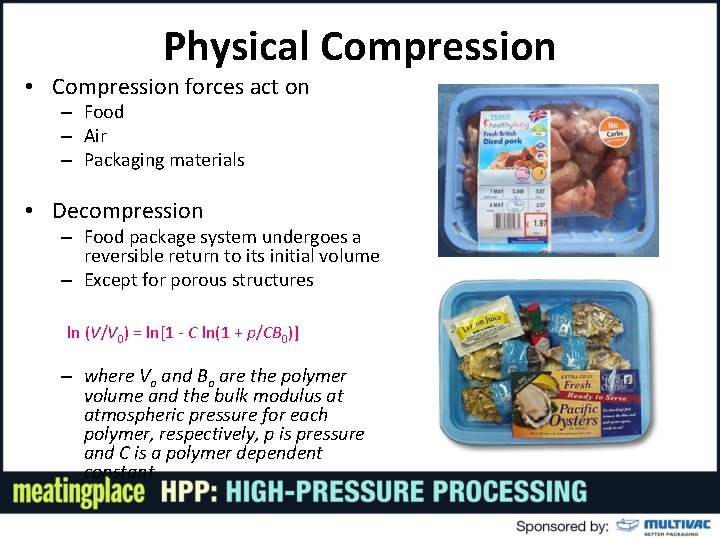
Physical Compression • Compression forces act on – Food – Air – Packaging materials • Decompression – Food package system undergoes a reversible return to its initial volume – Except for porous structures ln (V/V 0) = ln[1 - C ln(1 + p/CB 0)] – where Vo and Bo are the polymer volume and the bulk modulus at atmospheric pressure for each polymer, respectively, p is pressure and C is a polymer dependent constant
Compression of Packaging Materials • 5% of the vessel is full of packaging material • Polypropylene (PP) and polyethylene (PE) undergo compression heating (CH) • CH was greater than water under – HP-LT (10ºC and 50ºC) – HP-HT (90ºC) conditions up to 750 Mpa • CH was non-linear • “Warmer” layer may be formed surrounding the food
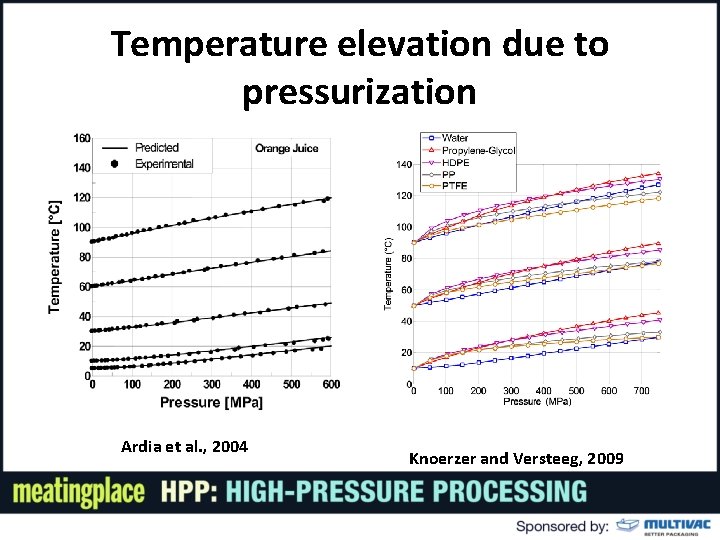
Temperature elevation due to pressurization Ardia et al. , 2004 Knoerzer and Versteeg, 2009
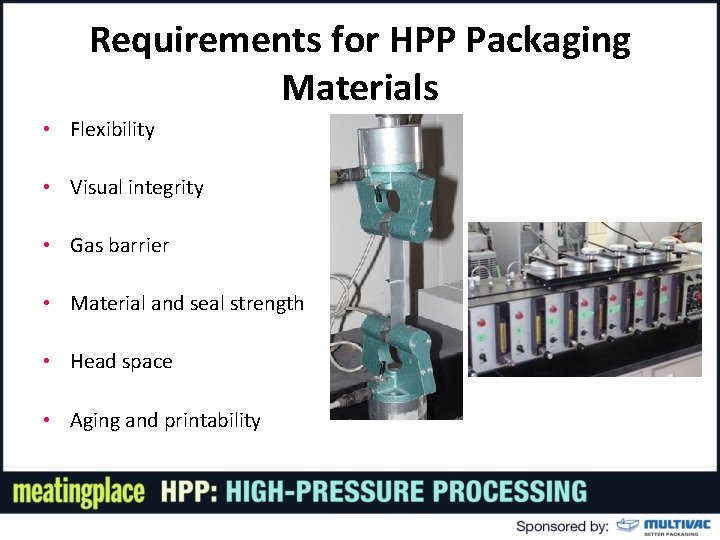
Requirements for HPP Packaging Materials • Flexibility • Visual integrity • Gas barrier • Material and seal strength • Head space • Aging and printability
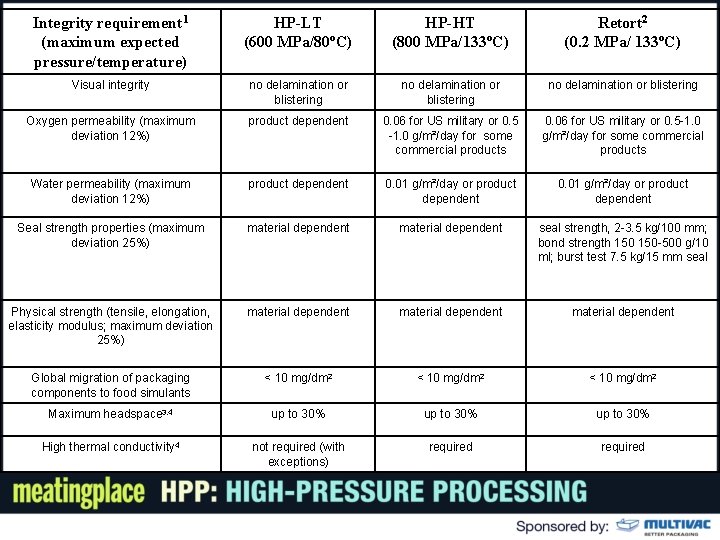
Integrity requirement 1 (maximum expected pressure/temperature) HP-LT (600 MPa/80ºC) HP-HT (800 MPa/133ºC) Retort 2 (0. 2 MPa/ 133ºC) Visual integrity no delamination or blistering Oxygen permeability (maximum deviation 12%) product dependent 0. 06 for US military or 0. 5 -1. 0 g/m²/day for some commercial products 0. 06 for US military or 0. 5 -1. 0 g/m²/day for some commercial products Water permeability (maximum deviation 12%) product dependent 0. 01 g/m²/day or product dependent Seal strength properties (maximum deviation 25%) material dependent seal strength, 2 -3. 5 kg/100 mm; bond strength 150 -500 g/10 ml; burst test 7. 5 kg/15 mm seal Physical strength (tensile, elongation, elasticity modulus; maximum deviation 25%) material dependent Global migration of packaging components to food simulants < 10 mg/dm 2 Maximum headspace 3, 4 up to 30% High thermal conductivity 4 not required (with exceptions) required
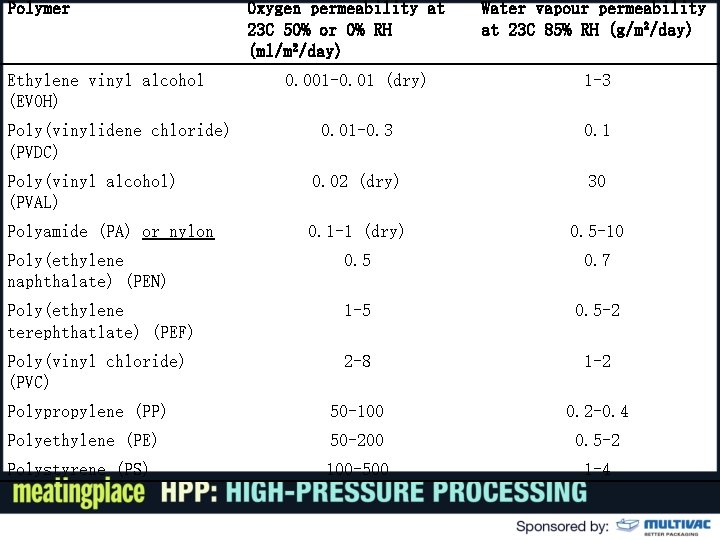
Polymer Ethylene vinyl alcohol (EVOH) Oxygen permeability at 23 C 50% or 0% RH (ml/m 2/day) Water vapour permeability at 23 C 85% RH (g/m 2/day) 0. 001 -0. 01 (dry) 1 -3 0. 01 -0. 3 0. 1 Poly(vinyl alcohol) (PVAL) 0. 02 (dry) 30 Polyamide (PA) or nylon 0. 1 -1 (dry) 0. 5 -10 Poly(ethylene naphthalate) (PEN) 0. 5 0. 7 Poly(ethylene terephthatlate) (PEF) 1 -5 0. 5 -2 Poly(vinyl chloride) (PVC) 2 -8 1 -2 Polypropylene (PP) 50 -100 0. 2 -0. 4 Polyethylene (PE) 50 -200 0. 5 -2 Polystyrene (PS) 100 -500 1 -4 Poly(vinylidene chloride) (PVDC)
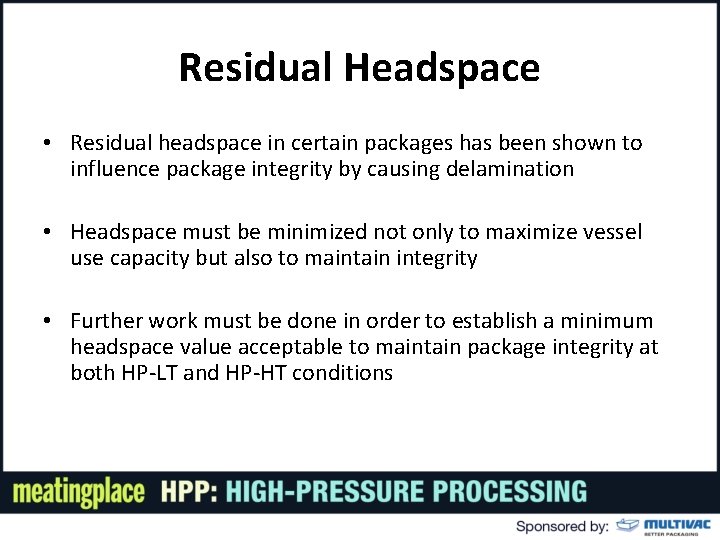
Residual Headspace • Residual headspace in certain packages has been shown to influence package integrity by causing delamination • Headspace must be minimized not only to maximize vessel use capacity but also to maintain integrity • Further work must be done in order to establish a minimum headspace value acceptable to maintain package integrity at both HP-LT and HP-HT conditions
Summary • Integrity criteria has to be met by a packaging material after HPP processing at mild and high temperature – visual integrity, gas permeability, seal and physical strength properties, and global migration of packaging components into the food • Reported EVOH-based materials showed no deviations after HPLT in terms of visual integrity, permeability, and physical properties. • Information gaps for certain properties, including global migration, must be provided for a complete assessment of the suitability of some reported materials
Future Trends • Further research is required in screening new materials that are finding applications in thermal processing (hot fill or retort) for their potential use in HPP processes • Transparent materials are desirable due to higher consumer preference – Thin vacuum deposited coatings of Si. Ox on PET, PP or PA which are transparent, waterresistant, retortable microwaveable options – New barrier polymers currently used as discrete layers with an oxygen permeability value 50 -100 times lower than PET. • Biodegradable polymers are being developed with oxygen barrier properties resembling those of EVOH, with heat sealability and resistance to grease. • Blends of barrier polymers and standard polymers have been developed, including EVOH in PP, PE or PA; PA in PP or PET, and LCP in PET and PE • Nanocomposite materials, or polymers filled with small (100 -1000 nm) inorganic particles, may improve barrier properties by a factor of 50 or higher.
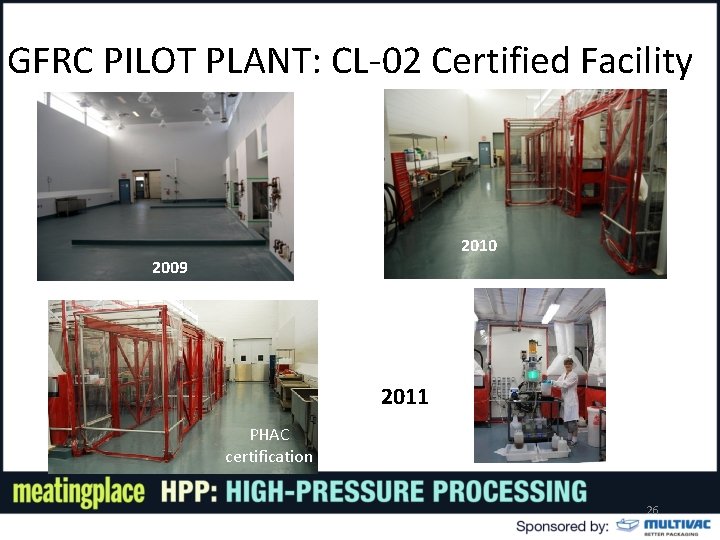
GFRC PILOT PLANT: CL-02 Certified Facility 2010 2009 2011 PHAC certification 26
Mc. Cormick Place, Chicago, IL Wednesday, November 2 2: 30 -3: 30 PM The Promises and Challenges of Applying High Pressure Pasteurization (HPP) for RTE Food Products Presented by Dr. Tobias Richter Dr. -Ing. , Dipl. -Kfm. , M. Sc. MULTIVAC Sepp Haggenmueller Gmb. H & Co. KG, Germany
NEXT-GENERATION HPP: BEYOND SHELF-LIFE EXTENSION Dr. Phil Minerich Vice President of Research and Development Hormel Foods
Agenda • Applications – – Natural Meats Produce Fresh Meats Harvest Processing • Conclusion
Poll Question What product features are achieved by using High-Pressure Processing? 1. 2. 3. 4. Minimally processed Extended shelf-life Post-package pasteurization All of the above
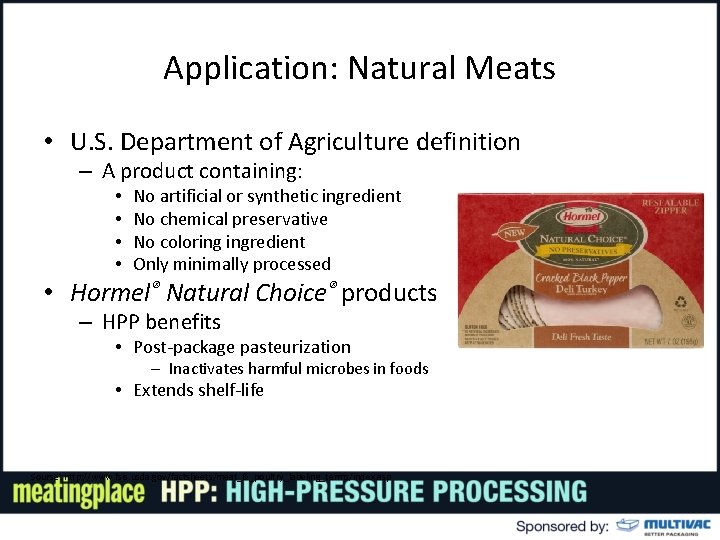
Application: Natural Meats • U. S. Department of Agriculture definition – A product containing: • • No artificial or synthetic ingredient No chemical preservative No coloring ingredient Only minimally processed • Hormel® Natural Choice® products – HPP benefits • Post-package pasteurization – Inactivates harmful microbes in foods • Extends shelf-life Sourse: http: //www. fsis. usda. gov/factsheets/meat_&_poultry_labeling_terms/index. asp
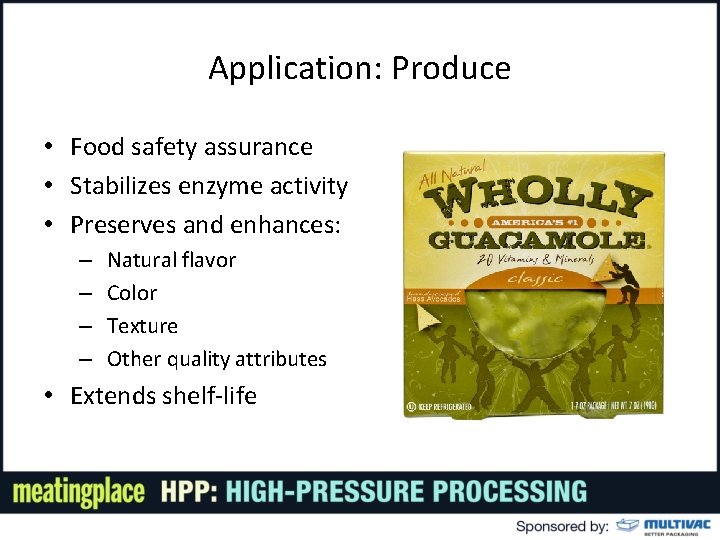
Application: Produce • Food safety assurance • Stabilizes enzyme activity • Preserves and enhances: – – Natural flavor Color Texture Other quality attributes • Extends shelf-life
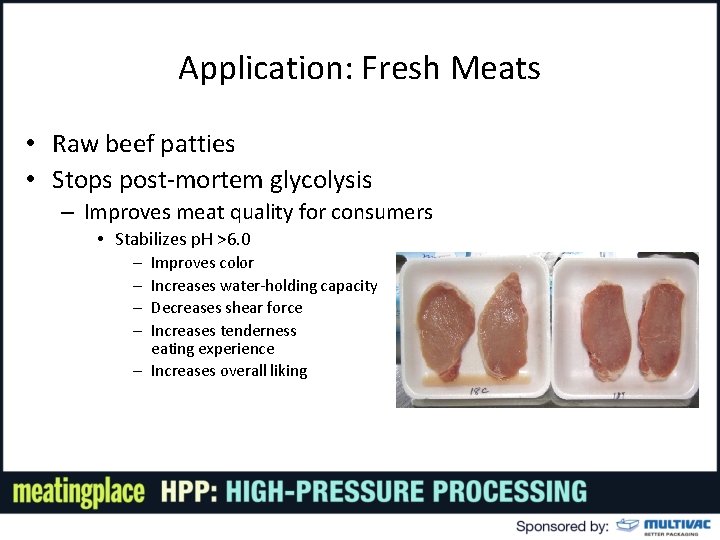
Application: Fresh Meats • Raw beef patties • Stops post-mortem glycolysis – Improves meat quality for consumers • Stabilizes p. H >6. 0 Improves color Increases water-holding capacity Decreases shear force Increases tenderness eating experience – Increases overall liking – –
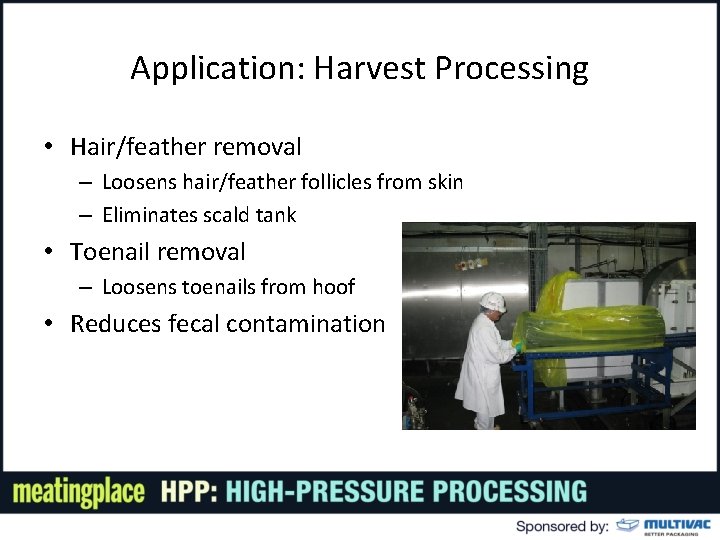
Application: Harvest Processing • Hair/feather removal – Loosens hair/feather follicles from skin – Eliminates scald tank • Toenail removal – Loosens toenails from hoof • Reduces fecal contamination
Conclusion • HPP fits a variety of applications: – Allows ready-to-eat meats to meet the USDA natural definition – Enhances quality attributes for produce products – Enhances quality for fresh meats – Improves harvest processing • Future outlook – ? ? ?
HOW TO ENTER THE MARKET WITH AN ADVANTAGE Justin Segel – President Greg Zaja – Vice President American Pasteurization Company
Poll Question Besides food safety, what is driving your interest in high-pressure processing? • Clean labels • Longer shelf life • Risk management (raw materials/finished product) • Regulatory compliance
Basic Concept of Toll vs. In-house q Capital costs • Hidden costs q Operations q Coordinating volume stream
First Steps q Initial product testing • Product evaluation • Identify quality & food safety measures • Validation • Inoculation studies • Shelf studies • Packaging
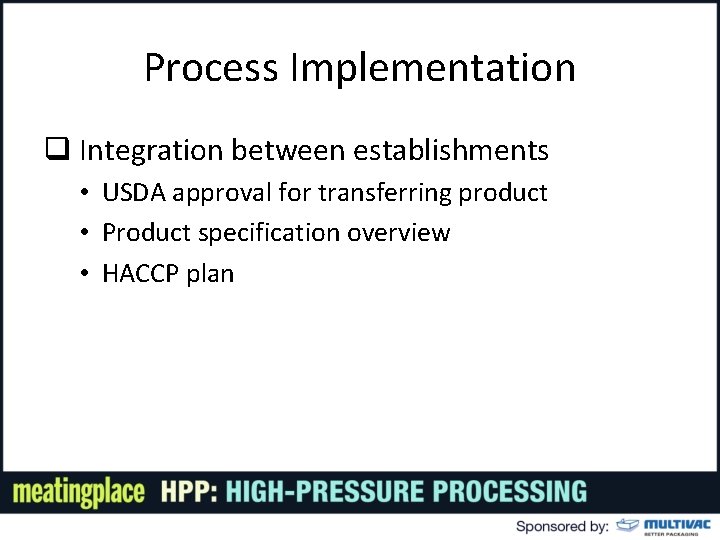
Process Implementation q Integration between establishments • USDA approval for transferring product • Product specification overview • HACCP plan
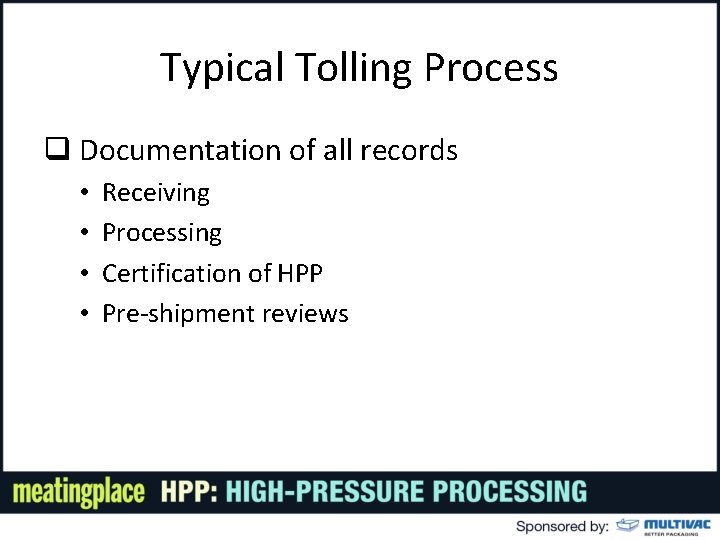
Typical Tolling Process q Documentation of all records • • Receiving Processing Certification of HPP Pre-shipment reviews
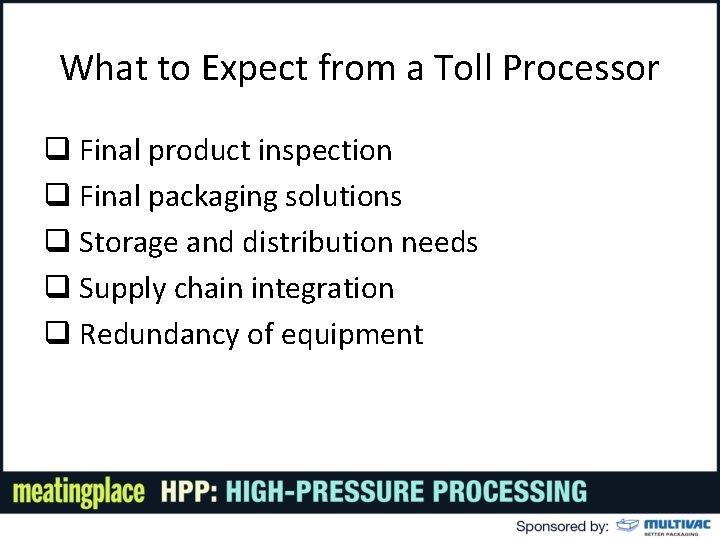
What to Expect from a Toll Processor q Final product inspection q Final packaging solutions q Storage and distribution needs q Supply chain integration q Redundancy of equipment

QUESTIONS & ANSWERS
FOR MORE INFORMATION Dr. Tatiana Koutchma: tnk 08@live. com Phillip L. Minerich: media@hormel. com Justin Segel: Justin_Segel@amerpastco. com Greg Zaja: Greg_Zaja@amerpastco. com Jerry Hirsh: jerry. hirsh@multivac. com Bill Kinross: bkinross@meatingplace. com Mike Fielding: mfielding@meatingplace. com Webinar recording and Power. Point presentation will be emailed to you within 48 hours. For more information: www. meatingplace. com/webinars
- Slides: 44