
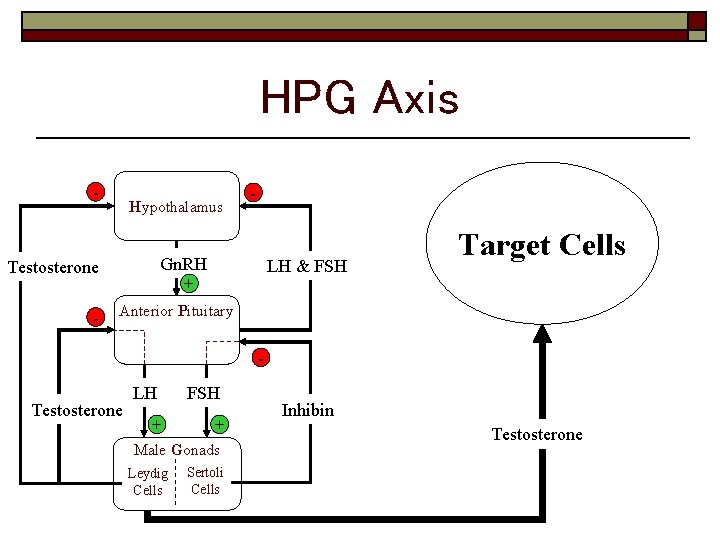
HPG Axis Hypothalamus Gn RH Testosterone LH FSH



- Slides: 23
HPG Axis - Hypothalamus Gn. RH + Testosterone - - LH & FSH Target Cells Anterior Pituitary Testosterone LH FSH + + Male Gonads Leydig Cells Sertoli Cells Inhibin Testosterone
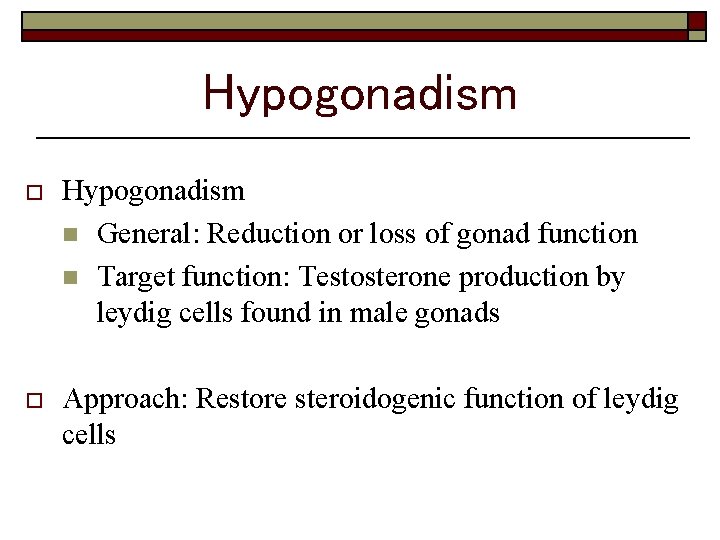
Hypogonadism o Hypogonadism n General: Reduction or loss of gonad function n Target function: Testosterone production by leydig cells found in male gonads o Approach: Restore steroidogenic function of leydig cells
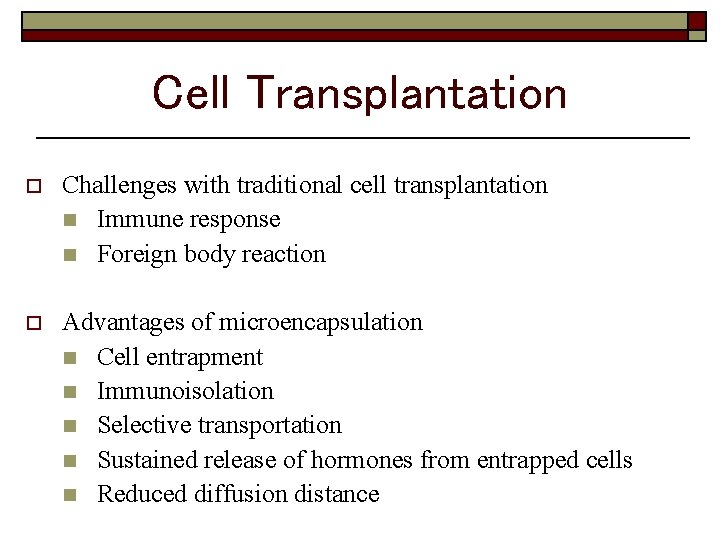
Cell Transplantation o Challenges with traditional cell transplantation n Immune response n Foreign body reaction o Advantages of microencapsulation n Cell entrapment n Immunoisolation n Selective transportation n Sustained release of hormones from entrapped cells n Reduced diffusion distance
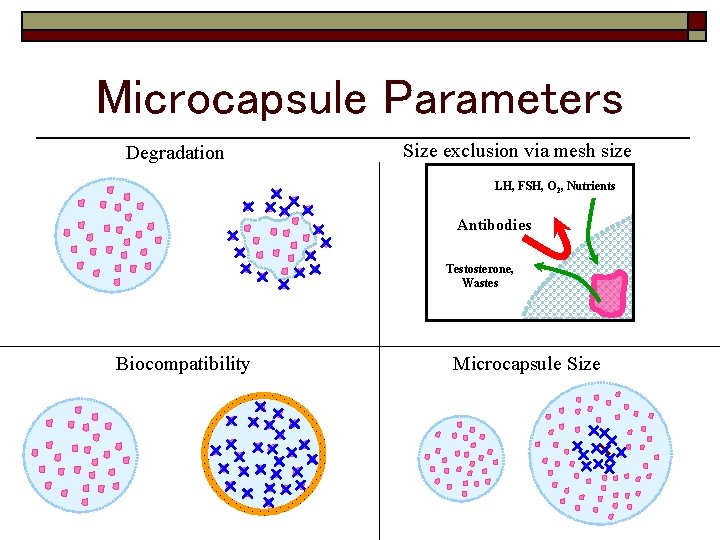
Microcapsule Parameters Degradation Size exclusion via mesh size LH, FSH, O 2, Nutrients Antibodies Testosterone, Wastes Biocompatibility Microcapsule Size
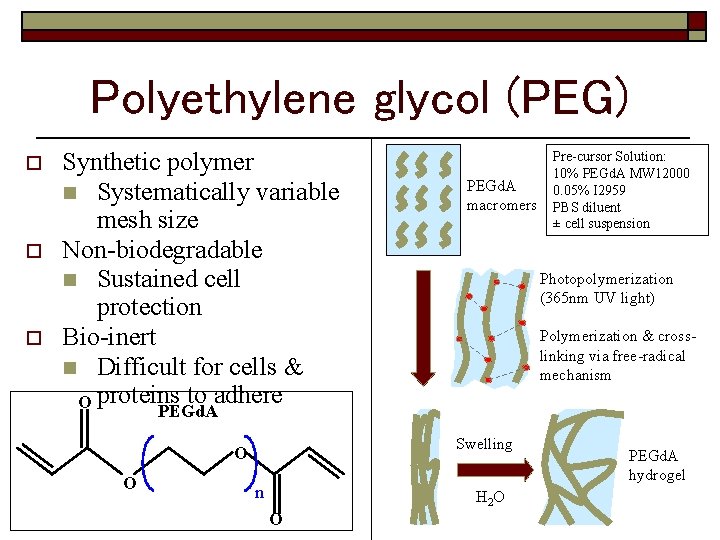
Polyethylene glycol (PEG) o o Synthetic polymer n Systematically variable mesh size Non-biodegradable n Sustained cell protection Bio-inert n Difficult for cells & O proteins to adhere PEGd. A macromers Pre-cursor Solution: 10% PEGd. A MW 12000 0. 05% I 2959 PBS diluent ± cell suspension Photopolymerization (365 nm UV light) Polymerization & crosslinking via free-radical mechanism PEGd. A Swelling O O n H 2 O O o PEGd. A hydrogel
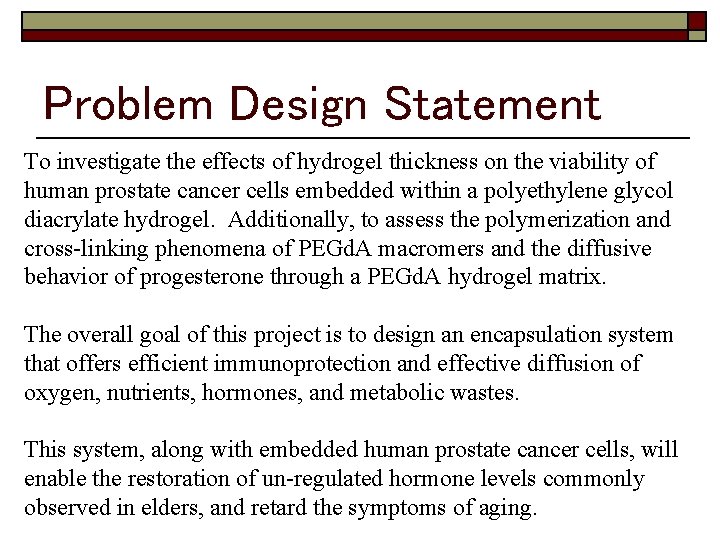
Problem Design Statement To investigate the effects of hydrogel thickness on the viability of human prostate cancer cells embedded within a polyethylene glycol diacrylate hydrogel. Additionally, to assess the polymerization and cross-linking phenomena of PEGd. A macromers and the diffusive behavior of progesterone through a PEGd. A hydrogel matrix. The overall goal of this project is to design an encapsulation system that offers efficient immunoprotection and effective diffusion of oxygen, nutrients, hormones, and metabolic wastes. This system, along with embedded human prostate cancer cells, will enable the restoration of un-regulated hormone levels commonly observed in elders, and retard the symptoms of aging.
Previous Work o Used capsule size of 100µm diameter o Observed cell viability out to 7 days and detected negligible testosterone release o 15 min of UV exposure = threshold for sustained cell viability o Current approach for improvements n Microcapsule size n UV exposure time
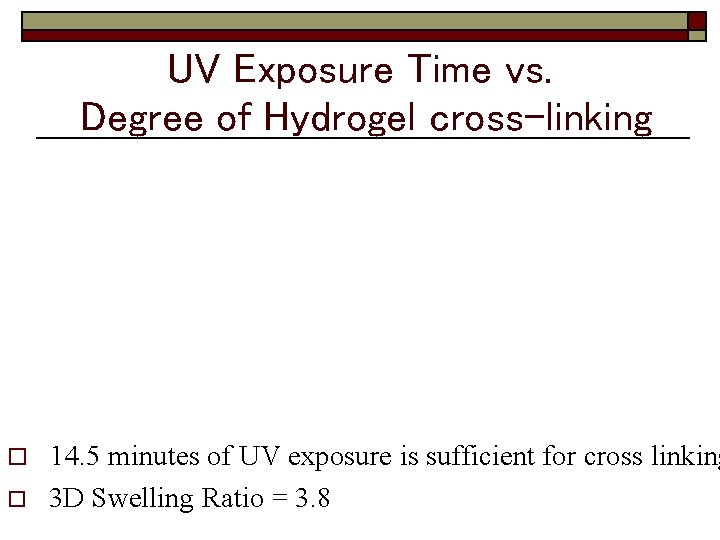
UV Exposure Time vs. Degree of Hydrogel cross-linking o o 14. 5 minutes of UV exposure is sufficient for cross linking 3 D Swelling Ratio = 3. 8
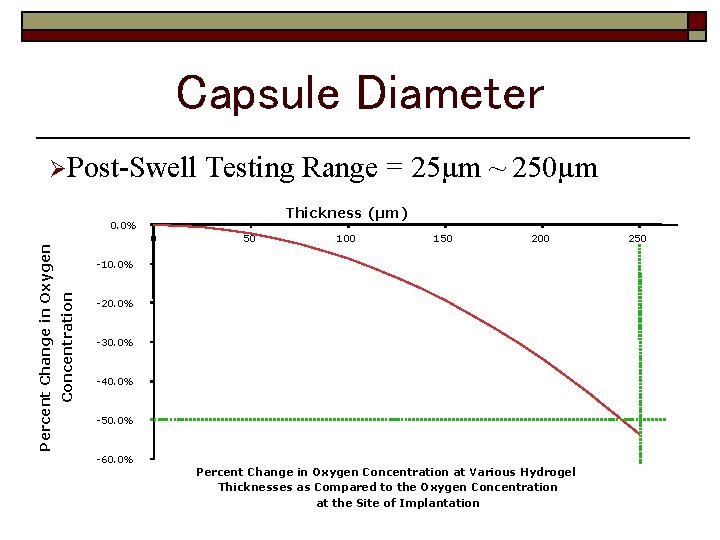
Capsule Diameter ØPost-Swell Testing Range = 25µm ~ 250µm Thickness (µm) 0 50 100 150 200 -10. 0% Concentration Percent Change in Oxygen 0. 0% -20. 0% -30. 0% -40. 0% -50. 0% -60. 0% Percent Change in Oxygen Concentration at Various Hydrogel Thicknesses as Compared to the Oxygen Concentration at the Site of Implantation 250
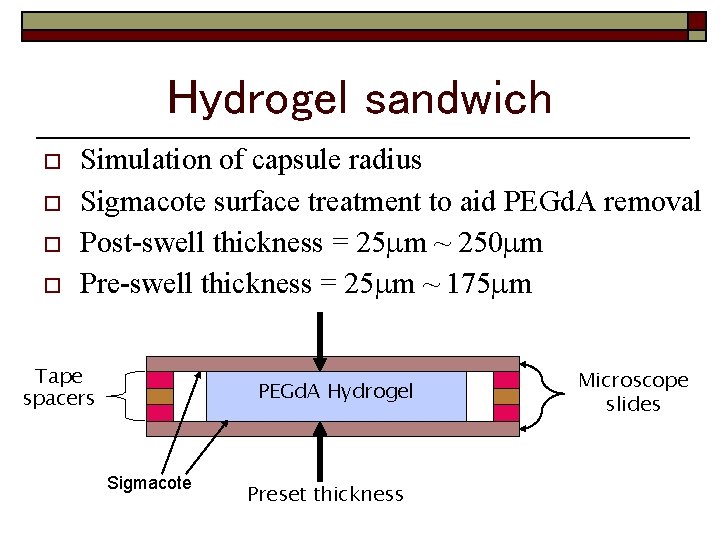
Hydrogel sandwich o o Simulation of capsule radius Sigmacote surface treatment to aid PEGd. A removal Post-swell thickness = 25 m ~ 250 m Pre-swell thickness = 25 m ~ 175 m Tape spacers PEGd. A Hydrogel Sigmacote Preset thickness Microscope slides
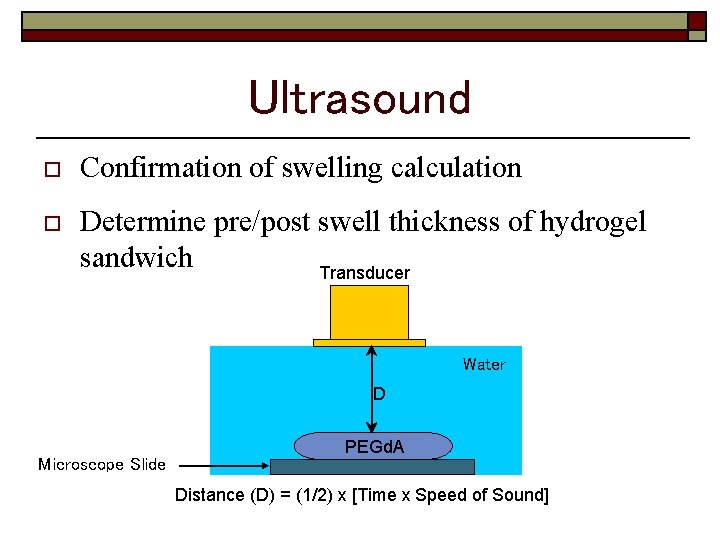
Ultrasound o Confirmation of swelling calculation o Determine pre/post swell thickness of hydrogel sandwich Transducer Water D Microscope Slide PEGd. A Distance (D) = (1/2) x [Time x Speed of Sound]
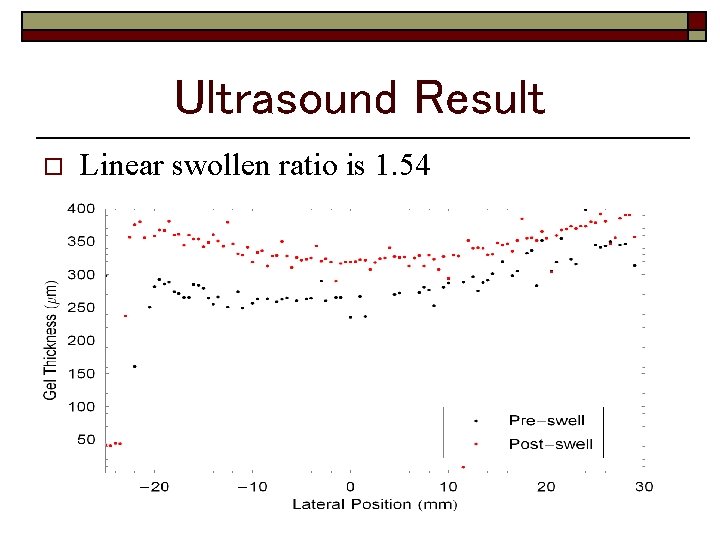
Ultrasound Result o Linear swollen ratio is 1. 54
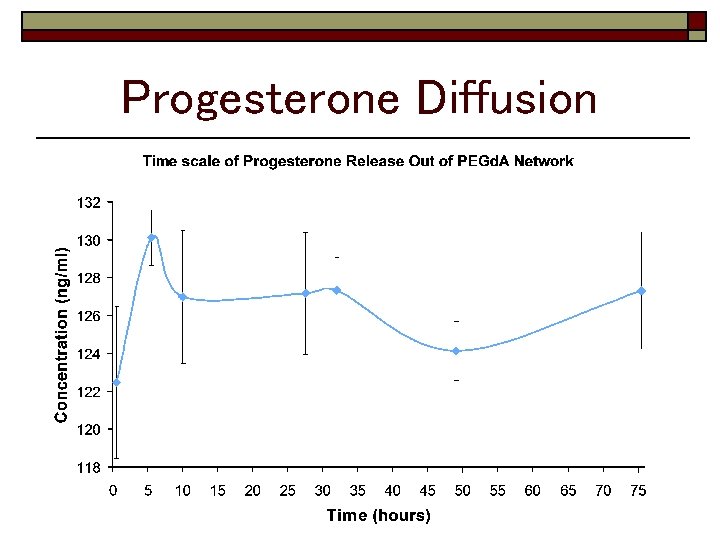
Progesterone Diffusion
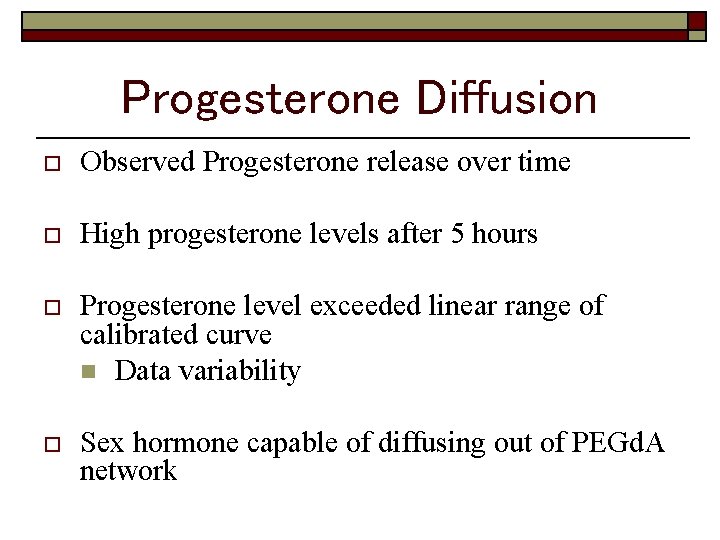
Progesterone Diffusion o Observed Progesterone release over time o High progesterone levels after 5 hours o Progesterone level exceeded linear range of calibrated curve n Data variability o Sex hormone capable of diffusing out of PEGd. A network
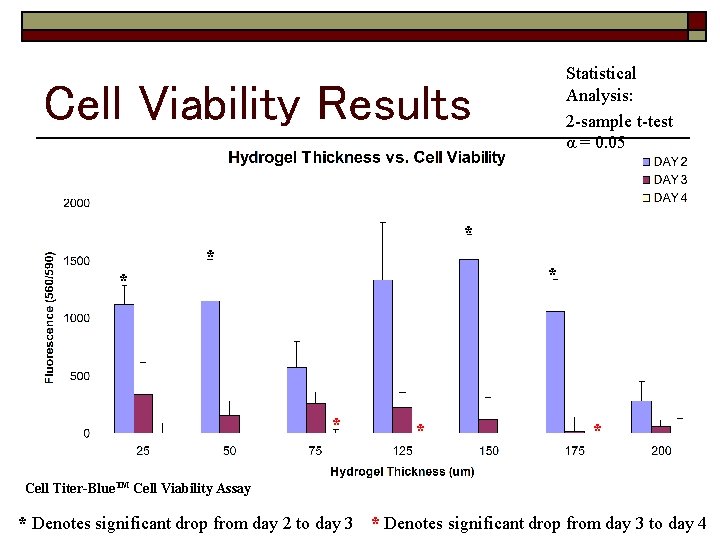
Statistical Analysis: 2 -sample t-test α = 0. 05 Cell Viability Results * * * * Cell Titer-Blue. TM Cell Viability Assay * Denotes significant drop from day 2 to day 3 * Denotes significant drop from day 3 to day 4
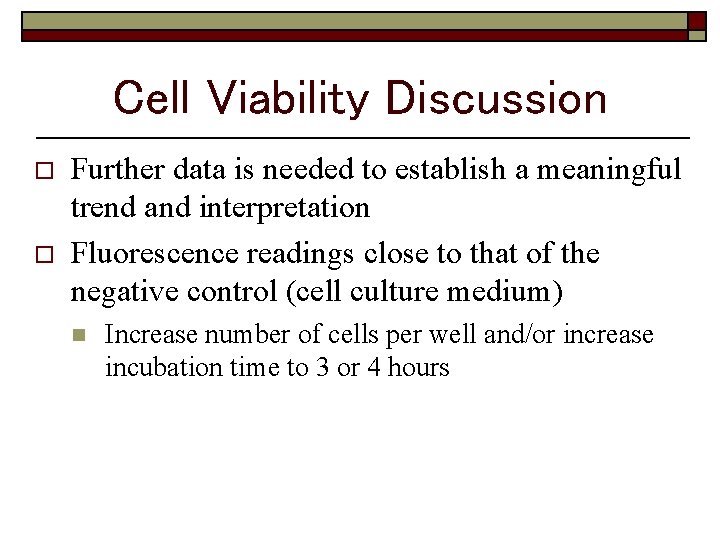
Cell Viability Discussion o o Further data is needed to establish a meaningful trend and interpretation Fluorescence readings close to that of the negative control (cell culture medium) n Increase number of cells per well and/or increase incubation time to 3 or 4 hours
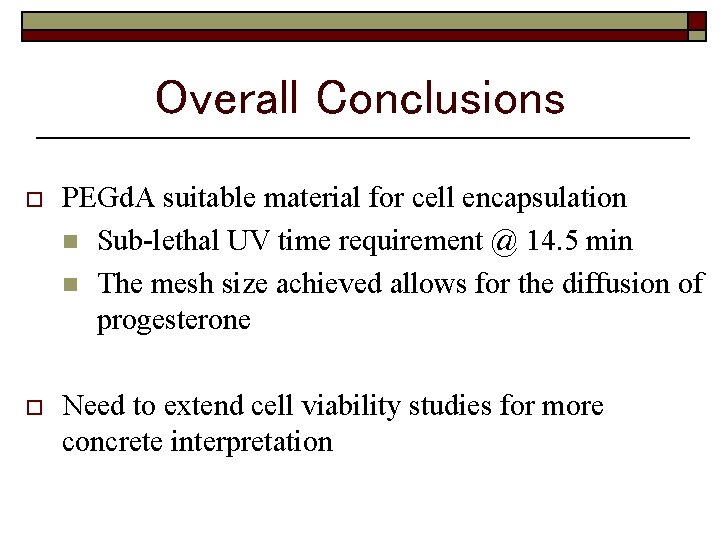
Overall Conclusions o PEGd. A suitable material for cell encapsulation n Sub-lethal UV time requirement @ 14. 5 min n The mesh size achieved allows for the diffusion of progesterone o Need to extend cell viability studies for more concrete interpretation
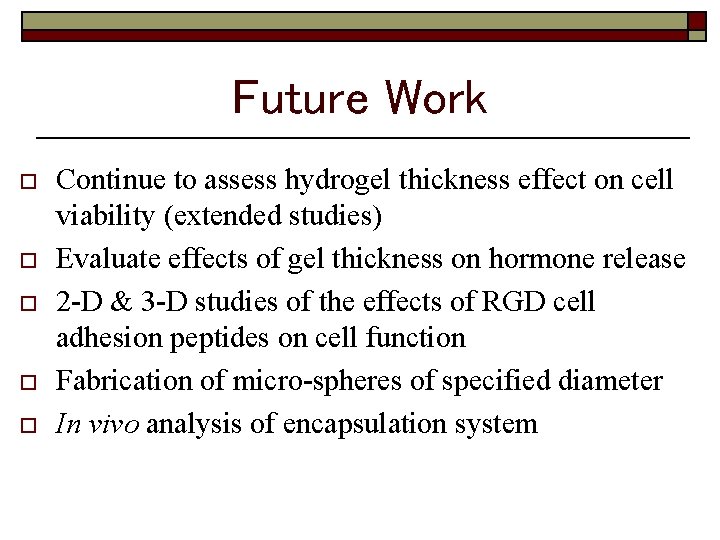
Future Work o o o Continue to assess hydrogel thickness effect on cell viability (extended studies) Evaluate effects of gel thickness on hormone release 2 -D & 3 -D studies of the effects of RGD cell adhesion peptides on cell function Fabrication of micro-spheres of specified diameter In vivo analysis of encapsulation system
References o o o ALPCO Diagnostics (2004). Progesterone EIA: For the direct quantitative determination of Progesterone by enzyme Immunoassay in human serum. 11 -PROGH-305 Version 4. 0 Cruise, G. M. , Hegre, O. D. , Scharp, D. S. , & Hubbell, J. A. (1998). A sensitivity study of the key parameters in the interfacial photopolymerization of poly(ethylene glycol) diacrylate upon porcine islets. Biotechnology and bioengineering, 57(6), 655 -665. Cruise, G. M. , Scharp, D. S. , & Hubbell, J. A. (1998). Characterization of permeability and network structure of interfacially photopolymerized poly(ethylene glycol) diacrylate hydrogels. Biomaterials, 19(14), 1287 -1294. Diramio, J. A. , Kisaalita, W. S. , Majetich, G. F. , & Shimkus, J. M. (2005). Poly(ethylene glycol) methacrylate/dimethacrylate hydrogels for controlled release of hydrophobic drugs. Biotechnology progress, 21(4), 1281 -1288. Kizilel, S. , Perez-Luna, V. H. , & Teymour, F. (2004). Photopolymerization of poly(ethylene glycol) diacrylate on eosinfunctionalized surfaces. Langmuir : the ACS journal of surfaces and colloids, 20(20), 8652 -8658. Kizilel, S. , Sawardecker, E. , Teymour, F. , & Perez-Luna, V. H. (2006). Sequential formation of covalently bonded hydrogel multilayers through surface initiated photopolymerization. Biomaterials, 27(8), 1209 -1215. Martens, P. J. , Bryant, S. J. , & Anseth, K. S. (2003). Tailoring the degradation of hydrogels formed from multivinyl poly(ethylene glycol) and poly(vinyl alcohol) macromers for cartilage tissue engineering. Biomacromolecules, 4(2), 283 -292. Mellott. M, Searcy. K, Pishko. M (2001). Release of protein from highly cross-linked hydrogels of poly(ethylene glycol) diacrylate fabricated by UV polymerization. Biomaterials 22(9): 929 -41. Muschler. G, Nakamoto C, Griffth L (2004). Engineering Principles of Clinical Cell-Based Tissue Engineering. The Journal of Bone and Joint Surgery (American) 86: 1541 -1558 Nuttelman, C. R. , Tripodi, M. C. , & Anseth, K. S. (2005). Synthetic hydrogel niches that promote h. MSC viability. Matrix biology : journal of the International Society for Matrix Biology, 24 (3), 208 -218. Yang. F, Williams. C, Wang. D, Lee. H (2004) The effect of incorporating RGD adhesive peptide in polyethylene glycol diacrylate hydrogel on osteogenesis of bone marrow stromal cells. Biomaterials. 2005 Oct; 26(30): 5991 -8.
Special Thanks • School of Medicine and Public Health, Medical Physics • • • Daesung Lee • Yi-Jin Kim • VA Kim • Dr. Craig Atwood • Miguel Gallego • Andrea Wilson • Ryan Haasl Dr. John Kao Graduate student Amy Chung for her endless generosity Dr. Kristyn Masters and lab Dr. William Murphy and lab Dr. Brenda Ogle and lab hospital • Yi-Jin Biomedical Engineering Department • • • Department • Dr. Tim Stiles for his help in ultrasound measurements Pharmacy Department • • • Chemistry • Promega Corporation • Lydia Hwang for her vital donation of project resources • CS Hyde Company
Micro Albert Kwansa Eric Lee
encaps John Harrison Miguel Benson Client: Dr. Craig Atwood Advisor: Professor William Murphy
ulation Yik Ning Wong