
HPC Based Electrical System Analysis HPC User Forum
HPC Based Electrical System Analysis HPC User Forum April 12 -15, 2010 Jeff Crompton, Alta. Sim Technologies Supported by DARPA contract #FA 8750 -08 -C-0184
Presentation • Background • Technical issues • Business impact 2

Background • Power switching device for next generation US Navy ships • New technology provides miniaturization – Increased power density – Increased conductive EMI • Traditional EMI solution is ~30% over target cost and weight • Current solution uses experience and iterative testing/evaluation 3
Objective • Decrease technology development cost and time: – Develop tools for analysis of large electrical circuits – Demonstrate effectiveness of virtual product development – Quantify the benefit of virtual vs traditional product development 4
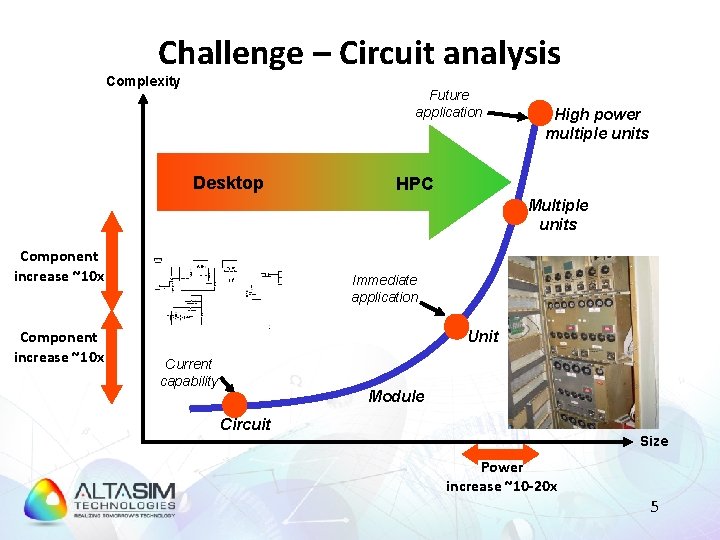
Challenge – Circuit analysis Complexity Future application Desktop High power multiple units HPC Multiple units Component increase ~10 x Immediate application Unit Current capability Module Circuit Size Power increase ~10 -20 x 5

Computational solution • Isolated circuits – Optimize MATLAB/Simulink operation • Discrete solver reduces run time by 300 x • Need knowledge of solver settings • Power units – Integrate parallelization strategies • MATLAB/Simulink parallelization • GHOST technology 6
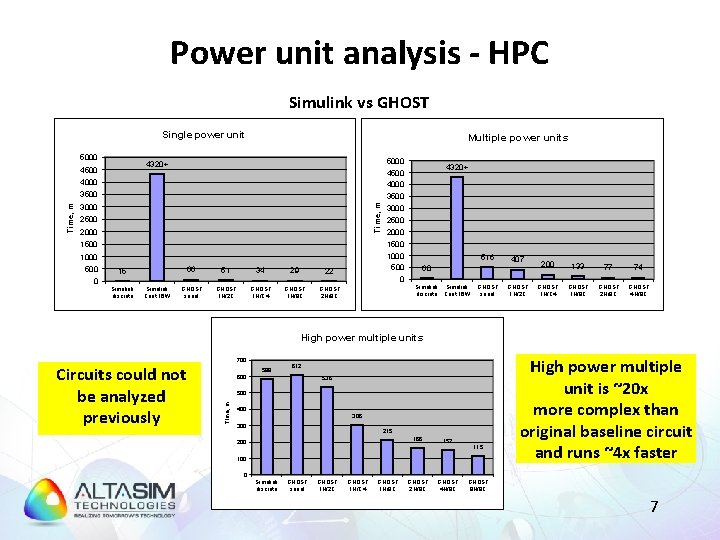
Power unit analysis - HPC Simulink vs GHOST Single power unit 5000 Multiple power units 4320+ 4500 4000 Time, m 3500 3000 2500 2000 1500 1000 500 0 66 51 34 29 22 GHOST serial GHOST 1 N/2 C GHOST 1 N/C 4 GHOST 1 N/8 C GHOST 2 N/8 C 15 Simulink discrete Simulink Cont 16 W 5000 4500 4000 3500 3000 2500 2000 1500 1000 500 0 4320+ 516 60 Simulink discrete Cont 16 W GHOST serial 407 GHOST 1 N/2 C 200 133 77 74 GHOST 1 N/C 4 GHOST 1 N/8 C GHOST 2 N/8 C GHOST 4 N/8 C High power multiple units 588 612 600 536 500 Time, m Circuits could not be analyzed previously 700 400 306 300 215 166 200 152 115 100 High power multiple unit is ~20 x more complex than original baseline circuit and runs ~4 x faster 0 Simulink discrete GHOST serial GHOST 1 N/2 C GHOST 1 N/C 4 GHOST 1 N/8 C GHOST 2 N/8 C GHOST 4 N/8 C GHOST 8 N/8 C 7

HPC-based Analysis: Time/Complexity 325 x Circuit Single unit ~30 x 12 x faster Circuit Multiple units ~6 x faster ~2 x complexity High power multiple units 8
Business impact • Current development process – Direct: • Concept, Po. C, Engineering model, Prototype qualification – Design escape • Pre-deployment • In the fleet • Current manufacturing methodology – Direct • Part consolidation and component selection – Structural • Weight, volume, additional ship structure • Future platform costs – Higher power switches, 10 -20 x increase in power 9
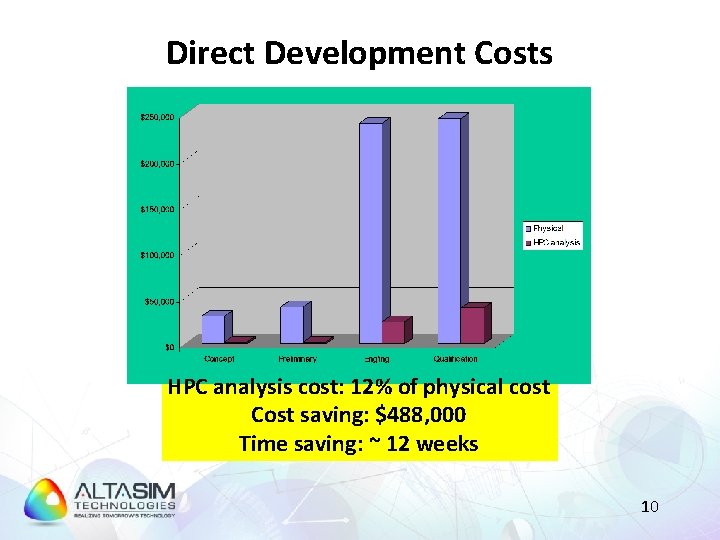
Direct Development Costs HPC analysis cost: 12% of physical cost Cost saving: $488, 000 Time saving: ~ 12 weeks 10
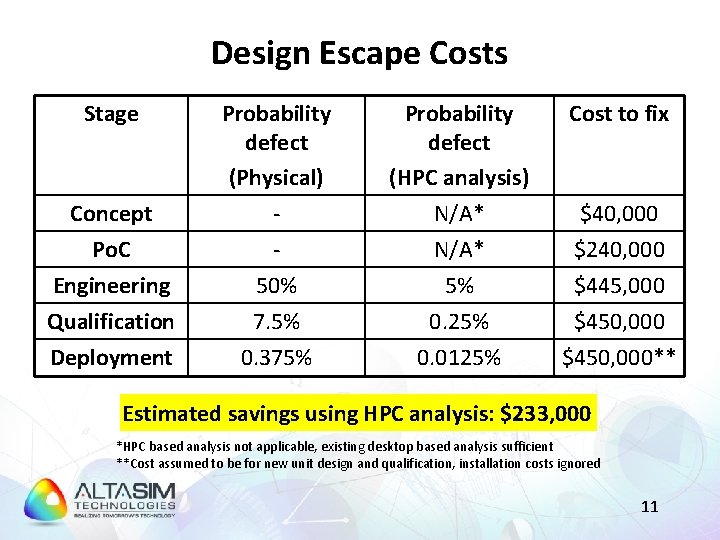
Design Escape Costs Stage Probability defect (HPC analysis) N/A* Cost to fix Concept Probability defect (Physical) - Po. C Engineering Qualification Deployment 50% 7. 5% 0. 375% N/A* 5% 0. 25% 0. 0125% $240, 000 $445, 000 $450, 000** $40, 000 Estimated savings using HPC analysis: $233, 000 *HPC based analysis not applicable, existing desktop based analysis sufficient **Cost assumed to be for new unit design and qualification, installation costs ignored 11
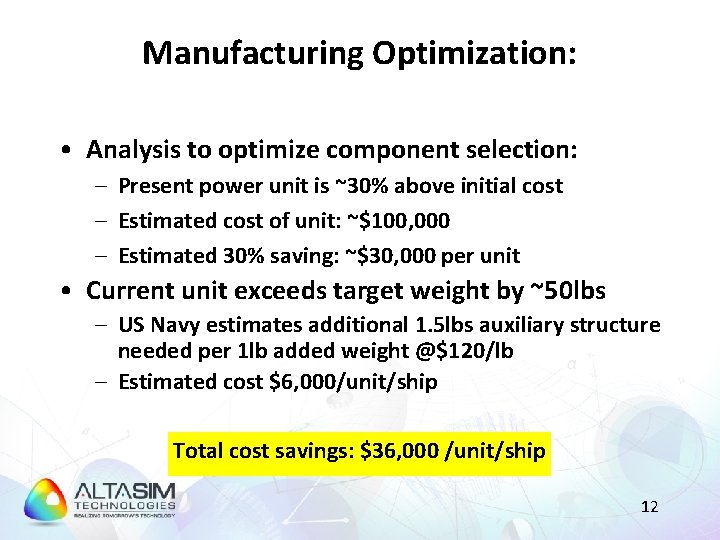
Manufacturing Optimization: • Analysis to optimize component selection: – Present power unit is ~30% above initial cost – Estimated cost of unit: ~$100, 000 – Estimated 30% saving: ~$30, 000 per unit • Current unit exceeds target weight by ~50 lbs – US Navy estimates additional 1. 5 lbs auxiliary structure needed per 1 lb added weight @$120/lb – Estimated cost $6, 000/unit/ship Total cost savings: $36, 000 /unit/ship 12
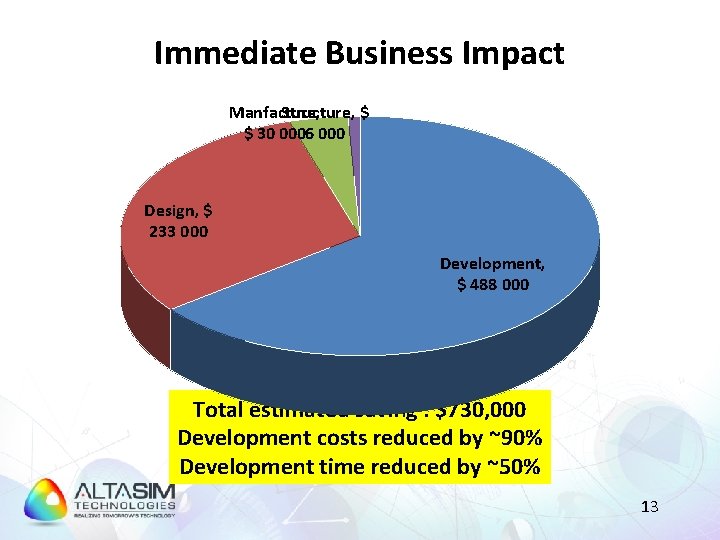
Immediate Business Impact Manfacture, Structure, $ $ 30 0006 000 Design, $ 233 000 Development, $ 488 000 Total estimated saving : $730, 000 Development costs reduced by ~90% Development time reduced by ~50% 13
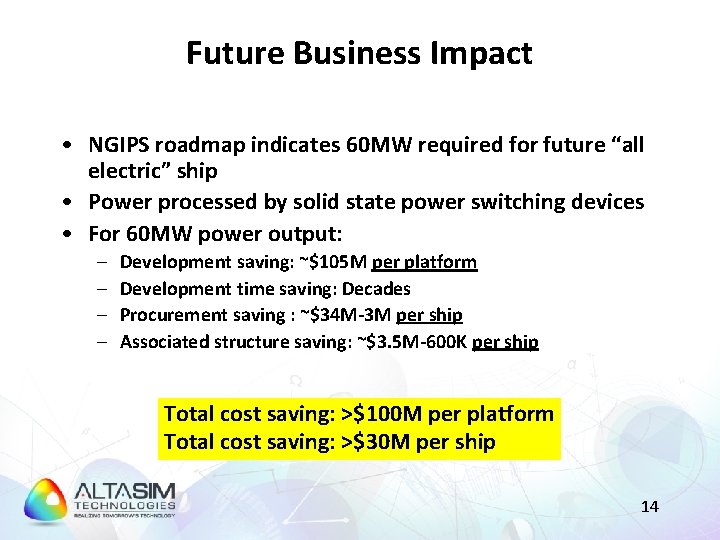
Future Business Impact • NGIPS roadmap indicates 60 MW required for future “all electric” ship • Power processed by solid state power switching devices • For 60 MW power output: – – Development saving: ~$105 M per platform Development time saving: Decades Procurement saving : ~$34 M-3 M per ship Associated structure saving: ~$3. 5 M-600 K per ship Total cost saving: >$100 M per platform Total cost saving: >$30 M per ship 14
Summary • HPC based solutions have successfully analyzed large circuits that could not be analyzed previously • Immediate impact in excess of $700 K and months in development • Projected impact estimated to be in excess of $100 M and decades in development 15
- Slides: 15