
How were civilians affected by World War 1
How were civilians affected by World War 1? Aim: To revise key details about the British Home Front during the First World War A revision presentation from http: //www. mrallsophistory. com/
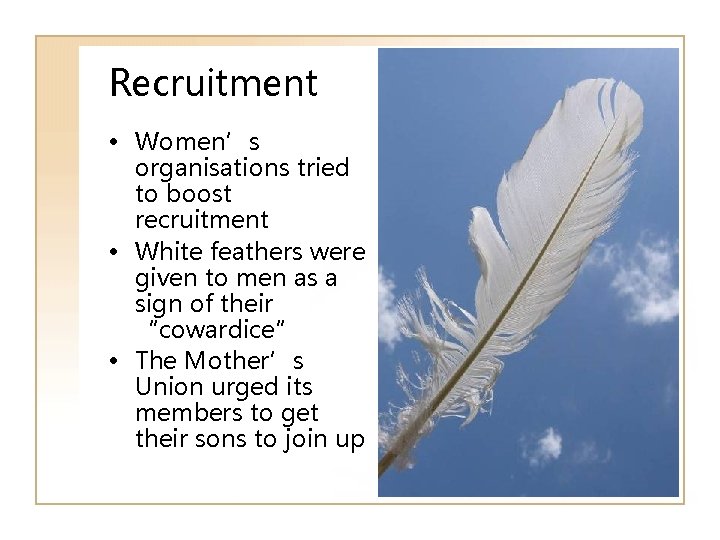
Recruitment • Women’s organisations tried to boost recruitment • White feathers were given to men as a sign of their “cowardice” • The Mother’s Union urged its members to get their sons to join up
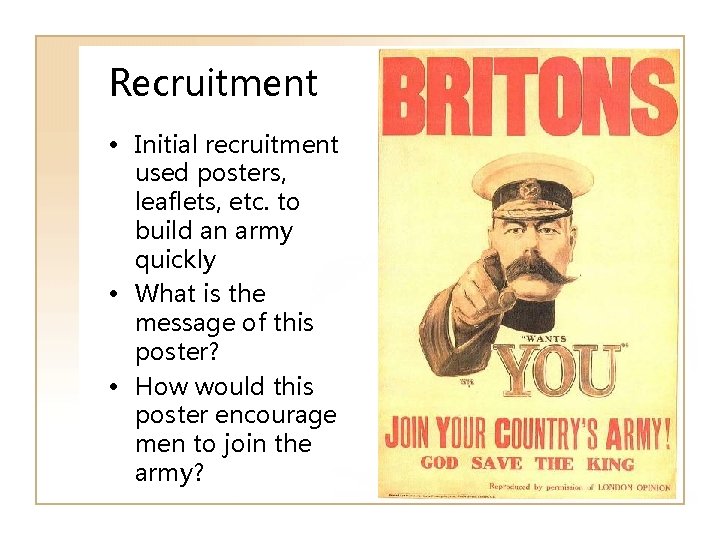
Recruitment • Initial recruitment used posters, leaflets, etc. to build an army quickly • What is the message of this poster? • How would this poster encourage men to join the army?
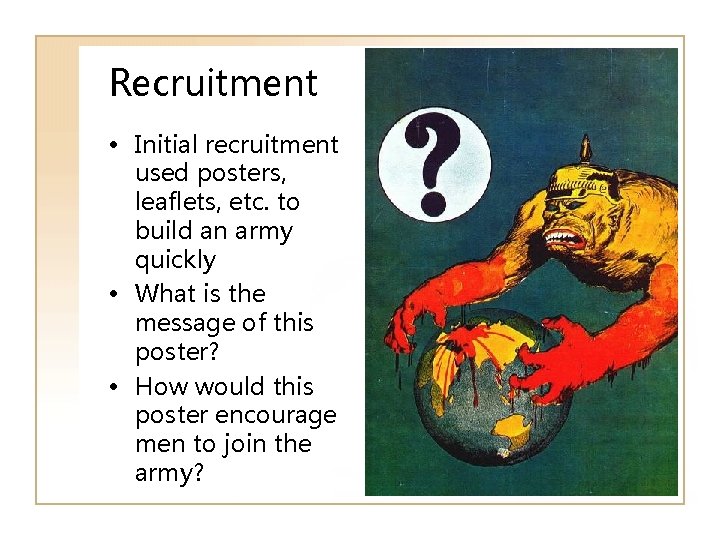
Recruitment • Initial recruitment used posters, leaflets, etc. to build an army quickly • What is the message of this poster? • How would this poster encourage men to join the army?
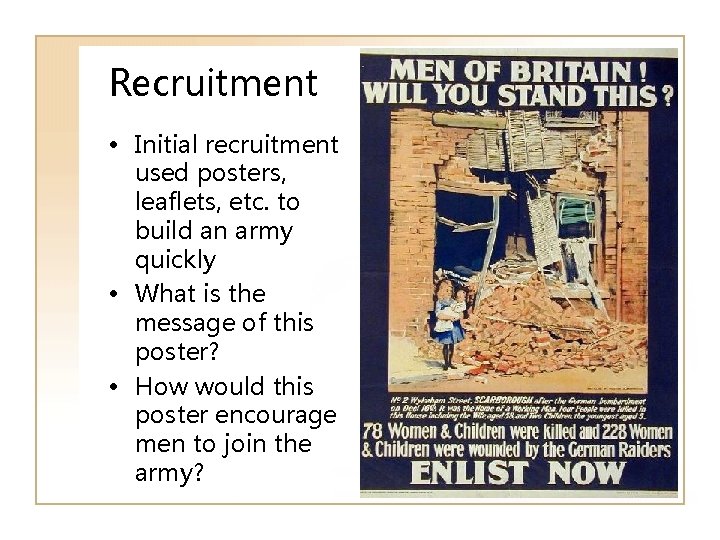
Recruitment • Initial recruitment used posters, leaflets, etc. to build an army quickly • What is the message of this poster? • How would this poster encourage men to join the army?
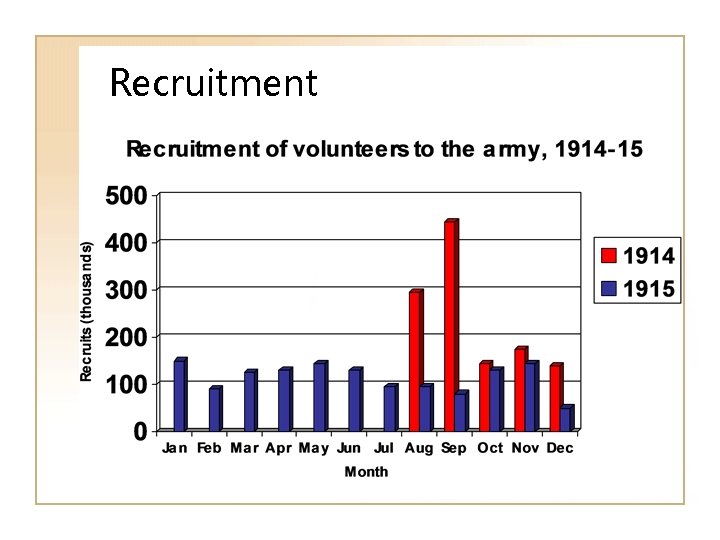
Recruitment
Conscription • Voluntary recruitment was decreasing, but the demand for troops was increasing • Voluntary recruitment didn’t share the burden between all parts of society • Conscription introduced in 1916 • All men aged 18 -40 had to register • They could be called up to fight at any time
Conscription • Conscientious objectors opposed the war for political or religious reasons • They refused to fight, and were imprisoned – or executed – for doing so • Others helped the war effort, but not through military action – Field hospitals – Stretched bearers
DORA • The Defence of the Realm Act • Introduced in 1914 • Gave the government powers to control many aspects of people’s daily lives • The priority was to keep industrial production high, but other things were affected too
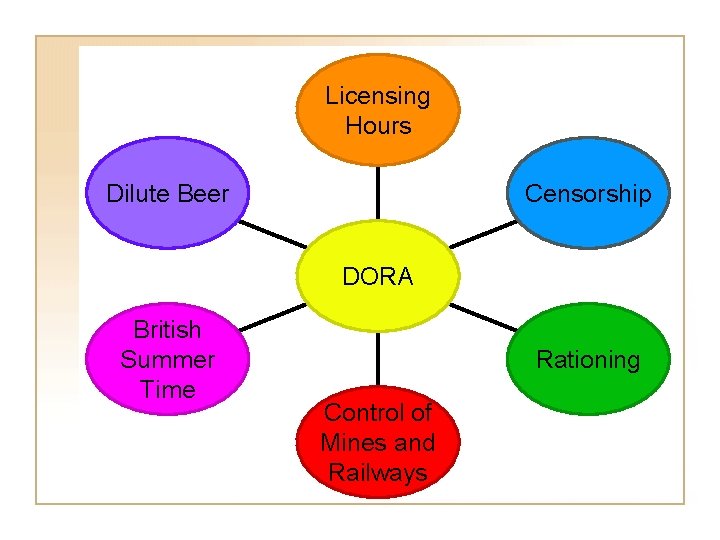
Licensing Hours Dilute Beer Censorship DORA British Summer Time Rationing Control of Mines and Railways
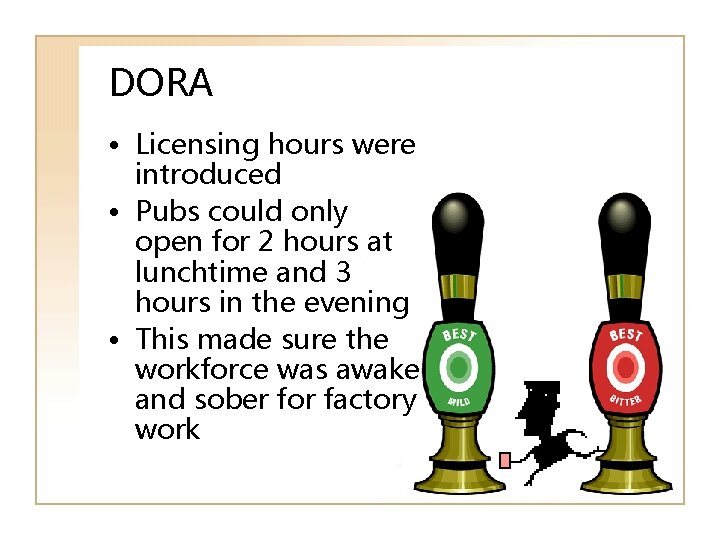
DORA • Licensing hours were introduced • Pubs could only open for 2 hours at lunchtime and 3 hours in the evening • This made sure the workforce was awake and sober for factory work
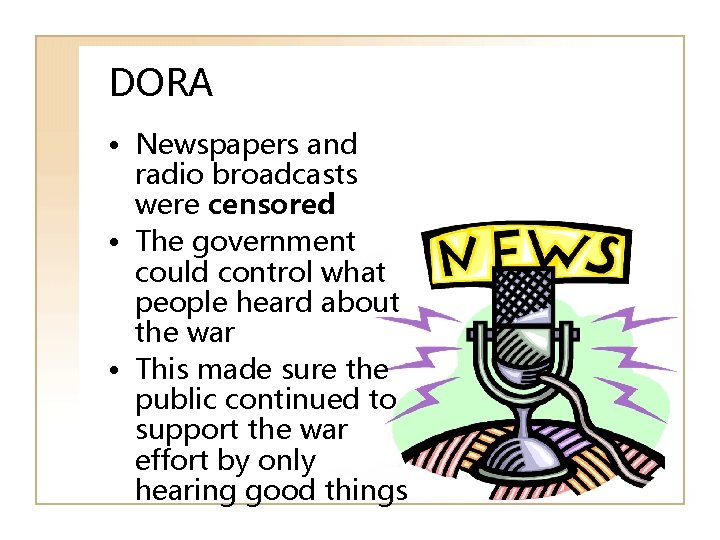
DORA • Newspapers and radio broadcasts were censored • The government could control what people heard about the war • This made sure the public continued to support the war effort by only hearing good things
DORA • Food was rationed • The government took over land used it for farm production • This ensured there was enough food to feed the public and the army, despite German U-Boat attacks
DORA • Beer was diluted • The government allowed publicans to make beer weaker • This ensured the workforce didn’t drink so much as to make them drunk or hung-over while at work
DORA • British Summer Time was introduced • The government move the clocks forward by an hour in the summer • This ensured factories had maximum daylight, meaning they could operate later
DORA • Mines and railways were taken over by the government • The government had ultimate control over them • This meant production of coal, and the movement of trains, would be prioritised for the war effort
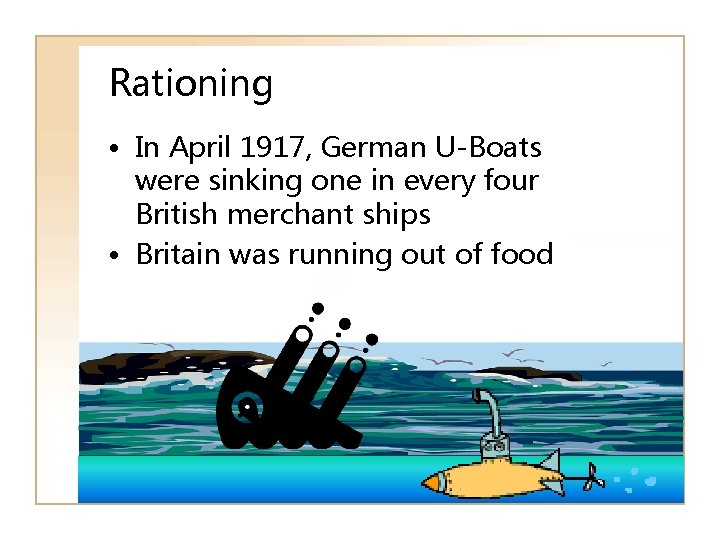
Rationing • In April 1917, German U-Boats were sinking one in every four British merchant ships • Britain was running out of food
Rationing • In 1917 voluntary rationing began, led by the royal family • In 1918 compulsory rationing began – – Sugar Butter Meat Beer
Propaganda and Censorship • All news was tightly controlled (censorship) • Reports aimed to: – Maintain morale – Encourage civilians to support the war effort – Create hatred and suspicion of the enemy • Newspapers, radio broadcasts, films and even board games were used
Propaganda and Censorship • The film, The Battle of the Somme, was filmed in 1916 • The Battle was a disaster for the British Army – Failed objectives – Enormous causalities • What can the film tell an historian about the use of propaganda in WW 1? • Watch the clip (will take a couple of minutes to download)
Propaganda and Censorship • The film, The Battle of the Somme, is seen by historians as a propaganda triumph • People at home felt they could see how their efforts were helping the troops • Although it showed some casualties, it also showed advancing troops, helping morale
Propaganda and Censorship • The film, Britain’s Effort, was created in 1917 • What was its purpose? • Watch the clip (will take a couple of minutes to download)
Propaganda and Censorship • It is hard to measure how effective propaganda was • BUT – Support for the war was reasonably constant • Only really changed with the enormous causalities at the Battle of the Somme in 1916 – People read lots of newspapers, and watched the films, so they were being exposed to it
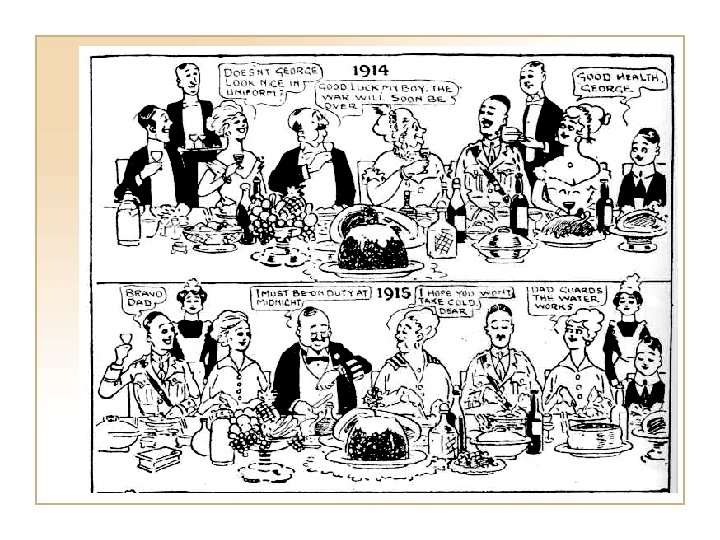
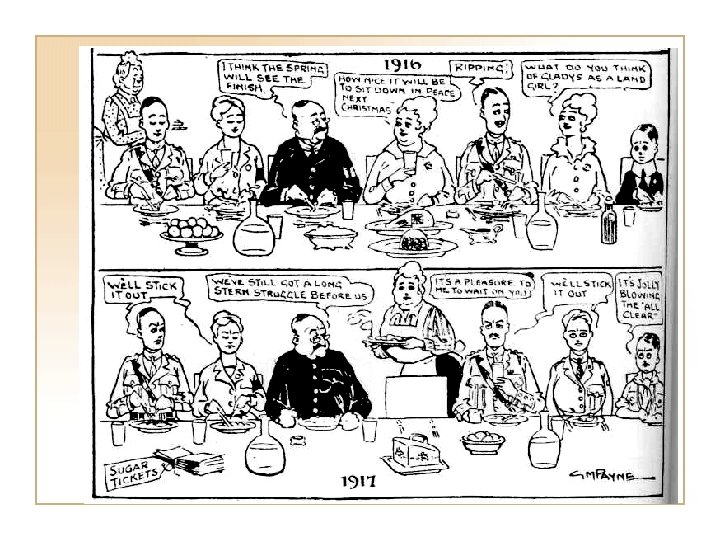
The Brown Family’s Four War Christmas • What is happening in each frame? • Explain why these things are happening, based on what you know about life on the Home Front
- Slides: 26