
How We Make Sense of What we Sensation


- Slides: 45
How We Make Sense of What we Sensation – gathering light in the eye Perception – processing and interpreting sensory input
Sensation and perception • Sensation: gathering of data using the 5 senses – Vision – Taste – Smell – Touch – Hearing • Perception – interpreting that data. Occurs in the BRAIN
Sensation: Vision • The eyes gather LIGHT from the environment • The occipital lobe interprets that information into VISION
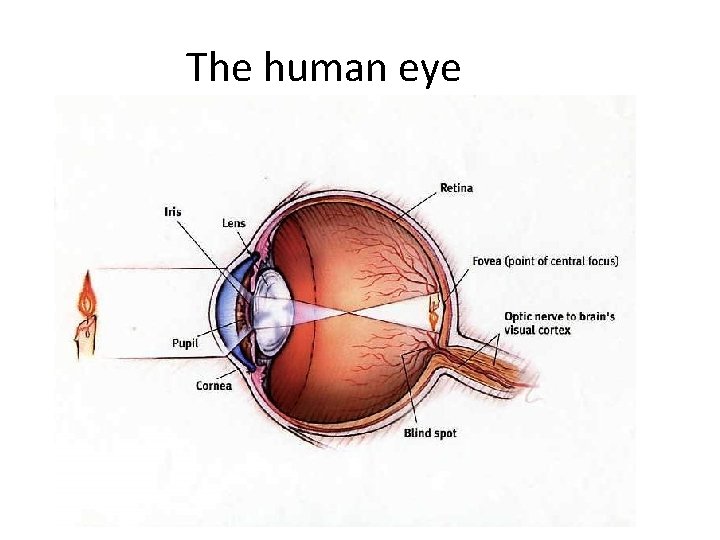
The human eye
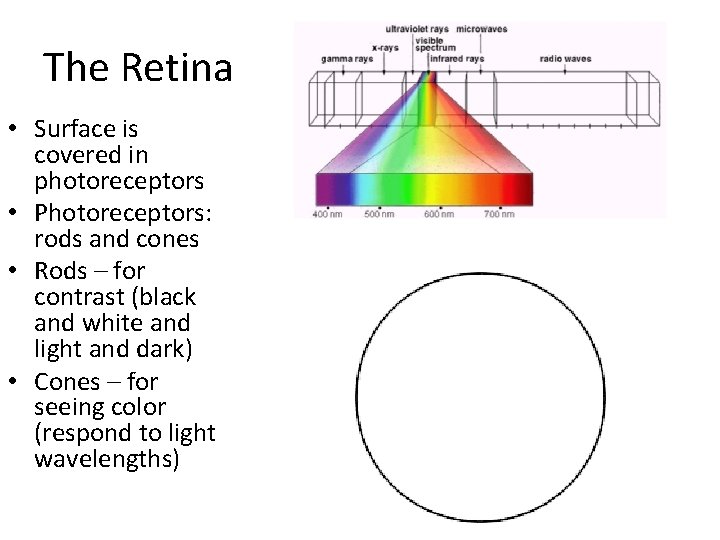
The Retina • Surface is covered in photoreceptors • Photoreceptors: rods and cones • Rods – for contrast (black and white and light and dark) • Cones – for seeing color (respond to light wavelengths)
What color…. ? • Volunteer – when can you report the color of the object held at side by teacher, with accuracy? • Explain why. • Draw a picture of the back of an eye (inside view). Label retina, rods, cones, optic nerve. • Why is it easier to see stars from the corner of your eyes?
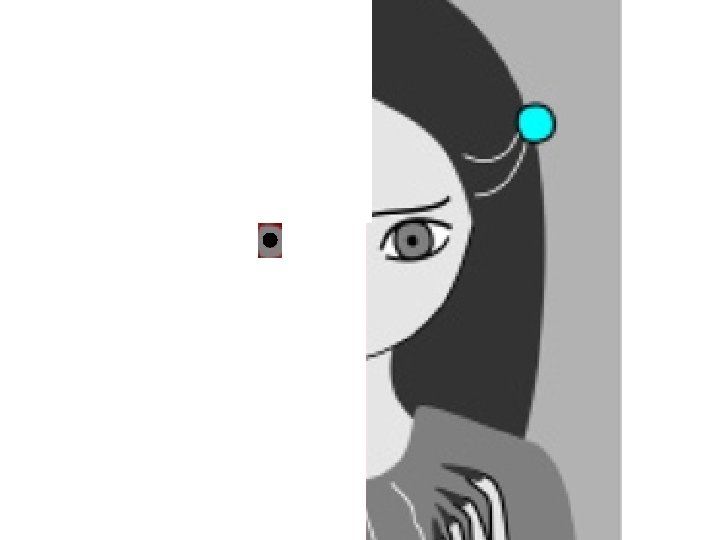
Is what we see reality? • Or does our brain processing (perception) sometimes “trick” us? • Complete vision tests 1 – 5 on the sheet provided. FOLLOW ALL INSTRUCTIONS for the tests to work. Read the sheet carefully. – Use desk packet for #1, 3 and 4. – Use Snellen eye chart for #2 – Use two pens for #5
Write and answer these questions • What is the “blind spot”? • What are rods and cones, and where are they located? • What stimulus do eyes respond to? • Where does visual perception occur? • Do we see reality the way it is, or do we “create” a visual reality in our brain? Explain?
Afterimages! (part 8 on sheet) • Are afterimages the result of sensation or perception fatigue? http: //izismile. com/2011/11/11/mind_blowing_afterimages_optical_illusions _3_pics_11_gifs. html
Homework Link is on sheet Bring sheet to class (eye dissection instructions on it) http: //www. purposegames. com/game/898
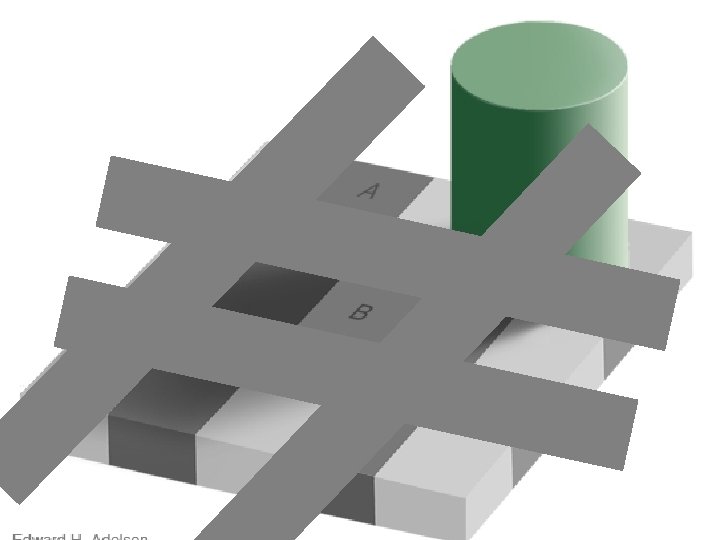
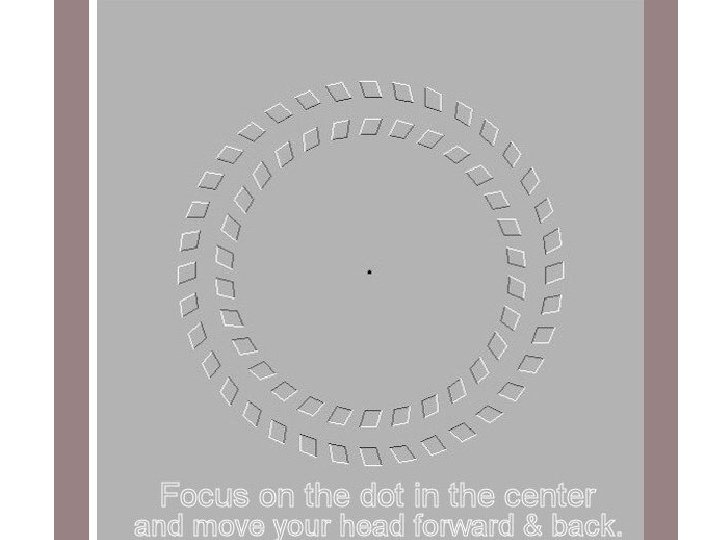
Optical illusions • Perception is not an accurate representation of reality • Processing vision is subject to lots of misinterpretation and contextual processing of info
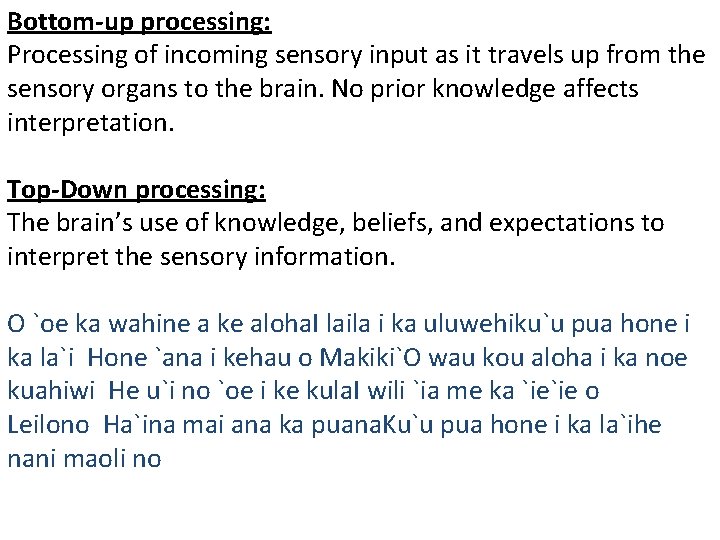
Bottom-up processing: Processing of incoming sensory input as it travels up from the sensory organs to the brain. No prior knowledge affects interpretation. Top-Down processing: The brain’s use of knowledge, beliefs, and expectations to interpret the sensory information. O `oe ka wahine a ke aloha. I laila i ka uluwehiku`u pua hone i ka la`i Hone `ana i kehau o Makiki`O wau kou aloha i ka noe kuahiwi He u`i no `oe i ke kula. I wili `ia me ka `ie`ie o Leilono Ha`ina mai ana ka puana. Ku`u pua hone i ka la`ihe nani maoli no
Pua Hone (Honey Flower) - by Dennis Kamakahi O `oe ka wahine a ke aloha. I laila i ka uluwehiku`u pua hone i ka la`i Hone `ana i kehau o Makiki`O wau kou aloha i ka noe kuahiwi He u`i no `oe i ke kula. I wili `ia me ka `ie`ie o Leilono Ha`ina mai ana ka puana. Ku`u pua hone i ka la`ihe nani maoli no You are the woman that I love. There in the lush verdure is my honey flower in the calm. Kissed by the dew of Makiki. I am your love in the mountain mist. You are a beauty on the plains. Entwined with the sacred `ie`ie vine of Leilono. This ends my story. For my honey flower in the calm, a true beauty, indeed
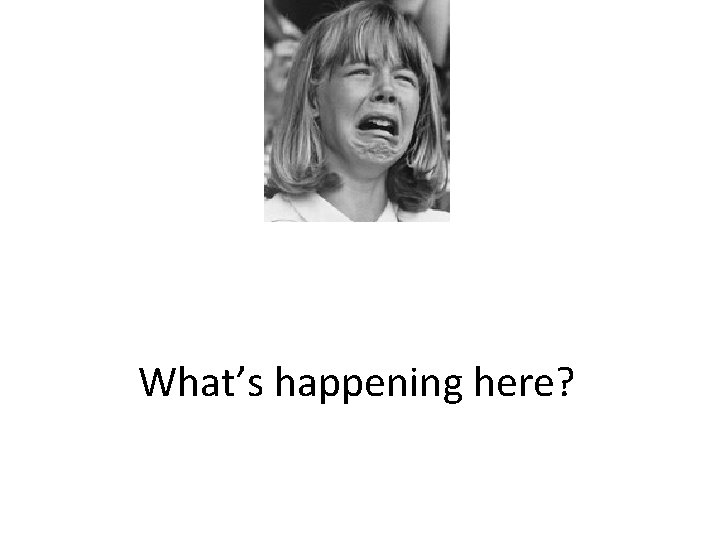
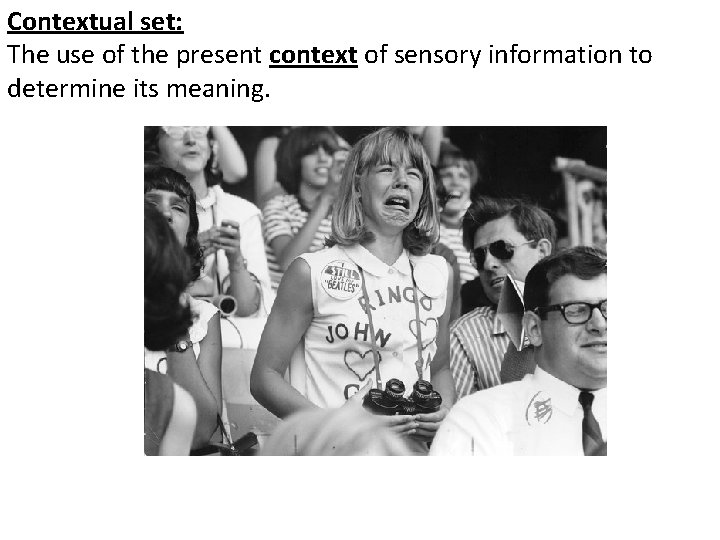
What’s happening here?
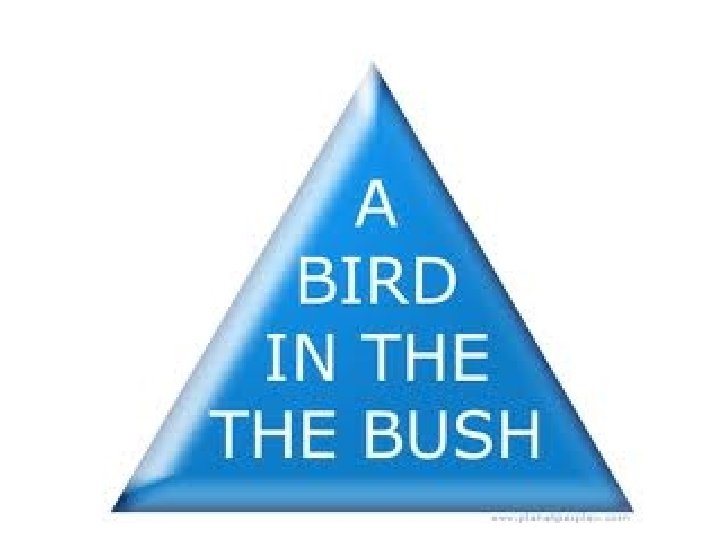
Contextual set: The use of the present context of sensory information to determine its meaning.
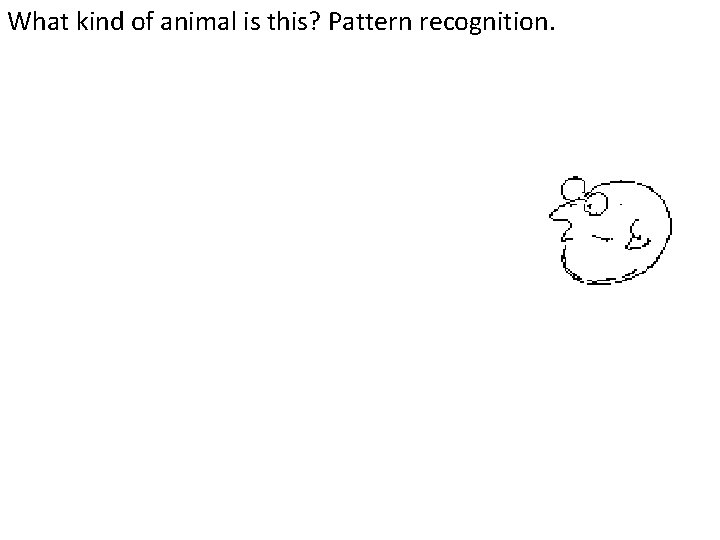
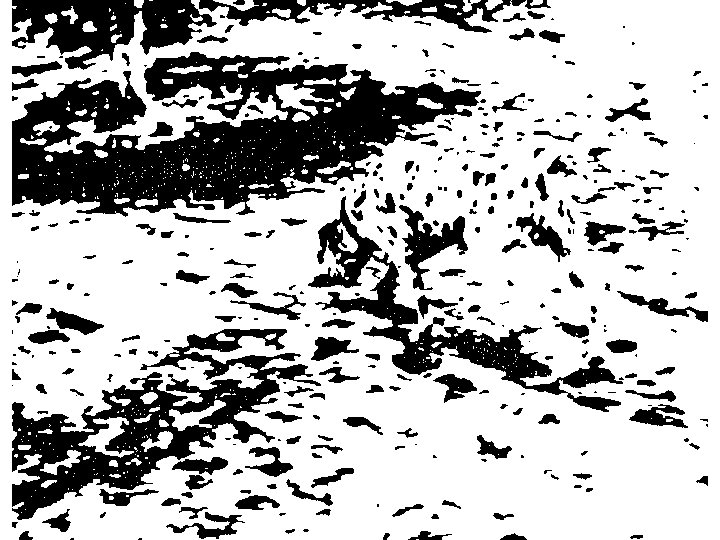
What kind of animal is this? Pattern recognition. v v
vv v v vv
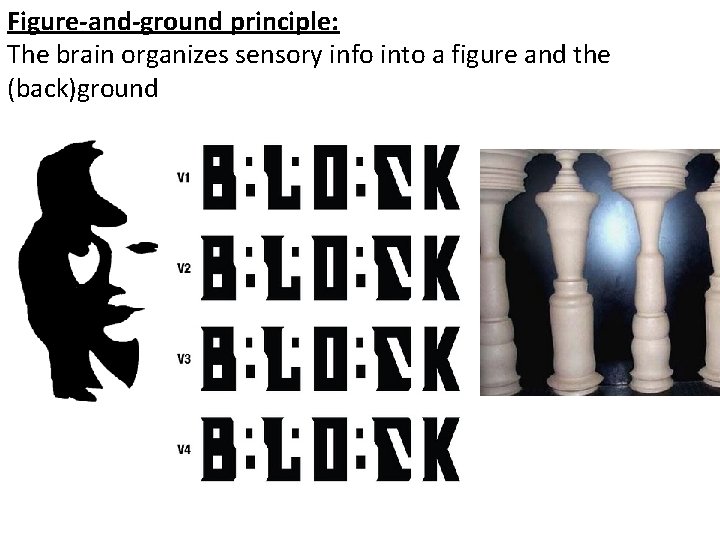
Figure-and-ground principle: The brain organizes sensory info into a figure and the (back)ground
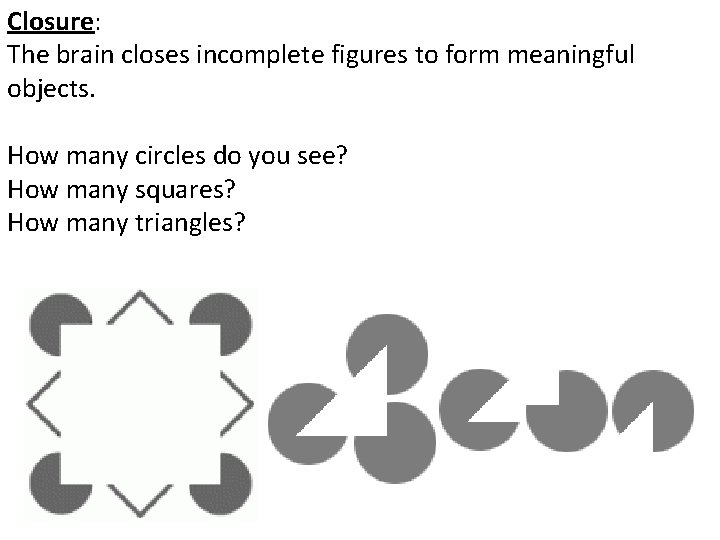
Closure: The brain closes incomplete figures to form meaningful objects. How many circles do you see? How many squares? How many triangles?
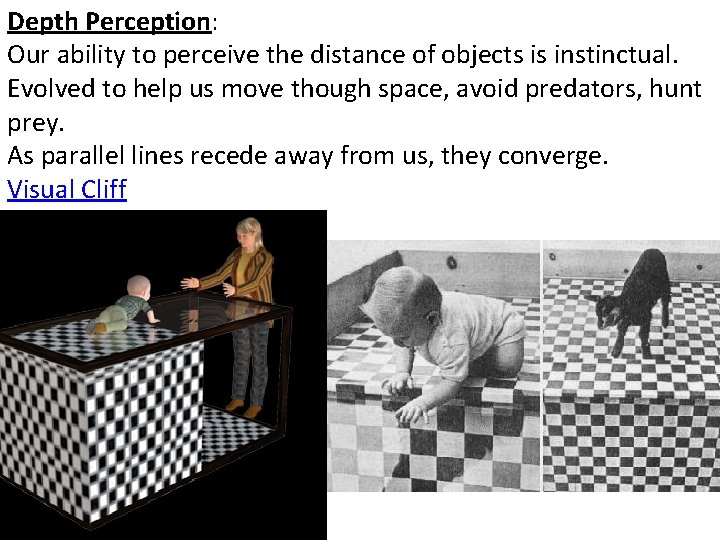
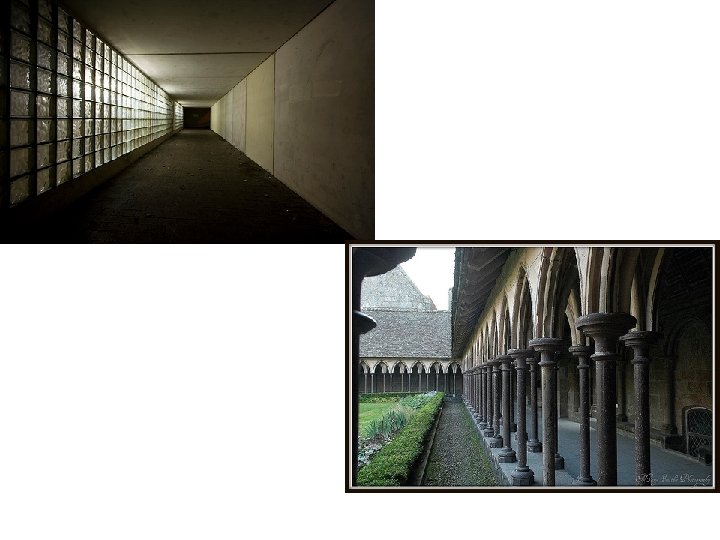
Depth Perception: Our ability to perceive the distance of objects is instinctual. Evolved to help us move though space, avoid predators, hunt prey. As parallel lines recede away from us, they converge. Visual Cliff
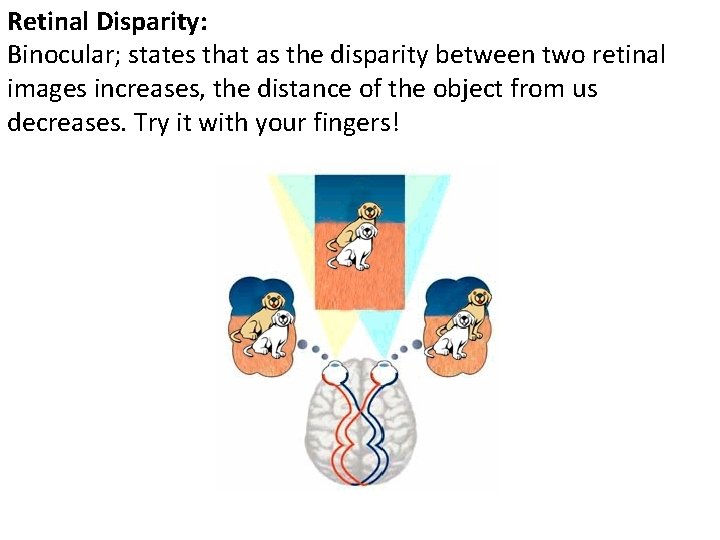
Retinal Disparity: Binocular; states that as the disparity between two retinal images increases, the distance of the object from us decreases. Try it with your fingers!
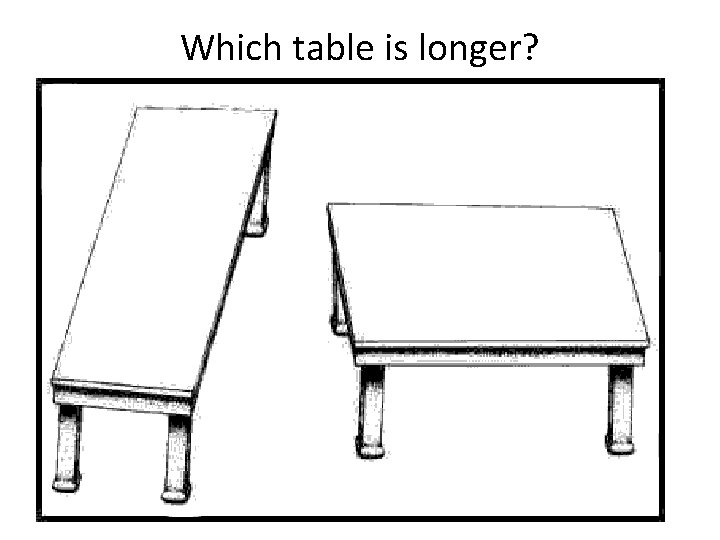
Which table is longer?
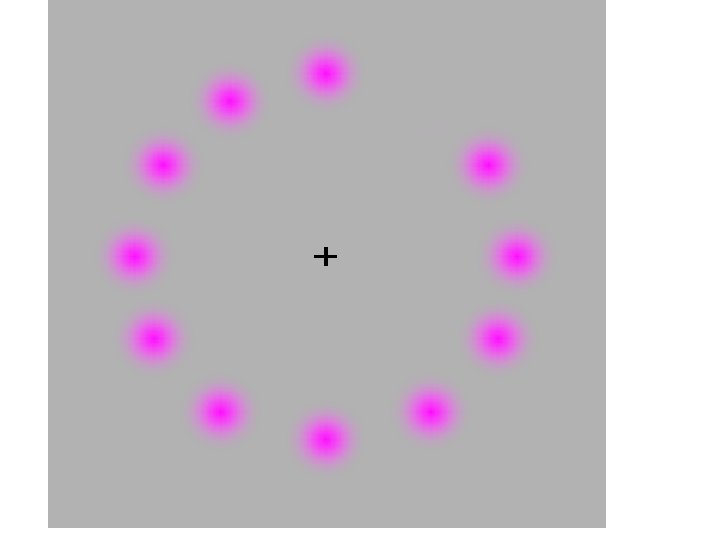
Follow the movement of the rotating pink dots Stare at the black ” +” in the center, the moving dots turns to green. If you concentrate on the + in the center, what happens? Visual compensation and afterimages.
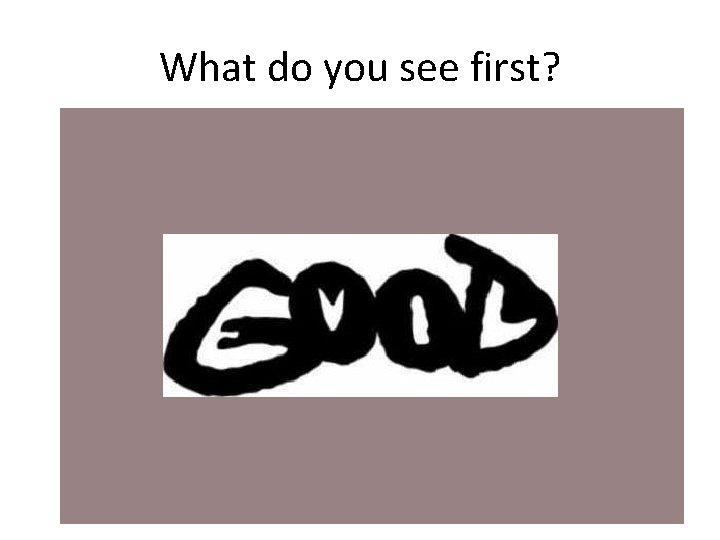
What do you see first?
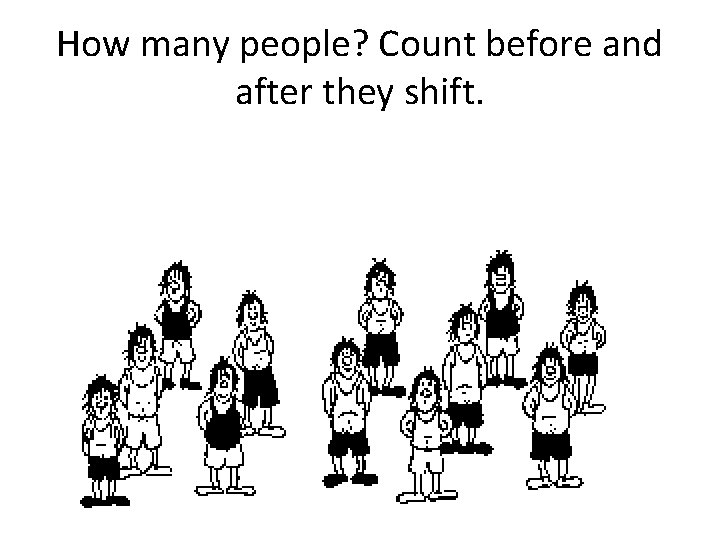
How many people? Count before and after they shift.
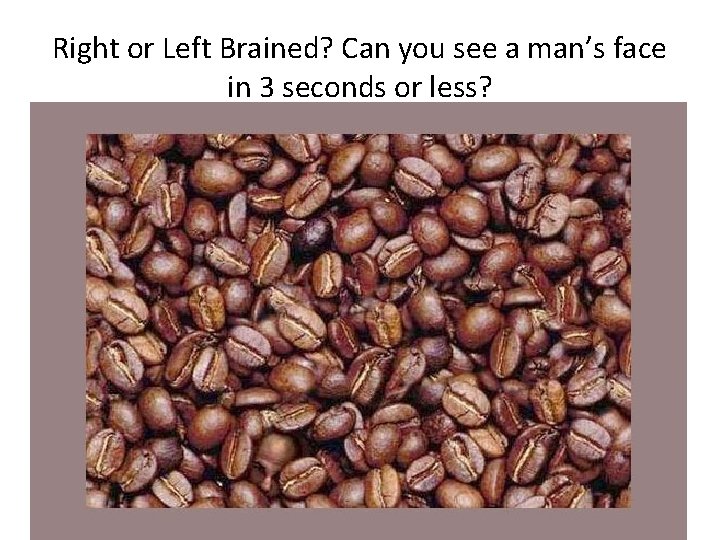
Right or Left Brained? Can you see a man’s face in 3 seconds or less?
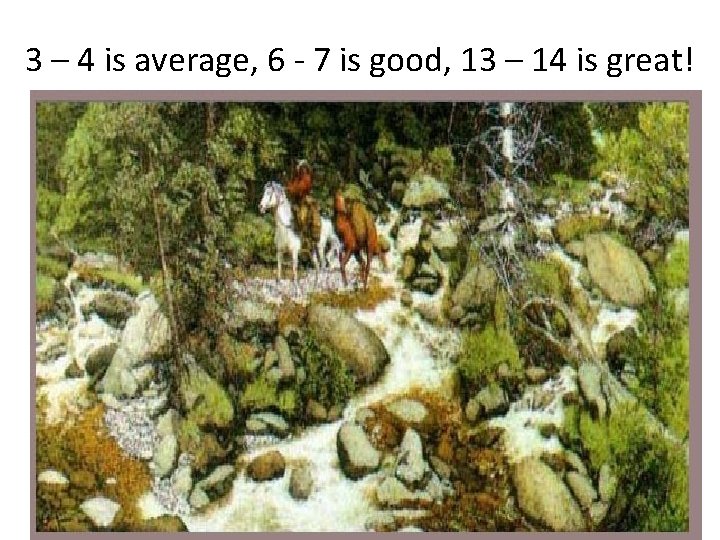
3 – 4 is average, 6 - 7 is good, 13 – 14 is great!
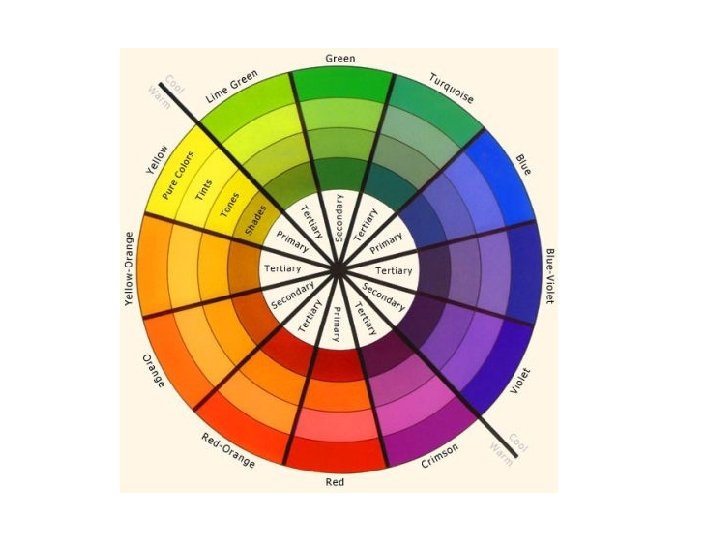
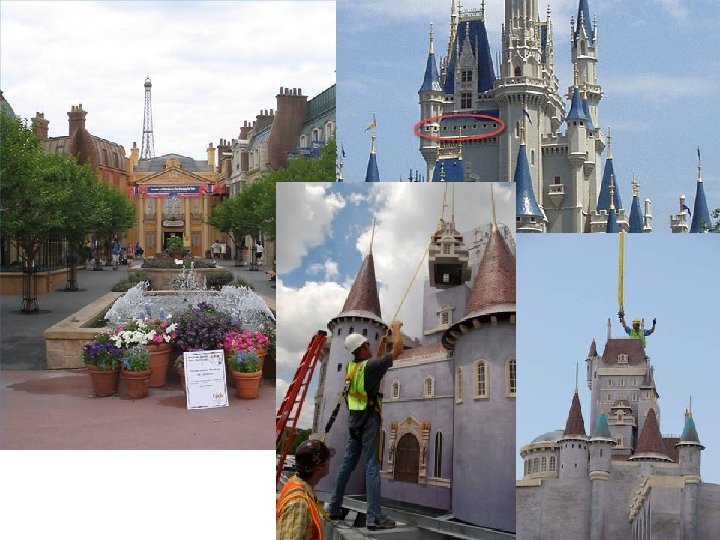
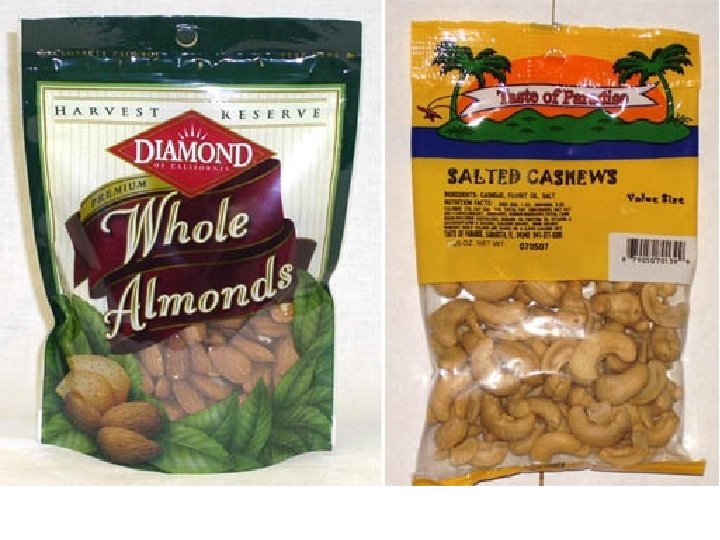
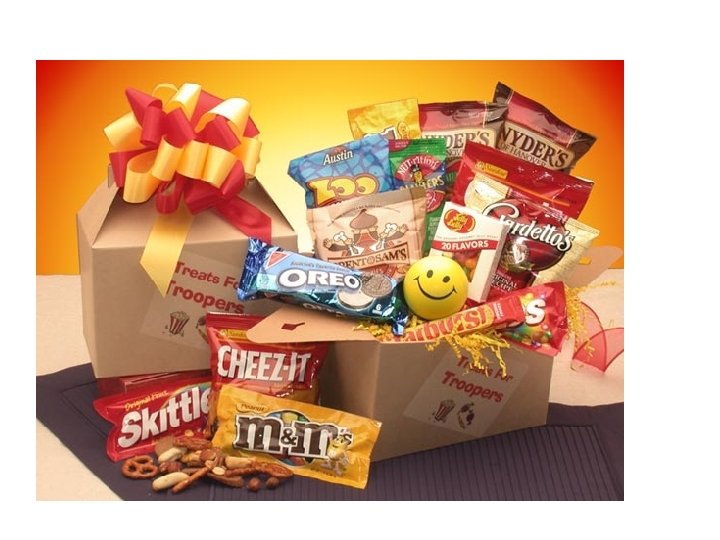
Why is perception important in our every day lives? • Architecture – manipulating perception of space • Advertizing – making things look bigger • Filling packages – making it seem like you’re getting more for your money • Human manipulation and persuasion of all types • Use of color is key. Examples: – Some colors look “cleaner”. What color are personal hygiene product packaging? – Some colors jump out among the competition – what color are chip and candy packages? – What colors are used in “healthy” food packages?
Key Concepts – Eye anatomy: cornea, lens, retina, optic nerve etc – What our eyes detect (sensation)… – …is not necessarily what we “see” (perception) • Perception can be top down (prior knowledge, context) or bottom up (pure interpretation of sensory data) • Context, prior knowledge, expectation, emotion all affect what we perceive
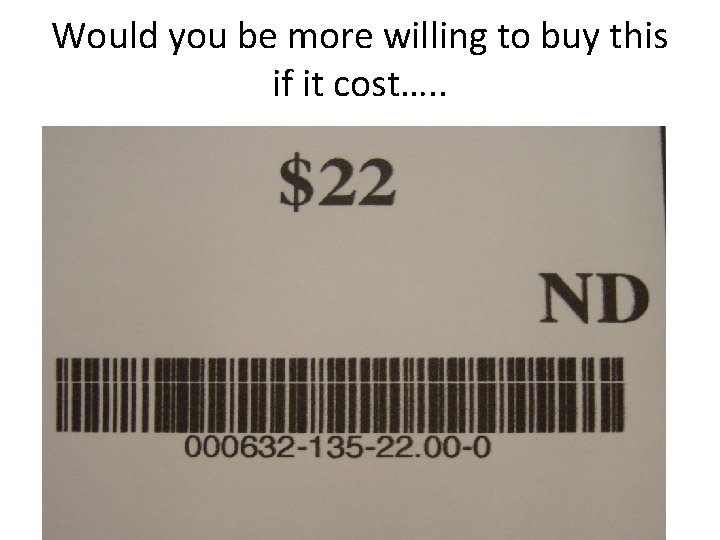
Would you be more willing to buy this if it cost…. .
Or how about…
Homework Link is on sheet Bring sheet to class (eye dissection instructions on it) http: //www. purposegames. com/game/898
Pig Eye Dissection • • Clear your desks. Follow lab instructions carefully. Use pins as directed, colors specified on LEFT. Dispose of gloves and specimen. Clean and return dissection kit in condition you received it.