
How we make decisions System 1 and System



- Slides: 37
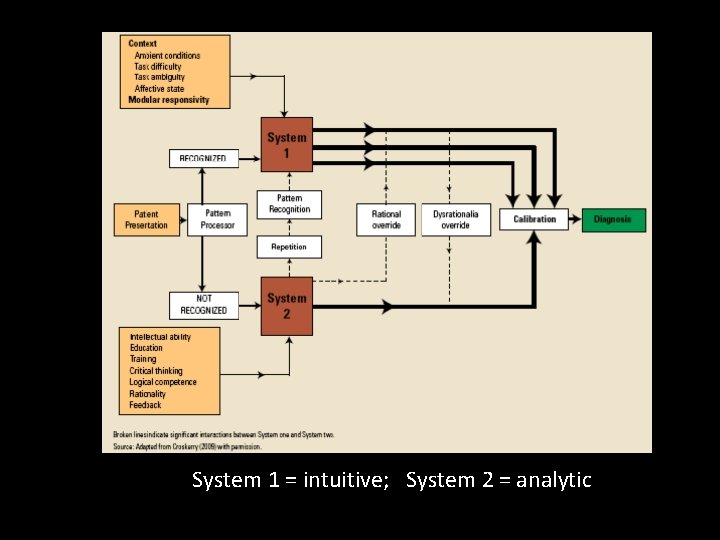
How we make decisions System 1 and System 2 thinking also known as Fast and Slow thinking
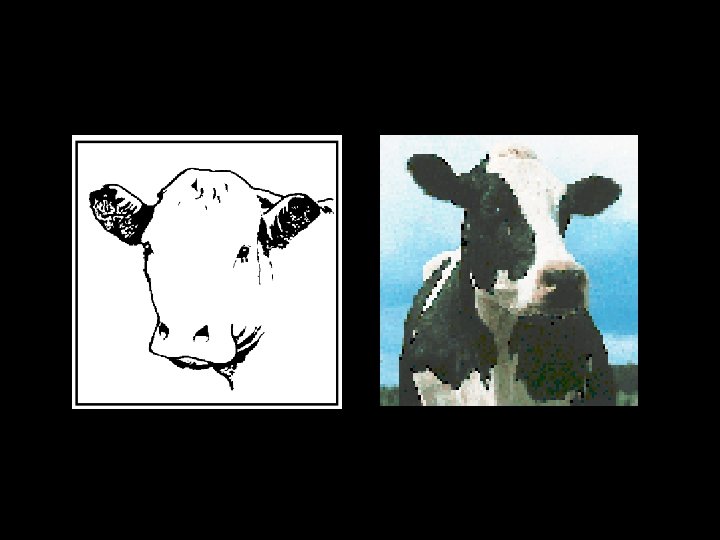
Apophenia seeing meaningful patterns or connections in random or meaningless data.
We make premature judgements from just a few bits of information • • “Perhaps she’s not managing with being a new mum” “He’s clearly lazy and needs to pull his finger out” “She’s a bit thick and needs to read a bit more” “It’s because of his language and culture” YOU MAY BE BARKING UP THE WRONG TREE!
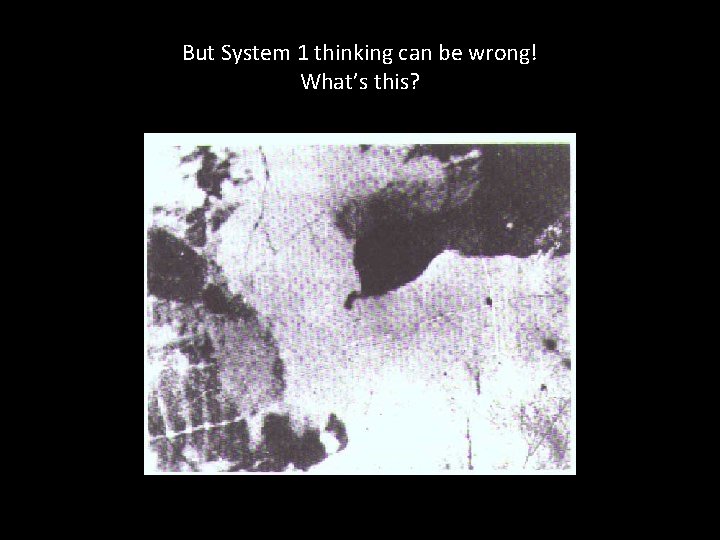
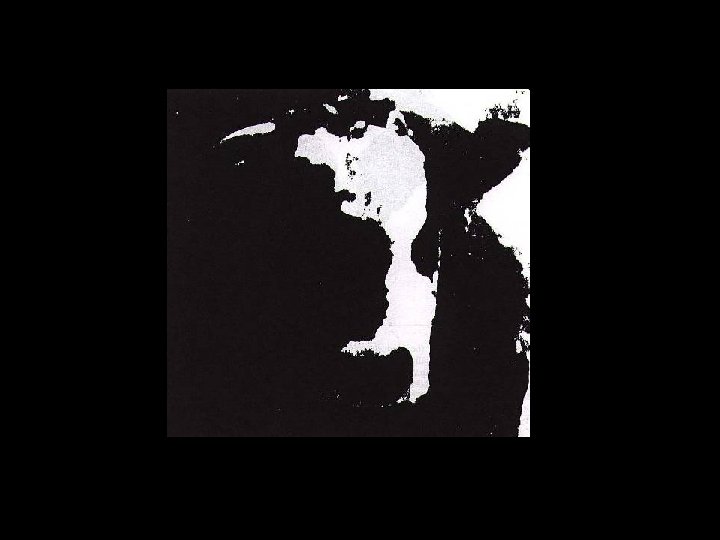
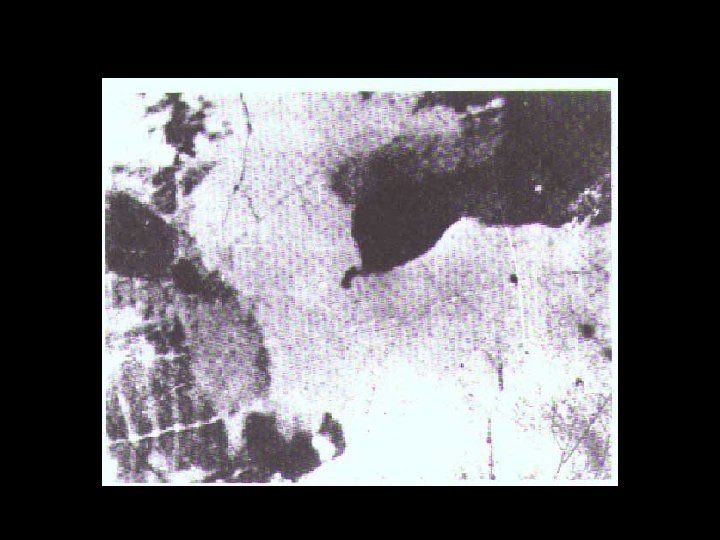
But System 1 thinking can be wrong! What’s this?
Humans make decisions by Small number of variables + Allocate value to those variables + Time frame = DECISION
We jump to conclusions and rush to ‘fix’ the problem – which fails to do the trick! Click centre to play video
To make decisions BETTER Probably more helpful to think about HOW we go about making decisions rather than WHAT decision should we make or has been made
And that means… We need to gather comprehensive ‘all rounded’ information: • From the trainee • From things you already know • From talking to others: colleagues, trainers, other docs and patients (+other stakeholders).
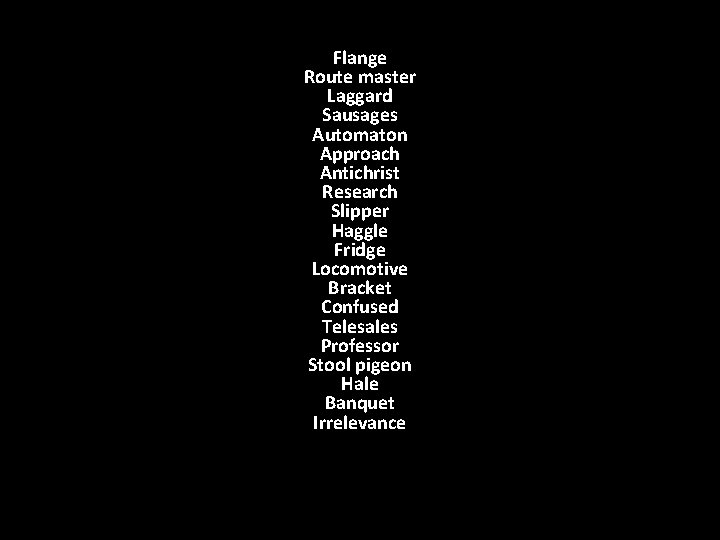
Please find a piece of paper and a pen • A list of words follows • Look at them once, do not re-read them • When you have read the list close your eyes
Flange Route master Laggard Sausages Automaton Approach Antichrist Research Slipper Haggle Fridge Locomotive Bracket Confused Telesales Professor Stool pigeon Hale Banquet Irrelevance
Write down as many words as you can remember
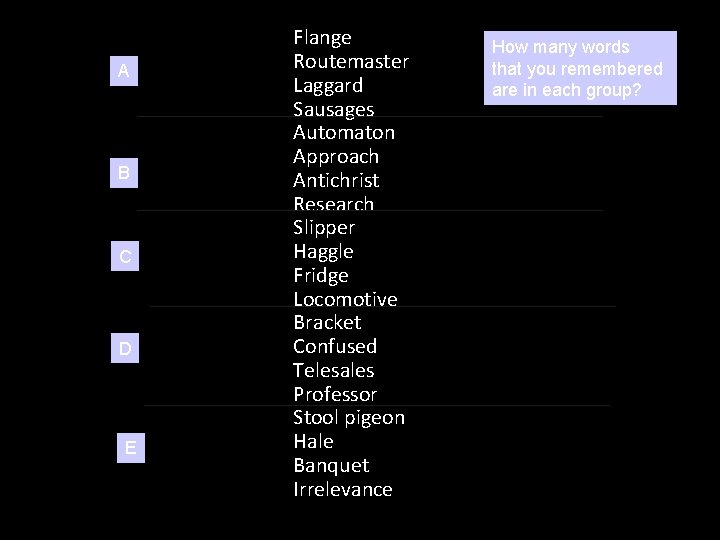
A B C D E Flange Routemaster Laggard Sausages Automaton Approach Antichrist Research Slipper Haggle Fridge Locomotive Bracket Confused Telesales Professor Stool pigeon Hale Banquet Irrelevance How many words that you remembered are in each group?
• How many words did you remember? • How many did not exactly match the words on the list? • What does all of this mean for us?
What does all of this mean for us? We remember wrong things AND THEN… We swear by them So – to prevent this… • data gather first, and don’t process it until all is gathered, write it down, and only then try to make sense of it
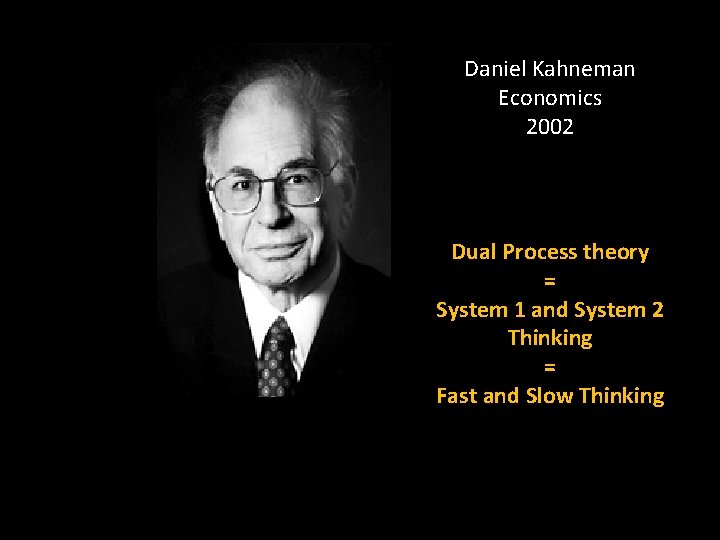
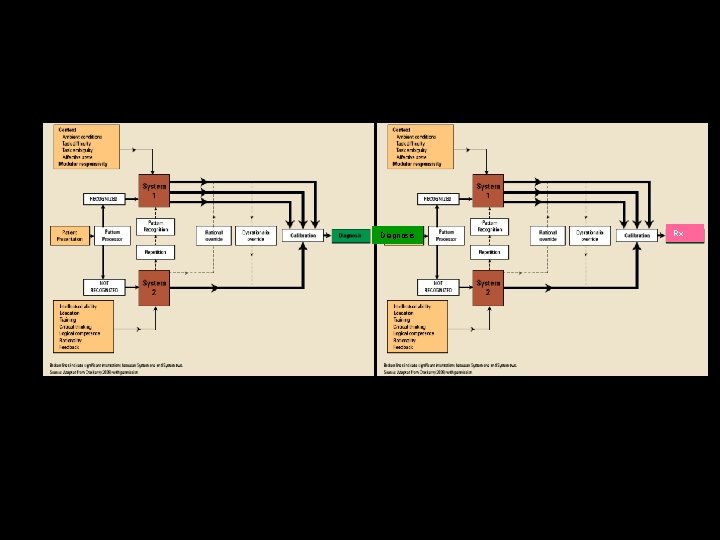
Daniel Kahneman Economics 2002 Dual Process theory = System 1 and System 2 Thinking = Fast and Slow Thinking
System 1 = intuitive; System 2 = analytic
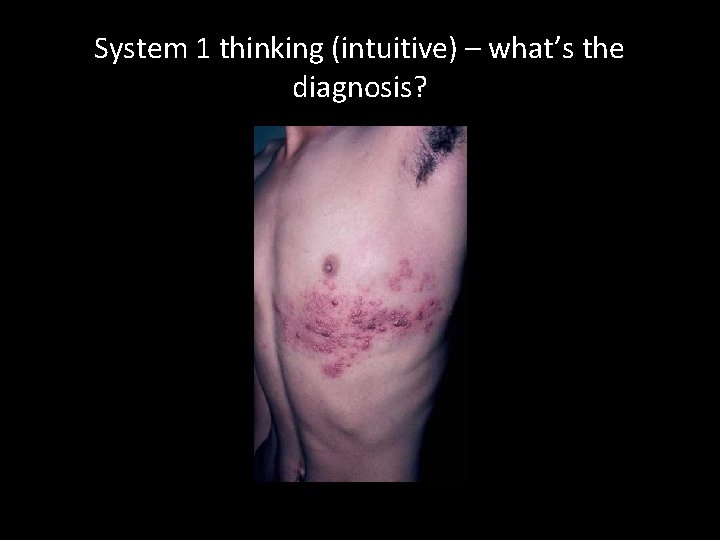
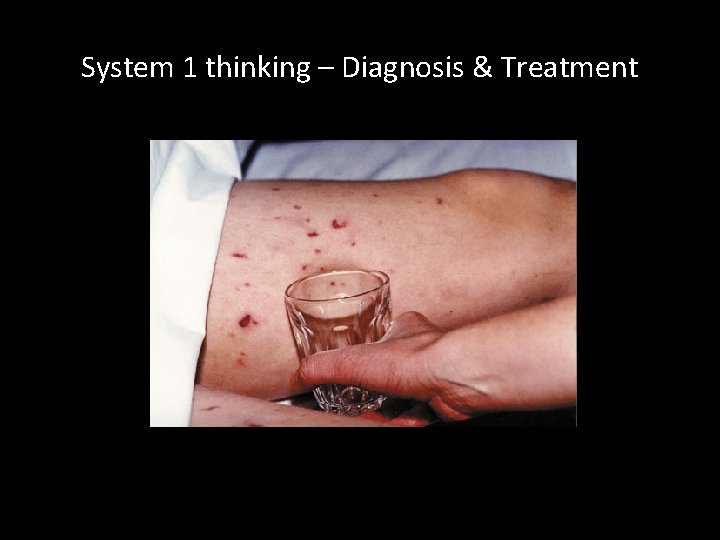
System 1 thinking (intuitive) – what’s the diagnosis?
System 1 thinking – Diagnosis & Treatment
Diagnosis Rx
System 2 thinking (analytic) • 85 year old with a raised cholesterol and who is hypertensive but prefers not to go on statins. She’d like to know what you think though. • What next?
With the trainee in difficulty • We often go for system 1 thinking • We should be going for system 2 thinking STOP, BREATH & THINK
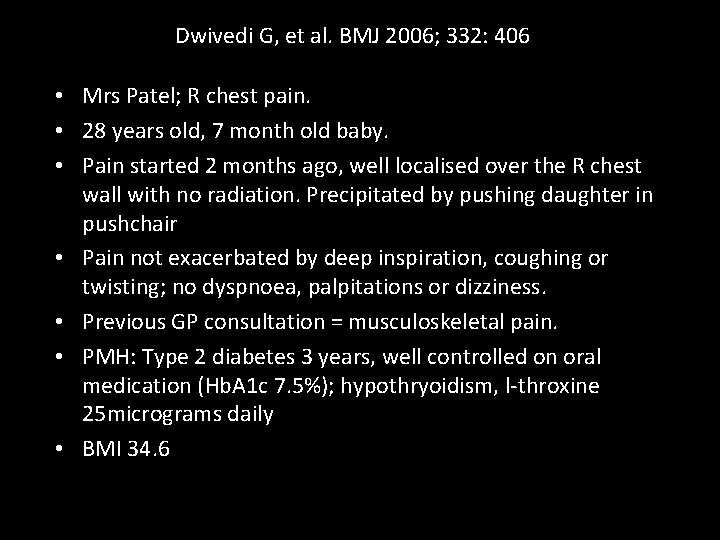
Dwivedi G, et al. BMJ 2006; 332: 406 • Mrs Patel; R chest pain. • 28 years old, 7 month old baby. • Pain started 2 months ago, well localised over the R chest wall with no radiation. Precipitated by pushing daughter in pushchair • Pain not exacerbated by deep inspiration, coughing or twisting; no dyspnoea, palpitations or dizziness. • Previous GP consultation = musculoskeletal pain. • PMH: Type 2 diabetes 3 years, well controlled on oral medication (Hb. A 1 c 7. 5%); hypothryoidism, l-throxine 25 micrograms daily • BMI 34. 6
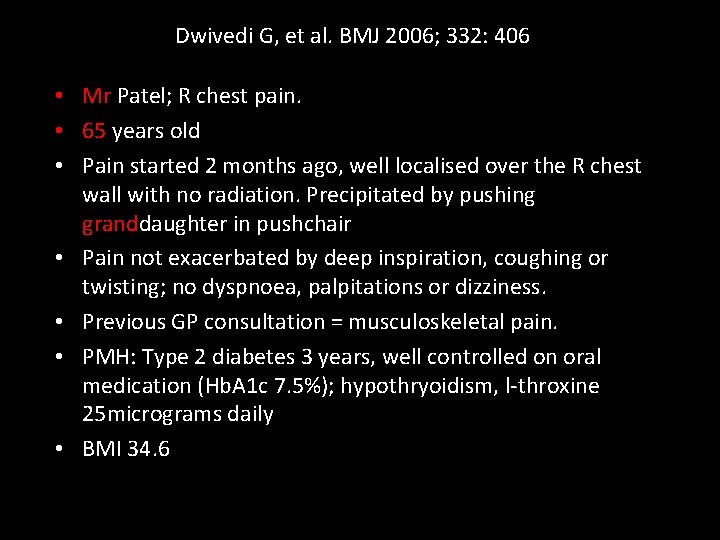
Dwivedi G, et al. BMJ 2006; 332: 406 • Mr Patel; R chest pain. • 65 years old • Pain started 2 months ago, well localised over the R chest wall with no radiation. Precipitated by pushing granddaughter in pushchair • Pain not exacerbated by deep inspiration, coughing or twisting; no dyspnoea, palpitations or dizziness. • Previous GP consultation = musculoskeletal pain. • PMH: Type 2 diabetes 3 years, well controlled on oral medication (Hb. A 1 c 7. 5%); hypothryoidism, l-throxine 25 micrograms daily • BMI 34. 6
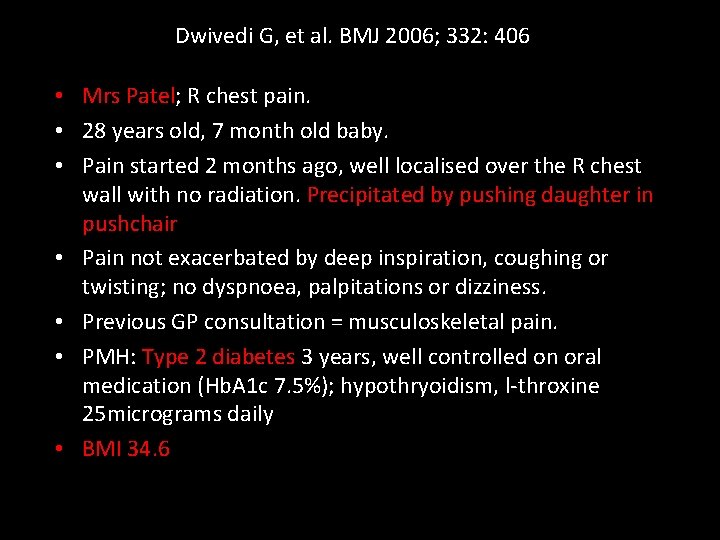
Dwivedi G, et al. BMJ 2006; 332: 406 • Mrs Patel; R chest pain. • 28 years old, 7 month old baby. • Pain started 2 months ago, well localised over the R chest wall with no radiation. Precipitated by pushing daughter in pushchair • Pain not exacerbated by deep inspiration, coughing or twisting; no dyspnoea, palpitations or dizziness. • Previous GP consultation = musculoskeletal pain. • PMH: Type 2 diabetes 3 years, well controlled on oral medication (Hb. A 1 c 7. 5%); hypothryoidism, l-throxine 25 micrograms daily • BMI 34. 6
Who knows the story of Noah in the Bible?
Imagine you are working as a doctor in a remote village. It’s the weekend. There are no other health care professionals around. But you do have a new piece of technology called THE MARVELTRON
• The MARVELTRON will save the life of any patient you are treating. • But you have to answer correctly the question the MARVELTRON asks of the attending doctor before it works its magic.
• A young child is brought to you. She is seriously ill and will die imminently. • You switch on the MARVELTRON and await the question. • You must write down your answer immediately the question is asked, or the child will die. • You will be blamed for the patient’s death only if you do not write down an answer. No blame will be attached to you if you get the answer wrong. • ARE YOU READY? • Have you got paper and something to write with?
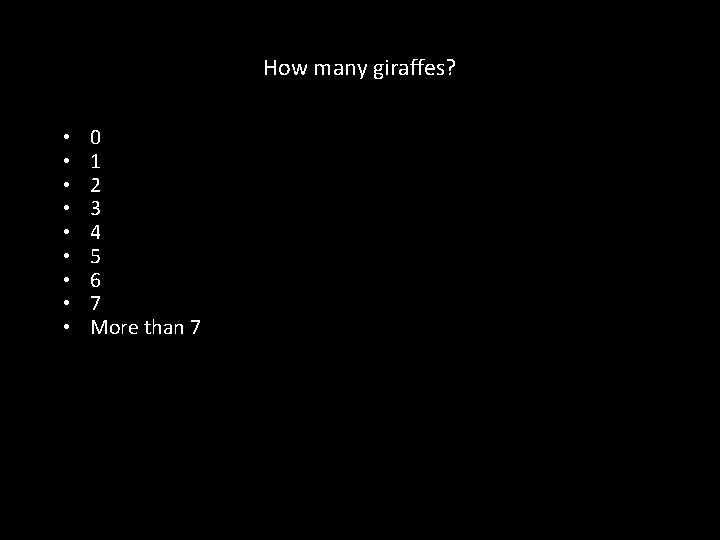
• According to the Bible, how many giraffes did Noah take into the Ark?
Answer quickly Write it down The child is dying.
How many giraffes? • • • 0 1 2 3 4 5 6 7 More than 7
The correct answer • Of every clean beast thou shalt take to thee by sevens, the male and his female: and of beasts that are not clean by two, the male and his female. Of fowls also of the air by sevens, the male and the female; to keep seed alive upon the face of all the earth. Genesis. Ch 7 • Whatsoever parteth the hoof, and is cloven-footed, and cheweth the cud, among the beasts, that shall ye eat. Leviticus Ch 11
• Where did you get the information from to make the decision about Noah and the giraffes? • If you had time, what would you have done to make sure you had the right answer?
So what am I trying to say? • We need to be careful of jumping to conclusions or relying on our ‘hunches’ • With familiar situations, just stop to pause and think for a moment to ensure you’ve considered alternatives. • With the unfamiliar - check things out properly. Data gather comprehensively and triangulate pieces of evidence against other pieces of evidence. Look for themes • And if some data is given to you which is at odds with other stuff, stop, breath, and review things for a moment.