
How We Doubled System Read Throughput with Only
How We Doubled System Read Throughput with Only 26 Lines of Code Presented by Minghua Tang
About me ● ● Minghua Tang Interested in databases, storage systems (and Civilization) R&D, Ping. CAP Github ID: @5 kbpers
Agenda ● ● What’s Ti. KV How Follower Read was built General use cases Q&A
Part 1 - What’s Ti. KV
Ti. KV is. . . ● a distributed transactional key-value database originally created by Ping. CAP as the underlying storage engine for Ti. DB ● based on the design of Google Spanner and HBase, but simpler to manage and without dependencies on any distributed file system ● a CNCF incubating project with 7. 6 K Git. Hub Stars and 246 Contributors
Ti. KV offers. . . ● Key-Value store ● Get(Key) ● Put(Key, Value) ● Delete(Key) ● Scan(Start. Key) Infra build upon Ti. KV: Ti. DB (SQL like), Tedis (Redis like), etc
Ti. KV offers. . . ● Key-Value store You can run Ti. KV across physical, virtual, ● Cloud native container, and cloud environments
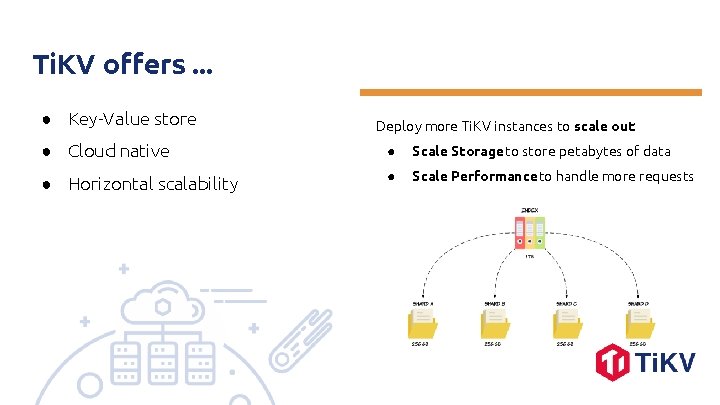
Ti. KV offers. . . ● Key-Value store Deploy more Ti. KV instances to scale out: ● Cloud native ● Scale Storage to store petabytes of data ● Horizontal scalability ● Scale Performance to handle more requests
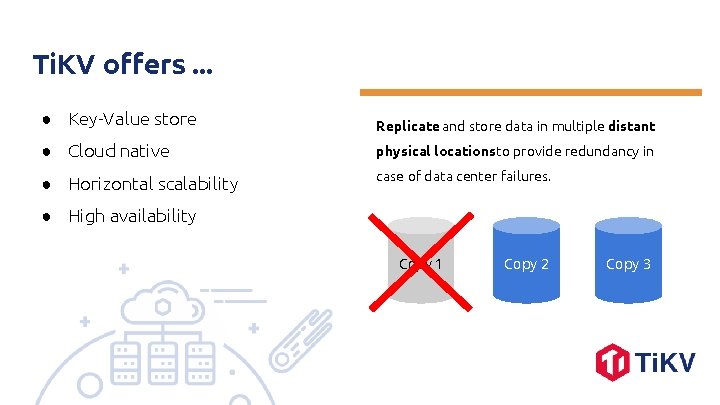
Ti. KV offers. . . ● Key-Value store Replicate and store data in multiple distant ● Cloud native physical locationsto provide redundancy in ● Horizontal scalability case of data center failures. ● High availability Copy 1 Copy 2 Copy 3
Ti. KV offers. . . ● Key-Value store Grow or shrink Ti. KV clusters dynamically, ● Cloud native without the need for downtime ● Horizontal scalability ● High availability ● Dynamic membership
Ti. KV offers. . . ● Key-Value store Provides externally consistent distributed ● Cloud native transactions (ACID) to operate over multiple ● Horizontal scalability Key-Value pairs. ● High availability ● Dynamic membership ● Transactional
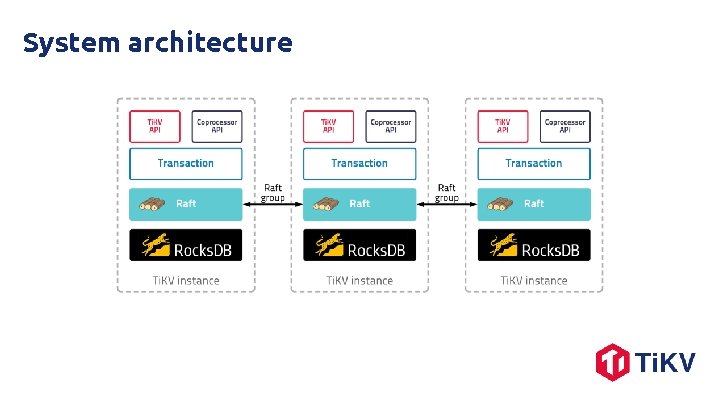
System architecture
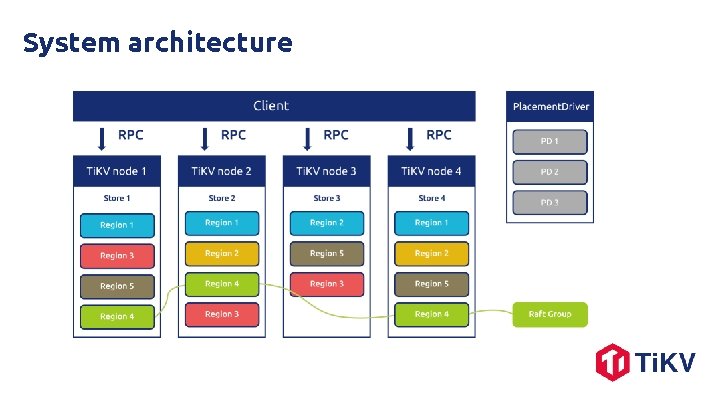
System architecture
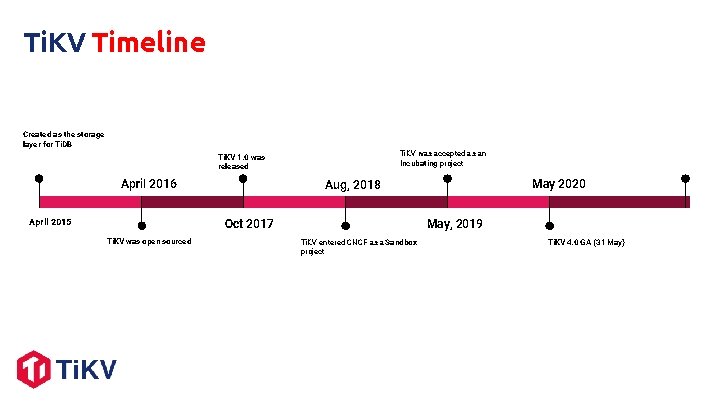
Ti. KV Timeline Created as the storage layer for Ti. DB Ti. KV was accepted as an Incubating project Ti. KV 1. 0 was released April 2016 April 2015 Oct 2017 Ti. KV was open sourced May 2020 Aug, 2018 May, 2019 Ti. KV entered CNCF as a Sandbox project Ti. KV 4. 0 GA (31 May)
Part 2 - How Follower Read was built
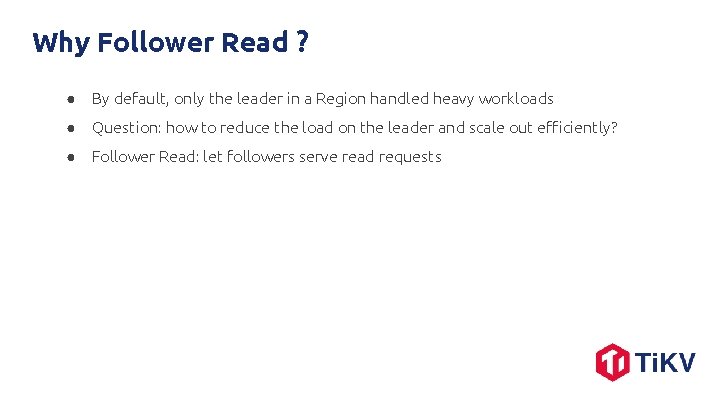
Why Follower Read ? ● By default, only the leader in a Region handled heavy workloads ● Question: how to reduce the load on the leader and scale out efficiently? ● Follower Read: let followers serve read requests
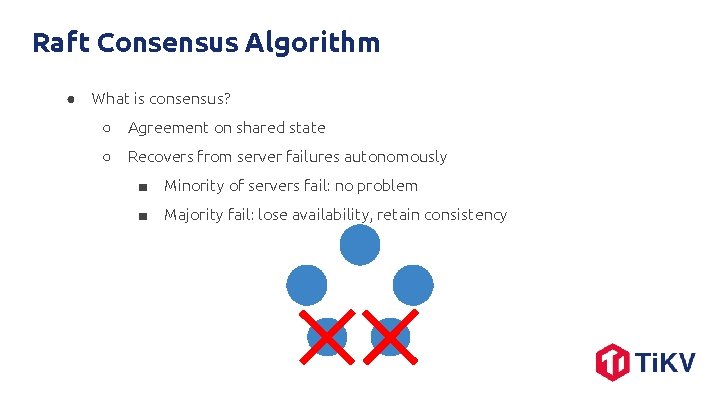
Raft Consensus Algorithm ● What is consensus? ○ Agreement on shared state ○ Recovers from server failures autonomously ■ Minority of servers fail: no problem ■ Majority fail: lose availability, retain consistency N N
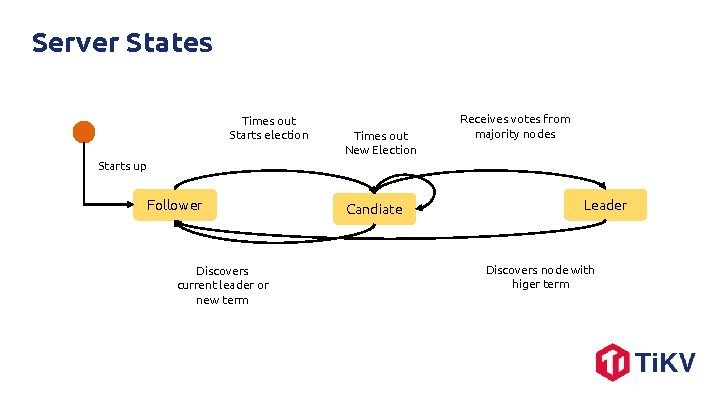
Server States Times out Starts election Times out New Election Receives votes from majority nodes Starts up Follower Discovers current leader or new term Candiate Leader Discovers node with higer term
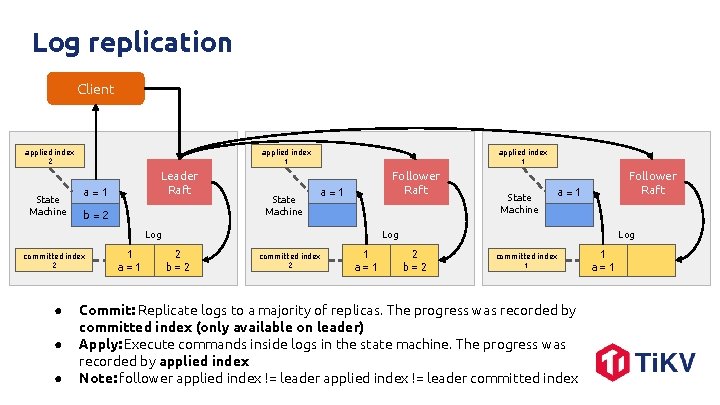
Log replication Client applied index 2 State Machine applied index 1 Leader Raft a=1 b=2 State Machine applied index 1 Follower Raft a=1 Log committed index 2 ● ● ● 1 a=1 State Machine Follower Raft a=1 Log 2 b=2 committed index 2 1 a=1 Log 2 b=2 committed index 1 Commit: Replicate logs to a majority of replicas. The progress was recorded by committed index (only available on leader) Apply: Execute commands inside logs in the state machine. The progress was recorded by applied index Note: follower applied index != leader committed index 1 a=1
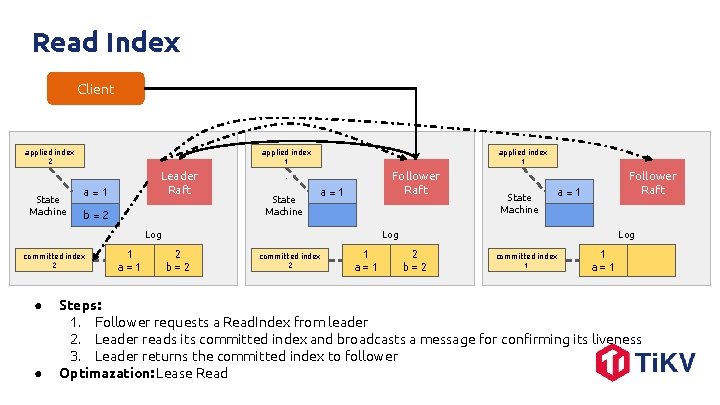
Read Index Client applied index 2 State Machine applied index 1 Leader Raft a=1 b=2 State Machine applied index 1 Follower Raft a=1 Log committed index 2 ● ● 1 a=1 State Machine Follower Raft a=1 Log 2 b=2 committed index 2 1 a=1 Log 2 b=2 committed index 1 1 a=1 Steps: 1. Follower requests a Read. Index from leader 2. Leader reads its committed index and broadcasts a message for confirming its liveness 3. Leader returns the committed index to follower Optimazation: Lease Read
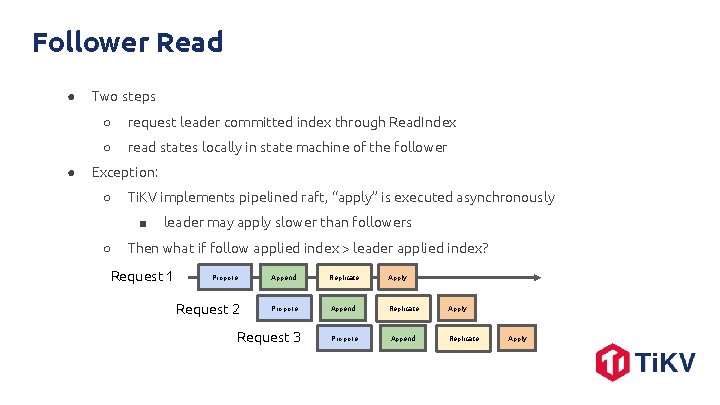
Follower Read ● ● Two steps ○ request leader committed index through Read. Index ○ read states locally in state machine of the follower Exception: ○ Ti. KV implements pipelined raft, “apply” is executed asynchronously ■ ○ leader may apply slower than followers Then what if follow applied index > leader applied index? Request 1 Propose Append Replicate Apply Request 2 Propose Append Replicate Apply Propose Append Replicate Request 3 Apply
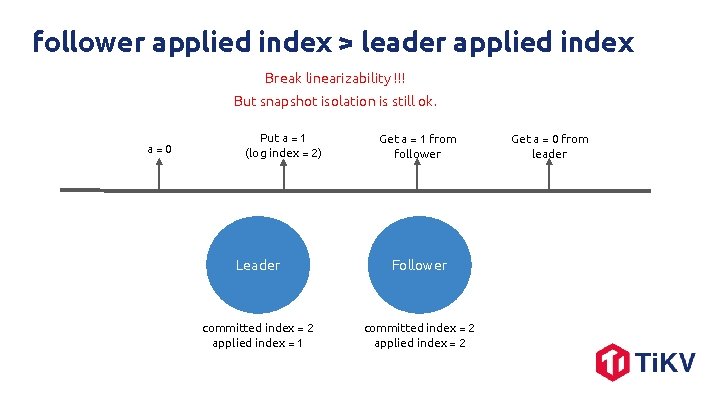
follower applied index > leader applied index Break linearizability !!! But snapshot isolation is still ok. a=0 Put a = 1 (log index = 2) Get a = 1 from follower Leader Follower committed index = 2 applied index = 1 committed index = 2 applied index = 2 Get a = 0 from leader
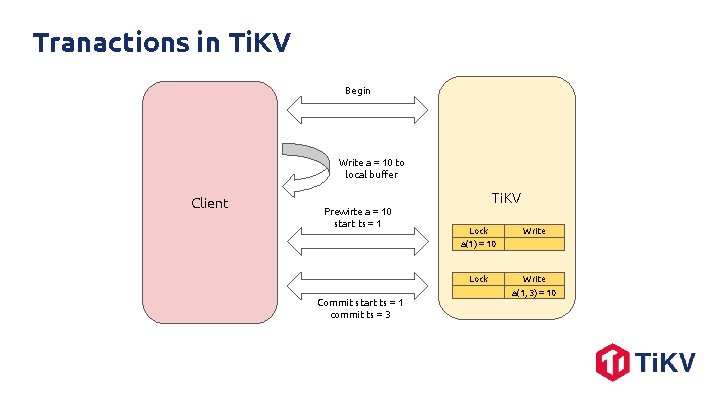
Tranactions in Ti. KV Begin Write a = 10 to local buffer Client Ti. KV Prewirte a = 10 start ts = 1 Commit start ts = 1 commit ts = 3 Lock a(1) = 10 Write Lock Write a(1, 3) = 10
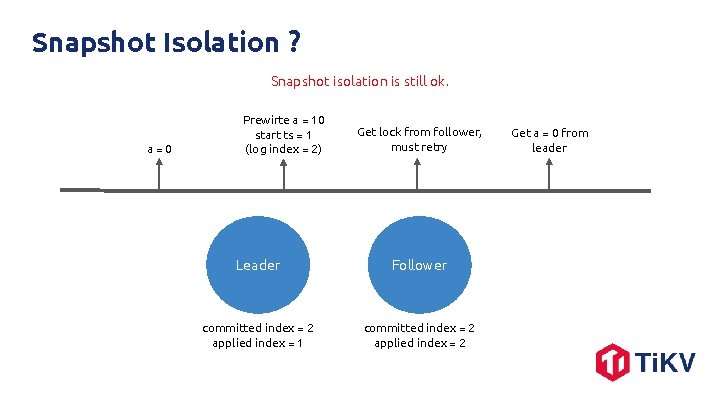
Snapshot Isolation ? Snapshot isolation is still ok. a=0 Prewirte a = 10 start ts = 1 (log index = 2) Get lock from follower, must retry Leader Follower committed index = 2 applied index = 1 committed index = 2 applied index = 2 Get a = 0 from leader
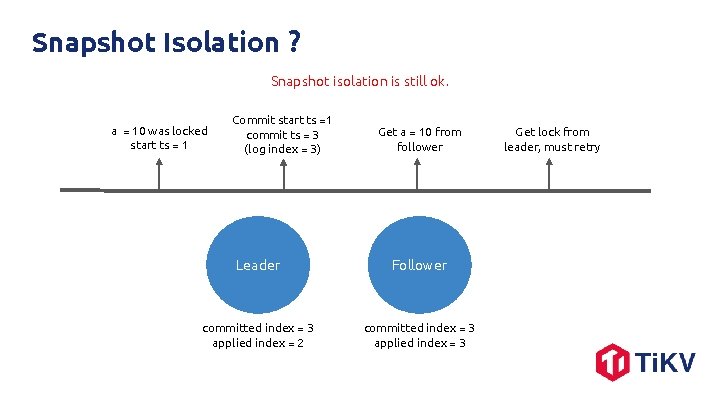
Snapshot Isolation ? Snapshot isolation is still ok. a = 10 was locked start ts = 1 Commit start ts =1 commit ts = 3 (log index = 3) Get a = 10 from follower Leader Follower committed index = 3 applied index = 2 committed index = 3 applied index = 3 Get lock from leader, must retry
Part 3 - General use cases
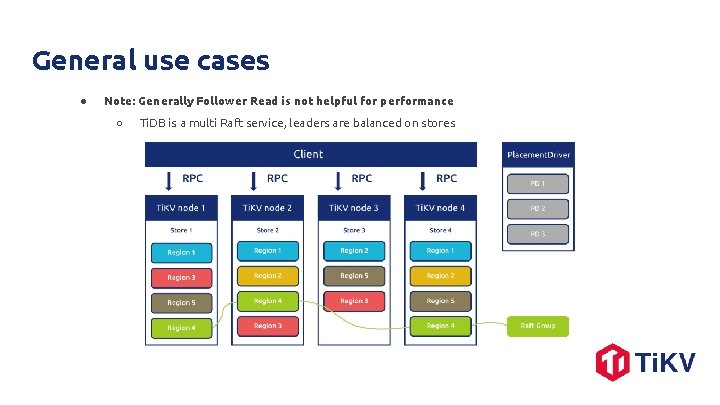
General use cases ● Note: Generally Follower Read is not helpful for performance ○ Ti. DB is a multi Raft service, leaders are balanced on stores
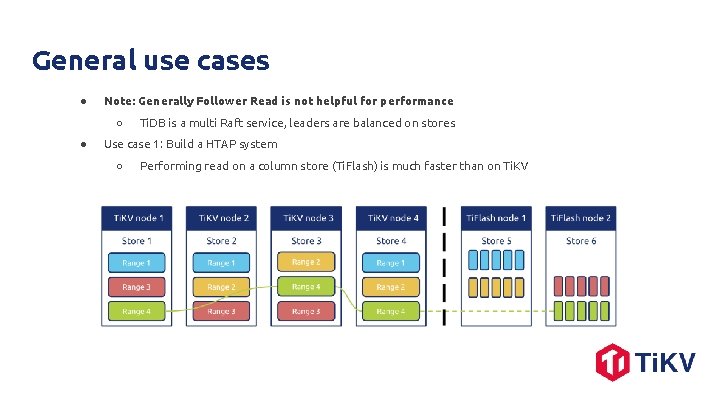
General use cases ● Note: Generally Follower Read is not helpful for performance ○ ● Ti. DB is a multi Raft service, leaders are balanced on stores Use case 1: Build a HTAP system ○ Performing read on a column store (Ti. Flash) is much faster than on Ti. KV
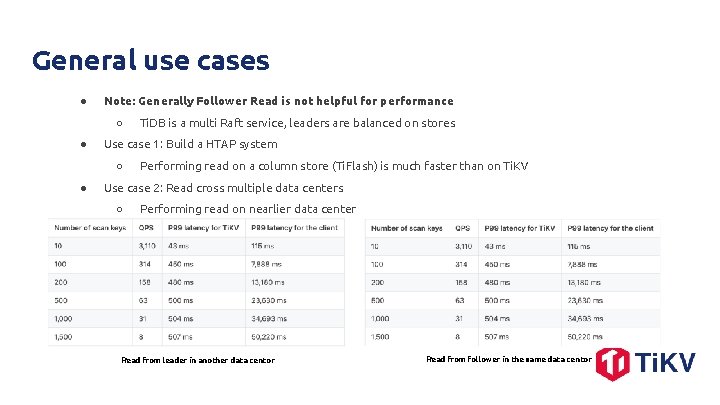
General use cases ● Note: Generally Follower Read is not helpful for performance ○ ● Use case 1: Build a HTAP system ○ ● Ti. DB is a multi Raft service, leaders are balanced on stores Performing read on a column store (Ti. Flash) is much faster than on Ti. KV Use case 2: Read cross multiple data centers ○ Performing read on nearlier data center Read from leader in another data centor Read from follower in the same data centor
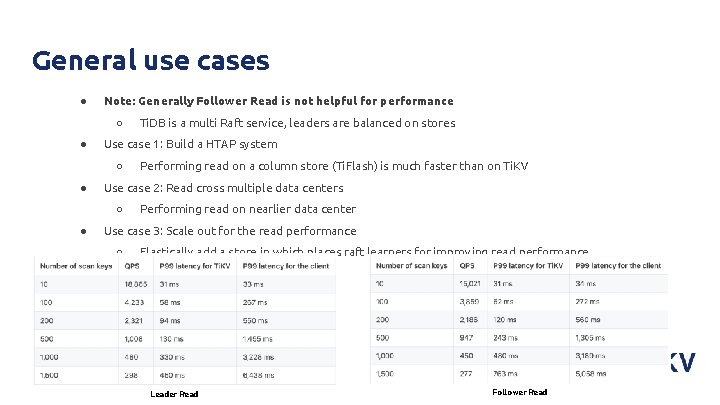
General use cases ● Note: Generally Follower Read is not helpful for performance ○ ● Use case 1: Build a HTAP system ○ ● Performing read on a column store (Ti. Flash) is much faster than on Ti. KV Use case 2: Read cross multiple data centers ○ ● Ti. DB is a multi Raft service, leaders are balanced on stores Performing read on nearlier data center Use case 3: Scale out for the read performance ○ Elastically add a store in which places raft learners for improving read performance Leader Read Follower Read

Thanks!
- Slides: 31