
How Waves Shape Earth Weathering Erosion Deposition How
- Slides: 28
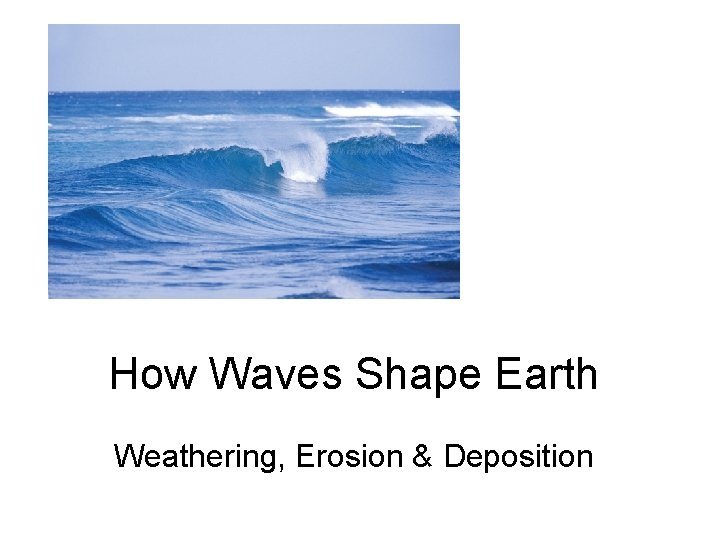
How Waves Shape Earth Weathering, Erosion & Deposition
How does a wave form? The ENERGY comes from the WIND. When the wind blows across the water, it changes the water's surface, first into ripples and then into waves. Once the surface becomes uneven, the wind has an ever increasing grip on it. Storms can make enormous waves, particularly if the wind blows in the same direction for any length of time. Across the open sea, the distance that waves can travel is much greater, they can grow higher and longer and travel faster. Coastlines are exposed to the full force of waves that have the energy to erode, transport and deposit vast quantities of sand.
The wave Inside the wave, water is moving in circles, so the water stays mostly in the same place. The energy is PASSED through the water from molecule to molecule; the water itself doesn’t move through the ocean to the shore.
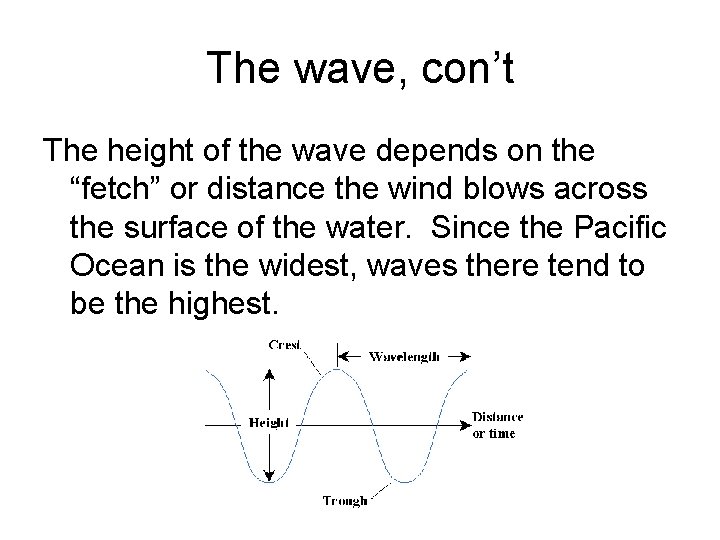
The wave, con’t The height of the wave depends on the “fetch” or distance the wind blows across the surface of the water. Since the Pacific Ocean is the widest, waves there tend to be the highest.
The wave, continued As the wave comes into shore, the depth of the water decreases, and the water near the bottom encounters friction with the ocean floor – slowing it down. The top of the water keeps moving, pushing the wave higher, and giving the curved shape; the wave eventually collapses and crashes into shore – passing its energy to the shore – on sand, rocks, cliffs, etc. – whatever the wave hits.
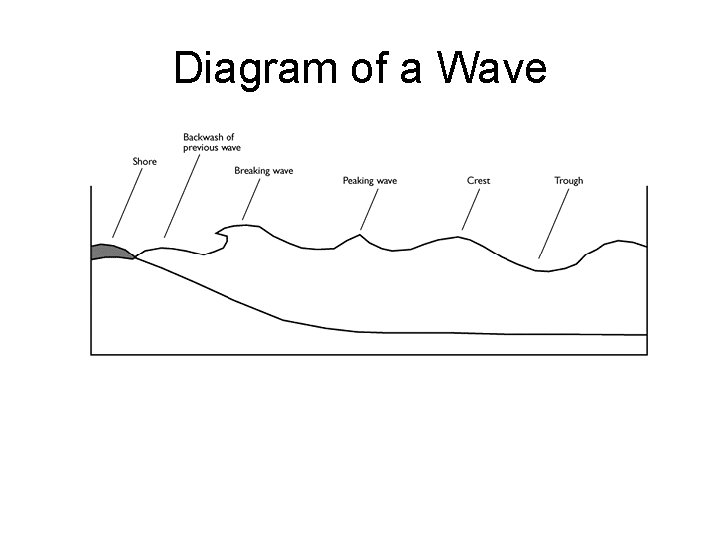
Diagram of a Wave
Waves cause weathering & erosion by: 1. Impact breaks down rock and shells; transports (moves) sand other sediment 2. Abrasion water carrying sand rocks grinds away at surfaces waves hit, causing further erosion; and then water carries sediment away
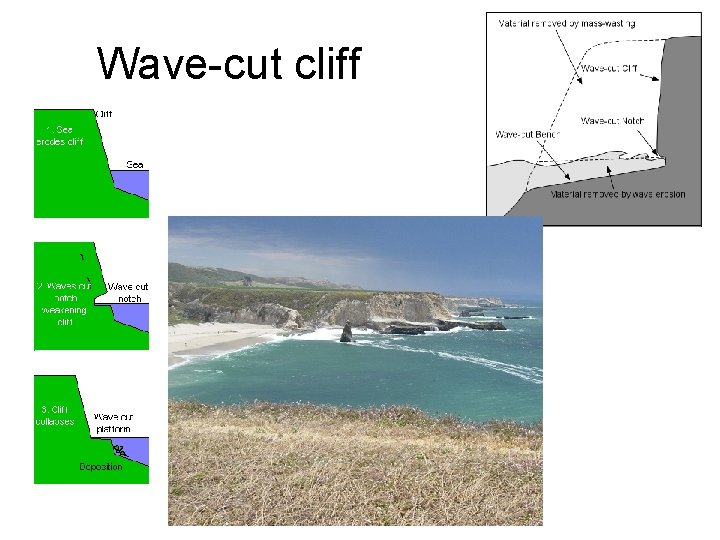
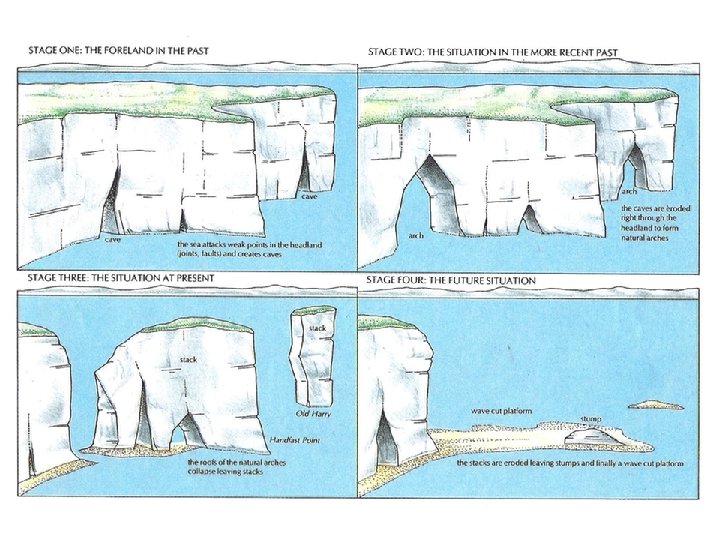
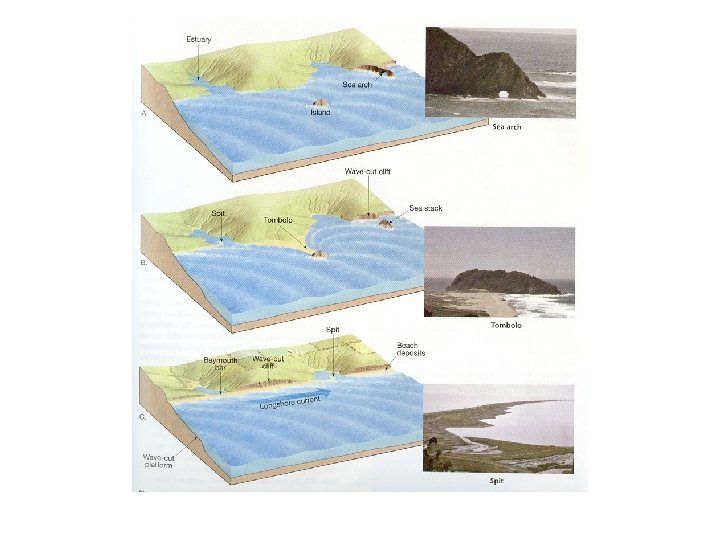
Land features formed from wave erosion Sea cave Sea arch wave-cut cliff Sea stack These are left behind where the weathering and erosion occurred.
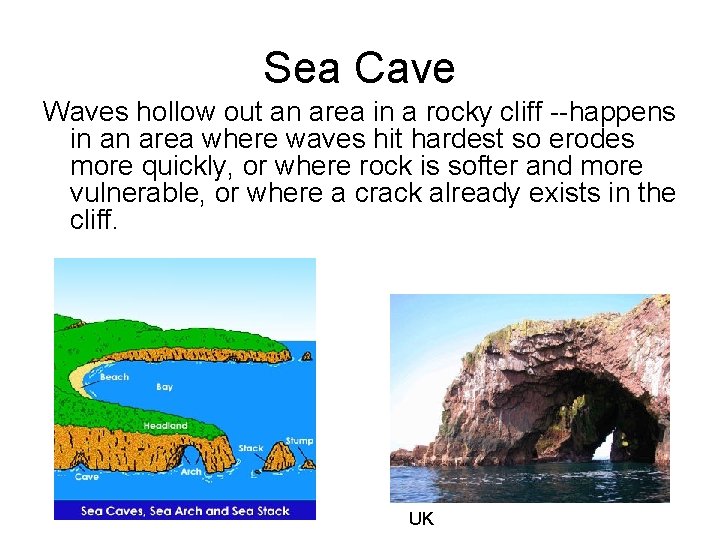
Sea Cave Waves hollow out an area in a rocky cliff --happens in an area where waves hit hardest so erodes more quickly, or where rock is softer and more vulnerable, or where a crack already exists in the cliff. UK
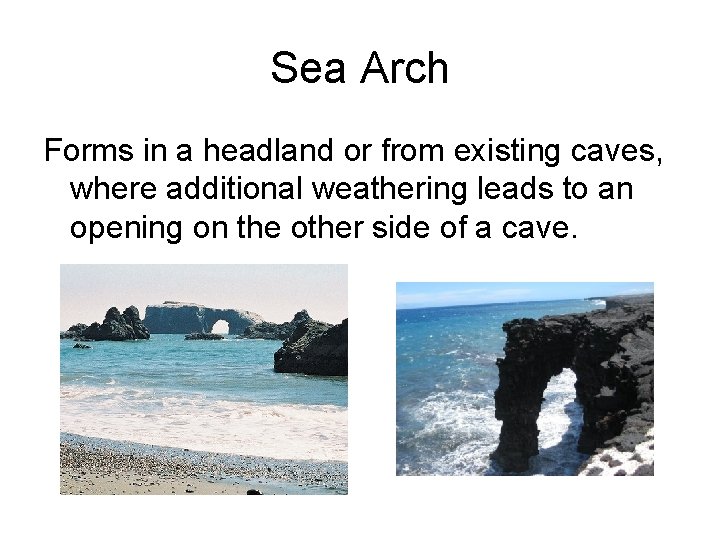
Sea Arch Forms in a headland or from existing caves, where additional weathering leads to an opening on the other side of a cave.
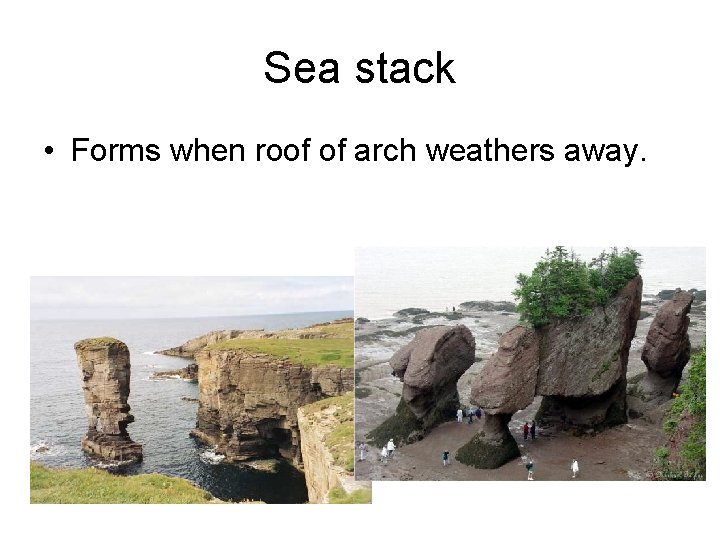
Sea stack • Forms when roof of arch weathers away.
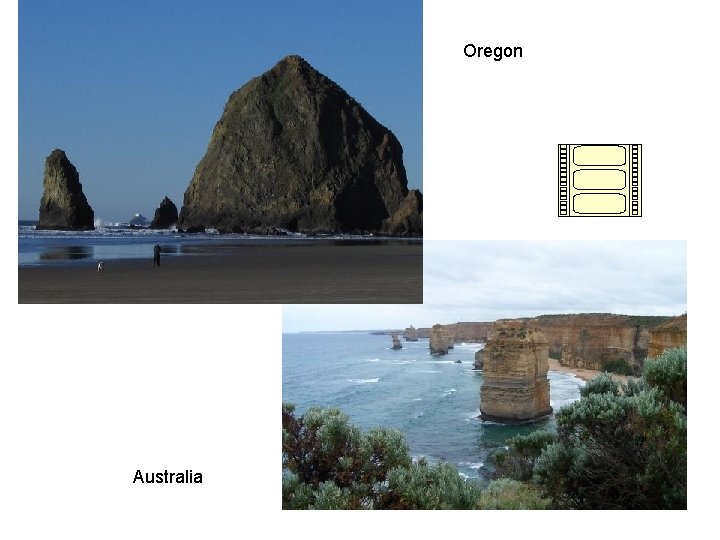
Oregon Australia
Wave-cut cliff
Land features formed from wave deposition Beach Spit Sandbar Barrier beach These are formed where the sediment gets piled up or deposited in new places.
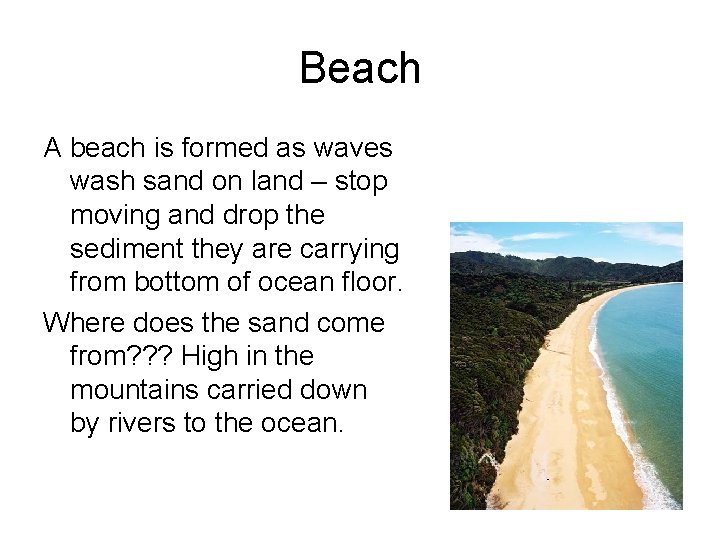
Beach A beach is formed as waves wash sand on land – stop moving and drop the sediment they are carrying from bottom of ocean floor. Where does the sand come from? ? ? High in the mountains carried down by rivers to the ocean.
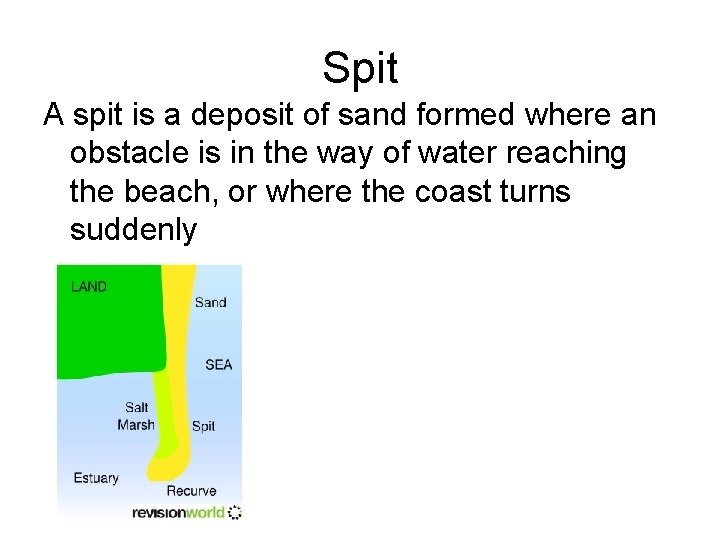
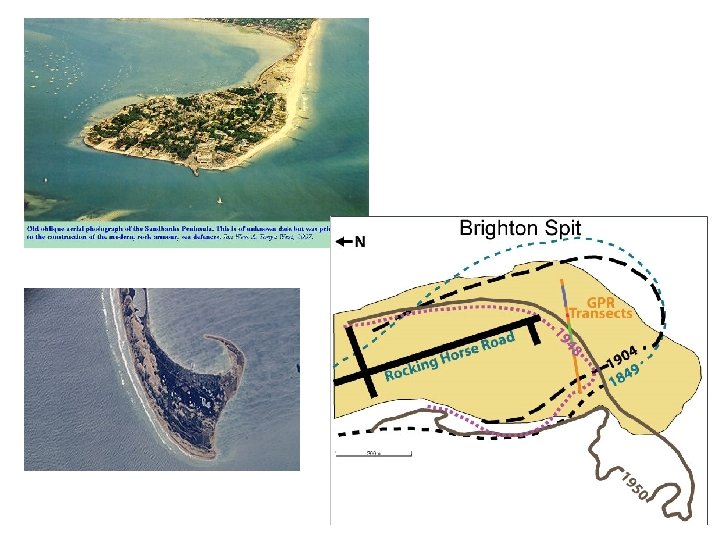
Spit A spit is a deposit of sand formed where an obstacle is in the way of water reaching the beach, or where the coast turns suddenly
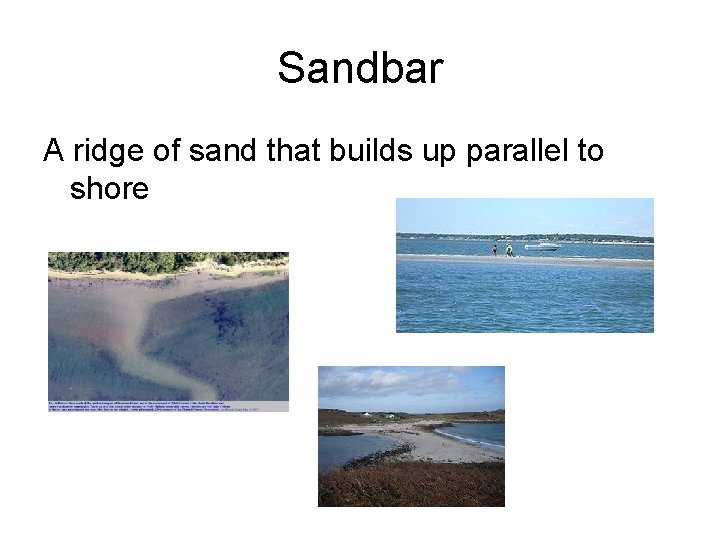
Sandbar A ridge of sand that builds up parallel to shore
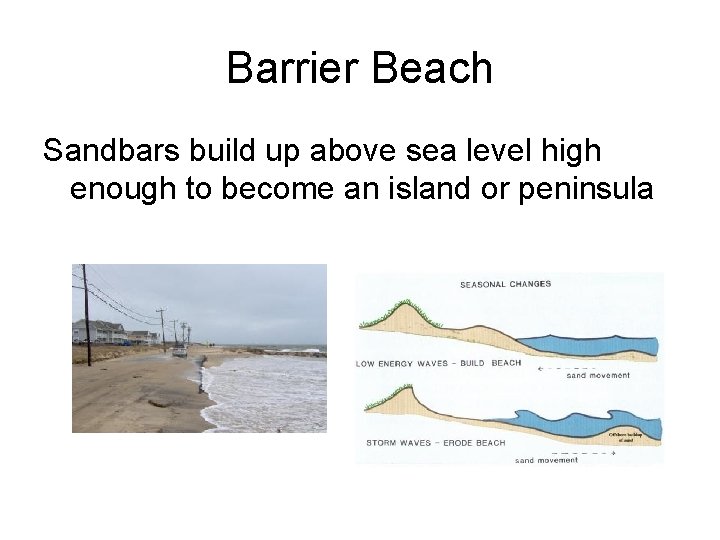
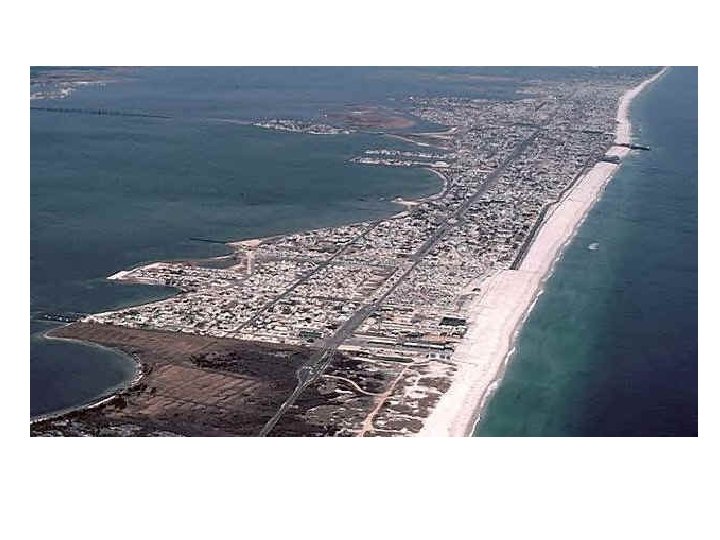
Barrier Beach Sandbars build up above sea level high enough to become an island or peninsula
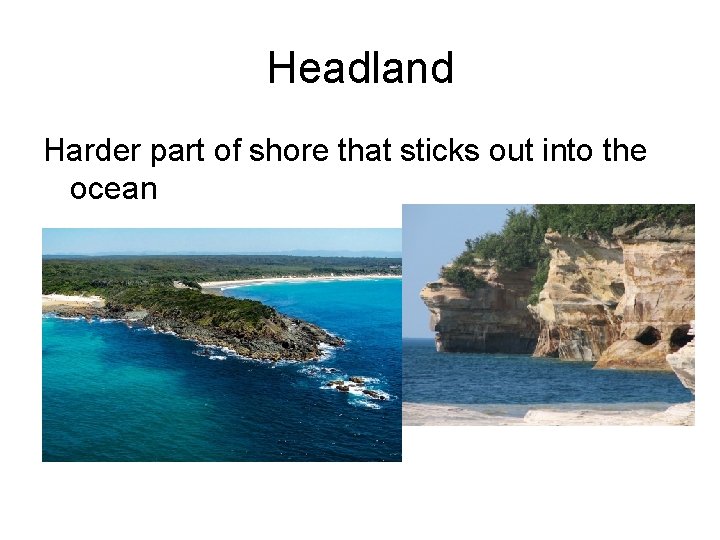
Headland Harder part of shore that sticks out into the ocean
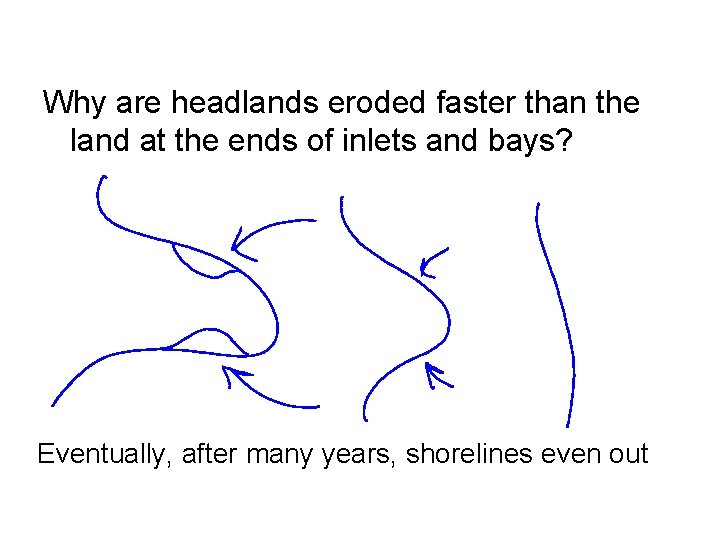
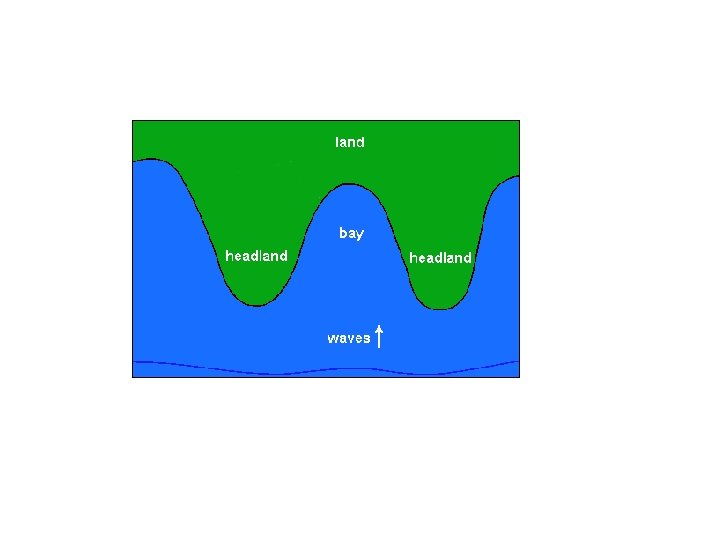
Why are headlands eroded faster than the land at the ends of inlets and bays? Eventually, after many years, shorelines even out
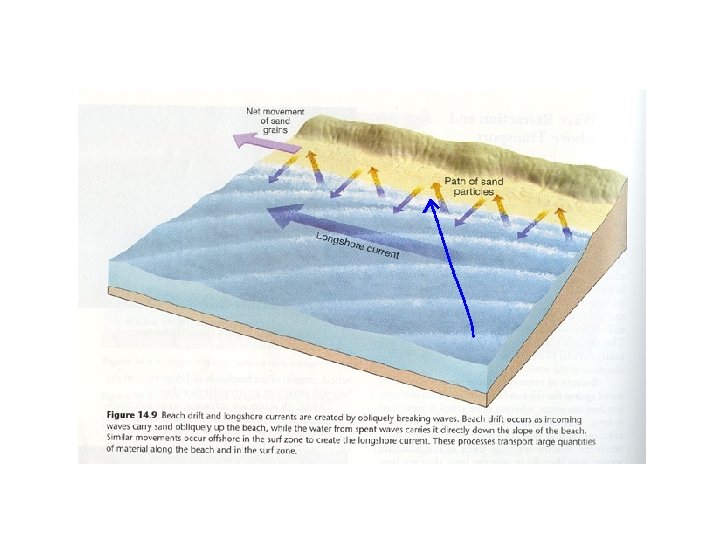
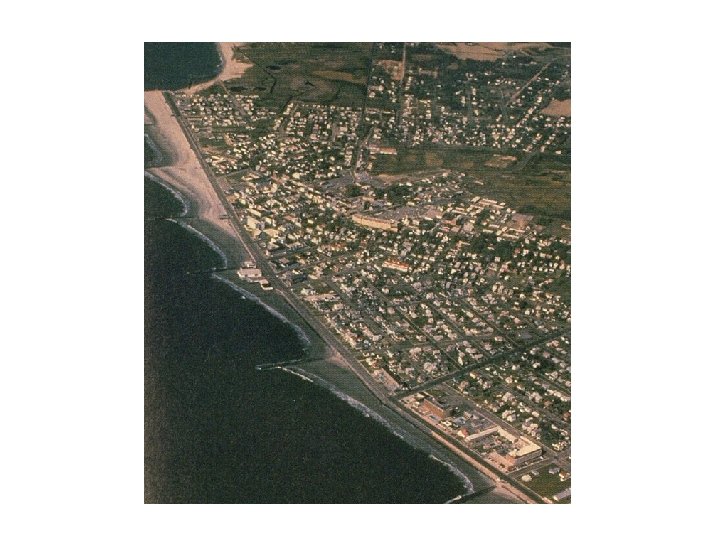
Longshore Drift Sand moves down the beach due to angle of waves. Longshore drift is interrupted by obstacles, and affects where sand is deposited.