
How was the universe created Big Bang Theory
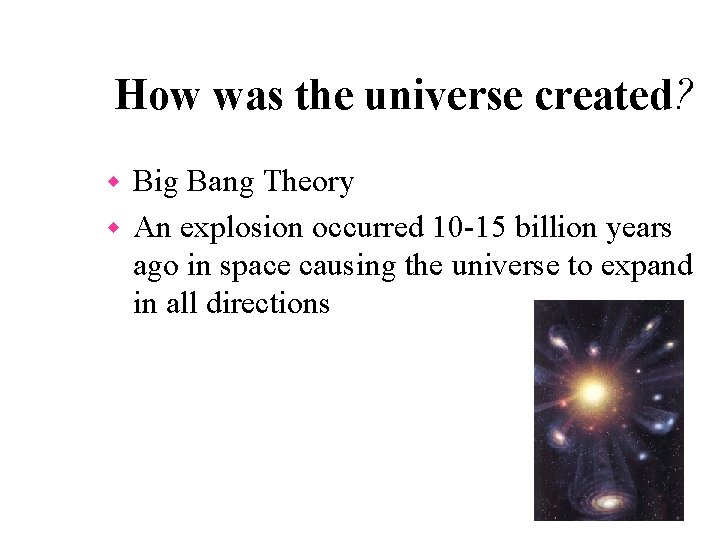
How was the universe created? Big Bang Theory w An explosion occurred 10 -15 billion years ago in space causing the universe to expand in all directions w
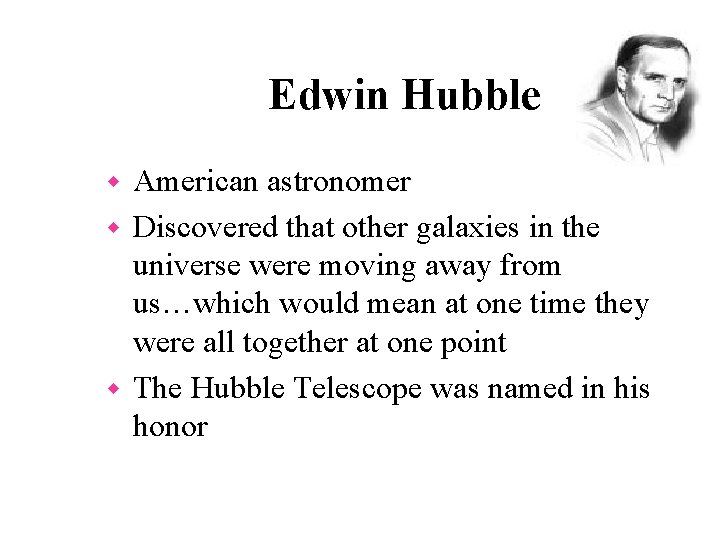
Edwin Hubble American astronomer w Discovered that other galaxies in the universe were moving away from us…which would mean at one time they were all together at one point w The Hubble Telescope was named in his honor w
What is the Milky Way? A cluster of stars called a galaxy w Contains hundreds of billions of stars w Traveling at the speed of light-it would take about 2 million years to reach another galaxy…the Andromeda Galaxy w It’s where our solar system is located w
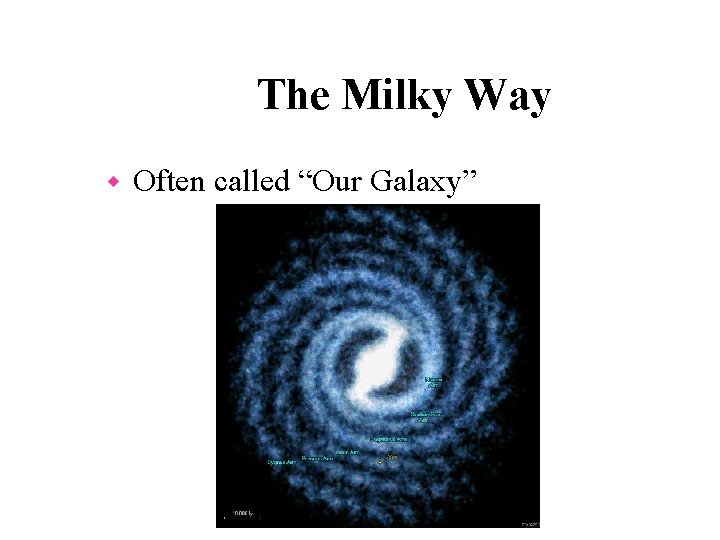
The Milky Way w Often called “Our Galaxy”
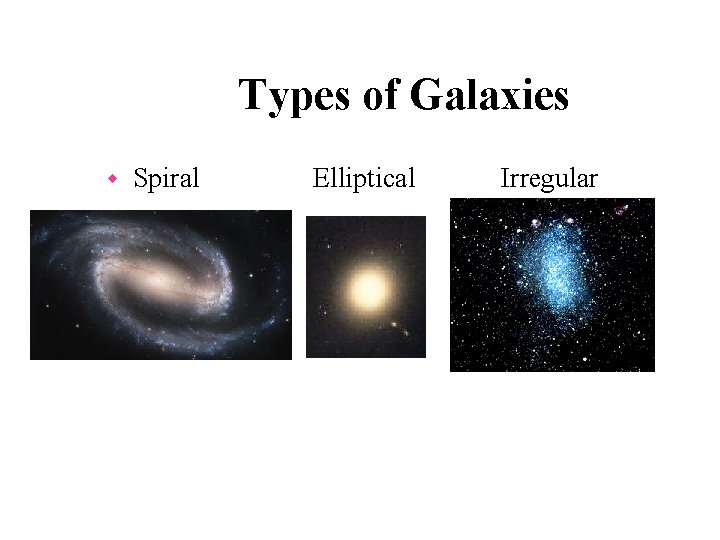
Types of Galaxies w Spiral Elliptical Irregular
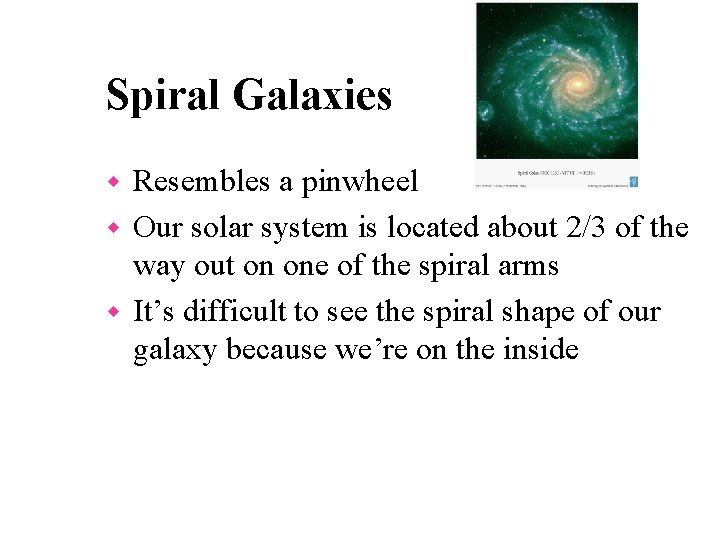
Spiral Galaxies Resembles a pinwheel w Our solar system is located about 2/3 of the way out on one of the spiral arms w It’s difficult to see the spiral shape of our galaxy because we’re on the inside w
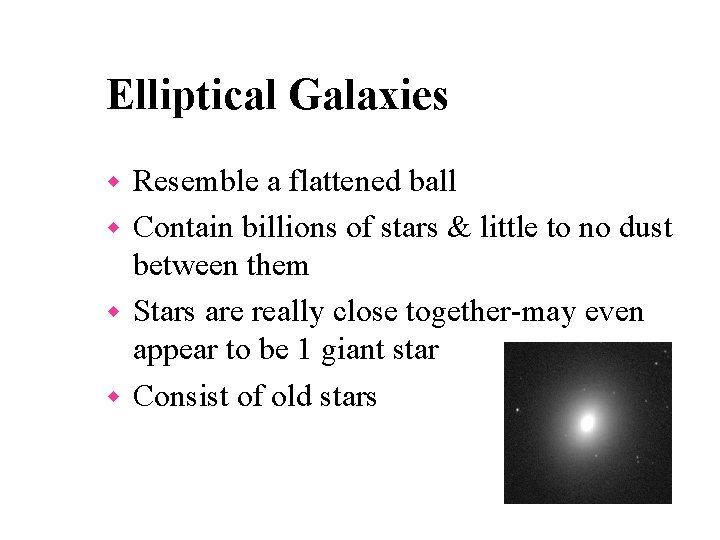
Elliptical Galaxies Resemble a flattened ball w Contain billions of stars & little to no dust between them w Stars are really close together-may even appear to be 1 giant star w Consist of old stars w
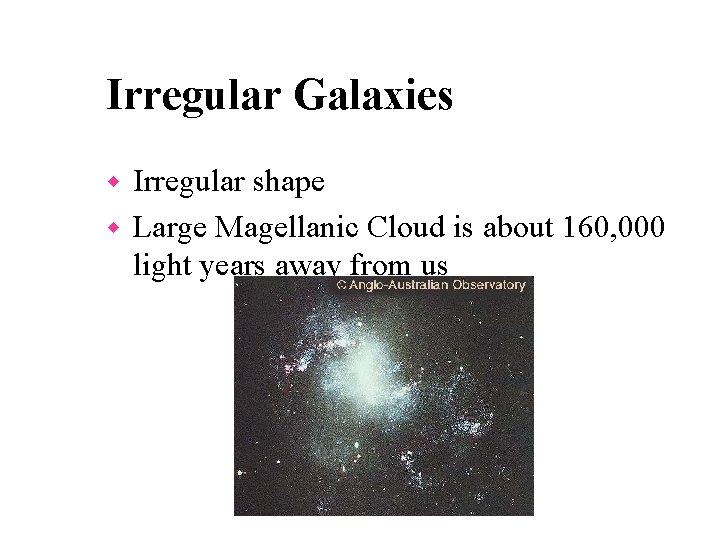
Irregular Galaxies Irregular shape w Large Magellanic Cloud is about 160, 000 light years away from us w

Stop HERE!
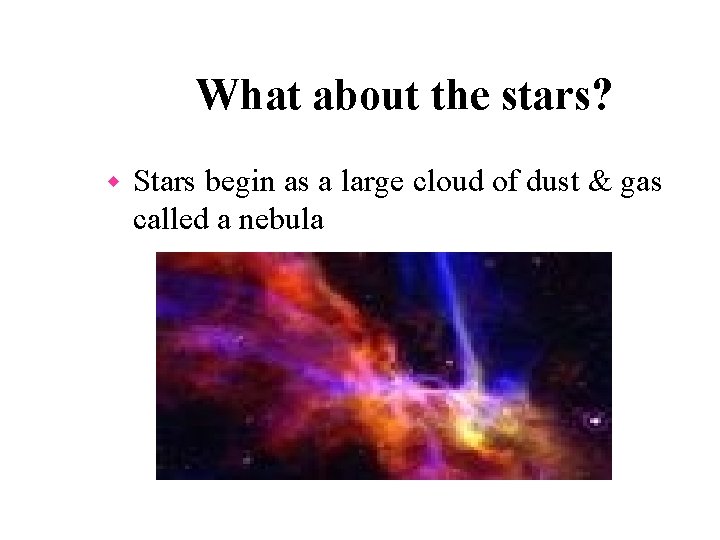
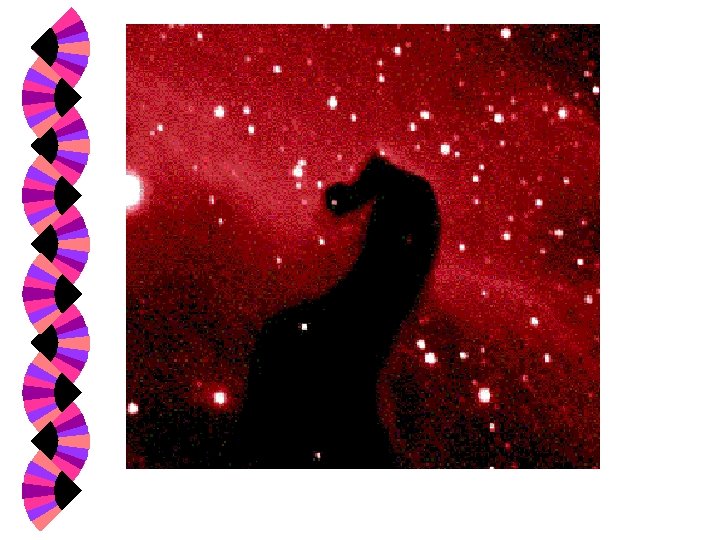
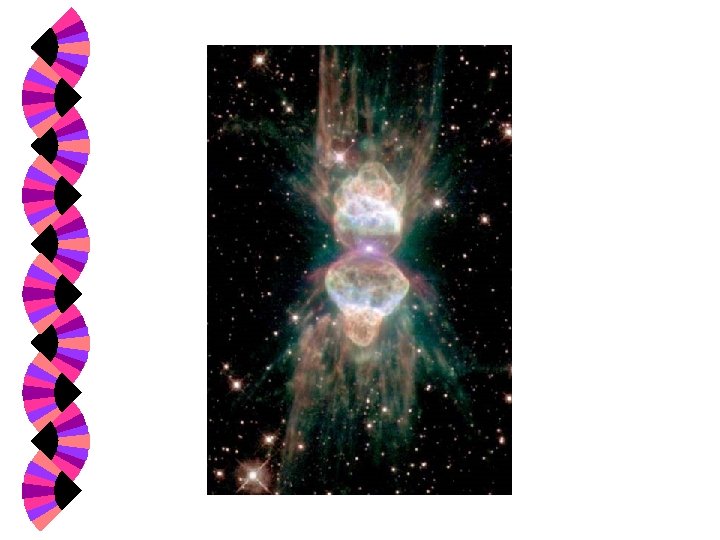
What about the stars? w Stars begin as a large cloud of dust & gas called a nebula
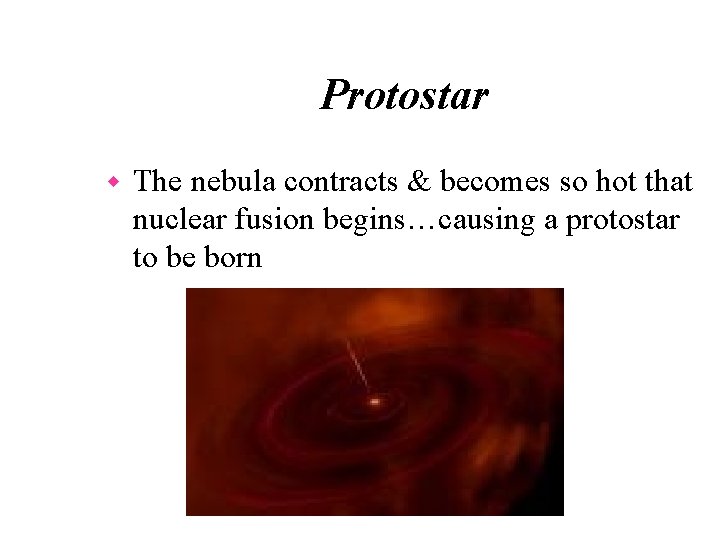
Protostar w The nebula contracts & becomes so hot that nuclear fusion begins…causing a protostar to be born
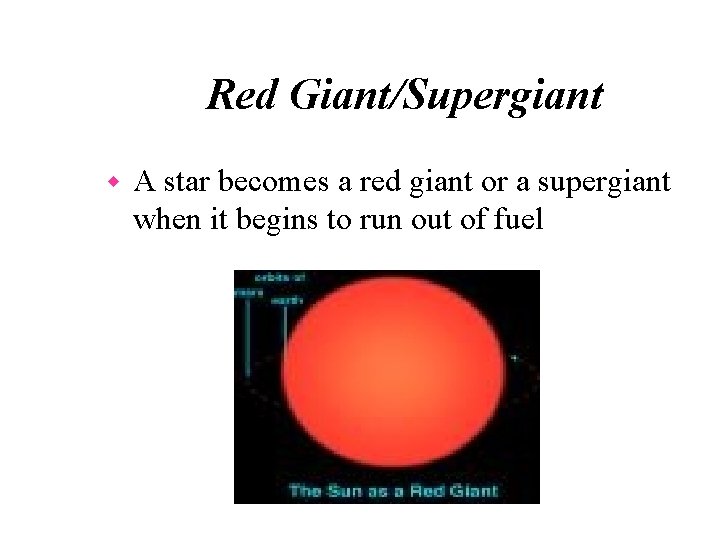
Red Giant/Supergiant w A star becomes a red giant or a supergiant when it begins to run out of fuel
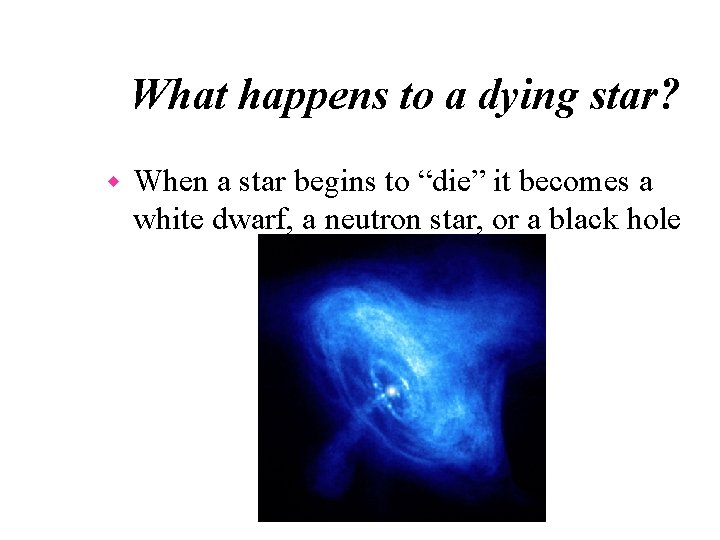
What happens to a dying star? w When a star begins to “die” it becomes a white dwarf, a neutron star, or a black hole
White Dwarf Blue-white hot core of a star left behind from a red giant w About the size of Earth w Have no fuel-just burn from leftover energy w Becomes a black dwarf when it stops glowing w
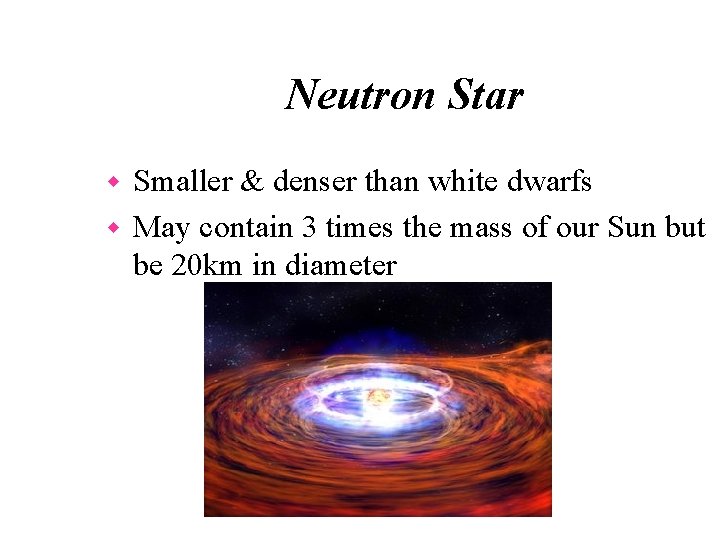
Neutron Star Smaller & denser than white dwarfs w May contain 3 times the mass of our Sun but be 20 km in diameter w
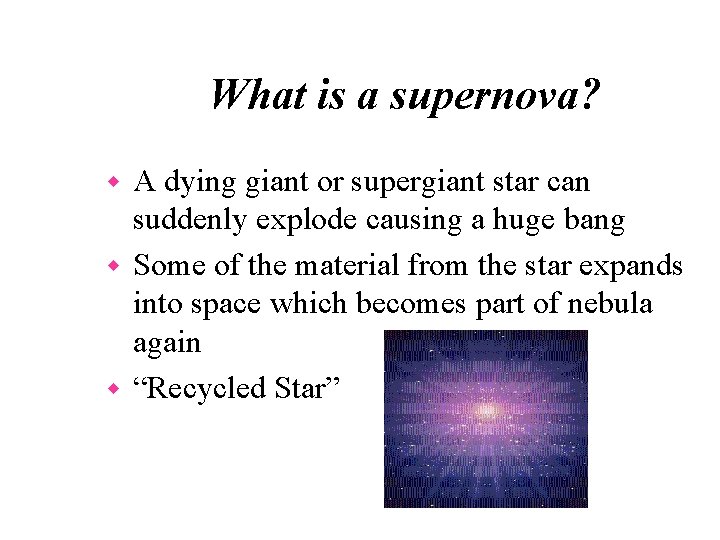
What is a supernova? A dying giant or supergiant star can suddenly explode causing a huge bang w Some of the material from the star expands into space which becomes part of nebula again w “Recycled Star” w
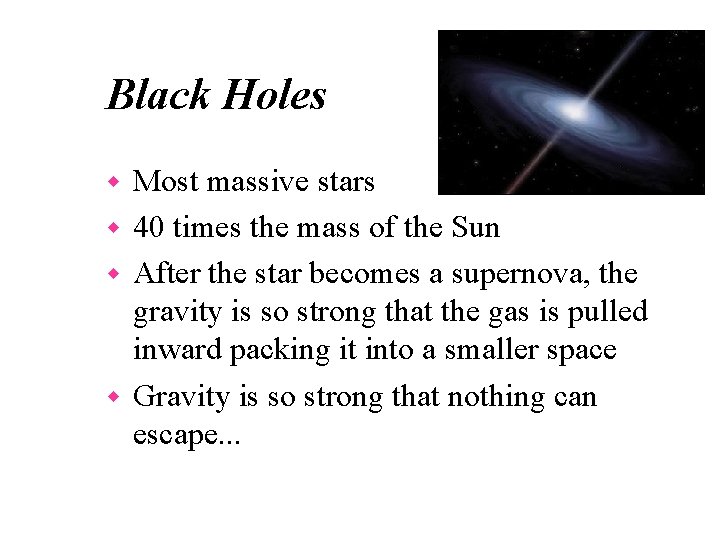
Black Holes Most massive stars w 40 times the mass of the Sun w After the star becomes a supernova, the gravity is so strong that the gas is pulled inward packing it into a smaller space w Gravity is so strong that nothing can escape. . . w
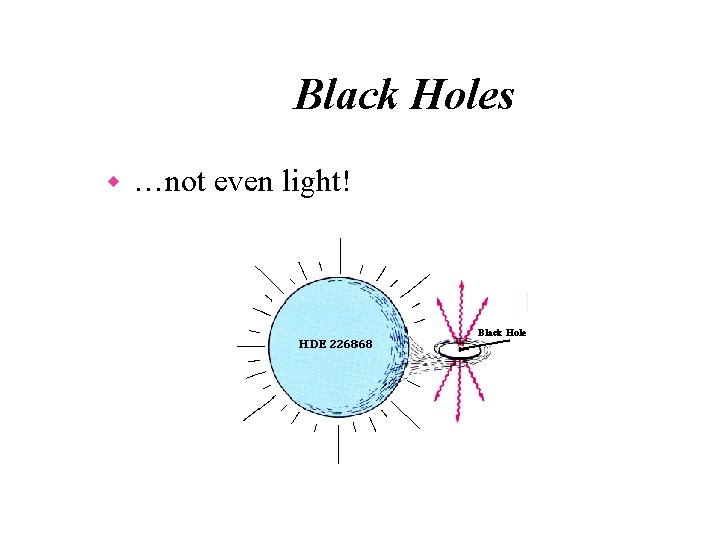
Black Holes w …not even light!
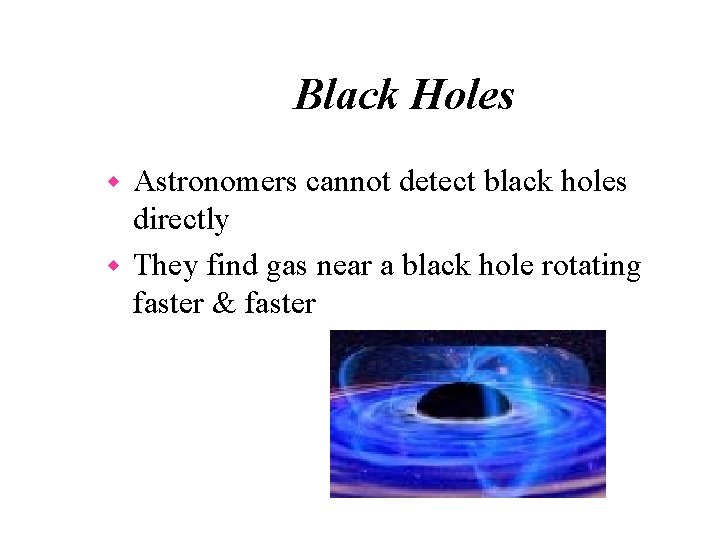
Black Holes Astronomers cannot detect black holes directly w They find gas near a black hole rotating faster & faster w
How are stars classified? Size w Temperature w Brightness w
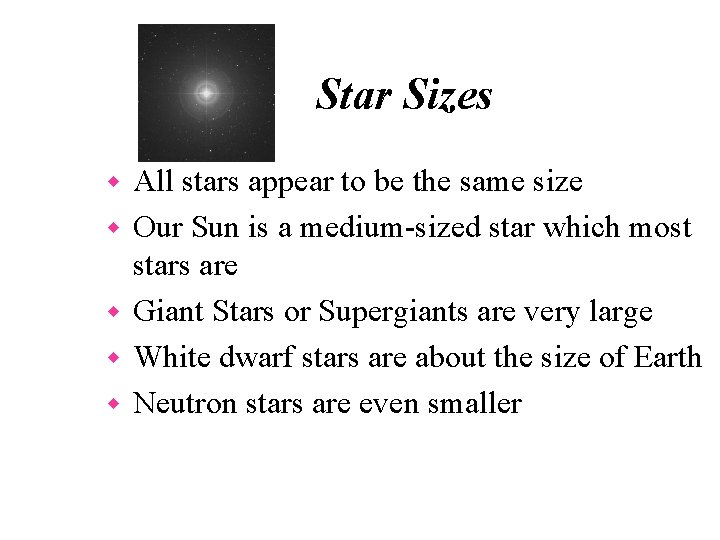
Star Sizes w w w All stars appear to be the same size Our Sun is a medium-sized star which most stars are Giant Stars or Supergiants are very large White dwarf stars are about the size of Earth Neutron stars are even smaller
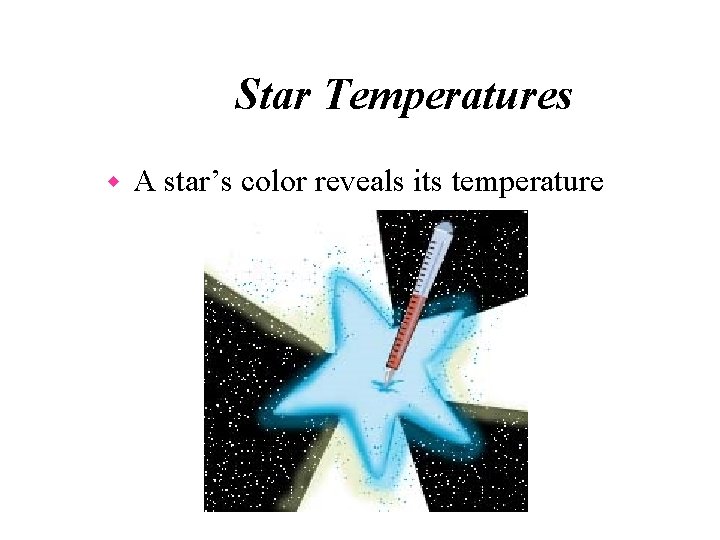
Star Temperatures w A star’s color reveals its temperature
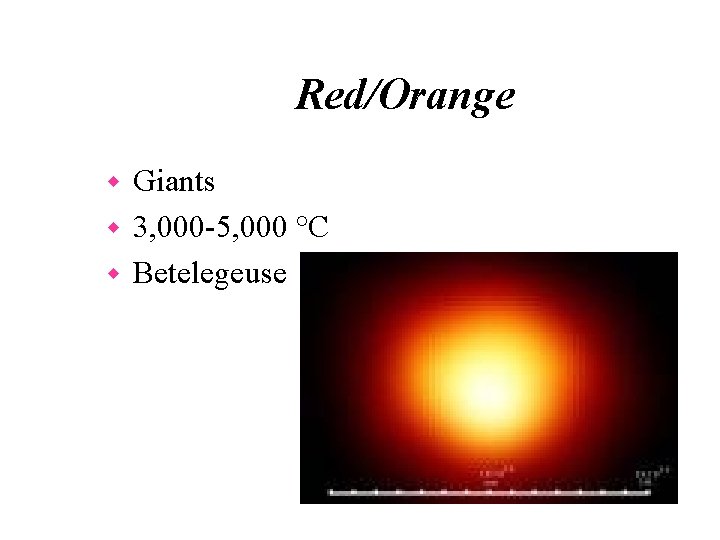
Red/Orange Giants w 3, 000 -5, 000 °C w Betelegeuse w
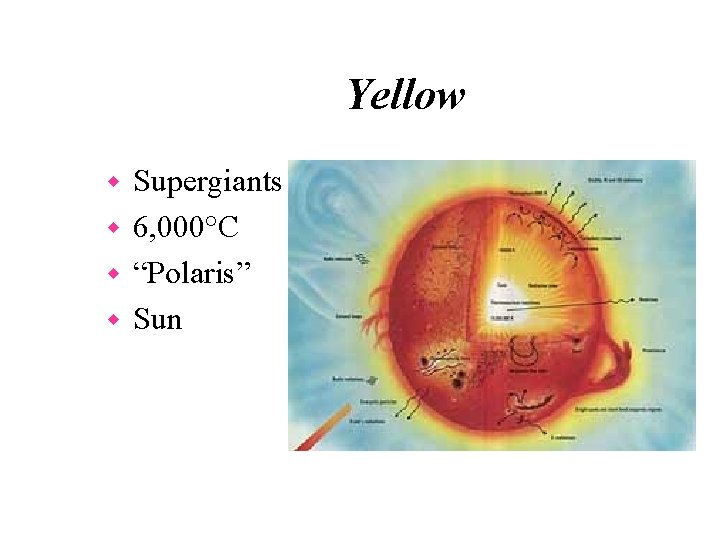
Yellow Supergiants w 6, 000°C w “Polaris” w Sun w
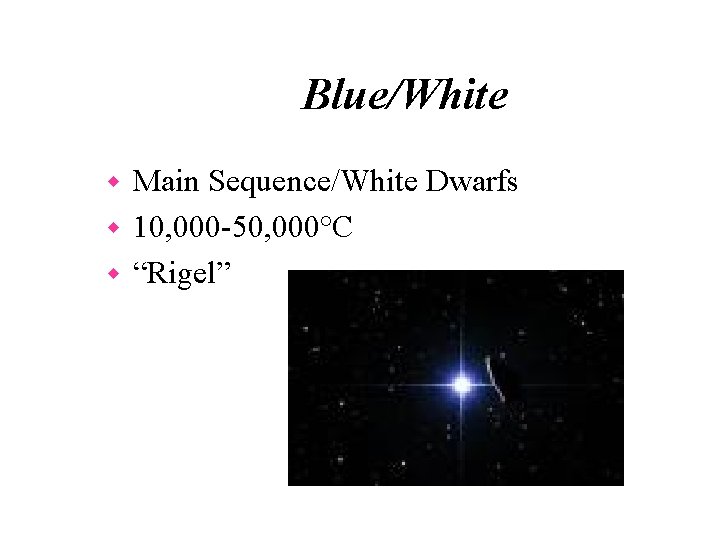
Blue/White Main Sequence/White Dwarfs w 10, 000 -50, 000°C w “Rigel” w
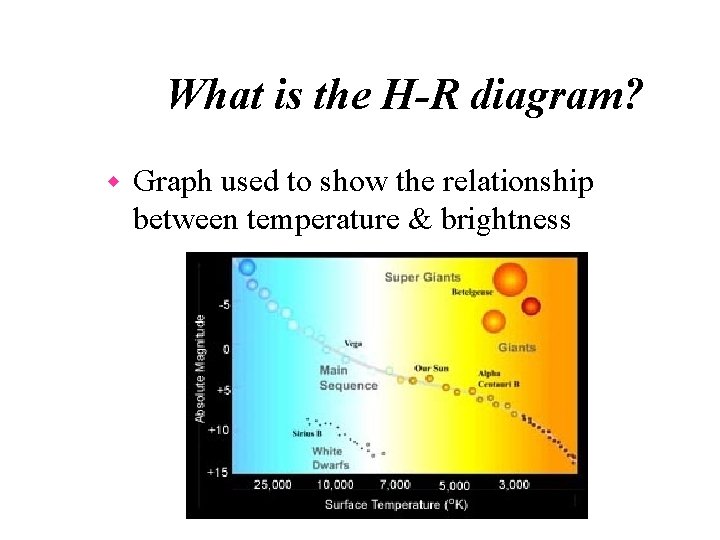
What is the H-R diagram? w Graph used to show the relationship between temperature & brightness
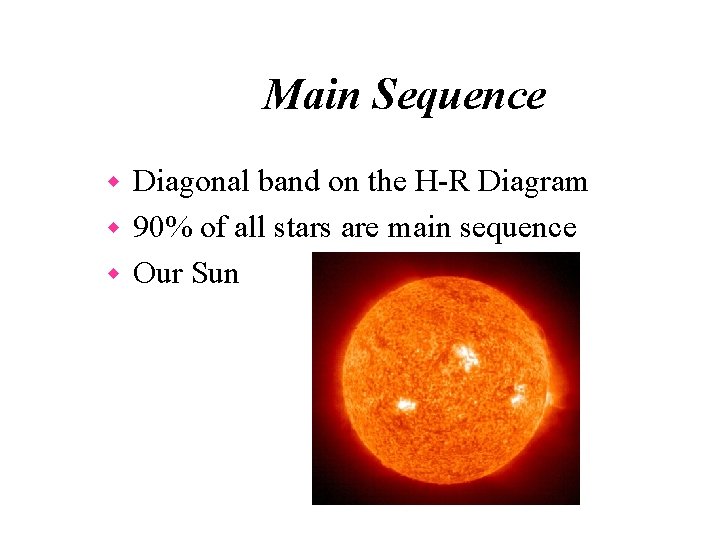
Main Sequence Diagonal band on the H-R Diagram w 90% of all stars are main sequence w Our Sun w
What is a light-year? w Is the distance that light travels in 1 year or about 9. 5 million km
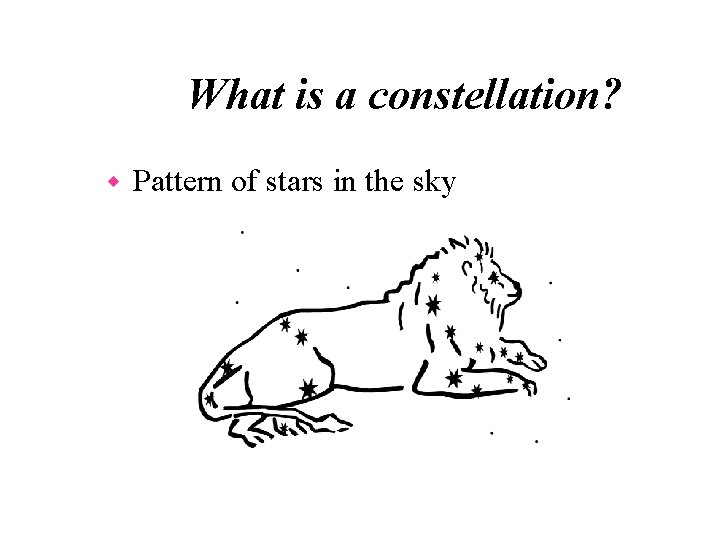
What is a constellation? w Pattern of stars in the sky
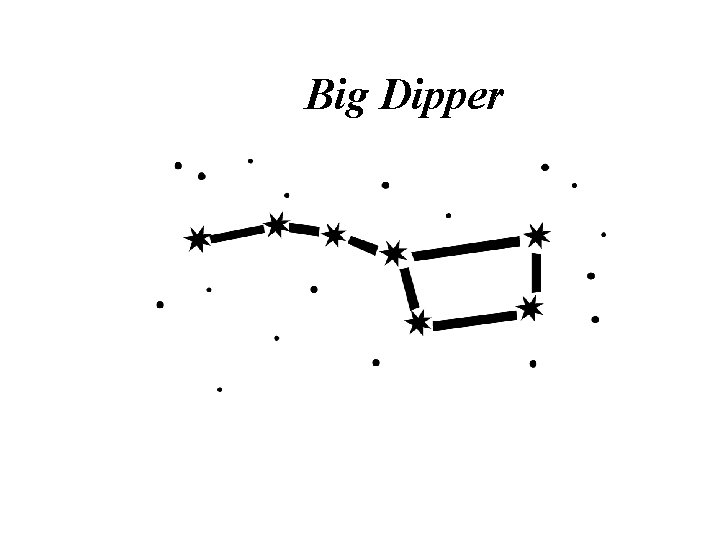
Big Dipper
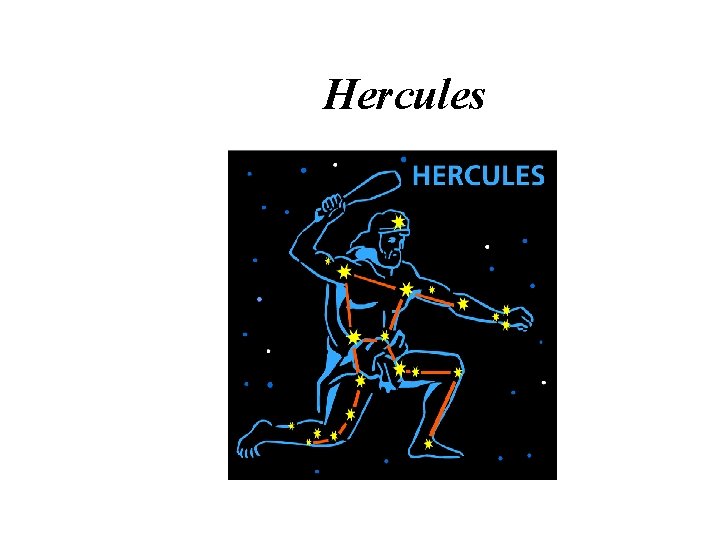
Hercules
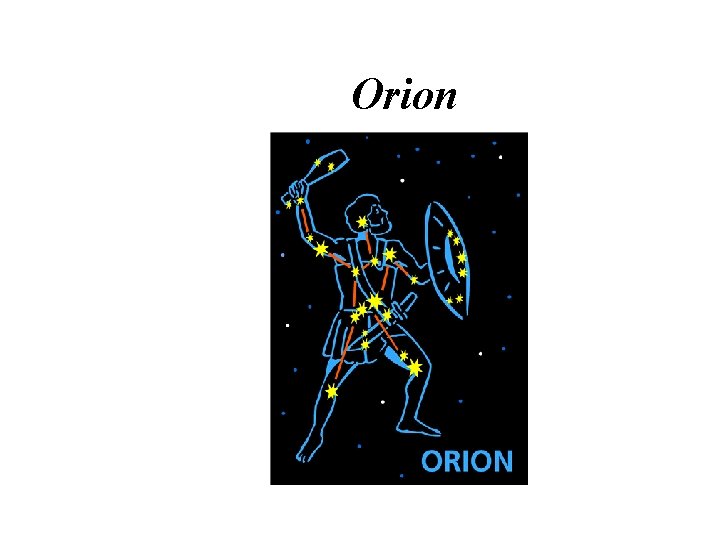
Orion
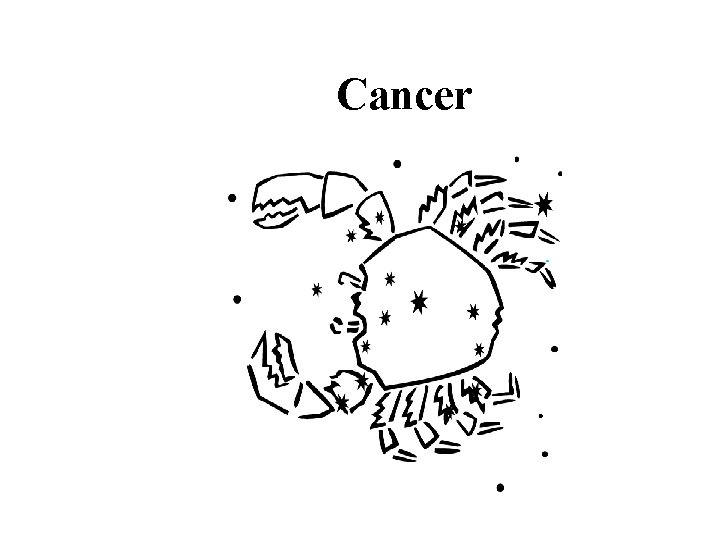
Cancer
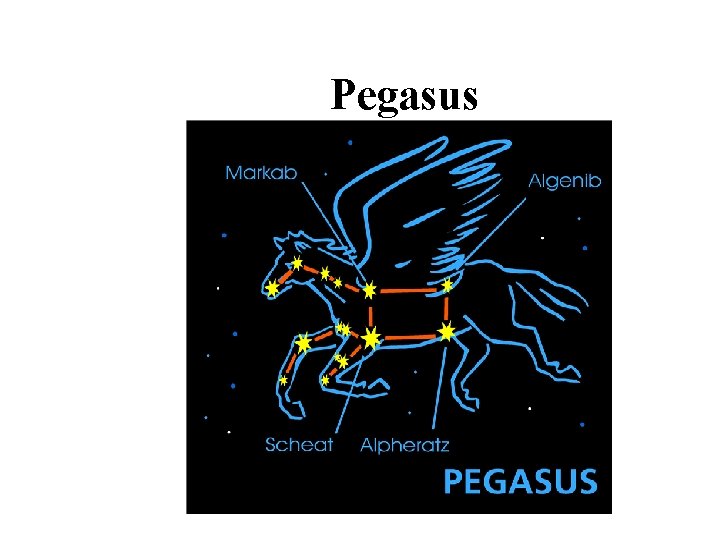
Pegasus
- Slides: 36