
How was Earth formed Big Bang Theory n
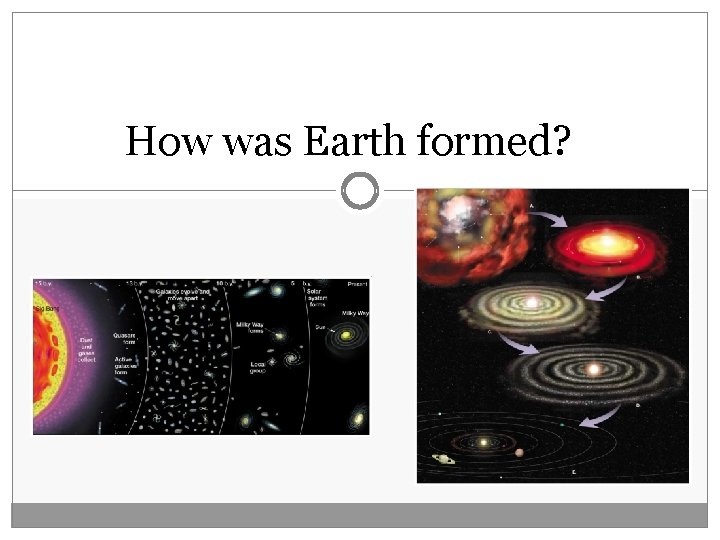
How was Earth formed?
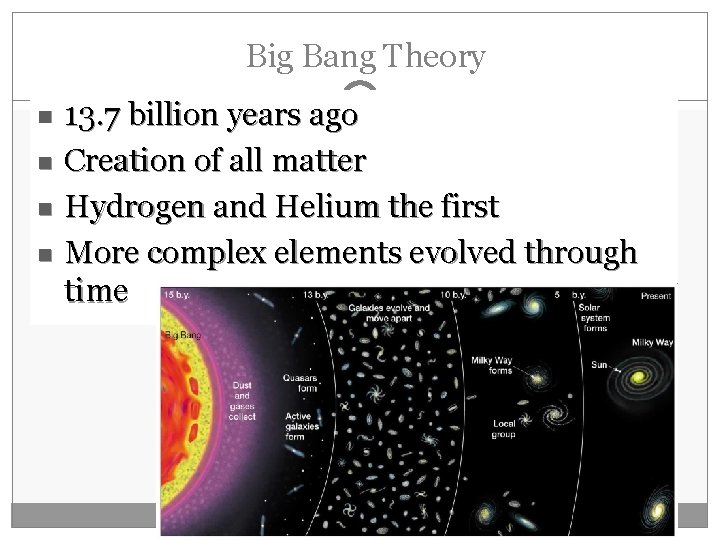
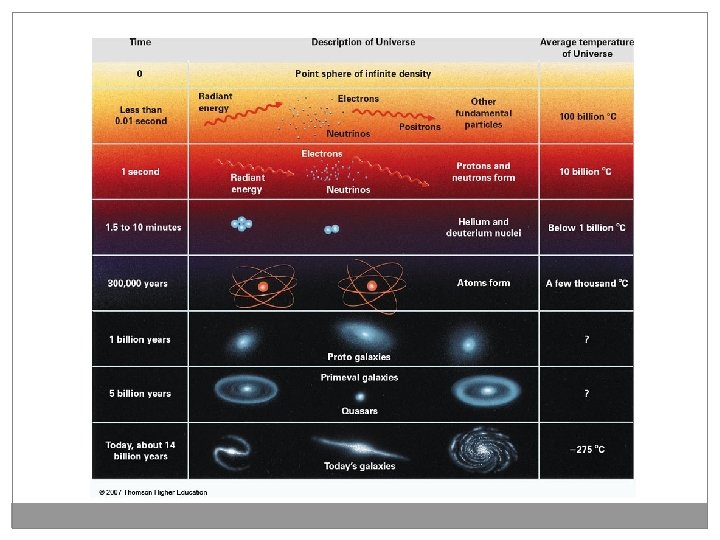
Big Bang Theory n n 13. 7 billion years ago Creation of all matter Hydrogen and Helium the first More complex elements evolved through time

The Expanding Universe �The Doppler effect is used to document the expanding universe
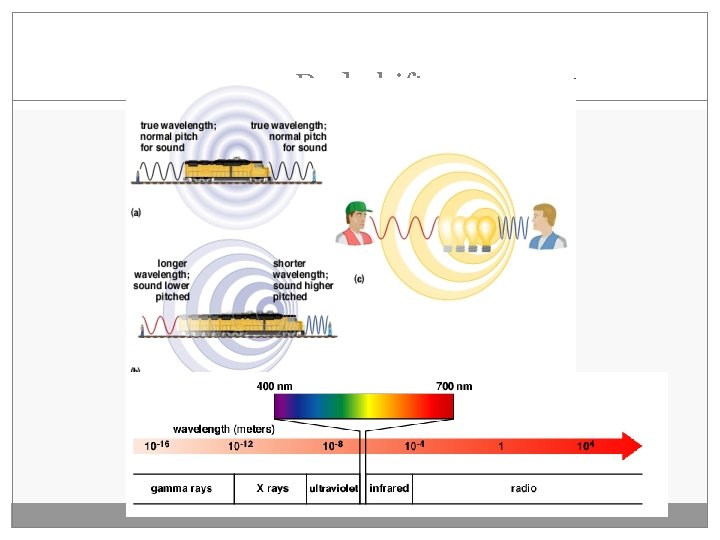
Red shift
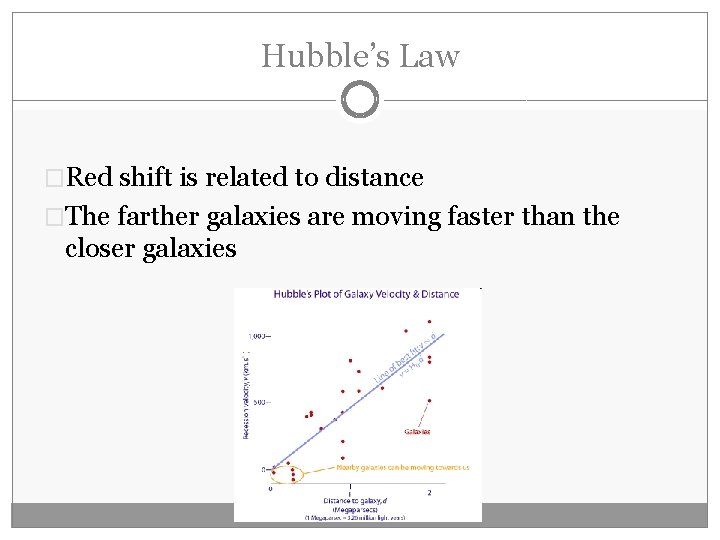
Hubble’s Law �Red shift is related to distance �The farther galaxies are moving faster than the closer galaxies
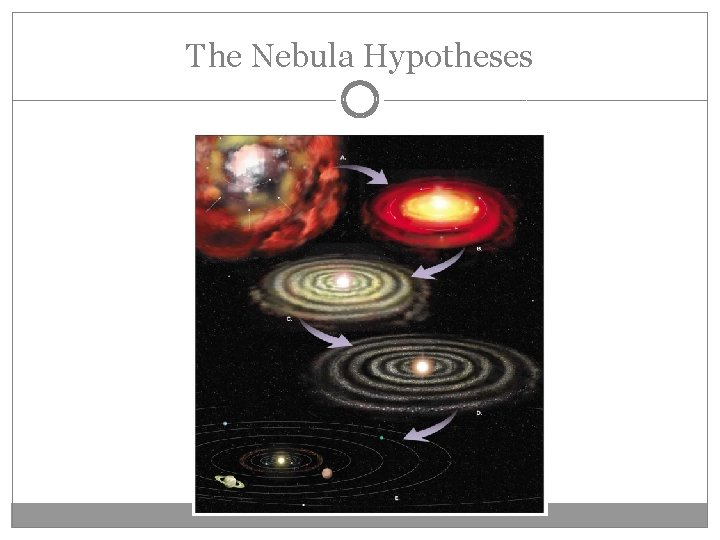
The Nebula Hypotheses
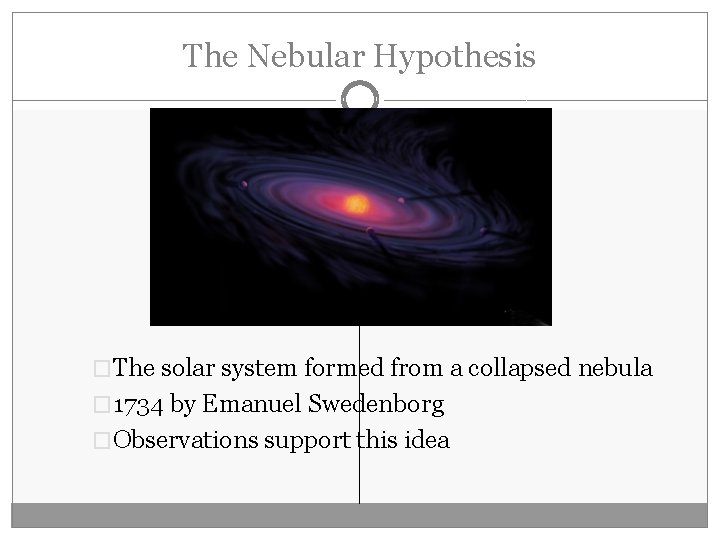
The Nebular Hypothesis �The solar system formed from a collapsed nebula � 1734 by Emanuel Swedenborg �Observations support this idea
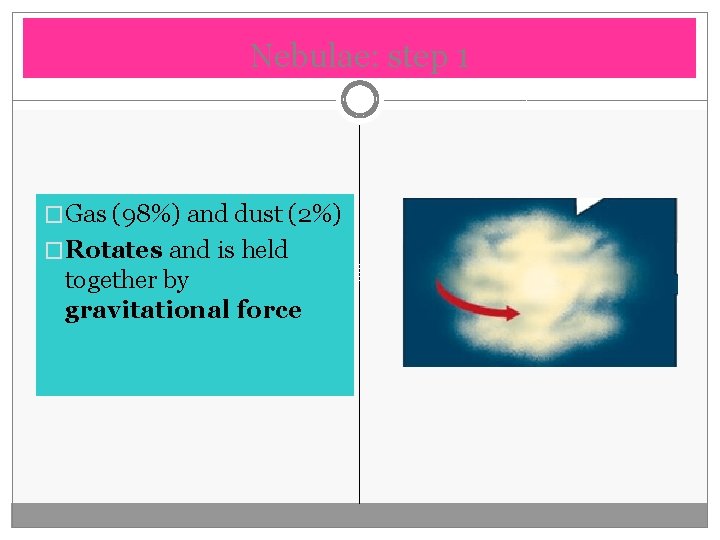
Nebulae: step 1 �Gas (98%) and dust (2%) �Rotates and is held together by gravitational force
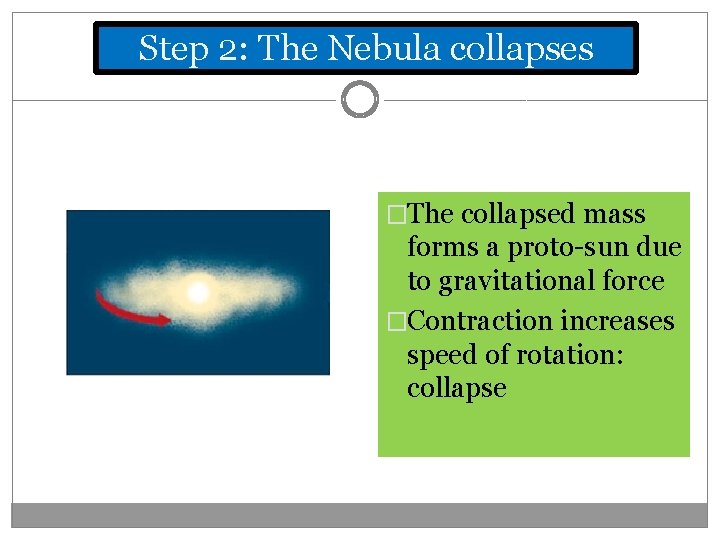
Step 2: The Nebula collapses �The collapsed mass forms a proto-sun due to gravitational force �Contraction increases speed of rotation: collapse
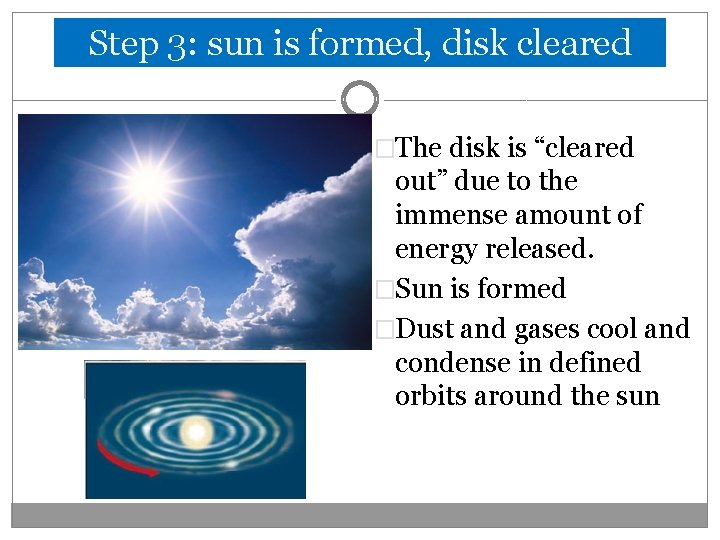
Step 3: sun is formed, disk cleared �The disk is “cleared out” due to the immense amount of energy released. �Sun is formed �Dust and gases cool and condense in defined orbits around the sun
Nebula hypothesis: step 4 - planet formation �Temperature differences with respect to distance from sun �Closer, where temperatures are higher, iron and silicates condense �Farther, cooler, hydrogen, water condense �material collides and accretes forming planetesimals (small planets)
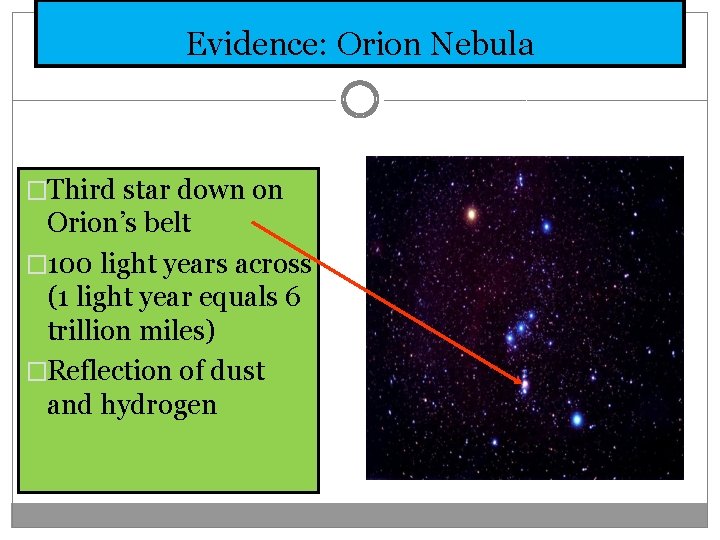
Evidence: Orion Nebula �Third star down on Orion’s belt � 100 light years across (1 light year equals 6 trillion miles) �Reflection of dust and hydrogen
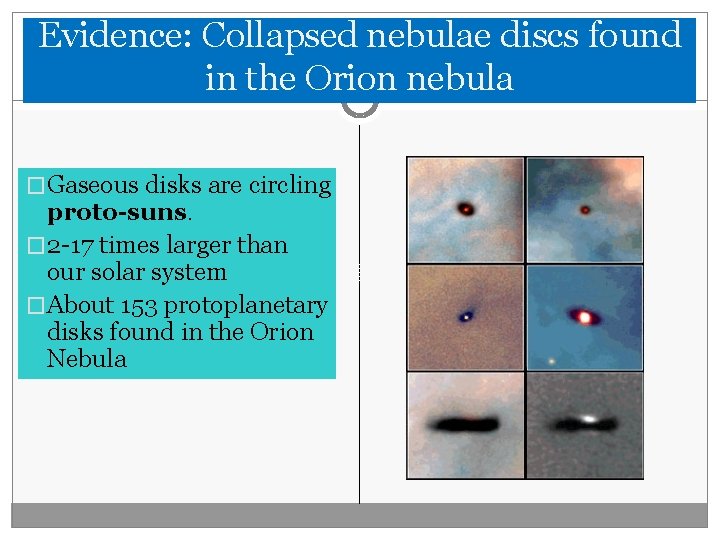
Evidence: Collapsed nebulae discs found in the Orion nebula �Gaseous disks are circling proto-suns. � 2 -17 times larger than our solar system �About 153 protoplanetary disks found in the Orion Nebula
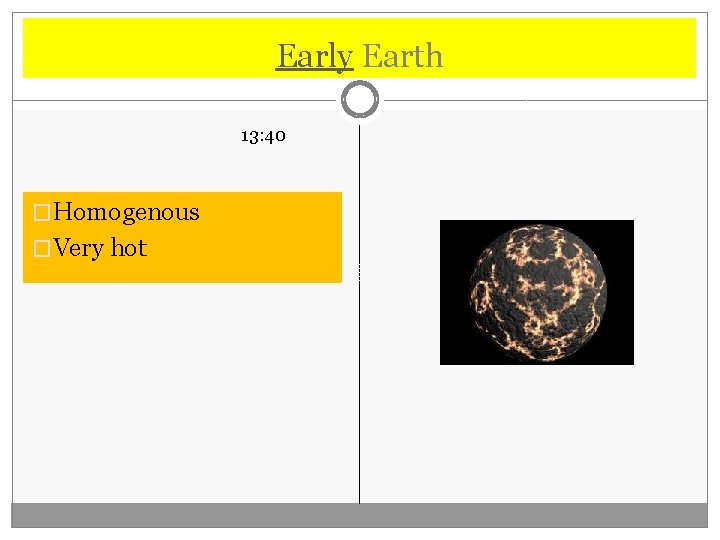
Early Earth 13: 40 �Homogenous �Very hot
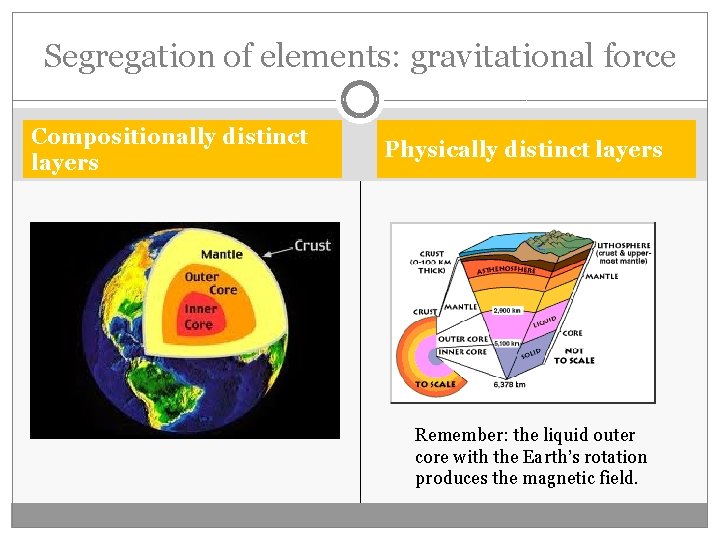
Segregation of elements: gravitational force Compositionally distinct layers Physically distinct layers Remember: the liquid outer core with the Earth’s rotation produces the magnetic field.
- Slides: 16