
HOW TO WRITE RHETORICAL ANALYSIS Things you must


- Slides: 24
HOW TO WRITE RHETORICAL ANALYSIS
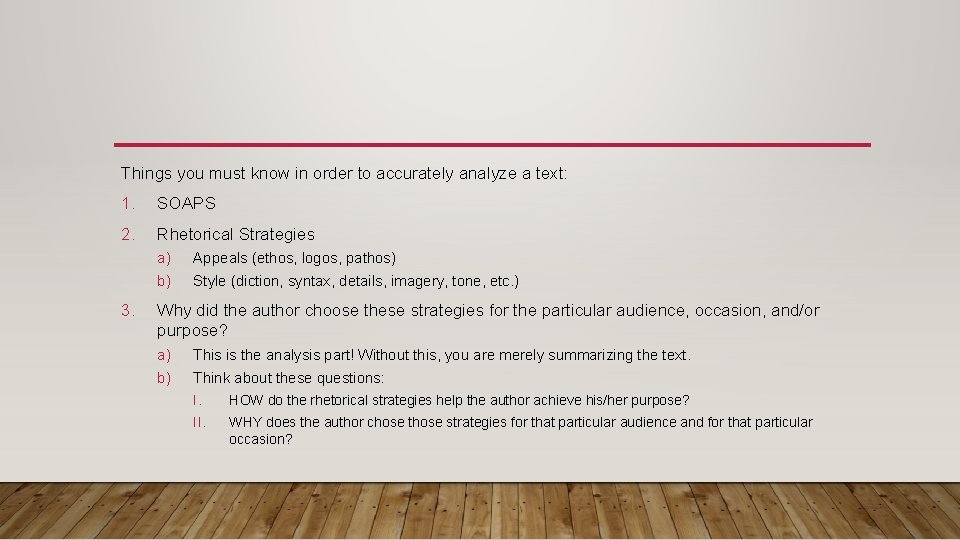
Things you must know in order to accurately analyze a text: 1. SOAPS 2. Rhetorical Strategies a) b) 3. Appeals (ethos, logos, pathos) Style (diction, syntax, details, imagery, tone, etc. ) Why did the author choose these strategies for the particular audience, occasion, and/or purpose? a) b) This is the analysis part! Without this, you are merely summarizing the text. Think about these questions: I. HOW do the rhetorical strategies help the author achieve his/her purpose? II. WHY does the author chose those strategies for that particular audience and for that particular occasion?
Once you’ve identified the information above, it’s time to begin putting your thoughts and ideas into a format that proves you have accurately analyzed the text. There are many ways to write an effective rhetorical analysis essay. Below is one way that is a good, simple format to help you get started. You may find as you become more comfortable with analysis that you want to deviate from this format. That’s fine as long as you are still focusing on numbers 1 -3 from above.
Introduction The introductory paragraph to an analysis essay is usually brief. However, it must contain some essential information.
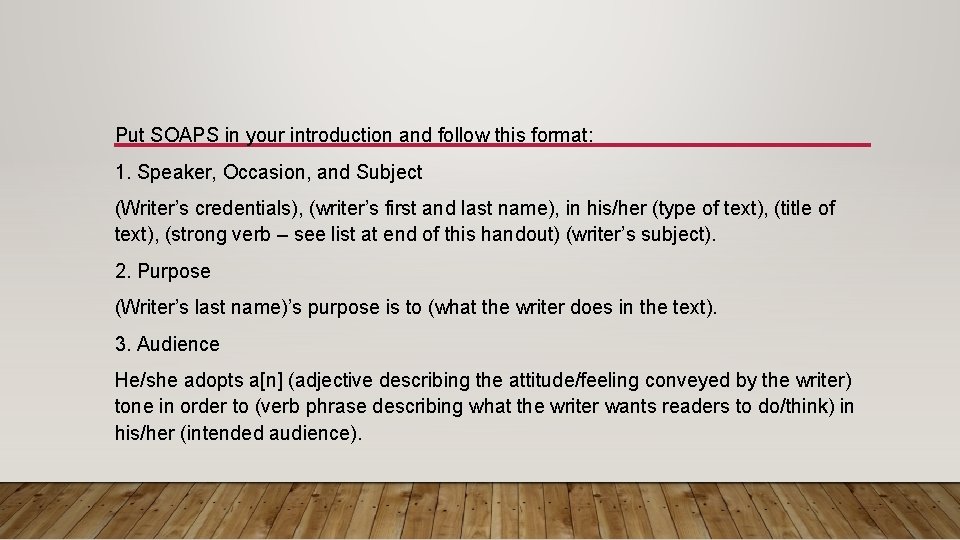
Put SOAPS in your introduction and follow this format: 1. Speaker, Occasion, and Subject (Writer’s credentials), (writer’s first and last name), in his/her (type of text), (title of text), (strong verb – see list at end of this handout) (writer’s subject). 2. Purpose (Writer’s last name)’s purpose is to (what the writer does in the text). 3. Audience He/she adopts a[n] (adjective describing the attitude/feeling conveyed by the writer) tone in order to (verb phrase describing what the writer wants readers to do/think) in his/her (intended audience).
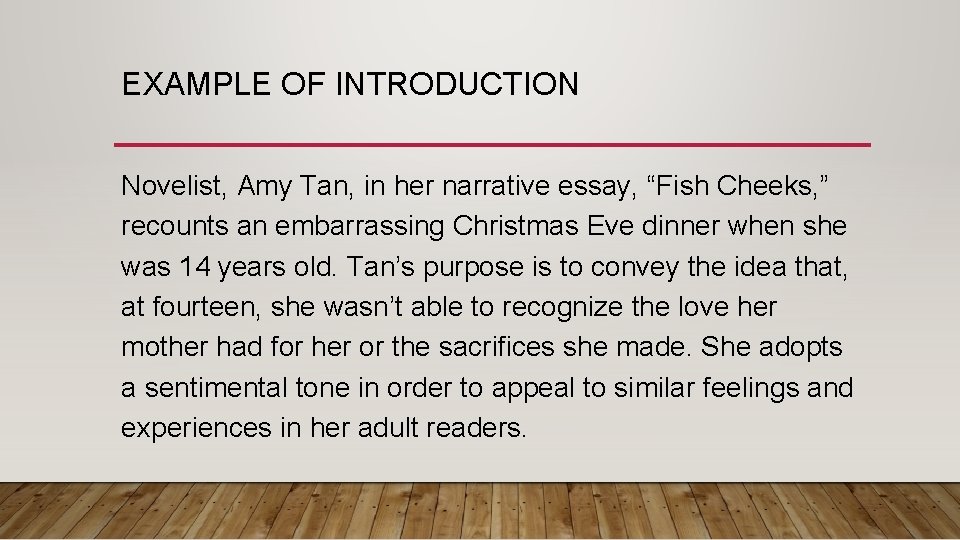
EXAMPLE OF INTRODUCTION Novelist, Amy Tan, in her narrative essay, “Fish Cheeks, ” recounts an embarrassing Christmas Eve dinner when she was 14 years old. Tan’s purpose is to convey the idea that, at fourteen, she wasn’t able to recognize the love her mother had for her or the sacrifices she made. She adopts a sentimental tone in order to appeal to similar feelings and experiences in her adult readers.
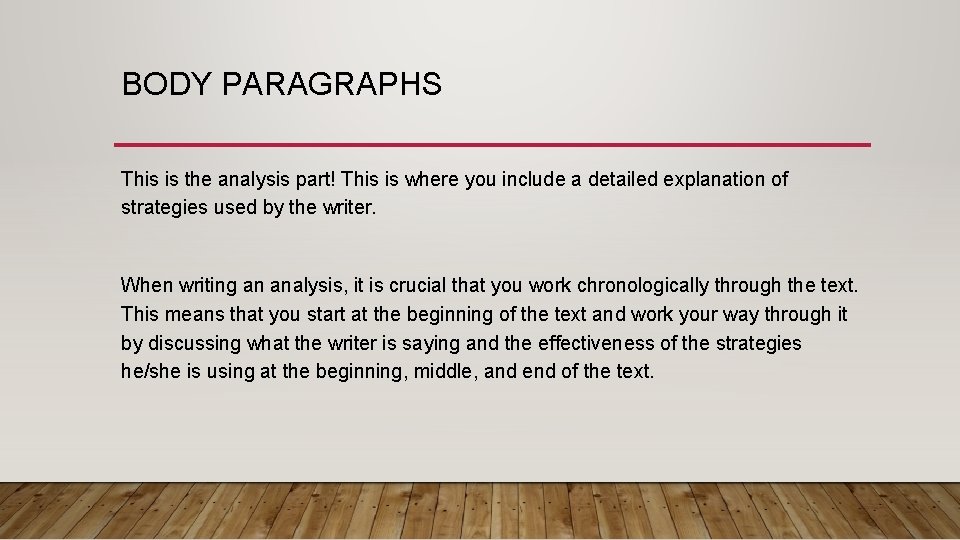
BODY PARAGRAPHS This is the analysis part! This is where you include a detailed explanation of strategies used by the writer. When writing an analysis, it is crucial that you work chronologically through the text. This means that you start at the beginning of the text and work your way through it by discussing what the writer is saying and the effectiveness of the strategies he/she is using at the beginning, middle, and end of the text.
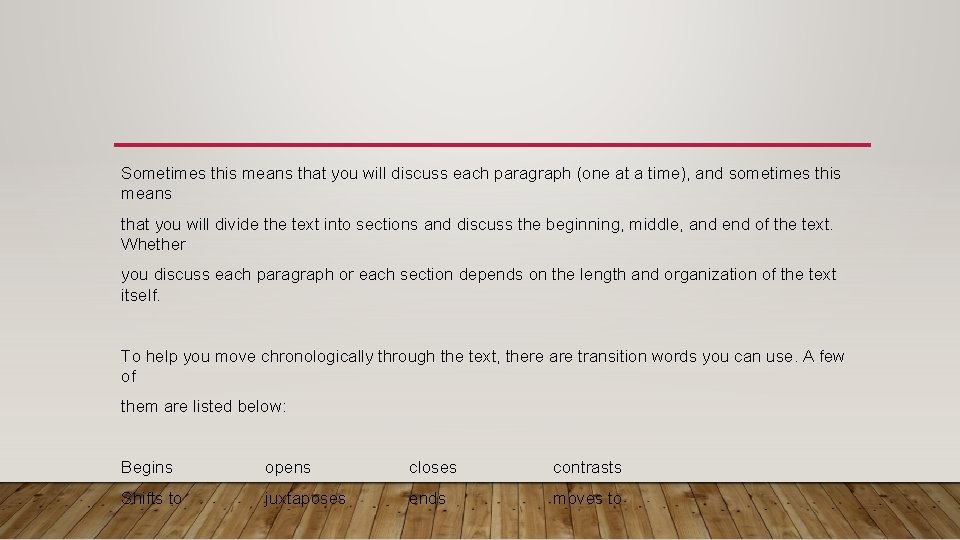
Sometimes this means that you will discuss each paragraph (one at a time), and sometimes this means that you will divide the text into sections and discuss the beginning, middle, and end of the text. Whether you discuss each paragraph or each section depends on the length and organization of the text itself. To help you move chronologically through the text, there are transition words you can use. A few of them are listed below: Begins opens closes contrasts Shifts to juxtaposes ends moves to
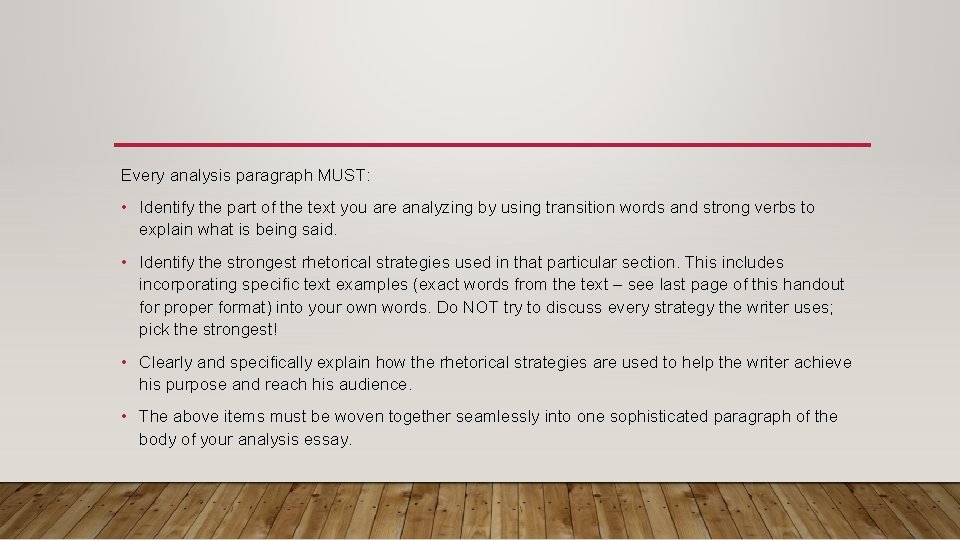
Every analysis paragraph MUST: • Identify the part of the text you are analyzing by using transition words and strong verbs to explain what is being said. • Identify the strongest rhetorical strategies used in that particular section. This includes incorporating specific text examples (exact words from the text – see last page of this handout for proper format) into your own words. Do NOT try to discuss every strategy the writer uses; pick the strongest! • Clearly and specifically explain how the rhetorical strategies are used to help the writer achieve his purpose and reach his audience. • The above items must be woven together seamlessly into one sophisticated paragraph of the body of your analysis essay.
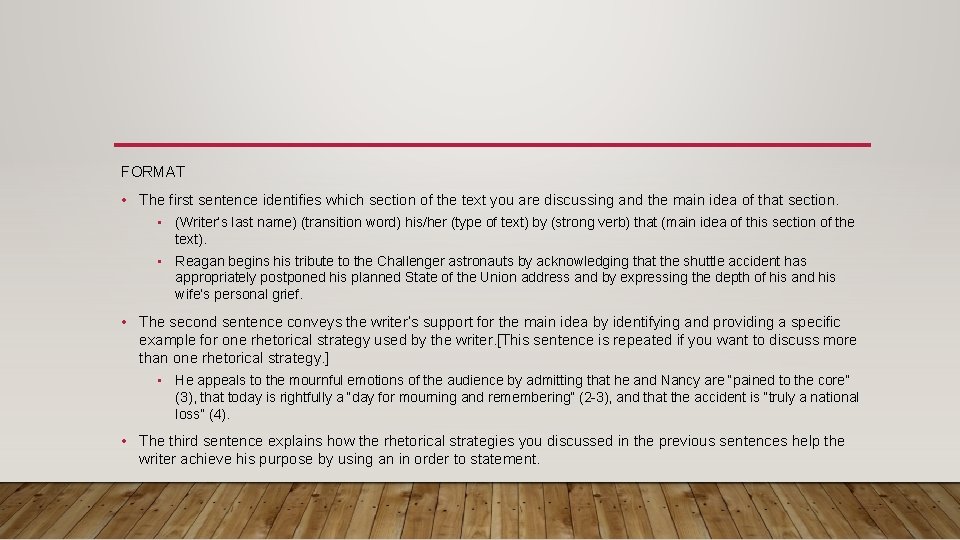
FORMAT • The first sentence identifies which section of the text you are discussing and the main idea of that section. • (Writer’s last name) (transition word) his/her (type of text) by (strong verb) that (main idea of this section of the text). • Reagan begins his tribute to the Challenger astronauts by acknowledging that the shuttle accident has appropriately postponed his planned State of the Union address and by expressing the depth of his and his wife’s personal grief. • The second sentence conveys the writer’s support for the main idea by identifying and providing a specific example for one rhetorical strategy used by the writer. [This sentence is repeated if you want to discuss more than one rhetorical strategy. ] • He appeals to the mournful emotions of the audience by admitting that he and Nancy are “pained to the core” (3), that today is rightfully a “day for mourning and remembering” (2 -3), and that the accident is “truly a national loss” (4). • The third sentence explains how the rhetorical strategies you discussed in the previous sentences help the writer achieve his purpose by using an in order to statement.
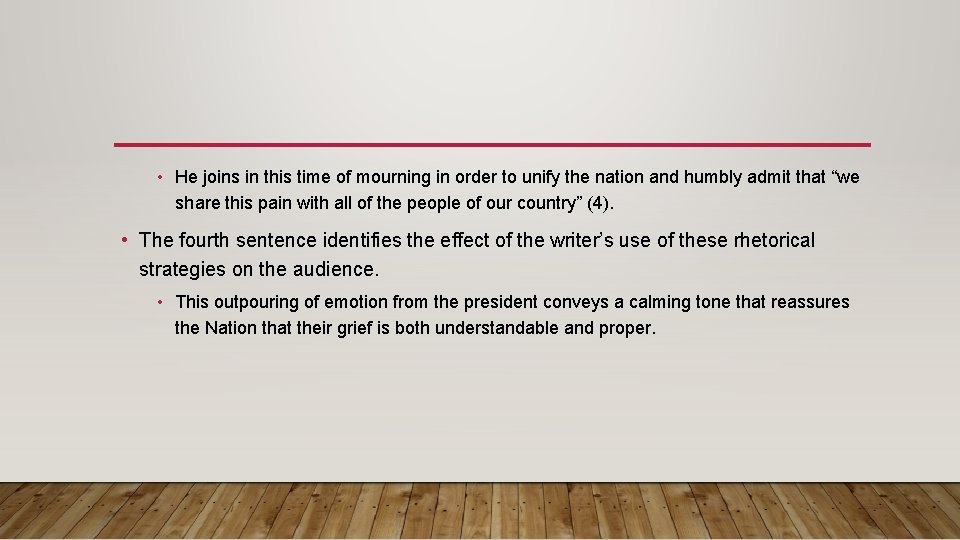
• He joins in this time of mourning in order to unify the nation and humbly admit that “we share this pain with all of the people of our country” (4). • The fourth sentence identifies the effect of the writer’s use of these rhetorical strategies on the audience. • This outpouring of emotion from the president conveys a calming tone that reassures the Nation that their grief is both understandable and proper.
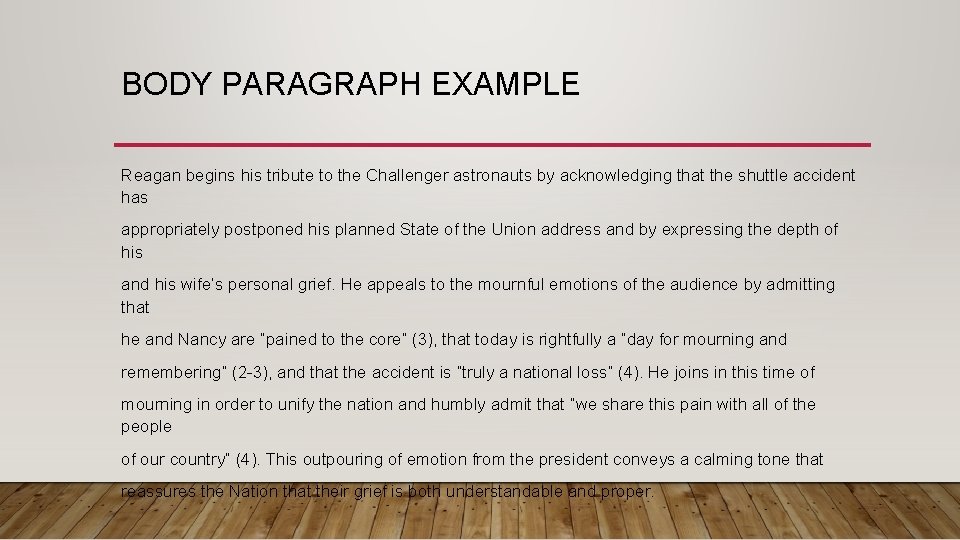
BODY PARAGRAPH EXAMPLE Reagan begins his tribute to the Challenger astronauts by acknowledging that the shuttle accident has appropriately postponed his planned State of the Union address and by expressing the depth of his and his wife’s personal grief. He appeals to the mournful emotions of the audience by admitting that he and Nancy are “pained to the core” (3), that today is rightfully a “day for mourning and remembering” (2 -3), and that the accident is “truly a national loss” (4). He joins in this time of mourning in order to unify the nation and humbly admit that “we share this pain with all of the people of our country” (4). This outpouring of emotion from the president conveys a calming tone that reassures the Nation that their grief is both understandable and proper.
CONCLUSION The conclusion is probably the easiest part. Be brief. In one-two sentences, simply remind your reader of the things you said in the introduction.
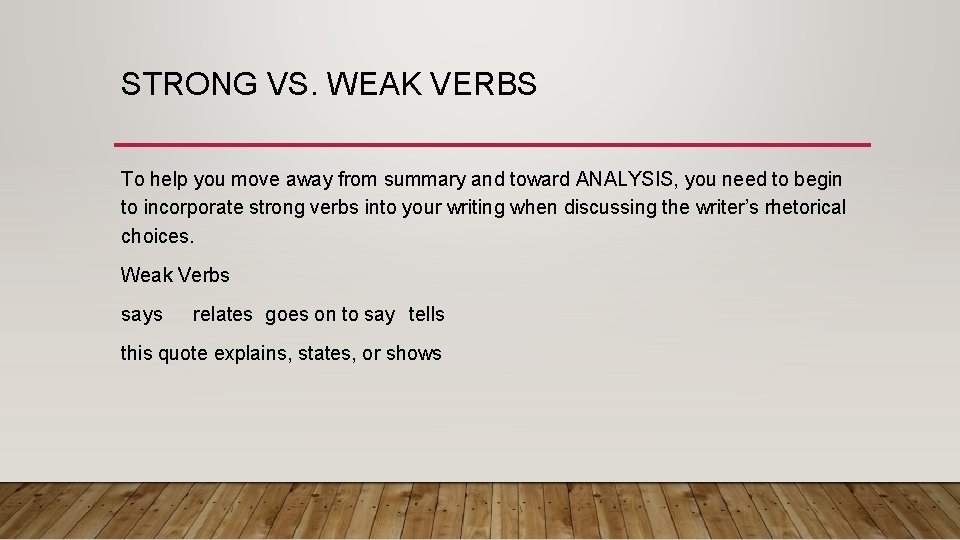
STRONG VS. WEAK VERBS To help you move away from summary and toward ANALYSIS, you need to begin to incorporate strong verbs into your writing when discussing the writer’s rhetorical choices. Weak Verbs says relates goes on to say tells this quote explains, states, or shows
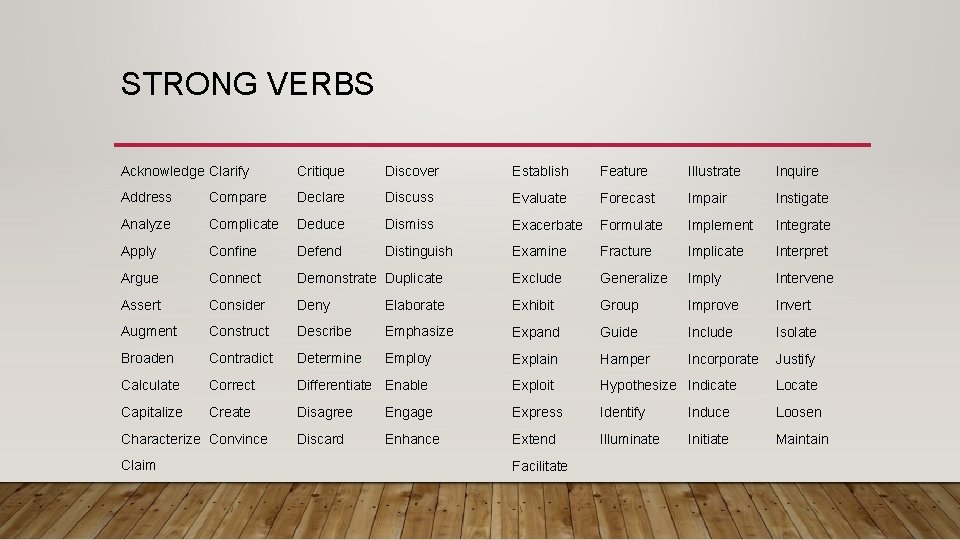
STRONG VERBS Acknowledge Clarify Critique Discover Establish Feature Illustrate Inquire Address Compare Declare Discuss Evaluate Forecast Impair Instigate Analyze Complicate Deduce Dismiss Exacerbate Formulate Implement Integrate Apply Confine Defend Distinguish Examine Fracture Implicate Interpret Argue Connect Demonstrate Duplicate Exclude Generalize Imply Intervene Assert Consider Deny Elaborate Exhibit Group Improve Invert Augment Construct Describe Emphasize Expand Guide Include Isolate Broaden Contradict Determine Employ Explain Hamper Incorporate Justify Calculate Correct Differentiate Enable Exploit Hypothesize Indicate Capitalize Create Disagree Engage Express Identify Induce Loosen Discard Enhance Extend Illuminate Initiate Maintain Characterize Convince Claim Facilitate Locate
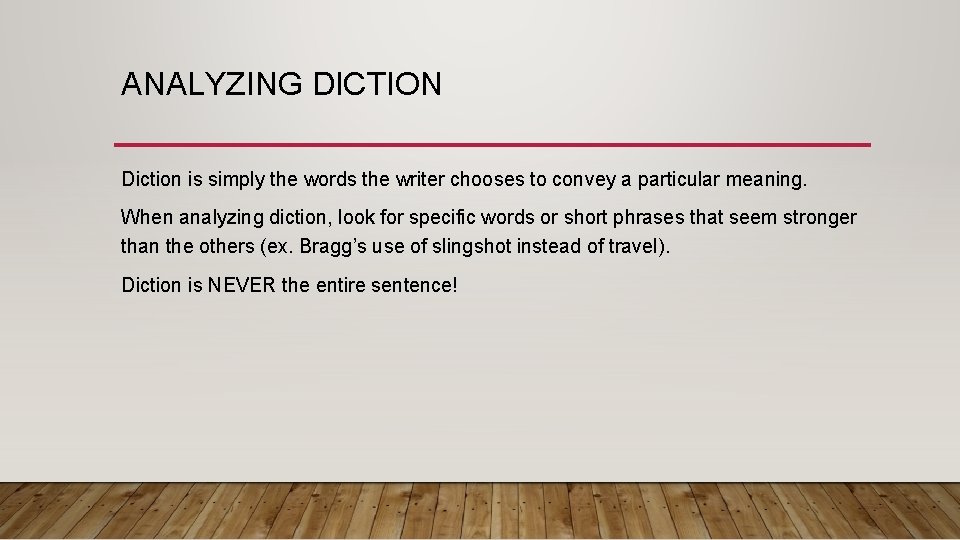
ANALYZING DICTION Diction is simply the words the writer chooses to convey a particular meaning. When analyzing diction, look for specific words or short phrases that seem stronger than the others (ex. Bragg’s use of slingshot instead of travel). Diction is NEVER the entire sentence!
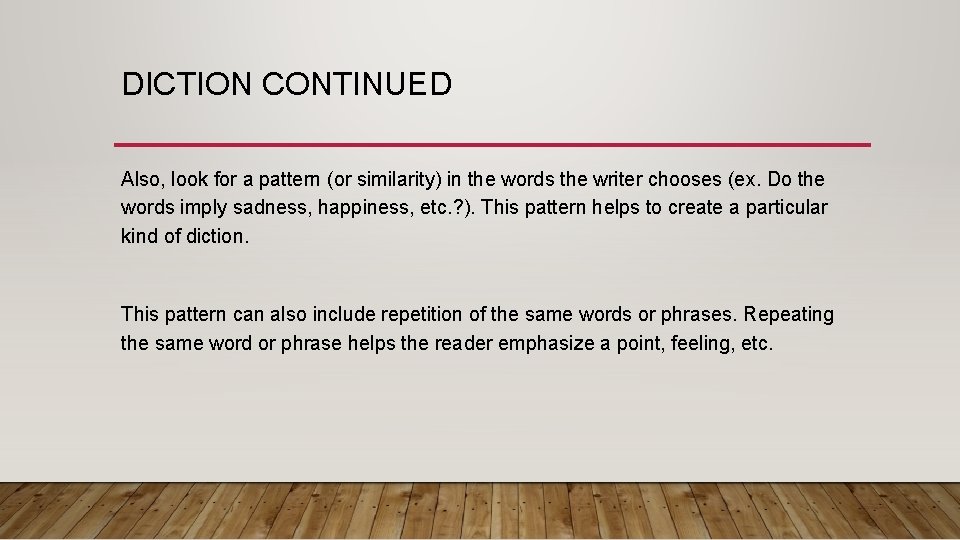
DICTION CONTINUED Also, look for a pattern (or similarity) in the words the writer chooses (ex. Do the words imply sadness, happiness, etc. ? ). This pattern helps to create a particular kind of diction. This pattern can also include repetition of the same words or phrases. Repeating the same word or phrase helps the reader emphasize a point, feeling, etc.
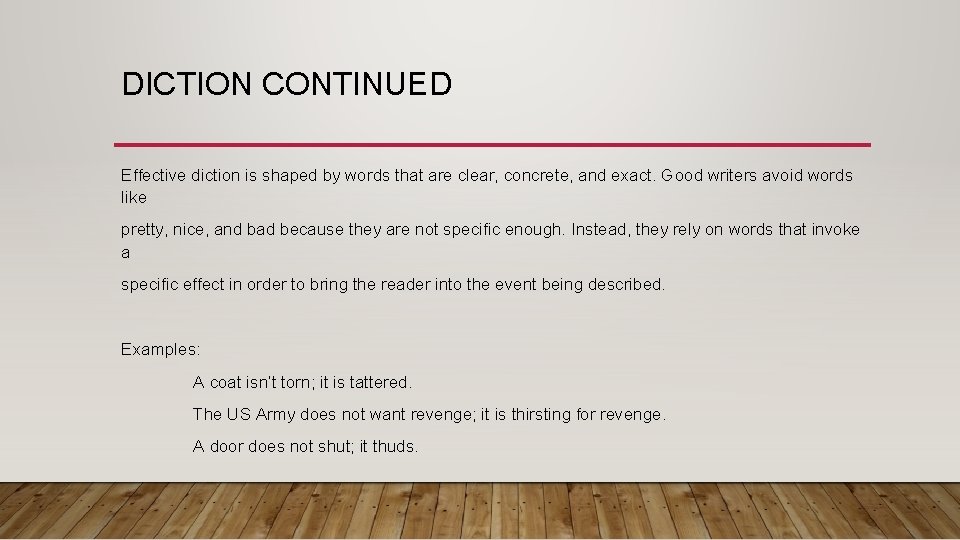
DICTION CONTINUED Effective diction is shaped by words that are clear, concrete, and exact. Good writers avoid words like pretty, nice, and bad because they are not specific enough. Instead, they rely on words that invoke a specific effect in order to bring the reader into the event being described. Examples: A coat isn’t torn; it is tattered. The US Army does not want revenge; it is thirsting for revenge. A door does not shut; it thuds.
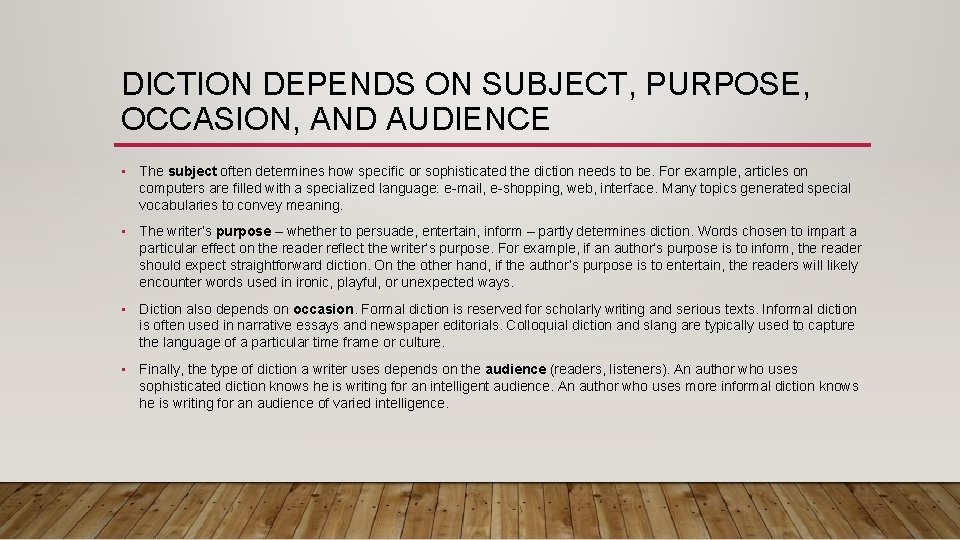
DICTION DEPENDS ON SUBJECT, PURPOSE, OCCASION, AND AUDIENCE • The subject often determines how specific or sophisticated the diction needs to be. For example, articles on computers are filled with a specialized language: e-mail, e-shopping, web, interface. Many topics generated special vocabularies to convey meaning. • The writer’s purpose – whether to persuade, entertain, inform – partly determines diction. Words chosen to impart a particular effect on the reader reflect the writer’s purpose. For example, if an author’s purpose is to inform, the reader should expect straightforward diction. On the other hand, if the author’s purpose is to entertain, the readers will likely encounter words used in ironic, playful, or unexpected ways. • Diction also depends on occasion. Formal diction is reserved for scholarly writing and serious texts. Informal diction is often used in narrative essays and newspaper editorials. Colloquial diction and slang are typically used to capture the language of a particular time frame or culture. • Finally, the type of diction a writer uses depends on the audience (readers, listeners). An author who uses sophisticated diction knows he is writing for an intelligent audience. An author who uses more informal diction knows he is writing for an audience of varied intelligence.
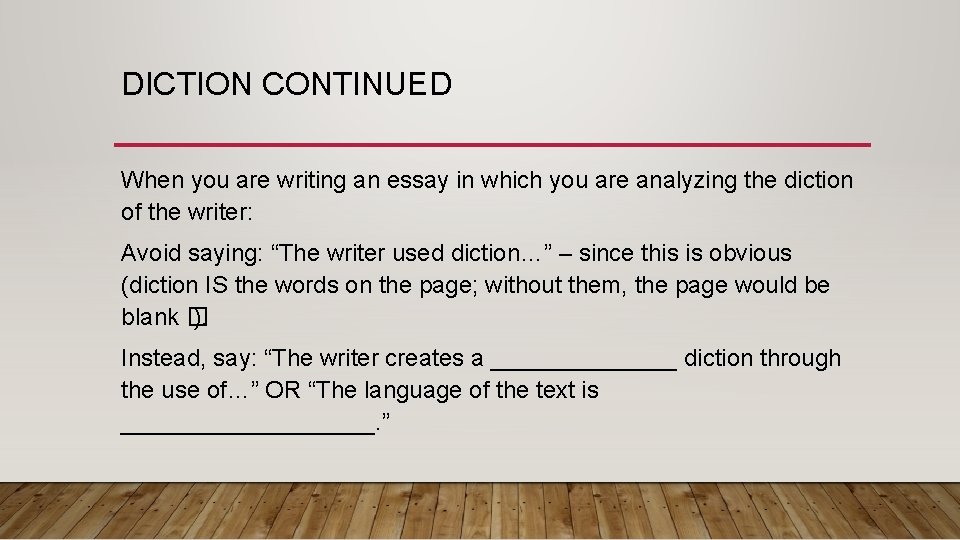
DICTION CONTINUED When you are writing an essay in which you are analyzing the diction of the writer: Avoid saying: “The writer used diction…” – since this is obvious (diction IS the words on the page; without them, the page would be blank � ). Instead, say: “The writer creates a _______ diction through the use of…” OR “The language of the text is __________. ”
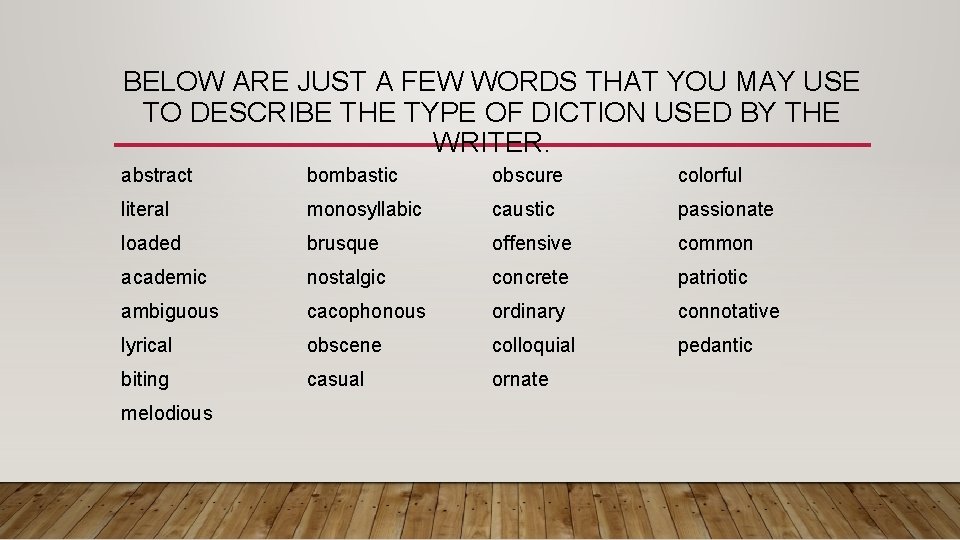
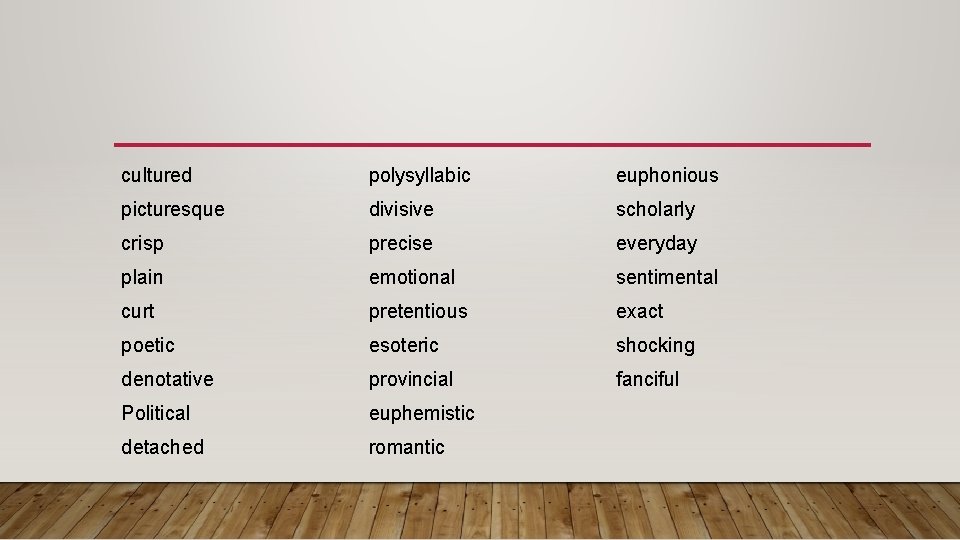
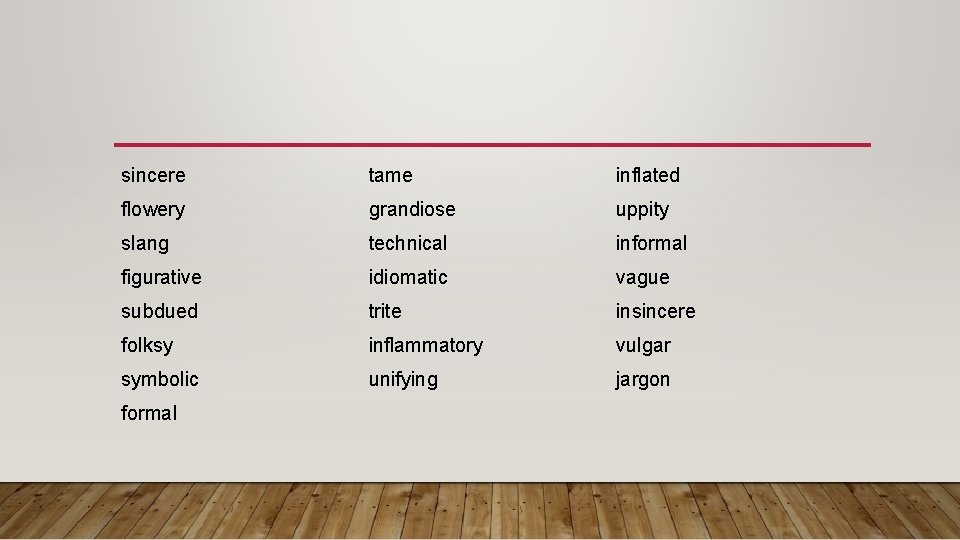
BELOW ARE JUST A FEW WORDS THAT YOU MAY USE TO DESCRIBE THE TYPE OF DICTION USED BY THE WRITER. abstract bombastic obscure colorful literal monosyllabic caustic passionate loaded brusque offensive common academic nostalgic concrete patriotic ambiguous cacophonous ordinary connotative lyrical obscene colloquial pedantic biting casual ornate melodious
cultured polysyllabic euphonious picturesque divisive scholarly crisp precise everyday plain emotional sentimental curt pretentious exact poetic esoteric shocking denotative provincial fanciful Political euphemistic detached romantic
sincere tame inflated flowery grandiose uppity slang technical informal figurative idiomatic vague subdued trite insincere folksy inflammatory vulgar symbolic unifying jargon formal