
How to Write An Integrated STEM Curriculum for
- Slides: 14
How to Write An Integrated STEM Curriculum for Middle or High School Courses Bryan Holmes Team Leader & Physics/Math Teacher Thomaston High School, Thomaston, CT http: //bryanholmesstem. wordpress. com bryanholmesstem@gmail. com
Introduction What can be integrated? STEM stands for Science, Technology, Engineering, and Math. Then what makes STEM different from these four subjects? The answer is that STEM is an integrated approach to teaching these four subjects. In each of the four subjects, students see clear connections from the other three subjects and apply those connections in integrated lessons. Therefore, an integrated STEM curriculum is the most effective way to teach STEM courses.
Conventional Learning Discrete Subjects with No Integration Students learning in a conventional school attend discrete classes covering subjects taught by different teachers in different rooms. There is little to no integration among subjects. This type of learning is ineffective for most students. They must organize up to 8 different subjects in high school. They must look for connections and applications on their own. They fail to see why many topics are relevant. They learn that disciplines are “stove piped” and separated from one another, which is the opposite of today’s reality.
Integrated Learning Connecting Topics Across 2+ Subjects Integrated learning changes the school experience for students. They effectively have fewer classes to process and organize. They learn connections and applications across subjects. They see how all topics are relevant since each topic integrates two or more disciplines. They learn that disciplines are interrelated, which is the reality today (and really always has been). They perform better in all subjects, often outperforming their peers on standardized tests. What do the students here think? STEM classes are prime candidates for integration.
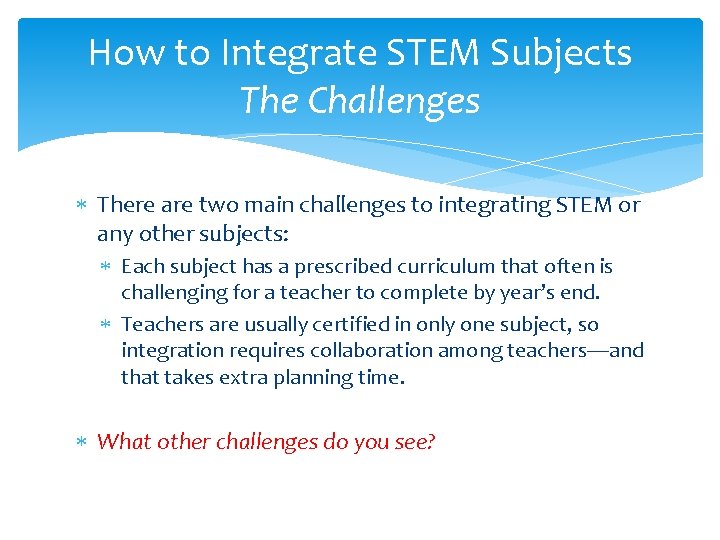
How to Integrate STEM Subjects The Challenges There are two main challenges to integrating STEM or any other subjects: Each subject has a prescribed curriculum that often is challenging for a teacher to complete by year’s end. Teachers are usually certified in only one subject, so integration requires collaboration among teachers—and that takes extra planning time. What other challenges do you see?
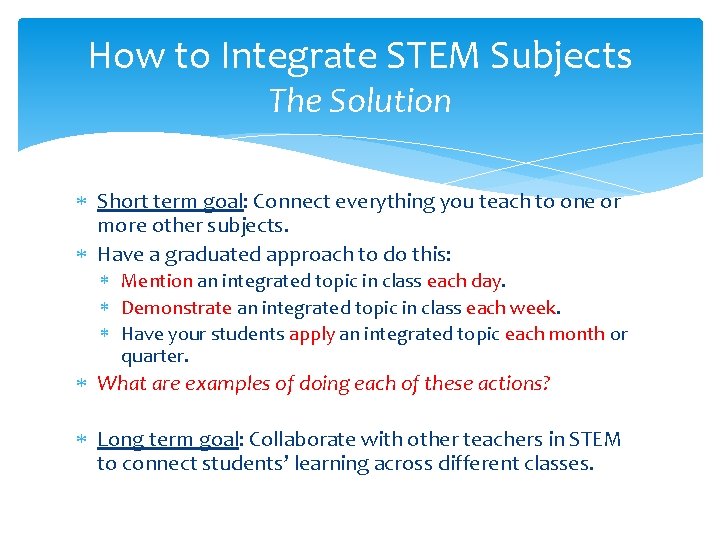
How to Integrate STEM Subjects The Solution Short term goal: Connect everything you teach to one or more other subjects. Have a graduated approach to do this: Mention an integrated topic in class each day. Demonstrate an integrated topic in class each week. Have your students apply an integrated topic each month or quarter. What are examples of doing each of these actions? Long term goal: Collaborate with other teachers in STEM to connect students’ learning across different classes.
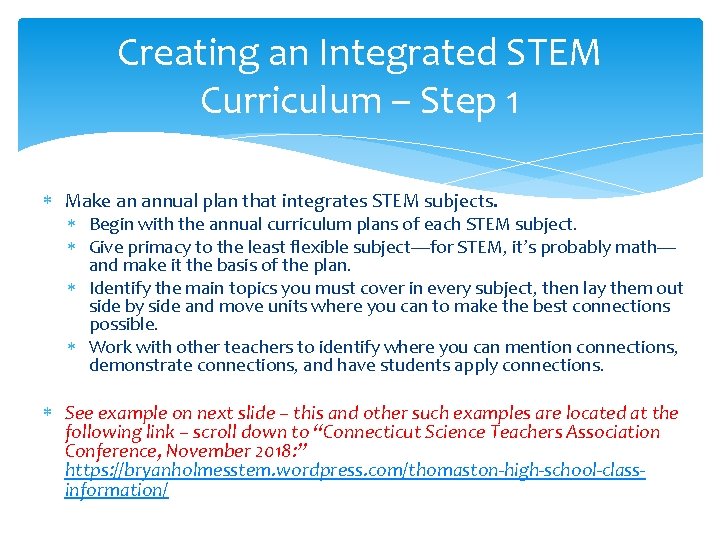
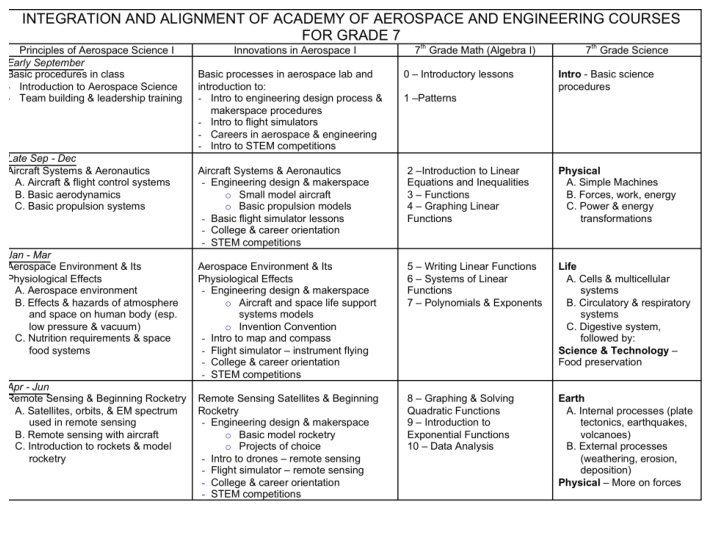
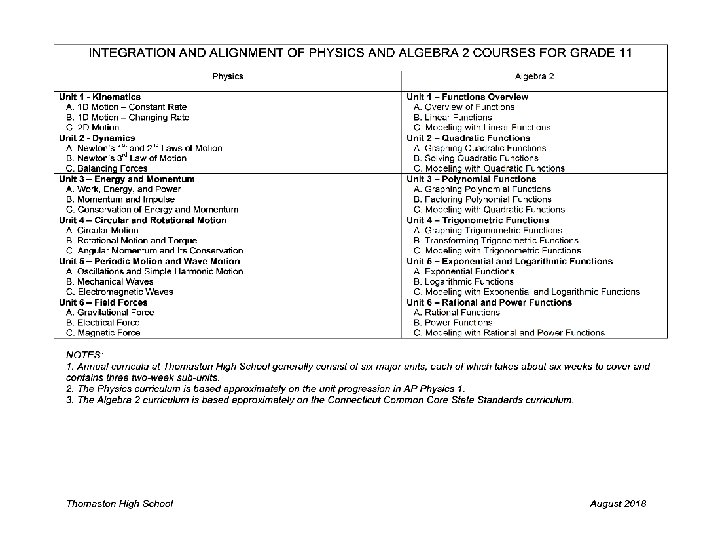
Creating an Integrated STEM Curriculum – Step 1 Make an annual plan that integrates STEM subjects. Begin with the annual curriculum plans of each STEM subject. Give primacy to the least flexible subject—for STEM, it’s probably math— and make it the basis of the plan. Identify the main topics you must cover in every subject, then lay them out side by side and move units where you can to make the best connections possible. Work with other teachers to identify where you can mention connections, demonstrate connections, and have students apply connections. See example on next slide – this and other such examples are located at the following link – scroll down to “Connecticut Science Teachers Association Conference, November 2018: ” https: //bryanholmesstem. wordpress. com/thomaston-high-school-classinformation/
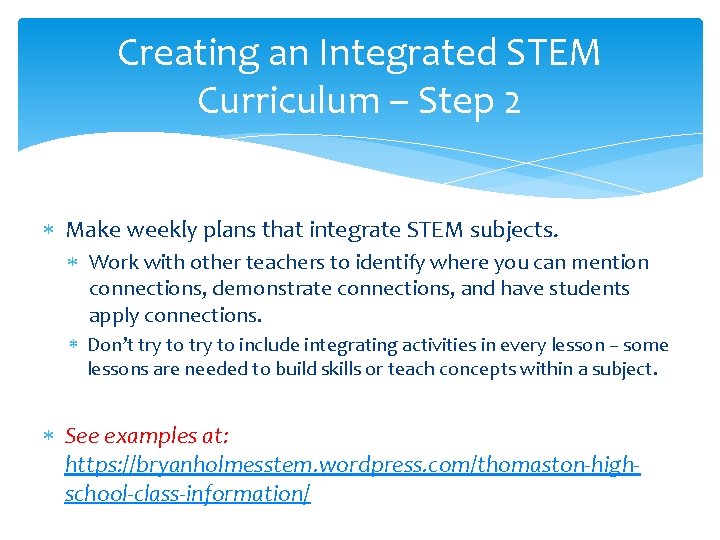
Creating an Integrated STEM Curriculum – Step 2 Make weekly plans that integrate STEM subjects. Work with other teachers to identify where you can mention connections, demonstrate connections, and have students apply connections. Don’t try to include integrating activities in every lesson – some lessons are needed to build skills or teach concepts within a subject. See examples at: https: //bryanholmesstem. wordpress. com/thomaston-highschool-class-information/
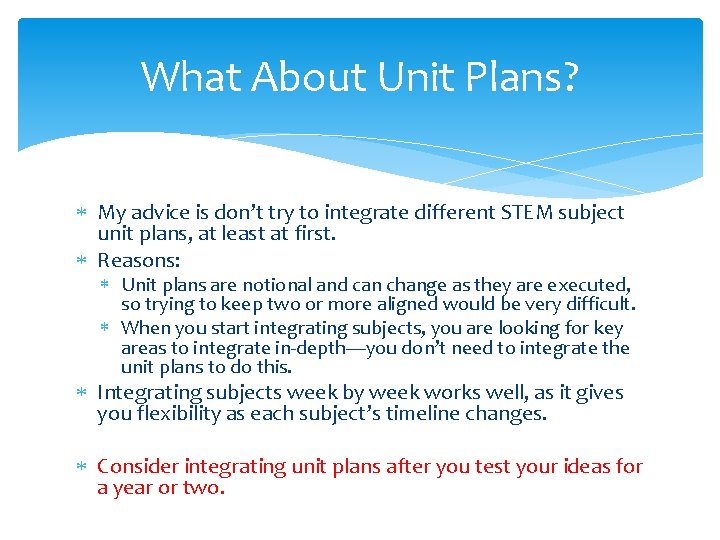
What About Unit Plans? My advice is don’t try to integrate different STEM subject unit plans, at least at first. Reasons: Unit plans are notional and can change as they are executed, so trying to keep two or more aligned would be very difficult. When you start integrating subjects, you are looking for key areas to integrate in-depth—you don’t need to integrate the unit plans to do this. Integrating subjects week by week works well, as it gives you flexibility as each subject’s timeline changes. Consider integrating unit plans after you test your ideas for a year or two.
Integrated STEM Projects While you can mention STEM connections each day and demonstrate them each week on your own, you need to coordinate with other teachers to apply STEM connections—integrated STEM projects are the perfect method. What ideas do you have for projects? See example of integrated projects at: https: //bryanholmesstem. wordpress. com/thomaston-high-school-classinformation/
Activities In the time remaining, do the following activities: Scan the resources I have provided at the following link (scroll to the bottom of the page) : https: //bryanholmesstem. wordpress. com/thomaston-high-school-classinformation/ Discuss how to integrate two or more courses with the other teachers in the room. Draft an integrated annual plan for your school or program.
Closing Thank you for participating in this workshop! For further questions, contact me at: bryanholmesstem@gmail. com. Curriculum resources are available at: https: //bryanholmesstem. wordpress. com/thomaston-high-school-classinformation/