
How to Write an Editorial editorial edtrl noun


- Slides: 19
How to Write an Editorial
ed·i·to·ri·al /edəˈtôrēəl/ noun a newspaper article written by an editor that gives an opinion on a topical issue. Editorial
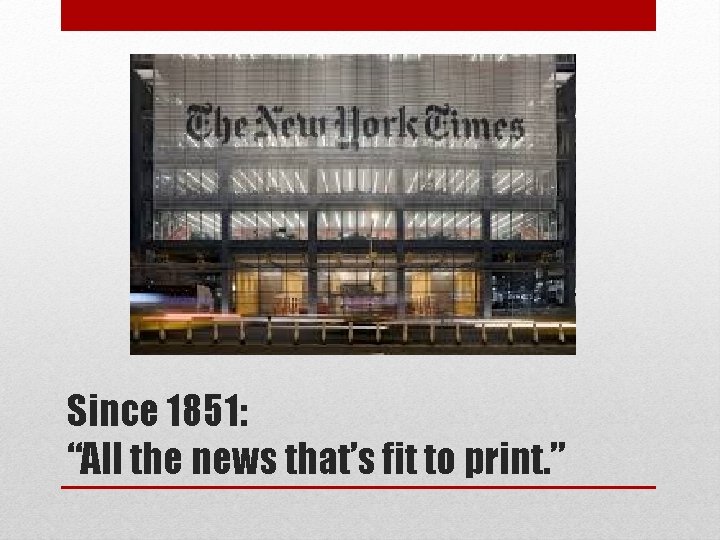
Since 1851: “All the news that’s fit to print. ”
The iconic logo
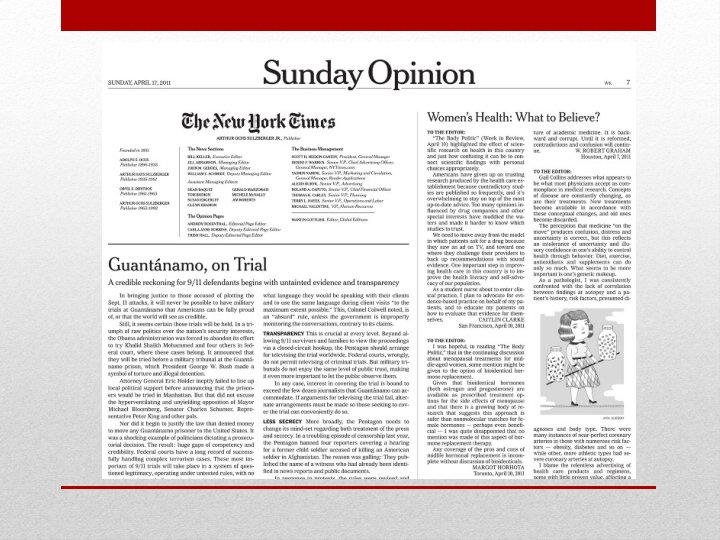
Seven tips from the editorial page editor of the New York Times. Andrew Rosenthal
“You have to know what you want to say. You have to have a clear opinion — what we call a bottom line. ” 1. Know your bottom line.
“You need to get to the point of your editorial quickly. You have to state it clearly and you have to be concise. ” 2. Be concise.
There are two kinds of editorials. One expresses an opinion about a situation, like human rights abuses in some part of the world. The other proposes a solution to a specific problem. For example, if you want to write about traffic congestion, you should have an answer to the traffic problem. 3. Give an opinion or solution.
You’re entitled to your own opinion; you’re not entitled to your own facts. There’s nothing that will undermine your argument faster than a fact you got wrong. 4. Do your research.
“Make your writing clear and easy to understand. Write as if you’re sending a letter to a well-informed friend who cares about what you think. But don’t use any slang. OMG — no. Use examples whenever you can. It’s better to use an example than just to use a word or an adjective that describes something. If you want to say that the mayor’s pre -K policy is wrong, explain how — don’t say it’s just stupid. In fact, never use the word stupid. ” 5. Write clearly.
“After you’ve written your editorial, give it to someone you trust to read and listen to what they say. If they don’t understand it, that means it’s probably not clear. ” 6. Get an editor.
“When you write something and you publish it, be prepared for a reaction. If you write a good editorial, people are going to respond to it. And if you criticize people, they definitely are going to respond. . Be prepared to defend your position. Don’t get defensive, just explain why you said what you had to say. And if they question your facts, be ready to show that you were right. ” 7. Be prepared for a reaction.
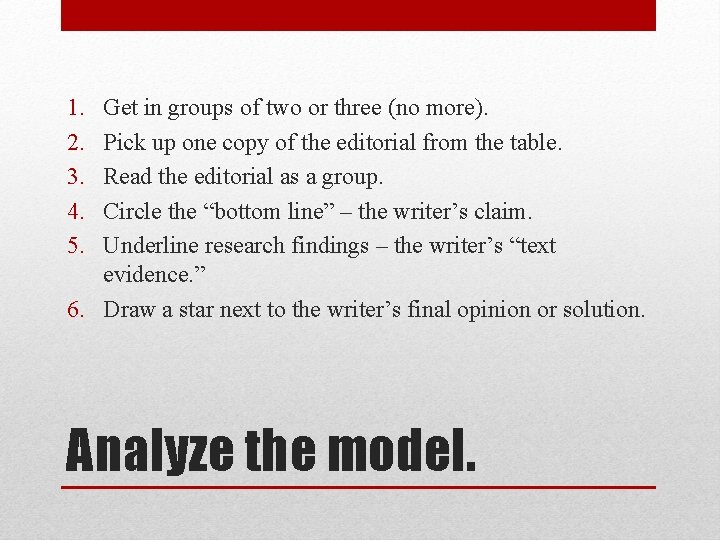
1. 2. 3. 4. 5. Get in groups of two or three (no more). Pick up one copy of the editorial from the table. Read the editorial as a group. Circle the “bottom line” – the writer’s claim. Underline research findings – the writer’s “text evidence. ” 6. Draw a star next to the writer’s final opinion or solution. Analyze the model.
• What’s the same? • What’s different? Argument Essay vs. Editorial
Argument Essay Editorial
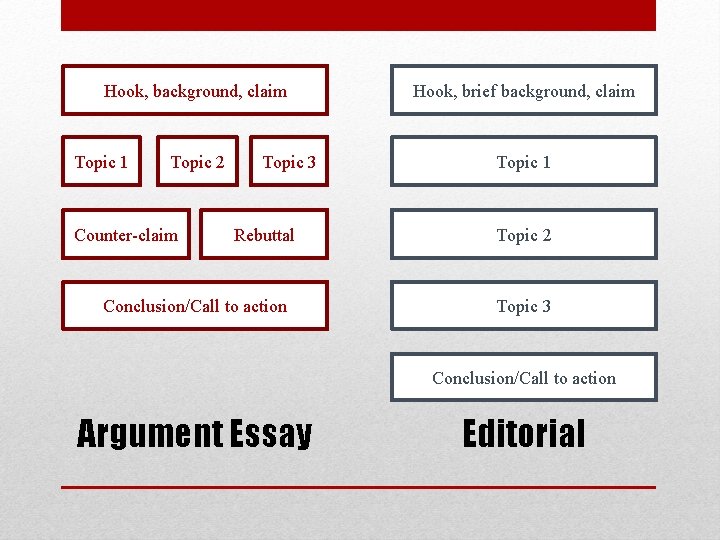
Hook, background, claim Topic 1 Topic 2 Counter-claim Topic 3 Rebuttal Conclusion/Call to action Hook, brief background, claim Topic 1 Topic 2 Topic 3 Conclusion/Call to action Argument Essay Editorial
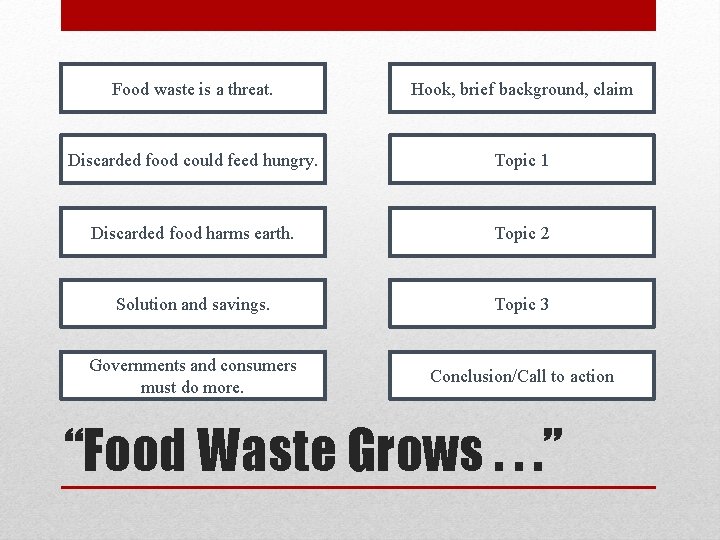
Food waste is a threat. Hook, brief background, claim Discarded food could feed hungry. Topic 1 Discarded food harms earth. Topic 2 Solution and savings. Topic 3 Governments and consumers must do more. Conclusion/Call to action “Food Waste Grows. . . ”