
How to write a Diary Entry LI Year
- Slides: 17
How to write a ………. Diary Entry
� LI: Year 5: Plan writing by noting and developing initial ideas, drawing on reading where necessary. � LI: Year 6: Plan writing by identifying audience and purpose and selecting the appropriate form (First person in diary writing) Steps to success: Use past tense Use first person Use the ‘shapes’ to help plan the diary entry � � Challenge Year 5: use a co-ordinating conjunction (fanboys) � Challenge Year 6: use a subordinating conjunction (isawawabub) �
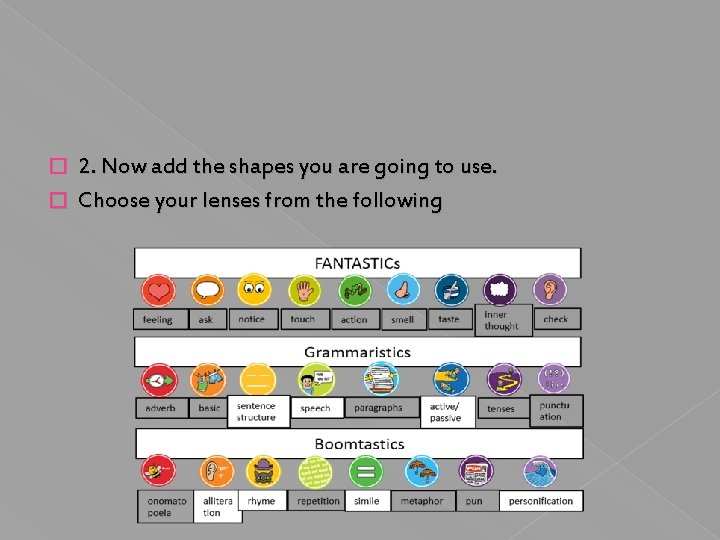
� Read through the model text again (we have previously read this together) � Look at the ‘shapes’ of the diary. � On your chotting side, choose the shapes and order of the shapes you are going to use.
Please pay attention Year 5 & 6 Here are some brilliant top tips that will help you to write a Diary Entry in a realistic way. . .
Top Tip - Number One Write in the past tense and in. . . “Chronological Order” To help the reader empathise with you Use pronouns such as. . . I, We, Us, We’re and I’m. They help to make the reader feel part of the text.
Time Connectives that will help Firstly…. Following on from … Next, I … Eventually, I … Some time later … Afterwards, I … Finally …
Top Tip - Number Two Detailed Description You need to add lots of detailed information relating to people, places, events & objects. Also. . . remember to include your personal thoughts and feelings about these things. By doing so, your writing will be more appealing to the reader.
Top Tip - Number Three Familiar - Everyday Events Write about ordinary, daily things that everybody does at some time. . – BUT – Do try to write about them using a completely different angle or slant. For example – I ran along the street, gripping the pie to my chest as if my life depended on it.
Top Tip - Number Four Explain Why. . Help your reader to understand your moods. By explaining your different Emotions and Feelings – the reader will be able to. . . VISUALISE and put themselves in your shoes. So, if you are sad – explain why you are sad. Similarly, if you are scared – explain why you are feeling in such a way.
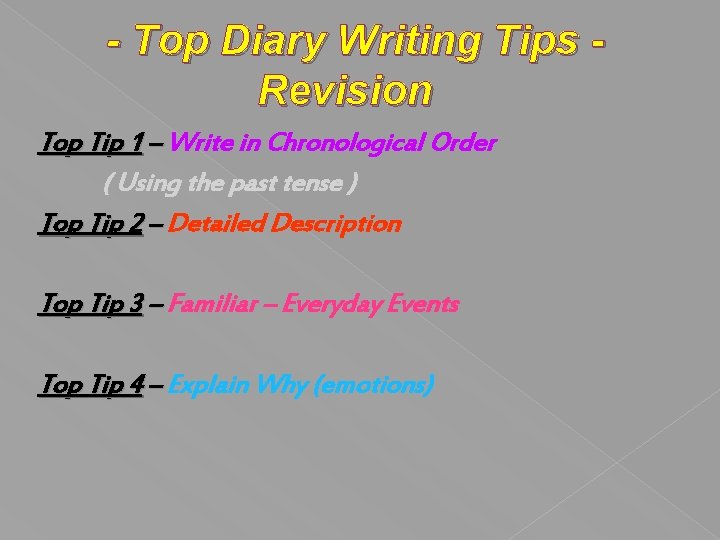
- Top Diary Writing Tips Revision Top Tip 1 – Write in Chronological Order ( Using the past tense ) Top Tip 2 – Detailed Description Top Tip 3 – Familiar – Everyday Events Top Tip 4 – Explain Why (emotions)
Now it is your turn to write a Diary Recount. Imagine that you are Jim. (Remember you are writing as Jim, in past tense (I went…I saw) using first person, I) 1: Order the events that happened. You can choose ANY part up to him beating the drum in the school room. Remember, it is a diary based on just 1 day in his life. (You can think back to previous events though). Choose your shapes and write a rough outline of what happened, choosing some key vocabulary you may like to include. .
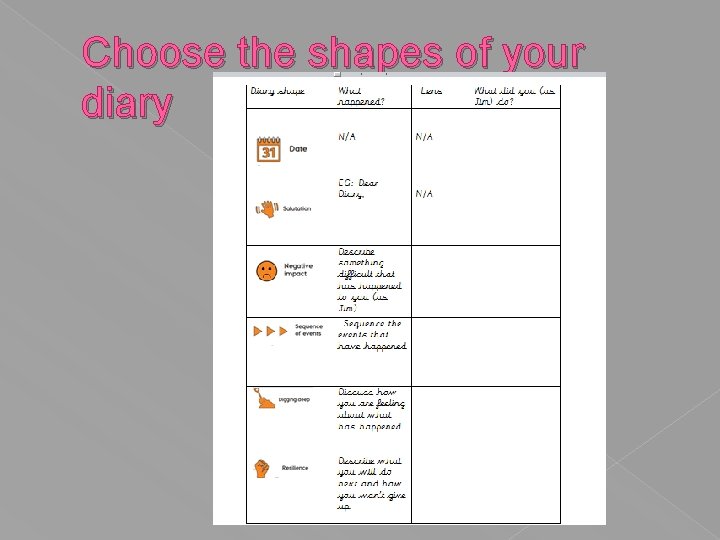
Choose the shapes of your diary
Plan a Diary Entry Day 2 LI: Year 5: Plan writing by noting and developing initial ideas, drawing on reading where necessary. LI: Year 6: Plan writing by identifying audience and purpose and selecting the appropriate form (First person in diary writing) Steps to success: Use past tense Use first person Use the ‘shapes’ to help plan the diary entry Challenge Year 5: use a co-ordinating conjunction (fanboys) Challenge Year 6: use a subordinating conjunction (isawawabub)
2. Now add the shapes you are going to use. � Choose your lenses from the following �
3. Adjectives and adverbs describing the event � 4. Note some familiar, everyday events you could include in your diary entry. � 5. Describe your emotions as things happen, and explain WHY you feel that way
Day 3 � Write your Diary entry � LI: 5 & 6 � Draft and write narratives describing settings, characters and atmosphere,
Remember to: � Follow your plan. � Use your shapes and lenses � Describe the setting (what you can see) � Describe other characters � Describe how you and they may be feeling. Why?